

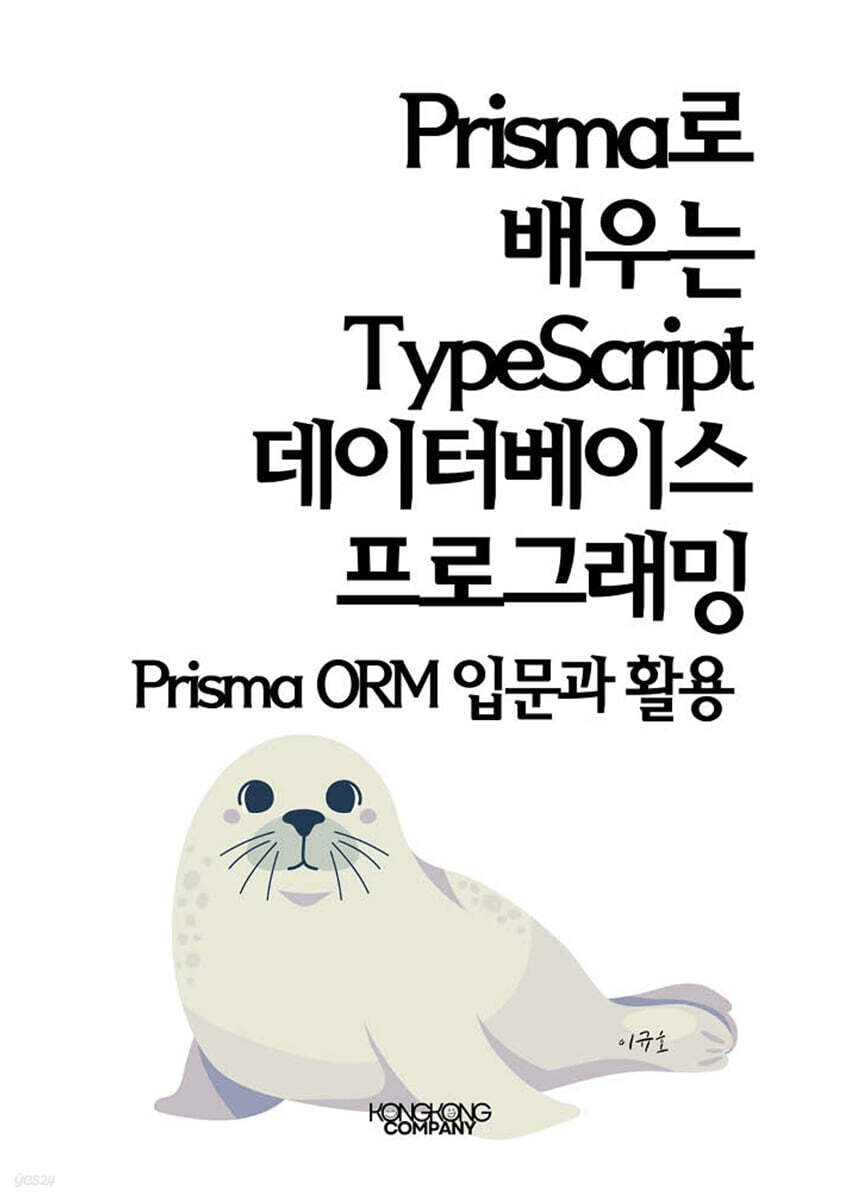
TypeScript Database Programming with Prisma: Introduction to Prisma ORM
 |
Description
Book Introduction
End your database worries in the TypeScript era with Prisma!
Say goodbye to complex type errors and cumbersome migrations.
Prisma, the next-generation ORM, is fully integrated with TypeScript, delivering an amazing development experience (DX) and stability.
This book contains only the essentials of Prisma and guides you on the fastest path.
What you get from this book:
Complete type safety: Experience a new world where all your code is automatically completed and type-safe, from queries to results.
Say goodbye to any type.
Intuitive schema management: Clearly define your database model with a single Prisma Schema file and safely manage change history with the migrate command.
Master core features: Master CRUD without worrying about types, as well as relational data loading (join), transactions, and advanced queries essential for practical use.
Practical Project Skills: Gain immediately applicable skills through practical examples that integrate Prisma with modern frameworks like Express, NestJS, and Next.js.
I highly recommend this to these people!
Developers who want to build a robust backend with TypeScript
Those who are tired of the limitations and inconveniences of existing ORMs
Anyone who wants to dramatically increase development productivity
Now with Prisma, reduce bugs and bring back the joy of development!
Say goodbye to complex type errors and cumbersome migrations.
Prisma, the next-generation ORM, is fully integrated with TypeScript, delivering an amazing development experience (DX) and stability.
This book contains only the essentials of Prisma and guides you on the fastest path.
What you get from this book:
Complete type safety: Experience a new world where all your code is automatically completed and type-safe, from queries to results.
Say goodbye to any type.
Intuitive schema management: Clearly define your database model with a single Prisma Schema file and safely manage change history with the migrate command.
Master core features: Master CRUD without worrying about types, as well as relational data loading (join), transactions, and advanced queries essential for practical use.
Practical Project Skills: Gain immediately applicable skills through practical examples that integrate Prisma with modern frameworks like Express, NestJS, and Next.js.
I highly recommend this to these people!
Developers who want to build a robust backend with TypeScript
Those who are tired of the limitations and inconveniences of existing ORMs
Anyone who wants to dramatically increase development productivity
Now with Prisma, reduce bugs and bring back the joy of development!
index
Learning TypeScript Database Programming with Prisma: Introduction and Utilization of Prisma ORM
Part 1: Understanding and Preparing for Prisma
Chapter 1: Evolution of the Database Environment and the Emergence of Prisma
1-1.
Limitations and disadvantages of existing ORMs (TypeORM, Sequelize, etc.)
1-2.
What is Prisma? (Next-Generation ORM Toolkit, TypeScript-Friendly)
1-3.
Prisma's core components: Prisma Schema, Prisma Client, and Prisma Migrate.
1-4.
Why Prisma (Type Safety, Developer Experience (DX), Migration Management)
Chapter 2: Setting Up and Initializing the Development Environment
2-1.
Installing Prisma in a Node.js Project
2-2.
Run the npx prisma init command and analyze the initial file structure.
2-3.
Setting up a database connection (understanding the Datasource block)
2-4.
Practice connecting to various databases such as PostgreSQL, MySQL, and SQLite
Chapter 3: Mastering the Prisma Schema Language
3-1.
Data Model Definition: Table (Model), Field (Field), Type (Type)
3-2.
Basic attributes: @id, @unique, @default, @map
3-3.
Relational Data Modeling: Defining 1:1, 1:N, and N:M Relationships and Using @relation
3-4.
Differences in NoSQL (MongoDB) Modeling (Optional)
Part 2: Prisma Core Features and CRUD
Chapter 4: Database Migration (Prisma Migrate)
4-1.
Migration Basics and Workflow
4-2.
How to use the npx prisma migrate dev command (synchronize the development environment)
4-3.
Managing migrations folders and SQL files
4-4.
Production Environment Migration Strategy (deploy Command)
Chapter 5: Prisma Client and Type Safety
5-1.
Prisma Client automatic generation principle and npx prisma generate
5-2.
Initializing Prisma Client and injecting it into the application (integrating with frameworks such as NestJS and Express)
5-3.
Leverage type inference and auto-completion features in Prisma Client methods.
Chapter 6: Basic CRUD Operations (Create, Read, Update, Delete)
6-1.
Data Creation (Create): create, createMany
6-2.
Data retrieval (Read): findUnique, findFirst, findMany, and filtering (where)
6-3.
Data Modification (Update): update, updateMany
6-4.
Delete data: delete, deleteMany
6-5.
Data visualization and editing using Prisma Studio
Part 3: Advanced Queries and Utilizations
Chapter 7: Relational Data Manipulation and Advanced Queries
7-1.
Relational Loading: Eager Loading (Joins) Using Include
7-2.
Nested Writes: Create and modify related data in a single query.
7-3.
Aggregation queries: count, sum, avg, etc.
7-4.
Executing and utilizing raw SQL queries
Chapter 8: Transactions and Complex Operations
8-1.
Understanding and Using Interactive Transactions
8-2.
Batch query execution
8-3.
Add query logging and custom logic using middleware (e.g., implementing soft delete)
Chapter 9: Scaling and Optimizing Prisma
9-1.
How to implement computed fields and virtual fields
9-2.
Specifying database-specific types using @db.* attributes
9-3.
Analyze and improve queries for performance optimization
Appendix: Practical Projects
Appendix-1.
Example of building a REST API server based on Express/NestJS
Appendix-2.
Integration with Next.js/React and Data Fetching Strategies
Appendix-3.
Frequently Asked Questions (FAQ) and Troubleshooting Guide
Learning TypeScript Database Programming with Prisma: Introduction and Utilization of Prisma ORM
Part 1: Understanding and Preparing for Prisma
Chapter 1: Evolution of the Database Environment and the Emergence of Prisma
1-1.
Limitations and disadvantages of existing ORMs (TypeORM, Sequelize, etc.)
1-2.
What is Prisma? (Next-Generation ORM Toolkit, TypeScript-Friendly)
1-3.
Prisma's core components: Prisma Schema, Prisma Client, and Prisma Migrate.
1-4.
Why Prisma (Type Safety, Developer Experience (DX), Migration Management)
Chapter 2: Setting Up and Initializing the Development Environment
2-1.
Installing Prisma in a Node.js Project
2-2.
Run the npx prisma init command and analyze the initial file structure.
2-3.
Setting up a database connection (understanding the Datasource block)
2-4.
Practice connecting to various databases such as PostgreSQL, MySQL, and SQLite
Chapter 3: Mastering the Prisma Schema Language
3-1.
Data Model Definition: Table (Model), Field (Field), Type (Type)
3-2.
Basic attributes: @id, @unique, @default, @map
3-3.
Relational Data Modeling: Defining 1:1, 1:N, and N:M Relationships and Using @relation
3-4.
Differences in NoSQL (MongoDB) Modeling (Optional)
Part 2: Prisma Core Features and CRUD
Chapter 4: Database Migration (Prisma Migrate)
4-1.
Migration Basics and Workflow
4-2.
How to use the npx prisma migrate dev command (synchronize the development environment)
4-3.
Managing migrations folders and SQL files
4-4.
Production Environment Migration Strategy (deploy Command)
Chapter 5: Prisma Client and Type Safety
5-1.
Prisma Client automatic generation principle and npx prisma generate
5-2.
Initializing Prisma Client and injecting it into the application (integrating with frameworks such as NestJS and Express)
5-3.
Leverage type inference and auto-completion features in Prisma Client methods.
Chapter 6: Basic CRUD Operations (Create, Read, Update, Delete)
6-1.
Data Creation (Create): create, createMany
6-2.
Data retrieval (Read): findUnique, findFirst, findMany, and filtering (where)
6-3.
Data Modification (Update): update, updateMany
6-4.
Delete data: delete, deleteMany
6-5.
Data visualization and editing using Prisma Studio
Part 3: Advanced Queries and Utilizations
Chapter 7: Relational Data Manipulation and Advanced Queries
7-1.
Relational Loading: Eager Loading (Joins) Using Include
7-2.
Nested Writes: Create and modify related data in a single query.
7-3.
Aggregation queries: count, sum, avg, etc.
7-4.
Executing and utilizing raw SQL queries
Chapter 8: Transactions and Complex Operations
8-1.
Understanding and Using Interactive Transactions
8-2.
Batch query execution
8-3.
Add query logging and custom logic using middleware (e.g., implementing soft delete)
Chapter 9: Scaling and Optimizing Prisma
9-1.
How to implement computed fields and virtual fields
9-2.
Specifying database-specific types using @db.* attributes
9-3.
Analyze and improve queries for performance optimization
Appendix: Practical Projects
Appendix-1.
Example of building a REST API server based on Express/NestJS
Appendix-2.
Integration with Next.js/React and Data Fetching Strategies
Appendix-3.
Frequently Asked Questions (FAQ) and Troubleshooting Guide
Learning TypeScript Database Programming with Prisma: Introduction and Utilization of Prisma ORM
GOODS SPECIFICS
- Date of issue: October 1, 2025
- Page count, weight, size: 307 pages | 182*257*30mm
- ISBN13: 9791124025444
You may also like
카테고리
korean


korean

![GQ KOREA Mark (Monthly): December [2025]](http://librairie.coreenne.fr/cdn/shop/files/8ef265dbbfbf186523ed75ba7319009d.jpg?v=1765340328&width=3840)


