

Song Jae-woo's Saju Edu
 |
Description
Book Introduction
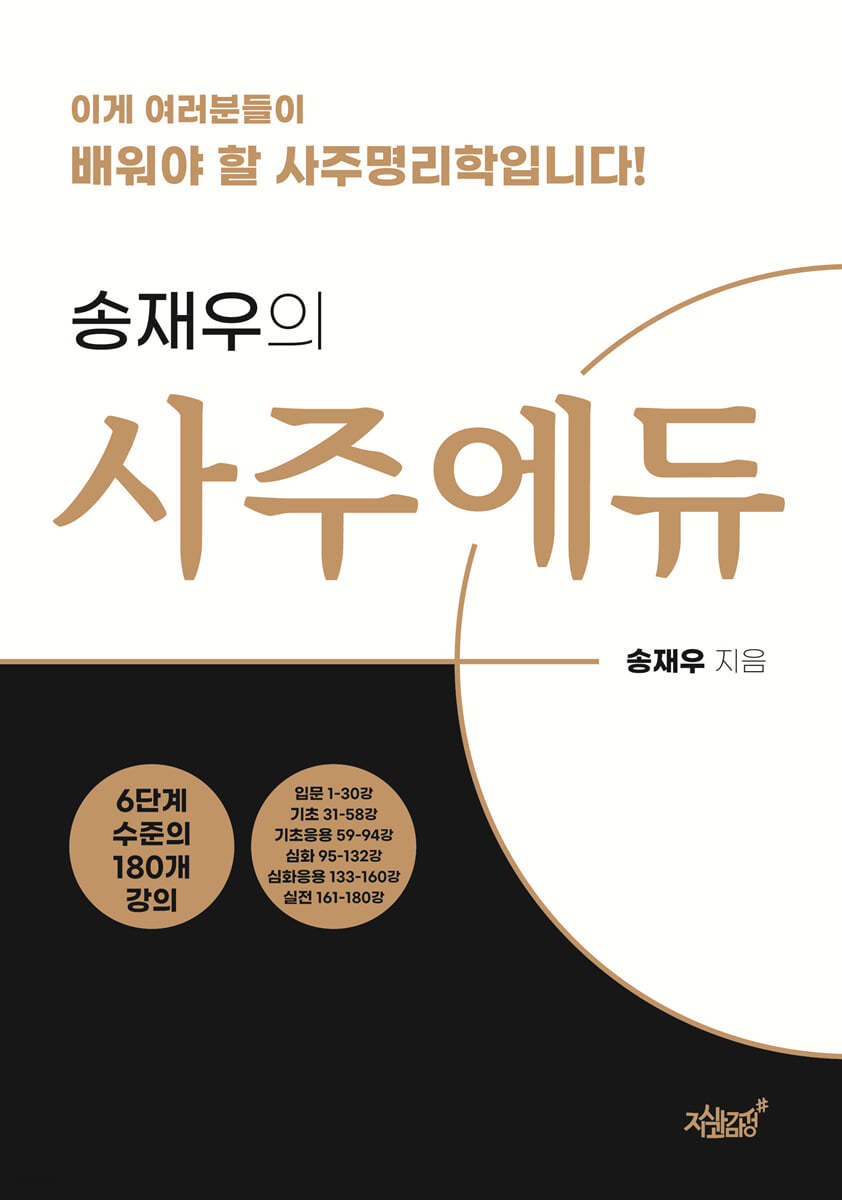
A must-read for anyone learning about fortune telling! There are many books on fortune telling, but most of them are either immersed in theory or full of unfounded practical interpretations. “Song Jae-woo’s Saju Edu” is a book that contains verified lectures given by fortune teller Song Jae-woo to 400 students on his Saju education website Saju Edu. This is an unprecedented book of theory and practical interpretation of Saju fortune telling, created by incorporating authentic fortune telling knowledge and verified interpretations. It will be an excellent guide for those who are just starting to study fortune telling, as well as for those who have already studied fortune telling for a long time. |
- You can preview some of the book's contents.
Preview
index
1 Introduction
Lesson 1 | Destiny and Life
Lecture 2 | The History and Principles of Saju (Four Pillars of Destiny)
Lesson 3 | Yin and Yang
Lesson 4 | The Five Elements - Wood, Fire, Earth, Metal, and Water
Lesson 5 | The Ten Heavenly Stems
Lesson 6 | The Twelve Earthly Branches
Lesson 7 | Sexagenary Cycle
Lecture 8 | Theory of the Stars 1
Lecture 9 | Theory of the Palace and Stars 2
Lesson 10 | Establishing the Four Pillars of Destiny
Lesson 11 | Daylight Savings Time for Foreign-Born Citizens
Lesson 12 | Establishing Great Fortune
Lesson 13 | Practice Building Your Great Fortune and Calculating Your Great Fortune Number
Lesson 14 | The Mutual Growth and Mutual Repression of the Five Elements and the Role of the Heavenly Stems
Lesson 15 | The Role of Support
Lesson 16 | The Combination of the Heavenly Stems
Lesson 17 | Conditions for Agreement Between the Heavenly Stems
Lesson 18 | Monthly Orders
Lesson 19 | Human Resources, Fire and Earth are the Same Palace
Lesson 20 | The Flow of the Earthly Branches 1
Lesson 21 | The Flow of the Earthly Branches 2
Lesson 22 | Square Harmony
Lesson 23 | Samhap (Three Harmonies)
Lesson 24 | Half-Conjunction
Lesson 25 | Six Harmonies and Dark Harmonies
Lesson 26 | Commuting
Lesson 27 | Discussion of Tonggeun and Tugan
Lesson 28 | Clash 1
Lesson 29 | Clash 2
Lesson 30 | The Role of the Earthly Branches
2 Basics
Lesson 31 | Definition of the Ten Gods
Lesson 32 | The Ten Gods of Each Day
Lesson 33 | The Mutual Growth and Mutual Repression of the Ten Gods
Lesson 34 | Body and Use
Lesson 35 | Finding the Ten Gods 1
Lesson 36 | Finding the Ten Gods 2
Lesson 37 | Interrelationships between the Ganji (干支) 1
Lesson 38 | Interrelationships Between the Ganji (干支) 2
Lesson 39 | The Role of Luck 1
Lesson 40 | The Role of Luck 2
Lesson 41 | Command
Lesson 42 | The Power of the Four Pillars of Destiny
Lesson 43 | The Five Elements: Prosperity, Rest, Prison, and Death
Lesson 44 | The strong become weak; the weak become strong; the strong become weak.
Lesson 45 | Obtaining Orders, Losing Orders, Gaining Land, Losing Land, Gaining Power, Losing Power
Lesson 46 | Determining Physical Strength and Weakness
Lesson 47 | The Twelve Zodiac Signs 1
Lesson 48 | The Twelve Zodiac Signs 2
Lesson 49 | The Twelve Gods of Death 1
Lesson 50 | The Twelve Gods of Death 2
Lesson 51 | Characteristics of the Four Pillars of Strength
Lesson 52 | Characteristics of the Four Pillars of Weakness
Lesson 53 | Characteristics of the Year of the Tiger, Monkey, and Pig
Lesson 54 | Substituting the Years of the Tiger, Monkey, and Pig
Lesson 55 | Characteristics of the Year of the Rat, Horse, and Rabbit
Lesson 56 | Trying to Substitute the Years of the Rat, Horse, and Rabbit
Lesson 57 | Characteristics of the Years of Jin, Xu, Chou, and Wei
Lesson 58 | Substituting the 12 months of the year (辰戌丑未) into the year (辰戌丑未)
3 Basic Applications
Lesson 59 | In-Depth Study of Mutual Growth
Lesson 60 | In-Depth Study of Mutual Conflict
Lesson 61 | Being King? Being Many?
Lesson 62 | Weakness?
Lesson 63 | Nothing?
Lesson 64 | Finding the Power of the Five Elements 1
Lesson 65 | Finding the Power of the Five Elements 2
Lesson 66 | The Gods Who Afflict and the Gods Who Use
Lesson 67 | The Divine Approach to the Weather 1
Lesson 68 | The Divine Approach to the Weather 2
Lesson 69 | The God of Suppression and Support 1
Lesson 70 | The God of Suppression and Support 2
Lesson 71 | The God of Medicine 1
Lesson 72 | The God of Medicine 2
Lesson 73 | Subjective Case
Lesson 74 | The False Case
Lesson 75 | The Two Qi Formations and Their Characteristics
Lesson 76 | The Cap
Lesson 77 | Chopsticks
Lesson 78 | Objects
Lesson 79 | Heavenly Stems and Objects 1
Lesson 80 | The Heavenly Stems and Objects 2
Lesson 81 | The Earthly Branches and Objects 1
Lesson 82 | The Earthly Branches and Objects 2
Lesson 83 | The Earthly Branches and Objects 3
Lesson 84 | The Four Earthly Branches and Objects
Lesson 85 | How to Deal with Killing (Hap-sal)
Lesson 86 | How to Handle Arrows
Lesson 87 | How to Deal with Killing (Jesal)
Lesson 88 | Emptiness
Lesson 89 | How to Find the Empty Space
Lesson 90 | Confusion
Lesson 91 | Exhalation
Lesson 92 | Looking at the Four Pillars of Destiny for the Exhaustion of Energy
Lesson 93 | Noble Persons of Heaven, Noble Persons of Moonchang, Noble Persons of Moongok
Lesson 94 | Punishment and Murder at the Ghost Gate
4 Deepening
Lesson 95 | Six Relatives - Male-centered
Lesson 96 | Six Relatives - Focused on Women
Lesson 97 | The Modern Meaning of Kinship, Part 1
Lesson 98 | Modern Meaning of Kinship, Part 2
Lesson 99 | The Influence of Kinship 1
Lesson 100 | The Influence of Kinship 2
Lesson 101 | Husband and Children 1
Lesson 102 | Husband and Children 2
Lesson 103 | The Characteristics of Comparison of Shoulders
Lesson 104 | The Role of Comparison
Lesson 105 | The Characteristics of Famine
Lesson 106 | The Role of Gyeopjae
Lesson 107 | Characteristics of the Food God
Lesson 108 | The Role of the Food God
Lesson 109 | Characteristics of the Injured Official
Lesson 110 | The Role of the Injured Official
Lesson 111 | The Characteristics of Partial Wealth
Lecture 112 | The Role of Partial Wealth
Lesson 113 | The Characteristics of Jeongjae (正財)
Lesson 114 | The Role of Jeongjae
Lesson 115 | Characteristics of Partial Officials
Lesson 116 | The Role of the Inspector General
Lesson 117 | Characteristics of a Government Official
Lesson 118 | The Role of the Official
Lesson 119 | Characteristics of Partial Seals
Lesson 120 | The Role of Partial Seals
Lesson 121 | The Characteristics of the Right Seal
Lesson 122 | The Role of the Right Seal
Lesson 123 | Problems with Cowardice When It Exceeds Its Power 1
Lesson 124 | Problems with Cowardice When It Exceeds Its Power 2
Lesson 125 | Problems with Excessive Food Saturation 1
Lesson 126 | Problems with Excessive Food Saturation 2
Lesson 127 | Problems with a Strong Wealth Star (Taewang) 1
Lesson 128 | Problems with a Strong Wealth Star (Taewang) 2
Lesson 129 | Problems with a Strong Gwansal (Taewang)
Lesson 130 | Problems with a Strong Gwansal (Taewang) 2
Lesson 131 | Problems with a Strong Personality 1
Lesson 132 | Problems with a Strong Personality (Part 2)
5 Advanced Applications
Lesson 133 | Definition of Grade
Lesson 134 | How to Grasp the Grip 1
Lesson 135 | How to Grasp the Grip 2
Lesson 136 | Types and Meanings of Cases
Lesson 137 | Cases in which the syllable is interjected and cases in which it is not
Lesson 138 | Lucky and Inauspicious Deities 1
Lesson 139 | Lucky and Unlucky Deities 2: Personality and Defeat
Lesson 140 | Success or Failure by Country (Siksingyeok)
Lesson 141 | Success or Failure by Position (Supporting Position)
Lesson 142 | Success or Failure by Constellation (Pyeonjae-Gyeok, Jeongjae-Gyeok)
Lesson 143 | Success or Failure by Position (Partial and Regular Positions)
Lesson 144 | Success or Failure by Constellation (Partial Constellation, Regular Constellation, and Green Constellation)
Lesson 145 | Definition of Daily
Lesson 146 | Gapmok (甲) Daily
Lesson 147 | Eulmok (乙) Daily
Lesson 148 | Byeonghwa (丙) Daily
Lesson 149 | Jeonghwa (丁) Daily
Lesson 150 | Muto (戊) Daily
Lesson 151 | Kito (己) Daily
Lesson 152 | Gyeonggeum (庚) Daily
Lesson 153 | Shin Geum (辛) Daily
Lesson 154 | Imsu (壬) Daily
Lesson 155 | Gyesu (癸) Daily
Lesson 156 | Defining the Seasons
Lesson 157 | The Meaning of the Seasons (Mokwangjeol)
Lesson 158 | The Meaning of Seasons (Hwawangjeol)
Lesson 159 | The Meaning of the Seasons (Golden Week)
Lesson 160 | The Meaning of the Seasons (Suwangjeol)
6 Practice
Lesson 161 | Good Fortune Telling, Bad Fortune Telling 1
Lesson 162 | Good Fortune Telling, Bad Fortune Telling 2
Lesson 163 | Finding Good and Bad Fortune-telling
Lesson 164 | Health View 1
Lesson 165 | Health View 2
Lesson 166 | When the Ten Gods Not in the Original State Come from Fortune
Lesson 167 | What is money in the four pillars of destiny?
Lesson 168 | View Growth Environment
Lesson 169 | The Art of Interpersonal Relationships
Lesson 170 | Career and Aptitude Test 1
Lesson 171 | Career and Aptitude Test 2
Lesson 172 | The Origin and Value of Compatibility
Lesson 173 | How to Read Compatibility
Lesson 174 | People Unsuitable for Marriage
Lesson 175 | Destiny and Relationships Based on Four Pillars of Destiny
Lesson 176 | Field Counseling Tips
Lesson 177 | Practical Four Pillars of Destiny 1
Lesson 178 | Practical Four Pillars of Destiny 2
Lesson 179 | Practical Four Pillars of Destiny 3
Lecture 180 | The Seven Counseling Ethics of Successful Epidemiology Professionals
Lesson 1 | Destiny and Life
Lecture 2 | The History and Principles of Saju (Four Pillars of Destiny)
Lesson 3 | Yin and Yang
Lesson 4 | The Five Elements - Wood, Fire, Earth, Metal, and Water
Lesson 5 | The Ten Heavenly Stems
Lesson 6 | The Twelve Earthly Branches
Lesson 7 | Sexagenary Cycle
Lecture 8 | Theory of the Stars 1
Lecture 9 | Theory of the Palace and Stars 2
Lesson 10 | Establishing the Four Pillars of Destiny
Lesson 11 | Daylight Savings Time for Foreign-Born Citizens
Lesson 12 | Establishing Great Fortune
Lesson 13 | Practice Building Your Great Fortune and Calculating Your Great Fortune Number
Lesson 14 | The Mutual Growth and Mutual Repression of the Five Elements and the Role of the Heavenly Stems
Lesson 15 | The Role of Support
Lesson 16 | The Combination of the Heavenly Stems
Lesson 17 | Conditions for Agreement Between the Heavenly Stems
Lesson 18 | Monthly Orders
Lesson 19 | Human Resources, Fire and Earth are the Same Palace
Lesson 20 | The Flow of the Earthly Branches 1
Lesson 21 | The Flow of the Earthly Branches 2
Lesson 22 | Square Harmony
Lesson 23 | Samhap (Three Harmonies)
Lesson 24 | Half-Conjunction
Lesson 25 | Six Harmonies and Dark Harmonies
Lesson 26 | Commuting
Lesson 27 | Discussion of Tonggeun and Tugan
Lesson 28 | Clash 1
Lesson 29 | Clash 2
Lesson 30 | The Role of the Earthly Branches
2 Basics
Lesson 31 | Definition of the Ten Gods
Lesson 32 | The Ten Gods of Each Day
Lesson 33 | The Mutual Growth and Mutual Repression of the Ten Gods
Lesson 34 | Body and Use
Lesson 35 | Finding the Ten Gods 1
Lesson 36 | Finding the Ten Gods 2
Lesson 37 | Interrelationships between the Ganji (干支) 1
Lesson 38 | Interrelationships Between the Ganji (干支) 2
Lesson 39 | The Role of Luck 1
Lesson 40 | The Role of Luck 2
Lesson 41 | Command
Lesson 42 | The Power of the Four Pillars of Destiny
Lesson 43 | The Five Elements: Prosperity, Rest, Prison, and Death
Lesson 44 | The strong become weak; the weak become strong; the strong become weak.
Lesson 45 | Obtaining Orders, Losing Orders, Gaining Land, Losing Land, Gaining Power, Losing Power
Lesson 46 | Determining Physical Strength and Weakness
Lesson 47 | The Twelve Zodiac Signs 1
Lesson 48 | The Twelve Zodiac Signs 2
Lesson 49 | The Twelve Gods of Death 1
Lesson 50 | The Twelve Gods of Death 2
Lesson 51 | Characteristics of the Four Pillars of Strength
Lesson 52 | Characteristics of the Four Pillars of Weakness
Lesson 53 | Characteristics of the Year of the Tiger, Monkey, and Pig
Lesson 54 | Substituting the Years of the Tiger, Monkey, and Pig
Lesson 55 | Characteristics of the Year of the Rat, Horse, and Rabbit
Lesson 56 | Trying to Substitute the Years of the Rat, Horse, and Rabbit
Lesson 57 | Characteristics of the Years of Jin, Xu, Chou, and Wei
Lesson 58 | Substituting the 12 months of the year (辰戌丑未) into the year (辰戌丑未)
3 Basic Applications
Lesson 59 | In-Depth Study of Mutual Growth
Lesson 60 | In-Depth Study of Mutual Conflict
Lesson 61 | Being King? Being Many?
Lesson 62 | Weakness?
Lesson 63 | Nothing?
Lesson 64 | Finding the Power of the Five Elements 1
Lesson 65 | Finding the Power of the Five Elements 2
Lesson 66 | The Gods Who Afflict and the Gods Who Use
Lesson 67 | The Divine Approach to the Weather 1
Lesson 68 | The Divine Approach to the Weather 2
Lesson 69 | The God of Suppression and Support 1
Lesson 70 | The God of Suppression and Support 2
Lesson 71 | The God of Medicine 1
Lesson 72 | The God of Medicine 2
Lesson 73 | Subjective Case
Lesson 74 | The False Case
Lesson 75 | The Two Qi Formations and Their Characteristics
Lesson 76 | The Cap
Lesson 77 | Chopsticks
Lesson 78 | Objects
Lesson 79 | Heavenly Stems and Objects 1
Lesson 80 | The Heavenly Stems and Objects 2
Lesson 81 | The Earthly Branches and Objects 1
Lesson 82 | The Earthly Branches and Objects 2
Lesson 83 | The Earthly Branches and Objects 3
Lesson 84 | The Four Earthly Branches and Objects
Lesson 85 | How to Deal with Killing (Hap-sal)
Lesson 86 | How to Handle Arrows
Lesson 87 | How to Deal with Killing (Jesal)
Lesson 88 | Emptiness
Lesson 89 | How to Find the Empty Space
Lesson 90 | Confusion
Lesson 91 | Exhalation
Lesson 92 | Looking at the Four Pillars of Destiny for the Exhaustion of Energy
Lesson 93 | Noble Persons of Heaven, Noble Persons of Moonchang, Noble Persons of Moongok
Lesson 94 | Punishment and Murder at the Ghost Gate
4 Deepening
Lesson 95 | Six Relatives - Male-centered
Lesson 96 | Six Relatives - Focused on Women
Lesson 97 | The Modern Meaning of Kinship, Part 1
Lesson 98 | Modern Meaning of Kinship, Part 2
Lesson 99 | The Influence of Kinship 1
Lesson 100 | The Influence of Kinship 2
Lesson 101 | Husband and Children 1
Lesson 102 | Husband and Children 2
Lesson 103 | The Characteristics of Comparison of Shoulders
Lesson 104 | The Role of Comparison
Lesson 105 | The Characteristics of Famine
Lesson 106 | The Role of Gyeopjae
Lesson 107 | Characteristics of the Food God
Lesson 108 | The Role of the Food God
Lesson 109 | Characteristics of the Injured Official
Lesson 110 | The Role of the Injured Official
Lesson 111 | The Characteristics of Partial Wealth
Lecture 112 | The Role of Partial Wealth
Lesson 113 | The Characteristics of Jeongjae (正財)
Lesson 114 | The Role of Jeongjae
Lesson 115 | Characteristics of Partial Officials
Lesson 116 | The Role of the Inspector General
Lesson 117 | Characteristics of a Government Official
Lesson 118 | The Role of the Official
Lesson 119 | Characteristics of Partial Seals
Lesson 120 | The Role of Partial Seals
Lesson 121 | The Characteristics of the Right Seal
Lesson 122 | The Role of the Right Seal
Lesson 123 | Problems with Cowardice When It Exceeds Its Power 1
Lesson 124 | Problems with Cowardice When It Exceeds Its Power 2
Lesson 125 | Problems with Excessive Food Saturation 1
Lesson 126 | Problems with Excessive Food Saturation 2
Lesson 127 | Problems with a Strong Wealth Star (Taewang) 1
Lesson 128 | Problems with a Strong Wealth Star (Taewang) 2
Lesson 129 | Problems with a Strong Gwansal (Taewang)
Lesson 130 | Problems with a Strong Gwansal (Taewang) 2
Lesson 131 | Problems with a Strong Personality 1
Lesson 132 | Problems with a Strong Personality (Part 2)
5 Advanced Applications
Lesson 133 | Definition of Grade
Lesson 134 | How to Grasp the Grip 1
Lesson 135 | How to Grasp the Grip 2
Lesson 136 | Types and Meanings of Cases
Lesson 137 | Cases in which the syllable is interjected and cases in which it is not
Lesson 138 | Lucky and Inauspicious Deities 1
Lesson 139 | Lucky and Unlucky Deities 2: Personality and Defeat
Lesson 140 | Success or Failure by Country (Siksingyeok)
Lesson 141 | Success or Failure by Position (Supporting Position)
Lesson 142 | Success or Failure by Constellation (Pyeonjae-Gyeok, Jeongjae-Gyeok)
Lesson 143 | Success or Failure by Position (Partial and Regular Positions)
Lesson 144 | Success or Failure by Constellation (Partial Constellation, Regular Constellation, and Green Constellation)
Lesson 145 | Definition of Daily
Lesson 146 | Gapmok (甲) Daily
Lesson 147 | Eulmok (乙) Daily
Lesson 148 | Byeonghwa (丙) Daily
Lesson 149 | Jeonghwa (丁) Daily
Lesson 150 | Muto (戊) Daily
Lesson 151 | Kito (己) Daily
Lesson 152 | Gyeonggeum (庚) Daily
Lesson 153 | Shin Geum (辛) Daily
Lesson 154 | Imsu (壬) Daily
Lesson 155 | Gyesu (癸) Daily
Lesson 156 | Defining the Seasons
Lesson 157 | The Meaning of the Seasons (Mokwangjeol)
Lesson 158 | The Meaning of Seasons (Hwawangjeol)
Lesson 159 | The Meaning of the Seasons (Golden Week)
Lesson 160 | The Meaning of the Seasons (Suwangjeol)
6 Practice
Lesson 161 | Good Fortune Telling, Bad Fortune Telling 1
Lesson 162 | Good Fortune Telling, Bad Fortune Telling 2
Lesson 163 | Finding Good and Bad Fortune-telling
Lesson 164 | Health View 1
Lesson 165 | Health View 2
Lesson 166 | When the Ten Gods Not in the Original State Come from Fortune
Lesson 167 | What is money in the four pillars of destiny?
Lesson 168 | View Growth Environment
Lesson 169 | The Art of Interpersonal Relationships
Lesson 170 | Career and Aptitude Test 1
Lesson 171 | Career and Aptitude Test 2
Lesson 172 | The Origin and Value of Compatibility
Lesson 173 | How to Read Compatibility
Lesson 174 | People Unsuitable for Marriage
Lesson 175 | Destiny and Relationships Based on Four Pillars of Destiny
Lesson 176 | Field Counseling Tips
Lesson 177 | Practical Four Pillars of Destiny 1
Lesson 178 | Practical Four Pillars of Destiny 2
Lesson 179 | Practical Four Pillars of Destiny 3
Lecture 180 | The Seven Counseling Ethics of Successful Epidemiology Professionals
Publisher's Review
A book that combines fundamental theory and proven practice.
(From the History and Principles of Saju Myungrihak)
The study of the four pillars of destiny is to interpret and predict human life through deductive reasoning by symbolizing and regularizing the energy of the natural world.
(The origin of compatibility, the value of compatibility)
Compatibility isn't about finding a good match.
Compatibility is something you look at to avoid bad matches.
(Viewing the growth environment)
Even siblings with the same parents have different fortunes.
So, the way parents treat their children is bound to be different.
That's each person's fate.
(What is money in the four pillars of destiny?)
The three values that people treasure, past and present, are health, wealth, and power.
These three values will not change until the end of humanity.
(Looking for good and bad fortunes)
There are very few horoscopes that are unilaterally good, and there are very few horoscopes that are unilaterally bad.
Almost all fortune-telling has both good and bad points.
Unlike existing fortune-telling books that are either overly theoretical or full of unsubstantiated interpretations, this book contains only reliable content based on the author's own experience and verification with students.
The learning effect is maximized by summarizing only the necessary content from the vast and difficult Sajoo study content, and the 'Table of Contents Preview' that checks and includes only the important content from the table of contents is particularly notable.
It is divided into the first half (Introduction, Basics, Basic Application) that focuses on theoretical explanations and concept learning, and the second half (Advanced, Advanced Application, Practice) that focuses on practical interpretation and understanding, so it is structured so that beginners as well as readers can understand it according to their own abilities.
This book will serve as a good guide for those who want to learn about fortune telling.
(From the History and Principles of Saju Myungrihak)
The study of the four pillars of destiny is to interpret and predict human life through deductive reasoning by symbolizing and regularizing the energy of the natural world.
(The origin of compatibility, the value of compatibility)
Compatibility isn't about finding a good match.
Compatibility is something you look at to avoid bad matches.
(Viewing the growth environment)
Even siblings with the same parents have different fortunes.
So, the way parents treat their children is bound to be different.
That's each person's fate.
(What is money in the four pillars of destiny?)
The three values that people treasure, past and present, are health, wealth, and power.
These three values will not change until the end of humanity.
(Looking for good and bad fortunes)
There are very few horoscopes that are unilaterally good, and there are very few horoscopes that are unilaterally bad.
Almost all fortune-telling has both good and bad points.
Unlike existing fortune-telling books that are either overly theoretical or full of unsubstantiated interpretations, this book contains only reliable content based on the author's own experience and verification with students.
The learning effect is maximized by summarizing only the necessary content from the vast and difficult Sajoo study content, and the 'Table of Contents Preview' that checks and includes only the important content from the table of contents is particularly notable.
It is divided into the first half (Introduction, Basics, Basic Application) that focuses on theoretical explanations and concept learning, and the second half (Advanced, Advanced Application, Practice) that focuses on practical interpretation and understanding, so it is structured so that beginners as well as readers can understand it according to their own abilities.
This book will serve as a good guide for those who want to learn about fortune telling.
GOODS SPECIFICS
- Publication date: October 12, 2022
- Page count, weight, size: 408 pages | 172*245*30mm
- ISBN13: 9791139207026
- ISBN10: 1139207024
You may also like
카테고리
korean


korean

![GQ KOREA Mark (Monthly): December [2025]](http://librairie.coreenne.fr/cdn/shop/files/8ef265dbbfbf186523ed75ba7319009d.jpg?v=1765340328&width=3840)


