

silent conversation
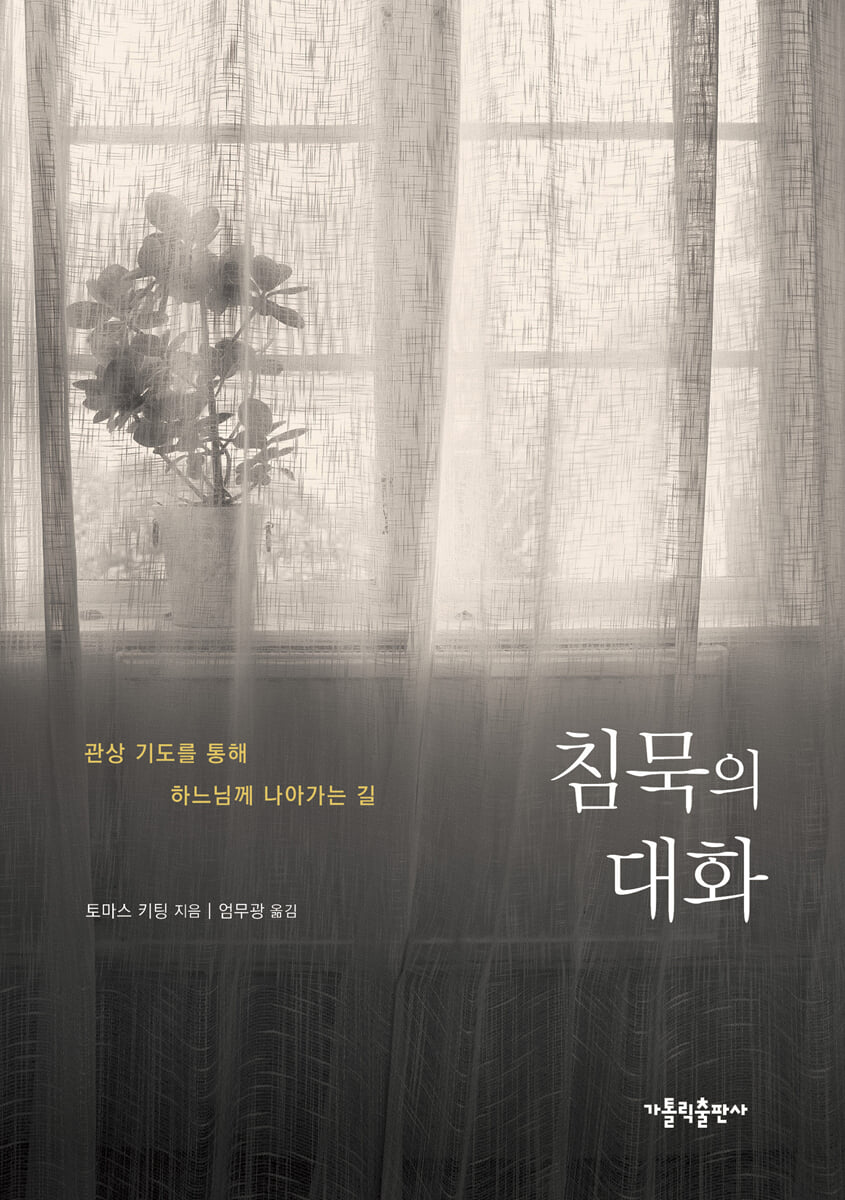 |
Description
Book Introduction
When you feel that your prayers and daily life have become dull
Explore the 'Map of the Spiritual Journey'!
There are times when I diligently meditate on the Bible, frequently attend Mass and receive the Eucharist, and diligently serve and pray at church, but I still feel no satisfaction.
You may remember going on a retreat, feeling filled with grace, and vowing to live a life filled with faith and love from now on, only to have that vow shattered within hours.
Now, I always firmly resolve to live a new life following the gospel, but why does this resolve always end up being temporary?
No matter how diligently we practice our faith, it is easy to lose our way on our spiritual journey.
In this regard, Father Thomas Keating, a master of contemplative prayer, helps us.
Father Thomas Keating, who started the Centering Prayer movement in 1975 and led people to unite with God through contemplative prayer and share the love of God felt in that unity with the world until his death in 2018, is one of the spiritual teachers of our time.
This time, Catholic Publishing House has newly revised one of his major works, “Silent Dialogue,” which provides the conceptual background necessary to understand the Christian’s contemplative journey.
This book, previously widely known under the title “The Way to God through Contemplative Prayer,” has been retitled “Silent Dialogue” in this revised edition.
Additionally, compared to the first edition published in 1999, the chapter titles and book contents have been revised to make it easier for readers to understand.
We also tried to make the book's design clean so that its deep content is not overlooked by other elements.
This book not only explains Christian spirituality in the language of modern psychology, but also includes ongoing reflections from those who have participated in and shared their experiences of centering prayer over many years.
Through this, we can comprehensively understand the psychological path we take in the process of healing and transformation that occurs through contemplative prayer.
Explore the 'Map of the Spiritual Journey'!
There are times when I diligently meditate on the Bible, frequently attend Mass and receive the Eucharist, and diligently serve and pray at church, but I still feel no satisfaction.
You may remember going on a retreat, feeling filled with grace, and vowing to live a life filled with faith and love from now on, only to have that vow shattered within hours.
Now, I always firmly resolve to live a new life following the gospel, but why does this resolve always end up being temporary?
No matter how diligently we practice our faith, it is easy to lose our way on our spiritual journey.
In this regard, Father Thomas Keating, a master of contemplative prayer, helps us.
Father Thomas Keating, who started the Centering Prayer movement in 1975 and led people to unite with God through contemplative prayer and share the love of God felt in that unity with the world until his death in 2018, is one of the spiritual teachers of our time.
This time, Catholic Publishing House has newly revised one of his major works, “Silent Dialogue,” which provides the conceptual background necessary to understand the Christian’s contemplative journey.
This book, previously widely known under the title “The Way to God through Contemplative Prayer,” has been retitled “Silent Dialogue” in this revised edition.
Additionally, compared to the first edition published in 1999, the chapter titles and book contents have been revised to make it easier for readers to understand.
We also tried to make the book's design clean so that its deep content is not overlooked by other elements.
This book not only explains Christian spirituality in the language of modern psychology, but also includes ongoing reflections from those who have participated in and shared their experiences of centering prayer over many years.
Through this, we can comprehensively understand the psychological path we take in the process of healing and transformation that occurs through contemplative prayer.
- You can preview some of the book's contents.
Preview
index
Preface · 5
Chapter 1: Reflecting on Yourself to Approach God
What if you needed to change your direction to find happiness? · 15
Experiencing God's Love in Our Weaknesses · 29
The Right to Inner Freedom · 08
Changes in Human Consciousness · 49
Evaluating Value in the Light of the Gospel · 58
An Opportunity to Change Your Attitude toward the World · 71
God's Gift, From Birth to Death · 78
Chapter 2: Spiritual Teachings for Unity with God
A reminder of God's presence · 89
Saint Anthony, a Model of the Spiritual Journey · 102
Night of the Senses: When You Feel Dry in Your Faith · 116
From the Night of the Senses to the Path of Peace · 123
How God Works in Our Lives · 132
Never Give Up · 145
Drawn to Solitude and Silence · 155
The Night of the Spirit, the Beginning of Divine Unity · 162
Toward a True Christian Life · 172
The Beatitudes and Jesus' Invitation · 177
People Who Experienced True Happiness · 184
Chapter 3: Building a Relationship with God in Everyday Life
The Path of Pure Faith · 193
Obedience Alone Cannot Discern God's Will · 206
The Practice of Love That Changes the World · 218
Living a Religious Life in Everyday Life · 222
Conclusion · 236
Glossary of Terms · 238
Chapter 1: Reflecting on Yourself to Approach God
What if you needed to change your direction to find happiness? · 15
Experiencing God's Love in Our Weaknesses · 29
The Right to Inner Freedom · 08
Changes in Human Consciousness · 49
Evaluating Value in the Light of the Gospel · 58
An Opportunity to Change Your Attitude toward the World · 71
God's Gift, From Birth to Death · 78
Chapter 2: Spiritual Teachings for Unity with God
A reminder of God's presence · 89
Saint Anthony, a Model of the Spiritual Journey · 102
Night of the Senses: When You Feel Dry in Your Faith · 116
From the Night of the Senses to the Path of Peace · 123
How God Works in Our Lives · 132
Never Give Up · 145
Drawn to Solitude and Silence · 155
The Night of the Spirit, the Beginning of Divine Unity · 162
Toward a True Christian Life · 172
The Beatitudes and Jesus' Invitation · 177
People Who Experienced True Happiness · 184
Chapter 3: Building a Relationship with God in Everyday Life
The Path of Pure Faith · 193
Obedience Alone Cannot Discern God's Will · 206
The Practice of Love That Changes the World · 218
Living a Religious Life in Everyday Life · 222
Conclusion · 236
Glossary of Terms · 238
Detailed image
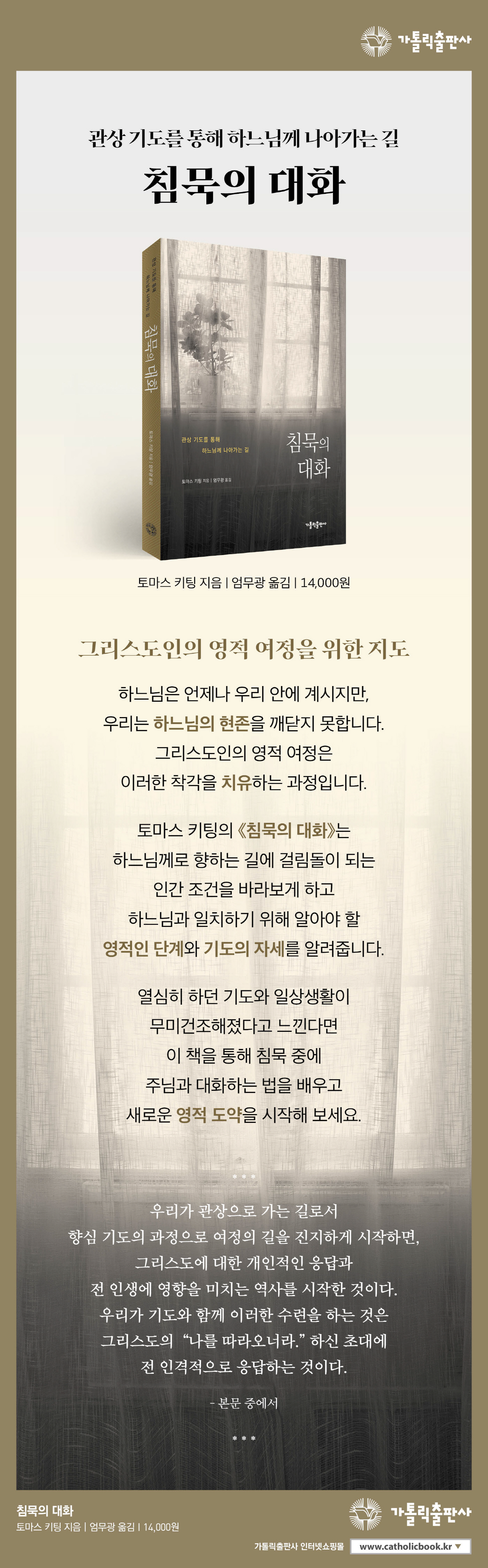
Into the book
This book serves as a kind of travel guide to help those who have begun their spiritual journey through centering prayer continue on that journey earnestly.
This is an attempt to inform you of the destination by showing you the milestones along the way.
This destination is not so much a goal to be achieved as a firm determination to commit to this journey to the end.
---From the "Preface"
God wants us to share His holy life to the fullest extent possible in this life.
In the Gospel, the words, “Follow me” (Mark 1:17) are said to all who have been baptized.
Through baptism we receive all the grace and strength we need to follow Christ into God's embrace.
This attempt—to go deeper into the love of Christ within us, to encounter Him, and to show that love to the world—is at the heart of the spiritual journey.
---From "If you had to change your direction to find happiness?"
There is a correlation between experiencing God's love and experiencing our own weaknesses.
These are like two poles that are used to gradually free us from the childish ways in which we have related to God.
The experience of feeling desperately in need of God's healing is a measure of our experience of His infinite mercy.
The more deeply we experience God's mercy, the more compassion we will have for others.
---From “Experiencing God’s Love in Weakness”
This kind of gradual training in agreement is learning to love God.
Through this training, God calls us to embrace His plan to share His divine life with us in ways that transcend anything human imagination can envision.
Consent itself is not the goal.
You must agree with God's will within it.
We must agree with God and His will as we enjoy and offer the gifts He gives us.
---From "God's Gift, From Birth to Death"
A compassionate person is someone who shows concern for his or her family, loved ones, and others in the community.
Their concern ultimately includes all human beings, past, present, and future.
Jesus' ultimate goal is to engage us in the salvation of the world.
True happiness is sharing God's constant love, which shines its rays on both the good and the bad, with both those who respond and those who do not.
---From "People Who Experienced True Happiness"
St. John of the Cross said that the night of the senses comes 'relatively quickly' to those who have committed themselves to the spiritual journey.
For St. John of the Cross, 'night' signifies the darkness of our usual way of relating to God, whether through reflection or sensory experience.
This means that our everyday way of relating to God is changed in ways we are not aware of.
This completely overturns our plans and strategies for our spiritual journey.
But through these experiences we learn that the journey is not a path we make according to a plan we made in advance.
God enlightens us through the contemplative grace of the Holy Spirit and helps us to break free from preconceived notions.
He infuses His light into our spirits, confirms His love, and makes us aware of our weaknesses and shortcomings.
This is not meant to discourage us, but to give us the courage to entrust ourselves completely to His infinite mercy.
---From "The Night of the Senses, When You Feel Dry in Your Religious Life"
Transforming unity is the first goal of the spiritual journey.
Although it is rare for something to happen that way, it should be a normal part of the Christian life.
Therefore, all our relationships with God, ourselves, others, and the universe must be transformed into this perspective and way of being in this world.
The fundamental means to transforming unity is personal love for Christ.
The next part of the journey is to learn the meaning of Jesus' words when he said, "I and the Father are one" (John 10:30), and then prayed, "That they may all be one" (John 17:21).
---From “Towards a True Christian Life”
The divine light of faith is now fully given to us so that we can consent and accept that God is present and active within us.
It first heals our deep wounds and then shares that healing with others, leading us to the light that heals and transforms the wounds of our entire lives, empowering us to enter into Christ's plan of salvation.
This is an attempt to inform you of the destination by showing you the milestones along the way.
This destination is not so much a goal to be achieved as a firm determination to commit to this journey to the end.
---From the "Preface"
God wants us to share His holy life to the fullest extent possible in this life.
In the Gospel, the words, “Follow me” (Mark 1:17) are said to all who have been baptized.
Through baptism we receive all the grace and strength we need to follow Christ into God's embrace.
This attempt—to go deeper into the love of Christ within us, to encounter Him, and to show that love to the world—is at the heart of the spiritual journey.
---From "If you had to change your direction to find happiness?"
There is a correlation between experiencing God's love and experiencing our own weaknesses.
These are like two poles that are used to gradually free us from the childish ways in which we have related to God.
The experience of feeling desperately in need of God's healing is a measure of our experience of His infinite mercy.
The more deeply we experience God's mercy, the more compassion we will have for others.
---From “Experiencing God’s Love in Weakness”
This kind of gradual training in agreement is learning to love God.
Through this training, God calls us to embrace His plan to share His divine life with us in ways that transcend anything human imagination can envision.
Consent itself is not the goal.
You must agree with God's will within it.
We must agree with God and His will as we enjoy and offer the gifts He gives us.
---From "God's Gift, From Birth to Death"
A compassionate person is someone who shows concern for his or her family, loved ones, and others in the community.
Their concern ultimately includes all human beings, past, present, and future.
Jesus' ultimate goal is to engage us in the salvation of the world.
True happiness is sharing God's constant love, which shines its rays on both the good and the bad, with both those who respond and those who do not.
---From "People Who Experienced True Happiness"
St. John of the Cross said that the night of the senses comes 'relatively quickly' to those who have committed themselves to the spiritual journey.
For St. John of the Cross, 'night' signifies the darkness of our usual way of relating to God, whether through reflection or sensory experience.
This means that our everyday way of relating to God is changed in ways we are not aware of.
This completely overturns our plans and strategies for our spiritual journey.
But through these experiences we learn that the journey is not a path we make according to a plan we made in advance.
God enlightens us through the contemplative grace of the Holy Spirit and helps us to break free from preconceived notions.
He infuses His light into our spirits, confirms His love, and makes us aware of our weaknesses and shortcomings.
This is not meant to discourage us, but to give us the courage to entrust ourselves completely to His infinite mercy.
---From "The Night of the Senses, When You Feel Dry in Your Religious Life"
Transforming unity is the first goal of the spiritual journey.
Although it is rare for something to happen that way, it should be a normal part of the Christian life.
Therefore, all our relationships with God, ourselves, others, and the universe must be transformed into this perspective and way of being in this world.
The fundamental means to transforming unity is personal love for Christ.
The next part of the journey is to learn the meaning of Jesus' words when he said, "I and the Father are one" (John 10:30), and then prayed, "That they may all be one" (John 17:21).
---From “Towards a True Christian Life”
The divine light of faith is now fully given to us so that we can consent and accept that God is present and active within us.
It first heals our deep wounds and then shares that healing with others, leading us to the light that heals and transforms the wounds of our entire lives, empowering us to enter into Christ's plan of salvation.
---From "The Path of Pure Faith"
Publisher's Review
Difficulties encountered while practicing contemplative prayer
How can I overcome it?
Father Thomas Keating emphasizes that if you decide to embark on a spiritual journey, you must surrender yourself to God and free yourself from the values and preconceptions that are ingrained within you.
And in this book, contemplative prayer is introduced as a tool to do so.
Contemplative prayer is built on the elements of solitude, silence, simplicity, prayer, and activity.
This creates an environment that fosters the virtues necessary for a deep relationship with God.
If we make an effort to repeat this prayer regularly, God will soon purify our inner being and place our consciousness in His presence in our prayers and activities.
The author focuses specifically on the changes in our consciousness that occur when we engage in contemplative prayer.
Let's look at this from a modern psychological perspective.
It also provides detailed information about the path of our spiritual journey through the examples of Saint Anthony of Egypt, who can be said to be a key example of the spiritual journey, as well as Saint John of the Cross and Saint Teresa of Jesus, two 16th-century Spanish mystics.
In this way, the author uses modern psychological analysis and classical reflection to help us re-evaluate our weaknesses and the emotional judgments we made in our childhood that led us to fear God.
And through this, it leads us to truly experience God's love and His mercy.
God begins to dig through our psychological defenses, like a kind of squeezing machine, by finding the accumulated bad lumps within us, and finally reveals to us the hidden secret places within us that we find so difficult to accept.
At this point, you may think that your relationship with God is over.
But in fact, this is an invitation to a new depth of relationship with God.
Much emptying and healing must occur if we are to respond to God's precious word.
When the noise of the false self is too loud, God's life cannot fully enter us, and we cannot hear God's voice.
―From ‘Experiencing God’s Love in Weakness’ on pages 34-35
The grace of contemplative prayer,
Meet God in silence!
Contemplative prayer has the power to heal the emotional wounds that humans receive throughout their lives.
But even when we repent, clean up our old ways, and approach relationships with a fresh perspective, old temptations can creep back into our hearts at some point.
Therefore, we must constantly strive to destroy our false selves and continuously cultivate virtue.
Father Thomas Keating offers several effective ways to integrate contemplative prayer into everyday life.
It helps you to commit yourself to this journey to the end by using methods such as ‘breaking down emotional programs’, ‘transcending group allegiance’, ‘memorizing active prayer phrases’, and ‘sacred reading (lectio divina)’.
What happens if, on our journey to contemplation, we shed our false selves and transcend the self-limited world within us? This book guides us on this long spiritual journey to find the answer.
At the same time, it guides us to go further and show concern for our neighbors who are surrounded by poverty, hunger, violence, and oppression.
This is the path to solving many of the problems of our time with love, and at the end of that path, we will realize that we are responding with our whole being to the Lord's call.
We often attribute our dryness in prayer to God's absence until we realize that God is speaking to us from deep within.
Silence is God's first language.
Anything else is a poor translation.
To understand that language, we must learn to sit quietly and rest in God.
One sign that we have reached the night of the senses is that we begin to prefer solitude and silence, and that we desire to be alone with God, even though we find no satisfaction in them.
―From ‘Attracted to Solitude and Silence’ on pages 155-156
How can I overcome it?
Father Thomas Keating emphasizes that if you decide to embark on a spiritual journey, you must surrender yourself to God and free yourself from the values and preconceptions that are ingrained within you.
And in this book, contemplative prayer is introduced as a tool to do so.
Contemplative prayer is built on the elements of solitude, silence, simplicity, prayer, and activity.
This creates an environment that fosters the virtues necessary for a deep relationship with God.
If we make an effort to repeat this prayer regularly, God will soon purify our inner being and place our consciousness in His presence in our prayers and activities.
The author focuses specifically on the changes in our consciousness that occur when we engage in contemplative prayer.
Let's look at this from a modern psychological perspective.
It also provides detailed information about the path of our spiritual journey through the examples of Saint Anthony of Egypt, who can be said to be a key example of the spiritual journey, as well as Saint John of the Cross and Saint Teresa of Jesus, two 16th-century Spanish mystics.
In this way, the author uses modern psychological analysis and classical reflection to help us re-evaluate our weaknesses and the emotional judgments we made in our childhood that led us to fear God.
And through this, it leads us to truly experience God's love and His mercy.
God begins to dig through our psychological defenses, like a kind of squeezing machine, by finding the accumulated bad lumps within us, and finally reveals to us the hidden secret places within us that we find so difficult to accept.
At this point, you may think that your relationship with God is over.
But in fact, this is an invitation to a new depth of relationship with God.
Much emptying and healing must occur if we are to respond to God's precious word.
When the noise of the false self is too loud, God's life cannot fully enter us, and we cannot hear God's voice.
―From ‘Experiencing God’s Love in Weakness’ on pages 34-35
The grace of contemplative prayer,
Meet God in silence!
Contemplative prayer has the power to heal the emotional wounds that humans receive throughout their lives.
But even when we repent, clean up our old ways, and approach relationships with a fresh perspective, old temptations can creep back into our hearts at some point.
Therefore, we must constantly strive to destroy our false selves and continuously cultivate virtue.
Father Thomas Keating offers several effective ways to integrate contemplative prayer into everyday life.
It helps you to commit yourself to this journey to the end by using methods such as ‘breaking down emotional programs’, ‘transcending group allegiance’, ‘memorizing active prayer phrases’, and ‘sacred reading (lectio divina)’.
What happens if, on our journey to contemplation, we shed our false selves and transcend the self-limited world within us? This book guides us on this long spiritual journey to find the answer.
At the same time, it guides us to go further and show concern for our neighbors who are surrounded by poverty, hunger, violence, and oppression.
This is the path to solving many of the problems of our time with love, and at the end of that path, we will realize that we are responding with our whole being to the Lord's call.
We often attribute our dryness in prayer to God's absence until we realize that God is speaking to us from deep within.
Silence is God's first language.
Anything else is a poor translation.
To understand that language, we must learn to sit quietly and rest in God.
One sign that we have reached the night of the senses is that we begin to prefer solitude and silence, and that we desire to be alone with God, even though we find no satisfaction in them.
―From ‘Attracted to Solitude and Silence’ on pages 155-156
GOODS SPECIFICS
- Date of issue: May 2, 2021
- Page count, weight, size: 244 pages | 354g | 148*210*20mm
- ISBN13: 9788932117713
- ISBN10: 8932117713
You may also like
카테고리
korean


korean

![GQ KOREA Mark (Monthly): December [2025]](http://librairie.coreenne.fr/cdn/shop/files/8ef265dbbfbf186523ed75ba7319009d.jpg?v=1765340328&width=3840)


