

The Future of Foreign Language Education
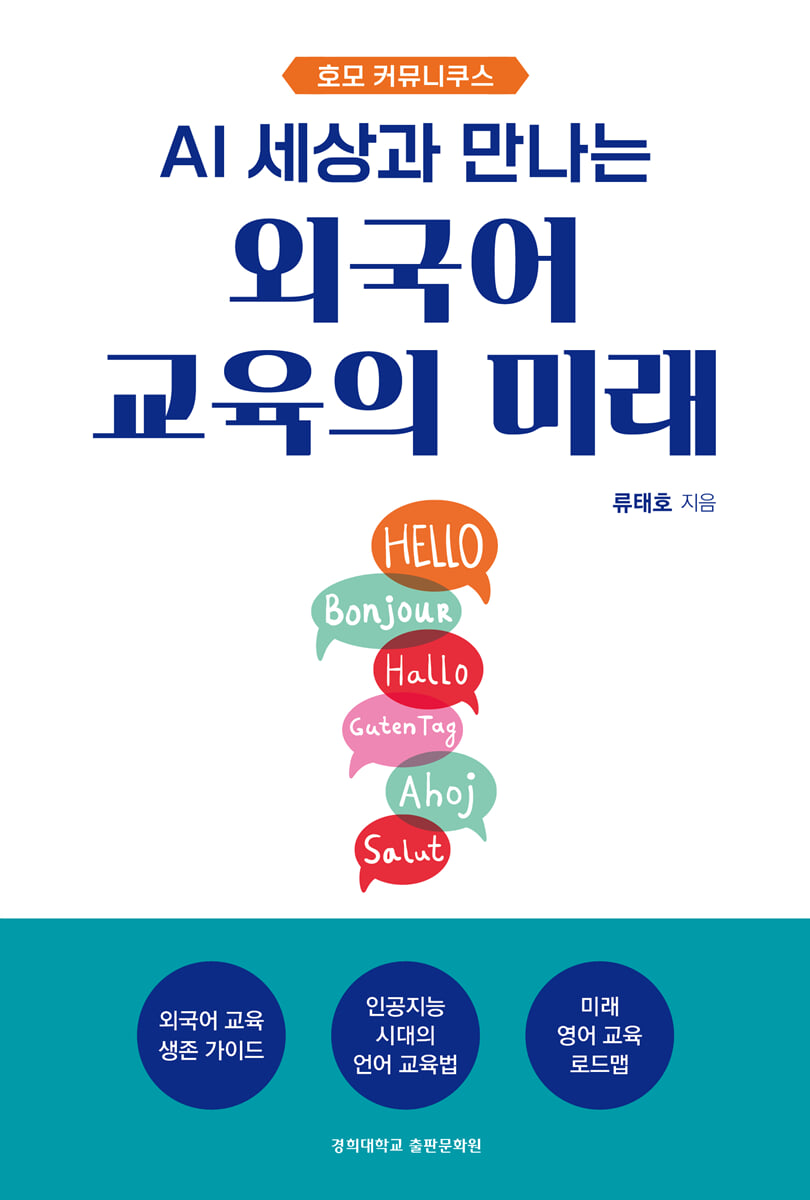 |
Description
Book Introduction
“Should we continue to learn foreign languages in the future?”
Professor Ryu Tae-ho's "The Fourth Industrial Revolution: Education is Hope" follows his dream of a new foreign language education amidst rapidly changing technology.
Koreans have been serious about English education since ancient times.
However, even after investing nearly a decade in learning English, most people only became proficient in reading and writing, and became paralyzed in front of foreigners.
Although things have changed a lot since the past, there are still many Koreans who have various complexes about English.
YouTube videos showcasing celebrities' wonderful foreign language pronunciation and fluent conversation are flooded with admiring comments.
People try to learn foreign languages whenever they have time, investing time and effort, and there is a constant stream of advertisements for English learning programs and apps such as Yanadoo, Speaking Max, and Speak.
However, with artificial intelligence translation tools like Google Translate and Papago, as well as voice recognition translation, developing at a rapid pace, some predict that learning foreign languages will become useless and disappear completely.
"With the advancement of big data and artificial intelligence, the era of real-time interpretation and translation is not far off. Should we even learn foreign languages? Wouldn't it be more effective to focus our efforts elsewhere?" AI technology is gradually approaching perfect real-time translation.
It can recognize and translate over 100 languages, including English, Chinese, Azerbaijani, and Cebuano.
Roblox has added an automatic chat translation feature that translates 16 languages in real time for users.
When you speak different languages during a call, the Galaxy S24 translates what the other person is saying into text in real time through the chat window.
Multilingual real-time interpretation technology that can be used in online video conferencing has also been developed.
Those who observe the ever-evolving translation technology are beginning to wonder whether humans should really be as passionate about learning foreign languages as they are now.
To help determine the necessity and direction of foreign language learning in this rapidly changing era, Professor Ryu Tae-ho, the author of "The Future of Foreign Language Education," analyzes the changes in foreign language education due to technological advancements and predicts the future.
Professor Ryu Tae-ho's "The Fourth Industrial Revolution: Education is Hope" follows his dream of a new foreign language education amidst rapidly changing technology.
Koreans have been serious about English education since ancient times.
However, even after investing nearly a decade in learning English, most people only became proficient in reading and writing, and became paralyzed in front of foreigners.
Although things have changed a lot since the past, there are still many Koreans who have various complexes about English.
YouTube videos showcasing celebrities' wonderful foreign language pronunciation and fluent conversation are flooded with admiring comments.
People try to learn foreign languages whenever they have time, investing time and effort, and there is a constant stream of advertisements for English learning programs and apps such as Yanadoo, Speaking Max, and Speak.
However, with artificial intelligence translation tools like Google Translate and Papago, as well as voice recognition translation, developing at a rapid pace, some predict that learning foreign languages will become useless and disappear completely.
"With the advancement of big data and artificial intelligence, the era of real-time interpretation and translation is not far off. Should we even learn foreign languages? Wouldn't it be more effective to focus our efforts elsewhere?" AI technology is gradually approaching perfect real-time translation.
It can recognize and translate over 100 languages, including English, Chinese, Azerbaijani, and Cebuano.
Roblox has added an automatic chat translation feature that translates 16 languages in real time for users.
When you speak different languages during a call, the Galaxy S24 translates what the other person is saying into text in real time through the chat window.
Multilingual real-time interpretation technology that can be used in online video conferencing has also been developed.
Those who observe the ever-evolving translation technology are beginning to wonder whether humans should really be as passionate about learning foreign languages as they are now.
To help determine the necessity and direction of foreign language learning in this rapidly changing era, Professor Ryu Tae-ho, the author of "The Future of Foreign Language Education," analyzes the changes in foreign language education due to technological advancements and predicts the future.
- You can preview some of the book's contents.
Preview
index
Recommended Article: "Should We Continue Learning Foreign Languages in the Future?" by Seok-su Han
Prologue: Homo communicus meets artificial intelligence
Part 1.
Imagination becomes reality
The era of real-time interpretation and translation has arrived.
Machines Speak Human Language? Machine Language vs.
Natural Language
Learning a foreign language? Now with personalized support.
Translation in a jiffy, writing in a jiffy, foreign language, what can I help you with?
A Generative AI Translation Tool: A Must-Have for Overseas Travel
From Pen Pal to Chat Pal
Simultaneous interpretation from smartphones to wearable devices
◎ Leaping into a new language horizon in the era of generative AI.
Part 2.
What is language?
The Origins of Language: The First Language and the Beginning of Communication
Properties of language: systematicity, regularity, and symbolism
The social functions of language: communication, cultural transmission, and identity formation.
Foreign Languages in a Multilingual Society for Global Communication
History of Language Education
Foreign language education in public education
The current state of foreign language education: Even after years of study, people still can't speak a word.
◎ Re-examining the meaning of language
Part 3.
The transformation of foreign language education brought about by generative artificial intelligence.
Grammar correction, pronunciation correction, and interactive foreign language tutor
Real-time language analysis and feedback system: Improving learning speed and accuracy.
Converging Virtual Reality (VR) and Generative AI: Situational Language Learning
Interactive AI capable of recognizing emotions and nonverbal expressions
Personalizing Foreign Language Education: Tailored Curriculum and Progress Management
An AI-Powered Metaverse Platform for Foreign Language Education: Eliminating Language Barriers and Addressing Inequality in Foreign Language Education
Asking and listening well, changing the way foreign language education is taught
The future of foreign language education, created by humans and artificial intelligence.
Part 4.
The Future of Foreign Language Education
The End of Traditional Foreign Language Education: A New Education Paradigm in the Age of Generative AI
The Importance of Autonomy and Motivation in Foreign Language Learning
Learn a foreign language when you want to learn it, not when you have to.
Beat AI! Developing Foreign Language Experts
The Rise of Foreign Language Education in Lifelong Learning
A Must-Have for Global Talents: Elevating the Status of International Languages
Information Asymmetry: The Risks of Using Generative AI Translation
Subtle nuances: a tense situation
◎ Is this the end of foreign language learning or a new beginning?
Epilogue: The Evolution of Homo Communicus, the Communicating Human
References
Prologue: Homo communicus meets artificial intelligence
Part 1.
Imagination becomes reality
The era of real-time interpretation and translation has arrived.
Machines Speak Human Language? Machine Language vs.
Natural Language
Learning a foreign language? Now with personalized support.
Translation in a jiffy, writing in a jiffy, foreign language, what can I help you with?
A Generative AI Translation Tool: A Must-Have for Overseas Travel
From Pen Pal to Chat Pal
Simultaneous interpretation from smartphones to wearable devices
◎ Leaping into a new language horizon in the era of generative AI.
Part 2.
What is language?
The Origins of Language: The First Language and the Beginning of Communication
Properties of language: systematicity, regularity, and symbolism
The social functions of language: communication, cultural transmission, and identity formation.
Foreign Languages in a Multilingual Society for Global Communication
History of Language Education
Foreign language education in public education
The current state of foreign language education: Even after years of study, people still can't speak a word.
◎ Re-examining the meaning of language
Part 3.
The transformation of foreign language education brought about by generative artificial intelligence.
Grammar correction, pronunciation correction, and interactive foreign language tutor
Real-time language analysis and feedback system: Improving learning speed and accuracy.
Converging Virtual Reality (VR) and Generative AI: Situational Language Learning
Interactive AI capable of recognizing emotions and nonverbal expressions
Personalizing Foreign Language Education: Tailored Curriculum and Progress Management
An AI-Powered Metaverse Platform for Foreign Language Education: Eliminating Language Barriers and Addressing Inequality in Foreign Language Education
Asking and listening well, changing the way foreign language education is taught
The future of foreign language education, created by humans and artificial intelligence.
Part 4.
The Future of Foreign Language Education
The End of Traditional Foreign Language Education: A New Education Paradigm in the Age of Generative AI
The Importance of Autonomy and Motivation in Foreign Language Learning
Learn a foreign language when you want to learn it, not when you have to.
Beat AI! Developing Foreign Language Experts
The Rise of Foreign Language Education in Lifelong Learning
A Must-Have for Global Talents: Elevating the Status of International Languages
Information Asymmetry: The Risks of Using Generative AI Translation
Subtle nuances: a tense situation
◎ Is this the end of foreign language learning or a new beginning?
Epilogue: The Evolution of Homo Communicus, the Communicating Human
References
Detailed image

Into the book
In the future, generative artificial intelligence will develop even more rapidly.
In this new era, we all—developers, educators, and learners—must navigate the uncharted waters that lie ahead.
The challenge of new technologies in language education is not to resist the wave of technological change, but to utilize them to enrich our understanding of language and deepen our connections with it.
By recognizing the eternal value of human communication and embracing the dynamic interplay of technology and tradition, we can build a future for education where innovation and cultural heritage coexist.
--- From the "Prologue"
As chatbot systems become established as language learning tools, active attempts are being made to integrate them with existing curricula.
Among these, the blended learning model in particular can effectively harmonize the strengths of generative artificial intelligence with the role of human teachers.
This is a method of using a generative artificial intelligence chatbot as a supplementary practice tool.
Teachers can assign homework assignments where students have to converse with a chatbot for a set amount of time, and then in class, students can deeply analyze and discuss any difficult expressions or grammatical errors they encountered in the conversation.
--- From "PART 1 Imagination Becomes Reality"
In real-life conversations, it's important to continue communicating even if you make mistakes, but in the classroom, there's a tendency to overemphasize grammatical accuracy.
Students often hesitate or pause in conversation as they try to speak grammatically perfect sentences.
… more practical teaching methods are needed to bridge the gap between classroom learning and real-world application.
First, we must create a learning environment that reflects real conversation situations.
Reinforcing practice in improvising conversations in unpredictable situations will help learners feel more confident in real-world communication situations.
--- From "PART 2: What is Language?"
One of the core technologies of artificial intelligence-based language education systems is gesture recognition technology.
It works by using computer vision and motion tracking algorithms to analyze a learner's hand and body movements and compare them to gestures used in a specific culture.
When a user performs a specific gesture in a virtual reality (VR) environment, artificial intelligence can detect it and provide immediate feedback on whether the gesture was used correctly.
Additionally, it maximizes learning effectiveness by providing guidelines to help learners correct their movements if they are inaccurate or contain inappropriate movements.
--- From "PART 3 Changes in Foreign Language Education Brought About by Generative Artificial Intelligence"
First, teachers must act as content curators who appropriately adjust and supplement the materials provided by generative AI.
Language learning materials automatically generated by generative AI are based on common patterns, but may not fully reflect cultural context or real-life applications.
Therefore, we need to add realistic materials and experiential activities to the content provided by generative AI to help learners go beyond simply acquiring information and use language in real-world contexts.
It can fill in the gaps that generative AI misses, by explaining whether a particular expression is used in formal conversation and whether there are more appropriate alternatives in informal conversation.
--- From "PART 4: The Future of Foreign Language Education"
Language education must also adapt to the changing times.
We need to move beyond the traditional method of simply memorizing grammar and vocabulary and create a learning environment that fosters practical communication skills and cultural understanding.
Personalized learning systems leveraging generative artificial intelligence can provide optimal learning paths tailored to each learner's individual level and goals, while hands-on training using immersive virtual reality (VR) or augmented reality (AR) technologies will also make language acquisition more effective.
These technologies enable learners to acquire language naturally, with a cultural context, rather than simply acquiring linguistic knowledge.
In this new era, we all—developers, educators, and learners—must navigate the uncharted waters that lie ahead.
The challenge of new technologies in language education is not to resist the wave of technological change, but to utilize them to enrich our understanding of language and deepen our connections with it.
By recognizing the eternal value of human communication and embracing the dynamic interplay of technology and tradition, we can build a future for education where innovation and cultural heritage coexist.
--- From the "Prologue"
As chatbot systems become established as language learning tools, active attempts are being made to integrate them with existing curricula.
Among these, the blended learning model in particular can effectively harmonize the strengths of generative artificial intelligence with the role of human teachers.
This is a method of using a generative artificial intelligence chatbot as a supplementary practice tool.
Teachers can assign homework assignments where students have to converse with a chatbot for a set amount of time, and then in class, students can deeply analyze and discuss any difficult expressions or grammatical errors they encountered in the conversation.
--- From "PART 1 Imagination Becomes Reality"
In real-life conversations, it's important to continue communicating even if you make mistakes, but in the classroom, there's a tendency to overemphasize grammatical accuracy.
Students often hesitate or pause in conversation as they try to speak grammatically perfect sentences.
… more practical teaching methods are needed to bridge the gap between classroom learning and real-world application.
First, we must create a learning environment that reflects real conversation situations.
Reinforcing practice in improvising conversations in unpredictable situations will help learners feel more confident in real-world communication situations.
--- From "PART 2: What is Language?"
One of the core technologies of artificial intelligence-based language education systems is gesture recognition technology.
It works by using computer vision and motion tracking algorithms to analyze a learner's hand and body movements and compare them to gestures used in a specific culture.
When a user performs a specific gesture in a virtual reality (VR) environment, artificial intelligence can detect it and provide immediate feedback on whether the gesture was used correctly.
Additionally, it maximizes learning effectiveness by providing guidelines to help learners correct their movements if they are inaccurate or contain inappropriate movements.
--- From "PART 3 Changes in Foreign Language Education Brought About by Generative Artificial Intelligence"
First, teachers must act as content curators who appropriately adjust and supplement the materials provided by generative AI.
Language learning materials automatically generated by generative AI are based on common patterns, but may not fully reflect cultural context or real-life applications.
Therefore, we need to add realistic materials and experiential activities to the content provided by generative AI to help learners go beyond simply acquiring information and use language in real-world contexts.
It can fill in the gaps that generative AI misses, by explaining whether a particular expression is used in formal conversation and whether there are more appropriate alternatives in informal conversation.
--- From "PART 4: The Future of Foreign Language Education"
Language education must also adapt to the changing times.
We need to move beyond the traditional method of simply memorizing grammar and vocabulary and create a learning environment that fosters practical communication skills and cultural understanding.
Personalized learning systems leveraging generative artificial intelligence can provide optimal learning paths tailored to each learner's individual level and goals, while hands-on training using immersive virtual reality (VR) or augmented reality (AR) technologies will also make language acquisition more effective.
These technologies enable learners to acquire language naturally, with a cultural context, rather than simply acquiring linguistic knowledge.
--- From "Epilogue"
Publisher's Review
A Guide to Foreign Language Education in the Age of Artificial Intelligence
The author, an educational technology expert and future education scholar, states in “The Future of Foreign Language Education” that the paradigm of language learning has already completely shifted.
This book does not just talk about changes in foreign language education.
When generative AI can replace language, it asks where human identity and the meaning of education will go.
Starting from the origins of language, it provides a sharp diagnosis of the current state of foreign language public education and makes detailed suggestions on what needs to change in education in the future.
In particular, the convergence of generative artificial intelligence, virtual reality, and the metaverse will bring about changes in foreign language education, going beyond technology-centric discussions to explore the potential of personalized, autonomy-driven, and emotional intelligence-based learning.
In an era where generative artificial intelligence provides real-time translation and AI tutors provide grammar and pronunciation corrections, being good at a foreign language is no longer a matter of memorization or effort.
However, there is no need to be overly optimistic or fearful about technological advancement.
Rather, we should use it as a stepping stone to ask questions like, “What is language?” and “What is education?” and reflect on how it should change in the future.
This is because humans are not simply beings who give and receive meaning, but rather communicating beings (Homo Cummunicus) who create and share meaning and form an identity.
"The Future of Foreign Language Education" will offer a challenge to teachers of foreign languages, a compass to students learning them, and profound insight to those contemplating educational policy.
Part 1.
Imagination becomes reality
Learning a foreign language is no longer a boring exercise in the classroom, but is being reborn as an exciting adventure and an infinitely expanding platform for communication.
Here, we examine the key factors driving these changes and the social and cultural trends surrounding them.
The rapid rise of generative AI-powered translation services and conversational chatbots is a remarkable innovation in itself, but it's important to consider how they will integrate into our lives, what benefits they offer, and what challenges they pose.
We need a shift in perception beyond the concept of 'learning a foreign language' to 'creating the future of language.'
Part 2.
What is language?
Language is the most fundamental medium through which humans live and connect with one another, and it is a key tool through which we perceive and express the world.
Here, we take a closer look at the nature of these languages, examining where they originated, how they were formed and developed, and how they have shaped human thought, culture, and society.
Language is not just a means of communication; it is a vibrant force that moves all of human civilization.
Part 3.
The transformation of foreign language education brought about by generative artificial intelligence.
Today, the rise of personalized learning paths, real-time feedback, and immersive scenarios is redefining the purpose and process of language learning itself.
In particular, there is a growing trend to move beyond simply learning grammar and vocabulary and emphasize comprehensive competencies such as speaking skills in real-life conversational situations, understanding cultural contexts, and creative problem-solving skills.
At the heart of these changes are cutting-edge technologies such as adaptive algorithms and conversational artificial intelligence.
However, these technologies do not completely replace the role of human teachers or traditional classrooms.
Part 4.
The Future of Foreign Language Education
Learners are no longer passive recipients of knowledge in the classroom. Instead, they can acquire language with a sense of presence through adaptive algorithms and real-time feedback systems that meticulously address individual weaknesses, and immersive technologies such as virtual reality (VR) and augmented reality (AR).
Teachers must move beyond being mere transmitters of knowledge to become mentors who interpret and supplement AI-generated feedback and learning data, and foster cultural sensitivity and critical thinking.
Here, we examine the key issues and changing aspects of future language education from this perspective.
The author, an educational technology expert and future education scholar, states in “The Future of Foreign Language Education” that the paradigm of language learning has already completely shifted.
This book does not just talk about changes in foreign language education.
When generative AI can replace language, it asks where human identity and the meaning of education will go.
Starting from the origins of language, it provides a sharp diagnosis of the current state of foreign language public education and makes detailed suggestions on what needs to change in education in the future.
In particular, the convergence of generative artificial intelligence, virtual reality, and the metaverse will bring about changes in foreign language education, going beyond technology-centric discussions to explore the potential of personalized, autonomy-driven, and emotional intelligence-based learning.
In an era where generative artificial intelligence provides real-time translation and AI tutors provide grammar and pronunciation corrections, being good at a foreign language is no longer a matter of memorization or effort.
However, there is no need to be overly optimistic or fearful about technological advancement.
Rather, we should use it as a stepping stone to ask questions like, “What is language?” and “What is education?” and reflect on how it should change in the future.
This is because humans are not simply beings who give and receive meaning, but rather communicating beings (Homo Cummunicus) who create and share meaning and form an identity.
"The Future of Foreign Language Education" will offer a challenge to teachers of foreign languages, a compass to students learning them, and profound insight to those contemplating educational policy.
Part 1.
Imagination becomes reality
Learning a foreign language is no longer a boring exercise in the classroom, but is being reborn as an exciting adventure and an infinitely expanding platform for communication.
Here, we examine the key factors driving these changes and the social and cultural trends surrounding them.
The rapid rise of generative AI-powered translation services and conversational chatbots is a remarkable innovation in itself, but it's important to consider how they will integrate into our lives, what benefits they offer, and what challenges they pose.
We need a shift in perception beyond the concept of 'learning a foreign language' to 'creating the future of language.'
Part 2.
What is language?
Language is the most fundamental medium through which humans live and connect with one another, and it is a key tool through which we perceive and express the world.
Here, we take a closer look at the nature of these languages, examining where they originated, how they were formed and developed, and how they have shaped human thought, culture, and society.
Language is not just a means of communication; it is a vibrant force that moves all of human civilization.
Part 3.
The transformation of foreign language education brought about by generative artificial intelligence.
Today, the rise of personalized learning paths, real-time feedback, and immersive scenarios is redefining the purpose and process of language learning itself.
In particular, there is a growing trend to move beyond simply learning grammar and vocabulary and emphasize comprehensive competencies such as speaking skills in real-life conversational situations, understanding cultural contexts, and creative problem-solving skills.
At the heart of these changes are cutting-edge technologies such as adaptive algorithms and conversational artificial intelligence.
However, these technologies do not completely replace the role of human teachers or traditional classrooms.
Part 4.
The Future of Foreign Language Education
Learners are no longer passive recipients of knowledge in the classroom. Instead, they can acquire language with a sense of presence through adaptive algorithms and real-time feedback systems that meticulously address individual weaknesses, and immersive technologies such as virtual reality (VR) and augmented reality (AR).
Teachers must move beyond being mere transmitters of knowledge to become mentors who interpret and supplement AI-generated feedback and learning data, and foster cultural sensitivity and critical thinking.
Here, we examine the key issues and changing aspects of future language education from this perspective.
GOODS SPECIFICS
- Date of issue: July 15, 2025
- Page count, weight, size: 440 pages | 152*225*30mm
- ISBN13: 9788982227974
- ISBN10: 8982227970
You may also like
카테고리
korean


korean

![ELLE 엘르 스페셜 에디션 A형 : 12월 [2025]](http://librairie.coreenne.fr/cdn/shop/files/b8e27a3de6c9538896439686c6b0e8fb.jpg?v=1766436872&width=3840)


