

10 Key Techniques for Practical Civil Servant AI Manual
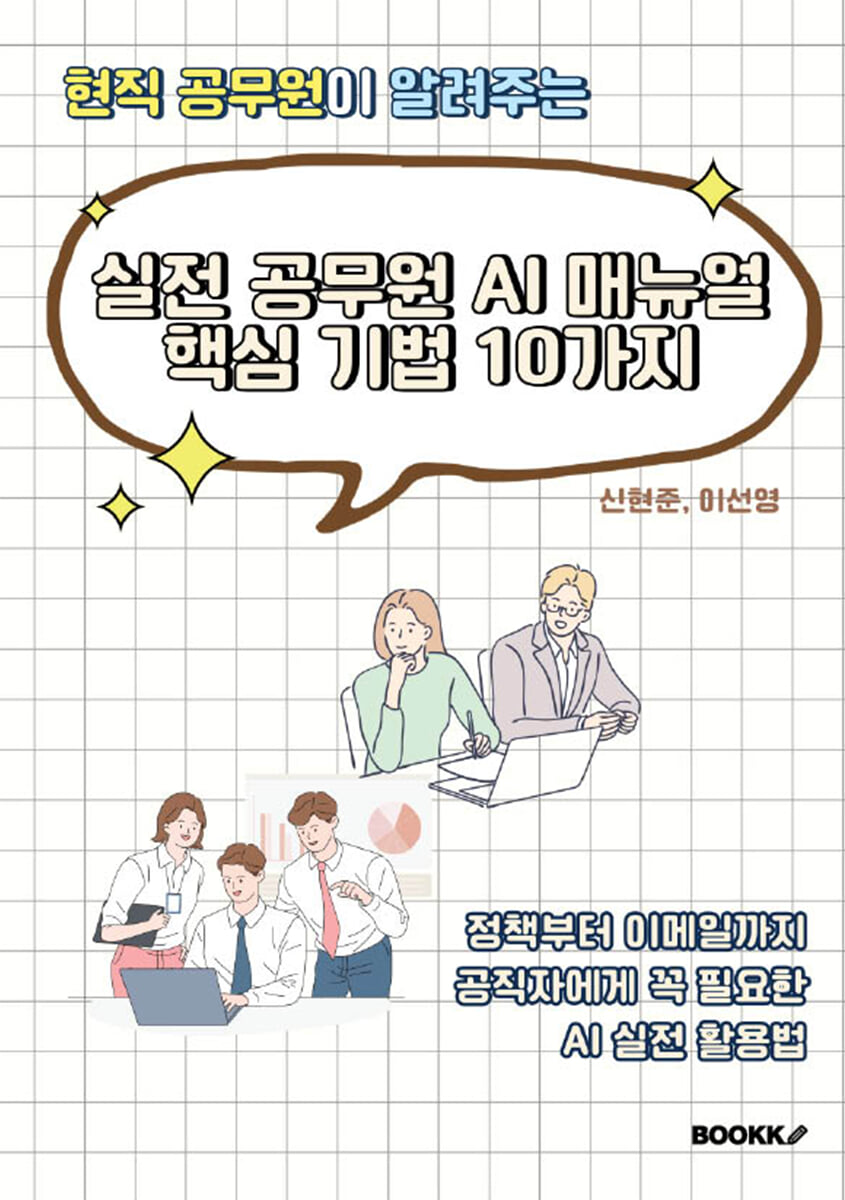 |
Description
Book Introduction
A must-read for fellow civil servants who spend their days busy with repetitive data research, report writing, and endless civil service inquiries has been published.
"10 Key Techniques for Practical Civil Servant AI Manual" is a practical AI utilization guide created for civil servants who feel vague fear of the word AI or hesitate due to their unfamiliarity with computers.
Instead of complex theories, this book presents the most practical and concrete ways to maximize work efficiency by utilizing AI as a capable secretary.
This book was written by the author, a civil servant with seven years of experience and a doctorate in engineering, based on his experience in applying AI in actual work environments. The book was written by a lifelong education and HRD expert from an educational engineering perspective to provide the optimal learning experience.
The core of the book lies in the answer to the question 'how to ask questions' to AI, namely the 'prompt engineering' technique.
Just as you would instruct a new employee on a task, the more clear and specific your instructions are, the more satisfactory the results will be. Under this principle, we first introduce six key principles for effectively communicating with AI.
Part 2 details 10 practical ways to apply AI to your work right away, without worrying about security, which civil servants consider most important.
Each usage method is designed to help anyone easily follow along, with a comparison chart showing the changes in work before and after using AI, allowing users to see the effects at a glance, and even includes examples of actual prompts and know-how on improving answers.
"10 Key Techniques for Practical Civil Servant AI Manual" is a practical AI utilization guide created for civil servants who feel vague fear of the word AI or hesitate due to their unfamiliarity with computers.
Instead of complex theories, this book presents the most practical and concrete ways to maximize work efficiency by utilizing AI as a capable secretary.
This book was written by the author, a civil servant with seven years of experience and a doctorate in engineering, based on his experience in applying AI in actual work environments. The book was written by a lifelong education and HRD expert from an educational engineering perspective to provide the optimal learning experience.
The core of the book lies in the answer to the question 'how to ask questions' to AI, namely the 'prompt engineering' technique.
Just as you would instruct a new employee on a task, the more clear and specific your instructions are, the more satisfactory the results will be. Under this principle, we first introduce six key principles for effectively communicating with AI.
Part 2 details 10 practical ways to apply AI to your work right away, without worrying about security, which civil servants consider most important.
Each usage method is designed to help anyone easily follow along, with a comparison chart showing the changes in work before and after using AI, allowing users to see the effects at a glance, and even includes examples of actual prompts and know-how on improving answers.
index
Prologue - AI, it's not difficult.
4 Work Innovation Tools for All of Us
CHAPTER 1-1: Giving Clear and Specific Instructions 14
CHAPTER 1-2: Assigning Roles and Setting Constraints 18
CHAPTER 1-3: Asking for Steps or Giving Examples 23
CHAPTER 1-4: Instructing Critical Review and Requesting Corrections 28
CHAPTER 1-5: 'Meta-Prompting': Asking AI to Improve Its Prompts 32
CHAPTER 1-6: AI Answers: Double-Checking the Habit! (The Importance of Fact-Checking) 37
CHAPTER 2: 10 AI Business Uses You Can Use Right Away, Without Worries About Security 41
CHAPTER 2-1: Support for Drafting Press Releases and Announcements 43
CHAPTER 2-2: Report and Plan Overview and Table of Contents 49
CHAPTER 2-3: Explaining Complex Policy Terms and Concepts 56
CHAPTER 2-4: Summary of Data Analysis Results and Key Findings 62
CHAPTER 2-5: Supporting Idea Brainstorming and Policy Proposal Generation 68
CHAPTER 2-6: Drafting Emails and Official Letters (Standardized Format) 75
CHAPTER 2-7: Translation and Summary of Foreign Language Documents 82
CHAPTER 2-8: Developing an Event Plan and Drafting a Program 89
CHAPTER 2-9: Grammar and Spelling Checking and Proofreading 97
CHAPTER 2-10: Developing Learning Materials and Educational Content Ideas 103
CHAPTER 3: Now, even civil servants can utilize AI. 110
4 Work Innovation Tools for All of Us
CHAPTER 1-1: Giving Clear and Specific Instructions 14
CHAPTER 1-2: Assigning Roles and Setting Constraints 18
CHAPTER 1-3: Asking for Steps or Giving Examples 23
CHAPTER 1-4: Instructing Critical Review and Requesting Corrections 28
CHAPTER 1-5: 'Meta-Prompting': Asking AI to Improve Its Prompts 32
CHAPTER 1-6: AI Answers: Double-Checking the Habit! (The Importance of Fact-Checking) 37
CHAPTER 2: 10 AI Business Uses You Can Use Right Away, Without Worries About Security 41
CHAPTER 2-1: Support for Drafting Press Releases and Announcements 43
CHAPTER 2-2: Report and Plan Overview and Table of Contents 49
CHAPTER 2-3: Explaining Complex Policy Terms and Concepts 56
CHAPTER 2-4: Summary of Data Analysis Results and Key Findings 62
CHAPTER 2-5: Supporting Idea Brainstorming and Policy Proposal Generation 68
CHAPTER 2-6: Drafting Emails and Official Letters (Standardized Format) 75
CHAPTER 2-7: Translation and Summary of Foreign Language Documents 82
CHAPTER 2-8: Developing an Event Plan and Drafting a Program 89
CHAPTER 2-9: Grammar and Spelling Checking and Proofreading 97
CHAPTER 2-10: Developing Learning Materials and Educational Content Ideas 103
CHAPTER 3: Now, even civil servants can utilize AI. 110
Publisher's Review
Drafting press releases and announcements
Report and plan outline and table of contents
Explaining complex policy terms and concepts in an easy-to-understand manner
Summary of data analysis results and key findings
Support for idea brainstorming and policy proposal generation
Drafting emails and official documents
Translation of foreign language documents and summary of their contents
Event planning and program drafting
In particular, this book repeatedly emphasizes the principle of "security" that sensitive information should not be entered when using AI, and the importance of "fact checking" that numbers, statistics, laws, etc. generated by AI must be double-checked with the original text, guiding users to protect themselves and utilize AI.
"10 Key Techniques for Practical Civil Servant AI Manual" goes beyond simple tool usage and will provide a valuable opportunity to strengthen the work capabilities of individual civil servants and improve the quality of public services.
With just this one book, you too can become a "smart civil servant" and "AI expert" who can freely handle AI.
Report and plan outline and table of contents
Explaining complex policy terms and concepts in an easy-to-understand manner
Summary of data analysis results and key findings
Support for idea brainstorming and policy proposal generation
Drafting emails and official documents
Translation of foreign language documents and summary of their contents
Event planning and program drafting
In particular, this book repeatedly emphasizes the principle of "security" that sensitive information should not be entered when using AI, and the importance of "fact checking" that numbers, statistics, laws, etc. generated by AI must be double-checked with the original text, guiding users to protect themselves and utilize AI.
"10 Key Techniques for Practical Civil Servant AI Manual" goes beyond simple tool usage and will provide a valuable opportunity to strengthen the work capabilities of individual civil servants and improve the quality of public services.
With just this one book, you too can become a "smart civil servant" and "AI expert" who can freely handle AI.
GOODS SPECIFICS
- Date of issue: August 25, 2025
- Page count, weight, size: 112 pages | 148*210*20mm
- ISBN13: 9791112043412
- ISBN10: 1112043411
You may also like
카테고리
korean


korean

![GQ KOREA Mark (Monthly): December [2025]](http://librairie.coreenne.fr/cdn/shop/files/8ef265dbbfbf186523ed75ba7319009d.jpg?v=1765340328&width=3840)


