

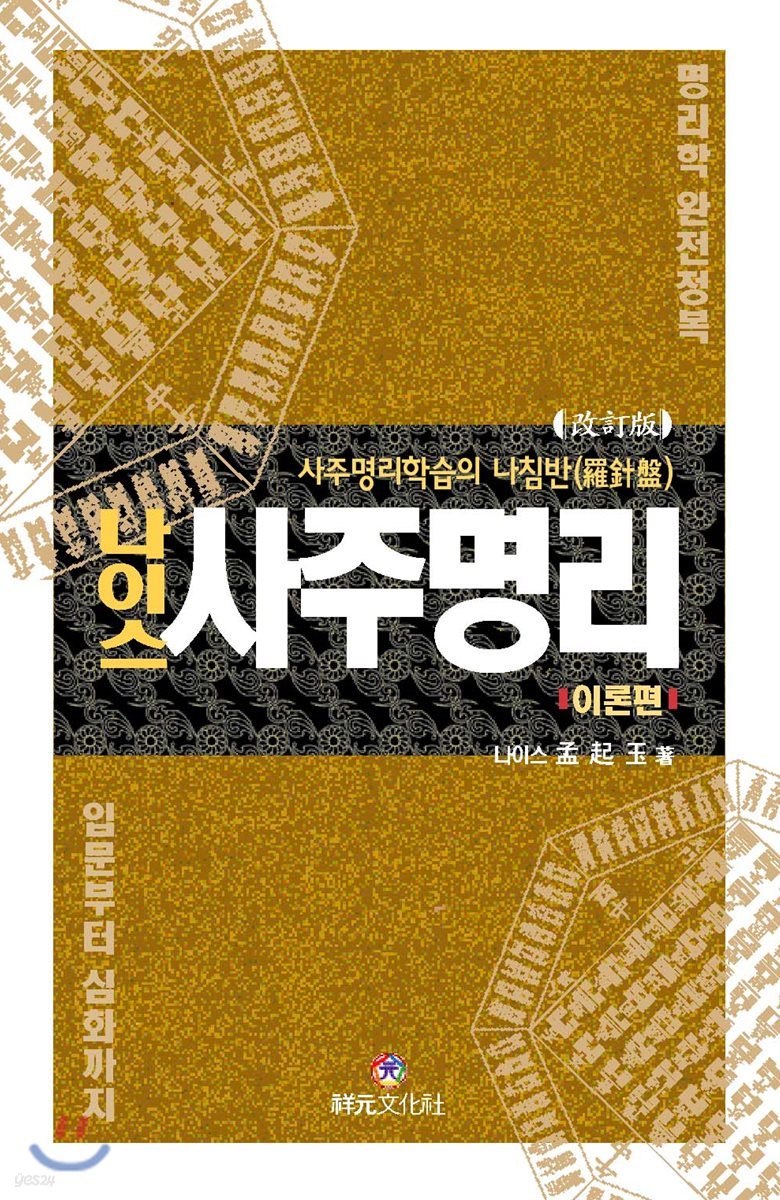
Nice Saju Myungri Theory
 |
Description
Book Introduction
This book is a revised version of 『Nice Sajumyeongri (Theory Edition)』 published in 2012.
As time passed, more things emerged to add and correct.
I believe that the traditional theories of fortune telling are still crude.
I believe that better papers will be produced at universities, and that different claims will gradually become more systematic through confrontation and competition.
This revised edition of 『Nice Saju Myeongri (Theory Edition)』 will be a good guide for those who wish to study Myeongri.
As time passed, more things emerged to add and correct.
I believe that the traditional theories of fortune telling are still crude.
I believe that better papers will be produced at universities, and that different claims will gradually become more systematic through confrontation and competition.
This revised edition of 『Nice Saju Myeongri (Theory Edition)』 will be a good guide for those who wish to study Myeongri.
index
introduction
Part 1: Introduction to Fortune-telling
(1) The science of fortune telling, which is gaining increasing attention day by day
① Four Pillars of Destiny Chart
② Four pillars
③ Name of the Ganji (干支)
④ Jijanggan (支藏干)
⑤ Great fortune
(2) The meaning of the location of the fortune
① How to read your fortune
(3) Yin and Yang
① The difference between yin and yang
② Yin-Yang arrangement of Ganji (干支)
(4) Five Elements
① The characters of the heavenly stems and earthly branches are divided into the five elements.
② Table of the Five Elements
③ Wood fire land gold water - wood
④ Wood fire earth gold water - fire
⑤ Wood fire earth gold water - earth
⑥ Wood fire earth gold water - gold
⑦ Wood fire earth gold water - water
⑧ The movement of mutual generation of the five elements
⑨ The mutual inhibition movement of the five elements
(5) If there is no specific five elements in the four pillars of destiny
① If there is no wood
② When there is no fire
③ When there is no soil
④ If there is no gold
⑤ When there is no water
(6) 10 thousand spans (天干)
① Explanation of the Ten Thousand Livers
·甲木·乙木
·丙fire ·丁fire
·戊土·己土
·庚金·辛金
·壬水·癸水
② The birth and death of the heavenly stems
(7) 12 Earthly Branches
① Nature of support
·Five elements of support
·The mutual growth and mutual inhibition of support
·Soil of support
② The birthplace of the supporter, the prosperous place, and the storehouse
·Characteristics of the birth year 寅申巳亥
·Characteristics of Wangji (子午卯酉)
·Characteristics of Goji Jinsul Ox and Mi
③ Explanation of the 12 Earthly Branches
·子水·丑土
·寅木·卯木
·辰土 ·巳fire
·午fire ·未土
·申金·酉金
·戌土·亥水
(8) Jijanggan (支藏干)
① The liver in the support
② The yin and yang of support
(9) 24 solar terms
(10) Six relatives
① Ten gods
② Six-person practice
③ The meaning of kinship
④ The life and death of relatives
⑤Organize kinship
·Cowardice
·Food injuries
·Wealth Star
·Official star
·Inseong (印星)
(11) The nature of the ten gods
·The nature of comparison
·The nature of calamity
·The nature of the food god
·The nature of the injured official
·The nature of partial wealth
·The nature of Jeongjae (正財)
·The nature of partial officials
·The nature of the official
·The nature of partiality
·The nature of the right seal
(12) Completion of the criminal justice association
① Reaction between the heavenly stems
·Heavenly stem combination
·Harmony between heavens
② Reactions between supporters
·Yukhap (六合)
·Chong (沖)
·Punishment
·Damage
·Samhap (Three Harmonies)
·Half-combined
·Amalgamation
·Difference between Samhap and Banghap
(13) Commutation and projection
① Comparison of the power of the heavenly stems
② Comparison of the strength of support
③ Finding the God of Suppression and Support
(14) Wangsanghyususa (旺相休囚死)
(15) 12 constellations
① A new interpretation of the 12 constellations
·Yin-yang movement of the heavenly stems
② New 12-constellation table
③ Existing 12-constellation table
(16) 12 Gods of Death
·Gyeopsal (劫殺)
·Disaster
·Cheonsal (Heavenly Murder)
·Jisal (earth killing)
· Yearly murder
·Wolsal (月殺)
·Disgrace and death
·General killing
·Killing with a saddle
·Station horse murder
·Six Harms and Kills
·Hwagaesal (華蓋殺)
(17) Emptiness
Part 2: Intermediate Fortune-telling
(1) About the soil
① Type of soil
② Why is there no earth between the yin and yang of the heavenly stems?
③ Difference between a storehouse and a graveyard
(2) Physical combination
① Root seedling flower room
② The period when the heavenly stems become the root
(3) The liver and the commuting organs
① The role of the initial (=here) of the Ji Jang Gan
② The role of the middle organ of the spleen and intestines
③ The role of the end of the spleen and intestines (=vital energy)
④ The ratio of the organs
⑤ The middle stage of the Earthly Branch is related to social activities.
⑥ Raw land, royal land, and grave site
⑦ Banhap and Jijanggan
⑧ Chong and Ji Jang Gan
(4) Differences between the heavenly stems, earthly branches, and earthly branches
① The difference between In-mok and Ma-mok
② Difference between heavenly stem combination and earthly branch combination
(5) Various types of divine killing
·Three disasters
·Cheon-eul-gwi-in (Heavenly Noble Person)
·Wonjinsal (怨嗔殺)
·Peach Blossom Killer
·White Tiger Killing
·Gwimunsal (Ghost Gate Killing)
·Station horse murder
·Execution by execution
·Sheep killing
·Tanghwasal (湯火殺)
·The net of heaven and earth
·Gosin-sal (killing oneself alone)
·Kwasuksal (murder after a short stay)
(6) Dragon God
① Determining strength and weakness
② The God of Suppression and Support
③ The god of weather control
④ Subject
⑤ Two Gods Forming an Image
⑥ Fire grade
⑦ One performance and one achievement
(7) Four lucky gods and four evil gods
① Sagilsin_Jaegwaninsik (Wealth, Official Seal, Food)
② The Four Evil Spirits_Sal-Sang-Hyo-In (殺傷梟刃)
(8) God of the Bureaucracy
① How to determine the level of competition
② The god of the conflict and the god of the relationship
③ High and low of the country
(9) Summary of 60 Ganji
(10) Five Unyukgi (Five Yun Yuqi)
(11) Interpretation of fortune
① Interpretation of the Great Fortune
② Interpretation of Seun (year fortune)
③ Interpretation of monthly fortune
(12) Fire and earth same law
(13) The clarity and turbidity of the grade
(14) Empty characters
① Clasp
② Reverse collision
③ Void by sum
(15) Body and Use
① The ten gods
② Use of Banghap and Samhap
(16) Reason and Energy
(17) Why is daily the standard?
(18) About the night time
(19) The heavenly stems and earthly branches are a continuous flow.
(20) Compatibility
(21) Fortune-telling and health
(22) Comprehensive summary of the Hyungchunghoehap
① Heavenly Stem Combination
② Samhap (三合), Banghap (方合), Banhap (半合)
③ Yukhap (六合)
④ Clash of the penal code
Part 3: In-Depth Analysis of Fengli
(1) The interaction between the heavenly stems
·甲木·乙木
·丙fire ·丁fire
·戊土·己土
·庚金·辛金
·壬水·癸水
(2) Interaction between supports
·子水·丑土
·寅木·卯木
·辰土 ·巳fire
·午fire ·未土
·申金·酉金
·戌土·亥水
(3) Summary of the ten stems and their nobility
·甲木·乙木
·丙fire ·丁fire
·戊土·己土
·庚金·辛金
·壬水·癸水
(4) Glossary of fortune-telling terms
- reference
·Nap-eum-o-haeng-pyo
·Bagua (Eight Trigrams)
·64 hexagrams
- Recommendation
- References
Part 1: Introduction to Fortune-telling
(1) The science of fortune telling, which is gaining increasing attention day by day
① Four Pillars of Destiny Chart
② Four pillars
③ Name of the Ganji (干支)
④ Jijanggan (支藏干)
⑤ Great fortune
(2) The meaning of the location of the fortune
① How to read your fortune
(3) Yin and Yang
① The difference between yin and yang
② Yin-Yang arrangement of Ganji (干支)
(4) Five Elements
① The characters of the heavenly stems and earthly branches are divided into the five elements.
② Table of the Five Elements
③ Wood fire land gold water - wood
④ Wood fire earth gold water - fire
⑤ Wood fire earth gold water - earth
⑥ Wood fire earth gold water - gold
⑦ Wood fire earth gold water - water
⑧ The movement of mutual generation of the five elements
⑨ The mutual inhibition movement of the five elements
(5) If there is no specific five elements in the four pillars of destiny
① If there is no wood
② When there is no fire
③ When there is no soil
④ If there is no gold
⑤ When there is no water
(6) 10 thousand spans (天干)
① Explanation of the Ten Thousand Livers
·甲木·乙木
·丙fire ·丁fire
·戊土·己土
·庚金·辛金
·壬水·癸水
② The birth and death of the heavenly stems
(7) 12 Earthly Branches
① Nature of support
·Five elements of support
·The mutual growth and mutual inhibition of support
·Soil of support
② The birthplace of the supporter, the prosperous place, and the storehouse
·Characteristics of the birth year 寅申巳亥
·Characteristics of Wangji (子午卯酉)
·Characteristics of Goji Jinsul Ox and Mi
③ Explanation of the 12 Earthly Branches
·子水·丑土
·寅木·卯木
·辰土 ·巳fire
·午fire ·未土
·申金·酉金
·戌土·亥水
(8) Jijanggan (支藏干)
① The liver in the support
② The yin and yang of support
(9) 24 solar terms
(10) Six relatives
① Ten gods
② Six-person practice
③ The meaning of kinship
④ The life and death of relatives
⑤Organize kinship
·Cowardice
·Food injuries
·Wealth Star
·Official star
·Inseong (印星)
(11) The nature of the ten gods
·The nature of comparison
·The nature of calamity
·The nature of the food god
·The nature of the injured official
·The nature of partial wealth
·The nature of Jeongjae (正財)
·The nature of partial officials
·The nature of the official
·The nature of partiality
·The nature of the right seal
(12) Completion of the criminal justice association
① Reaction between the heavenly stems
·Heavenly stem combination
·Harmony between heavens
② Reactions between supporters
·Yukhap (六合)
·Chong (沖)
·Punishment
·Damage
·Samhap (Three Harmonies)
·Half-combined
·Amalgamation
·Difference between Samhap and Banghap
(13) Commutation and projection
① Comparison of the power of the heavenly stems
② Comparison of the strength of support
③ Finding the God of Suppression and Support
(14) Wangsanghyususa (旺相休囚死)
(15) 12 constellations
① A new interpretation of the 12 constellations
·Yin-yang movement of the heavenly stems
② New 12-constellation table
③ Existing 12-constellation table
(16) 12 Gods of Death
·Gyeopsal (劫殺)
·Disaster
·Cheonsal (Heavenly Murder)
·Jisal (earth killing)
· Yearly murder
·Wolsal (月殺)
·Disgrace and death
·General killing
·Killing with a saddle
·Station horse murder
·Six Harms and Kills
·Hwagaesal (華蓋殺)
(17) Emptiness
Part 2: Intermediate Fortune-telling
(1) About the soil
① Type of soil
② Why is there no earth between the yin and yang of the heavenly stems?
③ Difference between a storehouse and a graveyard
(2) Physical combination
① Root seedling flower room
② The period when the heavenly stems become the root
(3) The liver and the commuting organs
① The role of the initial (=here) of the Ji Jang Gan
② The role of the middle organ of the spleen and intestines
③ The role of the end of the spleen and intestines (=vital energy)
④ The ratio of the organs
⑤ The middle stage of the Earthly Branch is related to social activities.
⑥ Raw land, royal land, and grave site
⑦ Banhap and Jijanggan
⑧ Chong and Ji Jang Gan
(4) Differences between the heavenly stems, earthly branches, and earthly branches
① The difference between In-mok and Ma-mok
② Difference between heavenly stem combination and earthly branch combination
(5) Various types of divine killing
·Three disasters
·Cheon-eul-gwi-in (Heavenly Noble Person)
·Wonjinsal (怨嗔殺)
·Peach Blossom Killer
·White Tiger Killing
·Gwimunsal (Ghost Gate Killing)
·Station horse murder
·Execution by execution
·Sheep killing
·Tanghwasal (湯火殺)
·The net of heaven and earth
·Gosin-sal (killing oneself alone)
·Kwasuksal (murder after a short stay)
(6) Dragon God
① Determining strength and weakness
② The God of Suppression and Support
③ The god of weather control
④ Subject
⑤ Two Gods Forming an Image
⑥ Fire grade
⑦ One performance and one achievement
(7) Four lucky gods and four evil gods
① Sagilsin_Jaegwaninsik (Wealth, Official Seal, Food)
② The Four Evil Spirits_Sal-Sang-Hyo-In (殺傷梟刃)
(8) God of the Bureaucracy
① How to determine the level of competition
② The god of the conflict and the god of the relationship
③ High and low of the country
(9) Summary of 60 Ganji
(10) Five Unyukgi (Five Yun Yuqi)
(11) Interpretation of fortune
① Interpretation of the Great Fortune
② Interpretation of Seun (year fortune)
③ Interpretation of monthly fortune
(12) Fire and earth same law
(13) The clarity and turbidity of the grade
(14) Empty characters
① Clasp
② Reverse collision
③ Void by sum
(15) Body and Use
① The ten gods
② Use of Banghap and Samhap
(16) Reason and Energy
(17) Why is daily the standard?
(18) About the night time
(19) The heavenly stems and earthly branches are a continuous flow.
(20) Compatibility
(21) Fortune-telling and health
(22) Comprehensive summary of the Hyungchunghoehap
① Heavenly Stem Combination
② Samhap (三合), Banghap (方合), Banhap (半合)
③ Yukhap (六合)
④ Clash of the penal code
Part 3: In-Depth Analysis of Fengli
(1) The interaction between the heavenly stems
·甲木·乙木
·丙fire ·丁fire
·戊土·己土
·庚金·辛金
·壬水·癸水
(2) Interaction between supports
·子水·丑土
·寅木·卯木
·辰土 ·巳fire
·午fire ·未土
·申金·酉金
·戌土·亥水
(3) Summary of the ten stems and their nobility
·甲木·乙木
·丙fire ·丁fire
·戊土·己土
·庚金·辛金
·壬水·癸水
(4) Glossary of fortune-telling terms
- reference
·Nap-eum-o-haeng-pyo
·Bagua (Eight Trigrams)
·64 hexagrams
- Recommendation
- References
Publisher's Review
When the weather forecast says it's going to rain, you can't stop the rain, but you can prepare an umbrella.
In a rapidly changing society, learning the art of fortune telling to predict an uncertain future is like preparing an umbrella.
Everyone is curious about the future and wants to know in advance whether they will pass an exam, choose a career, have a chance of promotion, be a suitable spouse, move somewhere, get sick, or get the outcome of a lawsuit.
This curiosity is instinctive, regardless of an individual's political leanings, region, religion, education, or gender.
So, attempts to predict the future have been around for thousands of years, regardless of East or West.
The Earth's revolution and rotation, as well as other cosmic movements, have followed certain rules for hundreds of millions of years, even now.
The science of fortune-telling began with the idea that there would be regularities in human life as well, based on the principles of the changes in heaven and earth.
Using the date, month, day, and hour of birth (Saju Palja) as a reference point, future fate was predicted by observing how each letter changed according to the flow of fortune.
The four pillars of destiny are like a timetable given to each person at birth.
If you follow the schedule well, your life will be orderly and you will live smoothly, but if you don't follow the schedule well, chaos will come.
Think of your school or work schedule.
Living according to one's destiny means doing what your heart tells you to do.
Regardless of the social status of your job, doing what you want to do, meeting the people you want to meet, eating what you want to eat, and studying what you want to study is living according to your destiny.
But living a life doing only what you want to do is not easy.
In order to make a living, you often have to do things you don't like and live with people you don't like.
If you continue to do this, stress will build up and eventually develop into mental and physical illness.
In short, problems arise because you do not live according to your destiny.
This book is a revised version of 『Nice Sajumyeongri (Theory Edition)』 published in 2012.
As time passed, more things emerged to add and correct.
I believe that the traditional theories of fortune telling are still crude.
I believe that better papers will emerge from universities, and that different claims will gradually become more systematic through confrontation and competition.
I hope that this revised edition of 『Nice Saju Myeongri (Theory Edition)』 will serve as a good guide for those who wish to study Myeongri.
In a rapidly changing society, learning the art of fortune telling to predict an uncertain future is like preparing an umbrella.
Everyone is curious about the future and wants to know in advance whether they will pass an exam, choose a career, have a chance of promotion, be a suitable spouse, move somewhere, get sick, or get the outcome of a lawsuit.
This curiosity is instinctive, regardless of an individual's political leanings, region, religion, education, or gender.
So, attempts to predict the future have been around for thousands of years, regardless of East or West.
The Earth's revolution and rotation, as well as other cosmic movements, have followed certain rules for hundreds of millions of years, even now.
The science of fortune-telling began with the idea that there would be regularities in human life as well, based on the principles of the changes in heaven and earth.
Using the date, month, day, and hour of birth (Saju Palja) as a reference point, future fate was predicted by observing how each letter changed according to the flow of fortune.
The four pillars of destiny are like a timetable given to each person at birth.
If you follow the schedule well, your life will be orderly and you will live smoothly, but if you don't follow the schedule well, chaos will come.
Think of your school or work schedule.
Living according to one's destiny means doing what your heart tells you to do.
Regardless of the social status of your job, doing what you want to do, meeting the people you want to meet, eating what you want to eat, and studying what you want to study is living according to your destiny.
But living a life doing only what you want to do is not easy.
In order to make a living, you often have to do things you don't like and live with people you don't like.
If you continue to do this, stress will build up and eventually develop into mental and physical illness.
In short, problems arise because you do not live according to your destiny.
This book is a revised version of 『Nice Sajumyeongri (Theory Edition)』 published in 2012.
As time passed, more things emerged to add and correct.
I believe that the traditional theories of fortune telling are still crude.
I believe that better papers will emerge from universities, and that different claims will gradually become more systematic through confrontation and competition.
I hope that this revised edition of 『Nice Saju Myeongri (Theory Edition)』 will serve as a good guide for those who wish to study Myeongri.
GOODS SPECIFICS
- Date of issue: June 18, 2019
- Format: Hardcover book binding method guide
- Page count, weight, size: 485 pages | 864g | 163*232*30mm
- ISBN13: 9791185179322
- ISBN10: 1185179321
You may also like
카테고리
korean


korean

![ELLE 엘르 스페셜 에디션 A형 : 12월 [2025]](http://librairie.coreenne.fr/cdn/shop/files/b8e27a3de6c9538896439686c6b0e8fb.jpg?v=1766436872&width=3840)


