

America's Betrayal and a Shaking World
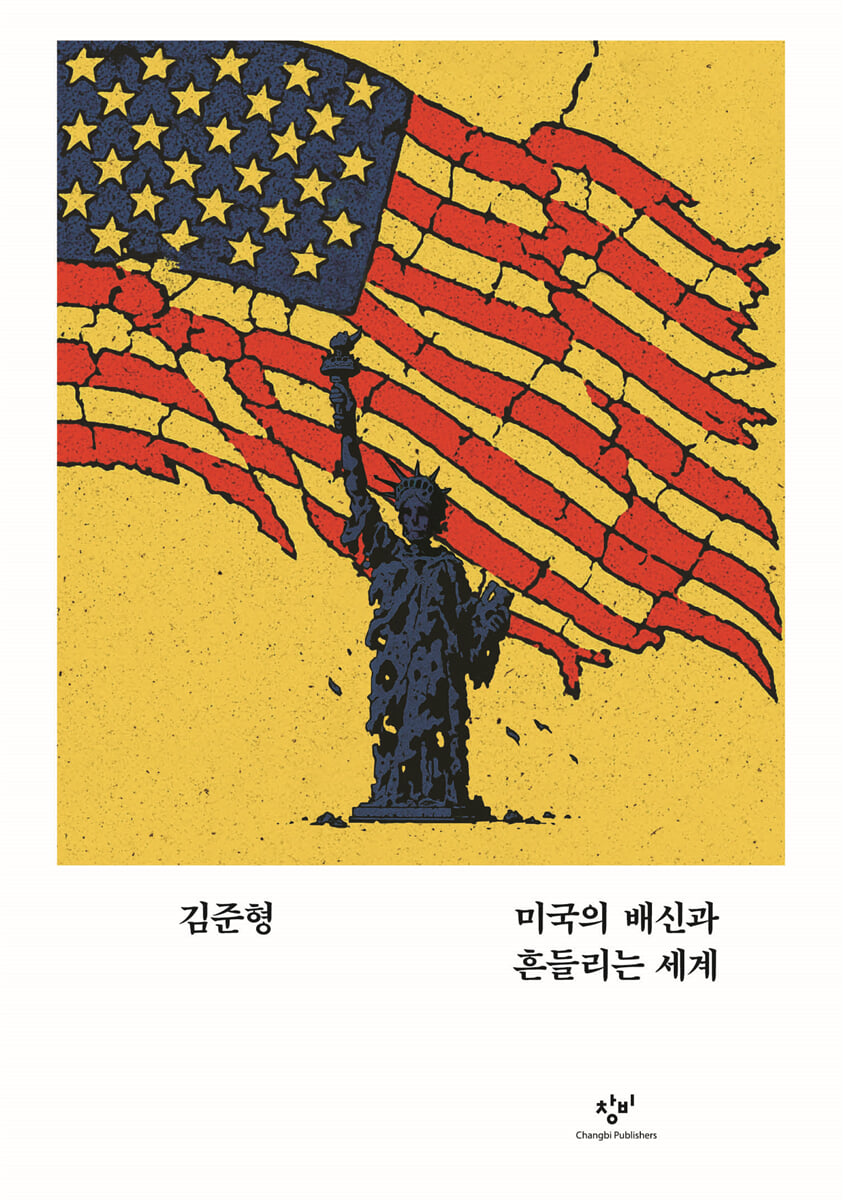 |
Description
Book Introduction
Why on earth is America like this?
The answer lies in the rapidly changing international order!
Kim Jun-hyung, the country's top foreign affairs expert
A one-volume international politics course
Donald Trump is once again President of the United States, having won re-election in 2024.
Since then, the news of American policy delivered through Trump's mouth has been enough to shock not only Korea but also countries around the world.
All sorts of outrageous remarks were made against other sovereign nations, including allies, and absurd news about a country's external actions, such as imposing tariffs of up to 3521% and then withdrawing them, filled the news every day.
In these times when the question, "Why on earth is America like this?" naturally arises, Kim Jun-hyung, former president of the Korea National Diplomatic Academy and Korea's leading foreign affairs expert, emphasizes that understanding the United States today requires understanding the rapidly changing flow of international politics.
The (re)emergence of the figure of Trump is not a simple aberration or an anomaly, but rather a cause, a consequence, and at the same time a driving force behind the ongoing global fragmentation.
The seventh book in Changbi's humanities and liberal arts series, "100 Grams of Liberal Arts," "America's Betrayal and the Shaking World," interprets the newly reorganized international order as a continuous flow, analyzes why America's response strategy has turned out to be a failure, and seeks a path for Korea to take within it.
This book will provide key insights for readers who want to look beyond the Trump phenomenon and broaden their perspective on international politics and consider practical alternatives from Korea's perspective.
The answer lies in the rapidly changing international order!
Kim Jun-hyung, the country's top foreign affairs expert
A one-volume international politics course
Donald Trump is once again President of the United States, having won re-election in 2024.
Since then, the news of American policy delivered through Trump's mouth has been enough to shock not only Korea but also countries around the world.
All sorts of outrageous remarks were made against other sovereign nations, including allies, and absurd news about a country's external actions, such as imposing tariffs of up to 3521% and then withdrawing them, filled the news every day.
In these times when the question, "Why on earth is America like this?" naturally arises, Kim Jun-hyung, former president of the Korea National Diplomatic Academy and Korea's leading foreign affairs expert, emphasizes that understanding the United States today requires understanding the rapidly changing flow of international politics.
The (re)emergence of the figure of Trump is not a simple aberration or an anomaly, but rather a cause, a consequence, and at the same time a driving force behind the ongoing global fragmentation.
The seventh book in Changbi's humanities and liberal arts series, "100 Grams of Liberal Arts," "America's Betrayal and the Shaking World," interprets the newly reorganized international order as a continuous flow, analyzes why America's response strategy has turned out to be a failure, and seeks a path for Korea to take within it.
This book will provide key insights for readers who want to look beyond the Trump phenomenon and broaden their perspective on international politics and consider practical alternatives from Korea's perspective.
- You can preview some of the book's contents.
Preview
index
At the beginning of the book
America's Betrayal and a Shaking World
We are living in a time of upheaval
Post-Cold War and Pax Americana
Two crises and Superman's weakness
It's not a new Cold War, it's fragmentation.
A Nation Divided: The Same America and South Korea
Trump's Foreign Policy: Divide and conquer
What South Korea's Trump Presidency Means
A New Perspective on the ROK-US Alliance and Peace Regime
Is it possible to stand up to the Trump storm?
The possibility of democracy in Korea right now
Q&A
Sentences I want to remember
America's Betrayal and a Shaking World
We are living in a time of upheaval
Post-Cold War and Pax Americana
Two crises and Superman's weakness
It's not a new Cold War, it's fragmentation.
A Nation Divided: The Same America and South Korea
Trump's Foreign Policy: Divide and conquer
What South Korea's Trump Presidency Means
A New Perspective on the ROK-US Alliance and Peace Regime
Is it possible to stand up to the Trump storm?
The possibility of democracy in Korea right now
Q&A
Sentences I want to remember
Detailed image
.png)
Into the book
Although it's a thin and light book, it contains profound and weighty questions about how to understand the nature of the changing international order and what preparations and choices we must make for our future.
I will try to give a careful and rigorous answer to this question.
I hope this book will alleviate some of the readers' worries and concerns about how we should live in a world shaken by America's betrayal, and serve as a starting point for efforts to properly understand the current changes.
--- From "Introduction"
In early March 2024, I left behind my 25-year career as a university professor and suddenly, but boldly, embarked on a new path as a member of the National Assembly.
I couldn't stand by and watch as Yoon Seok-yeol's forces ruined Korean diplomacy.
I was anxious because I thought that since diplomacy involves a counterparty, once it was ruined, it would be difficult to restore it no matter how hard one side tried.
My time in the National Assembly, which lasted less than a year, was a turbulent time, as if I had experienced more than I would in ten years, but it was meaningful in that I played even a small role in the making of history.
Lifting martial law on December 3rd and passing the impeachment motion on December 14th was a great accomplishment, and I felt that I had made the right choice to become a member of the National Assembly.
--- p.5~6
One of the huge events that symbolizes this upheaval we are experiencing is Trump (D.
(Trump) You could say it's the emergence of the US President.
What I'm going to tell you today is that Trump's rise is not a mere coincidence.
Of course, this could be explained as a shocking deviation and an exceptional event, the appearance of a monster, and there are quite a few people who say so.
But in my view, Trump is both a cause and an effect of the changes in the current international order, and at times a catalyst that accelerates those changes.
It may seem as if Yoon Seok-yeol's internal rebellion, which occurred in late 2024, suddenly occurred after 45 years, but it actually clearly reveals the problems inherent in our society.
--- p.16
The 'New Cold War' is a provocative term referring to the US-China hegemony competition, but I believe that the current situation is completely different in nature from the Cold War of the past.
Rather, this is probably the most accurate term to describe the world today.
Fragmentation.
(…) That is, the struggle of all against all is at work today not only in individual countries but also in international politics.
Therefore, fragmentation refers to an order in which each country prioritizes survival and profit.
This means that compromise for cooperation between nations will disappear, and we will enter an era of fierce competition in a negative-sum game where each country's interests are detrimental to its own.
When nationalism and exclusive nationalism become so prevalent, the possibility of not only economic conflict but also armed conflict increases.
--- p.37~38
The New York Times even commented in a column that “Trump has destroyed the order that America has worked so hard to build for 80 years in just 50 days.”
The problem is that although the United States is still the world's most powerful nation, it lacks the hegemonic ability to lead the entire world, let alone the will to do so, and is determined to pursue national egoism.
--- p.49
However, the ROK-US alliance is so strongly entrenched within us as a symbol of peace that whenever inter-Korean relations improve, we worry about the alliance weakening, a paradoxical situation arises.
Whenever progressive governments attempted to achieve inter-Korean cooperation, they inevitably faced criticism that they were undermining the ROK-US alliance, and this had a strong impact on the public.
--- p.65
But Trump's time is limited.
When a typhoon comes, sometimes if you hold out until it passes, it will pass.
Developing the power to endure may be the next government's greatest mission of the times.
This is not simply a monstrous trait of Trump's personal character, but, as we have discussed, a major trend unfolding in this turbulent period of world history.
--- p.75
We've analyzed the storm of Trumpism so far, but the only thing that can truly stop its harm is an awakening from within.
No matter how much America's national power has declined, there is still no country that can defeat the United States in a confrontation.
If so, the most effective and desirable way to stop Trump's unilateralism, racism, and anti-democratic policies is through the democratic struggle of American citizens.
In fact, American citizens began to rise up.
On April 5, 2025, the day after our Constitutional Court impeached Yoon Seok-yeol, millions of citizens took to the streets across the United States under the slogan “Hands Off.”
In American history, the civil rights movement of the 1960s is the most recent resistance.
They cry out that America has been struggling for democracy for too long and that it is time to learn from the remarkable democratic resilience that has occurred in South Korea.
I will try to give a careful and rigorous answer to this question.
I hope this book will alleviate some of the readers' worries and concerns about how we should live in a world shaken by America's betrayal, and serve as a starting point for efforts to properly understand the current changes.
--- From "Introduction"
In early March 2024, I left behind my 25-year career as a university professor and suddenly, but boldly, embarked on a new path as a member of the National Assembly.
I couldn't stand by and watch as Yoon Seok-yeol's forces ruined Korean diplomacy.
I was anxious because I thought that since diplomacy involves a counterparty, once it was ruined, it would be difficult to restore it no matter how hard one side tried.
My time in the National Assembly, which lasted less than a year, was a turbulent time, as if I had experienced more than I would in ten years, but it was meaningful in that I played even a small role in the making of history.
Lifting martial law on December 3rd and passing the impeachment motion on December 14th was a great accomplishment, and I felt that I had made the right choice to become a member of the National Assembly.
--- p.5~6
One of the huge events that symbolizes this upheaval we are experiencing is Trump (D.
(Trump) You could say it's the emergence of the US President.
What I'm going to tell you today is that Trump's rise is not a mere coincidence.
Of course, this could be explained as a shocking deviation and an exceptional event, the appearance of a monster, and there are quite a few people who say so.
But in my view, Trump is both a cause and an effect of the changes in the current international order, and at times a catalyst that accelerates those changes.
It may seem as if Yoon Seok-yeol's internal rebellion, which occurred in late 2024, suddenly occurred after 45 years, but it actually clearly reveals the problems inherent in our society.
--- p.16
The 'New Cold War' is a provocative term referring to the US-China hegemony competition, but I believe that the current situation is completely different in nature from the Cold War of the past.
Rather, this is probably the most accurate term to describe the world today.
Fragmentation.
(…) That is, the struggle of all against all is at work today not only in individual countries but also in international politics.
Therefore, fragmentation refers to an order in which each country prioritizes survival and profit.
This means that compromise for cooperation between nations will disappear, and we will enter an era of fierce competition in a negative-sum game where each country's interests are detrimental to its own.
When nationalism and exclusive nationalism become so prevalent, the possibility of not only economic conflict but also armed conflict increases.
--- p.37~38
The New York Times even commented in a column that “Trump has destroyed the order that America has worked so hard to build for 80 years in just 50 days.”
The problem is that although the United States is still the world's most powerful nation, it lacks the hegemonic ability to lead the entire world, let alone the will to do so, and is determined to pursue national egoism.
--- p.49
However, the ROK-US alliance is so strongly entrenched within us as a symbol of peace that whenever inter-Korean relations improve, we worry about the alliance weakening, a paradoxical situation arises.
Whenever progressive governments attempted to achieve inter-Korean cooperation, they inevitably faced criticism that they were undermining the ROK-US alliance, and this had a strong impact on the public.
--- p.65
But Trump's time is limited.
When a typhoon comes, sometimes if you hold out until it passes, it will pass.
Developing the power to endure may be the next government's greatest mission of the times.
This is not simply a monstrous trait of Trump's personal character, but, as we have discussed, a major trend unfolding in this turbulent period of world history.
--- p.75
We've analyzed the storm of Trumpism so far, but the only thing that can truly stop its harm is an awakening from within.
No matter how much America's national power has declined, there is still no country that can defeat the United States in a confrontation.
If so, the most effective and desirable way to stop Trump's unilateralism, racism, and anti-democratic policies is through the democratic struggle of American citizens.
In fact, American citizens began to rise up.
On April 5, 2025, the day after our Constitutional Court impeached Yoon Seok-yeol, millions of citizens took to the streets across the United States under the slogan “Hands Off.”
In American history, the civil rights movement of the 1960s is the most recent resistance.
They cry out that America has been struggling for democracy for too long and that it is time to learn from the remarkable democratic resilience that has occurred in South Korea.
--- p.81~82
Publisher's Review
It is truly an era of upheaval,
What is America Betraying?
Recently, the United States has been showing clear signs of decline due to the policies of the second Trump administration.
The high tariff policies targeting China and the European Union in early 2025 have disrupted global supply chains, threatened the free trade system, and significantly undermined international trust.
Furthermore, the United States' declaration of withdrawal from the WHO and its threat to reduce financial support for NATO have weakened international cooperation based on multilateralism, significantly reducing trust in America's global leadership.
At the same time, political polarization continues to deepen within the United States, and Trump's hardline immigration policies in his second term are pushing for large-scale deportations that ignore legal procedures, even raising human rights concerns.
It is no exaggeration to say that the image that the United States has long promoted as the "guardian of freedom and democracy" is being damaged across the board.
"America's Betrayal and the World in Shakenness" analyzes the regressive course of the United States, currently under Trump, within the context of world history.
This book provides a comprehensive overview of the turbulent international politics, from the end of the Cold War and the heyday of Pax Americana, which began with the collapse of the Soviet Union in 1991, to the shock of the September 11, 2001 terrorist attacks and the 2008 financial crisis, and to Brexit and the second term of Trump.
The author defines the current international order not as a "new Cold War between the US and China," as is commonly referred to, but as "fragmentation," and emphasizes that, unlike the past Cold War, this is an era of each country prioritizing survival and self-interest, rather than one characterized by ideological conflict or clear-cut division into camps.
Trump's racist rhetoric, protectionism, and America First policies, which at first glance seem like nonsense, should be viewed as an attempt by the United States to maximize its own interests in the face of the decline of the era of American hegemony.
However, the author diagnoses that this US response is a global betrayal that weakens the global order and mutual trust, and a self-betrayal that undermines the values of freedom and democracy that the US has defended thus far.
just now,
The possibility of democracy in Korea
In this era of each person for himself and fragmentation, what path should Korea pursue?
This book deeply considers the ROK-US alliance and inter-Korean relations, focusing on the variable of the United States.
First, I would like to point out that shattering the "myth" of the ROK-US alliance is the most important cognitive shift in Korea's future diplomatic path.
Because the essence of the alliance is rooted in the structure of inter-Korean confrontation, the necessity and strength of the ROK-US alliance will naturally weaken as the Korean Peninsula peace process progresses. However, it is true that South Korea has yet to overcome its sense of crisis that it is safe only under the US security umbrella.
The author emphasizes that now, with the United States' power weakening and multipolarization advancing, is the time for South Korea to break free from its dependence on the United States, seize the initiative, and reestablish South Korea-U.S. and inter-Korean relations.
In particular, we have recently experienced the restoration of democracy through organized resistance by citizens.
The 'Struggle of Light' is a historical example that demonstrates Korea's democratic capacity and the maturity of civil society.
The author argues that South Korea can revive the values that Trump and the United States have abandoned, such as human rights, democracy, and freedom.
In fact, the United States is also conducting citizen-led anti-Trump protests, referencing Korea's example.
This dynamism, unparalleled in any other country in the world, is the driving force that allows Korea to diversify the targets and forms of its diplomacy, from Korea-China relations to the Global South, and to pursue new forms of cooperation.
The work of practicing democratic values and establishing a peaceful order in the international community in the face of the raging "Trump typhoon" will also begin right now, stemming from the potential of Korean democracy.
What is America Betraying?
Recently, the United States has been showing clear signs of decline due to the policies of the second Trump administration.
The high tariff policies targeting China and the European Union in early 2025 have disrupted global supply chains, threatened the free trade system, and significantly undermined international trust.
Furthermore, the United States' declaration of withdrawal from the WHO and its threat to reduce financial support for NATO have weakened international cooperation based on multilateralism, significantly reducing trust in America's global leadership.
At the same time, political polarization continues to deepen within the United States, and Trump's hardline immigration policies in his second term are pushing for large-scale deportations that ignore legal procedures, even raising human rights concerns.
It is no exaggeration to say that the image that the United States has long promoted as the "guardian of freedom and democracy" is being damaged across the board.
"America's Betrayal and the World in Shakenness" analyzes the regressive course of the United States, currently under Trump, within the context of world history.
This book provides a comprehensive overview of the turbulent international politics, from the end of the Cold War and the heyday of Pax Americana, which began with the collapse of the Soviet Union in 1991, to the shock of the September 11, 2001 terrorist attacks and the 2008 financial crisis, and to Brexit and the second term of Trump.
The author defines the current international order not as a "new Cold War between the US and China," as is commonly referred to, but as "fragmentation," and emphasizes that, unlike the past Cold War, this is an era of each country prioritizing survival and self-interest, rather than one characterized by ideological conflict or clear-cut division into camps.
Trump's racist rhetoric, protectionism, and America First policies, which at first glance seem like nonsense, should be viewed as an attempt by the United States to maximize its own interests in the face of the decline of the era of American hegemony.
However, the author diagnoses that this US response is a global betrayal that weakens the global order and mutual trust, and a self-betrayal that undermines the values of freedom and democracy that the US has defended thus far.
just now,
The possibility of democracy in Korea
In this era of each person for himself and fragmentation, what path should Korea pursue?
This book deeply considers the ROK-US alliance and inter-Korean relations, focusing on the variable of the United States.
First, I would like to point out that shattering the "myth" of the ROK-US alliance is the most important cognitive shift in Korea's future diplomatic path.
Because the essence of the alliance is rooted in the structure of inter-Korean confrontation, the necessity and strength of the ROK-US alliance will naturally weaken as the Korean Peninsula peace process progresses. However, it is true that South Korea has yet to overcome its sense of crisis that it is safe only under the US security umbrella.
The author emphasizes that now, with the United States' power weakening and multipolarization advancing, is the time for South Korea to break free from its dependence on the United States, seize the initiative, and reestablish South Korea-U.S. and inter-Korean relations.
In particular, we have recently experienced the restoration of democracy through organized resistance by citizens.
The 'Struggle of Light' is a historical example that demonstrates Korea's democratic capacity and the maturity of civil society.
The author argues that South Korea can revive the values that Trump and the United States have abandoned, such as human rights, democracy, and freedom.
In fact, the United States is also conducting citizen-led anti-Trump protests, referencing Korea's example.
This dynamism, unparalleled in any other country in the world, is the driving force that allows Korea to diversify the targets and forms of its diplomacy, from Korea-China relations to the Global South, and to pursue new forms of cooperation.
The work of practicing democratic values and establishing a peaceful order in the international community in the face of the raging "Trump typhoon" will also begin right now, stemming from the potential of Korean democracy.
GOODS SPECIFICS
- Date of issue: May 23, 2025
- Page count, weight, size: 112 pages | 160g | 128*182*10mm
- ISBN13: 9788936480820
You may also like
카테고리
korean


korean

![GQ KOREA Mark (Monthly): December [2025]](http://librairie.coreenne.fr/cdn/shop/files/8ef265dbbfbf186523ed75ba7319009d.jpg?v=1765340328&width=3840)


