

Seongsu-dong
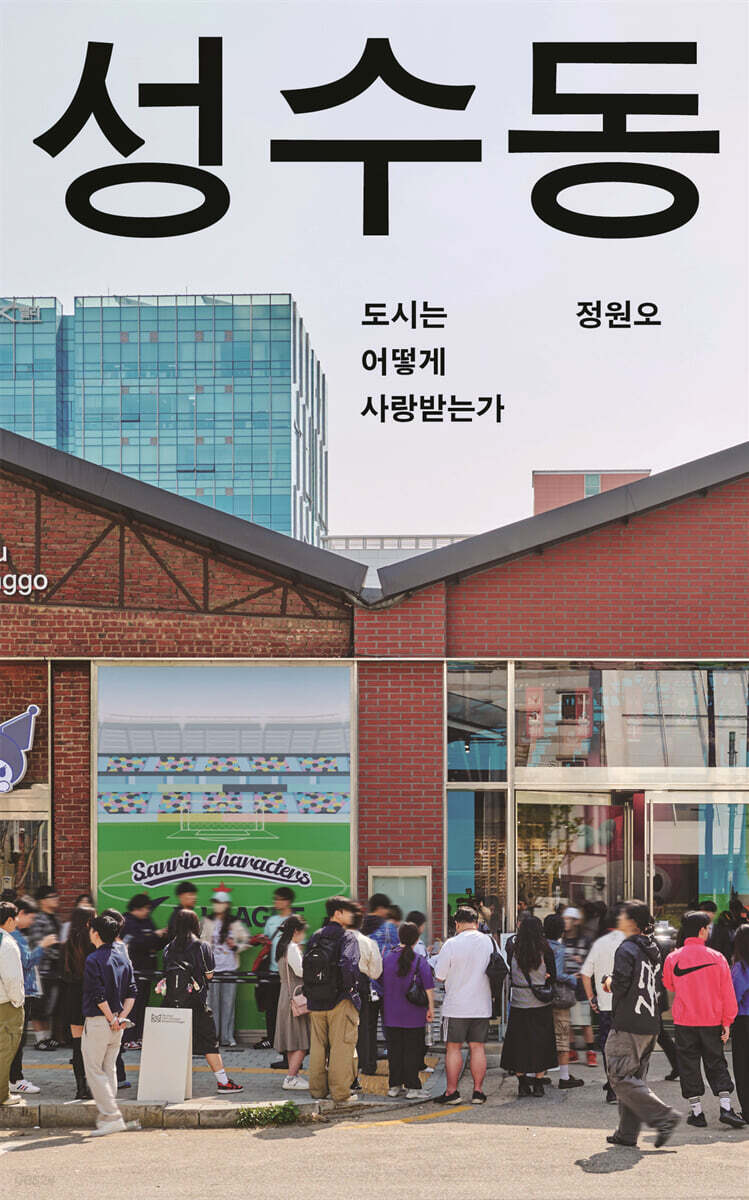 |
Description
Book Introduction
“What is more difficult than creating a trendy neighborhood is preserving its charm.”
How was Seongsu's charm created and evolved?
Jeongwon Oh's urban experiment that created a 10-year miracle in Seongsu-dong
In 2024, Seongsu-dong in Seongdong-gu, Seoul, proudly ranked 4th among the "38 Coolest Neighborhoods in the World" selected by the British travel and culture magazine Time Out.
The hip neighborhood of Seongsu is not only an attractive tourist destination, but is also a creative 'production city' brimming with economic vitality.
The number of companies, which stood at 10,323 in 2013, nearly doubled to 19,200 in 2023, and the number of industrial workers also increased significantly, from 77,369 to 124,923 in 2023.
The economic value of Seongsu-dong has increased 3.5 times in 10 years.
It is also the steepest rise in Seoul.
Behind Seongsu-dong's success lies the unique charm of the area itself, along with the creative efforts of the young people and businesses that have gathered there.
In 2014, when Mayor Jeongwon Oh began his first term, young entrepreneurs and artists had already gathered in Seongsu-dong, taking advantage of the city's declining reputation and conducting various experiments.
The change had already begun.
The administration assisted and encouraged the change.
Director Jeong Won-oh, who read the flow of how the city would revive itself, faithfully performed his role as a competent 'supporting actor'.
Protected people first.
To protect people who were forced out of their former neighborhoods due to gentrification and moved to Seongsu-dong, the city introduced the nation's first "gentrification prevention" system.
And preserved the scenery.
The 'Support for Red Brick Buildings' policy, which contributed significantly to creating Seongsu's unique atmosphere, emerged as the city pondered how to remember its history and connect with the future.
This book is a record of the changes in Seongsu-dong over the past 10 years by Seongdong-gu Mayor Jeong Won-oh. It also contains the insight of a city administrator who accurately reads the flow of the city and listens to and respects the opinions of residents.
It calmly tells the story of how a city administrator who is "good at his job" worked to naturally form the unique value of "Seongsu-ness" and grow into a city loved by people not only domestically but also around the world.
How was Seongsu's charm created and evolved?
Jeongwon Oh's urban experiment that created a 10-year miracle in Seongsu-dong
In 2024, Seongsu-dong in Seongdong-gu, Seoul, proudly ranked 4th among the "38 Coolest Neighborhoods in the World" selected by the British travel and culture magazine Time Out.
The hip neighborhood of Seongsu is not only an attractive tourist destination, but is also a creative 'production city' brimming with economic vitality.
The number of companies, which stood at 10,323 in 2013, nearly doubled to 19,200 in 2023, and the number of industrial workers also increased significantly, from 77,369 to 124,923 in 2023.
The economic value of Seongsu-dong has increased 3.5 times in 10 years.
It is also the steepest rise in Seoul.
Behind Seongsu-dong's success lies the unique charm of the area itself, along with the creative efforts of the young people and businesses that have gathered there.
In 2014, when Mayor Jeongwon Oh began his first term, young entrepreneurs and artists had already gathered in Seongsu-dong, taking advantage of the city's declining reputation and conducting various experiments.
The change had already begun.
The administration assisted and encouraged the change.
Director Jeong Won-oh, who read the flow of how the city would revive itself, faithfully performed his role as a competent 'supporting actor'.
Protected people first.
To protect people who were forced out of their former neighborhoods due to gentrification and moved to Seongsu-dong, the city introduced the nation's first "gentrification prevention" system.
And preserved the scenery.
The 'Support for Red Brick Buildings' policy, which contributed significantly to creating Seongsu's unique atmosphere, emerged as the city pondered how to remember its history and connect with the future.
This book is a record of the changes in Seongsu-dong over the past 10 years by Seongdong-gu Mayor Jeong Won-oh. It also contains the insight of a city administrator who accurately reads the flow of the city and listens to and respects the opinions of residents.
It calmly tells the story of how a city administrator who is "good at his job" worked to naturally form the unique value of "Seongsu-ness" and grow into a city loved by people not only domestically but also around the world.
index
Recommendation
prolog
PART 1 Young people and companies visiting Seongsu-dong
1.
A city where companies come
2.
Seongsu becomes a brand
3.
The future of Seongsu Pop-up City
4.
The beginning of urban regeneration in Seongsu-dong, the lifting of the special planning zone designation.
5.
Urban Regeneration: Observing Urban Policy
PART 2: Designing a City with Red Bricks
1.
'Politics of Process' Between Redevelopment and Regeneration
2.
Seongsu-dong urban regeneration
3.
Reinterpreting red bricks
4.
Urban design achieved through the politics of the senses
5.
Can the Holy Spirit's method be spread?
PART 3: The Seongsu-type Social Contract and the Anti-Gentrification Ordinance
1.
Institutionalized Solidarity: An Ordinance to Protect Seongsu-dong
2.
Putting the Ordinance into Practice: From the System to the Field
3.
Anti-gentrification policies that protect the market
4.
A neighborhood policy experiment changes the nation's laws and institutions.
5.
Designing the Next Chapter for Sustainable Seongsu
PART 4: Seongsu-dong, a Social Innovation City
1.
Social Ventures: A New Engine of Social Innovation
2.
Seongsu-dong: From a Laboratory for Social Innovation to a Global City
3.
Seongsu-dong's future, a hub for the cultural industry
4.
Responding to the Urban Crisis with Town Management
5.
A city where culture becomes economy
Epilogue
People who created 'Seongsu' together
prolog
PART 1 Young people and companies visiting Seongsu-dong
1.
A city where companies come
2.
Seongsu becomes a brand
3.
The future of Seongsu Pop-up City
4.
The beginning of urban regeneration in Seongsu-dong, the lifting of the special planning zone designation.
5.
Urban Regeneration: Observing Urban Policy
PART 2: Designing a City with Red Bricks
1.
'Politics of Process' Between Redevelopment and Regeneration
2.
Seongsu-dong urban regeneration
3.
Reinterpreting red bricks
4.
Urban design achieved through the politics of the senses
5.
Can the Holy Spirit's method be spread?
PART 3: The Seongsu-type Social Contract and the Anti-Gentrification Ordinance
1.
Institutionalized Solidarity: An Ordinance to Protect Seongsu-dong
2.
Putting the Ordinance into Practice: From the System to the Field
3.
Anti-gentrification policies that protect the market
4.
A neighborhood policy experiment changes the nation's laws and institutions.
5.
Designing the Next Chapter for Sustainable Seongsu
PART 4: Seongsu-dong, a Social Innovation City
1.
Social Ventures: A New Engine of Social Innovation
2.
Seongsu-dong: From a Laboratory for Social Innovation to a Global City
3.
Seongsu-dong's future, a hub for the cultural industry
4.
Responding to the Urban Crisis with Town Management
5.
A city where culture becomes economy
Epilogue
People who created 'Seongsu' together
Detailed image
.jpg)
Into the book
The story of Seongsu-dong does not give the intensity of a spicy, stimulating taste.
Instead, it is a story like a simple and refined meal that leaves a subtle joy that lasts longer the more you chew on it.
This may be an unfamiliar story.
But it certainly contains new insights.
--- From the "Prologue"
As a city that doesn't have to explain what kind of city it is, Seongsu has become a town that is understood in and of itself.
Each person who walks through Seongsu-dong takes in their own senses, each person who stays adds their own unique experiences, and the memories created in this way naturally fill the name 'Seongsu'.
--- From "PART 1: Young people and companies visiting Seongsu-dong"
The reason people who visit Seongsu-dong these days say it has a “feel” is not just because of the physical properties of the bricks.
It's because of the way the bricks clash and contrast with the new material, the way the traces of time and the new are juxtaposed without awkwardness.
A street where the unfamiliar and the familiar coexist, an old space where new sensations are felt.
The red bricks of Seongsu-dong symbolize that very point of contact.
--- From "PART 2 Designing a City with Red Bricks"
The key to responding to gentrification is prevention, not post-facto control.
Efforts to create an environment in which the market can function normally were the minimum public intervention to ensure the city's economic sustainability.
The foolishness of trying to kill the goose that lays the golden eggs, and the anti-gentrification policy was a device to block that foolishness in advance.
Seongsu-dong is just one neighborhood in Seoul, but what happened here transcended the region and became a new standard for urban policy in South Korea.
We started with policy, but we ended up with laws, and those laws still protect the people of this neighborhood today.
--- From "PART 3: The Seongsu-type Social Contract, Anti-Gentrification Ordinance"
To preserve and expand the essence of Seongsu, all of the people who make up Seongsu—administration, merchants, creators, and residents—must become active participants.
Town management is the 'operational framework' that connects them.
And at this very point, Seongsu is about to be reborn as a testing ground for a new urban management model.
--- From "PART 4 Social Innovation City, Seongsu-dong"
Seongsu-dong was a city that demonstrated the role that politics and administration should play in the 21st century, and a city that proved its effectiveness.
In the heart of the city, we have already experienced how human power and ideas can transform space and shape the future.
Not blocking the flow, but giving way for it to flow.
That is what politics should do, and that is the attitude we must maintain going forward.
Instead, it is a story like a simple and refined meal that leaves a subtle joy that lasts longer the more you chew on it.
This may be an unfamiliar story.
But it certainly contains new insights.
--- From the "Prologue"
As a city that doesn't have to explain what kind of city it is, Seongsu has become a town that is understood in and of itself.
Each person who walks through Seongsu-dong takes in their own senses, each person who stays adds their own unique experiences, and the memories created in this way naturally fill the name 'Seongsu'.
--- From "PART 1: Young people and companies visiting Seongsu-dong"
The reason people who visit Seongsu-dong these days say it has a “feel” is not just because of the physical properties of the bricks.
It's because of the way the bricks clash and contrast with the new material, the way the traces of time and the new are juxtaposed without awkwardness.
A street where the unfamiliar and the familiar coexist, an old space where new sensations are felt.
The red bricks of Seongsu-dong symbolize that very point of contact.
--- From "PART 2 Designing a City with Red Bricks"
The key to responding to gentrification is prevention, not post-facto control.
Efforts to create an environment in which the market can function normally were the minimum public intervention to ensure the city's economic sustainability.
The foolishness of trying to kill the goose that lays the golden eggs, and the anti-gentrification policy was a device to block that foolishness in advance.
Seongsu-dong is just one neighborhood in Seoul, but what happened here transcended the region and became a new standard for urban policy in South Korea.
We started with policy, but we ended up with laws, and those laws still protect the people of this neighborhood today.
--- From "PART 3: The Seongsu-type Social Contract, Anti-Gentrification Ordinance"
To preserve and expand the essence of Seongsu, all of the people who make up Seongsu—administration, merchants, creators, and residents—must become active participants.
Town management is the 'operational framework' that connects them.
And at this very point, Seongsu is about to be reborn as a testing ground for a new urban management model.
--- From "PART 4 Social Innovation City, Seongsu-dong"
Seongsu-dong was a city that demonstrated the role that politics and administration should play in the 21st century, and a city that proved its effectiveness.
In the heart of the city, we have already experienced how human power and ideas can transform space and shape the future.
Not blocking the flow, but giving way for it to flow.
That is what politics should do, and that is the attitude we must maintain going forward.
--- From "Epilogue"
Publisher's Review
The number of companies doubles in 10 years, and Seoul ranks first in economic growth!
Seongsu-dong, ranked 4th on Time Out's "World's Coolest Neighborhoods," has seen a 10-year miracle.
Seongdong-gu Mayor Jeong Won-oh documents the entire process of urban experimentation.
Seongsu-dong, once filled with run-down shoe factories and printing shops, has transformed into one of South Korea's most dynamic business hubs in just 10 years.
The number of companies has nearly doubled from 10,323 in 2013 to 19,200 in 2023, and the number of industrial workers has also increased from 77,000 to 124,000.
The number of foreign visitors this year, 2025, is expected to exceed 6 million.
Seongsu-dong's economic value in 2024 will be 1.5497 trillion won, a 3.5-fold increase from 10 years ago.
SM Entertainment, Musinsa, I.I. Combined, Krafton…
Many people ask me the secret to my success, such as, “How did you attract such companies?”
In response, Mayor Jeongwon Oh said, “It wasn’t the district office that attracted companies, but the companies themselves chose Seongsu-dong.”
The analysis shows that the fundamental reason companies seek out Seongsu-dong is because of its identity as a 'city of youth.'
“Between abandoned factories and warehouses, print shops and iron gates, there was endless possibility and room for interpretation, and this space attracted creators and entrepreneurs.
“This place, where the brand’s narrative and the space’s sensibility are in sync, and where creation and entrepreneurship naturally blend together, has established itself as a ‘place of experience’ beyond a simple place of residence.” - From 〈PART 1 Young people and companies visiting Seongsu-dong〉
The red brick factory, which was left empty after the IMF foreign exchange crisis, paradoxically became a 'niche full of possibility' for young artists and startups.
Old spaces like 'Daerim Warehouse' and 'Jagmachi' are being reborn as complex cultural spaces, and Seongsu-dong is beginning to transform into a creative place.
Director Jeong Won-oh, who read the flow of how the city would revive itself, faithfully performed his role as a competent 'supporting actor'.
How did Seongsu's charm evolve?
While he was faithful to his supporting role by prioritizing listening and dialogue, he sometimes actively took on the role of reconstructing the city.
First, a stepping stone called 'Understand Avenue' was built on an isolated, idle lot to allow visitors to Seoul Forest to naturally flow into the alleys of Seongsu-dong.
Also, urban regeneration and redevelopment were not viewed as either/or options, but rather the advantages of both were taken advantage of.
Areas that showed signs of spontaneous recovery boldly dismantled previously established 'special planning zones' and shifted their direction to 'urban regeneration.'
In contrast, in the riverside area, where there was no spontaneous change and aging was severe, flexible decisions were made based on 'observation' rather than ideology, such as promoting public-led 'redevelopment'.
The 'red brick' buildings of Seongsu-dong create a special atmosphere unique to the area.
The author consulted with local residents and experts to reinterpret red bricks, a common material in industrial areas in the 1980s, as “assets embodying the city’s memories,” and institutionalized the “Support for Red Brick Buildings” policy in 2017 to solidify the city’s identity.
The policy of respecting and continuing the local time that has permeated the city emerged as the city pondered how to remember its history and connect with the future.
“What is more difficult than creating a trendy neighborhood is preserving its charm.”
Mayor Jeong Won-oh, who began his term in 2014, realized the importance of prevention rather than reactive measures after encountering people who had left their neighborhoods due to gentrification.
In 2015, the city enacted the nation's first "Anti-Gentrification Ordinance," creating a unique "social contract" for Seongsu-dong. It also designated a "Sustainable Development Zone" as an area where the public can intervene, and created a "Coexistence Agreement" between building owners, tenants, and the district office to voluntarily cooperate to stabilize rents, all in an effort to combat gentrification.
While upholding the value of "Seongsu-da-eum," we also achieved economic success.
Mayor Jeongwon Oh says that Seongsu-dong has now passed the development stage and entered the 'operation' stage, and proposes a new urban philosophy called 'town management' and 'E+ESG' as a solution.
The most significant change that CEO Jeongwon Oh sees as happening now is that companies joining Seongsu agree with Seongsu's unique value, "Seongsu-ness," and are willing to join in.
《Seongsu-dong》 faithfully captures the ten-year history of an urban experiment by a conscientious administrator who knew exactly what he was supposed to do and went above and beyond.
The success story of the 'Seongsu-dong Experiment' provides the best answer to the question of what kind of administrator and politician is needed in today's era.
Reading the flow of change, talking with relevant stakeholders, listening to competing opinions, and striving to find the best solution within them.
This book shines with the daily insights and practices of Jeong Won-oh, a hard-working city administrator.
Seongsu-dong, ranked 4th on Time Out's "World's Coolest Neighborhoods," has seen a 10-year miracle.
Seongdong-gu Mayor Jeong Won-oh documents the entire process of urban experimentation.
Seongsu-dong, once filled with run-down shoe factories and printing shops, has transformed into one of South Korea's most dynamic business hubs in just 10 years.
The number of companies has nearly doubled from 10,323 in 2013 to 19,200 in 2023, and the number of industrial workers has also increased from 77,000 to 124,000.
The number of foreign visitors this year, 2025, is expected to exceed 6 million.
Seongsu-dong's economic value in 2024 will be 1.5497 trillion won, a 3.5-fold increase from 10 years ago.
SM Entertainment, Musinsa, I.I. Combined, Krafton…
Many people ask me the secret to my success, such as, “How did you attract such companies?”
In response, Mayor Jeongwon Oh said, “It wasn’t the district office that attracted companies, but the companies themselves chose Seongsu-dong.”
The analysis shows that the fundamental reason companies seek out Seongsu-dong is because of its identity as a 'city of youth.'
“Between abandoned factories and warehouses, print shops and iron gates, there was endless possibility and room for interpretation, and this space attracted creators and entrepreneurs.
“This place, where the brand’s narrative and the space’s sensibility are in sync, and where creation and entrepreneurship naturally blend together, has established itself as a ‘place of experience’ beyond a simple place of residence.” - From 〈PART 1 Young people and companies visiting Seongsu-dong〉
The red brick factory, which was left empty after the IMF foreign exchange crisis, paradoxically became a 'niche full of possibility' for young artists and startups.
Old spaces like 'Daerim Warehouse' and 'Jagmachi' are being reborn as complex cultural spaces, and Seongsu-dong is beginning to transform into a creative place.
Director Jeong Won-oh, who read the flow of how the city would revive itself, faithfully performed his role as a competent 'supporting actor'.
How did Seongsu's charm evolve?
While he was faithful to his supporting role by prioritizing listening and dialogue, he sometimes actively took on the role of reconstructing the city.
First, a stepping stone called 'Understand Avenue' was built on an isolated, idle lot to allow visitors to Seoul Forest to naturally flow into the alleys of Seongsu-dong.
Also, urban regeneration and redevelopment were not viewed as either/or options, but rather the advantages of both were taken advantage of.
Areas that showed signs of spontaneous recovery boldly dismantled previously established 'special planning zones' and shifted their direction to 'urban regeneration.'
In contrast, in the riverside area, where there was no spontaneous change and aging was severe, flexible decisions were made based on 'observation' rather than ideology, such as promoting public-led 'redevelopment'.
The 'red brick' buildings of Seongsu-dong create a special atmosphere unique to the area.
The author consulted with local residents and experts to reinterpret red bricks, a common material in industrial areas in the 1980s, as “assets embodying the city’s memories,” and institutionalized the “Support for Red Brick Buildings” policy in 2017 to solidify the city’s identity.
The policy of respecting and continuing the local time that has permeated the city emerged as the city pondered how to remember its history and connect with the future.
“What is more difficult than creating a trendy neighborhood is preserving its charm.”
Mayor Jeong Won-oh, who began his term in 2014, realized the importance of prevention rather than reactive measures after encountering people who had left their neighborhoods due to gentrification.
In 2015, the city enacted the nation's first "Anti-Gentrification Ordinance," creating a unique "social contract" for Seongsu-dong. It also designated a "Sustainable Development Zone" as an area where the public can intervene, and created a "Coexistence Agreement" between building owners, tenants, and the district office to voluntarily cooperate to stabilize rents, all in an effort to combat gentrification.
While upholding the value of "Seongsu-da-eum," we also achieved economic success.
Mayor Jeongwon Oh says that Seongsu-dong has now passed the development stage and entered the 'operation' stage, and proposes a new urban philosophy called 'town management' and 'E+ESG' as a solution.
The most significant change that CEO Jeongwon Oh sees as happening now is that companies joining Seongsu agree with Seongsu's unique value, "Seongsu-ness," and are willing to join in.
《Seongsu-dong》 faithfully captures the ten-year history of an urban experiment by a conscientious administrator who knew exactly what he was supposed to do and went above and beyond.
The success story of the 'Seongsu-dong Experiment' provides the best answer to the question of what kind of administrator and politician is needed in today's era.
Reading the flow of change, talking with relevant stakeholders, listening to competing opinions, and striving to find the best solution within them.
This book shines with the daily insights and practices of Jeong Won-oh, a hard-working city administrator.
GOODS SPECIFICS
- Date of issue: November 15, 2025
- Page count, weight, size: 272 pages | 396g | 130*208*17mm
- ISBN13: 9791157064847
You may also like
카테고리
korean


korean

![GQ KOREA Mark (Monthly): December [2025]](http://librairie.coreenne.fr/cdn/shop/files/8ef265dbbfbf186523ed75ba7319009d.jpg?v=1765340328&width=3840)


