

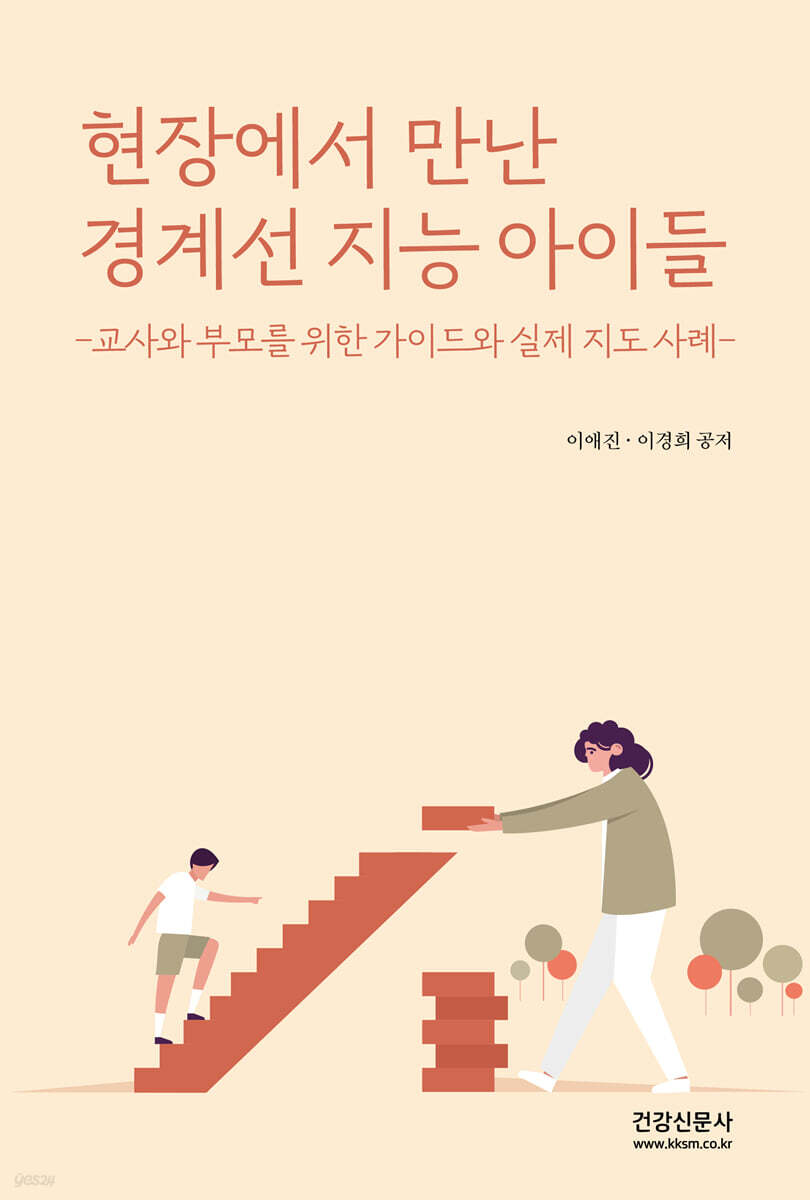
Children with borderline intelligence encountered in the field
 |
Description
Book Introduction
A warm and practical guide for borderline children, their parents, and their teachers!
A heartfelt message of encouragement to all parents and teachers.
"Children with Borderline Intelligence Met in the Field" is a book that records the "quiet miracles" of children, and is a realistic and warm field report that teachers and parents can read together.
It covers a wide range of topics, from understanding children with borderline intelligence to personalized education, emotional support, and real-world examples of change, and provides concrete examples of the growth potential of each child.
Having worked with children with borderline intelligence for a long time at a cognitive, learning, and emotional integration support center for slow learners, the author has consistently explored how they can change and grow.
Experiencing the growth of children who move from "Can I do it?" to "I did it," the author deeply realized on the spot that the power to lead change grows in relationships that do not give up.
The experience gained by approaching things with patience rather than impatience and understanding rather than judgment became the foundation of this book.
This book talks about the field rather than theory, and possibilities rather than diagnosis.
Another thing I've learned from the field is that when there's a lack of understanding of children with borderline intelligence, their difficulties are often misinterpreted as a "lack of effort."
Children with borderline intelligence have difficulty expressing their difficulties, so parents and teachers need to pay more attention and provide more support.
Rather than saying, “You just have to work harder,” you need to pay more attention to reading your child’s signals.
To do this, we need to deeply understand what characteristics children with borderline intelligence have, where their difficulties come from, and what kind of support is effective.
Only with this understanding can we discover our children's potential and find a path for growth together.
Children with borderline intelligence can be viewed not as “slow children,” but as beings with the potential to learn about the world in their own way.
Beyond the unfamiliar term "borderline intelligence," this book, which captures children's expressions and stories and provides concrete examples, is a warm and practical guide that offers practical directions for helping children in educational settings, and a heartfelt message of encouragement to all parents and teachers who want to grow with their children.
A heartfelt message of encouragement to all parents and teachers.
"Children with Borderline Intelligence Met in the Field" is a book that records the "quiet miracles" of children, and is a realistic and warm field report that teachers and parents can read together.
It covers a wide range of topics, from understanding children with borderline intelligence to personalized education, emotional support, and real-world examples of change, and provides concrete examples of the growth potential of each child.
Having worked with children with borderline intelligence for a long time at a cognitive, learning, and emotional integration support center for slow learners, the author has consistently explored how they can change and grow.
Experiencing the growth of children who move from "Can I do it?" to "I did it," the author deeply realized on the spot that the power to lead change grows in relationships that do not give up.
The experience gained by approaching things with patience rather than impatience and understanding rather than judgment became the foundation of this book.
This book talks about the field rather than theory, and possibilities rather than diagnosis.
Another thing I've learned from the field is that when there's a lack of understanding of children with borderline intelligence, their difficulties are often misinterpreted as a "lack of effort."
Children with borderline intelligence have difficulty expressing their difficulties, so parents and teachers need to pay more attention and provide more support.
Rather than saying, “You just have to work harder,” you need to pay more attention to reading your child’s signals.
To do this, we need to deeply understand what characteristics children with borderline intelligence have, where their difficulties come from, and what kind of support is effective.
Only with this understanding can we discover our children's potential and find a path for growth together.
Children with borderline intelligence can be viewed not as “slow children,” but as beings with the potential to learn about the world in their own way.
Beyond the unfamiliar term "borderline intelligence," this book, which captures children's expressions and stories and provides concrete examples, is a warm and practical guide that offers practical directions for helping children in educational settings, and a heartfelt message of encouragement to all parents and teachers who want to grow with their children.
index
Author's Note
- Lee Ae-jin_Borderline Intelligence: The Name of Possibility, Not an Object of Abandonment
- Lee Kyung-hee_Understanding and empathy for communication
Part 1.
What is borderline intelligence?
Chapter 1.
Understanding Borderline Intelligence
1.
Definition and Current Status of Borderline Intelligence
2.
Characteristics of children with borderline intelligence
1) Cognitive characteristics
2) Academic characteristics
3) Emotional characteristics
4) Social characteristics
3.
Misconceptions about borderline intelligence
4.
The Need for Individualized Education for Children with Borderline Intelligence
5.
Can borderline intelligence be improved to average intelligence?
Chapter 2.
Analysis of cognitive, emotional, and behavioral characteristics of borderline intelligence
1.
Introducing the inspection tool
1) Korean Wechsler Intelligence Scale for Children, 5th Edition (K-WISC-V)
2) Korean version of Wechsler Foundations of Learning (K-WFA)
3) Korean Child and Adolescent Behavior Rating Scale (K-CBCL)
2.
Analysis of cognitive, emotional, and behavioral trait profiles through case studies
1) 2nd grade elementary school student, female
2) 5th grade elementary school boy
3) 2nd year middle school student, male
4) High school freshman, male student
3.
The IQ Pitfalls: What Teachers and Parents Need to Know
1) The dangers of relying solely on intelligence scores
2) Don't get caught up in the diagnosis.
3) The right way to use intelligence test results in education
Part 2.
What support do children with borderline intelligence need?
Chapter 1.
Support Guide
1.
Support measures based on cognitive characteristics
1) Meaningful repetition learning strategy
2) Presentation of step-by-step tasks
3) Use of multisensory media
2.
Support plans based on academic characteristics
1) Reading and writing instruction
2) Basic mathematics instruction
3.
Support measures based on emotional characteristics
4.
Support measures based on social characteristics
5.
Support plans based on developmental characteristics
1) Support based on elementary school characteristics
2) Support based on the characteristics of middle and high school
6.
Support measures at home
Chapter 2.
Integrated support program through reading books
1.
The effectiveness of integrated support
2.
Start by reading a picture book
3.
How to Read Books to Improve Your Thinking Skills
4.
Example of a reading activity: A reading class that nurtures the mind and heart, The Jaram
Chapter 3.
Case study of supporting children with borderline intelligence
1.
Only when you let go of heavy emotions can you see your thoughts.
2.
There's always a reason why a child behaves like that.
3.
When you give them faith and trust, they give them the courage to try.
4.
You have to be accepted to be accepted
5.
You have to endure the time it takes to wait for change.
6.
If you're going slowly, you shouldn't pull from the front.
7.
It's not that I'm not interested, it's just that it's difficult to face.
Chapter 4.
Finding Answers in the Field: Practical Q&A with Parents and Teachers
1.
Even if I repeat the same workbook, why can't my child solve it well?
2.
Is it okay to just read the child's emotions?
3.
How can we develop a positive self-concept?
4.
How can we help children with apathy?
5.
Captain Woogi, how should I lead you?
6.
How should I guide a child who is sensitive to right and wrong?
7.
How can I help a child who is exhibiting self-harming behavior?
8.
How do I communicate with a child who only answers with yes or no?
9.
How do I communicate with a child who always wants to be spoken to in a kind and affectionate tone?
- Lee Ae-jin_Borderline Intelligence: The Name of Possibility, Not an Object of Abandonment
- Lee Kyung-hee_Understanding and empathy for communication
Part 1.
What is borderline intelligence?
Chapter 1.
Understanding Borderline Intelligence
1.
Definition and Current Status of Borderline Intelligence
2.
Characteristics of children with borderline intelligence
1) Cognitive characteristics
2) Academic characteristics
3) Emotional characteristics
4) Social characteristics
3.
Misconceptions about borderline intelligence
4.
The Need for Individualized Education for Children with Borderline Intelligence
5.
Can borderline intelligence be improved to average intelligence?
Chapter 2.
Analysis of cognitive, emotional, and behavioral characteristics of borderline intelligence
1.
Introducing the inspection tool
1) Korean Wechsler Intelligence Scale for Children, 5th Edition (K-WISC-V)
2) Korean version of Wechsler Foundations of Learning (K-WFA)
3) Korean Child and Adolescent Behavior Rating Scale (K-CBCL)
2.
Analysis of cognitive, emotional, and behavioral trait profiles through case studies
1) 2nd grade elementary school student, female
2) 5th grade elementary school boy
3) 2nd year middle school student, male
4) High school freshman, male student
3.
The IQ Pitfalls: What Teachers and Parents Need to Know
1) The dangers of relying solely on intelligence scores
2) Don't get caught up in the diagnosis.
3) The right way to use intelligence test results in education
Part 2.
What support do children with borderline intelligence need?
Chapter 1.
Support Guide
1.
Support measures based on cognitive characteristics
1) Meaningful repetition learning strategy
2) Presentation of step-by-step tasks
3) Use of multisensory media
2.
Support plans based on academic characteristics
1) Reading and writing instruction
2) Basic mathematics instruction
3.
Support measures based on emotional characteristics
4.
Support measures based on social characteristics
5.
Support plans based on developmental characteristics
1) Support based on elementary school characteristics
2) Support based on the characteristics of middle and high school
6.
Support measures at home
Chapter 2.
Integrated support program through reading books
1.
The effectiveness of integrated support
2.
Start by reading a picture book
3.
How to Read Books to Improve Your Thinking Skills
4.
Example of a reading activity: A reading class that nurtures the mind and heart, The Jaram
Chapter 3.
Case study of supporting children with borderline intelligence
1.
Only when you let go of heavy emotions can you see your thoughts.
2.
There's always a reason why a child behaves like that.
3.
When you give them faith and trust, they give them the courage to try.
4.
You have to be accepted to be accepted
5.
You have to endure the time it takes to wait for change.
6.
If you're going slowly, you shouldn't pull from the front.
7.
It's not that I'm not interested, it's just that it's difficult to face.
Chapter 4.
Finding Answers in the Field: Practical Q&A with Parents and Teachers
1.
Even if I repeat the same workbook, why can't my child solve it well?
2.
Is it okay to just read the child's emotions?
3.
How can we develop a positive self-concept?
4.
How can we help children with apathy?
5.
Captain Woogi, how should I lead you?
6.
How should I guide a child who is sensitive to right and wrong?
7.
How can I help a child who is exhibiting self-harming behavior?
8.
How do I communicate with a child who only answers with yes or no?
9.
How do I communicate with a child who always wants to be spoken to in a kind and affectionate tone?
Into the book
This is the question I get asked most frequently when meeting children with borderline intelligence.
“Can this child get better?”
The answer I got from working with children in the field for a long time was one.
“It takes time, but it definitely grows.”
This book contains small moments of miracle created through understanding children's characteristics and providing appropriate education and support.
The traces of change achieved through the process of consistently helping each and every child, believing in their potential, are fully reflected in every story in this book.
At first, the child who took a long time to read even one letter was soon writing his day in a diary.
I polished my personal statement for the contest, figured out ways to reduce my cell phone use, and seriously thought about what I wanted to do with my life.
And I saw them meet new friends, share their hearts, and build long-lasting friendships.
In this way, the children's changes continued gradually, like a tree growing steadily, but unnoticeably.
All these changes did not come suddenly one day.
It was the result of the accumulation of small daily attempts, a single glance, and the warm waiting of parents and teachers.
Children with borderline intelligence are not “slow learners,” but rather individuals with the potential to learn about the world in their own way.
I hope this book will provide a small comfort, assurance, and practical guidance to those walking that path together.
“Can this child get better?”
The answer I got from working with children in the field for a long time was one.
“It takes time, but it definitely grows.”
This book contains small moments of miracle created through understanding children's characteristics and providing appropriate education and support.
The traces of change achieved through the process of consistently helping each and every child, believing in their potential, are fully reflected in every story in this book.
At first, the child who took a long time to read even one letter was soon writing his day in a diary.
I polished my personal statement for the contest, figured out ways to reduce my cell phone use, and seriously thought about what I wanted to do with my life.
And I saw them meet new friends, share their hearts, and build long-lasting friendships.
In this way, the children's changes continued gradually, like a tree growing steadily, but unnoticeably.
All these changes did not come suddenly one day.
It was the result of the accumulation of small daily attempts, a single glance, and the warm waiting of parents and teachers.
Children with borderline intelligence are not “slow learners,” but rather individuals with the potential to learn about the world in their own way.
I hope this book will provide a small comfort, assurance, and practical guidance to those walking that path together.
--- From "Introduction"
Publisher's Review
When you feel lost in the face of the limitations of education, when your child seems to have stopped,
The power this book conveys is ultimately 'hope.'
"Children with Borderline Intelligence Met in the Field" is not a simple educational guide.
This is a record of the author's journey of growth, which he personally witnessed and felt while working with children with borderline intelligence in numerous settings, and the insights and emotions he gained from that time.
Children with borderline intelligence are on the borderline between intellectual disability and average intelligence, and can easily become frustrated without careful support from those around them.
However, this book shows in concrete scenes that 'we grow despite everything'.
As children learn to read, express their emotions in sentences, and regain their confidence, teachers and parents can see the trajectory of growth, not just the number of intelligence points.
The author suggests a direction for long-term, consistent, individually tailored education, rather than a short-term prescription.
It also provides practical advice and warm comfort gained from the field, so that teachers and parents can return to their children's side during moments of frustration that they often experience.
The power that this book conveys is ultimately 'hope.'
When faced with the limitations of education, when children seem to have stopped, the author speaks quietly.
“If you look at your child as he or she is, change has already begun.”
"Children with Borderline Intelligence Met in the Field" provides practical guidance to all adults who are wondering, "How should I help this child?"
And it is a warm and solid record of the field that shows the possibility of growth that blooms only when we do not give up and work together.
The power this book conveys is ultimately 'hope.'
"Children with Borderline Intelligence Met in the Field" is not a simple educational guide.
This is a record of the author's journey of growth, which he personally witnessed and felt while working with children with borderline intelligence in numerous settings, and the insights and emotions he gained from that time.
Children with borderline intelligence are on the borderline between intellectual disability and average intelligence, and can easily become frustrated without careful support from those around them.
However, this book shows in concrete scenes that 'we grow despite everything'.
As children learn to read, express their emotions in sentences, and regain their confidence, teachers and parents can see the trajectory of growth, not just the number of intelligence points.
The author suggests a direction for long-term, consistent, individually tailored education, rather than a short-term prescription.
It also provides practical advice and warm comfort gained from the field, so that teachers and parents can return to their children's side during moments of frustration that they often experience.
The power that this book conveys is ultimately 'hope.'
When faced with the limitations of education, when children seem to have stopped, the author speaks quietly.
“If you look at your child as he or she is, change has already begun.”
"Children with Borderline Intelligence Met in the Field" provides practical guidance to all adults who are wondering, "How should I help this child?"
And it is a warm and solid record of the field that shows the possibility of growth that blooms only when we do not give up and work together.
GOODS SPECIFICS
- Date of issue: November 17, 2025
- Page count, weight, size: 192 pages | 152*225*20mm
- ISBN13: 9788962671575
- ISBN10: 8962671573
You may also like
카테고리
korean


korean

![GQ KOREA Mark (Monthly): December [2025]](http://librairie.coreenne.fr/cdn/shop/files/8ef265dbbfbf186523ed75ba7319009d.jpg?v=1765340328&width=3840)


