

Lying Game
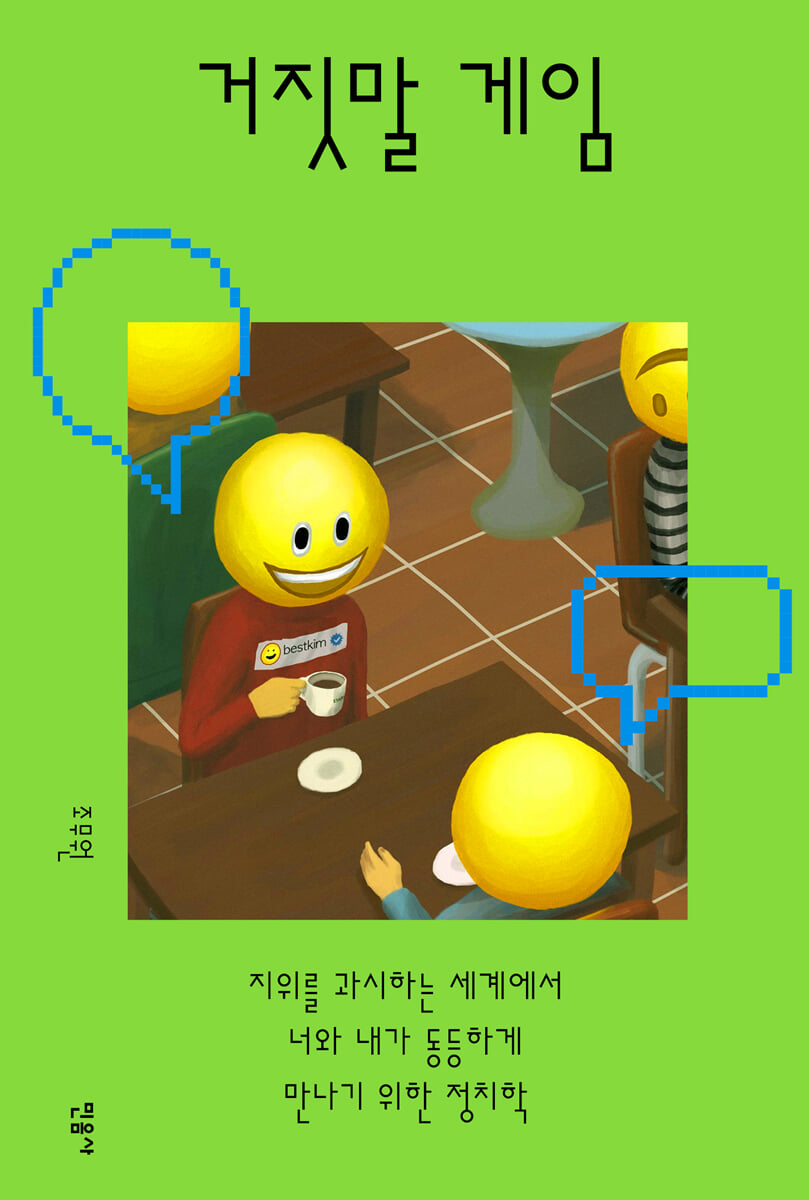 |
Description
Book Introduction
Trump's Lies, Yoon Seok-yeol's Martial Law
From the occupation of the Western District Court to the Constitutional Court ruling
Analyzing sharp political issues
Thinking about the state and law, freedom and equality
Social Criticism by a Young Political Scientist
Why does Trump continue to tell lies that will be exposed so quickly? What does Yoon Seok-yeol mean when he says, "Our country is a liberal democracy"? Why did men in their 20s and 30s climb over the Western District Court walls? With the impeachment verdict in April 2025, Korean society appeared to have overcome martial law, but the subsequent intensification of political conflict demands a new framework for understanding Korean politics.
"The Lying Game" proposes that we let go of the question, "Is it true or false?"
What if we view all of Trump's words, his declaration of martial law, the riots at the Western District Court, and even the Constitutional Court's ruling as a form of acting for status quo ante? In his previous work, "We Who Change Us," young political scientist Jo Moo-won explored the meaning of the "promise" that creates community. In his second book, he proposes a "lying game" that renders all truth provisional as a framework for understanding reality.
When we move beyond the question of what is true, a narrow path opens up for different people to meet as equals.
From the occupation of the Western District Court to the Constitutional Court ruling
Analyzing sharp political issues
Thinking about the state and law, freedom and equality
Social Criticism by a Young Political Scientist
Why does Trump continue to tell lies that will be exposed so quickly? What does Yoon Seok-yeol mean when he says, "Our country is a liberal democracy"? Why did men in their 20s and 30s climb over the Western District Court walls? With the impeachment verdict in April 2025, Korean society appeared to have overcome martial law, but the subsequent intensification of political conflict demands a new framework for understanding Korean politics.
"The Lying Game" proposes that we let go of the question, "Is it true or false?"
What if we view all of Trump's words, his declaration of martial law, the riots at the Western District Court, and even the Constitutional Court's ruling as a form of acting for status quo ante? In his previous work, "We Who Change Us," young political scientist Jo Moo-won explored the meaning of the "promise" that creates community. In his second book, he proposes a "lying game" that renders all truth provisional as a framework for understanding reality.
When we move beyond the question of what is true, a narrow path opens up for different people to meet as equals.
- You can preview some of the book's contents.
Preview
index
Enter - The Lying Game is Over! 5
Chapter 1: Trump's Theater 27
Chapter 2: A Society of Show-Off Humans 49
Chapter 3: The Failure of Showoff, the Beginning of Conspiracy Theories 73
Chapter 4: Nation, New Idol 103
Chapter 5: The Limits of the Lie of the Nation 135
Chapter 6: Theater Nation Korea 165
Chapter 7: Social Media and Lonely Losers 193
Further Reading 221
Chapter 1: Trump's Theater 27
Chapter 2: A Society of Show-Off Humans 49
Chapter 3: The Failure of Showoff, the Beginning of Conspiracy Theories 73
Chapter 4: Nation, New Idol 103
Chapter 5: The Limits of the Lie of the Nation 135
Chapter 6: Theater Nation Korea 165
Chapter 7: Social Media and Lonely Losers 193
Further Reading 221
Into the book
The lying game is doubly dangerous today, as more politicians are willing to lie, and at the same time, people value their identities more than ever.
People who are tired of the hypocrisy of politics seem to be demanding a politics based more on truth.
In some ways, both the left and the right rely on the politics of truth.
The idea that humans are equal and therefore should be treated equally, or conversely that humans are inherently unequal and therefore should be treated unequally, is simply a dependence on different truths.
But when the truth that each person believes becomes the truth, all conflicts become unresolvable.
At this point, 'lies' create a buffer zone between us by making all truth provisional, leaving room for exploring possible solutions to the relationship.
--- From "Entering"
It doesn't matter whether Trump actually holds these beliefs.
What is important is that his words and actions fill the public sphere, which can be called the stage of appearance.
It grabs attention, increases views, and drives spread.
Whenever serious people try to judge the truth of politicians' words, they are invited to the stage they have planned.
--- From "Chapter 1, 'Trump's Theater'"
Even in the 'performative male' phenomenon, books are important objects that reveal emotional tastes.
The main items of 'show-off men' are known to be paper books, matcha lattes, wired earphones, cameras, and eco-bags.
It would be even better if it was an eco-bag or t-shirt with a feminist slogan on it.
Compared to Burnett's display of his masculinity as he occupied the White House, it seems positive that he is breaking away from traditional masculinity, experimenting with diverse tastes and even reading books often.
But there are striking similarities between Burnett and 'performative mail', which display very different masculinities.
The fact is that they are all show-off people.
--- From Chapter 2, "A Society of Show-Off People"
There is a point to the movements that do not hesitate to use physical violence against the government that goes beyond mere identity politics.
When does identity politics, which considers my group to be ignored and this alienation incomprehensible from the outside, become the argument for a world that revolves around me? When do humans reject objective order and become dependent on their own states of mind? Or, perhaps, in a more grandiose form, we might ask:
When do people appeal to God?
--- From Chapter 3, “Failure to Show Off, the Beginning of Conspiracy Theories”
Humans compete for scarce resources, but at the heart of such competition lies the desire for honor.
Humans first resort to violence to protect their bodies, that is, to maintain sensory motor function and self-preservation.
But the ultimate crux of the conflict lies in the evaluations made between humans.
“Violence is used because of a single word, a single smile, a difference of opinion, or a trivial expression of belittling about one’s identity, one’s relatives, friends, ethnicity, occupation, or family.”
This is the state of 'war of all against all', which is commonly referred to as the Hobbesian state of conflict.
The important thing is that this war is not a continuation of actual slaughter, but a state of continued mutual contempt.
In this state of civil war, everyone has no choice but to become a show-off who puts on a good show.
--- From Chapter 4, "The Nation, the New Idol"
Can we truly meet as equals, completely erasing the markers of social superiority and inferiority? Even if we wear the same hat, what if subtle differences in material or fashion reveal class distinctions? However, when we reflect on the nation's struggle as an agent to create itself through lies, straddling the line between appearance and inner self, we realize that individual citizens, too, cannot help but engage in similar efforts.
Rather, the difficulty of performing lying as a political ability lies in the fact that one cannot lie indiscriminately.
The importance of the active act of not taking off one's hat in front of Leviathan is also revealed in a new light in this context.
So how can we restore some form of public worship?
--- From Chapter 5, “The Limits of the Lie Called the Nation”
The Constitutional Court's actions in its impeachment trial can be understood as a theatrical performance that brought the two principles of democracy and the state into the world of visibility.
Unlike other constitutional courts, the Constitutional Court in the impeachment trial of the president used honorifics when announcing the gist of its decision, seemingly reminding the public that the parties to the trial are all equal fellow citizens.
In fact, the trial at this time appears to be a stage that visualizes the crisis and closure of the constitution.
It's a rare moment when everyone can look in the same direction, like on the Leviathan map.
Unlike the impeachment trial of President Park Geun-hye, no separate supplementary opinion was read in the impeachment trial of President Yoon Seok-yeol.
Although the official decision included a supplementary opinion on the impeachment trial process, the presiding Justice, Moon Hyung-bae, concluded his ruling with the following statement, clearly demonstrating that even the Constitutional Court trial is part of a theatrical performance that must appear in the world of visibility.
“Therefore, with the unanimous consent of all the judges, the order is pronounced.
Since this is an impeachment case, we will confirm the sentencing time.
The time now is 11:22 AM.
The petitioner, President Yoon Seok-yeol, is dismissed.
This concludes the sentence.”
--- From Chapter 6, “Korea, the Theater Nation”
The increasingly sophisticated social media arena is once again transforming into a stage for social clubs and parties.
The key to showing off now is to cross the boundaries between online and offline.
Losers watch the winners' show-off party scenes on Instagram 'stories'.
But even so, there is a true winner in this new arena of show.
It's an algorithm.
How will I show myself off? From the beginning, a society of visibility presupposes a disconnect—or, more blatantly, a lie—between the human interior and the exterior. But now, a truly profound disconnect seems to exist between people.
If my ostentation is to extend beyond my small network, I must now rely on algorithms rather than my friends.
As this rhetorical expression shows, an unknown boundary now exists between humans.
This provides a new grammar to the world of visibility.
We seem to see more than ever before, but we are increasingly losing control over what we see.
Does the flood of information reflect my desires? Maybe, maybe not.
It's not easy to decide to wear a hat and see the country together.
Because the algorithm is invisible.
People who are tired of the hypocrisy of politics seem to be demanding a politics based more on truth.
In some ways, both the left and the right rely on the politics of truth.
The idea that humans are equal and therefore should be treated equally, or conversely that humans are inherently unequal and therefore should be treated unequally, is simply a dependence on different truths.
But when the truth that each person believes becomes the truth, all conflicts become unresolvable.
At this point, 'lies' create a buffer zone between us by making all truth provisional, leaving room for exploring possible solutions to the relationship.
--- From "Entering"
It doesn't matter whether Trump actually holds these beliefs.
What is important is that his words and actions fill the public sphere, which can be called the stage of appearance.
It grabs attention, increases views, and drives spread.
Whenever serious people try to judge the truth of politicians' words, they are invited to the stage they have planned.
--- From "Chapter 1, 'Trump's Theater'"
Even in the 'performative male' phenomenon, books are important objects that reveal emotional tastes.
The main items of 'show-off men' are known to be paper books, matcha lattes, wired earphones, cameras, and eco-bags.
It would be even better if it was an eco-bag or t-shirt with a feminist slogan on it.
Compared to Burnett's display of his masculinity as he occupied the White House, it seems positive that he is breaking away from traditional masculinity, experimenting with diverse tastes and even reading books often.
But there are striking similarities between Burnett and 'performative mail', which display very different masculinities.
The fact is that they are all show-off people.
--- From Chapter 2, "A Society of Show-Off People"
There is a point to the movements that do not hesitate to use physical violence against the government that goes beyond mere identity politics.
When does identity politics, which considers my group to be ignored and this alienation incomprehensible from the outside, become the argument for a world that revolves around me? When do humans reject objective order and become dependent on their own states of mind? Or, perhaps, in a more grandiose form, we might ask:
When do people appeal to God?
--- From Chapter 3, “Failure to Show Off, the Beginning of Conspiracy Theories”
Humans compete for scarce resources, but at the heart of such competition lies the desire for honor.
Humans first resort to violence to protect their bodies, that is, to maintain sensory motor function and self-preservation.
But the ultimate crux of the conflict lies in the evaluations made between humans.
“Violence is used because of a single word, a single smile, a difference of opinion, or a trivial expression of belittling about one’s identity, one’s relatives, friends, ethnicity, occupation, or family.”
This is the state of 'war of all against all', which is commonly referred to as the Hobbesian state of conflict.
The important thing is that this war is not a continuation of actual slaughter, but a state of continued mutual contempt.
In this state of civil war, everyone has no choice but to become a show-off who puts on a good show.
--- From Chapter 4, "The Nation, the New Idol"
Can we truly meet as equals, completely erasing the markers of social superiority and inferiority? Even if we wear the same hat, what if subtle differences in material or fashion reveal class distinctions? However, when we reflect on the nation's struggle as an agent to create itself through lies, straddling the line between appearance and inner self, we realize that individual citizens, too, cannot help but engage in similar efforts.
Rather, the difficulty of performing lying as a political ability lies in the fact that one cannot lie indiscriminately.
The importance of the active act of not taking off one's hat in front of Leviathan is also revealed in a new light in this context.
So how can we restore some form of public worship?
--- From Chapter 5, “The Limits of the Lie Called the Nation”
The Constitutional Court's actions in its impeachment trial can be understood as a theatrical performance that brought the two principles of democracy and the state into the world of visibility.
Unlike other constitutional courts, the Constitutional Court in the impeachment trial of the president used honorifics when announcing the gist of its decision, seemingly reminding the public that the parties to the trial are all equal fellow citizens.
In fact, the trial at this time appears to be a stage that visualizes the crisis and closure of the constitution.
It's a rare moment when everyone can look in the same direction, like on the Leviathan map.
Unlike the impeachment trial of President Park Geun-hye, no separate supplementary opinion was read in the impeachment trial of President Yoon Seok-yeol.
Although the official decision included a supplementary opinion on the impeachment trial process, the presiding Justice, Moon Hyung-bae, concluded his ruling with the following statement, clearly demonstrating that even the Constitutional Court trial is part of a theatrical performance that must appear in the world of visibility.
“Therefore, with the unanimous consent of all the judges, the order is pronounced.
Since this is an impeachment case, we will confirm the sentencing time.
The time now is 11:22 AM.
The petitioner, President Yoon Seok-yeol, is dismissed.
This concludes the sentence.”
--- From Chapter 6, “Korea, the Theater Nation”
The increasingly sophisticated social media arena is once again transforming into a stage for social clubs and parties.
The key to showing off now is to cross the boundaries between online and offline.
Losers watch the winners' show-off party scenes on Instagram 'stories'.
But even so, there is a true winner in this new arena of show.
It's an algorithm.
How will I show myself off? From the beginning, a society of visibility presupposes a disconnect—or, more blatantly, a lie—between the human interior and the exterior. But now, a truly profound disconnect seems to exist between people.
If my ostentation is to extend beyond my small network, I must now rely on algorithms rather than my friends.
As this rhetorical expression shows, an unknown boundary now exists between humans.
This provides a new grammar to the world of visibility.
We seem to see more than ever before, but we are increasingly losing control over what we see.
Does the flood of information reflect my desires? Maybe, maybe not.
It's not easy to decide to wear a hat and see the country together.
Because the algorithm is invisible.
--- From Chapter 7, "Social Media and Lonely Losers"
Publisher's Review
In a world where what you see is everything
We are not in a truth game
You're playing a lying game!
Everyone lies.
The era of authenticity, which demands looking inside yourself and finding your true self, is also an era in which showing yourself is more important than ever.
The images we upload to social media are not fake, but they are not the truth, they are fabricated, a kind of lie.
Lies are spread throughout conversations with friends, job interviews, and salary negotiations.
“Your new clothes are pretty.” “I’ll do my best.” “Our company aims for a horizontal atmosphere.” People aren’t playing a game of truth, where they transparently tell the truth, but a game of lies, where they choose at every moment what to show others.
Everyone is an actor on stage.
The problem is that the conditions of life that force us to see, compare, and evaluate each other inevitably give rise to feelings of jealousy and contempt.
People who look down on each other and feel anxious when comparing themselves to others cannot be truly free.
The competition for status to show off just continues endlessly.
So how can we escape the mere competition of showing off our superiority over others? Can people with different looks, financial resources, and social status truly meet on equal footing? This is the central question of this book.
"Social media is
"It's a stage for failed show-offs."
Rousseau, who was excluded from the salons of 18th century Paris,
When it comes to the founders of 21st century social media
Humans are show-off creatures.
The 'text hip' craze shows off reading as a form of display, and the 'perfoman' phenomenon shows the existence of young men who are conscious of women's gaze.
Meanwhile, 'Youngpoti' is a trendy term that mocks those who fail at showing off.
Will ostentation succeed or fail? This is the crucial question that preoccupies us today.
When we view the world through the lens of 'showing off,' we gain a perspective that penetrates from the inner world of modern people to the crises of modern society.
Let's watch the movie "The Social Network," a fictionalized account of Mark Zuckerberg's journey to founding the social networking service "Facebook."
Mark is a shy person who doesn't fit into the popular social circles.
The "losers" who can't get into the fancy parties create social media to vent their frustrations and revenge, and Facebook soon becomes a platform for the "timid outcasts" who can't fit into the social clubs to show off.
Surprisingly, this overlaps with the fact that Jean-Jacques Rousseau, the French thinker who explored the origins of social inequality and proposed a new national image, wrote his autobiography in isolation in his later years, obsessed with the idea that he was “not understood by the world.”
Those who fail to interact socially either become engrossed in a never-ending competition of show-offs or fall into alternative beliefs.
This keen insight provides a clue to understanding the parallel events of the U.S. Capitol riots and the Western District Court riots in South Korea.
"Just as Rousseau imagined a global conspiracy in his solitude, today's social media serves as a distribution channel and rallying point for conspiracy theories for losers."
Rousseau foresaw a secret 'competition for charm'
Even Hobbes warned against 'hate speech' that could lead to civil war.
Reading Political Philosophy for a New Generation
"The Lying Game" reinterprets a classic and offers a unique perspective on diagnosing today's crisis of democracy.
In Rousseau's philosophy, we read the origins of the competition for attractiveness that modern people cannot avoid.
Hobbes' famous 'state of nature' is reinterpreted not as a simple state of struggle among all people, but as a state of exchanging petty expressions of dislike.
This is a study that seeks to find the origins of the political civil war that is rampant today.
Jo Moo-won mainly deals with the thoughts of Hobbes and Rousseau, representative political philosophers of the modern era, and broadly covers political philosophy and political economics of the 17th and 18th centuries, including Montesquieu, Machiavelli, John Locke, and Adam Smith.
Furthermore, we reread the theories of thinkers who explored the relationship between politics and authority, state and society, such as Thorstein Veblen, Max Weber, Hannah Arendt, Clifford Geertz, and Erving Goffman, through the keyword of ‘lie.’
He critically examines concepts essential to understanding contemporary politics, such as identity politics, the struggle for recognition, and the theater state, and engages head-on with prominent contemporary thinkers such as Francis Fukuyama, Axel Honneth, and Darren Asmoglou.
It sharply analyzes real-world issues such as conspiracy theories, post-truth politics, the attention economy, and political polarization within a solid theoretical context.
In a reality where images flaunting "me" and placards in the square with different political slogans simultaneously capture our attention, "The Lying Game" is a political science for a new generation that we must read to not ignore the jealousy and helplessness we feel every day, and to find a way for different yous and mes to meet as equals.
We are not in a truth game
You're playing a lying game!
Everyone lies.
The era of authenticity, which demands looking inside yourself and finding your true self, is also an era in which showing yourself is more important than ever.
The images we upload to social media are not fake, but they are not the truth, they are fabricated, a kind of lie.
Lies are spread throughout conversations with friends, job interviews, and salary negotiations.
“Your new clothes are pretty.” “I’ll do my best.” “Our company aims for a horizontal atmosphere.” People aren’t playing a game of truth, where they transparently tell the truth, but a game of lies, where they choose at every moment what to show others.
Everyone is an actor on stage.
The problem is that the conditions of life that force us to see, compare, and evaluate each other inevitably give rise to feelings of jealousy and contempt.
People who look down on each other and feel anxious when comparing themselves to others cannot be truly free.
The competition for status to show off just continues endlessly.
So how can we escape the mere competition of showing off our superiority over others? Can people with different looks, financial resources, and social status truly meet on equal footing? This is the central question of this book.
"Social media is
"It's a stage for failed show-offs."
Rousseau, who was excluded from the salons of 18th century Paris,
When it comes to the founders of 21st century social media
Humans are show-off creatures.
The 'text hip' craze shows off reading as a form of display, and the 'perfoman' phenomenon shows the existence of young men who are conscious of women's gaze.
Meanwhile, 'Youngpoti' is a trendy term that mocks those who fail at showing off.
Will ostentation succeed or fail? This is the crucial question that preoccupies us today.
When we view the world through the lens of 'showing off,' we gain a perspective that penetrates from the inner world of modern people to the crises of modern society.
Let's watch the movie "The Social Network," a fictionalized account of Mark Zuckerberg's journey to founding the social networking service "Facebook."
Mark is a shy person who doesn't fit into the popular social circles.
The "losers" who can't get into the fancy parties create social media to vent their frustrations and revenge, and Facebook soon becomes a platform for the "timid outcasts" who can't fit into the social clubs to show off.
Surprisingly, this overlaps with the fact that Jean-Jacques Rousseau, the French thinker who explored the origins of social inequality and proposed a new national image, wrote his autobiography in isolation in his later years, obsessed with the idea that he was “not understood by the world.”
Those who fail to interact socially either become engrossed in a never-ending competition of show-offs or fall into alternative beliefs.
This keen insight provides a clue to understanding the parallel events of the U.S. Capitol riots and the Western District Court riots in South Korea.
"Just as Rousseau imagined a global conspiracy in his solitude, today's social media serves as a distribution channel and rallying point for conspiracy theories for losers."
Rousseau foresaw a secret 'competition for charm'
Even Hobbes warned against 'hate speech' that could lead to civil war.
Reading Political Philosophy for a New Generation
"The Lying Game" reinterprets a classic and offers a unique perspective on diagnosing today's crisis of democracy.
In Rousseau's philosophy, we read the origins of the competition for attractiveness that modern people cannot avoid.
Hobbes' famous 'state of nature' is reinterpreted not as a simple state of struggle among all people, but as a state of exchanging petty expressions of dislike.
This is a study that seeks to find the origins of the political civil war that is rampant today.
Jo Moo-won mainly deals with the thoughts of Hobbes and Rousseau, representative political philosophers of the modern era, and broadly covers political philosophy and political economics of the 17th and 18th centuries, including Montesquieu, Machiavelli, John Locke, and Adam Smith.
Furthermore, we reread the theories of thinkers who explored the relationship between politics and authority, state and society, such as Thorstein Veblen, Max Weber, Hannah Arendt, Clifford Geertz, and Erving Goffman, through the keyword of ‘lie.’
He critically examines concepts essential to understanding contemporary politics, such as identity politics, the struggle for recognition, and the theater state, and engages head-on with prominent contemporary thinkers such as Francis Fukuyama, Axel Honneth, and Darren Asmoglou.
It sharply analyzes real-world issues such as conspiracy theories, post-truth politics, the attention economy, and political polarization within a solid theoretical context.
In a reality where images flaunting "me" and placards in the square with different political slogans simultaneously capture our attention, "The Lying Game" is a political science for a new generation that we must read to not ignore the jealousy and helplessness we feel every day, and to find a way for different yous and mes to meet as equals.
GOODS SPECIFICS
- Date of issue: November 7, 2025
- Format: Paperback book binding method guide
- Page count, weight, size: 232 pages | 340g | 135*200*15mm
- ISBN13: 9788937492341
- ISBN10: 8937492342
You may also like
카테고리
korean


korean

![GQ KOREA Mark (Monthly): December [2025]](http://librairie.coreenne.fr/cdn/shop/files/8ef265dbbfbf186523ed75ba7319009d.jpg?v=1765340328&width=3840)


