

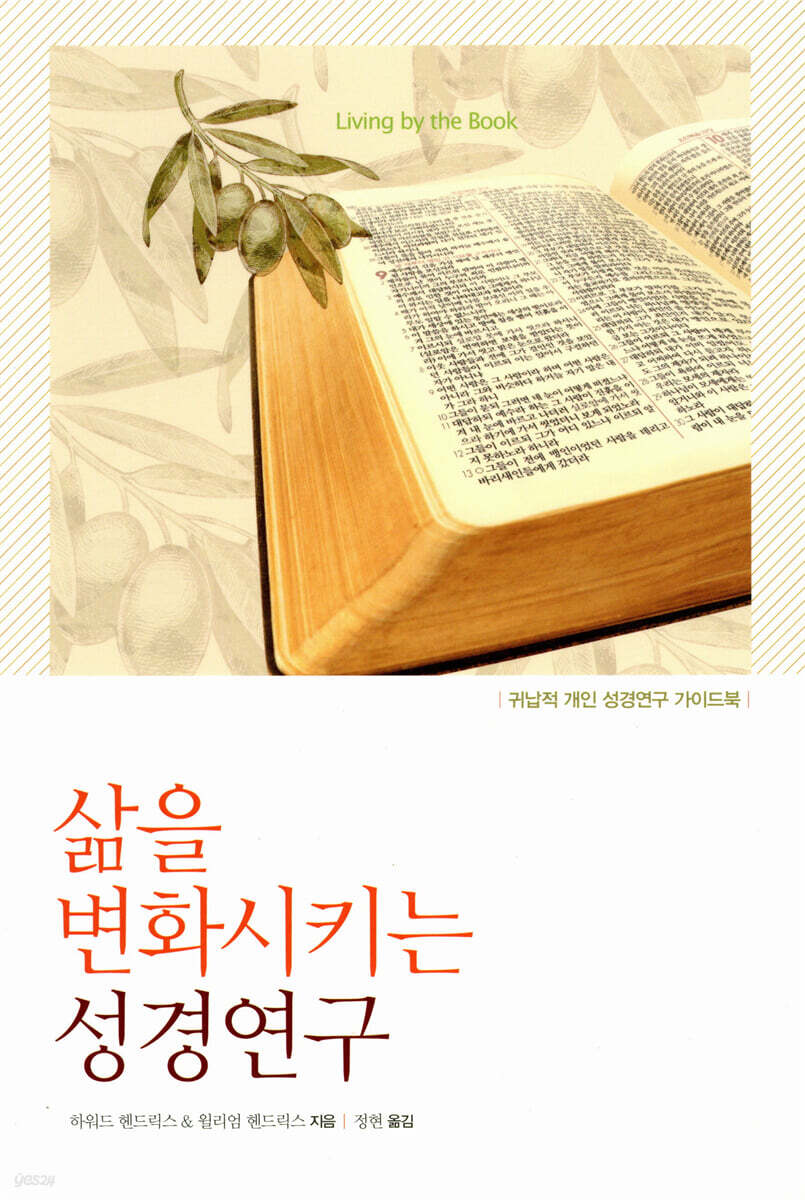
Life-Changing Bible Study
 |
Description
Book Introduction
God gave the Bible for "all people," not "some special people," yet many people hesitate to dive right into it.
So, although we know a lot about the Bible, we often don't know much about the Bible itself.
The purpose of this book is to help these people reach a new turning point in their lives through the Bible.
Since its first publication in Korea in 1993, this book has contributed greatly to helping readers understand the meaning of the Word and apply it to their lives through inductive personal Bible study (PBS) for nearly 20 years.
This book still offers a helpful and diverse tool for people of all faith backgrounds, from those who are new to the Bible to those who have been attending church for many years but have never seriously studied the Bible.
This book, written by an author who has taught the Bible for over 50 years, presents a rich and systematic account of the know-how and various examples he has gained through his experience. It is especially meaningful in that it teaches us the right attitude toward the Bible based on a healthy and appropriate perspective on each stage of observation, interpretation, and application.
This book will be your first step in guiding you through the amazing transformation of your life through the living Word of God.
So, although we know a lot about the Bible, we often don't know much about the Bible itself.
The purpose of this book is to help these people reach a new turning point in their lives through the Bible.
Since its first publication in Korea in 1993, this book has contributed greatly to helping readers understand the meaning of the Word and apply it to their lives through inductive personal Bible study (PBS) for nearly 20 years.
This book still offers a helpful and diverse tool for people of all faith backgrounds, from those who are new to the Bible to those who have been attending church for many years but have never seriously studied the Bible.
This book, written by an author who has taught the Bible for over 50 years, presents a rich and systematic account of the know-how and various examples he has gained through his experience. It is especially meaningful in that it teaches us the right attitude toward the Bible based on a healthy and appropriate perspective on each stage of observation, interpretation, and application.
This book will be your first step in guiding you through the amazing transformation of your life through the living Word of God.
- You can preview some of the book's contents.
Preview
index
To Korean readers
Recommendation
Translator's Preface to the Revised Edition
Preface to the Revised Edition
Preface to the first edition
1.
Why not study the Bible?
2.
Why Study the Bible
3.
How does this book help?
4.
An overview of each course in this book
Step 1: Observation
5.
The importance of observation
6.
Start with one verse
7.
First, learn how to read the Bible.
10 Strategies for Effective Bible Reading
8.
Read and explore
9.
Read it over and over again
10.
Read with patience
11.
Read analytically
12.
Read with a prayerful heart
13.
Read using a variety of methods
14.
Read with meditation
15.
Read with an understanding of the purpose
16.
Read while digesting the content
17.
Read with the eyes of a telescope
18.
Study paragraph by paragraph
6 Clues for Effective Observation
19.
Note the emphasis
20.
Note the repetition
21.
Pay attention to what is interconnected
22.
Notice what is similar and what is different.
23.
Focus on what's helpful in real life
24.
Understand the big picture
25.
Summary of observations
26.
meaningless observation
Step 2: Interpretation
27.
The importance of interpretation
28.
Handle with care!
29.
What kind of literary style is it?
Five Keys to Interpretation
30.
detail
31.
context
32.
comparison
33.
culture
34.
reference
35.
Understanding Key Terms
36.
Correct understanding of figurative expressions
37.
Summary of interpretation
38.
Don't stop at interpretation!
Step 3: Apply
39.
The importance of application
40.
The truth that changes lives
41.
A changed person
42.
4 Steps to Application
43.
Customized Christianity
44.
9 Questions to Ask Before Applying
45.
Then and Now
46.
The principles that guide life
47.
The process of life change
48.
3 Suggestions to Change Your Life
References
main
Recommendation
Translator's Preface to the Revised Edition
Preface to the Revised Edition
Preface to the first edition
1.
Why not study the Bible?
2.
Why Study the Bible
3.
How does this book help?
4.
An overview of each course in this book
Step 1: Observation
5.
The importance of observation
6.
Start with one verse
7.
First, learn how to read the Bible.
10 Strategies for Effective Bible Reading
8.
Read and explore
9.
Read it over and over again
10.
Read with patience
11.
Read analytically
12.
Read with a prayerful heart
13.
Read using a variety of methods
14.
Read with meditation
15.
Read with an understanding of the purpose
16.
Read while digesting the content
17.
Read with the eyes of a telescope
18.
Study paragraph by paragraph
6 Clues for Effective Observation
19.
Note the emphasis
20.
Note the repetition
21.
Pay attention to what is interconnected
22.
Notice what is similar and what is different.
23.
Focus on what's helpful in real life
24.
Understand the big picture
25.
Summary of observations
26.
meaningless observation
Step 2: Interpretation
27.
The importance of interpretation
28.
Handle with care!
29.
What kind of literary style is it?
Five Keys to Interpretation
30.
detail
31.
context
32.
comparison
33.
culture
34.
reference
35.
Understanding Key Terms
36.
Correct understanding of figurative expressions
37.
Summary of interpretation
38.
Don't stop at interpretation!
Step 3: Apply
39.
The importance of application
40.
The truth that changes lives
41.
A changed person
42.
4 Steps to Application
43.
Customized Christianity
44.
9 Questions to Ask Before Applying
45.
Then and Now
46.
The principles that guide life
47.
The process of life change
48.
3 Suggestions to Change Your Life
References
main
Into the book
Who studies the Bible? Historians, linguists, or theologians? The Bible contains more than these scholars could ever grasp, even after a lifetime of study.
However, the Bible was given primarily for all who believe in Jesus Christ and become children of God.
As followers of Christ, we live in a spiritual war against this world that opposes the Lord, and this Bible passage presents us with a strategy for victory.
This war must be fought directly by Christians.
Paul exhorts Timothy to rightly handle the word of God so that he may be approved by God and not be put to shame.
--- p.9
Well, now everything is in your hands.
God still wants to speak directly with you in the 21st century.
God has written all the messages you need in the Bible.
God strongly desires that each of you come before His Word and study it for yourself for the following three reasons.
To grow spiritually and mature spiritually, to be prepared and trained to become a pure and sharp instrument that can be used to accomplish God's will.
The question before you now is this:
“Why not dive into God’s Word?” --- p.37
The meaning should not be our subjective thoughts inserted into the text, but the objective truth of God's word should be read out from the text.
As some people say, studying the Bible is about seeking God and contemplating “God’s thoughts.”
God is a thinking being, and he has revealed his thoughts in his Word.
--- p.248
A special category of prophecy is 'revelation' or 'revelation.'
The Book of Revelation is a representative example of apocalypse.
The Apocalypse deals with the cataclysmic events that will occur globally in connection with the end of the world.
The language used in the Revelation is highly symbolic, and events unfold with the speed and dazzling speed of light and sound.
As such, these elements provide a breeding ground for fanciful and highly subjective interpretations.
To avoid this, when studying the book of Revelation, I suggest paying close attention to the structure of the book as a whole.
What is the flow of the book from beginning to end? What changes are taking place? And for whom is this section written? What was the historical and cultural context of the author's time? How did these circumstances influence the author's approach to communication? Regarding the symbolism of Revelation, a close study of the Old Testament can provide insight into what the author is describing.
Rather than worrying about the timeline of future events, we should focus more on examining what this book meant to the early church.
--- p.276
Many Christians are like novice photographers who throw away their photos due to overexposure or lack of developing time.
They are often exposed to the sunlight of God's Word.
But nothing much changes in their lives.
The problem is not God's word.
As we saw in the previous chapter, the Bible fundamentally changes us.
But if that is true, then spiritual growth is a commitment to change.
Right here lies our problem.
We hate changes of heart the most.
They will do anything to avoid change.
In this chapter, we will explore ways to overcome this spiritual inertia.
--- p.392
The fact that biblical truth applies so flexibly to so many different people in such diverse environments is only part of the praise for God's wisdom.
Only God can speak truths that are so universally applicable and never change.
The fact that God's Word has the ability to be applied appropriately to each individual's diverse circumstances allows us to make customized applications that make Christianity our own.
This means that we need not be content with leaving God's Word superficial and boring, without any direct help or stimulation to our personal circumstances.
That is, we must avoid a one-size-fits-all approach that may work well for some but leave most with a lukewarm faith experience.
However, the Bible was given primarily for all who believe in Jesus Christ and become children of God.
As followers of Christ, we live in a spiritual war against this world that opposes the Lord, and this Bible passage presents us with a strategy for victory.
This war must be fought directly by Christians.
Paul exhorts Timothy to rightly handle the word of God so that he may be approved by God and not be put to shame.
--- p.9
Well, now everything is in your hands.
God still wants to speak directly with you in the 21st century.
God has written all the messages you need in the Bible.
God strongly desires that each of you come before His Word and study it for yourself for the following three reasons.
To grow spiritually and mature spiritually, to be prepared and trained to become a pure and sharp instrument that can be used to accomplish God's will.
The question before you now is this:
“Why not dive into God’s Word?” --- p.37
The meaning should not be our subjective thoughts inserted into the text, but the objective truth of God's word should be read out from the text.
As some people say, studying the Bible is about seeking God and contemplating “God’s thoughts.”
God is a thinking being, and he has revealed his thoughts in his Word.
--- p.248
A special category of prophecy is 'revelation' or 'revelation.'
The Book of Revelation is a representative example of apocalypse.
The Apocalypse deals with the cataclysmic events that will occur globally in connection with the end of the world.
The language used in the Revelation is highly symbolic, and events unfold with the speed and dazzling speed of light and sound.
As such, these elements provide a breeding ground for fanciful and highly subjective interpretations.
To avoid this, when studying the book of Revelation, I suggest paying close attention to the structure of the book as a whole.
What is the flow of the book from beginning to end? What changes are taking place? And for whom is this section written? What was the historical and cultural context of the author's time? How did these circumstances influence the author's approach to communication? Regarding the symbolism of Revelation, a close study of the Old Testament can provide insight into what the author is describing.
Rather than worrying about the timeline of future events, we should focus more on examining what this book meant to the early church.
--- p.276
Many Christians are like novice photographers who throw away their photos due to overexposure or lack of developing time.
They are often exposed to the sunlight of God's Word.
But nothing much changes in their lives.
The problem is not God's word.
As we saw in the previous chapter, the Bible fundamentally changes us.
But if that is true, then spiritual growth is a commitment to change.
Right here lies our problem.
We hate changes of heart the most.
They will do anything to avoid change.
In this chapter, we will explore ways to overcome this spiritual inertia.
--- p.392
The fact that biblical truth applies so flexibly to so many different people in such diverse environments is only part of the praise for God's wisdom.
Only God can speak truths that are so universally applicable and never change.
The fact that God's Word has the ability to be applied appropriately to each individual's diverse circumstances allows us to make customized applications that make Christianity our own.
This means that we need not be content with leaving God's Word superficial and boring, without any direct help or stimulation to our personal circumstances.
That is, we must avoid a one-size-fits-all approach that may work well for some but leave most with a lukewarm faith experience.
--- p.415
GOODS SPECIFICS
- Date of publication: June 7, 2012
- Page count, weight, size: 487 pages | 724g | 153*224*30mm
- ISBN13: 9788938815446
- ISBN10: 8938815447
You may also like
카테고리
korean


korean

![GQ KOREA Mark (Monthly): December [2025]](http://librairie.coreenne.fr/cdn/shop/files/8ef265dbbfbf186523ed75ba7319009d.jpg?v=1765340328&width=3840)


