

Find the turtle's dream wings
 |
Description
Book Introduction
Before reading 『Turtle's Dream, In Search of Wings』
The title of this book suggests something weighty.
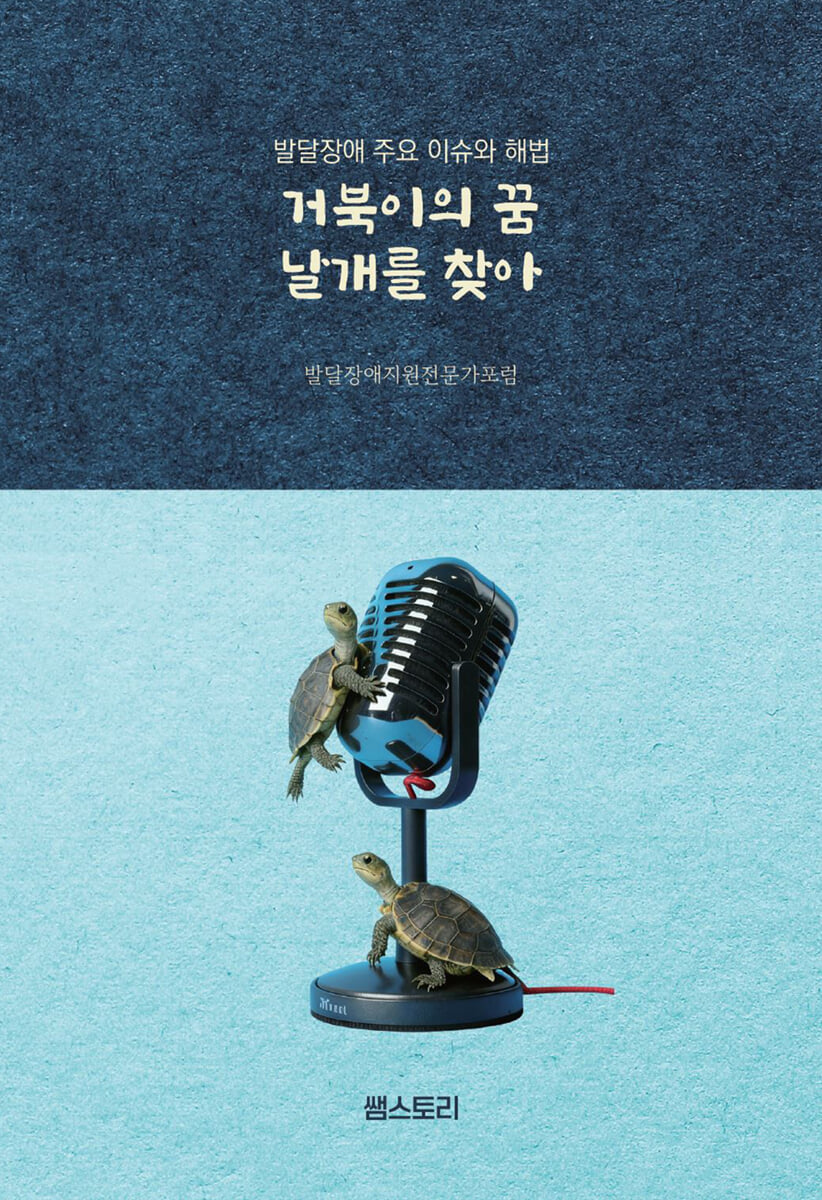
The 'turtle' symbolizes people with developmental disabilities who are stigmatized as beings left behind in a society obsessed with speed and who deviate from the orbit of 'normality'.
So what are the "wings" they seek? Some might interpret these wings as a synonym for the miracle of "curing" or "overcoming" a disability, a moment when the disability magically disappears.
However, this book, compiled by the Developmental Disability Support Specialist Forum, begins by shattered such common sense and false expectations with sharp language from the very first chapter.
Rather than offering vague, sentimental reassurances like, "It'll be okay," this book directly dismantles the long-standing prejudices and myths surrounding developmental disabilities in our society.
And on that dismantled place, we firmly declare that we must abandon the narrow frame of 'treatment' and face the essence of 'life' itself.
"The Turtle's Dream, In Search of Wings" is not a collection of 21 fragmented stories, but rather a vast tapestry that weaves together the entire process from early development to independence in adulthood, all with the goal of a "dignified life" that should be possible for people with developmental disabilities.
The title of this book suggests something weighty.
The 'turtle' symbolizes people with developmental disabilities who are stigmatized as beings left behind in a society obsessed with speed and who deviate from the orbit of 'normality'.
So what are the "wings" they seek? Some might interpret these wings as a synonym for the miracle of "curing" or "overcoming" a disability, a moment when the disability magically disappears.
However, this book, compiled by the Developmental Disability Support Specialist Forum, begins by shattered such common sense and false expectations with sharp language from the very first chapter.
Rather than offering vague, sentimental reassurances like, "It'll be okay," this book directly dismantles the long-standing prejudices and myths surrounding developmental disabilities in our society.
And on that dismantled place, we firmly declare that we must abandon the narrow frame of 'treatment' and face the essence of 'life' itself.
"The Turtle's Dream, In Search of Wings" is not a collection of 21 fragmented stories, but rather a vast tapestry that weaves together the entire process from early development to independence in adulthood, all with the goal of a "dignified life" that should be possible for people with developmental disabilities.
- You can preview some of the book's contents.
Preview
index
Introduction
Chapter 1: A Hopeful Torture Called "Complete Cure"
Chapter 2: My Life, Not Yours
Chapter 3: How do autistic children understand other people's minds?
Chapter 4: Can you hear the voices of people with severe autism?
Chapter 5: The Mirror Reflecting the Child, the Parents' Heart
Chapter 6: Communication is not a goal of education, but a right.
Chapter 7: Being unable to speak does not mean you have nothing to say.
Chapter 8: How to Dance Together Without Stepping on Each Other's Feet
Chapter 9: Six Keys to Accessing Your Child's World
Chapter 10: Nine Principles of Education for Students with Severe Developmental Disabilities
Chapter 11 How Should Schools Support Students with Developmental Disabilities?
Chapter 12: Important Principles for Disciplining Children with Autism
Chapter 13: Non-Physical Calming Strategies for Dealing with Crisis Situations
Chapter 14: From Cradle to Grave: A Framework for Support by Life Cycle
Chapter 15: From Guest to Master: On Active Support
Chapter 16: The Triangle of Self-Determination, Communication, and Action
Chapter 17: New Imaginations of the "Occupations" of People with Developmental Disabilities
Chapter 18: Our Neighborhood Explorer, the Intelligent Jaehyun
Chapter 19: A Step Possible Because We Are Together
Chapter 20: Planning the Life of a Child with Disabilities
Chapter 21: The Decision to Leave: Preparing for Retirement for Parents of People with Developmental Disabilities
Chapter 1: A Hopeful Torture Called "Complete Cure"
Chapter 2: My Life, Not Yours
Chapter 3: How do autistic children understand other people's minds?
Chapter 4: Can you hear the voices of people with severe autism?
Chapter 5: The Mirror Reflecting the Child, the Parents' Heart
Chapter 6: Communication is not a goal of education, but a right.
Chapter 7: Being unable to speak does not mean you have nothing to say.
Chapter 8: How to Dance Together Without Stepping on Each Other's Feet
Chapter 9: Six Keys to Accessing Your Child's World
Chapter 10: Nine Principles of Education for Students with Severe Developmental Disabilities
Chapter 11 How Should Schools Support Students with Developmental Disabilities?
Chapter 12: Important Principles for Disciplining Children with Autism
Chapter 13: Non-Physical Calming Strategies for Dealing with Crisis Situations
Chapter 14: From Cradle to Grave: A Framework for Support by Life Cycle
Chapter 15: From Guest to Master: On Active Support
Chapter 16: The Triangle of Self-Determination, Communication, and Action
Chapter 17: New Imaginations of the "Occupations" of People with Developmental Disabilities
Chapter 18: Our Neighborhood Explorer, the Intelligent Jaehyun
Chapter 19: A Step Possible Because We Are Together
Chapter 20: Planning the Life of a Child with Disabilities
Chapter 21: The Decision to Leave: Preparing for Retirement for Parents of People with Developmental Disabilities
Into the book
“Our goal is not a ‘cure.’
It is about ‘supporting’ children so that they can live more happily as they are.
"All the parents' efforts to get their children on the 'normal' track ultimately lead to misery for both the children and the parents.
Parents should not be 'therapists'.
We must become our child's strongest 'companion.'"
"The goal of early intervention should not be to change the child, but to help the child discover the joy of interacting with the world."
--- p.17~18
Challenging behavior is not 'problem behavior'.
It is the most desperate 'attempt at communication' of those who are deprived of their only means of expressing their will, desires, and refusals."
"Rather than trying to 'eliminate' that behavior, we need to find ways to 'hear' that voice."
"AAC (Augmentative and Alternative Communication) is not just an assistive device.
It is a tool of 'human rights' that restores a human being's voice and allows them to enjoy their rightful rights."
--- p.74
"It's not that students with developmental disabilities 'can't learn', it's that we 'can't teach'."
"If multiplication is difficult, you can teach them how to use a calculator.
Education should be 'for life', not for proving 'normality'."
--- p.102
Instead of using the prohibitive word “don’t go up,” you should provide a concrete alternative, such as “come down and run here.”
Discipline is not punishment, it is 'teaching.'"
--- p.116
“Active support” does not mean that the market will do everything for you.
It is a process of establishing oneself as the subject of life by 'taking in' all experiences, just as 'taking in' and pouring out a stock pot together.
--- p.147
"I don't know how much of my child's day was filled with meaninglessness by the blind belief that everyone else was doing it."
--- p.168
"It's not that adults with developmental disabilities can't get jobs because they have low functioning.
"He can't work because there's no structure that works for him."
--- p.159
"When we view sex solely as an object of control and oppression, we deprive those involved of the opportunity to learn how to protect their bodies and relate to others."
"Independence is not 'not being dependent,' but 'being able to choose what to rely on.'"
"True independence is enjoying the 'right to self-determination,' including the opportunity to fail, within a network of 'interdependence.'"
--- p.196
"A parent's destiny is not to 'live one day longer than their child.'
"It's about creating a 'social support system' that allows children to live happily even without their parents."
It is about ‘supporting’ children so that they can live more happily as they are.
"All the parents' efforts to get their children on the 'normal' track ultimately lead to misery for both the children and the parents.
Parents should not be 'therapists'.
We must become our child's strongest 'companion.'"
"The goal of early intervention should not be to change the child, but to help the child discover the joy of interacting with the world."
--- p.17~18
Challenging behavior is not 'problem behavior'.
It is the most desperate 'attempt at communication' of those who are deprived of their only means of expressing their will, desires, and refusals."
"Rather than trying to 'eliminate' that behavior, we need to find ways to 'hear' that voice."
"AAC (Augmentative and Alternative Communication) is not just an assistive device.
It is a tool of 'human rights' that restores a human being's voice and allows them to enjoy their rightful rights."
--- p.74
"It's not that students with developmental disabilities 'can't learn', it's that we 'can't teach'."
"If multiplication is difficult, you can teach them how to use a calculator.
Education should be 'for life', not for proving 'normality'."
--- p.102
Instead of using the prohibitive word “don’t go up,” you should provide a concrete alternative, such as “come down and run here.”
Discipline is not punishment, it is 'teaching.'"
--- p.116
“Active support” does not mean that the market will do everything for you.
It is a process of establishing oneself as the subject of life by 'taking in' all experiences, just as 'taking in' and pouring out a stock pot together.
--- p.147
"I don't know how much of my child's day was filled with meaninglessness by the blind belief that everyone else was doing it."
--- p.168
"It's not that adults with developmental disabilities can't get jobs because they have low functioning.
"He can't work because there's no structure that works for him."
--- p.159
"When we view sex solely as an object of control and oppression, we deprive those involved of the opportunity to learn how to protect their bodies and relate to others."
"Independence is not 'not being dependent,' but 'being able to choose what to rely on.'"
"True independence is enjoying the 'right to self-determination,' including the opportunity to fail, within a network of 'interdependence.'"
--- p.196
"A parent's destiny is not to 'live one day longer than their child.'
"It's about creating a 'social support system' that allows children to live happily even without their parents."
--- p.197
Publisher's Review
Dispelling the mirage of 'complete cure'
The most provocative and central virtue of this book is contained in Chapter 1, "The Hopeful Torture Called 'Cure'."
The authors define autism as a "disease that needs to be cured" and criticize the reality of clinging to treatments with little scientific evidence, using the powerful and direct term "torture of hope."
This goes beyond simply criticizing a few specific treatments; it also raises fundamental questions about our society's overall perspective on developmental disabilities, which views them solely through the lens of "abnormality" and "defect."
The book coldly exposes how chasing the mirage of a "cure" can devastate the lives of those affected and their families.
This is not just a matter of wasting a huge amount of time and money.
What is more serious is the emotional breakdown in which the relationship with the child is transformed into that of a 'therapist and client' and the parents become 'supervisors'.
Meanwhile, the golden time for meaningful interaction, or ‘support’, that is essential for the child’s growth, passes by without a trace.
If you are a parent reading this book, this part may be the most painful, but at the same time, it is also the part where you will feel the greatest sense of liberation.
The moment we break free from the obsession that we must 'fix', we can take the first step toward viewing our children as human beings 'as they are', rather than as 'objects to be corrected'.
'Problematic behavior' is an attempt at 'desperate communication.'
In the place where the myth of 'complete cure' has been dispelled, the first and most solid pillar that books establish is 'communication.'
In particular, Chapter 6, “Communication is not the goal of education, but a right,” and Chapter 7, “Not being able to speak does not mean you have nothing to say,” are like the heart of this book.
We are talking about communication as a basic human right, not as a simple skill.
The authors delve into the nature of the behaviors of people with developmental disabilities, what we commonly call "problem behaviors" or "challenging behaviors."
Chapter 16, titled “The Triangle of Self-Determination, Communication, and Action,” encapsulates the core logic of this book.
When a person does not have an appropriate way to express his or her desires and intentions (lack of communication), and is deprived of the opportunity to make even the most basic decisions about his or her life (lack of self-determination), the only way he or she can prove his or her existence and demand something from the world is through desperate struggles that we call "problem behavior."
Therefore, this book strongly urges readers to listen to the 'voice' of the person behind the behavior, before taking the technical approach of 'behavior modification.'
The effort to decipher the silent cries of a person with severe autism who cannot speak (Chapter 4) is the starting point of the 'support' presented in this book.
The Specifics of "How": A Practical Manual Written by Experts and Parents
The reason this book is more than just a declaration; it holds such powerful force is because the authors are practitioners at the forefront of education, welfare, and human rights.
Written by special education teachers, researchers, activists, and, above all, parents of children with developmental disabilities, these articles are not idealistic theories grasping at the clouds, but rather contain concrete "how-tos" learned through blood, sweat, and tears in their respective fields.
Much of the book is filled with concrete, practical guidance you can apply in your own practice, from Six Keys to Connecting to Your Child's World (Chapter 9), Nine Principles for Educating Students with Developing Disabilities (Chapter 10), Principles of Respectful Discipline (Chapter 12), and even Ten Non-Physical Strategies for Calming Someone Without Physical Intervention in a Crisis (Chapter 13).
This is the result of vivid reflections and discussions accumulated over many years through podcast broadcasts, making it even more realistic and relatable.
In particular, Chapter 8, "How to Dance Together Without Stepping on Each Other's Toes," contains realistic advice on how parents and experts, two entities that should be the closest but also most prone to conflict, can work together as partners without stepping on each other's toes.
From the Cradle to the Grave: Why It's Necessary to Decide to Break Up
Another point where this book differs from existing parenting/education guides is its ‘length of perspective.’
This book does not stop at infancy or school age, but persistently examines a person's entire life, "from cradle to grave" (Chapter 14).
This long gaze leads readers beyond solving immediate problems to ask a more fundamental question: 'What kind of life will we ultimately create together?'
Chapter 20, "Designing the Life of a Child with a Disability," and Chapter 21, "Decission to Leave," are the most weighty and important conclusions of this book.
Instead of the desperate determination to "live one day longer than your child" and the shackles of endless responsibility, the authors urge parents to "make the decision to part ways healthily" so that their children can live their own lives without their parents.
This does not mean that you should give up or neglect your children.
It also emphasizes the need to redefine the role of parents from being the subject of 'care' to being an assistant supporting 'independence', and to make efforts to build a 'social system' rather than relying solely on the power of the individual parents.
It confronts the anxiety of parents who cannot leave their 'cold nest' (Chapter 21), and persuasively presents the reason why, despite this, they must create a 'state of being able to choose where to rely' (Chapters 19 and 21), which is independence.
This is a decision for parents and an expression of their ultimate responsibility for their children's dignified lives.
Families of people with developmental disabilities, those working in related fields, and policymakers should all read this book first.
"The Turtle's Dream, In Search of Wings" is a sharp interrogation of how our society treats "human dignity" and "living together" through the lens of developmental disabilities.
If you are a parent who has just received a diagnosis and is feeling lost, this book will help you alleviate your guilt and shift your perspective so you can focus on your child's life, free from the pressure of "treatment."
If you are a teacher or a rehabilitation and welfare professional, this will serve as a sharp mirror to reflect on whether you are suppressing the 'voice' of the person in the name of 'education', 'treatment', or 'functional improvement'.
The 'wings' the turtle needed were not a miracle cure.
It was a strong support called 'support' that protected the minimum human life that a person should be able to enjoy even if he or she has a developmental disability, even if the disability is severe, by actively communicating until the end and believing that 'there is something he or she wants to say even if he or she cannot say it', by having the eyes to read the 'message' beyond the 'problem behavior' that is happening right before his or her eyes.
This book is the most urgent and practical "community declaration" that has arrived in Korean society in 2025, reaching out to us all to create those wings together.
The most provocative and central virtue of this book is contained in Chapter 1, "The Hopeful Torture Called 'Cure'."
The authors define autism as a "disease that needs to be cured" and criticize the reality of clinging to treatments with little scientific evidence, using the powerful and direct term "torture of hope."
This goes beyond simply criticizing a few specific treatments; it also raises fundamental questions about our society's overall perspective on developmental disabilities, which views them solely through the lens of "abnormality" and "defect."
The book coldly exposes how chasing the mirage of a "cure" can devastate the lives of those affected and their families.
This is not just a matter of wasting a huge amount of time and money.
What is more serious is the emotional breakdown in which the relationship with the child is transformed into that of a 'therapist and client' and the parents become 'supervisors'.
Meanwhile, the golden time for meaningful interaction, or ‘support’, that is essential for the child’s growth, passes by without a trace.
If you are a parent reading this book, this part may be the most painful, but at the same time, it is also the part where you will feel the greatest sense of liberation.
The moment we break free from the obsession that we must 'fix', we can take the first step toward viewing our children as human beings 'as they are', rather than as 'objects to be corrected'.
'Problematic behavior' is an attempt at 'desperate communication.'
In the place where the myth of 'complete cure' has been dispelled, the first and most solid pillar that books establish is 'communication.'
In particular, Chapter 6, “Communication is not the goal of education, but a right,” and Chapter 7, “Not being able to speak does not mean you have nothing to say,” are like the heart of this book.
We are talking about communication as a basic human right, not as a simple skill.
The authors delve into the nature of the behaviors of people with developmental disabilities, what we commonly call "problem behaviors" or "challenging behaviors."
Chapter 16, titled “The Triangle of Self-Determination, Communication, and Action,” encapsulates the core logic of this book.
When a person does not have an appropriate way to express his or her desires and intentions (lack of communication), and is deprived of the opportunity to make even the most basic decisions about his or her life (lack of self-determination), the only way he or she can prove his or her existence and demand something from the world is through desperate struggles that we call "problem behavior."
Therefore, this book strongly urges readers to listen to the 'voice' of the person behind the behavior, before taking the technical approach of 'behavior modification.'
The effort to decipher the silent cries of a person with severe autism who cannot speak (Chapter 4) is the starting point of the 'support' presented in this book.
The Specifics of "How": A Practical Manual Written by Experts and Parents
The reason this book is more than just a declaration; it holds such powerful force is because the authors are practitioners at the forefront of education, welfare, and human rights.
Written by special education teachers, researchers, activists, and, above all, parents of children with developmental disabilities, these articles are not idealistic theories grasping at the clouds, but rather contain concrete "how-tos" learned through blood, sweat, and tears in their respective fields.
Much of the book is filled with concrete, practical guidance you can apply in your own practice, from Six Keys to Connecting to Your Child's World (Chapter 9), Nine Principles for Educating Students with Developing Disabilities (Chapter 10), Principles of Respectful Discipline (Chapter 12), and even Ten Non-Physical Strategies for Calming Someone Without Physical Intervention in a Crisis (Chapter 13).
This is the result of vivid reflections and discussions accumulated over many years through podcast broadcasts, making it even more realistic and relatable.
In particular, Chapter 8, "How to Dance Together Without Stepping on Each Other's Toes," contains realistic advice on how parents and experts, two entities that should be the closest but also most prone to conflict, can work together as partners without stepping on each other's toes.
From the Cradle to the Grave: Why It's Necessary to Decide to Break Up
Another point where this book differs from existing parenting/education guides is its ‘length of perspective.’
This book does not stop at infancy or school age, but persistently examines a person's entire life, "from cradle to grave" (Chapter 14).
This long gaze leads readers beyond solving immediate problems to ask a more fundamental question: 'What kind of life will we ultimately create together?'
Chapter 20, "Designing the Life of a Child with a Disability," and Chapter 21, "Decission to Leave," are the most weighty and important conclusions of this book.
Instead of the desperate determination to "live one day longer than your child" and the shackles of endless responsibility, the authors urge parents to "make the decision to part ways healthily" so that their children can live their own lives without their parents.
This does not mean that you should give up or neglect your children.
It also emphasizes the need to redefine the role of parents from being the subject of 'care' to being an assistant supporting 'independence', and to make efforts to build a 'social system' rather than relying solely on the power of the individual parents.
It confronts the anxiety of parents who cannot leave their 'cold nest' (Chapter 21), and persuasively presents the reason why, despite this, they must create a 'state of being able to choose where to rely' (Chapters 19 and 21), which is independence.
This is a decision for parents and an expression of their ultimate responsibility for their children's dignified lives.
Families of people with developmental disabilities, those working in related fields, and policymakers should all read this book first.
"The Turtle's Dream, In Search of Wings" is a sharp interrogation of how our society treats "human dignity" and "living together" through the lens of developmental disabilities.
If you are a parent who has just received a diagnosis and is feeling lost, this book will help you alleviate your guilt and shift your perspective so you can focus on your child's life, free from the pressure of "treatment."
If you are a teacher or a rehabilitation and welfare professional, this will serve as a sharp mirror to reflect on whether you are suppressing the 'voice' of the person in the name of 'education', 'treatment', or 'functional improvement'.
The 'wings' the turtle needed were not a miracle cure.
It was a strong support called 'support' that protected the minimum human life that a person should be able to enjoy even if he or she has a developmental disability, even if the disability is severe, by actively communicating until the end and believing that 'there is something he or she wants to say even if he or she cannot say it', by having the eyes to read the 'message' beyond the 'problem behavior' that is happening right before his or her eyes.
This book is the most urgent and practical "community declaration" that has arrived in Korean society in 2025, reaching out to us all to create those wings together.
GOODS SPECIFICS
- Date of issue: October 31, 2025
- Page count, weight, size: 187 pages | 148*210*20mm
- ISBN13: 9791186314104
- ISBN10: 1186314109
You may also like
카테고리
korean


korean

![GQ KOREA Mark (Monthly): December [2025]](http://librairie.coreenne.fr/cdn/shop/files/8ef265dbbfbf186523ed75ba7319009d.jpg?v=1765340328&width=3840)


