

The Birth of Japanese Meritocracy
 |
Description
Book Introduction
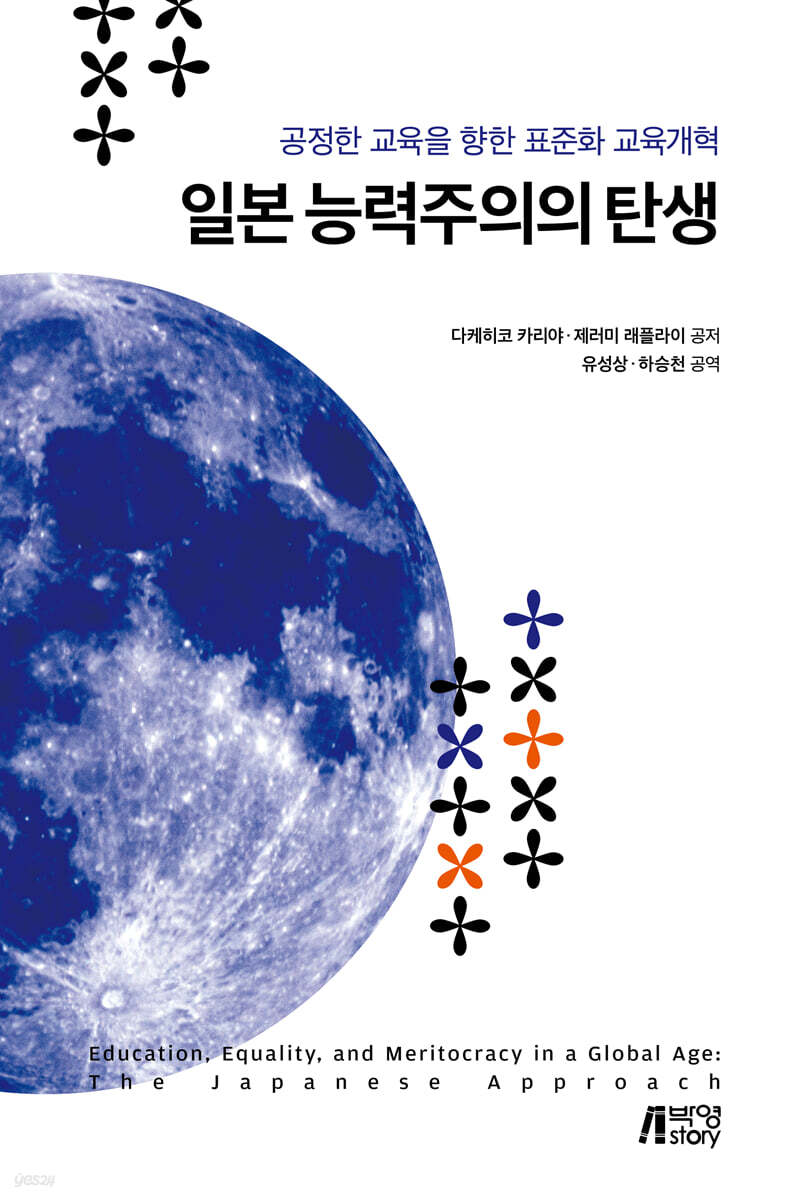
The original title of this book is 『Education, Equality, and Meritocracy in a Global Age』.
The authors critically argue that over the past several decades, as globalization has progressed, the ideology of meritocracy has not only served to criticize educational gaps and inequalities, but also to justify these gaps and inequalities.
Like other countries, Japan, as it went through the process of modernization, set out the goal of providing “equal education for all.”
The ideal of “equal education for all” has now been established as “deep-rooted egalitarianism close to absolute,” but the situation of trying to implement this ideal into concrete policy has faced challenging difficulties.
Japan was no exception.
After World War II and through the 1950s, Japan faced constraints in implementing policies toward educational equality due to a lack of educational resources.
That is, despite the clear desire among major postwar Japanese policymakers for a model of individual equality rooted in individual differences, the financial constraints of education at that particular historical juncture made it impossible to establish the individual student as the fundamental unit of education.
Due to the poor educational cost situation, Japan's unique educational equality was created and implemented through an educational finance approach that replaced per-student tuition with the number of teachers. The authors show that the Western view of educational equality, "individual equality," was transformed into Japan's "spatial equality," which has become the unquestioned formula for educational equality today.
This book describes it as an "unknown revolution," emphasizing that it was "an ambiguous consequence of historical constraints that were not initially intended" or "an unintended policy outgrowth rather than a carefully planned policy intervention."
The authors critically argue that over the past several decades, as globalization has progressed, the ideology of meritocracy has not only served to criticize educational gaps and inequalities, but also to justify these gaps and inequalities.
Like other countries, Japan, as it went through the process of modernization, set out the goal of providing “equal education for all.”
The ideal of “equal education for all” has now been established as “deep-rooted egalitarianism close to absolute,” but the situation of trying to implement this ideal into concrete policy has faced challenging difficulties.
Japan was no exception.
After World War II and through the 1950s, Japan faced constraints in implementing policies toward educational equality due to a lack of educational resources.
That is, despite the clear desire among major postwar Japanese policymakers for a model of individual equality rooted in individual differences, the financial constraints of education at that particular historical juncture made it impossible to establish the individual student as the fundamental unit of education.
Due to the poor educational cost situation, Japan's unique educational equality was created and implemented through an educational finance approach that replaced per-student tuition with the number of teachers. The authors show that the Western view of educational equality, "individual equality," was transformed into Japan's "spatial equality," which has become the unquestioned formula for educational equality today.
This book describes it as an "unknown revolution," emphasizing that it was "an ambiguous consequence of historical constraints that were not initially intended" or "an unintended policy outgrowth rather than a carefully planned policy intervention."
- You can preview some of the book's contents.
Preview
index
Acknowledgmentsㆍⅰ
Translator's Prefaceㆍⅳ
Chapter 1: Introduction: Rethinking Education and Equality in an Age of Inequalityㆍ1
Global Meritocracy? A Brief History of the Formation of the Meritocracy Ideal / A Meritocracy Utopia? The Importance of the Japanese Context in the Debate / Purpose of the Book / Sub-Objectives / Chapter Outlines
Chapter 2: The Story Begins: Why 1958?ㆍ33
Why the late 1950s? / The meaning of a “centralized curriculum” - differences of opinion / Ministry of Education vs. Japan Teachers' Union (JTU) / State control / Ministry of Education explained / From left to right / The Great 6-3 Experiment - Regional educational inequality / Inequality in educational provision: educational resources, teachers, academic achievement / Differences in curriculum implementation / Unraveling the problem: Beyond the left/right divide - departure from new education and learning / How to reduce educational inequality?
Chapter 3: Negative Prewar Legacies and the Roots of the American Modelㆍ71
Distribution of educational resources before the war - public finance in poor areas / Equal educational opportunity and the education finance system / Unequal conditions among teachers / How to solve problems - teacher unit / The most important problem since 1872 / The roots of America: The scientific management revolution - the turn of the century / Ensuring uniformity of educational facilities / Resolving inequality in education finance / Technology of unit costs / Student time standard / Individualization of learning and the logic of education finance - shift from school-centered to child-centered / Learners as individuals
Chapter 4: Draft Education Blueprint for the Postwar Periodㆍ107
Postwar, Restarting - Institutionalization of Compulsory Education / Ministry of Education's Perception / Postwar Demands - Independence of Educational Finance / Ensuring Qualitative and Quantitative Equality in the Educational Environment / Minimum School Standards / The World of Standardization as an Approach to Equality - Hidden Assumptions / Three Key Elements of the Calculation Formula / World Per Student / Another Factor: Demographic Change / Second-Best Options
Chapter 5: The Unknown Revolutionㆍ139
Spatial equality / Trends in education finance and regional inequality / Expanding public input / Structural changes in the distribution of education expenditures / Unknown revolution - homogenization of educational conditions - student-teacher ratio / Improving the number of teachers / Unexpected results / Spatial equality: Towards greater equality - The reality of remote islands / Allocation criteria / Securing extensive regional human resources for teachers / The case of Gifu Prefecture / The case of Fukushima Prefecture / The phenomenon of hollowing out local decentralization / Strong will from below
Chapter 6: The Duality of Standardizationㆍ189
National Survey of Educational Achievement: Reanalysis - Test Administration / The Significance of the Achievement Survey Debate / Connections to Teacher Performance Evaluation / How Standardization Worked / Common Criteria / Establishing Standards for Educational Materials / Connections to Achievement - Reversing Achievement Rankings / Economic Indicators and Achievements / Achieving Excellence and Equity / Spatial Equality and Ambivalence: Classes, Collective Order, and Exam Competition - Classes: Equalization Techniques / Collective Order / High School Entrance Exam Competition
Chapter 7: The Future of Spatial Equality in Modern Japanㆍ231
Too Easy a Criticism Target / Dismantling the Standardized World? Policy Reform 1995-2020 / Curriculum and Teaching Methods (1992-present) / Cultivating Global Talent (2011-present) / Decentralization (2004-present) / The Conflict between Spatial Equality and Reform for Individualized Learning / The Image of One-Way Knowledge-Instilling Education / Stereotypes of Centralized Education: Uniformity in Educational Administration / A Distorted Perspective: The Illusion of Individualization and Individualism
Chapter 8 Conclusionㆍ261
Implications for the Global Era / Neither Dystopia nor Utopia: Revisiting Michael Young's Vision / The Paradox of Standardization / Meritocracy and Achievement in Reducing Inequality / Japan in the Global Dialogue: Is Japan Still on the Brink of Meritocracy? / Changing Inequality / The State of the Individual / Japan in the Global Discourse / 30 Years of Neoliberalism: Education and Equality
Searchㆍ291
Referencesㆍ298
Translator's Prefaceㆍⅳ
Chapter 1: Introduction: Rethinking Education and Equality in an Age of Inequalityㆍ1
Global Meritocracy? A Brief History of the Formation of the Meritocracy Ideal / A Meritocracy Utopia? The Importance of the Japanese Context in the Debate / Purpose of the Book / Sub-Objectives / Chapter Outlines
Chapter 2: The Story Begins: Why 1958?ㆍ33
Why the late 1950s? / The meaning of a “centralized curriculum” - differences of opinion / Ministry of Education vs. Japan Teachers' Union (JTU) / State control / Ministry of Education explained / From left to right / The Great 6-3 Experiment - Regional educational inequality / Inequality in educational provision: educational resources, teachers, academic achievement / Differences in curriculum implementation / Unraveling the problem: Beyond the left/right divide - departure from new education and learning / How to reduce educational inequality?
Chapter 3: Negative Prewar Legacies and the Roots of the American Modelㆍ71
Distribution of educational resources before the war - public finance in poor areas / Equal educational opportunity and the education finance system / Unequal conditions among teachers / How to solve problems - teacher unit / The most important problem since 1872 / The roots of America: The scientific management revolution - the turn of the century / Ensuring uniformity of educational facilities / Resolving inequality in education finance / Technology of unit costs / Student time standard / Individualization of learning and the logic of education finance - shift from school-centered to child-centered / Learners as individuals
Chapter 4: Draft Education Blueprint for the Postwar Periodㆍ107
Postwar, Restarting - Institutionalization of Compulsory Education / Ministry of Education's Perception / Postwar Demands - Independence of Educational Finance / Ensuring Qualitative and Quantitative Equality in the Educational Environment / Minimum School Standards / The World of Standardization as an Approach to Equality - Hidden Assumptions / Three Key Elements of the Calculation Formula / World Per Student / Another Factor: Demographic Change / Second-Best Options
Chapter 5: The Unknown Revolutionㆍ139
Spatial equality / Trends in education finance and regional inequality / Expanding public input / Structural changes in the distribution of education expenditures / Unknown revolution - homogenization of educational conditions - student-teacher ratio / Improving the number of teachers / Unexpected results / Spatial equality: Towards greater equality - The reality of remote islands / Allocation criteria / Securing extensive regional human resources for teachers / The case of Gifu Prefecture / The case of Fukushima Prefecture / The phenomenon of hollowing out local decentralization / Strong will from below
Chapter 6: The Duality of Standardizationㆍ189
National Survey of Educational Achievement: Reanalysis - Test Administration / The Significance of the Achievement Survey Debate / Connections to Teacher Performance Evaluation / How Standardization Worked / Common Criteria / Establishing Standards for Educational Materials / Connections to Achievement - Reversing Achievement Rankings / Economic Indicators and Achievements / Achieving Excellence and Equity / Spatial Equality and Ambivalence: Classes, Collective Order, and Exam Competition - Classes: Equalization Techniques / Collective Order / High School Entrance Exam Competition
Chapter 7: The Future of Spatial Equality in Modern Japanㆍ231
Too Easy a Criticism Target / Dismantling the Standardized World? Policy Reform 1995-2020 / Curriculum and Teaching Methods (1992-present) / Cultivating Global Talent (2011-present) / Decentralization (2004-present) / The Conflict between Spatial Equality and Reform for Individualized Learning / The Image of One-Way Knowledge-Instilling Education / Stereotypes of Centralized Education: Uniformity in Educational Administration / A Distorted Perspective: The Illusion of Individualization and Individualism
Chapter 8 Conclusionㆍ261
Implications for the Global Era / Neither Dystopia nor Utopia: Revisiting Michael Young's Vision / The Paradox of Standardization / Meritocracy and Achievement in Reducing Inequality / Japan in the Global Dialogue: Is Japan Still on the Brink of Meritocracy? / Changing Inequality / The State of the Individual / Japan in the Global Discourse / 30 Years of Neoliberalism: Education and Equality
Searchㆍ291
Referencesㆍ298
Publisher's Review
Everyone should have access to an inclusive and equitable quality education.
These words are not someone's angry claim, but a joint promise made by the UN member countries in 2015 to work together until 2030.
These are not words or promises that are that difficult to understand.
Let's look a little deeper into the meaning of this sentence.
'All', 'inclusive', 'equitable', 'quality', 'education' must be 'provided'.
Inclusive education means that everyone should have access to educational opportunities, regardless of their individual characteristics (disability, gender, class, race, ethnicity, language, etc.).
To say that education should be equal means that the basic good of education should be distributed fairly and equitably.
Although the meanings of the two words seem slightly different, if we define them in the most comprehensive sense, I think there is little difference between these two concepts in education.
In other words, individuals should be able to receive as much education as they want, and society should provide quality education according to individual needs.
That is, no one should be restricted from educational opportunities or discriminated against in terms of educational attainment for any reason.
The former case is often discussed as equality of opportunity, and the latter case is often discussed as equality of outcome (in an ideal, though not perfect, sense).
In this way, the discussion surrounding educational equality (or 'equal education') has always been a difficult educational issue to resolve, both theoretically and practically.
Although it is expressed differently with terms such as ‘inclusion’, ‘equality’ or ‘fairness’, education must be ‘equal’ for all.
It is difficult to disagree with this statement, and no one dares to suggest a way of speaking that contradicts it.
It seems as if 'equal education for all' has taken a firm position as an unbreakable proposition.
Perhaps this is because the expression that conveys the comprehensive meaning of these two concepts is expressed as ‘quality’ education.
For education to be of high quality, it must be inclusive and equal in terms of educational opportunities, processes, and outcomes, beyond the physical educational environment.
But what exactly does "equal education for all" look like? I can't help but feel embarrassed by this question.
Even though we cannot deny the proposition of 'equal education for all,' the realistic form of that proposition and the way it has been realized are not very clear.
Secondly, it is unclear, and it is so vague that you wonder if such a thing really exists.
Each society has developed different sociocultural systems regarding what is valuable and effective to teach and how to teach it.
Interestingly, in these societies, 'equal education for all' has been accepted as a kind of global ideology.
However, this ideology is only recited as rhetorical expression in each society, and equal education for all remains a distant goal in different educational systems.
Perhaps the opposite is true: the unequal nature of education continues to be produced, reproduced, reinforced, or even spread.
In short, it cannot be anything other than the globalization of educational inequality.
Even though voices advocating for equal education are growing louder.
It's a great paradox.
In his book, The Illusion of Fairness, Michael Sandel captures the dark side of a society that, contrary to the discourse on educational fairness in American society, seeks to use education as a pipeline to achieve class reproduction.
In his book, "You've Got a Good Job: Luck and the Myth of Meritocracy," Robert Frank argues that inequality in American society is solidified through education that exaggerates and justifies individual abilities.
In his book, Oxford's Super-Elite, Simon Cooper uses the educational backgrounds of elected high-ranking officials to illustrate how Britain's long tradition of elite education fails to reach the common people and instead expands and reproduces social inequality and instability.
In 『Engines of Privilege: Britain's Private School Problem』, Green and Kynerstone explore the social function of private schools as a mechanism for reproducing social privilege that violates equality.
This type of criticism is not limited to the United States and the United Kingdom.
Clive Hamilton, in his book The Privileged Class, cites the case of Australia and argues that an extremely small privileged class dominates the world, and that this privilege is maintained and strengthened through prestigious private schools that exercise their privileges regardless of social order.
Korea seems to be no exception.
Kim Dong-chun's "Testing Abilityism" and Park Kwon-il's "Korean Abilityism" show that Korean school education functions as a mechanism to reinforce social inequality by cultivating, measuring, and evaluating certain abilities, while they serve as key criteria for distributing social status.
Cases such as China (Liu, 2023) and Taiwan (Chen et al., 2021) also highlight educational inequality based on meritocracy in East Asia, pointing out that unequal educational outcomes in this region are negatively impacting people's quality of life (Kim, 2024).
Each society's specific practices toward educational equality actually reveal the unequal state of education more clearly.
It seems as if the engine of education in each society is burning brighter with the fuel of 'meritocracy', rushing towards an unequal and unfair society, the opposite of equality.
The current global debate surrounding educational equality continues to debate what hinders educational equality, why this is so, and what social policy measures can be taken to rectify this.
For example, Sandel's proposal for 'college entrance through lottery', Kim Jong-young's proposal for 'creating 10 Seoul Universities', and Kim Dong-chun's proposal for 'improving the social structure through education-labor linkage' are examples of such proposals.
In extreme cases, the 'abolition of Seoul National University' in Korea and the 'abolition of private schools' in the UK are also mentioned as possible options.
That is, these arguments emphasize that specific sociopolitical policies and interventions can address structural problems in education that undermine social equality.
Does education, as a process of nurturing talents who are considered the elite of a society, truly have the fundamental capabilities to overcome criticism that it is a channel for the reproduction of the privileged class?
But here's an interesting study that uses the Japanese case to uniquely illustrate the interrelationship between educational equality and meritocracy.
The authors, Takehiko Kariya and Jeremy Lafley, criticize the existing interpretation that Japan is a utopia that has achieved both quantitative and qualitative “equal education for all” based on meritocracy, and argue that educational equality in Japan has become an ideological realm that is not even properly discussed.
In particular, neoliberalism, which emerged in the 1980s, took the position that educational achievement based on individual ability should be a specific mechanism for acquiring social status, and portrayed Japan as a utopia based on meritocracy.
In that sense, rather than showing how the already established meritocracy has deviated into a social problem, this book focuses on a historical-sociological explanation of why meritocracy came to be established in such a unique way in Japan.
The two authors properly criticize the point at which Japan's current meritocracy is intertwined with criticisms of other countries' meritocracy, not through the function of the ideology of meritocracy, but through the formation of the ideology of meritocracy.
The original title of this book is 『Education, Equality, and Meritocracy in a Global Age』.
The authors critically argue that over the past several decades, as globalization has progressed, the ideology of meritocracy has not only served to criticize educational gaps and inequalities, but also to justify these gaps and inequalities.
Like other countries, Japan, as it went through the process of modernization, set out the goal of providing “equal education for all.”
The ideal of “equal education for all” has now been established as “deep-rooted egalitarianism close to absolute,” but the situation of trying to implement this ideal into concrete policy has faced challenging difficulties.
Japan was no exception.
After World War II and through the 1950s, Japan faced constraints in implementing policies toward educational equality due to a lack of educational resources.
That is, despite the clear desire among major postwar Japanese policymakers for a model of individual equality rooted in individual differences, the financial constraints of education at that particular historical juncture made it impossible to establish the individual student as the fundamental unit of education.
Due to the poor educational cost situation, Japan's unique educational equality was created and implemented through an educational finance approach that replaced per-student tuition with the number of teachers. The authors show that the Western view of educational equality, "individual equality," was transformed into Japan's "spatial equality," which has become the unquestioned formula for educational equality today.
This book describes it as an "unknown revolution," emphasizing that it was "an ambiguous consequence of historical constraints that were not initially intended" or "an unintended policy outgrowth rather than a carefully planned policy intervention."
These authors' interest in educational equality does not lie in the interpretation, critique, or explanation of education as an instrumental phenomenon that should promote equality in society.
As mentioned earlier, the methods of implementing ‘equal education for all’ have been formed in various ways in each society.
While the Japanese case presents itself as the meritocratic utopia that neoliberals long to see in the international community, the authors' analysis suggests that Japan's meritocracy has a distinctly different historical lineage and formative process from those of other societies, and should not be judged through Western eyes.
The authors narrow the selection process to the implementation of 'equal education for all' as an inherent logic within the education system, and interestingly describe the competition between intention ('effective means considered to achieve the goal') and unintentionality ('alternative means that must inevitably be chosen') in this process.
In the West (especially the United States), the policy for providing equitable educational opportunities was the question of how to distribute public education funds per student, but in Japan, a different method was chosen under the policy goal of realizing the same discourse.
In other words, public education expenses are not allocated based on the number of students, but rather on the number of classrooms (or the number of teachers teaching each classroom).
Although the direct cause was a lack of budget, it was also due to the socio-cultural context in which it was acceptable for the basic unit of teaching and learning that constitutes education to be understood and accepted from the individual to the group, that is, the group of people who teach and learn.
So, although the rhetoric of “equal education for all” is the same, the policy planning and implementation in the West and Japan (I’m not sure if the two can be compared in this way) have taken different paths.
The authors argue that Japan's historical and sociological conditions have led to a series of unintended choices, as different paths have been taken under the same policy goals, ultimately resulting in Japan's own ideology of educational equality becoming deeply entrenched in society.
This can be seen as an example of a decolonial approach to educational research, demonstrating through historical evidence that Westernized explanations of the operation and evolution of the education system do not apply to East Asia, or more specifically, Japan.
Therefore, the academic significance of this book is not small.
The academic significance and strengths of this book, as well as the authors' outstanding insights, can be considered as follows.
First of all, the ideology of 'meritocracy' is not an ideology that one must dichotomously decide whether to accept or not.
In this book, the authors urge us not to dichotomize the global rise of meritocracy, accepting it optimistically or avoiding it pessimistically.
The debates that have swept the world over the past decade or so—global inequality, a society of disparity, the privileged class, elite dominance, birth, connections, and success—have forced us to reflect on the tyrannical atrocities of meritocracy.
Meritocracy, cynically described by sociologist Michael Young, enjoyed a golden age as an ideological orientation to be implemented by Daniel Bell, who sharply reshaped it as a measure of competence in management.
That is, a noisy battlefield debate ensued over whether meritocracy should be pursued or eliminated.
In particular, the debate surrounding the framework and content of the education system that internalizes meritocracy is still in a state of intense tension.
The ongoing criticisms of Japan's intellectuals about the gap in society and the role of education, as well as the Moon Jae-in administration's critique of the fairness debate in Korean society, which states that "opportunities will be equal, processes will be fair, and results will be just," are also understood as part of this tension.
However, this book argues that it is inappropriate to evaluate social phenomena embodying meritocracy and to pursue or not pursue them by calling them “good” or “bad.”
Rather, I believe that explaining how and why 'meritocracy' is implemented in a society is better for understanding the relationship between that society's educational ideology and practice.
To some, Japanese society might seem like a utopia where meritocracy has borne fruit, where one's circumstances at birth have the least influence on social success.
However, rather than understanding meritocracy as a flat technology, the authors seek to explain the characteristics of Japanese society that go beyond "good" or "bad" by examining the process of forming a system that has established itself as an educational ideology over the past several decades.
Second, the rhetoric used to achieve policy goals is not always implemented as intended, depending on the social, cultural, political, and economic context in which the policy is implemented.
Ideas planned according to policy goals undergo a process of being refracted or adjusted according to various unintended factors.
This process is well depicted in this book, which deals with the case of Japan.
The authors emphasize, in the introduction and elsewhere throughout the text, that the process by which Japan's meritocracy was realized as an equal education system was shaped by tensions and adjustments between the intended and the unintended.
In particular, 'spatial equality', which appears as a key keyword in this book, is a surprising discovery that leads to a new perspective on educational equality while responding to the existing 'individual equality'.
Why does Japan maintain a different logic for allocating educational funding than other Western countries (especially the UK and the US)? How did this system come to be established in Japan, and what does it mean for educational equality? The authors' questions clearly demonstrate how different institutional approaches within education systems pursuing the same goals lead to context-dependent implementation of the underlying ideology.
In other words, Japan's unique attempt to achieve educational equality shows that it was neither unilaterally decided under the influence of the social, political, and economic factors surrounding education, nor was it solely based on educational logic.
Perhaps this is a result that clearly demonstrates the characteristics of educational historical sociology as a methodology and the methodological uses of historical sociology.
Third, this book contains a non-Western perspective on educational ideology.
The methods and policy concepts presented as educational ideals in each society have been accepted as advanced achievements within the framework of modernity in Western society.
There may be many reasons, but it is probably because we have never had a proper framework to view and explain the social phenomena around us from our own perspective, nor have we received proper training to do so.
To put it more bluntly, it is because we lack the insight to see whether the education we have, the framework for analyzing the larger society, is ‘ours’ or not.
In that respect, Kwan-Sheng Chen's "Asia as Method," which argues that Asian social practices must be viewed and understood through Asian eyes, is a masterpiece that will undoubtedly refresh the eyes of Asian social scientists.
In light of this, educational practices in East Asia must be understood and explained differently from those in Western societies.
The book explicitly states that its ultimate goal is to "show what Japan's experience can teach us about global issues and, as mentioned earlier, to restart a more rigorous discussion about meritocracy, equality, and education at this point, which is already long overdue."
The educational vision presented in the first part of the introduction, ‘inclusive and equal quality education for all,’ comes across as an objective, natural concept that everyone should pursue.
However, the concept in society that must understand and implement this is not the same, and the social, political, cultural, and economic systems that implement this are not the same in shape, level, or even direction.
The justification for which one should take priority and why is also not the same.
In that respect, the two authors' presentation of the uniquely Japanese situation in which Japan's meritocracy emerged and the foundation of educational equality, which has become a kind of powerful educational ideology, operates can serve as a useful guide for understanding educational characteristics beyond a Western-centric perspective.
Fourth, this book reveals through historical-sociological analysis that educational equality without a material foundation is nothing more than a fiction.
The Japanese case shows that the ideology that education should be equal and provided fairly, almost a religious belief, is the product of successive policy decisions.
In other words, educational equality as a strong belief is the result of a policy based on material conditions being realized in society.
In other words, an educational ideology that advocates equality (whether equality of opportunity or equality of outcome) cannot emerge without a material foundation, and educational equality will always remain an incomplete policy goal without resources as a concrete means of implementation.
The authors call this process an "unknown revolution," and trace how Japan's educational equality emerged in the form of "spatial equality as a result of the logic of resource distribution."
Interestingly, the educational ideology that once established itself as a ‘deep-rooted, almost absolute egalitarianism’, despite the clear intentions of postwar policymakers to favor a model of ‘individual equality rooted in individual differences’, ‘due to financial constraints at a particular historical point in time, it was not possible to establish the individual student as the basic unit of education.’
In this book, it is not particularly new to understand the implementation of educational equality as a logic of resource allocation according to the educational budget situation.
However, discussions on implementing educational ideals, including educational equality, often focus excessively on sociocultural explanations, or on raising public awareness and promoting participation, excluding resource mobilization.
Interestingly, this story soon raises the question of whether it is really necessary to spend 'a lot of money' to supplement, innovate, and reform the education system.
To put it simply, the state is reluctant to spend a lot of money on social policies.
Needless to say, the state is passive in forming and promoting the education system as a social policy.
In a society where education is an individual matter and educational outcomes are treated as a matter of personal interest, why would the government find any reason to invest in a system that serves individual interests? Unfortunately, education is not an independent activity, requiring individuals to individually acquire and utilize their socioeconomic and cultural capital.
In that respect, a society centered on the state must invest in education and, through education, enhance the material foundation for social cohesion and a humane life for its members.
In other words, resource mobilization is essential to education, and the degree to which a society's education can reflect social interests varies depending on the degree to which it is mobilized.
In this respect, this book once again emphasizes, through historical and sociological sources, that it is impossible to realize educational values without mobilizing resources.
Fifth, the ideology of education has a deep correlation with more macro-level socio-political and economic ideologies.
Since the 1980s, we have been living in an era of educational reform that prioritizes global competition and excellence.
In short, neoliberal ideology is firmly established as the foundation for reforms in useful education.
Interestingly, the ideology of educational equality, which advocates fairness, is a constant theme in a series of educational reform agendas.
However, the current rhetoric that education must be equal does not go beyond the level of understanding that it is about strengthening educational accessibility, that is, equal educational opportunity.
We are unable to move beyond the idea that 'education is equal if everyone has equal access to education provided as a system.'
Perhaps for this reason, educational reforms in modern countries are rapidly moving toward ‘standardization,’ ‘decentralization,’ and ‘privatization’ of the system under the banners of ‘individualization,’ ‘internationalization,’ and ‘ease.’
The authors argue that ‘the obsession with the utopian hope that education can resolve the tensions inherent in modernity fails to acknowledge its fundamental ambivalence and leads to a situation in which neoliberalism is “invited” in the form of a global meritocracy’, and they critically explore how ‘curriculum and educational reforms aimed at individualized learning, internationalization, and financial and administrative decentralization have been sustained’.
In other words, the three policy reforms are based on the belief that the postwar system produced the pathological phenomena of uniformity and standardization that stagnated Japan in the new global world. The authors criticize this policy interpretation as a problem because subsequent reforms only addressed the superficial phenomena of a “standardized world” and failed to recognize the deeper mechanisms.
Ultimately, in the authors' eyes, these neoliberal educational reforms have led to the failure of reform-driven educational policies and unintended consequences.
This book once again confirms that the foundation of the existing neoliberal orientation that operates as the ideology of educational reform is considerably weak, and that education is ultimately swayed by a larger discourse system that reflects political and economic interests.
In conclusion, this book demonstrates that the idea of "educational equality" should not be explained solely through the input-output gap within the logic of the education system, but rather should be critiqued, evaluated, and reinterpreted through its relationship to the macro-social system directly and indirectly linked to education.
The arguments of these authors provide insights that allow us to think more deeply and approach education as a social phenomenon more critically.
However, looking at their critical arguments, I cannot help but ask the following question.
If the Japanese meritocracy that created the ideology of educational equality shaped Japanese society as neither utopia nor dystopia, then does that mean the current problems in Japanese education have little to do with meritocracy? What are the next steps for Japanese education to achieve the equal education it has long strived for? This question is essentially the same as asking how we should understand the meritocracy internalized in the education system around us.
The authors describe the situation in which the ideology of educational equality as a means of social success based on meritocracy has taken root, using the example of Japan, and conclude that meritocracy takes an intermediate form that cannot be viewed as positive or negative.
Their position is explained as pointing out 'the inherent danger in the belief that individual freedom and equality can be achieved simultaneously, rather than accepting or rejecting meritocracy.'
That is, the authors are criticizing the public's assessment that Japan is a meritocratic society that has achieved a certain harmony between individual freedom and equality.
So what function does meritocracy play in Japanese education? While Japan has built its education system on meritocracy, isn't it reinforcing, expanding, and reproducing the class inequality fostered by Western meritocracy? Persistent political conservatism since the war, an economic system dependent on large corporations, growing inequality across various social sectors criticized as a "gap society," growing collectivism fueled by hatred and discrimination against vulnerable individuals, the entrenched privilege of academics and the educational elite, the reproduction of privileged classes, and the function of education that reflects this.
Can we deny that "meritocracy," a concept cynically promoted by Michael Young, not only hinders the diversity of abilities in Japan today, but also perpetuates the reproduction of existing privileged classes and widens the gap between members of society? Unfortunately, the authors' approach to meritocracy in this book offers little insight into how to understand, or even necessitate, the implementation of education based on specific abilities and the institutional changes that reflect this.
Moreover, the authors express concern that critical discussions of "educational inequality" within Japan are scarce in this book, and they anticipate that historical-sociological discussions of Japanese meritocracy will be meaningful in reviving these discussions.
With these authors' expectations, this book can also be read as an attempt to explore the possibility that Japanese educational research may not be situated within the Western educational research tradition.
That is, it seems that it is expected to be seen as an example of what content and how decolonial educational research in East Asia can be carried out.
This emphasizes that education is a special characteristic that must be explained historically and sociologically within the long-term systemic changes of a society, and therefore must be understood and explained on a different axis from the application of universal theories or the exploration of universal theories.
While the translators applaud the authors' critical awareness and the academic contribution of this book to the Western-centric decoloniality, they question how these specific Japanese cases and analyses differ from the pursuit of universal theorization in another sense—in other words, from theorization in another sense.
Unlike Western approaches to educational equality, which focus on individual educational opportunities, the translators believe it is difficult to overstate the significance of Japan's shift toward collective educational opportunities, encompassing a structure within a single space, across regional and temporal contexts.
Still, there is a need for deep thought on how to appropriately understand education in Asia, East Asia, or specific countries (such as Korea, Japan, China, Taiwan, and Singapore) based on mainstream Western theories, and what the methodology for doing so might look like.
While this book is an important study in this regard, it should be read with caution and caution against being read as representing or even replacing a decolonial discourse that seeks to escape Western predatory colonialism, beyond simply emphasizing the uniqueness of Japanese education.
This is why we need ongoing discussions on how to think about and study similar social and educational issues (such as population decline, social disparity, and low inclusiveness) in communities within East Asia, particularly Northeast Asia, which share significant cultural similarities with other regions of the world, and how to bring about educational changes that can foster an advanced democratic society.
There are many people to thank as the translation of this book is being completed.
I would like to express my special gratitude to those who provided meticulous advice and assistance during the process of refining the translated manuscript.
The comments and suggestions you each gave me were the spur I needed to make this book more readable.
First of all, I would like to thank the editorial staff of Park Young Story, which published this book.
Even in these challenging publishing market conditions, publishing an academic book must be a significant burden. I am grateful that they readily agreed with the academic significance and approved the publication.
Although this article has been proofread, reviewed, and revised quite a few times over a considerable period of time, its sentences are still lacking and its dry writing style is noticeable.
Any possible mistranslations, errors, or typos are solely the responsibility of our translators, and cannot be anything other than the result of our arrogance in rushing to translate an academic book.
I would appreciate your generous understanding and reading.
Through this book, which covers the modern and contemporary history of meritocracy and educational equality through the lens of Japan, we hope to understand the formation and transformation of education in Korea over the past 100 years, and to create a forum for public discussion on how to create a more democratic and transformative education in the future.
- November 2025
Yoo Seong-sang, Ha Seung-cheon
These words are not someone's angry claim, but a joint promise made by the UN member countries in 2015 to work together until 2030.
These are not words or promises that are that difficult to understand.
Let's look a little deeper into the meaning of this sentence.
'All', 'inclusive', 'equitable', 'quality', 'education' must be 'provided'.
Inclusive education means that everyone should have access to educational opportunities, regardless of their individual characteristics (disability, gender, class, race, ethnicity, language, etc.).
To say that education should be equal means that the basic good of education should be distributed fairly and equitably.
Although the meanings of the two words seem slightly different, if we define them in the most comprehensive sense, I think there is little difference between these two concepts in education.
In other words, individuals should be able to receive as much education as they want, and society should provide quality education according to individual needs.
That is, no one should be restricted from educational opportunities or discriminated against in terms of educational attainment for any reason.
The former case is often discussed as equality of opportunity, and the latter case is often discussed as equality of outcome (in an ideal, though not perfect, sense).
In this way, the discussion surrounding educational equality (or 'equal education') has always been a difficult educational issue to resolve, both theoretically and practically.
Although it is expressed differently with terms such as ‘inclusion’, ‘equality’ or ‘fairness’, education must be ‘equal’ for all.
It is difficult to disagree with this statement, and no one dares to suggest a way of speaking that contradicts it.
It seems as if 'equal education for all' has taken a firm position as an unbreakable proposition.
Perhaps this is because the expression that conveys the comprehensive meaning of these two concepts is expressed as ‘quality’ education.
For education to be of high quality, it must be inclusive and equal in terms of educational opportunities, processes, and outcomes, beyond the physical educational environment.
But what exactly does "equal education for all" look like? I can't help but feel embarrassed by this question.
Even though we cannot deny the proposition of 'equal education for all,' the realistic form of that proposition and the way it has been realized are not very clear.
Secondly, it is unclear, and it is so vague that you wonder if such a thing really exists.
Each society has developed different sociocultural systems regarding what is valuable and effective to teach and how to teach it.
Interestingly, in these societies, 'equal education for all' has been accepted as a kind of global ideology.
However, this ideology is only recited as rhetorical expression in each society, and equal education for all remains a distant goal in different educational systems.
Perhaps the opposite is true: the unequal nature of education continues to be produced, reproduced, reinforced, or even spread.
In short, it cannot be anything other than the globalization of educational inequality.
Even though voices advocating for equal education are growing louder.
It's a great paradox.
In his book, The Illusion of Fairness, Michael Sandel captures the dark side of a society that, contrary to the discourse on educational fairness in American society, seeks to use education as a pipeline to achieve class reproduction.
In his book, "You've Got a Good Job: Luck and the Myth of Meritocracy," Robert Frank argues that inequality in American society is solidified through education that exaggerates and justifies individual abilities.
In his book, Oxford's Super-Elite, Simon Cooper uses the educational backgrounds of elected high-ranking officials to illustrate how Britain's long tradition of elite education fails to reach the common people and instead expands and reproduces social inequality and instability.
In 『Engines of Privilege: Britain's Private School Problem』, Green and Kynerstone explore the social function of private schools as a mechanism for reproducing social privilege that violates equality.
This type of criticism is not limited to the United States and the United Kingdom.
Clive Hamilton, in his book The Privileged Class, cites the case of Australia and argues that an extremely small privileged class dominates the world, and that this privilege is maintained and strengthened through prestigious private schools that exercise their privileges regardless of social order.
Korea seems to be no exception.
Kim Dong-chun's "Testing Abilityism" and Park Kwon-il's "Korean Abilityism" show that Korean school education functions as a mechanism to reinforce social inequality by cultivating, measuring, and evaluating certain abilities, while they serve as key criteria for distributing social status.
Cases such as China (Liu, 2023) and Taiwan (Chen et al., 2021) also highlight educational inequality based on meritocracy in East Asia, pointing out that unequal educational outcomes in this region are negatively impacting people's quality of life (Kim, 2024).
Each society's specific practices toward educational equality actually reveal the unequal state of education more clearly.
It seems as if the engine of education in each society is burning brighter with the fuel of 'meritocracy', rushing towards an unequal and unfair society, the opposite of equality.
The current global debate surrounding educational equality continues to debate what hinders educational equality, why this is so, and what social policy measures can be taken to rectify this.
For example, Sandel's proposal for 'college entrance through lottery', Kim Jong-young's proposal for 'creating 10 Seoul Universities', and Kim Dong-chun's proposal for 'improving the social structure through education-labor linkage' are examples of such proposals.
In extreme cases, the 'abolition of Seoul National University' in Korea and the 'abolition of private schools' in the UK are also mentioned as possible options.
That is, these arguments emphasize that specific sociopolitical policies and interventions can address structural problems in education that undermine social equality.
Does education, as a process of nurturing talents who are considered the elite of a society, truly have the fundamental capabilities to overcome criticism that it is a channel for the reproduction of the privileged class?
But here's an interesting study that uses the Japanese case to uniquely illustrate the interrelationship between educational equality and meritocracy.
The authors, Takehiko Kariya and Jeremy Lafley, criticize the existing interpretation that Japan is a utopia that has achieved both quantitative and qualitative “equal education for all” based on meritocracy, and argue that educational equality in Japan has become an ideological realm that is not even properly discussed.
In particular, neoliberalism, which emerged in the 1980s, took the position that educational achievement based on individual ability should be a specific mechanism for acquiring social status, and portrayed Japan as a utopia based on meritocracy.
In that sense, rather than showing how the already established meritocracy has deviated into a social problem, this book focuses on a historical-sociological explanation of why meritocracy came to be established in such a unique way in Japan.
The two authors properly criticize the point at which Japan's current meritocracy is intertwined with criticisms of other countries' meritocracy, not through the function of the ideology of meritocracy, but through the formation of the ideology of meritocracy.
The original title of this book is 『Education, Equality, and Meritocracy in a Global Age』.
The authors critically argue that over the past several decades, as globalization has progressed, the ideology of meritocracy has not only served to criticize educational gaps and inequalities, but also to justify these gaps and inequalities.
Like other countries, Japan, as it went through the process of modernization, set out the goal of providing “equal education for all.”
The ideal of “equal education for all” has now been established as “deep-rooted egalitarianism close to absolute,” but the situation of trying to implement this ideal into concrete policy has faced challenging difficulties.
Japan was no exception.
After World War II and through the 1950s, Japan faced constraints in implementing policies toward educational equality due to a lack of educational resources.
That is, despite the clear desire among major postwar Japanese policymakers for a model of individual equality rooted in individual differences, the financial constraints of education at that particular historical juncture made it impossible to establish the individual student as the fundamental unit of education.
Due to the poor educational cost situation, Japan's unique educational equality was created and implemented through an educational finance approach that replaced per-student tuition with the number of teachers. The authors show that the Western view of educational equality, "individual equality," was transformed into Japan's "spatial equality," which has become the unquestioned formula for educational equality today.
This book describes it as an "unknown revolution," emphasizing that it was "an ambiguous consequence of historical constraints that were not initially intended" or "an unintended policy outgrowth rather than a carefully planned policy intervention."
These authors' interest in educational equality does not lie in the interpretation, critique, or explanation of education as an instrumental phenomenon that should promote equality in society.
As mentioned earlier, the methods of implementing ‘equal education for all’ have been formed in various ways in each society.
While the Japanese case presents itself as the meritocratic utopia that neoliberals long to see in the international community, the authors' analysis suggests that Japan's meritocracy has a distinctly different historical lineage and formative process from those of other societies, and should not be judged through Western eyes.
The authors narrow the selection process to the implementation of 'equal education for all' as an inherent logic within the education system, and interestingly describe the competition between intention ('effective means considered to achieve the goal') and unintentionality ('alternative means that must inevitably be chosen') in this process.
In the West (especially the United States), the policy for providing equitable educational opportunities was the question of how to distribute public education funds per student, but in Japan, a different method was chosen under the policy goal of realizing the same discourse.
In other words, public education expenses are not allocated based on the number of students, but rather on the number of classrooms (or the number of teachers teaching each classroom).
Although the direct cause was a lack of budget, it was also due to the socio-cultural context in which it was acceptable for the basic unit of teaching and learning that constitutes education to be understood and accepted from the individual to the group, that is, the group of people who teach and learn.
So, although the rhetoric of “equal education for all” is the same, the policy planning and implementation in the West and Japan (I’m not sure if the two can be compared in this way) have taken different paths.
The authors argue that Japan's historical and sociological conditions have led to a series of unintended choices, as different paths have been taken under the same policy goals, ultimately resulting in Japan's own ideology of educational equality becoming deeply entrenched in society.
This can be seen as an example of a decolonial approach to educational research, demonstrating through historical evidence that Westernized explanations of the operation and evolution of the education system do not apply to East Asia, or more specifically, Japan.
Therefore, the academic significance of this book is not small.
The academic significance and strengths of this book, as well as the authors' outstanding insights, can be considered as follows.
First of all, the ideology of 'meritocracy' is not an ideology that one must dichotomously decide whether to accept or not.
In this book, the authors urge us not to dichotomize the global rise of meritocracy, accepting it optimistically or avoiding it pessimistically.
The debates that have swept the world over the past decade or so—global inequality, a society of disparity, the privileged class, elite dominance, birth, connections, and success—have forced us to reflect on the tyrannical atrocities of meritocracy.
Meritocracy, cynically described by sociologist Michael Young, enjoyed a golden age as an ideological orientation to be implemented by Daniel Bell, who sharply reshaped it as a measure of competence in management.
That is, a noisy battlefield debate ensued over whether meritocracy should be pursued or eliminated.
In particular, the debate surrounding the framework and content of the education system that internalizes meritocracy is still in a state of intense tension.
The ongoing criticisms of Japan's intellectuals about the gap in society and the role of education, as well as the Moon Jae-in administration's critique of the fairness debate in Korean society, which states that "opportunities will be equal, processes will be fair, and results will be just," are also understood as part of this tension.
However, this book argues that it is inappropriate to evaluate social phenomena embodying meritocracy and to pursue or not pursue them by calling them “good” or “bad.”
Rather, I believe that explaining how and why 'meritocracy' is implemented in a society is better for understanding the relationship between that society's educational ideology and practice.
To some, Japanese society might seem like a utopia where meritocracy has borne fruit, where one's circumstances at birth have the least influence on social success.
However, rather than understanding meritocracy as a flat technology, the authors seek to explain the characteristics of Japanese society that go beyond "good" or "bad" by examining the process of forming a system that has established itself as an educational ideology over the past several decades.
Second, the rhetoric used to achieve policy goals is not always implemented as intended, depending on the social, cultural, political, and economic context in which the policy is implemented.
Ideas planned according to policy goals undergo a process of being refracted or adjusted according to various unintended factors.
This process is well depicted in this book, which deals with the case of Japan.
The authors emphasize, in the introduction and elsewhere throughout the text, that the process by which Japan's meritocracy was realized as an equal education system was shaped by tensions and adjustments between the intended and the unintended.
In particular, 'spatial equality', which appears as a key keyword in this book, is a surprising discovery that leads to a new perspective on educational equality while responding to the existing 'individual equality'.
Why does Japan maintain a different logic for allocating educational funding than other Western countries (especially the UK and the US)? How did this system come to be established in Japan, and what does it mean for educational equality? The authors' questions clearly demonstrate how different institutional approaches within education systems pursuing the same goals lead to context-dependent implementation of the underlying ideology.
In other words, Japan's unique attempt to achieve educational equality shows that it was neither unilaterally decided under the influence of the social, political, and economic factors surrounding education, nor was it solely based on educational logic.
Perhaps this is a result that clearly demonstrates the characteristics of educational historical sociology as a methodology and the methodological uses of historical sociology.
Third, this book contains a non-Western perspective on educational ideology.
The methods and policy concepts presented as educational ideals in each society have been accepted as advanced achievements within the framework of modernity in Western society.
There may be many reasons, but it is probably because we have never had a proper framework to view and explain the social phenomena around us from our own perspective, nor have we received proper training to do so.
To put it more bluntly, it is because we lack the insight to see whether the education we have, the framework for analyzing the larger society, is ‘ours’ or not.
In that respect, Kwan-Sheng Chen's "Asia as Method," which argues that Asian social practices must be viewed and understood through Asian eyes, is a masterpiece that will undoubtedly refresh the eyes of Asian social scientists.
In light of this, educational practices in East Asia must be understood and explained differently from those in Western societies.
The book explicitly states that its ultimate goal is to "show what Japan's experience can teach us about global issues and, as mentioned earlier, to restart a more rigorous discussion about meritocracy, equality, and education at this point, which is already long overdue."
The educational vision presented in the first part of the introduction, ‘inclusive and equal quality education for all,’ comes across as an objective, natural concept that everyone should pursue.
However, the concept in society that must understand and implement this is not the same, and the social, political, cultural, and economic systems that implement this are not the same in shape, level, or even direction.
The justification for which one should take priority and why is also not the same.
In that respect, the two authors' presentation of the uniquely Japanese situation in which Japan's meritocracy emerged and the foundation of educational equality, which has become a kind of powerful educational ideology, operates can serve as a useful guide for understanding educational characteristics beyond a Western-centric perspective.
Fourth, this book reveals through historical-sociological analysis that educational equality without a material foundation is nothing more than a fiction.
The Japanese case shows that the ideology that education should be equal and provided fairly, almost a religious belief, is the product of successive policy decisions.
In other words, educational equality as a strong belief is the result of a policy based on material conditions being realized in society.
In other words, an educational ideology that advocates equality (whether equality of opportunity or equality of outcome) cannot emerge without a material foundation, and educational equality will always remain an incomplete policy goal without resources as a concrete means of implementation.
The authors call this process an "unknown revolution," and trace how Japan's educational equality emerged in the form of "spatial equality as a result of the logic of resource distribution."
Interestingly, the educational ideology that once established itself as a ‘deep-rooted, almost absolute egalitarianism’, despite the clear intentions of postwar policymakers to favor a model of ‘individual equality rooted in individual differences’, ‘due to financial constraints at a particular historical point in time, it was not possible to establish the individual student as the basic unit of education.’
In this book, it is not particularly new to understand the implementation of educational equality as a logic of resource allocation according to the educational budget situation.
However, discussions on implementing educational ideals, including educational equality, often focus excessively on sociocultural explanations, or on raising public awareness and promoting participation, excluding resource mobilization.
Interestingly, this story soon raises the question of whether it is really necessary to spend 'a lot of money' to supplement, innovate, and reform the education system.
To put it simply, the state is reluctant to spend a lot of money on social policies.
Needless to say, the state is passive in forming and promoting the education system as a social policy.
In a society where education is an individual matter and educational outcomes are treated as a matter of personal interest, why would the government find any reason to invest in a system that serves individual interests? Unfortunately, education is not an independent activity, requiring individuals to individually acquire and utilize their socioeconomic and cultural capital.
In that respect, a society centered on the state must invest in education and, through education, enhance the material foundation for social cohesion and a humane life for its members.
In other words, resource mobilization is essential to education, and the degree to which a society's education can reflect social interests varies depending on the degree to which it is mobilized.
In this respect, this book once again emphasizes, through historical and sociological sources, that it is impossible to realize educational values without mobilizing resources.
Fifth, the ideology of education has a deep correlation with more macro-level socio-political and economic ideologies.
Since the 1980s, we have been living in an era of educational reform that prioritizes global competition and excellence.
In short, neoliberal ideology is firmly established as the foundation for reforms in useful education.
Interestingly, the ideology of educational equality, which advocates fairness, is a constant theme in a series of educational reform agendas.
However, the current rhetoric that education must be equal does not go beyond the level of understanding that it is about strengthening educational accessibility, that is, equal educational opportunity.
We are unable to move beyond the idea that 'education is equal if everyone has equal access to education provided as a system.'
Perhaps for this reason, educational reforms in modern countries are rapidly moving toward ‘standardization,’ ‘decentralization,’ and ‘privatization’ of the system under the banners of ‘individualization,’ ‘internationalization,’ and ‘ease.’
The authors argue that ‘the obsession with the utopian hope that education can resolve the tensions inherent in modernity fails to acknowledge its fundamental ambivalence and leads to a situation in which neoliberalism is “invited” in the form of a global meritocracy’, and they critically explore how ‘curriculum and educational reforms aimed at individualized learning, internationalization, and financial and administrative decentralization have been sustained’.
In other words, the three policy reforms are based on the belief that the postwar system produced the pathological phenomena of uniformity and standardization that stagnated Japan in the new global world. The authors criticize this policy interpretation as a problem because subsequent reforms only addressed the superficial phenomena of a “standardized world” and failed to recognize the deeper mechanisms.
Ultimately, in the authors' eyes, these neoliberal educational reforms have led to the failure of reform-driven educational policies and unintended consequences.
This book once again confirms that the foundation of the existing neoliberal orientation that operates as the ideology of educational reform is considerably weak, and that education is ultimately swayed by a larger discourse system that reflects political and economic interests.
In conclusion, this book demonstrates that the idea of "educational equality" should not be explained solely through the input-output gap within the logic of the education system, but rather should be critiqued, evaluated, and reinterpreted through its relationship to the macro-social system directly and indirectly linked to education.
The arguments of these authors provide insights that allow us to think more deeply and approach education as a social phenomenon more critically.
However, looking at their critical arguments, I cannot help but ask the following question.
If the Japanese meritocracy that created the ideology of educational equality shaped Japanese society as neither utopia nor dystopia, then does that mean the current problems in Japanese education have little to do with meritocracy? What are the next steps for Japanese education to achieve the equal education it has long strived for? This question is essentially the same as asking how we should understand the meritocracy internalized in the education system around us.
The authors describe the situation in which the ideology of educational equality as a means of social success based on meritocracy has taken root, using the example of Japan, and conclude that meritocracy takes an intermediate form that cannot be viewed as positive or negative.
Their position is explained as pointing out 'the inherent danger in the belief that individual freedom and equality can be achieved simultaneously, rather than accepting or rejecting meritocracy.'
That is, the authors are criticizing the public's assessment that Japan is a meritocratic society that has achieved a certain harmony between individual freedom and equality.
So what function does meritocracy play in Japanese education? While Japan has built its education system on meritocracy, isn't it reinforcing, expanding, and reproducing the class inequality fostered by Western meritocracy? Persistent political conservatism since the war, an economic system dependent on large corporations, growing inequality across various social sectors criticized as a "gap society," growing collectivism fueled by hatred and discrimination against vulnerable individuals, the entrenched privilege of academics and the educational elite, the reproduction of privileged classes, and the function of education that reflects this.
Can we deny that "meritocracy," a concept cynically promoted by Michael Young, not only hinders the diversity of abilities in Japan today, but also perpetuates the reproduction of existing privileged classes and widens the gap between members of society? Unfortunately, the authors' approach to meritocracy in this book offers little insight into how to understand, or even necessitate, the implementation of education based on specific abilities and the institutional changes that reflect this.
Moreover, the authors express concern that critical discussions of "educational inequality" within Japan are scarce in this book, and they anticipate that historical-sociological discussions of Japanese meritocracy will be meaningful in reviving these discussions.
With these authors' expectations, this book can also be read as an attempt to explore the possibility that Japanese educational research may not be situated within the Western educational research tradition.
That is, it seems that it is expected to be seen as an example of what content and how decolonial educational research in East Asia can be carried out.
This emphasizes that education is a special characteristic that must be explained historically and sociologically within the long-term systemic changes of a society, and therefore must be understood and explained on a different axis from the application of universal theories or the exploration of universal theories.
While the translators applaud the authors' critical awareness and the academic contribution of this book to the Western-centric decoloniality, they question how these specific Japanese cases and analyses differ from the pursuit of universal theorization in another sense—in other words, from theorization in another sense.
Unlike Western approaches to educational equality, which focus on individual educational opportunities, the translators believe it is difficult to overstate the significance of Japan's shift toward collective educational opportunities, encompassing a structure within a single space, across regional and temporal contexts.
Still, there is a need for deep thought on how to appropriately understand education in Asia, East Asia, or specific countries (such as Korea, Japan, China, Taiwan, and Singapore) based on mainstream Western theories, and what the methodology for doing so might look like.
While this book is an important study in this regard, it should be read with caution and caution against being read as representing or even replacing a decolonial discourse that seeks to escape Western predatory colonialism, beyond simply emphasizing the uniqueness of Japanese education.
This is why we need ongoing discussions on how to think about and study similar social and educational issues (such as population decline, social disparity, and low inclusiveness) in communities within East Asia, particularly Northeast Asia, which share significant cultural similarities with other regions of the world, and how to bring about educational changes that can foster an advanced democratic society.
There are many people to thank as the translation of this book is being completed.
I would like to express my special gratitude to those who provided meticulous advice and assistance during the process of refining the translated manuscript.
The comments and suggestions you each gave me were the spur I needed to make this book more readable.
First of all, I would like to thank the editorial staff of Park Young Story, which published this book.
Even in these challenging publishing market conditions, publishing an academic book must be a significant burden. I am grateful that they readily agreed with the academic significance and approved the publication.
Although this article has been proofread, reviewed, and revised quite a few times over a considerable period of time, its sentences are still lacking and its dry writing style is noticeable.
Any possible mistranslations, errors, or typos are solely the responsibility of our translators, and cannot be anything other than the result of our arrogance in rushing to translate an academic book.
I would appreciate your generous understanding and reading.
Through this book, which covers the modern and contemporary history of meritocracy and educational equality through the lens of Japan, we hope to understand the formation and transformation of education in Korea over the past 100 years, and to create a forum for public discussion on how to create a more democratic and transformative education in the future.
- November 2025
Yoo Seong-sang, Ha Seung-cheon
GOODS SPECIFICS
- Date of issue: November 10, 2025
- Page count, weight, size: 324 pages | 153*224*30mm
- ISBN13: 9791172790165
- ISBN10: 1172790167
You may also like
카테고리
korean


korean

![GQ KOREA Mark (Monthly): December [2025]](http://librairie.coreenne.fr/cdn/shop/files/8ef265dbbfbf186523ed75ba7319009d.jpg?v=1765340328&width=3840)


