

AI in the Classroom: Digital Education Insights
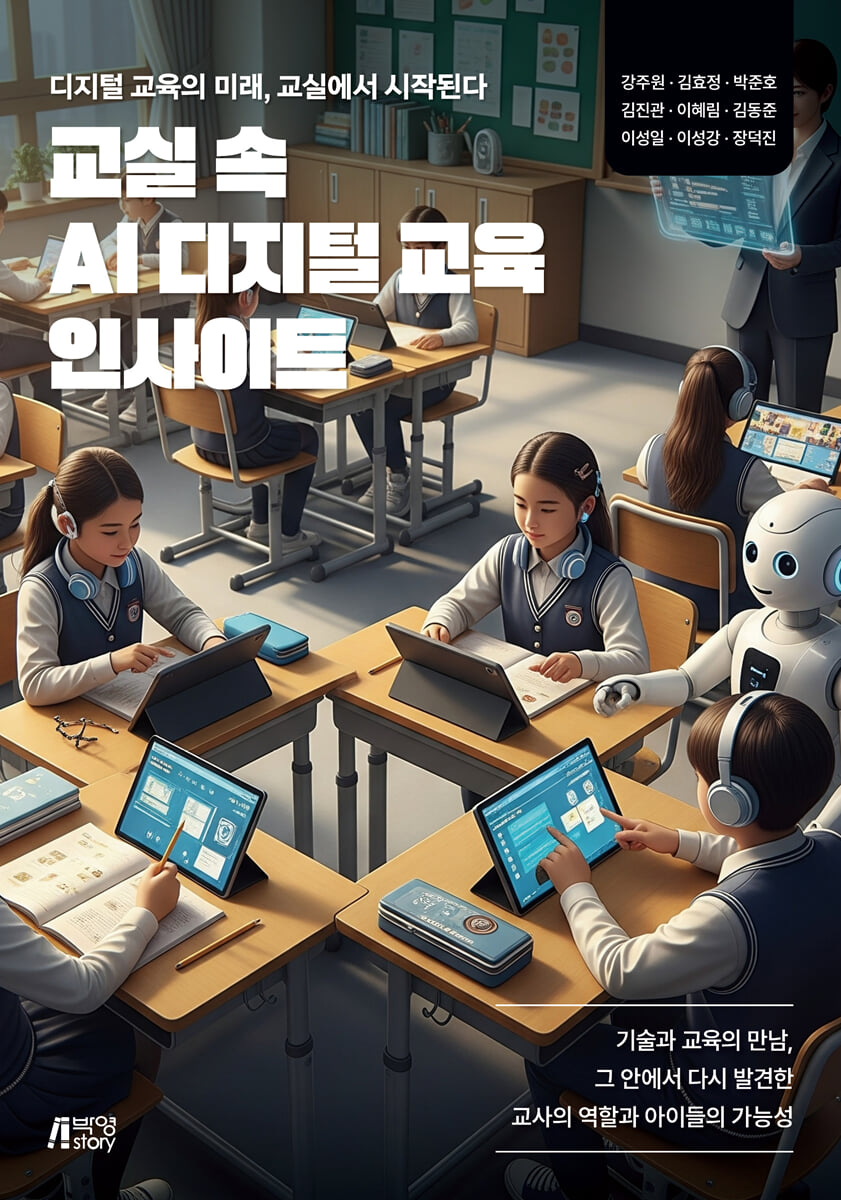 |
Description
Book Introduction
AI in the Classroom: Digital Education, a Journey to the Future
hello.
Dear readers, in the midst of a rapidly changing era, education stands at a greater inflection point than ever before.
The wave of artificial intelligence (AI) and digital technology is reshaping the future society our children will live in.
It raises fundamental questions about the nature and direction of education.
In this era of change, I am truly delighted to explore the future of education with you through "AI Digital Education Insights in the Classroom."
This book goes beyond simply covering the technical aspects of AI digital education, and aims to capture vivid voices and in-depth reflections from the classroom.
The nine authors broadly examine the diverse spectrum of AI digital education, ranging from policy visions beyond the introduction of AI and digital educational materials to roadmaps for special education, new horizons in social and emotional learning, the power of teacher learning communities, digital literacy, basic academic skills, in-depth learning, process-centered assessment, and AI-based essay-based assessment.
hello.
Dear readers, in the midst of a rapidly changing era, education stands at a greater inflection point than ever before.
The wave of artificial intelligence (AI) and digital technology is reshaping the future society our children will live in.
It raises fundamental questions about the nature and direction of education.
In this era of change, I am truly delighted to explore the future of education with you through "AI Digital Education Insights in the Classroom."
This book goes beyond simply covering the technical aspects of AI digital education, and aims to capture vivid voices and in-depth reflections from the classroom.
The nine authors broadly examine the diverse spectrum of AI digital education, ranging from policy visions beyond the introduction of AI and digital educational materials to roadmaps for special education, new horizons in social and emotional learning, the power of teacher learning communities, digital literacy, basic academic skills, in-depth learning, process-centered assessment, and AI-based essay-based assessment.
- You can preview some of the book's contents.
Preview
index
Part 01: AI Digital Education: A Paradigm Shift in Policy and Practice
Chapter 1 Designing Resilient AI Education Policies.................................................
2
1.
The role of AI in education in Korea at a crossroads of change.................................................
2
2.
Current status and challenges facing elementary and secondary education in Korea...............................................
3
3. Current Status and Challenges of AI and Digital Educational Materials Policy.................................................
9
4. Synergy between AI technology and educational problem solving..................................................16
5.
Changes in College Admissions and AI-Based Evaluation Support ..................................................19
6.
Global AI Education Policy Trends and Implications.............................................................20
7.
Resilient AI Education Policy Framework..................................................23
8.
Policy Framework Implementation Plan...........................................................................27
9. AI Opens the Way to Human-Centered Education Innovation..................................................42
References...........................................................................................................................43
Chapter 2: A Roadmap for Special Education Supported by AI and Digital Technology..................................45
1.
Challenges and Opportunities for Special Education in the Digital Transformation Era..................................................45
2.
The Current State of Digital Strategy as Seen Through the 6th Special Education Development Plan...................50
3.
The Reality and Challenges of Promoting Digital-Based Special Education..................................................59
4.
Case Studies of AI and Digital Technology Support in Special Education..................................................62
5.
Direction of Special Education AI and Digital Educational Materials Development..................................65
6. The Direction of Special Education Strengthened by AI and Digital: "Learning Independence".............................70
7.
Summary and Recommendations: The Future of Special Education with Digital Transformation.........................81
References..........................................................................................................................82
Chapter 3: Future Education: A Case Study of Social and Emotional Learning Using EdTech.............................83
1.
Social and Emotional Learning in the Digital Transformation Era..................................................83
2.
Introduction to a Case Study of an App for Social and Emotional Learning Using EdTech..................................93
3.
Samsung Financial Networks' Social Contribution Project, "Life Respect Education Project," and its Demonstration in the Classroom..................................................................118
References..........................................................................................................149
Chapter 4: Teacher Autonomy, Asking the Way to Build a Community-Centric (PLC) Ecosystem...........150
1.
Why a Teacher Community?.................................................................................150
2.
Voices from the Field: Case Studies of Korean Teachers' Communities..................................167
3. Global Trends in AI, Digital Education, and the Teacher Community..................................................179
4.
Expanding AI and Digital Education Focused on Teacher Communities..................................187
5.
Effective Resource Utilization Strategies and School Culture..................................................199
6.
Practical know-how for operating a teacher community..................................................204
7.
Opening the future of education through teachers' initiative and the power of connection..................................214
8.
In conclusion.............................................................................................................................218
References...........................................................................................................219
Part 02: Transforming the Classroom: A New Class with AI
Chapter 5 Digital Literacy Education for All Students..................................................224
1.
From Digital Consumer to Digital Producer Training.............................................224
2.
Digital Competency Training for All..................................................................236
3.
Digital Literacy for All: Starting in the Classroom..................................257
References...........................................................................................................259
Chapter 6: Teaching and Learning Methods Using AI and Digital Educational Materials....................................... 260
1.
2022 Revised Mathematics Curriculum Summary..................................................260
2.
Exploring AI and Digital Educational Materials for Mathematics Teaching and Learning: A Classroom Model 267
3. Practical Strategies for Teaching and Learning Mathematics Using AI and Digital Educational Materials..............286
Chapter 7: Deep Learning and AI-Based Digital Inquiry Course Design....................300
1. The AI Era, Transforming Classes...........................................................................300
2.
Principles of Deep Learning and Lesson Design Strategies..................................304
3. AI- and Digital-Based Class Design Strategies..................................................312
4.
Case Study - A Science Class Designed with Questions and Expanded with Technology....................321
References...........................................................................................................335
Chapter 8 The emergence of digital convergence classes and changes in the evaluation paradigm Focusing on process-centered evaluation.............................................
336
1.
Digital Transformation and the Great Transformation of Evaluation.....................................................336
2.
The emergence of process-centered evaluation...........................................................................337
3.
Convergence of Digital Tools and Process-Centered Assessment...........................................347
4.
Case Studies and Changes in Educational Practices.....................................................353
5.
What the Shift in the Evaluation Paradigm Means..................................................364
References...........................................................................................................368
Chapter 9: Current Status and Direction of AI-Based Feedback on Essay-Based Assignments..................................369
1. Strengthening AI-based, digital educational materials and personalized feedback..................................................369
2.
The Reality of Feedback on Essay-Type Assignments..................................................376
3.
Limitations and Direction of AI-Based Essay-Type Assignment Feedback....................................403
References...........................................................................................................408
Chapter 1 Designing Resilient AI Education Policies.................................................
2
1.
The role of AI in education in Korea at a crossroads of change.................................................
2
2.
Current status and challenges facing elementary and secondary education in Korea...............................................
3
3. Current Status and Challenges of AI and Digital Educational Materials Policy.................................................
9
4. Synergy between AI technology and educational problem solving..................................................16
5.
Changes in College Admissions and AI-Based Evaluation Support ..................................................19
6.
Global AI Education Policy Trends and Implications.............................................................20
7.
Resilient AI Education Policy Framework..................................................23
8.
Policy Framework Implementation Plan...........................................................................27
9. AI Opens the Way to Human-Centered Education Innovation..................................................42
References...........................................................................................................................43
Chapter 2: A Roadmap for Special Education Supported by AI and Digital Technology..................................45
1.
Challenges and Opportunities for Special Education in the Digital Transformation Era..................................................45
2.
The Current State of Digital Strategy as Seen Through the 6th Special Education Development Plan...................50
3.
The Reality and Challenges of Promoting Digital-Based Special Education..................................................59
4.
Case Studies of AI and Digital Technology Support in Special Education..................................................62
5.
Direction of Special Education AI and Digital Educational Materials Development..................................65
6. The Direction of Special Education Strengthened by AI and Digital: "Learning Independence".............................70
7.
Summary and Recommendations: The Future of Special Education with Digital Transformation.........................81
References..........................................................................................................................82
Chapter 3: Future Education: A Case Study of Social and Emotional Learning Using EdTech.............................83
1.
Social and Emotional Learning in the Digital Transformation Era..................................................83
2.
Introduction to a Case Study of an App for Social and Emotional Learning Using EdTech..................................93
3.
Samsung Financial Networks' Social Contribution Project, "Life Respect Education Project," and its Demonstration in the Classroom..................................................................118
References..........................................................................................................149
Chapter 4: Teacher Autonomy, Asking the Way to Build a Community-Centric (PLC) Ecosystem...........150
1.
Why a Teacher Community?.................................................................................150
2.
Voices from the Field: Case Studies of Korean Teachers' Communities..................................167
3. Global Trends in AI, Digital Education, and the Teacher Community..................................................179
4.
Expanding AI and Digital Education Focused on Teacher Communities..................................187
5.
Effective Resource Utilization Strategies and School Culture..................................................199
6.
Practical know-how for operating a teacher community..................................................204
7.
Opening the future of education through teachers' initiative and the power of connection..................................214
8.
In conclusion.............................................................................................................................218
References...........................................................................................................219
Part 02: Transforming the Classroom: A New Class with AI
Chapter 5 Digital Literacy Education for All Students..................................................224
1.
From Digital Consumer to Digital Producer Training.............................................224
2.
Digital Competency Training for All..................................................................236
3.
Digital Literacy for All: Starting in the Classroom..................................257
References...........................................................................................................259
Chapter 6: Teaching and Learning Methods Using AI and Digital Educational Materials....................................... 260
1.
2022 Revised Mathematics Curriculum Summary..................................................260
2.
Exploring AI and Digital Educational Materials for Mathematics Teaching and Learning: A Classroom Model 267
3. Practical Strategies for Teaching and Learning Mathematics Using AI and Digital Educational Materials..............286
Chapter 7: Deep Learning and AI-Based Digital Inquiry Course Design....................300
1. The AI Era, Transforming Classes...........................................................................300
2.
Principles of Deep Learning and Lesson Design Strategies..................................304
3. AI- and Digital-Based Class Design Strategies..................................................312
4.
Case Study - A Science Class Designed with Questions and Expanded with Technology....................321
References...........................................................................................................335
Chapter 8 The emergence of digital convergence classes and changes in the evaluation paradigm Focusing on process-centered evaluation.............................................
336
1.
Digital Transformation and the Great Transformation of Evaluation.....................................................336
2.
The emergence of process-centered evaluation...........................................................................337
3.
Convergence of Digital Tools and Process-Centered Assessment...........................................347
4.
Case Studies and Changes in Educational Practices.....................................................353
5.
What the Shift in the Evaluation Paradigm Means..................................................364
References...........................................................................................................368
Chapter 9: Current Status and Direction of AI-Based Feedback on Essay-Based Assignments..................................369
1. Strengthening AI-based, digital educational materials and personalized feedback..................................................369
2.
The Reality of Feedback on Essay-Type Assignments..................................................376
3.
Limitations and Direction of AI-Based Essay-Type Assignment Feedback....................................403
References...........................................................................................................408
Publisher's Review
AI in the Classroom: Digital Education, a Journey to the Future
hello.
Dear readers, in the midst of a rapidly changing era, education stands at a greater inflection point than ever before.
The wave of artificial intelligence (AI) and digital technology is reshaping the future society our children will live in.
It raises fundamental questions about the nature and direction of education.
In this era of change, I am truly delighted to explore the future of education with you through "AI Digital Education Insights in the Classroom."
This book goes beyond simply covering the technical aspects of AI digital education, and aims to capture vivid voices and in-depth reflections from the classroom.
The nine authors broadly examine the diverse spectrum of AI digital education, ranging from policy visions beyond the introduction of AI and digital educational materials to roadmaps for special education, new horizons in social and emotional learning, the power of teacher learning communities, digital literacy, basic academic skills, in-depth learning, process-centered assessment, and AI-based essay-based assessment.
Part 1 includes future educational case studies and policy recommendations, including the introduction of existing AI and digital educational materials, special education, social-emotional learning, and the establishment of a PLC ecosystem.
Professor Kang Joo-won proposes a sustainable and comprehensive AI education policy framework that goes beyond a single technology-centered approach through “Designing a Resilient AI Education Policy Beyond AI and Digital Education Materials.”
While diagnosing the complex crisis facing Korean education and emphasizing that AI technology can be a solution, it also presents a concrete roadmap for designing "resilient" policies that transcend technological and ethical limitations.
In "A Roadmap for Special Education Supported by AI and Digital Technology," Professor Kim Hyo-jeong explores how technologies in the digital transformation era can be effectively utilized in special education.
We emphasized the necessity of digital technology for the 'learning independence' of special education students, and we sought to share concerns from the field by analyzing domestic and international cases and looking into the direction of utilizing special education AI and digital educational materials.
In "Future Education Seen Through EdTech Social-Emotional Learning Cases," Professor Park Jun-ho shows how social-emotional learning (SEL) and EdTech can come together in AI digital education to make classrooms warmer and richer.
Through various EdTech cases, it presents the possibility of education that carefully cares for students' minds, and emphasizes that technology should ultimately serve as a bridge connecting the minds of people.
In “Asking the Path to Building a Teacher Autonomy-Centered Ecosystem (PLC),” Professor Kim Jin-gwan emphasizes that the power of teachers and communities is the core of educational innovation.
Beyond the limitations of top-down policy delivery, this paper proposes a model for building a 'Teacher-Led Professional Learning Community (PLC)' based on teachers' autonomy and collaboration among colleagues, and vividly demonstrates the potential of a 'hybrid growth model' of bottom-up and top-down approaches through actual field cases.
Part 2 continues with an in-depth exploration of how AI digital education can be implemented and applied in the classroom.
Teacher Lee Hye-rim presents a new educational direction for children living in the digital age through “From Digital Consumer to Digital Producer: Digital Literacy Education by Age Group.”
It emphasizes that students must move beyond being mere consumers and transition to 'producer-type digital literacy' where they create and communicate content, and specifically introduces actual class cases and policy directions.
In "Exploring Teaching and Learning Strategies for the 2022 Revised Mathematics Curriculum Using AI and Digital Educational Materials," Professor Kim Dong-jun explores how AI and digital educational materials can effectively support the 2022 Revised Mathematics Curriculum's goal of fostering "inclusive and creative, proactive individuals."
We provide customized learning for each student and suggest specific teaching and learning methods for collaborative learning, and explore practical strategies for practical use in the field.
In “Deep Learning and AI Digital-Based Lesson Design,” Professor Lee Seong-il emphasizes that the role of teachers has changed from knowledge transmitters to learning designers.
To achieve the "deep learning" emphasized in the 2022 revised curriculum, we present a method of utilizing backward design centered on inquiry questions and performance-oriented tasks, and demonstrate that AI can serve as an assistant in supporting such lesson design.
At the same time, it emphasizes the educational context of technology use and the professionalism of teachers.
In "The Emergence of Digital Convergence Classes and the Shift in the Assessment Paradigm," Professor Lee Seong-gang reiterates the importance of competency-based education and process-centered assessment, both of which began with the 2015 revised curriculum.
In order to solve the difficulty of implementing process-centered evaluation in the field, we are applying new tools to create a 'teacher-student-side evaluation' rather than an 'evaluation in a document'.
It describes the reality of 'approaching evaluation'.
Lastly, Professor Jang Deok-jin discusses the possibilities and limitations of AI-based essay-based assessment in “The Current State and Direction of AI-based Essay-based Assignment Feedback.”
This paper examines the reliability, validity, and infringement of teacher authority when AI technology supporting personalized education is applied to high-level thinking assessments. It explores the current applicability and suggests future directions through domestic and international edutech cases.
『AI Digital Education Insights in the Classroom』 is a book in which experts in each field diagnose the current state of AI digital education and propose its future based on their field experience and deep insight.
We hope this book will inspire teachers, educational administrators, researchers, and everyone interested in the future of education.
Through this book, we aimed to demonstrate that AI and digital technologies are not simply educational tools, but can become partners for teachers and students.
I hope that this book will serve as a small but meaningful stepping stone for readers so that our children, the protagonists of future education, can grow into learners who can lead the digital world and become citizens with warm hearts.
We dream of a better tomorrow for education by thinking and practicing together.
thank you
- AI in the Classroom Digital Education Insights Authors
hello.
Dear readers, in the midst of a rapidly changing era, education stands at a greater inflection point than ever before.
The wave of artificial intelligence (AI) and digital technology is reshaping the future society our children will live in.
It raises fundamental questions about the nature and direction of education.
In this era of change, I am truly delighted to explore the future of education with you through "AI Digital Education Insights in the Classroom."
This book goes beyond simply covering the technical aspects of AI digital education, and aims to capture vivid voices and in-depth reflections from the classroom.
The nine authors broadly examine the diverse spectrum of AI digital education, ranging from policy visions beyond the introduction of AI and digital educational materials to roadmaps for special education, new horizons in social and emotional learning, the power of teacher learning communities, digital literacy, basic academic skills, in-depth learning, process-centered assessment, and AI-based essay-based assessment.
Part 1 includes future educational case studies and policy recommendations, including the introduction of existing AI and digital educational materials, special education, social-emotional learning, and the establishment of a PLC ecosystem.
Professor Kang Joo-won proposes a sustainable and comprehensive AI education policy framework that goes beyond a single technology-centered approach through “Designing a Resilient AI Education Policy Beyond AI and Digital Education Materials.”
While diagnosing the complex crisis facing Korean education and emphasizing that AI technology can be a solution, it also presents a concrete roadmap for designing "resilient" policies that transcend technological and ethical limitations.
In "A Roadmap for Special Education Supported by AI and Digital Technology," Professor Kim Hyo-jeong explores how technologies in the digital transformation era can be effectively utilized in special education.
We emphasized the necessity of digital technology for the 'learning independence' of special education students, and we sought to share concerns from the field by analyzing domestic and international cases and looking into the direction of utilizing special education AI and digital educational materials.
In "Future Education Seen Through EdTech Social-Emotional Learning Cases," Professor Park Jun-ho shows how social-emotional learning (SEL) and EdTech can come together in AI digital education to make classrooms warmer and richer.
Through various EdTech cases, it presents the possibility of education that carefully cares for students' minds, and emphasizes that technology should ultimately serve as a bridge connecting the minds of people.
In “Asking the Path to Building a Teacher Autonomy-Centered Ecosystem (PLC),” Professor Kim Jin-gwan emphasizes that the power of teachers and communities is the core of educational innovation.
Beyond the limitations of top-down policy delivery, this paper proposes a model for building a 'Teacher-Led Professional Learning Community (PLC)' based on teachers' autonomy and collaboration among colleagues, and vividly demonstrates the potential of a 'hybrid growth model' of bottom-up and top-down approaches through actual field cases.
Part 2 continues with an in-depth exploration of how AI digital education can be implemented and applied in the classroom.
Teacher Lee Hye-rim presents a new educational direction for children living in the digital age through “From Digital Consumer to Digital Producer: Digital Literacy Education by Age Group.”
It emphasizes that students must move beyond being mere consumers and transition to 'producer-type digital literacy' where they create and communicate content, and specifically introduces actual class cases and policy directions.
In "Exploring Teaching and Learning Strategies for the 2022 Revised Mathematics Curriculum Using AI and Digital Educational Materials," Professor Kim Dong-jun explores how AI and digital educational materials can effectively support the 2022 Revised Mathematics Curriculum's goal of fostering "inclusive and creative, proactive individuals."
We provide customized learning for each student and suggest specific teaching and learning methods for collaborative learning, and explore practical strategies for practical use in the field.
In “Deep Learning and AI Digital-Based Lesson Design,” Professor Lee Seong-il emphasizes that the role of teachers has changed from knowledge transmitters to learning designers.
To achieve the "deep learning" emphasized in the 2022 revised curriculum, we present a method of utilizing backward design centered on inquiry questions and performance-oriented tasks, and demonstrate that AI can serve as an assistant in supporting such lesson design.
At the same time, it emphasizes the educational context of technology use and the professionalism of teachers.
In "The Emergence of Digital Convergence Classes and the Shift in the Assessment Paradigm," Professor Lee Seong-gang reiterates the importance of competency-based education and process-centered assessment, both of which began with the 2015 revised curriculum.
In order to solve the difficulty of implementing process-centered evaluation in the field, we are applying new tools to create a 'teacher-student-side evaluation' rather than an 'evaluation in a document'.
It describes the reality of 'approaching evaluation'.
Lastly, Professor Jang Deok-jin discusses the possibilities and limitations of AI-based essay-based assessment in “The Current State and Direction of AI-based Essay-based Assignment Feedback.”
This paper examines the reliability, validity, and infringement of teacher authority when AI technology supporting personalized education is applied to high-level thinking assessments. It explores the current applicability and suggests future directions through domestic and international edutech cases.
『AI Digital Education Insights in the Classroom』 is a book in which experts in each field diagnose the current state of AI digital education and propose its future based on their field experience and deep insight.
We hope this book will inspire teachers, educational administrators, researchers, and everyone interested in the future of education.
Through this book, we aimed to demonstrate that AI and digital technologies are not simply educational tools, but can become partners for teachers and students.
I hope that this book will serve as a small but meaningful stepping stone for readers so that our children, the protagonists of future education, can grow into learners who can lead the digital world and become citizens with warm hearts.
We dream of a better tomorrow for education by thinking and practicing together.
thank you
- AI in the Classroom Digital Education Insights Authors
GOODS SPECIFICS
- Date of issue: October 15, 2025
- Page count, weight, size: 420 pages | 171*244*30mm
- ISBN13: 9791172791650
- ISBN10: 1172791651
You may also like
카테고리
korean


korean

![GQ KOREA Mark (Monthly): December [2025]](http://librairie.coreenne.fr/cdn/shop/files/8ef265dbbfbf186523ed75ba7319009d.jpg?v=1765340328&width=3840)


