

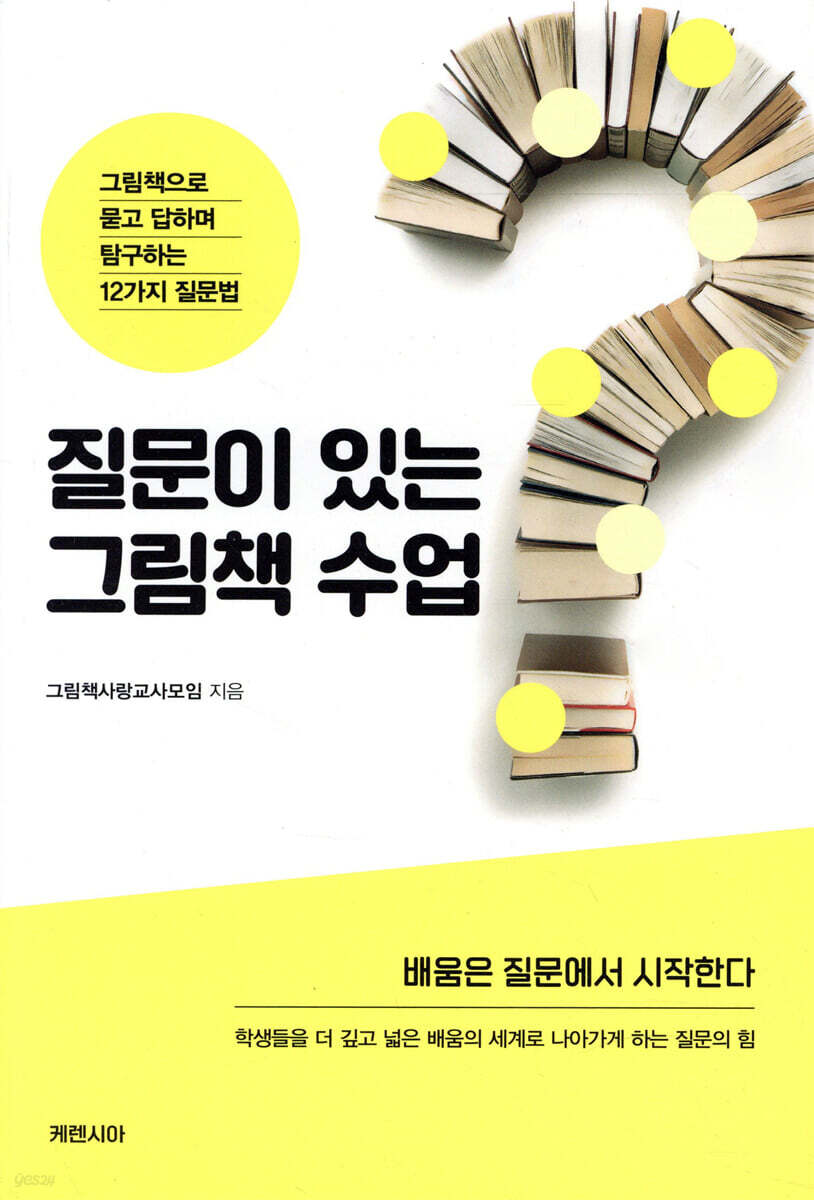
Picture book class with questions
 |
Description
Book Introduction
Learning begins with questions.
The power of questions that lead students into a deeper and broader world of learning.
12 Questioning Methods for Exploring through Questioning and Answering in Picture Books
In recent years, the importance of questions in classes has been increasingly emphasized.
Teachers are always thinking about how to help students develop their questioning skills.
But I have a lot of trouble teaching question classes.
This is because students often have difficulty creating questions or it is difficult to conduct classes by creating only questions with correct answers.
Moreover, if you keep doing it, you end up doing it the same way every time.
So, students often find it bothersome to create questions and lose interest in class.
This book presents a variety of questioning methods that can be used in classes to overcome these difficulties.
Explains what each questioning method is, how to apply it, and guides games and activities to help you become familiar with the questioning methods.
Next, we will present in detail various examples of picture book classes conducted through questions created by students.
Additionally, it is even more useful because it introduces picture books that are good for applying each questioning method to QR codes and good questions that can be used in class.
The power of questions that lead students into a deeper and broader world of learning.
12 Questioning Methods for Exploring through Questioning and Answering in Picture Books
In recent years, the importance of questions in classes has been increasingly emphasized.
Teachers are always thinking about how to help students develop their questioning skills.
But I have a lot of trouble teaching question classes.
This is because students often have difficulty creating questions or it is difficult to conduct classes by creating only questions with correct answers.
Moreover, if you keep doing it, you end up doing it the same way every time.
So, students often find it bothersome to create questions and lose interest in class.
This book presents a variety of questioning methods that can be used in classes to overcome these difficulties.
Explains what each questioning method is, how to apply it, and guides games and activities to help you become familiar with the questioning methods.
Next, we will present in detail various examples of picture book classes conducted through questions created by students.
Additionally, it is even more useful because it introduces picture books that are good for applying each questioning method to QR codes and good questions that can be used in class.
- You can preview some of the book's contents.
Preview
index
Entering
Before starting class
Chapter 1.
Collaborative inquiry that expands the pie of ideas: the Socratic seminar questioning method.
Chapter 2.
Bloom's Level-of-Thinking Questioning Method Appropriate for Learning Stages
Chapter 3.
QAR questioning method with step-by-step associative keywords
Chapter 4.
Takashi's Questioning Method for Deeper Conversations
Chapter 5.
Synctrix Thinking Expansion Questioning Method Using the Thinking Matrix
Chapter 6.
VTS Questioning Method for Reading Pictures and Conversing
Chapter 7.
Understand the problem deeply and use the DVDM question method to solve the problem.
Chapter 8.
The SWOT question method that makes it easy to understand a person's life
Chapter 9.
Scamper questions to encourage diverse thinking
Chapter 10.
Orid questioning to clarify the flow of thought
Chapter 11.
The ABCDE Question Method to Check Your Thinking
Chapter 12.
Knocking on the Door of the Heart: Identification, Catharsis, and Insight Questioning
Before starting class
Chapter 1.
Collaborative inquiry that expands the pie of ideas: the Socratic seminar questioning method.
Chapter 2.
Bloom's Level-of-Thinking Questioning Method Appropriate for Learning Stages
Chapter 3.
QAR questioning method with step-by-step associative keywords
Chapter 4.
Takashi's Questioning Method for Deeper Conversations
Chapter 5.
Synctrix Thinking Expansion Questioning Method Using the Thinking Matrix
Chapter 6.
VTS Questioning Method for Reading Pictures and Conversing
Chapter 7.
Understand the problem deeply and use the DVDM question method to solve the problem.
Chapter 8.
The SWOT question method that makes it easy to understand a person's life
Chapter 9.
Scamper questions to encourage diverse thinking
Chapter 10.
Orid questioning to clarify the flow of thought
Chapter 11.
The ABCDE Question Method to Check Your Thinking
Chapter 12.
Knocking on the Door of the Heart: Identification, Catharsis, and Insight Questioning
Publisher's Review
Questions are the key to learning.
Questions stimulate, expand, and deepen thinking, and the interaction that occurs to resolve the questions fosters critical thinking and logical reasoning.
Learning expands and deepens when students, rather than simply listening to the teacher, create their own questions and use them to spark conversation and discussion.
However, students have difficulty forming questions.
Often times, we feel no interest or curiosity about a topic or fact, and we are at a loss as to what questions to ask.
Therefore, it is important to select appropriate learning materials that stimulate students' curiosity and interest, enabling them to find their own questions and elicit meaningful questions.
In that respect, picture books are very effective.
Picture books contain countless stories.
Above all, picture books take less time to read than other textbooks, so they are less burdensome and can be read and thought about multiple times.
Because the perspective changes each time you look at it, more in-depth analysis is possible, and classes can utilize various questions.
Picture book classes that enrich questions and broaden thinking
There are three steps to a question-based lesson using picture books:
The first is the preparation stage.
There are some things to keep in mind when preparing a picture book question class.
First, think about the intention and purpose of the class.
Set goals for what kind of learning and study you want to achieve for your students.
After that, decide on a picture book to achieve the goal.
It is important to select appropriate picture books that match the students' age and thinking level.
Then choose a questioning method.
The second is the utilization stage.
First, read the picture book with the students and look at the pictures and content.
Then, we create various questions.
It is good to use games or activities to ask questions that students are not familiar with.
After you have had enough practice creating questions through play, create the questions.
And then we discuss and exchange opinions about the questions that students have created.
In the final organizing stage, you can do post-reading activities that apply each questioning method.
You can try changing the cover or find a keyword and write a short article.
We conclude the class with a variety of post-reading activities that allow students to expand beyond the picture book into their own lives.
There are no bad questions.
Until now, the teacher has asked the questions and the students have answered them.
Now we need to break away from the stereotype that teachers ask questions.
Questions are asked by people who are curious and want to know.
Asking a question means that your curiosity has been aroused and you have begun to think about finding an answer.
A tolerant attitude that encourages and allows all students' questions is needed to allow this instinctive desire to learn to naturally manifest.
Learning begins with questions.
We must address all of our students' questions with the philosophy that "there are no bad questions."
In order for students to ask questions and find answers to those questions, teachers must be able to accept any question.
If students are given ample opportunity to ask questions, they will be able to advance into a world of deeper and broader learning.
Questions stimulate, expand, and deepen thinking, and the interaction that occurs to resolve the questions fosters critical thinking and logical reasoning.
Learning expands and deepens when students, rather than simply listening to the teacher, create their own questions and use them to spark conversation and discussion.
However, students have difficulty forming questions.
Often times, we feel no interest or curiosity about a topic or fact, and we are at a loss as to what questions to ask.
Therefore, it is important to select appropriate learning materials that stimulate students' curiosity and interest, enabling them to find their own questions and elicit meaningful questions.
In that respect, picture books are very effective.
Picture books contain countless stories.
Above all, picture books take less time to read than other textbooks, so they are less burdensome and can be read and thought about multiple times.
Because the perspective changes each time you look at it, more in-depth analysis is possible, and classes can utilize various questions.
Picture book classes that enrich questions and broaden thinking
There are three steps to a question-based lesson using picture books:
The first is the preparation stage.
There are some things to keep in mind when preparing a picture book question class.
First, think about the intention and purpose of the class.
Set goals for what kind of learning and study you want to achieve for your students.
After that, decide on a picture book to achieve the goal.
It is important to select appropriate picture books that match the students' age and thinking level.
Then choose a questioning method.
The second is the utilization stage.
First, read the picture book with the students and look at the pictures and content.
Then, we create various questions.
It is good to use games or activities to ask questions that students are not familiar with.
After you have had enough practice creating questions through play, create the questions.
And then we discuss and exchange opinions about the questions that students have created.
In the final organizing stage, you can do post-reading activities that apply each questioning method.
You can try changing the cover or find a keyword and write a short article.
We conclude the class with a variety of post-reading activities that allow students to expand beyond the picture book into their own lives.
There are no bad questions.
Until now, the teacher has asked the questions and the students have answered them.
Now we need to break away from the stereotype that teachers ask questions.
Questions are asked by people who are curious and want to know.
Asking a question means that your curiosity has been aroused and you have begun to think about finding an answer.
A tolerant attitude that encourages and allows all students' questions is needed to allow this instinctive desire to learn to naturally manifest.
Learning begins with questions.
We must address all of our students' questions with the philosophy that "there are no bad questions."
In order for students to ask questions and find answers to those questions, teachers must be able to accept any question.
If students are given ample opportunity to ask questions, they will be able to advance into a world of deeper and broader learning.
GOODS SPECIFICS
- Publication date: April 15, 2022
- Page count, weight, size: 304 pages | 152*225*30mm
- ISBN13: 9791197681127
- ISBN10: 1197681124
You may also like
카테고리
korean


korean

![GQ KOREA Mark (Monthly): December [2025]](http://librairie.coreenne.fr/cdn/shop/files/8ef265dbbfbf186523ed75ba7319009d.jpg?v=1765340328&width=3840)


