

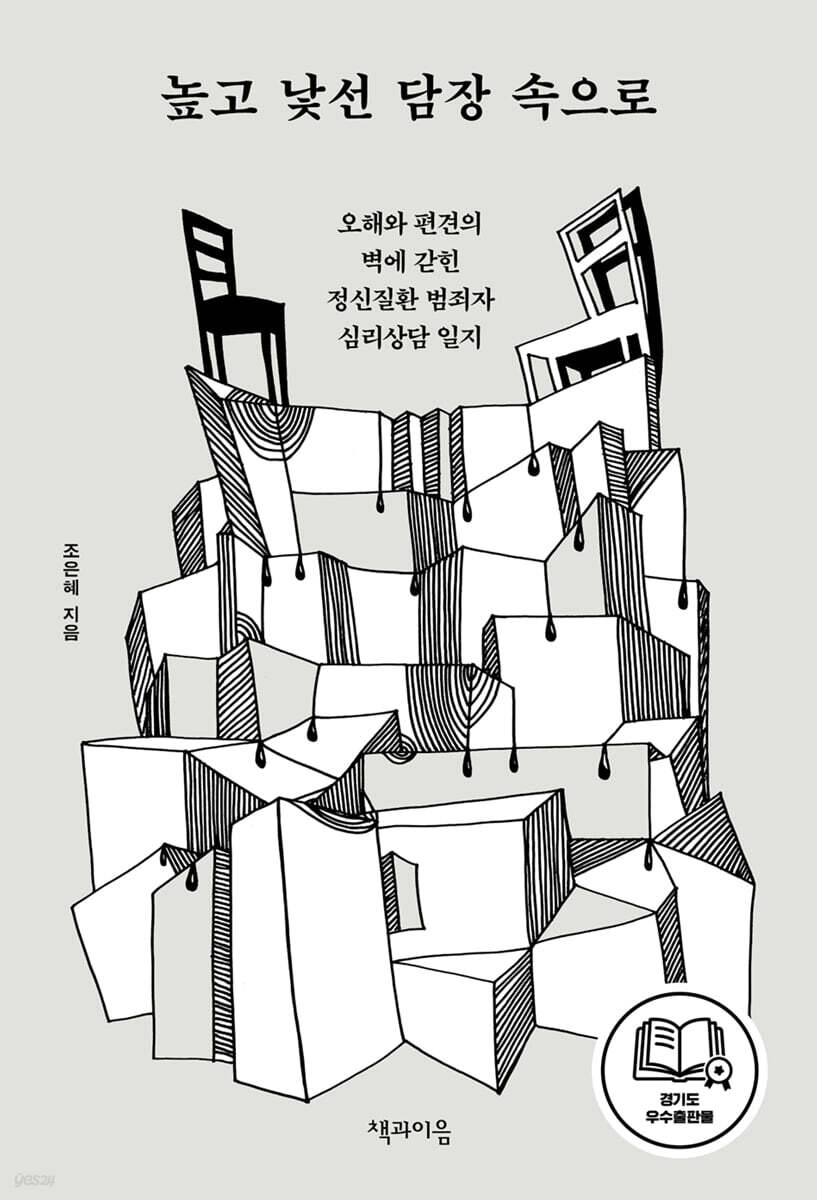
Into the high and unfamiliar wall
 |
Description
Book Introduction
Locked in a prison beyond a cold gray wall
Reading the Minds of Mentally Ill Criminals
A record of psychological counseling filled with the author's professional struggles and human anguish as he met mentally ill criminals in prison and closely observed their minds.
By vividly depicting actual counseling scenes in prison for mentally ill criminals, the film aims to move beyond the simple connection between illness, crime, and victimization, and to consider the complex social issues hidden behind them.
This book does not hastily offer a right or wrong answer to our society's general prejudice against mentally ill criminals.
However, through cases experienced in the field, the author calmly and painfully shows how these people think and live, and what process leads them to commit crime.
By listening to the stories of mentally ill offenders throughout their lives, we believe we can better understand their minds and, through this, find solutions to prevent crime and ensure social safety.
※ Selected for the 2025 Gyeonggi Province Excellent Publication Production Support Project.
Reading the Minds of Mentally Ill Criminals
A record of psychological counseling filled with the author's professional struggles and human anguish as he met mentally ill criminals in prison and closely observed their minds.
By vividly depicting actual counseling scenes in prison for mentally ill criminals, the film aims to move beyond the simple connection between illness, crime, and victimization, and to consider the complex social issues hidden behind them.
This book does not hastily offer a right or wrong answer to our society's general prejudice against mentally ill criminals.
However, through cases experienced in the field, the author calmly and painfully shows how these people think and live, and what process leads them to commit crime.
By listening to the stories of mentally ill offenders throughout their lives, we believe we can better understand their minds and, through this, find solutions to prevent crime and ensure social safety.
※ Selected for the 2025 Gyeonggi Province Excellent Publication Production Support Project.
- You can preview some of the book's contents.
Preview
index
Prologue | On the way to the counseling room
Part 1 | Prejudice Against Differences
Same yet different
Miss, Younghee
I'm glad I'm a weapon
Motherhood that did not grow up
I don't want to do anything more actively
Killed an angel
People who are sick but not sick
PART 2 | THE INVISIBLE BOUNDARIES
faceless beauty
The inevitable reason for a murderer
It's as beautiful as tteokbokki
Your feelings are right
The temptation of salt
Cherry Blossom Ending
A life that rustles
PART 3 | HOPE BEYOND DESPAIR
Mother's tears
Be fruitful and multiply
Scattered fragments of words
In search of the golden prescription
We are family
She's back
Harmony
Epilogue | Between the Boundaries and Cracks of the Heart
Part 1 | Prejudice Against Differences
Same yet different
Miss, Younghee
I'm glad I'm a weapon
Motherhood that did not grow up
I don't want to do anything more actively
Killed an angel
People who are sick but not sick
PART 2 | THE INVISIBLE BOUNDARIES
faceless beauty
The inevitable reason for a murderer
It's as beautiful as tteokbokki
Your feelings are right
The temptation of salt
Cherry Blossom Ending
A life that rustles
PART 3 | HOPE BEYOND DESPAIR
Mother's tears
Be fruitful and multiply
Scattered fragments of words
In search of the golden prescription
We are family
She's back
Harmony
Epilogue | Between the Boundaries and Cracks of the Heart
Detailed image

Into the book
One person's illness cannot be another's laughing stock.
Even though the behavior is beyond my common sense and its bizarreness is beyond my understanding.
--- p.18
Younghee, who was helplessly swayed by her auditory hallucinations, often hit other family members who shared a meal at the hospital, including me.
Despite this, she felt like a victim to me, not a perpetrator.
This is because the person named 'Younghee', who viewed the words 'mental illness' and 'violence' as being far apart, was an extremely pure and beautiful being.
Yeong-hee's bright smile made everyone who saw her smile, but at the same time, it also had a sadness that made her heart ache.
--- p.28
To be honest, I think I understand only a little bit of the saying, 'Hate the sin, not the sinner.'
The moment a person commits a crime, all of his or her identity disappears, leaving only the stigma of being a 'criminal'.
--- p.70
It's hard to ignore the fact that some studies show that the more aware you are of your illness, the higher your risk of suicide.
This is a prison, not a hospital, and there is a severe lack of capacity to help patients in crisis.
The burden on the workers who have to take responsibility for the aftermath of those who only raise awareness about the disease and then leave without any solutions, the burden on the patients and their families who have to face emergency situations with insufficient medical staff and treatment equipment, and the administrative procedures and disputes that follow are all burdensome to me.
--- p.83
For her, the target of her death should have been the 'devil', not her 'father'.
Only by deceiving himself in this way could he relieve himself of the threatening guilt that was surging, and give himself the breathing space to live with acceptance.
--- p.98
She tried to break up with her boyfriend, but the extreme loneliness and emptiness that followed brought more drug addicts to Choi Ah-young's side.
Choi Ah-young, who smiled bitterly in front of me, said that she had already fallen into an ant pit, and looked lonely, like someone trapped in darkness with no escape.
In less than a year, her unique girlishness and liveliness had completely disappeared.
--- p.135
I told the criminal who was complaining that he wanted to die to live again today.
He told the criminal who blamed himself for being trash to separate himself from his sin.
I'm just incompetent when it comes to victim empathy, even though criminals who are about to reintegrate into society are still failing.
--- p.166
After my confusion cleared up, I looked at the patient in front of me.
There was no longer any desire to refute or persuade his beliefs.
In the place where anger and disgust had arisen, a pitiful and sick human being was placed.
I asked the question again to try to understand even a little bit about the reality he was facing and the darkness in his heart.
--- p.178
Unable to find the right words, I paused for a moment, wondering, "Should I tell him that slashing the faces of passersby with a knife isn't a great stress reliever?"
It may sound like a pun, but I thought the name ‘crime with a strange motive’ was strange in the first place.
I couldn't understand the difference between what constitutes a crime with a strange motive and what constitutes a crime with a non-strange motive.
--- p.194
The public and society always focus on what characteristics the mentally ill person has, what risks he poses, what he has done, and what medical history he has behind it.
It is very easy to overlook the fact that there are families who endure as much pain as the patient, or perhaps even more.
--- p.209
The resentment that should have been directed at the man who brought down Lee Ji-young, and the resentment toward the mental rehabilitation system that fails to help the mentally ill return to normal society, were instead directed solely at her.
Or maybe it was just a selfish resentment that my accomplishments, which would have been proven by her life getting back on track, had been taken away.
Even though the behavior is beyond my common sense and its bizarreness is beyond my understanding.
--- p.18
Younghee, who was helplessly swayed by her auditory hallucinations, often hit other family members who shared a meal at the hospital, including me.
Despite this, she felt like a victim to me, not a perpetrator.
This is because the person named 'Younghee', who viewed the words 'mental illness' and 'violence' as being far apart, was an extremely pure and beautiful being.
Yeong-hee's bright smile made everyone who saw her smile, but at the same time, it also had a sadness that made her heart ache.
--- p.28
To be honest, I think I understand only a little bit of the saying, 'Hate the sin, not the sinner.'
The moment a person commits a crime, all of his or her identity disappears, leaving only the stigma of being a 'criminal'.
--- p.70
It's hard to ignore the fact that some studies show that the more aware you are of your illness, the higher your risk of suicide.
This is a prison, not a hospital, and there is a severe lack of capacity to help patients in crisis.
The burden on the workers who have to take responsibility for the aftermath of those who only raise awareness about the disease and then leave without any solutions, the burden on the patients and their families who have to face emergency situations with insufficient medical staff and treatment equipment, and the administrative procedures and disputes that follow are all burdensome to me.
--- p.83
For her, the target of her death should have been the 'devil', not her 'father'.
Only by deceiving himself in this way could he relieve himself of the threatening guilt that was surging, and give himself the breathing space to live with acceptance.
--- p.98
She tried to break up with her boyfriend, but the extreme loneliness and emptiness that followed brought more drug addicts to Choi Ah-young's side.
Choi Ah-young, who smiled bitterly in front of me, said that she had already fallen into an ant pit, and looked lonely, like someone trapped in darkness with no escape.
In less than a year, her unique girlishness and liveliness had completely disappeared.
--- p.135
I told the criminal who was complaining that he wanted to die to live again today.
He told the criminal who blamed himself for being trash to separate himself from his sin.
I'm just incompetent when it comes to victim empathy, even though criminals who are about to reintegrate into society are still failing.
--- p.166
After my confusion cleared up, I looked at the patient in front of me.
There was no longer any desire to refute or persuade his beliefs.
In the place where anger and disgust had arisen, a pitiful and sick human being was placed.
I asked the question again to try to understand even a little bit about the reality he was facing and the darkness in his heart.
--- p.178
Unable to find the right words, I paused for a moment, wondering, "Should I tell him that slashing the faces of passersby with a knife isn't a great stress reliever?"
It may sound like a pun, but I thought the name ‘crime with a strange motive’ was strange in the first place.
I couldn't understand the difference between what constitutes a crime with a strange motive and what constitutes a crime with a non-strange motive.
--- p.194
The public and society always focus on what characteristics the mentally ill person has, what risks he poses, what he has done, and what medical history he has behind it.
It is very easy to overlook the fact that there are families who endure as much pain as the patient, or perhaps even more.
--- p.209
The resentment that should have been directed at the man who brought down Lee Ji-young, and the resentment toward the mental rehabilitation system that fails to help the mentally ill return to normal society, were instead directed solely at her.
Or maybe it was just a selfish resentment that my accomplishments, which would have been proven by her life getting back on track, had been taken away.
--- p.221
Publisher's Review
“I wanted to write about ‘people,’ not ‘crimes’ or ‘diseases.’
I wanted to show the faces of people that the world tries hard not to look at.
The stories of people who were only known by their symptoms, not their names.
“I wanted to write in the language of pain, not the weight of sin.”
There is a word that inevitably follows news that often catches the public's attention, such as social news.
It is ‘mental illness’.
Whenever a mental illness-related crime that captures the public's attention breaks out, the mass media is quick to churn out sensational keywords and superficial analyses, fanning the public's fears and concerns.
There are even voices arguing that all mentally ill people should be branded as potential criminals and isolated from society.
But are the mentally ill truly unpredictable, potential criminals? Are they cruel psychopaths who feel no remorse for their victims? Or are they merely pathetic patients, incapable of independent, normal life? Are they marginalized individuals in desperate need of social care and systematic support? This book began with the hope that our society would collectively reflect on the dual identities of these individuals, who are simultaneously "patients" and "criminals."
The author, a psychiatric nurse and criminal psychologist who has been counseling mentally ill criminals face-to-face in prisons for a long time, feels sorry for them, but also confesses that in the process of treating them, he is overcome with guilt towards the victims of crime whose faces he has never even known.
The more I try to understand criminals, the more I feel like I'm doing terrible things to their victims and their families.
The more we acknowledge and accept that criminals are also ordinary human beings and just another victim, the more the author's inner contradiction multiplies.
A murderer who shocked the world with his brutal methods that are hard to describe, a mother who abused her young son to death, a daughter who killed her father and was imprisoned, a father who sexually assaulted his two daughters…
Criminals in the extremely dangerous and horrific news are transformed into patients suffering from illness through counseling. The process of understanding their narratives, empathizing with their perspectives, and reflecting on oneself as a writer softens the defensive posture toward these horrific criminals while simultaneously evoking compassion and pity for them.
And the more this happened, the heavier the weight of pain felt by the victims of the crimes hidden behind their shadows became.
In fact, not all people with mental illness commit crimes or are dangerous.
The crime rate of people with severe mental illness is not higher than that of the general population.
However, their crimes attract attention for whatever reason, and as a result, the media easily mentions 'mental illness' when violent crimes occur, which in turn tends to reinforce prejudice against people with mental illness.
In severe cases, they are sometimes considered to be a different species from ordinary people.
So, even though the word '-disease' is attached, rather than trying to understand them as 'patients', they are simply viewed as 'dangerous objects to be avoided'.
However, this book does not provide an answer to whether this prejudice is right or wrong.
However, through the deep and dark inner stories the author experienced while dealing with mentally ill criminals in the field, it calmly and painfully shows what kind of thoughts and lives these people have and what process leads them to commit a 'crime'.
As the author says, this book is written in the language of distant pain, not about ‘crime’ or ‘disease’, but about ‘people’.
By listening to the stories of mentally ill offenders, who tell their stories from their entire lives, we can better understand their minds and, through this, we can even find solutions to prevent crime and ensure social safety.
That is why today, too, the writer courageously jumps into the tall and unfamiliar gray wall.
“To linger longer in the stories of the wounded, to become a thin thread of hope that reconnects them to the world.”
I wanted to show the faces of people that the world tries hard not to look at.
The stories of people who were only known by their symptoms, not their names.
“I wanted to write in the language of pain, not the weight of sin.”
There is a word that inevitably follows news that often catches the public's attention, such as social news.
It is ‘mental illness’.
Whenever a mental illness-related crime that captures the public's attention breaks out, the mass media is quick to churn out sensational keywords and superficial analyses, fanning the public's fears and concerns.
There are even voices arguing that all mentally ill people should be branded as potential criminals and isolated from society.
But are the mentally ill truly unpredictable, potential criminals? Are they cruel psychopaths who feel no remorse for their victims? Or are they merely pathetic patients, incapable of independent, normal life? Are they marginalized individuals in desperate need of social care and systematic support? This book began with the hope that our society would collectively reflect on the dual identities of these individuals, who are simultaneously "patients" and "criminals."
The author, a psychiatric nurse and criminal psychologist who has been counseling mentally ill criminals face-to-face in prisons for a long time, feels sorry for them, but also confesses that in the process of treating them, he is overcome with guilt towards the victims of crime whose faces he has never even known.
The more I try to understand criminals, the more I feel like I'm doing terrible things to their victims and their families.
The more we acknowledge and accept that criminals are also ordinary human beings and just another victim, the more the author's inner contradiction multiplies.
A murderer who shocked the world with his brutal methods that are hard to describe, a mother who abused her young son to death, a daughter who killed her father and was imprisoned, a father who sexually assaulted his two daughters…
Criminals in the extremely dangerous and horrific news are transformed into patients suffering from illness through counseling. The process of understanding their narratives, empathizing with their perspectives, and reflecting on oneself as a writer softens the defensive posture toward these horrific criminals while simultaneously evoking compassion and pity for them.
And the more this happened, the heavier the weight of pain felt by the victims of the crimes hidden behind their shadows became.
In fact, not all people with mental illness commit crimes or are dangerous.
The crime rate of people with severe mental illness is not higher than that of the general population.
However, their crimes attract attention for whatever reason, and as a result, the media easily mentions 'mental illness' when violent crimes occur, which in turn tends to reinforce prejudice against people with mental illness.
In severe cases, they are sometimes considered to be a different species from ordinary people.
So, even though the word '-disease' is attached, rather than trying to understand them as 'patients', they are simply viewed as 'dangerous objects to be avoided'.
However, this book does not provide an answer to whether this prejudice is right or wrong.
However, through the deep and dark inner stories the author experienced while dealing with mentally ill criminals in the field, it calmly and painfully shows what kind of thoughts and lives these people have and what process leads them to commit a 'crime'.
As the author says, this book is written in the language of distant pain, not about ‘crime’ or ‘disease’, but about ‘people’.
By listening to the stories of mentally ill offenders, who tell their stories from their entire lives, we can better understand their minds and, through this, we can even find solutions to prevent crime and ensure social safety.
That is why today, too, the writer courageously jumps into the tall and unfamiliar gray wall.
“To linger longer in the stories of the wounded, to become a thin thread of hope that reconnects them to the world.”
GOODS SPECIFICS
- Date of issue: August 30, 2025
- Page count, weight, size: 240 pages | 260g | 128*188*15mm
- ISBN13: 9791190365826
- ISBN10: 1190365820
You may also like
카테고리
korean


korean

![GQ KOREA Mark (Monthly): December [2025]](http://librairie.coreenne.fr/cdn/shop/files/8ef265dbbfbf186523ed75ba7319009d.jpg?v=1765340328&width=3840)


