

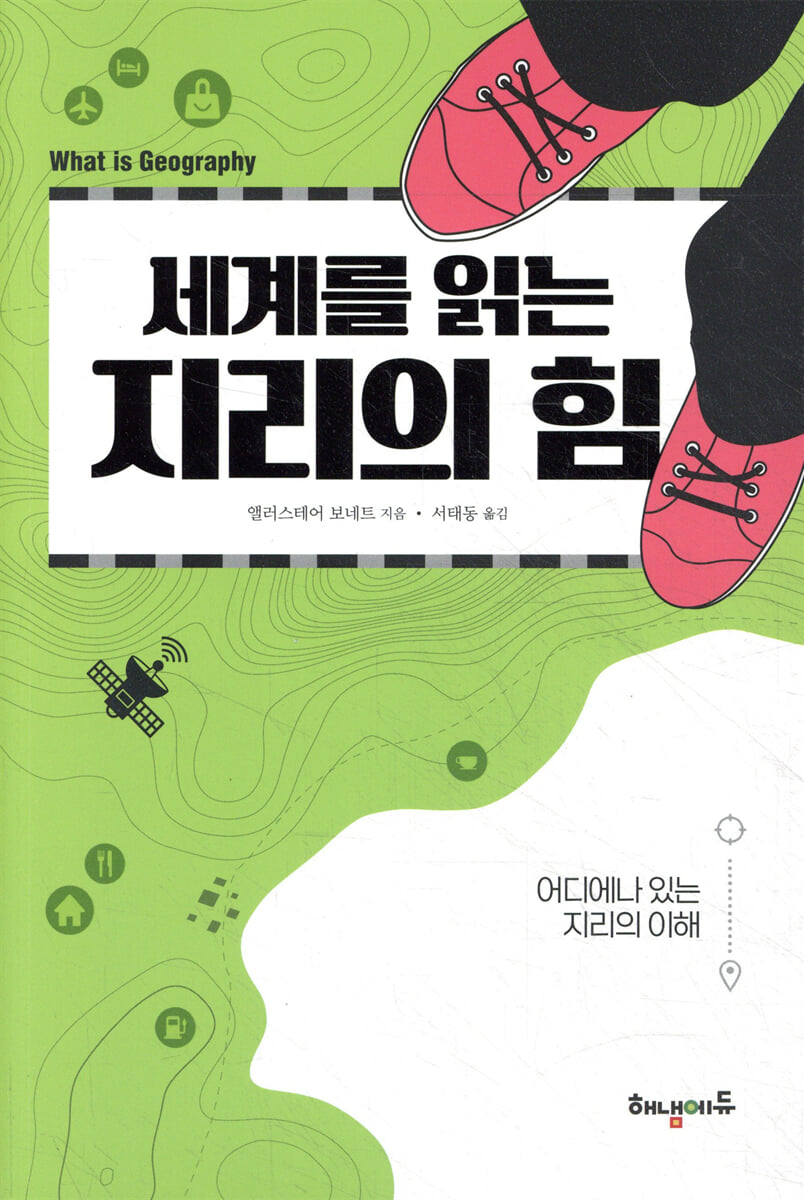
The power of geography to read the world
 |
Description
Book Introduction
The region, country, world, and earth where we live
Furthermore, the power to understand the universe begins with geography.
Geography is an essential discipline for understanding how the world works.
This book explains the concepts and ideas that make up geography in a concise and accessible way.
It covers core topics such as environment, space, and place across both human and physical geography, and also examines research methods and the history of geography.
This shows why and how geography plays a vital role in creating a sustainable planet.
In this introductory but not simplistic book, the author helps students understand the history and context of geography without prior knowledge.
This short and elegant book will be an engaging read for all readers fascinated by the 'geographic imagination'.
Furthermore, the power to understand the universe begins with geography.
Geography is an essential discipline for understanding how the world works.
This book explains the concepts and ideas that make up geography in a concise and accessible way.
It covers core topics such as environment, space, and place across both human and physical geography, and also examines research methods and the history of geography.
This shows why and how geography plays a vital role in creating a sustainable planet.
In this introductory but not simplistic book, the author helps students understand the history and context of geography without prior knowledge.
This short and elegant book will be an engaging read for all readers fascinated by the 'geographic imagination'.
index
To Korean readers
preface
Chapter 1 Introduction
Chapter 2: Order and Power - Understanding the World 1
· Finding order in the world
· Modern Geography: The World of Trade and the State
· Whose geography is it?
Chapter 3: Humans and Nature - Understanding the World 2
· Our environment
· Changes, Problems, and Solutions
· Natural system
Chapter 4 Urbanization and Mobility
· City view
· Urban critics
· Mobility
Chapter 5 Geography
· Explore
· Connect
· Mapping
· Research
Geography, Children, and Freedom: An Appeal
Chapter 6: The Institutionalization of Geography
· Professional institutions
· Popular institutions of geography
Chapter 7: Geography of the Future
Survival and prosperity
· Various geographical studies
· Digital geography and virtual geography
· Cosmogeography: Other Worlds, New Comparisons, New Conflicts
· Planet of Geographers
Additional remarks
Translator's Note
preface
Chapter 1 Introduction
Chapter 2: Order and Power - Understanding the World 1
· Finding order in the world
· Modern Geography: The World of Trade and the State
· Whose geography is it?
Chapter 3: Humans and Nature - Understanding the World 2
· Our environment
· Changes, Problems, and Solutions
· Natural system
Chapter 4 Urbanization and Mobility
· City view
· Urban critics
· Mobility
Chapter 5 Geography
· Explore
· Connect
· Mapping
· Research
Geography, Children, and Freedom: An Appeal
Chapter 6: The Institutionalization of Geography
· Professional institutions
· Popular institutions of geography
Chapter 7: Geography of the Future
Survival and prosperity
· Various geographical studies
· Digital geography and virtual geography
· Cosmogeography: Other Worlds, New Comparisons, New Conflicts
· Planet of Geographers
Additional remarks
Translator's Note
Detailed image

Into the book
Geography is a discipline with an inherent fascination.
It also contains the core elements of a good education.
Yet, many people don't know exactly what geography is.
I hesitate before the question, “What is geography?”
Perhaps we hesitate because of the scale of this question and the implications of a clear answer.
Because geography is a discipline that deals with the world.
Studying geography means studying the world, both near and far.
---p.15
Geography seeks to describe and explain the world and the people who live in it.
There are several pitfalls to this undertaking, the most fundamental of which is how to learn about people in other places.
---p.52
Geography is both modern and non-modern.
Geography fosters the development of many specializations, but it is not a specific field in itself, but rather a comprehensive and integrative project.
Geography's intellectual ambitions, like those of history, are absurdly vast.
But we know that giving it up would be more absurd.
---p.59
History is generally understood to deal with the human past.
But geography is broader than that.
Geography is not simply concerned with viewing the Earth as a human habitat, but with viewing the world as a whole.
Geography has always been interested in the natural processes that shape the Earth.
This exploration of nature is driven and directed by the need to survive, thrive, and find order in the world.
---p.85
The two pillars of modern geography are environmental knowledge and international knowledge.
But geographers have several more specific concerns, the most important of which are urbanization and mobility.
---p.97
Geographic research cannot remain confined to libraries and laboratories.
Geography is the study of our world, and it must go directly into the world.
Geography wants to take children out of the classroom and into the streets and fields.
I want to get people who are typing away at their keyboards out of their fluorescent-lit offices and into the real world, where they can feel the warm sun and cold rain.
---p.136
Geography is a pressing issue, and its interests and activities are central to understanding and addressing the most important crises of our time.
This challenge goes beyond simply teaching geography; it demands that geographical knowledge become part of all education and that geographic education be continuous and lifelong.
In short, we need a “planet of geographers.”
The reality that our actions are intertwined makes this need even more evident.
It also contains the core elements of a good education.
Yet, many people don't know exactly what geography is.
I hesitate before the question, “What is geography?”
Perhaps we hesitate because of the scale of this question and the implications of a clear answer.
Because geography is a discipline that deals with the world.
Studying geography means studying the world, both near and far.
---p.15
Geography seeks to describe and explain the world and the people who live in it.
There are several pitfalls to this undertaking, the most fundamental of which is how to learn about people in other places.
---p.52
Geography is both modern and non-modern.
Geography fosters the development of many specializations, but it is not a specific field in itself, but rather a comprehensive and integrative project.
Geography's intellectual ambitions, like those of history, are absurdly vast.
But we know that giving it up would be more absurd.
---p.59
History is generally understood to deal with the human past.
But geography is broader than that.
Geography is not simply concerned with viewing the Earth as a human habitat, but with viewing the world as a whole.
Geography has always been interested in the natural processes that shape the Earth.
This exploration of nature is driven and directed by the need to survive, thrive, and find order in the world.
---p.85
The two pillars of modern geography are environmental knowledge and international knowledge.
But geographers have several more specific concerns, the most important of which are urbanization and mobility.
---p.97
Geographic research cannot remain confined to libraries and laboratories.
Geography is the study of our world, and it must go directly into the world.
Geography wants to take children out of the classroom and into the streets and fields.
I want to get people who are typing away at their keyboards out of their fluorescent-lit offices and into the real world, where they can feel the warm sun and cold rain.
---p.136
Geography is a pressing issue, and its interests and activities are central to understanding and addressing the most important crises of our time.
This challenge goes beyond simply teaching geography; it demands that geographical knowledge become part of all education and that geographic education be continuous and lifelong.
In short, we need a “planet of geographers.”
The reality that our actions are intertwined makes this need even more evident.
---p.204
Publisher's Review
Geography that surrounds us, and geography that is far from us.
“We drive over geography, fly over it, and walk over it.” Our lives are thus surrounded by geography.
If it doesn't feel real, try turning on your smartphone screen.
I see a message saying that the item I ordered yesterday will arrive today.
I'm meeting a friend for the weekend, but I've never been to a place I've been to before. I looked it up on a map app and it said the fastest way was to take the subway.
Let's broaden our horizons a little.
As sea levels rise due to climate change, access to Jeju Island's Yongmeori Coast is restricted for half of the year, leaving only a few days open for full-day exploration.
In Switzerland, a massive landslide caused by the collapse of a glacier in the Alps has destroyed a village.
Mobility, maps, and climate change, as mentioned earlier, as well as urban issues, border conflicts, and even space travel, are all connected to geography.
In contrast, we don't know much about geography.
When you think of geography, the first thing that probably comes to mind is maps.
A map showing geographical features such as oceans, mountain ranges, rivers, and lakes, as well as national boundaries, and listing country names and city names.
Or maybe it's just a distribution map of a specific resource that you see in a textbook during class.
The geography the author speaks of is not simply memorizing maps or identifying which resources are produced in which region.
“We need to understand the Earth from near and far, from environmental knowledge and international knowledge, and we need to understand other worlds.” That’s why we need geography.
The geography that the author speaks of in this book is a 'world study', a discipline that studies the world, that is, everything about nature, culture, and human life covered in natural science, social science, and humanities.
The author presents various aspects of geography as a world discipline.
It covers the main topics of geography, such as place, space, environment, urbanization, and mobility, and examines digital and virtual geography and space geography as future geography.
Along with this, we will look at the history of geography and the four research methods that geographers use to understand the world: 'explore, connect, map, and study.'
In this context, the author shows what role geography, “rooted in the human survival instinct,” can play in creating a sustainable Earth.
The author says:
“Now is the time when ‘global scholarship’ is desperately needed.
“For the continued survival of humans and other life forms on Earth in the 21st century, geographical knowledge, geographical education, and geographical imagination are essential.”
“We drive over geography, fly over it, and walk over it.” Our lives are thus surrounded by geography.
If it doesn't feel real, try turning on your smartphone screen.
I see a message saying that the item I ordered yesterday will arrive today.
I'm meeting a friend for the weekend, but I've never been to a place I've been to before. I looked it up on a map app and it said the fastest way was to take the subway.
Let's broaden our horizons a little.
As sea levels rise due to climate change, access to Jeju Island's Yongmeori Coast is restricted for half of the year, leaving only a few days open for full-day exploration.
In Switzerland, a massive landslide caused by the collapse of a glacier in the Alps has destroyed a village.
Mobility, maps, and climate change, as mentioned earlier, as well as urban issues, border conflicts, and even space travel, are all connected to geography.
In contrast, we don't know much about geography.
When you think of geography, the first thing that probably comes to mind is maps.
A map showing geographical features such as oceans, mountain ranges, rivers, and lakes, as well as national boundaries, and listing country names and city names.
Or maybe it's just a distribution map of a specific resource that you see in a textbook during class.
The geography the author speaks of is not simply memorizing maps or identifying which resources are produced in which region.
“We need to understand the Earth from near and far, from environmental knowledge and international knowledge, and we need to understand other worlds.” That’s why we need geography.
The geography that the author speaks of in this book is a 'world study', a discipline that studies the world, that is, everything about nature, culture, and human life covered in natural science, social science, and humanities.
The author presents various aspects of geography as a world discipline.
It covers the main topics of geography, such as place, space, environment, urbanization, and mobility, and examines digital and virtual geography and space geography as future geography.
Along with this, we will look at the history of geography and the four research methods that geographers use to understand the world: 'explore, connect, map, and study.'
In this context, the author shows what role geography, “rooted in the human survival instinct,” can play in creating a sustainable Earth.
The author says:
“Now is the time when ‘global scholarship’ is desperately needed.
“For the continued survival of humans and other life forms on Earth in the 21st century, geographical knowledge, geographical education, and geographical imagination are essential.”
GOODS SPECIFICS
- Date of issue: June 16, 2025
- Page count, weight, size: 268 pages | 486g | 152*225*16mm
- ISBN13: 9788964462713
You may also like
카테고리
korean


korean

![GQ KOREA Mark (Monthly): December [2025]](http://librairie.coreenne.fr/cdn/shop/files/8ef265dbbfbf186523ed75ba7319009d.jpg?v=1765340328&width=3840)


