

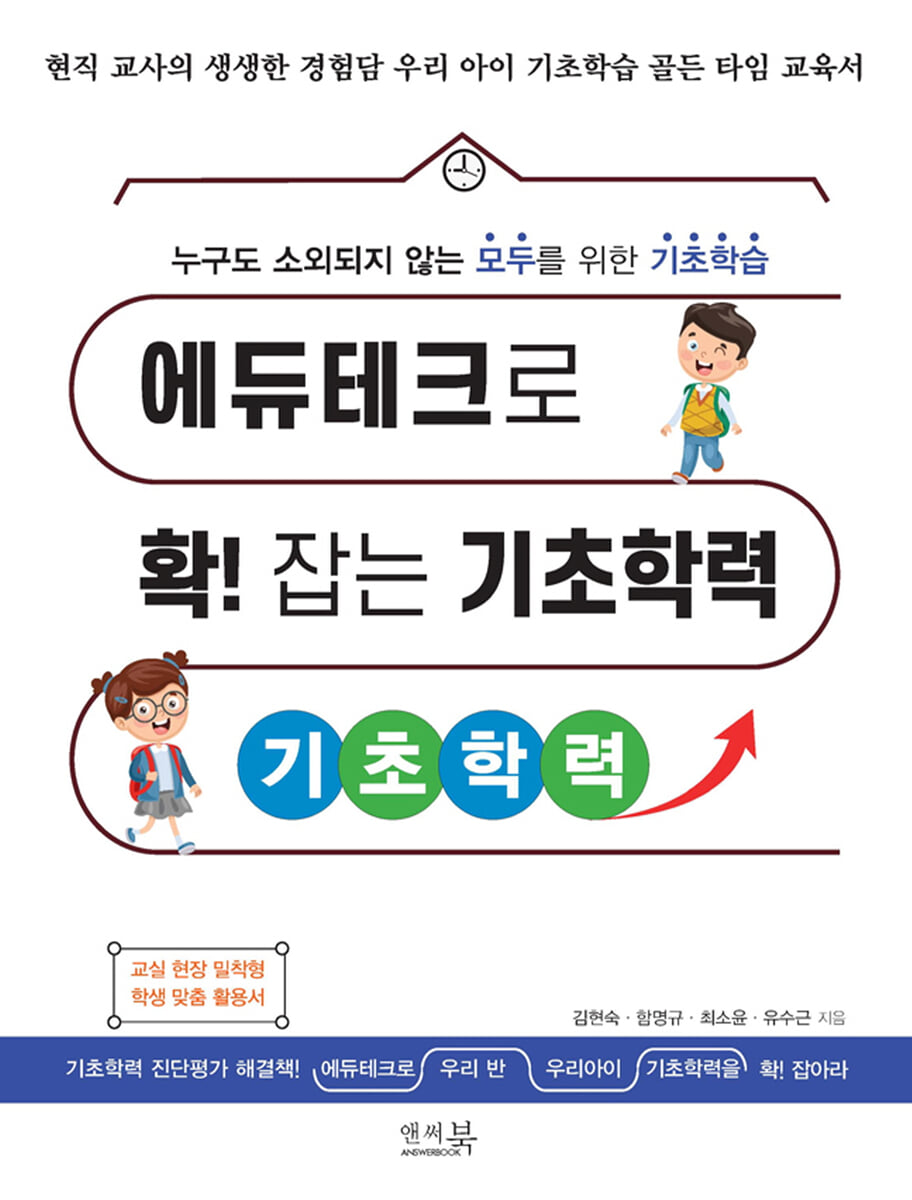
Developing Basic Academic Skills with EdTech
 |
Description
Book Introduction
The book, "Capturing Basic Academic Skills with EdTech," is a hands-on, student-focused guide that connects the extensive experience and know-how of four current teachers in basic academic skills with EdTech, and contains vivid accounts of basic academic skills education proven to be a nuanced tool for students.
Through the edutech and basic learning methods introduced in this book, we can expect to see the improvement of basic academic skills for all students in the classroom, not just those who require more nuanced learning.
Through the edutech and basic learning methods introduced in this book, we can expect to see the improvement of basic academic skills for all students in the classroom, not just those who require more nuanced learning.
index
Prologue: A Conversation Between Basic Academic Skills and EdTech
- Introduction of edtech in schools
The Appeal of EdTech: The Basics of Academic Skills Revealed by COVID-19
- EdTech and Teachers
- Children who need edutech and a nuanced approach
- How to use the book
Chapter 1: Understanding Students Who Need Learning Support
Head story
The meaning of basic academic skills that are built upside down
The importance of basic academic ability assessment
What students are eligible for learning support?
What are the benefits of using edutech in teaching?
Chapter 2: A Treasure Trove of Resources: National Basic Academic Support Center (https://k-basics.org)
1.
Introduction to the National Basic Academic Support Center and How to Join
2.
Learning Ability Diagnostic Test Tool
2-1.
Essential Learning Competency Diagnostic Tool
1) Literacy Diagnostic Tool
2) Reading Learning Characteristics Checklist (Difficulty in Reading, Dyslexia)
2-2 Slow Learner Screening Checklist (Borderline Intelligence Screening)
2-3 Repair Diagnostic Tool
3.
Emotional and Psychological Assessment Tool
3-1 Learning Support Competency Diagnostic Tool (Self-Awareness and Relationship Abilities: Emotional and Psychological Support Diagnosis)
1) Learning Ability Test (for elementary school students)
2) Learning Ability Test (for middle school students)
3) Social-Emotional Competency Test (for elementary school students)
3-2 Learning Style Test (for elementary and middle school students)
3-3 Learning Impairment Factor Test
1) For elementary school
2) Learning Competency Test, Part II Emotional Behavioral Environment Area (for middle school)
3-4 Emotional Behavioral Environment Inventory (EBEQ) (for elementary and middle school students)
3-5 Math Learning Motivation Test
3-6 Social Learning Motivation Test
3-7 School Life Adaptation Test
3-8 Self-Regulation Learning Test (for high school)
3-9 Results of a Satisfaction Survey on the Operation of Parent Counseling Week Using EdTech
Chapter 3: Interpretation and Real-World Cases Using Inspection Tools
1.
Interpreting the Social-Emotional Competence Test and the Learning Barriers Test
2.
Interpreting the Learning Style Test and the Emotional Behavioral Environment Test
3.
Digging into Real-World Case Studies: Analyzing Pre-Test Results and Comparing Pre- and Post-Test Results
3-1 Case 1 2021.
6th grade student A
3-2 Comparison of the results of the Learning Impairment Factor Diagnostic Tool and the Emotional Behavioral Environment Test
3-3 Support Program
Case 3-4 2021.
6th grade B student
3-5 Comparison of School Life Adaptation Test and Emotional Behavioral Environment Test Results
3-6 Support Program
3-7 Case 2 2023.
4th grade C student
3-8 Comparison of the results of the Social and Emotional Competency Test and the Learning Barriers Test
3-9 Comparison of Learning Style Test and Learning Ability Test Results
4.
Finishing chapters 1-3
4-1 Building Classrooms with EdTech
Chapter 4: Understanding and Guidance for Students on the Boundaries of Special Education
1.
Understanding Students on the Edge of Special Education
2.
In-depth analysis and guidance for students on the edge of special education
2-1 Diagnosing and Guiding Students in Need of Emotional and Behavioral Support (1st Grade, Male)
1) Reason for request
2) In-depth analysis through educational diagnosis
3) Setting teaching objectives and teaching methods according to learning level
4) Collaboration with parents to achieve goals
5) Overall Review
2-2 Diagnosing and Guiding a Student Suspected of Dyslexia (1st Grade, Male)
1) Reason for request
2) In-depth analysis through educational diagnosis
3) Setting teaching objectives and teaching methods according to learning level
4) Collaboration with parents to achieve goals
5) Overall Review
2-3 Diagnosing and Guiding Students with Slow Reaction Speeds (2nd Grade, Male)
1) Reason for request
2) In-depth analysis through educational diagnosis
3) Parental cooperation and overall evaluation
Diagnosing and Guiding Students with Developmental Delays (2nd Grade, Male)
1) Reason for request (background information)
2) In-depth analysis through educational diagnosis
3) Setting teaching objectives and teaching methods according to learning level
4) Collaboration with parents to achieve goals
5) Overall Review
2-5 Q&A on Diagnosis and Guidance
3.
EdTech for Basic Learning Guidance for Students on the Edge of Special Education
1) Hangul, step by step
2) Chanchan Hangul learning video (Incheon Metropolitan Office of Education)
3) Mathematical Ability Diagnostic Tool (National Basic Academic Ability Support Center)
4) Hancom Typing
5) Clova Note (Naver)
Chapter 5: Learning Support Using EdTech
1.
EdTech in the Classroom
1-1 Classroom Basic Academic Skills Education Using Class Tools
1) Class Tool
2) Thinkerbell
3) Mentimeter
4) OKmindmap
5) Autodraw
6) Tuning
7) Class Card
8) Kahoot
9) Underwater Korean Language Play (Application)
2.
Edukaemiapification
2-1 Quickdraw
2-2 Lapo Lapo
2-3 ZEP
3.
Diagnostic Correction System
3-1 Learning Basic Functions (Creating a Diagnostic Correction System Class and Enrolling Students)
3-2 Conducting student diagnosis and improvement tests
3-3 Using the correction data
3-4 Use in basic academic skills guidance
4.
Bayes Camp (Learn and Achieve Yourself Camp)
4-1 Learning Basic Functions
4-2 Home-use bass camp
Chapter 6: Teaching Basic Learning Using EdTech
1.
Enjoyable supplementary math lessons with Smart Math Explorers
1-1 Open the door of your heart
1-2 Diagnose learning level and set common goals
1-3 Monitor students' growth together
1-4 Check growth results
2. Enjoyable English Basics Learning (English Curriculum Learning) with AI Pengtok
2-1 Learning motivation created by attractive characters
2-2 Learn AI Pengtok and set your own goals.
2-3 Monitor students' growth together
2-4 Speaking
2-5 Scanit
2-6 Checking growth results
3.
Laporapo Escape Room Game for Everyone
3-1 Students who have lost their motivation to learn and become listless
3-2 Discover where you can contribute
3-3 Game activities that foster consideration
4.
Online diagnosis with the diagnostic correction system
5.
Supplementary learning through base camp
5-1 1:1 study in the study room
5-2 Distributing Learning Topics
6.
Basic mathematics instruction using the National Basic Academic Ability Support Center's mathematical ability diagnostic tool
6-1 Let's Cross the Stone Bridge After Knocking It Out (Learner Diagnosis and Planning)
6-2 Making the most of video resources
6-3 Be careful about these things
6-4 Check growth
- Introduction of edtech in schools
The Appeal of EdTech: The Basics of Academic Skills Revealed by COVID-19
- EdTech and Teachers
- Children who need edutech and a nuanced approach
- How to use the book
Chapter 1: Understanding Students Who Need Learning Support
Head story
The meaning of basic academic skills that are built upside down
The importance of basic academic ability assessment
What students are eligible for learning support?
What are the benefits of using edutech in teaching?
Chapter 2: A Treasure Trove of Resources: National Basic Academic Support Center (https://k-basics.org)
1.
Introduction to the National Basic Academic Support Center and How to Join
2.
Learning Ability Diagnostic Test Tool
2-1.
Essential Learning Competency Diagnostic Tool
1) Literacy Diagnostic Tool
2) Reading Learning Characteristics Checklist (Difficulty in Reading, Dyslexia)
2-2 Slow Learner Screening Checklist (Borderline Intelligence Screening)
2-3 Repair Diagnostic Tool
3.
Emotional and Psychological Assessment Tool
3-1 Learning Support Competency Diagnostic Tool (Self-Awareness and Relationship Abilities: Emotional and Psychological Support Diagnosis)
1) Learning Ability Test (for elementary school students)
2) Learning Ability Test (for middle school students)
3) Social-Emotional Competency Test (for elementary school students)
3-2 Learning Style Test (for elementary and middle school students)
3-3 Learning Impairment Factor Test
1) For elementary school
2) Learning Competency Test, Part II Emotional Behavioral Environment Area (for middle school)
3-4 Emotional Behavioral Environment Inventory (EBEQ) (for elementary and middle school students)
3-5 Math Learning Motivation Test
3-6 Social Learning Motivation Test
3-7 School Life Adaptation Test
3-8 Self-Regulation Learning Test (for high school)
3-9 Results of a Satisfaction Survey on the Operation of Parent Counseling Week Using EdTech
Chapter 3: Interpretation and Real-World Cases Using Inspection Tools
1.
Interpreting the Social-Emotional Competence Test and the Learning Barriers Test
2.
Interpreting the Learning Style Test and the Emotional Behavioral Environment Test
3.
Digging into Real-World Case Studies: Analyzing Pre-Test Results and Comparing Pre- and Post-Test Results
3-1 Case 1 2021.
6th grade student A
3-2 Comparison of the results of the Learning Impairment Factor Diagnostic Tool and the Emotional Behavioral Environment Test
3-3 Support Program
Case 3-4 2021.
6th grade B student
3-5 Comparison of School Life Adaptation Test and Emotional Behavioral Environment Test Results
3-6 Support Program
3-7 Case 2 2023.
4th grade C student
3-8 Comparison of the results of the Social and Emotional Competency Test and the Learning Barriers Test
3-9 Comparison of Learning Style Test and Learning Ability Test Results
4.
Finishing chapters 1-3
4-1 Building Classrooms with EdTech
Chapter 4: Understanding and Guidance for Students on the Boundaries of Special Education
1.
Understanding Students on the Edge of Special Education
2.
In-depth analysis and guidance for students on the edge of special education
2-1 Diagnosing and Guiding Students in Need of Emotional and Behavioral Support (1st Grade, Male)
1) Reason for request
2) In-depth analysis through educational diagnosis
3) Setting teaching objectives and teaching methods according to learning level
4) Collaboration with parents to achieve goals
5) Overall Review
2-2 Diagnosing and Guiding a Student Suspected of Dyslexia (1st Grade, Male)
1) Reason for request
2) In-depth analysis through educational diagnosis
3) Setting teaching objectives and teaching methods according to learning level
4) Collaboration with parents to achieve goals
5) Overall Review
2-3 Diagnosing and Guiding Students with Slow Reaction Speeds (2nd Grade, Male)
1) Reason for request
2) In-depth analysis through educational diagnosis
3) Parental cooperation and overall evaluation
Diagnosing and Guiding Students with Developmental Delays (2nd Grade, Male)
1) Reason for request (background information)
2) In-depth analysis through educational diagnosis
3) Setting teaching objectives and teaching methods according to learning level
4) Collaboration with parents to achieve goals
5) Overall Review
2-5 Q&A on Diagnosis and Guidance
3.
EdTech for Basic Learning Guidance for Students on the Edge of Special Education
1) Hangul, step by step
2) Chanchan Hangul learning video (Incheon Metropolitan Office of Education)
3) Mathematical Ability Diagnostic Tool (National Basic Academic Ability Support Center)
4) Hancom Typing
5) Clova Note (Naver)
Chapter 5: Learning Support Using EdTech
1.
EdTech in the Classroom
1-1 Classroom Basic Academic Skills Education Using Class Tools
1) Class Tool
2) Thinkerbell
3) Mentimeter
4) OKmindmap
5) Autodraw
6) Tuning
7) Class Card
8) Kahoot
9) Underwater Korean Language Play (Application)
2.
Edukaemiapification
2-1 Quickdraw
2-2 Lapo Lapo
2-3 ZEP
3.
Diagnostic Correction System
3-1 Learning Basic Functions (Creating a Diagnostic Correction System Class and Enrolling Students)
3-2 Conducting student diagnosis and improvement tests
3-3 Using the correction data
3-4 Use in basic academic skills guidance
4.
Bayes Camp (Learn and Achieve Yourself Camp)
4-1 Learning Basic Functions
4-2 Home-use bass camp
Chapter 6: Teaching Basic Learning Using EdTech
1.
Enjoyable supplementary math lessons with Smart Math Explorers
1-1 Open the door of your heart
1-2 Diagnose learning level and set common goals
1-3 Monitor students' growth together
1-4 Check growth results
2. Enjoyable English Basics Learning (English Curriculum Learning) with AI Pengtok
2-1 Learning motivation created by attractive characters
2-2 Learn AI Pengtok and set your own goals.
2-3 Monitor students' growth together
2-4 Speaking
2-5 Scanit
2-6 Checking growth results
3.
Laporapo Escape Room Game for Everyone
3-1 Students who have lost their motivation to learn and become listless
3-2 Discover where you can contribute
3-3 Game activities that foster consideration
4.
Online diagnosis with the diagnostic correction system
5.
Supplementary learning through base camp
5-1 1:1 study in the study room
5-2 Distributing Learning Topics
6.
Basic mathematics instruction using the National Basic Academic Ability Support Center's mathematical ability diagnostic tool
6-1 Let's Cross the Stone Bridge After Knocking It Out (Learner Diagnosis and Planning)
6-2 Making the most of video resources
6-3 Be careful about these things
6-4 Check growth
Publisher's Review
The book, "Capturing Basic Academic Skills with EdTech," is a student-tailored book closely related to the field of education, containing vivid accounts of basic academic skills education proven to be a growth tool for students who require nuance by connecting the long-term experience and know-how of four current teachers in basic academic skills with EdTech.
Through the edutech and basic learning methods introduced in this book, you can expect to see the fundamental academic skills of all students in the classroom grow, not just those who require more nuanced learning!
This book is divided into six chapters, and the key contents of each chapter are as follows.
Chapter 01 Understanding Students Who Need Learning Support
We will examine existing propositions about what basic academic skills are, establish our own meaning, and learn about the importance of basic diagnosis at the beginning of the school year.
This chapter is a preparation for examining the application program for early intervention to prevent the worsening of underachievement by identifying students who are underachievable or expected to be underachievable based on the analysis of the results of the basic diagnosis and analyzing the causes.
Chapter 02: A Treasure Trove of Resources: National Basic Academic Support Center (https://k-basics.org)
This is an introduction to the National Basic Academic Ability Support Center operated by the Korea Institute for Curriculum and Evaluation.
We will explain the steps from membership registration to student management and matching with parents, and learn about various diagnostic tools by area (literacy, math, psychology, and emotions, etc.).
We also provide links to each diagnostic tool to enhance usability, and we also introduce teaching and learning materials that can be used in conjunction with the results.
Chapter 03 Interpretation and Real-World Cases Using Inspection Tools
Covers real-world examples of analyzing and interpreting test results.
First, we attempted to analyze the test results that were installed, and then we analyzed the results after diagnosing the students the author had taught, and published the interpretation.
We intended to combine and analyze several diagnostic tests to help you.
If you look at the analyzed content and graphs together, it will be more helpful when you actually use it.
Chapter 04 Understanding and Guidance for Students on the Boundary of Special Education
Chapter 4 covers the following topics: understanding students at the edge of special education, in-depth analysis and guidance of students at the edge of special education, and edutech for basic learning of students at the edge of special education.
I hope this topic will be of some help to teachers in the classroom, guardians at home, and, most importantly, students on the edge of special education.
Chapter 05: Learning Support Using EdTech
In this chapter, we will learn about teaching methods for learning support targets using edutech.
Teachers who are accustomed to traditional analog methods will find it very helpful in teaching basic academic skills by utilizing edutech if they follow along step by step.
This chapter will help teachers learn about effective edutech tools that can be used in the classroom to teach a variety of basic academic skills.
You'll also learn how to support basic academic education using edutech by understanding the definition of gamification and exploring real-world educational examples utilizing games.
Chapter 06: Teaching Basic Learning Using EdTech
EdTech has its own appeal that attracts students.
Even when learning the same content, students tend to show more interest and willingness when utilizing edutech.
In this chapter, I share my experience teaching basic learning using edutech.
The book "Edutech for Basic Academic Skills" is designed to ensure that no one is left behind by effectively incorporating edutech and basic learning methods for basic academic skills education, allowing students to experience the benefits of growth!
This is a student-tailored guide for classroom use, packed with the vivid basic academic skills and edutech utilization experiences and know-how of four current teachers.
This book can be called a "basic learning golden time textbook" that utilizes proven edutech to reduce the gap in basic academic ability and create a classroom where everyone can grow, from children who require a delicate approach to all children in our class.
This book is recommended for current elementary, middle, and high school teachers, students and prospective teachers at teacher training colleges, educators interested in basic academic skills, and parents.
Supplementary materials for this book can be downloaded through the official Answerbook cafe, and you can also check the errata, important revisions, and notifications.
-hhttps://cafe.naver.com/answerbook/5799
Through the edutech and basic learning methods introduced in this book, you can expect to see the fundamental academic skills of all students in the classroom grow, not just those who require more nuanced learning!
This book is divided into six chapters, and the key contents of each chapter are as follows.
Chapter 01 Understanding Students Who Need Learning Support
We will examine existing propositions about what basic academic skills are, establish our own meaning, and learn about the importance of basic diagnosis at the beginning of the school year.
This chapter is a preparation for examining the application program for early intervention to prevent the worsening of underachievement by identifying students who are underachievable or expected to be underachievable based on the analysis of the results of the basic diagnosis and analyzing the causes.
Chapter 02: A Treasure Trove of Resources: National Basic Academic Support Center (https://k-basics.org)
This is an introduction to the National Basic Academic Ability Support Center operated by the Korea Institute for Curriculum and Evaluation.
We will explain the steps from membership registration to student management and matching with parents, and learn about various diagnostic tools by area (literacy, math, psychology, and emotions, etc.).
We also provide links to each diagnostic tool to enhance usability, and we also introduce teaching and learning materials that can be used in conjunction with the results.
Chapter 03 Interpretation and Real-World Cases Using Inspection Tools
Covers real-world examples of analyzing and interpreting test results.
First, we attempted to analyze the test results that were installed, and then we analyzed the results after diagnosing the students the author had taught, and published the interpretation.
We intended to combine and analyze several diagnostic tests to help you.
If you look at the analyzed content and graphs together, it will be more helpful when you actually use it.
Chapter 04 Understanding and Guidance for Students on the Boundary of Special Education
Chapter 4 covers the following topics: understanding students at the edge of special education, in-depth analysis and guidance of students at the edge of special education, and edutech for basic learning of students at the edge of special education.
I hope this topic will be of some help to teachers in the classroom, guardians at home, and, most importantly, students on the edge of special education.
Chapter 05: Learning Support Using EdTech
In this chapter, we will learn about teaching methods for learning support targets using edutech.
Teachers who are accustomed to traditional analog methods will find it very helpful in teaching basic academic skills by utilizing edutech if they follow along step by step.
This chapter will help teachers learn about effective edutech tools that can be used in the classroom to teach a variety of basic academic skills.
You'll also learn how to support basic academic education using edutech by understanding the definition of gamification and exploring real-world educational examples utilizing games.
Chapter 06: Teaching Basic Learning Using EdTech
EdTech has its own appeal that attracts students.
Even when learning the same content, students tend to show more interest and willingness when utilizing edutech.
In this chapter, I share my experience teaching basic learning using edutech.
The book "Edutech for Basic Academic Skills" is designed to ensure that no one is left behind by effectively incorporating edutech and basic learning methods for basic academic skills education, allowing students to experience the benefits of growth!
This is a student-tailored guide for classroom use, packed with the vivid basic academic skills and edutech utilization experiences and know-how of four current teachers.
This book can be called a "basic learning golden time textbook" that utilizes proven edutech to reduce the gap in basic academic ability and create a classroom where everyone can grow, from children who require a delicate approach to all children in our class.
This book is recommended for current elementary, middle, and high school teachers, students and prospective teachers at teacher training colleges, educators interested in basic academic skills, and parents.
Supplementary materials for this book can be downloaded through the official Answerbook cafe, and you can also check the errata, important revisions, and notifications.
-hhttps://cafe.naver.com/answerbook/5799
GOODS SPECIFICS
- Date of issue: March 10, 2024
- Page count, weight, size: 264 pages | 463g | 170*225*11mm
- ISBN13: 9791193059210
- ISBN10: 1193059216
You may also like
카테고리
korean


korean

![GQ KOREA Mark (Monthly): December [2025]](http://librairie.coreenne.fr/cdn/shop/files/8ef265dbbfbf186523ed75ba7319009d.jpg?v=1765340328&width=3840)


