

A folk painting that you will fall in love with once you get to know it
 |
Description
Book Introduction
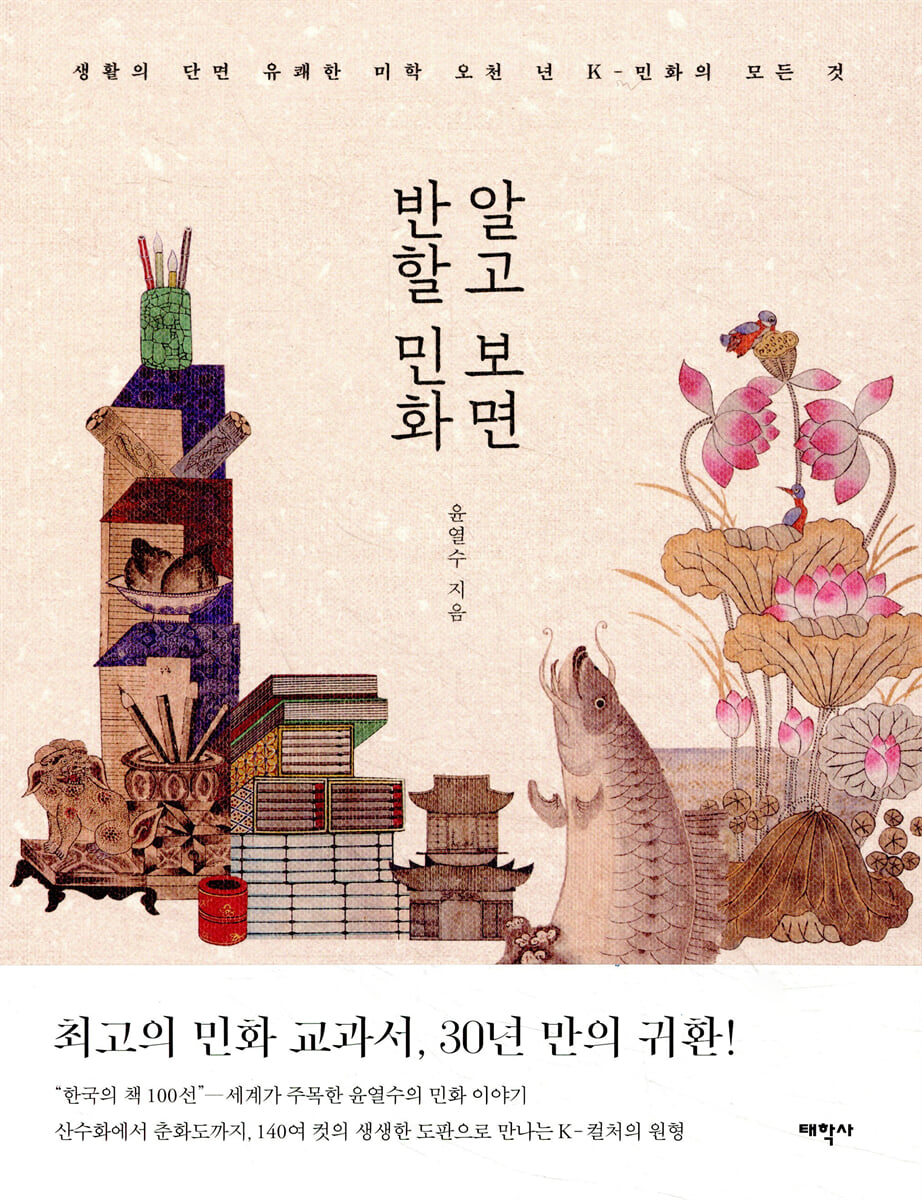
"100 Korean Books" - Yun Yeol-su's Folk Painting Stories That Gained Global Attention
The best folk painting textbook returns after 30 years!
Paintings loved by the people
A tiger for the front gate, grapes for the newlyweds' house, grilled shrimp for the 60th birthday party,
In the test taker’s room, there is a picture of a fish turning into a dragon…
An introduction to folk painting by Yun Yeol-su, a giant in the folk painting world.
This is a completely revised edition, 30 years after its first publication, of a book that has served as an unrivaled 'folk painting textbook.'
Since establishing itself as the best folk painting textbook to date, it has been published in English (2000) and Japanese (2006), and was selected as one of the '100 Korean Books' at the 2005 Frankfurt Book Fair.
This book, "Folk Paintings You'll Fall in Love With Once You Know Them," is based on newly collected data and research results from the past 30 years, and presents a more sophisticated design with a refreshing format and abundant illustrations suited to the sensibilities of 2020s K-culture.
The best folk painting textbook returns after 30 years!
Paintings loved by the people
A tiger for the front gate, grapes for the newlyweds' house, grilled shrimp for the 60th birthday party,
In the test taker’s room, there is a picture of a fish turning into a dragon…
An introduction to folk painting by Yun Yeol-su, a giant in the folk painting world.
This is a completely revised edition, 30 years after its first publication, of a book that has served as an unrivaled 'folk painting textbook.'
Since establishing itself as the best folk painting textbook to date, it has been published in English (2000) and Japanese (2006), and was selected as one of the '100 Korean Books' at the 2005 Frankfurt Book Fair.
This book, "Folk Paintings You'll Fall in Love With Once You Know Them," is based on newly collected data and research results from the past 30 years, and presents a more sophisticated design with a refreshing format and abundant illustrations suited to the sensibilities of 2020s K-culture.
- You can preview some of the book's contents.
Preview
index
introduction
Part 1: First Encounter with Folk Painting - What is Folk Painting?
1.
Are folk paintings meant for appreciation?
2.
Why is folk painting called folk painting? Five keywords to understand folk painting.
1) Folk paintings are paintings created for decorative purposes.
2) Folk paintings are paintings that reflect indigenous beliefs and worldviews.
3) Folk paintings reflect shamanistic beliefs.
4) Folk painting is an expression of collective sensibility.
5) Minhwa is a 'Bon' painting.
3.
What Kinds of Painting Are in Folk Painting: Understanding the Types of Folk Painting
4.
How to Paint Folk Painting: From Composition to Color, Capturing Ideas in a Free-spirited Way
5.
How Should We View Folk Painting Now?: Reading the Social History of Folk Painting Beyond Art History
Part 2: From Landscape Paintings to Chunhwa Paintings, Everything About Folk Painting - Understanding and Appreciating Folk Painting
1.
Landscape painting: Born from nature and disappearing into nature
1) Geumgangsando (Map of Geumgangsan) / 2) Eight Scenic Views of Gwandong (Map of Eight Scenic Views of Gwandong)
2.
Jangsaengdo (長生圖): A wish for a long life
1) Ten Symbols of Longevity / 2) Old Pine Tree / 3) Strange Rock
3.
Flower Painting: Flowers, the epitome of captivating beauty
1) Peony / 2) Other types of flowers
4.
Vegetable and Fruit Drawing: Vegetables and fruits bring happiness and drive away misfortune.
1) Pomegranate painting / 2) Pomegranate painting / 3) Grape painting
5.
Flower and Bird Painting: The aesthetics and symbolism of flowers and birds in harmony
1) Crane / 2) Phoenix / 3) White Heron / 4) Geese and Mandarin Ducks / 5) Chickens / 6) Hawks, Owls, Ducks, Pheasants, Sparrows, etc.
6.
Animal Illustration: Communicating with the friendly animals around us
1) Tiger / 2) Magpie Tiger / 3) Deer / 4) Rabbit
7.
Spirit Beast (靈獸?): An imaginary guardian animal
1) Kirin (麒麟) / 2) Shingu (神龜) / 3) Hyeonmu (玄武) / 4) Haetae (??) / 5) Bulgasari (불가사리) / 6) Sabulsang (四不像) / 7) Unryongdo (雲龍圖)
8.
Fish and Crab Map: Another Paradise, Aquatic Creatures
1) Samyeo-do (Three Extra Pictures) / 2) Yakrido (Rising Carp) and Eobyeonseongryongdo (Fish Transformation into Dragon) / 3) Baek-do (Hundred Fish) / 4) Hahap-do (Salt and Crab) / 5) Gwol-eodo (Closed Fish)
9.
Grass and Insects: The Small, Quiet World of Grass and Insects
1) Baekjeopdo (百蝶圖) / 2) Pyeonbokdo (??圖)
10.
Okwoohwa (屋宇畵): A dream house where you want to live for a thousand years
1) Donggwoldo (East Palace Map) / 2) Sadangdo (Shrine Map) / 3) Yonggungdo (Dragon Palace Map)
11.
Paintings on utensils: Paintings on everything from bookshelves to vases, and on folding screens.
1) Chaekgado (冊架圖) / 2) Leopard tent (虎皮帳幕圖) / 3) Flower vase (花甁圖)
12.
Portraits: People walking through a landscape
1) Painting of a Hundred Children / 2) Painting of a Divine Child / 3) Portrait
13.
Genre Painting: A Cross-Section of Life, the Pleasant Aesthetics of Making a Living
1) Plowing and weaving diagram / 2) Lifetime diagram
14.
Taoist and Buddhist paintings: the world of immortals and high priests, portraits of Taoist and Buddhist figures
1) Painting of Immortals / 2) Painting of the Elderly of the Longevity Star / 3) Painting of the Eight Immortals / Painting of the Immortals of the Sea / 4) Painting of the Banquet at Yaochi Pond / Painting of the Group of Immortals at Sea
15.
Record paintings: Records left in pictures, from wars to various events.
1) Royal Procession Map / 2) Sea Battle Map, Turtle Ship Procession Map, and Eight Gifts Map / 3) Dongrae-bu Sasunjeoldo Map
16.
Tale Painting: The Joy of Reading a Story
1) Painting of a Filial Son / 2) Painting of Chunhyang and Painting of a Nine Clouds / 3) Painting of Historical Figures
17.
Design drawings and character drawings: Patterns that bring good luck
18.
Map painting: a painting combined with a map
19.
Hybrid Painting: A combination of various paintings, with freedom in use and technique.
20.
Chunhwado (春?圖): Sex between men and women, between harmony and taboo
21.
Other paintings besides Sehwa (歲畵)
Appendix: 100 Most Common Patterns in Folk Painting
List of illustrations
References
Part 1: First Encounter with Folk Painting - What is Folk Painting?
1.
Are folk paintings meant for appreciation?
2.
Why is folk painting called folk painting? Five keywords to understand folk painting.
1) Folk paintings are paintings created for decorative purposes.
2) Folk paintings are paintings that reflect indigenous beliefs and worldviews.
3) Folk paintings reflect shamanistic beliefs.
4) Folk painting is an expression of collective sensibility.
5) Minhwa is a 'Bon' painting.
3.
What Kinds of Painting Are in Folk Painting: Understanding the Types of Folk Painting
4.
How to Paint Folk Painting: From Composition to Color, Capturing Ideas in a Free-spirited Way
5.
How Should We View Folk Painting Now?: Reading the Social History of Folk Painting Beyond Art History
Part 2: From Landscape Paintings to Chunhwa Paintings, Everything About Folk Painting - Understanding and Appreciating Folk Painting
1.
Landscape painting: Born from nature and disappearing into nature
1) Geumgangsando (Map of Geumgangsan) / 2) Eight Scenic Views of Gwandong (Map of Eight Scenic Views of Gwandong)
2.
Jangsaengdo (長生圖): A wish for a long life
1) Ten Symbols of Longevity / 2) Old Pine Tree / 3) Strange Rock
3.
Flower Painting: Flowers, the epitome of captivating beauty
1) Peony / 2) Other types of flowers
4.
Vegetable and Fruit Drawing: Vegetables and fruits bring happiness and drive away misfortune.
1) Pomegranate painting / 2) Pomegranate painting / 3) Grape painting
5.
Flower and Bird Painting: The aesthetics and symbolism of flowers and birds in harmony
1) Crane / 2) Phoenix / 3) White Heron / 4) Geese and Mandarin Ducks / 5) Chickens / 6) Hawks, Owls, Ducks, Pheasants, Sparrows, etc.
6.
Animal Illustration: Communicating with the friendly animals around us
1) Tiger / 2) Magpie Tiger / 3) Deer / 4) Rabbit
7.
Spirit Beast (靈獸?): An imaginary guardian animal
1) Kirin (麒麟) / 2) Shingu (神龜) / 3) Hyeonmu (玄武) / 4) Haetae (??) / 5) Bulgasari (불가사리) / 6) Sabulsang (四不像) / 7) Unryongdo (雲龍圖)
8.
Fish and Crab Map: Another Paradise, Aquatic Creatures
1) Samyeo-do (Three Extra Pictures) / 2) Yakrido (Rising Carp) and Eobyeonseongryongdo (Fish Transformation into Dragon) / 3) Baek-do (Hundred Fish) / 4) Hahap-do (Salt and Crab) / 5) Gwol-eodo (Closed Fish)
9.
Grass and Insects: The Small, Quiet World of Grass and Insects
1) Baekjeopdo (百蝶圖) / 2) Pyeonbokdo (??圖)
10.
Okwoohwa (屋宇畵): A dream house where you want to live for a thousand years
1) Donggwoldo (East Palace Map) / 2) Sadangdo (Shrine Map) / 3) Yonggungdo (Dragon Palace Map)
11.
Paintings on utensils: Paintings on everything from bookshelves to vases, and on folding screens.
1) Chaekgado (冊架圖) / 2) Leopard tent (虎皮帳幕圖) / 3) Flower vase (花甁圖)
12.
Portraits: People walking through a landscape
1) Painting of a Hundred Children / 2) Painting of a Divine Child / 3) Portrait
13.
Genre Painting: A Cross-Section of Life, the Pleasant Aesthetics of Making a Living
1) Plowing and weaving diagram / 2) Lifetime diagram
14.
Taoist and Buddhist paintings: the world of immortals and high priests, portraits of Taoist and Buddhist figures
1) Painting of Immortals / 2) Painting of the Elderly of the Longevity Star / 3) Painting of the Eight Immortals / Painting of the Immortals of the Sea / 4) Painting of the Banquet at Yaochi Pond / Painting of the Group of Immortals at Sea
15.
Record paintings: Records left in pictures, from wars to various events.
1) Royal Procession Map / 2) Sea Battle Map, Turtle Ship Procession Map, and Eight Gifts Map / 3) Dongrae-bu Sasunjeoldo Map
16.
Tale Painting: The Joy of Reading a Story
1) Painting of a Filial Son / 2) Painting of Chunhyang and Painting of a Nine Clouds / 3) Painting of Historical Figures
17.
Design drawings and character drawings: Patterns that bring good luck
18.
Map painting: a painting combined with a map
19.
Hybrid Painting: A combination of various paintings, with freedom in use and technique.
20.
Chunhwado (春?圖): Sex between men and women, between harmony and taboo
21.
Other paintings besides Sehwa (歲畵)
Appendix: 100 Most Common Patterns in Folk Painting
List of illustrations
References
Detailed image

Into the book
The characteristics of folk paintings include practicality, symbolism, and artistry.
Pure art prioritizes artistry.
In contrast, folk paintings emphasize practicality over artistry, as they are imbued with symbolism.
Each era has its own common symbolism that appears in paintings, and this symbolism helps us understand the cultural characteristics of that era.
Our folk paintings are no exception, and they serve as an important criterion for interpreting the spirit of the times in which they were painted.
Folk paintings contain many symbolic icons, whether for decorative or magical purposes.
Moreover, our ancestors constantly innovated methods of expression and interpretation of materials to highlight these symbolic meanings more clearly, and through this, our folk paintings developed into even more unique pieces.
In this process, the symbolism of folk paintings was freely transformed and modified according to the cultural environment of the region or individual intentions, and became completely new and interesting paintings that had never been seen before.
For example, the biological characteristics of fish, namely, laying many eggs at once and swimming in schools, gave the fish and crab painting the symbolism of fertility, and the carp floating leisurely in the pond symbolized success and wealth, and the painting of a carp jumping over a waterfall, called Yakrido, came to symbolize success by passing the civil service examination and becoming a government official.
Sometimes, the content of a story or folktale is expressed in a symbolic picture by condensing it into one or two or three objects.
Catfish pictures usually symbolize two things.
The head was sometimes drawn like a helmet to symbolize longevity, and sometimes like a penis to express the desire for fertility.
---From "Why is folk painting called folk painting?"
The chicken picture is a type of Sehwa that was traditionally hung on the front gate or inside the house along with the tiger picture at the beginning of the year with the meaning of warding off evil and inviting good fortune.
It was used by drawing directly or stamping it with a woodblock.
The rooster has been treated as an auspicious sign that announces the dawn, and as the only winged animal among the twelve zodiac animals, it has been seen as a messenger connecting the earth and the sky.
Also, when the rooster crows, the dawn breaks, and when the dawn breaks, all evil spirits that fear the light run away, so it was treasured as a domestic bird with the meaning of exorcism.
The rooster's red comb symbolizes obtaining a government post because its name and appearance are related to government posts, and the hen's red comb symbolizes the prosperity of descendants because it lays eggs every day.
---From "Flower and Bird Painting"
Unlike landscape paintings or bird-and-flower paintings, the book depicts objects in a three-dimensional way.
The books in the bookstore are not drawn in a way that makes things close up bigger and things further away smaller, but rather in a reverse perspective that makes things wider as they go further back.
The point of view is also drawn in a multi-viewpoint manner, either without a specific point of view or with multiple points of view. This unique perspective, which is a characteristic of Chaekgeori, is noteworthy.
The shape of the books, the volume of the stacked books, the pattern on the cover, etc. are all drawn in straight lines, and the spacing is maintained precisely as if using a marked ruler, which is also a characteristic of the book stand.
However, if you look closely at each line, you can see that it was drawn without using a ruler.
The paintings on the books are works that bring to life the story of Dohwaseo's painting classes, which states, "When teaching painting classes at an institution that trained painters, we trained them to draw straight lines and curves at least 2,000 times using a single painting as a model."
Perhaps the creation of such a luxurious bookcase would have been impossible without the expertise of an artist who had taken special painting classes.
Pure art prioritizes artistry.
In contrast, folk paintings emphasize practicality over artistry, as they are imbued with symbolism.
Each era has its own common symbolism that appears in paintings, and this symbolism helps us understand the cultural characteristics of that era.
Our folk paintings are no exception, and they serve as an important criterion for interpreting the spirit of the times in which they were painted.
Folk paintings contain many symbolic icons, whether for decorative or magical purposes.
Moreover, our ancestors constantly innovated methods of expression and interpretation of materials to highlight these symbolic meanings more clearly, and through this, our folk paintings developed into even more unique pieces.
In this process, the symbolism of folk paintings was freely transformed and modified according to the cultural environment of the region or individual intentions, and became completely new and interesting paintings that had never been seen before.
For example, the biological characteristics of fish, namely, laying many eggs at once and swimming in schools, gave the fish and crab painting the symbolism of fertility, and the carp floating leisurely in the pond symbolized success and wealth, and the painting of a carp jumping over a waterfall, called Yakrido, came to symbolize success by passing the civil service examination and becoming a government official.
Sometimes, the content of a story or folktale is expressed in a symbolic picture by condensing it into one or two or three objects.
Catfish pictures usually symbolize two things.
The head was sometimes drawn like a helmet to symbolize longevity, and sometimes like a penis to express the desire for fertility.
---From "Why is folk painting called folk painting?"
The chicken picture is a type of Sehwa that was traditionally hung on the front gate or inside the house along with the tiger picture at the beginning of the year with the meaning of warding off evil and inviting good fortune.
It was used by drawing directly or stamping it with a woodblock.
The rooster has been treated as an auspicious sign that announces the dawn, and as the only winged animal among the twelve zodiac animals, it has been seen as a messenger connecting the earth and the sky.
Also, when the rooster crows, the dawn breaks, and when the dawn breaks, all evil spirits that fear the light run away, so it was treasured as a domestic bird with the meaning of exorcism.
The rooster's red comb symbolizes obtaining a government post because its name and appearance are related to government posts, and the hen's red comb symbolizes the prosperity of descendants because it lays eggs every day.
---From "Flower and Bird Painting"
Unlike landscape paintings or bird-and-flower paintings, the book depicts objects in a three-dimensional way.
The books in the bookstore are not drawn in a way that makes things close up bigger and things further away smaller, but rather in a reverse perspective that makes things wider as they go further back.
The point of view is also drawn in a multi-viewpoint manner, either without a specific point of view or with multiple points of view. This unique perspective, which is a characteristic of Chaekgeori, is noteworthy.
The shape of the books, the volume of the stacked books, the pattern on the cover, etc. are all drawn in straight lines, and the spacing is maintained precisely as if using a marked ruler, which is also a characteristic of the book stand.
However, if you look closely at each line, you can see that it was drawn without using a ruler.
The paintings on the books are works that bring to life the story of Dohwaseo's painting classes, which states, "When teaching painting classes at an institution that trained painters, we trained them to draw straight lines and curves at least 2,000 times using a single painting as a model."
Perhaps the creation of such a luxurious bookcase would have been impossible without the expertise of an artist who had taken special painting classes.
---From "Ok Woo-hwa"
Publisher's Review
My first folk painting textbook. There has never been a better folk painting textbook than this one.
From landscape paintings to Chunhwa paintings, the archetypes of K-culture are revealed through over 140 vivid illustrations.
1.
Why folk painting again?
Thanks to the 'learning folk painting' craze that has been blowing for the past 10 years, there are currently about 70 folk painting education institutions affiliated with universities (Yonsei University, Ewha Womans University, Dongguk University, Hongik University, etc.), and if private educational institutions are included, the number is estimated to be as high as 1,000.
In the art world, there is a joke that "Insa-dong is fed by folk paintings," and art supply stores and galleries are thriving with folk painting materials and folk painting exhibitions.
Accordingly, the demand for related books has increased, and many folk painting coloring books are being published, but there are almost no humanities books that cover 'everything about folk painting' at a level suitable for general readers.
2.
The best folk painting textbook for both beginners and experts
This book begins with "What is folk painting?" and explains the types of folk painting, composition and colors, and the meaning contained in each painting in an easy and friendly manner.
First, it helps to understand the stylistic characteristics based on five keywords for understanding folk paintings: ‘decoration,’ ‘indigenous beliefs and worldview,’ ‘shamanic beliefs,’ ‘collective sensibility,’ and ‘pon.’
And we will examine specifically how folk paintings were painted, and the overall characteristics of composition and color.
And, by classifying folk paintings into about 20 types, the characteristics and various paintings of each type are introduced.
You can encounter exciting folk painting stories with over 140 vivid illustrations ranging from landscape paintings, portraits, genre paintings, documentary paintings, design paintings, Chunhwa paintings, and Sehwa (歲畵), as well as flowers and trees (Hwahwado/Hwajodo), vegetables and fruits (Sogwado), animals and fish (Chuksudo/Eohaedo), imaginary guardian animals (Yeongsuhwa), grass and insects (Chochungdo), houses and folding screens (Okuhwa/Giyonghwa), immortals and Buddhism (Dosukhwa), maps (Jidohwa), old stories (Seolhwahwa), and combinations of various pictures (Hyundaehwa).
Through the characteristics of each painting, as well as the symbols contained within them and the humor and wit that are sometimes revealed, we can glimpse a cross-section of the lives of our ancestors and the delightful aesthetics they embody.
3.
140 vivid illustrations and rich commentary
Based on newly collected data and research results from nearly 30 years since the first edition was published, nearly half of the illustrations, which can be considered the backbone of the book, have been replaced or added.
Above all, the colorful and lively composition and illustrated commentary, tailored to the level of beginners in folk painting, stand out.
4.
Beyond art history, from the social history of folk painting to the archetype of K-culture.
By meticulously tracing the lives of our ancestors and the delightful aesthetics of folk paintings, we can go beyond art history and encounter the 'social history of folk paintings.'
Let's meet the prototype of K-culture, the most popular and most Korean culture that is sweeping the world today.
5.
Appendix: 100 Korean Folk Painting Patterns
In the ‘Appendix’, we introduce ‘100 most frequently used patterns in folk paintings’.
It helps you to immediately figure out the hidden meaning and symbolism in the picture of an animal, plant, or pattern that appears as a topic.
The people, Min (民), the painting, Hwa (畵); the reason why the people cannot help but love 'this painting'
- A tiger on the front gate, grapes in the newlywed home, grilled shrimp for the 60th birthday party, a picture of a fish turning into a dragon in the test taker's room...
There are various reasons why folk paintings were loved by the common people.
First of all, it is because of the symbolism of the material.
There was a custom of drawing Haetae, a chicken, a dog, and a tiger on the kitchen door, middle door, barn door, and main gate during the New Year.
Haetae was an imaginary animal that was said to ward off fire, making it perfect for guarding the kitchen, while the rooster was a symbol of illuminating the darkness and chasing away evil spirits.
Dogs were also faithful friends of humans who guarded against thieves, and tigers served as strong generals who prevented disaster.
These may seem like unfamiliar 'symbols' now, but our people have been familiar with these symbols since ancient times and have had deep faith in them.
Folk paintings freely displayed these symbols.
Besides this, pictures of watermelon or grapes were suitable for decorating the screen in the honeymoon room.
Fruits with many seeds were kept nearby in the hope of fertility.
Of course, the mandarin ducks, which symbolize harmony, are also not left out.
For the 60th birthday party, a shrimp with a bent back was painted, and in the room of a scholar about to take the civil service examination, a painting of a crab wishing for success or a painting of a fish transforming into a dragon was painted.
In this way, folk paintings not only borrowed intuitive materials without reservation, but also actively utilized primary color contrasts that were strictly avoided in existing paintings, and boldly changed the viewpoint to emphasize the material, thereby adding intensity to the composition.
In addition, he also drew on Chinese folktales and anecdotes such as “Romance of the Three Kingdoms” and “Baekdongja,” as well as stories from our novels such as “Guunmong” and “Chunhyangjeon.”
Even if you don't know how to read, you can guess from the pictures and tell the story, so it was perfect for a time when illiteracy was common.
Moreover, since it prioritizes what is close, greatly emphasizes what is revealing, and even includes the humor and wit of our people, how could the people not love folk paintings?
The Birth, Decline, and Rediscovery of Folk Painting: A Little History We Never Knew
Around the 17th century, Joseon, which had experienced unprecedented chaos due to the two invasions of Korea (the Imjin War and the Byeongja War) and the Great Famine (1670-1671), had to lower its level of art along with rapid social change.
What became popular at this time was folk painting, which was called ‘folk painting’ at the time.
Folk paintings were used not only on the main gates, walls, and pillars of women's houses, but also on everyday items such as folding screens and fans, and eventually even penetrated into temples.
Of course, with the subsequent cultural revival of King Yeongjo and the emergence of outstanding painters such as Kim Hong-do, Shin Yun-bok, and Jang Seung-eop, "high art" regained its place. However, the popularity of folk painting, which had already become a part of the lives of the common people, continued throughout the late Joseon Dynasty and even into the Japanese colonial period.
Under the Supyogyo Bridge in the city, there was a place that rented out folk painting folding screens that were essential for family events such as weddings, 60th birthday parties, and funerals. In rural areas, they were also purchased collectively.
However, with rapid modernization, folk painting has gradually become a forgotten name.
Folk paintings, usually painted by nameless, unknown artists, so-called 'illustrators' who were looked down upon, could only be found occasionally in rural markets or from folding screen sellers who wandered around the village.
I thought the lineage was going to end like that.
But, let's call it a mulberry field and a blue sea.
Folk painting, which began to be rediscovered in the 1980s along with the public's interest in ethnicity and folklore, began to gain momentum in earnest after the 2000s.
Currently, there are about 70 university-affiliated folk painting education institutions, and although exact statistics are not available, it is estimated that the number reaches about 1,000 when including private educational institutions.
Among those involved, there are estimates that there are at least 200,000 and at most over 300,000 people who are painting folk paintings (according to those who teach folk paintings, 'the biggest advantage is that it takes much less time to master it than other types of painting, so the sense of accomplishment is high').
As a result, there is a joke in the art world that "Insa-dong is fed by folk paintings," and art supply stores and galleries are thriving with folk painting materials and exhibitions.
This book was like a flower blooming in a barren land before folk painting became popular (it was a success, going through 15 printings in nearly 20 years since its first publication in 1995, but unfortunately, it has been out of print for the past 10 years or so).
At the time, no one could have guessed that a book on the subject of folk painting would be a success.
However, it was praised as the 'best folk painting textbook' because it was organized in the easiest way possible so that even beginners could easily understand folk paintings, explained in easy-to-understand language, and included a wealth of valuable illustrations.
And this is why it is still worthy of the reputation of being called ‘there is no other folk painting textbook as good as this one.’
From landscape paintings to Chunhwa paintings, the archetypes of K-culture are revealed through over 140 vivid illustrations.
1.
Why folk painting again?
Thanks to the 'learning folk painting' craze that has been blowing for the past 10 years, there are currently about 70 folk painting education institutions affiliated with universities (Yonsei University, Ewha Womans University, Dongguk University, Hongik University, etc.), and if private educational institutions are included, the number is estimated to be as high as 1,000.
In the art world, there is a joke that "Insa-dong is fed by folk paintings," and art supply stores and galleries are thriving with folk painting materials and folk painting exhibitions.
Accordingly, the demand for related books has increased, and many folk painting coloring books are being published, but there are almost no humanities books that cover 'everything about folk painting' at a level suitable for general readers.
2.
The best folk painting textbook for both beginners and experts
This book begins with "What is folk painting?" and explains the types of folk painting, composition and colors, and the meaning contained in each painting in an easy and friendly manner.
First, it helps to understand the stylistic characteristics based on five keywords for understanding folk paintings: ‘decoration,’ ‘indigenous beliefs and worldview,’ ‘shamanic beliefs,’ ‘collective sensibility,’ and ‘pon.’
And we will examine specifically how folk paintings were painted, and the overall characteristics of composition and color.
And, by classifying folk paintings into about 20 types, the characteristics and various paintings of each type are introduced.
You can encounter exciting folk painting stories with over 140 vivid illustrations ranging from landscape paintings, portraits, genre paintings, documentary paintings, design paintings, Chunhwa paintings, and Sehwa (歲畵), as well as flowers and trees (Hwahwado/Hwajodo), vegetables and fruits (Sogwado), animals and fish (Chuksudo/Eohaedo), imaginary guardian animals (Yeongsuhwa), grass and insects (Chochungdo), houses and folding screens (Okuhwa/Giyonghwa), immortals and Buddhism (Dosukhwa), maps (Jidohwa), old stories (Seolhwahwa), and combinations of various pictures (Hyundaehwa).
Through the characteristics of each painting, as well as the symbols contained within them and the humor and wit that are sometimes revealed, we can glimpse a cross-section of the lives of our ancestors and the delightful aesthetics they embody.
3.
140 vivid illustrations and rich commentary
Based on newly collected data and research results from nearly 30 years since the first edition was published, nearly half of the illustrations, which can be considered the backbone of the book, have been replaced or added.
Above all, the colorful and lively composition and illustrated commentary, tailored to the level of beginners in folk painting, stand out.
4.
Beyond art history, from the social history of folk painting to the archetype of K-culture.
By meticulously tracing the lives of our ancestors and the delightful aesthetics of folk paintings, we can go beyond art history and encounter the 'social history of folk paintings.'
Let's meet the prototype of K-culture, the most popular and most Korean culture that is sweeping the world today.
5.
Appendix: 100 Korean Folk Painting Patterns
In the ‘Appendix’, we introduce ‘100 most frequently used patterns in folk paintings’.
It helps you to immediately figure out the hidden meaning and symbolism in the picture of an animal, plant, or pattern that appears as a topic.
The people, Min (民), the painting, Hwa (畵); the reason why the people cannot help but love 'this painting'
- A tiger on the front gate, grapes in the newlywed home, grilled shrimp for the 60th birthday party, a picture of a fish turning into a dragon in the test taker's room...
There are various reasons why folk paintings were loved by the common people.
First of all, it is because of the symbolism of the material.
There was a custom of drawing Haetae, a chicken, a dog, and a tiger on the kitchen door, middle door, barn door, and main gate during the New Year.
Haetae was an imaginary animal that was said to ward off fire, making it perfect for guarding the kitchen, while the rooster was a symbol of illuminating the darkness and chasing away evil spirits.
Dogs were also faithful friends of humans who guarded against thieves, and tigers served as strong generals who prevented disaster.
These may seem like unfamiliar 'symbols' now, but our people have been familiar with these symbols since ancient times and have had deep faith in them.
Folk paintings freely displayed these symbols.
Besides this, pictures of watermelon or grapes were suitable for decorating the screen in the honeymoon room.
Fruits with many seeds were kept nearby in the hope of fertility.
Of course, the mandarin ducks, which symbolize harmony, are also not left out.
For the 60th birthday party, a shrimp with a bent back was painted, and in the room of a scholar about to take the civil service examination, a painting of a crab wishing for success or a painting of a fish transforming into a dragon was painted.
In this way, folk paintings not only borrowed intuitive materials without reservation, but also actively utilized primary color contrasts that were strictly avoided in existing paintings, and boldly changed the viewpoint to emphasize the material, thereby adding intensity to the composition.
In addition, he also drew on Chinese folktales and anecdotes such as “Romance of the Three Kingdoms” and “Baekdongja,” as well as stories from our novels such as “Guunmong” and “Chunhyangjeon.”
Even if you don't know how to read, you can guess from the pictures and tell the story, so it was perfect for a time when illiteracy was common.
Moreover, since it prioritizes what is close, greatly emphasizes what is revealing, and even includes the humor and wit of our people, how could the people not love folk paintings?
The Birth, Decline, and Rediscovery of Folk Painting: A Little History We Never Knew
Around the 17th century, Joseon, which had experienced unprecedented chaos due to the two invasions of Korea (the Imjin War and the Byeongja War) and the Great Famine (1670-1671), had to lower its level of art along with rapid social change.
What became popular at this time was folk painting, which was called ‘folk painting’ at the time.
Folk paintings were used not only on the main gates, walls, and pillars of women's houses, but also on everyday items such as folding screens and fans, and eventually even penetrated into temples.
Of course, with the subsequent cultural revival of King Yeongjo and the emergence of outstanding painters such as Kim Hong-do, Shin Yun-bok, and Jang Seung-eop, "high art" regained its place. However, the popularity of folk painting, which had already become a part of the lives of the common people, continued throughout the late Joseon Dynasty and even into the Japanese colonial period.
Under the Supyogyo Bridge in the city, there was a place that rented out folk painting folding screens that were essential for family events such as weddings, 60th birthday parties, and funerals. In rural areas, they were also purchased collectively.
However, with rapid modernization, folk painting has gradually become a forgotten name.
Folk paintings, usually painted by nameless, unknown artists, so-called 'illustrators' who were looked down upon, could only be found occasionally in rural markets or from folding screen sellers who wandered around the village.
I thought the lineage was going to end like that.
But, let's call it a mulberry field and a blue sea.
Folk painting, which began to be rediscovered in the 1980s along with the public's interest in ethnicity and folklore, began to gain momentum in earnest after the 2000s.
Currently, there are about 70 university-affiliated folk painting education institutions, and although exact statistics are not available, it is estimated that the number reaches about 1,000 when including private educational institutions.
Among those involved, there are estimates that there are at least 200,000 and at most over 300,000 people who are painting folk paintings (according to those who teach folk paintings, 'the biggest advantage is that it takes much less time to master it than other types of painting, so the sense of accomplishment is high').
As a result, there is a joke in the art world that "Insa-dong is fed by folk paintings," and art supply stores and galleries are thriving with folk painting materials and exhibitions.
This book was like a flower blooming in a barren land before folk painting became popular (it was a success, going through 15 printings in nearly 20 years since its first publication in 1995, but unfortunately, it has been out of print for the past 10 years or so).
At the time, no one could have guessed that a book on the subject of folk painting would be a success.
However, it was praised as the 'best folk painting textbook' because it was organized in the easiest way possible so that even beginners could easily understand folk paintings, explained in easy-to-understand language, and included a wealth of valuable illustrations.
And this is why it is still worthy of the reputation of being called ‘there is no other folk painting textbook as good as this one.’
GOODS SPECIFICS
- Publication date: June 15, 2022
- Page count, weight, size: 320 pages | 662g | 173*225*30mm
- ISBN13: 9791168100664
- ISBN10: 1168100666
You may also like
카테고리
korean


korean

![GQ KOREA Mark (Monthly): December [2025]](http://librairie.coreenne.fr/cdn/shop/files/8ef265dbbfbf186523ed75ba7319009d.jpg?v=1765340328&width=3840)


