

Awesome Guitar Harmony Book for Guitar Only
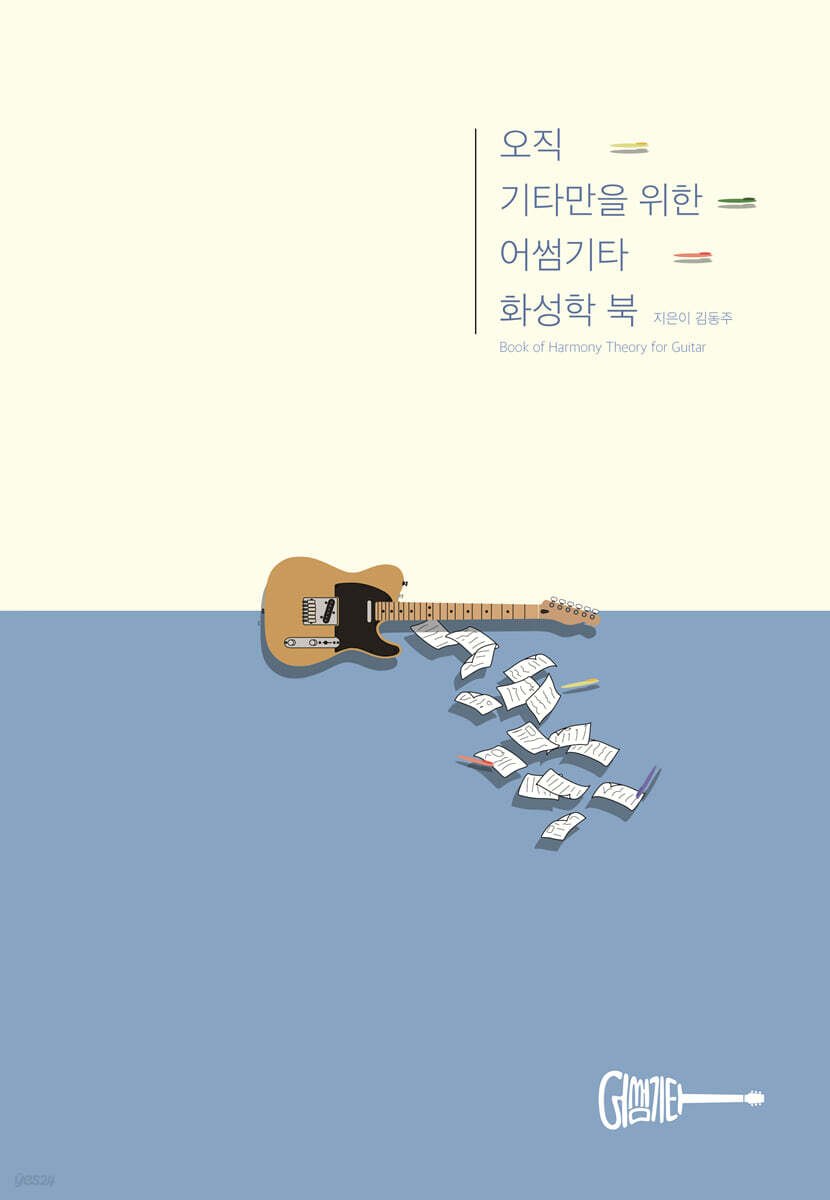 |
Description
Book Introduction
A Harmony Book Just for Guitarists
It goes beyond simply explaining music theory and covers how to apply harmony to the guitar.
Why isn't there a book that teaches how to apply the general principles of music harmony to the guitar? While there are countless books teaching guitar playing and harmony academically, none teach how to apply the essential principles of harmony to the guitar.
Even if you learn music theory from an academic perspective, you will eventually have to apply it to the instrument you play. However, compared to other instruments, there is no detailed information on how to apply harmony to the guitar.
So, I experimented with various courses directly with many people, established a method to apply music theory to the guitar, and developed a curriculum.
It goes beyond simply explaining music theory and covers how to apply harmony to the guitar.
Why isn't there a book that teaches how to apply the general principles of music harmony to the guitar? While there are countless books teaching guitar playing and harmony academically, none teach how to apply the essential principles of harmony to the guitar.
Even if you learn music theory from an academic perspective, you will eventually have to apply it to the instrument you play. However, compared to other instruments, there is no detailed information on how to apply harmony to the guitar.
So, I experimented with various courses directly with many people, established a method to apply music theory to the guitar, and developed a curriculum.
index
Unit 01 Understanding the basic scales and notes needed to play the guitar
- Key names and note names
- Major Scale
- Structure of the major scale
- Circle of Fifth
- Finding the major scale using the fifth circle
Unit 02 Finding the Root Note on the Guitar Fingerboard
- Finding the root note on the fretboard
- Tips for quickly finding the root note
- Practice order for finding the root note
Unit 03 Understanding Chords (Triad Chords)
- Triad Chord
- Major code
- Minor (m) chord
- Diminished (dim) chord
- Augment (aug) code
Unit 04 Understanding Chords (7th Chord)
- 7th Chord
- Major Seven (M7) chord
- Minor seventh (m7) chord
- Dominant Seven (7) Code
- Minor Seven b5 (m7b5) chord
- Diminished Seven (dim7) chord
- Augment Seven (aug7) code
Unit 05 Seven Chord Fingerboard Application
- 6th line form M7
- 6th line form m7
- Form 7, line 6
- Finding chords using root finder
- 5th line form M7
- 5th line form m7
- Form 7, line 5
- Finding chords using root finder
Unit 06 Diatonic Chord
- Degree of diatonic chord
Unit 07 Code progression direction
- 4 degrees upward progress
- Line 5 from line 6
- Lines 5 to 6
- Use proxy code
- Ascending & descending in scale order
Unit 08 Chord Progression
- Ⅱm7 - Ⅴ7 - ⅠM7
- Ⅱm7 - Ⅴ7 - ⅠM7 transformation
- ⅠM7 - Ⅵm7 - Ⅱm7 - Ⅴ7
- ⅠM7 - Ⅵm7 - Ⅱm7 - Ⅴ7 transformations
Unit 09 4th degree ascending notation
- Arrow shape
- Bucket shape
Unit 10 Suspo Chord (Sus4 Chord)
- Sus4 Chord
- Application of Sus4 Chord
Unit 11 Slash Chord
- Inversion
- Fraction chord fingering (root note of 6th string)
- Fraction chord fingering (root note of 5th string)
- How to use fraction code
- Use fractional codes in open code
Unit 12 Secondary Dominant
- Secondary Dominant
- Secondary dominant notation
- Secondary dominant assignment in another key
- Secondary dominant fretboard substitution
- Mars analysis examples and practical applications
Unit 13 Extended Dominant
- Extended Dominant
- Extended Dominant Example
Unit 14 Related IIm7
- Related Ⅱm7 (Rel Ⅱm7)
- Related Ⅱm7 Substitution method on the fingerboard
Unit 15 Tension Chord
- Tension code basic form
- Tension code 6-string form
- Tension code 5th line form
- Use of tension codes
- Ⅱm7 - Ⅴ7 - ⅠM7 variations (tension code)
- ⅠM7 - Ⅵm7 - Ⅱm7 - Ⅴ7 variations (tension code)
- Ⅱm7b5 - Ⅴ7 - Ⅰm7 (minor two five one)
Unit 16 Diminished Seven
- Ascending Diminished 7
- Descending Diminished 7
- Diminished chord (Diminished 7) fingering
- Example of applying the Diminished Chord (Diminished 7)
Unit 17 Substitute Dominant
- Substitute Dominant
- SubⅤ7 (Substitute Dominant) fingerboard application
- Example of application of SubⅤ7 (Substitute Dominant)
Unit 18 Modal Interchange
- Minor Scale
- Modal Interchange
- Ⅳm6
- Ⅳm6 fingerboard fingering
Unit 19 Line Cliche
- Minor Line Cliche
- Major Line Cliche
- Variation of the Minor Line Cliche
- Variations of the Major Line Cliche
Unit 20 Blues
- Blues Basic Progression
- Blues variation progress
- Key names and note names
- Major Scale
- Structure of the major scale
- Circle of Fifth
- Finding the major scale using the fifth circle
Unit 02 Finding the Root Note on the Guitar Fingerboard
- Finding the root note on the fretboard
- Tips for quickly finding the root note
- Practice order for finding the root note
Unit 03 Understanding Chords (Triad Chords)
- Triad Chord
- Major code
- Minor (m) chord
- Diminished (dim) chord
- Augment (aug) code
Unit 04 Understanding Chords (7th Chord)
- 7th Chord
- Major Seven (M7) chord
- Minor seventh (m7) chord
- Dominant Seven (7) Code
- Minor Seven b5 (m7b5) chord
- Diminished Seven (dim7) chord
- Augment Seven (aug7) code
Unit 05 Seven Chord Fingerboard Application
- 6th line form M7
- 6th line form m7
- Form 7, line 6
- Finding chords using root finder
- 5th line form M7
- 5th line form m7
- Form 7, line 5
- Finding chords using root finder
Unit 06 Diatonic Chord
- Degree of diatonic chord
Unit 07 Code progression direction
- 4 degrees upward progress
- Line 5 from line 6
- Lines 5 to 6
- Use proxy code
- Ascending & descending in scale order
Unit 08 Chord Progression
- Ⅱm7 - Ⅴ7 - ⅠM7
- Ⅱm7 - Ⅴ7 - ⅠM7 transformation
- ⅠM7 - Ⅵm7 - Ⅱm7 - Ⅴ7
- ⅠM7 - Ⅵm7 - Ⅱm7 - Ⅴ7 transformations
Unit 09 4th degree ascending notation
- Arrow shape
- Bucket shape
Unit 10 Suspo Chord (Sus4 Chord)
- Sus4 Chord
- Application of Sus4 Chord
Unit 11 Slash Chord
- Inversion
- Fraction chord fingering (root note of 6th string)
- Fraction chord fingering (root note of 5th string)
- How to use fraction code
- Use fractional codes in open code
Unit 12 Secondary Dominant
- Secondary Dominant
- Secondary dominant notation
- Secondary dominant assignment in another key
- Secondary dominant fretboard substitution
- Mars analysis examples and practical applications
Unit 13 Extended Dominant
- Extended Dominant
- Extended Dominant Example
Unit 14 Related IIm7
- Related Ⅱm7 (Rel Ⅱm7)
- Related Ⅱm7 Substitution method on the fingerboard
Unit 15 Tension Chord
- Tension code basic form
- Tension code 6-string form
- Tension code 5th line form
- Use of tension codes
- Ⅱm7 - Ⅴ7 - ⅠM7 variations (tension code)
- ⅠM7 - Ⅵm7 - Ⅱm7 - Ⅴ7 variations (tension code)
- Ⅱm7b5 - Ⅴ7 - Ⅰm7 (minor two five one)
Unit 16 Diminished Seven
- Ascending Diminished 7
- Descending Diminished 7
- Diminished chord (Diminished 7) fingering
- Example of applying the Diminished Chord (Diminished 7)
Unit 17 Substitute Dominant
- Substitute Dominant
- SubⅤ7 (Substitute Dominant) fingerboard application
- Example of application of SubⅤ7 (Substitute Dominant)
Unit 18 Modal Interchange
- Minor Scale
- Modal Interchange
- Ⅳm6
- Ⅳm6 fingerboard fingering
Unit 19 Line Cliche
- Minor Line Cliche
- Major Line Cliche
- Variation of the Minor Line Cliche
- Variations of the Major Line Cliche
Unit 20 Blues
- Blues Basic Progression
- Blues variation progress
Detailed image

GOODS SPECIFICS
- Date of issue: February 5, 2021
- Page count, weight, size: 216 pages | 182*257*20mm
- ISBN13: 9791195795352
- ISBN10: 1195795351
You may also like
카테고리
korean


korean

![GQ KOREA Mark (Monthly): December [2025]](http://librairie.coreenne.fr/cdn/shop/files/8ef265dbbfbf186523ed75ba7319009d.jpg?v=1765340328&width=3840)


