

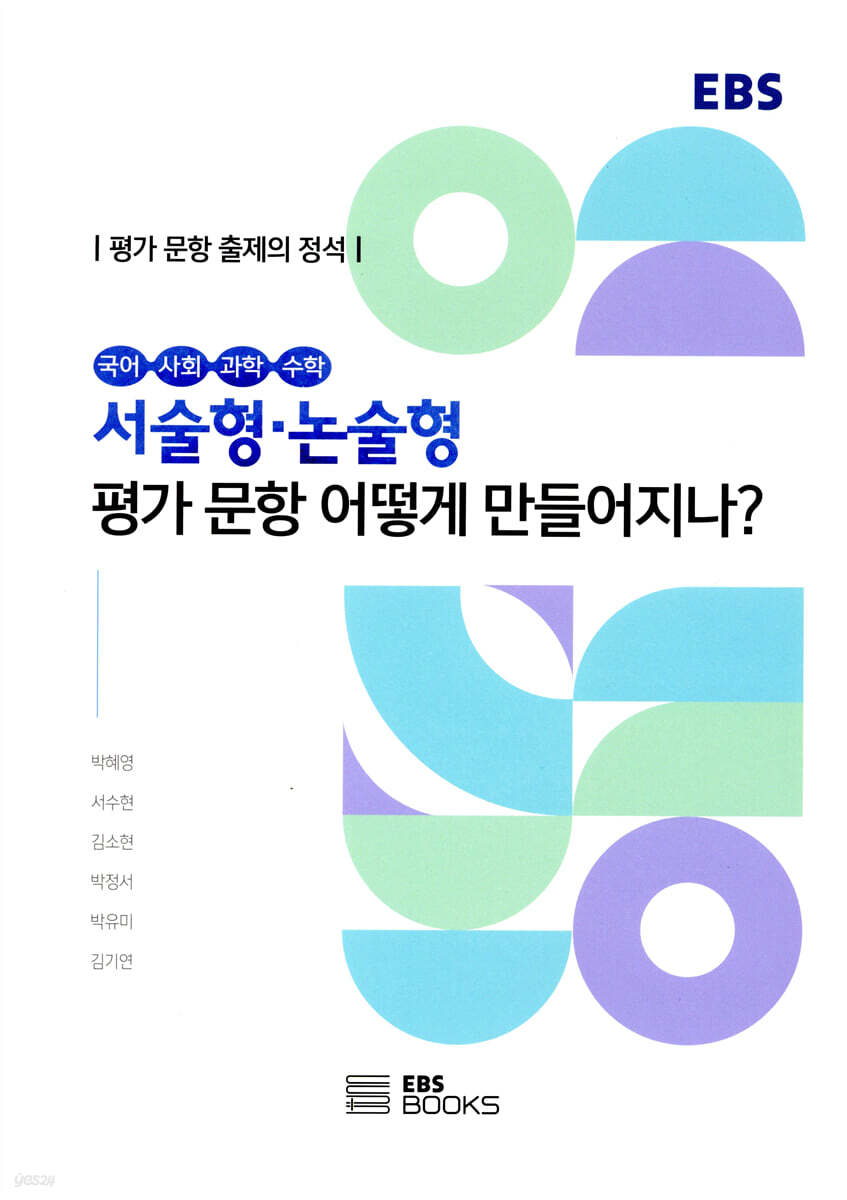
How are descriptive and essay-type assessment questions created?
 |
Description
Book Introduction
EBS's top writers share their know-how in creating descriptive and essay-type questions!
A guide that clearly shows the process of creating descriptive and argumentative questions!
Authors in Korean, social studies, science, and mathematics with extensive experience in school education present detailed explanations of the entire process of creating descriptive and essay-type exams based on their field experience.
A guide that clearly shows the process of creating descriptive and argumentative questions!
Authors in Korean, social studies, science, and mathematics with extensive experience in school education present detailed explanations of the entire process of creating descriptive and essay-type exams based on their field experience.
- You can preview some of the book's contents.
Preview
index
Ⅰ.
What is a descriptive/argumentative assessment?
1.
The concept of descriptive and argumentative evaluation
1-1.
The significance of descriptive and argumentative evaluations
1-2.
Descriptive and argumentative assessment in the context of competency-based education and process-centered assessment
2.
Descriptive and essay questions classification and types
2-1.
Distinction between descriptive and argumentative questions
2-2.
Descriptive/argumentative question types
2-3.
Question components and scoring rubric
3.
Descriptive and essay-type evaluation procedures
3-1.
Developing an Evaluation Plan
3-2.
Developing an assessment tool
3-3.
Utilizing the results of the evaluation
Ⅱ.
Korean language descriptive and essay-type evaluation
1.
Characteristics of descriptive and essay-type questions in the Korean language subject
2.
Korean language descriptive and essay types
2-1.
Descriptive and essay types based on function in each field of the Korean language department
2-2.
Examples of descriptive and essay questions based on functional classification by Korean language subject area
3.
Understanding the Korean Language Department's Descriptive and Essay-Type Evaluation Process
3-1.
Setting evaluation goals
3-2.
Designing a set of descriptive and argumentative questions
3-3.
Selecting evaluation materials
3-4.
Write the sentence and conditions
3-5.
Create and grade grading criteria
3-6.
Interpreting and providing feedback on evaluation results
4.
The actual process of descriptive and essay-type evaluation in the Korean language department
4-1.
Setting evaluation goals
4-2.
Designing a set of descriptive and argumentative questions
4-3.
Selecting evaluation materials
4-4.
Write a sentence
* Korean language descriptive and essay-type practice problems
4-5.
Create grading criteria
4-6.
Grading
4-6.
Interpreting and providing feedback on evaluation results
Ⅲ.
Social Studies Descriptive and Essay-Type Evaluation
1.
Characteristics of descriptive and essay questions in social studies
1-1.
Understanding of social studies and descriptive and essay-based assessment
1-2.
Process-oriented assessment and descriptive/argumentative assessment
2.
Social Studies Descriptive/Argumentative Type
2-1.
Whether freedom of response is allowed
2-2.
Type of data provision method
3.
Understanding the Descriptive and Essay-Based Assessment Process in Social Studies
3-1.
Setting evaluation goals
3-2.
Designing a set of descriptive and argumentative questions
3-3.
Selecting evaluation materials
3-4.
Write a sentence
3-5.
Create and grade grading criteria
3-6.
Interpreting and providing feedback on evaluation results
4.
The actual process of descriptive and essay-based assessment in social studies
4-1.
Setting evaluation goals
4-2.
Designing a set of descriptive and argumentative questions
4-3.
Selecting evaluation materials
4-4.
Write a sentence
* Social Studies Descriptive and Essay-type Practice Problems
4-5.
Create grading criteria
4-6.
Grading
4-7.
Interpreting and providing feedback on evaluation results
Ⅳ.
Science and Descriptive and Argumentative Assessment
1.
Characteristics of science and descriptive and argumentative questions
1-1.
Understanding and evaluating science and curriculum
1-2.
Understanding the educational landscape for science and descriptive and argumentative assessments
2.
Understanding Science and the Descriptive and Argumentative Assessment Process
2-1.
Setting evaluation goals
2-2.
Designing a Descriptive and Argumentative Question Set 171
2-3.
Selecting evaluation materials
2-4.
Write a sentence
2-5.
Create and grade grading criteria
2-6.
Interpreting and providing feedback on evaluation results
3.
The reality of science and descriptive and argumentative assessment processes
3-1.
Setting evaluation goals
3-2.
Designing a set of descriptive and argumentative questions
3-3.
Selecting evaluation materials
3-4.
Write a sentence
* Science and descriptive/argumentative practice problems
* Practical examples of science and group activities
3-5.
Create and grade grading criteria
3-6.
Interpreting and providing feedback on evaluation results
V.
Mathematics and descriptive and essay-based assessments
1.
Characteristics of mathematics and descriptive and essay questions
2.
Understanding the process of creating mathematics and descriptive assessment items
2-1.
Setting evaluation goals
2-2.
Creating an evaluation framework
2-3.
Establishment of question creation and scoring criteria
2-4.
Conducting evaluations and utilizing results
3.
The practice of creating descriptive assessment items in mathematics
3-1.
Creating descriptive questions to confirm concepts for formative assessment
3-2.
Development of descriptive assessment items for summative assessment (regular exam)
4.
Creating descriptive items for learning activities and performance assessments to adapt to descriptive assessments.
4-1.
Learning Activities for Adapting Descriptive Assessment
4-2.
Creating a set of questions for performance evaluation
What is a descriptive/argumentative assessment?
1.
The concept of descriptive and argumentative evaluation
1-1.
The significance of descriptive and argumentative evaluations
1-2.
Descriptive and argumentative assessment in the context of competency-based education and process-centered assessment
2.
Descriptive and essay questions classification and types
2-1.
Distinction between descriptive and argumentative questions
2-2.
Descriptive/argumentative question types
2-3.
Question components and scoring rubric
3.
Descriptive and essay-type evaluation procedures
3-1.
Developing an Evaluation Plan
3-2.
Developing an assessment tool
3-3.
Utilizing the results of the evaluation
Ⅱ.
Korean language descriptive and essay-type evaluation
1.
Characteristics of descriptive and essay-type questions in the Korean language subject
2.
Korean language descriptive and essay types
2-1.
Descriptive and essay types based on function in each field of the Korean language department
2-2.
Examples of descriptive and essay questions based on functional classification by Korean language subject area
3.
Understanding the Korean Language Department's Descriptive and Essay-Type Evaluation Process
3-1.
Setting evaluation goals
3-2.
Designing a set of descriptive and argumentative questions
3-3.
Selecting evaluation materials
3-4.
Write the sentence and conditions
3-5.
Create and grade grading criteria
3-6.
Interpreting and providing feedback on evaluation results
4.
The actual process of descriptive and essay-type evaluation in the Korean language department
4-1.
Setting evaluation goals
4-2.
Designing a set of descriptive and argumentative questions
4-3.
Selecting evaluation materials
4-4.
Write a sentence
* Korean language descriptive and essay-type practice problems
4-5.
Create grading criteria
4-6.
Grading
4-6.
Interpreting and providing feedback on evaluation results
Ⅲ.
Social Studies Descriptive and Essay-Type Evaluation
1.
Characteristics of descriptive and essay questions in social studies
1-1.
Understanding of social studies and descriptive and essay-based assessment
1-2.
Process-oriented assessment and descriptive/argumentative assessment
2.
Social Studies Descriptive/Argumentative Type
2-1.
Whether freedom of response is allowed
2-2.
Type of data provision method
3.
Understanding the Descriptive and Essay-Based Assessment Process in Social Studies
3-1.
Setting evaluation goals
3-2.
Designing a set of descriptive and argumentative questions
3-3.
Selecting evaluation materials
3-4.
Write a sentence
3-5.
Create and grade grading criteria
3-6.
Interpreting and providing feedback on evaluation results
4.
The actual process of descriptive and essay-based assessment in social studies
4-1.
Setting evaluation goals
4-2.
Designing a set of descriptive and argumentative questions
4-3.
Selecting evaluation materials
4-4.
Write a sentence
* Social Studies Descriptive and Essay-type Practice Problems
4-5.
Create grading criteria
4-6.
Grading
4-7.
Interpreting and providing feedback on evaluation results
Ⅳ.
Science and Descriptive and Argumentative Assessment
1.
Characteristics of science and descriptive and argumentative questions
1-1.
Understanding and evaluating science and curriculum
1-2.
Understanding the educational landscape for science and descriptive and argumentative assessments
2.
Understanding Science and the Descriptive and Argumentative Assessment Process
2-1.
Setting evaluation goals
2-2.
Designing a Descriptive and Argumentative Question Set 171
2-3.
Selecting evaluation materials
2-4.
Write a sentence
2-5.
Create and grade grading criteria
2-6.
Interpreting and providing feedback on evaluation results
3.
The reality of science and descriptive and argumentative assessment processes
3-1.
Setting evaluation goals
3-2.
Designing a set of descriptive and argumentative questions
3-3.
Selecting evaluation materials
3-4.
Write a sentence
* Science and descriptive/argumentative practice problems
* Practical examples of science and group activities
3-5.
Create and grade grading criteria
3-6.
Interpreting and providing feedback on evaluation results
V.
Mathematics and descriptive and essay-based assessments
1.
Characteristics of mathematics and descriptive and essay questions
2.
Understanding the process of creating mathematics and descriptive assessment items
2-1.
Setting evaluation goals
2-2.
Creating an evaluation framework
2-3.
Establishment of question creation and scoring criteria
2-4.
Conducting evaluations and utilizing results
3.
The practice of creating descriptive assessment items in mathematics
3-1.
Creating descriptive questions to confirm concepts for formative assessment
3-2.
Development of descriptive assessment items for summative assessment (regular exam)
4.
Creating descriptive items for learning activities and performance assessments to adapt to descriptive assessments.
4-1.
Learning Activities for Adapting Descriptive Assessment
4-2.
Creating a set of questions for performance evaluation
Publisher's Review
In today's rapidly developing information society, the ability to actively express one's thoughts and opinions, communicate with others, and solve complex problems through self-directed thinking, as well as the ability to construct and produce new knowledge, are essential skills.
The ability to solve complex problems or perform practical tasks is difficult to develop through memorization of knowledge or repeated practice of fragmented skills, which are mainly achieved through conventional school education.
Therefore, descriptive and argumentative writing is essential to foster critical and creative thinking, the ability to apply and utilize what you've learned appropriately to the situation, and the ability to connect and integrate knowledge.
This book was created in recognition of the necessity of narrative and argumentative writing, and the importance of critical and creative thinking, problem-solving skills, and other aspects of narrative and argumentative writing that can adapt to the future society.
This book covers the overall understanding of descriptive and argumentative essays, as well as the entire process of creating descriptive and argumentative essays tailored to the characteristics of each subject (Korean, social studies, science, and mathematics), so that they can be effectively utilized in actual school settings.
Chapter 1 introduces the concepts of descriptive and essay-type assessments to facilitate a comprehensive understanding of descriptive and essay-type assessments. It also explains the criteria and types of descriptive and essay-type items used to distinguish them. It also provides procedural guidelines for descriptive and essay-type assessments that are linked to the curriculum, classes, and assessments.
And in Chapters II to V, the understanding and practice of descriptive and essay-type evaluations are presented for each subject of Korean, social studies, science, and mathematics.
In other words, by showing the understanding and practice of the process of setting evaluation goals, designing a set of descriptive and essay questions, selecting evaluation materials, writing the sentence introduction, writing grading criteria, grading, and interpreting and providing feedback on evaluation results, it effectively shows the process of easily creating descriptive and essay questions in actual school settings.
This book can be considered a helpful guide and guide for developing descriptive and argumentative questions, as it systematically demonstrates the process of developing descriptive and argumentative questions.
Therefore, I am confident that this book will be helpful not only to teachers currently working in schools, but also to prospective teachers who want to learn about descriptive and essay-based assessments, and to students and parents who want to broaden their understanding of the changing school education and descriptive and essay-based assessments in the future.
The ability to solve complex problems or perform practical tasks is difficult to develop through memorization of knowledge or repeated practice of fragmented skills, which are mainly achieved through conventional school education.
Therefore, descriptive and argumentative writing is essential to foster critical and creative thinking, the ability to apply and utilize what you've learned appropriately to the situation, and the ability to connect and integrate knowledge.
This book was created in recognition of the necessity of narrative and argumentative writing, and the importance of critical and creative thinking, problem-solving skills, and other aspects of narrative and argumentative writing that can adapt to the future society.
This book covers the overall understanding of descriptive and argumentative essays, as well as the entire process of creating descriptive and argumentative essays tailored to the characteristics of each subject (Korean, social studies, science, and mathematics), so that they can be effectively utilized in actual school settings.
Chapter 1 introduces the concepts of descriptive and essay-type assessments to facilitate a comprehensive understanding of descriptive and essay-type assessments. It also explains the criteria and types of descriptive and essay-type items used to distinguish them. It also provides procedural guidelines for descriptive and essay-type assessments that are linked to the curriculum, classes, and assessments.
And in Chapters II to V, the understanding and practice of descriptive and essay-type evaluations are presented for each subject of Korean, social studies, science, and mathematics.
In other words, by showing the understanding and practice of the process of setting evaluation goals, designing a set of descriptive and essay questions, selecting evaluation materials, writing the sentence introduction, writing grading criteria, grading, and interpreting and providing feedback on evaluation results, it effectively shows the process of easily creating descriptive and essay questions in actual school settings.
This book can be considered a helpful guide and guide for developing descriptive and argumentative questions, as it systematically demonstrates the process of developing descriptive and argumentative questions.
Therefore, I am confident that this book will be helpful not only to teachers currently working in schools, but also to prospective teachers who want to learn about descriptive and essay-based assessments, and to students and parents who want to broaden their understanding of the changing school education and descriptive and essay-based assessments in the future.
GOODS SPECIFICS
- Date of issue: December 31, 2021
- Page count, weight, size: 272 pages | 516g | 176*246*20mm
- ISBN13: 9788954762847
- ISBN10: 8954762840
You may also like
카테고리
korean


korean

![GQ KOREA Mark (Monthly): December [2025]](http://librairie.coreenne.fr/cdn/shop/files/8ef265dbbfbf186523ed75ba7319009d.jpg?v=1765340328&width=3840)


