

Ballet terminology and techniques
 |
Description
Book Introduction
Understanding and mastering ballet terminology is essential to effectively executing and expressing ballet movements.
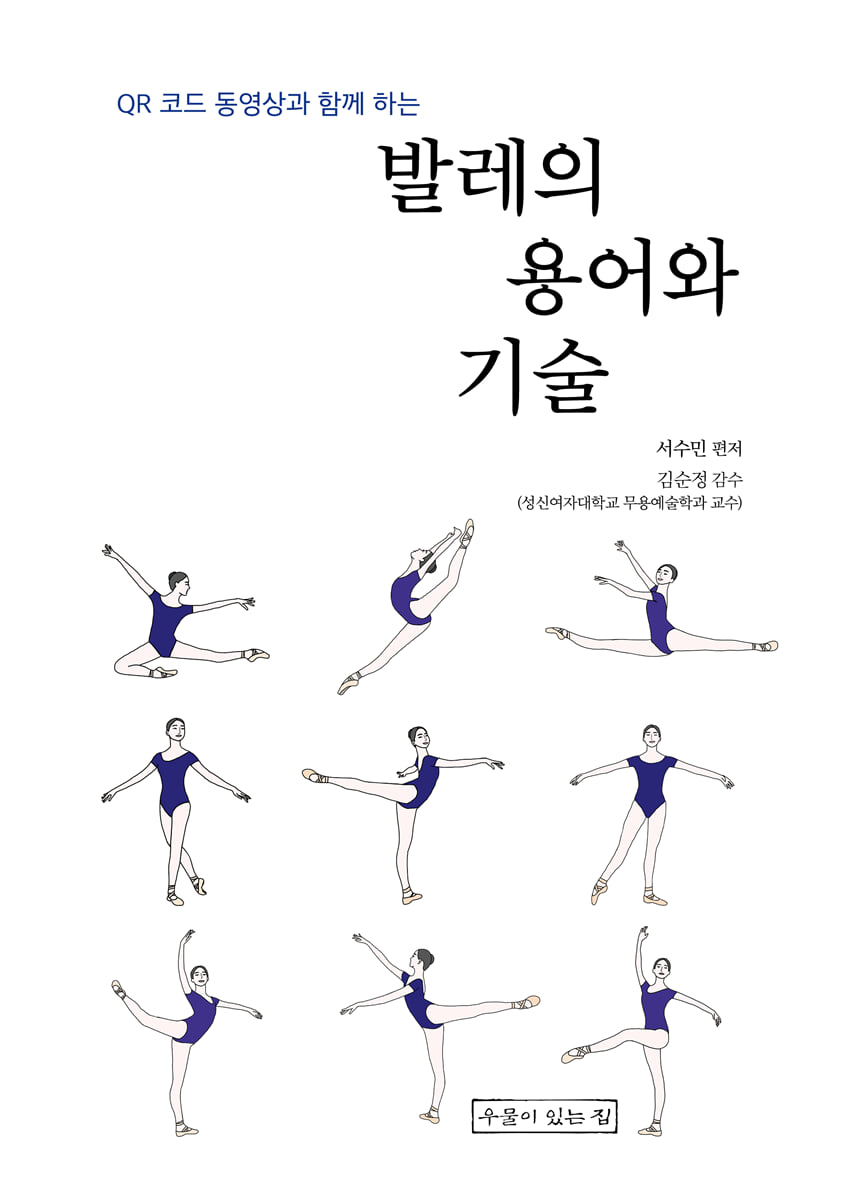
This book is not limited to simple terminology interpretation, but is a comprehensive educational resource that summarizes the author's experience in the educational field for many years. It introduces the characteristics of movements and teaching methods, and provides ballet movements with photos, drawings, and even videos (QR codes) so that students can learn both theory and practical movements at the same time.
The author organized ballet terminology, which is used differently by each ballet teacher, based on the Vaganova teaching method, including Cecchetti, Royal (RAD), and French teaching methods, and attempted to easily explain many elements commonly encountered in actual ballet classes, such as confusing terminology and differences in movements.
This book will be an essential guide for current and future ballet educators, and will also serve as a valuable guide for ballet enthusiasts.
This book is not limited to simple terminology interpretation, but is a comprehensive educational resource that summarizes the author's experience in the educational field for many years. It introduces the characteristics of movements and teaching methods, and provides ballet movements with photos, drawings, and even videos (QR codes) so that students can learn both theory and practical movements at the same time.
The author organized ballet terminology, which is used differently by each ballet teacher, based on the Vaganova teaching method, including Cecchetti, Royal (RAD), and French teaching methods, and attempted to easily explain many elements commonly encountered in actual ballet classes, such as confusing terminology and differences in movements.
This book will be an essential guide for current and future ballet educators, and will also serve as a valuable guide for ballet enthusiasts.
- You can preview some of the book's contents.
Preview
index
Publishing a book 4
Recommendation I 6
Recommendation II 8
Ⅰ.
Basic Concepts
1.
Types of Ballet Method 19
2.
Seven Movements of Ballet 20
3.
Positions of the Feet 21
4.
Directions of Movement of the Legs 23
5.
Directions of Travel 24
6.
Aplomb (아플롬) 25
7.
En Dehors & En Dedans (En Dehors & En Dedans) 26
8.
Sur le Cou-de-pied (Sur le Cou-de-pied) 27
9.
Retire (Retire) 29
10.
Positions of the Arms 30
11.
Port de Bras 36
12.
Allonge & Arrondi (Allonge & Arrondi) 37
13.
Points of Stage or Studio 38
14.
Directions of the Body 39
15.
Levels of the Working Leg 43
16.
Releve (Releve) 45
17.
Arabesque 46
18.
Attitude 50
19.
En Diagonale (En Diagonale) 51
20.
En Manege (En Manege) 52
21.
Reverence (Reverence) 53
Ⅱ.
Barre Works
1.
Plie (Plie) 57
2.
Cambre (Cambre) 59
3.
Battement (Battemang) 61
4.
Battement Tendu Simple (Battement Tendu Simple) 63
4-1.
Battement Tendu pour le Pied (Batment Tendu pour le Pied) 65
4-2.
Battement Tendu pour Batterie (Battery Tendu pour Battrie) 67
5.
Battement Soutenu (Batman Soutenu) 68
6.
Detourne (Detourne) 70
7.
Battement Tendu Jete (Batman Tendu Jete) 72
7-1.
Battement Tendu Jete Pique (Batman Tendu Jete Pique) 73
7-2.
Battement Tendu Jete Balancoire (Batman Tendu Jete Balancoire) 74
8.
Flic-Flac 76
9.
Rond de Jambe par Terre (Ronde Jambe par Terre) 77
10.
Grand Rond de Jambe Jete (Grand Rond de Jambe Jete) 79
11.
Coupe 82
12.
Passe (Passe) 83
13.
Pas de Cheval (Pas de Cheval) 86
14.
Battement Fondu (Batman Fondue) 88
15.
Battement Frappe (Battement Frappe) 90
16.
Petit Battement sur le Cou-de-pied (Petit Battement sur le Cou-de-pied) 92
17.
Battement Battu sur le Cou-de-pied (Battement Battu sur le Cou-de-pied) 94
18.
Temps Releve (Land Releve) 97
19.
Rond de Jambe en L'air (Round of Jambe en L'air) 100
20.
Battement Retire (Batmang Retire) 102
21.
Battement Releve Lent (Battement Releve Lent) 104
22.
Battement Developpe (Batman Development) 105
22-1.
Battement Developpe Passe (Batman Development Passe) 107
22-2.
Balance Development (Batman Development Balance) 108
22-3.
Battement Developpe Tombe (Batman Development Tombe) 109
22-4.
Ballot Development Project (Battement Development Ballot) 110
23.
D'ici-Dela (D'ici-Dela) 112
24.
Battement Enveloppe (Battement Enveloppe) 114
25.
Grand Battement Jete (Grand Battement Jete) 116
25-1.
Grand Battement Jete Pointe (Grand Battement Jete Pointe) 118
25-2.
Grand Battement Jete Passe (Grand Battement Jete Passe) 119
25-3.
Soft Grand Battement Jete (Soft Grand Battement Jete) 120
25-4.
Grand Battement Arrondi (Grand Battement Alongdi) 121
25-5.
Grand Battement Jete Balance (Grand Battement Jete Balance) 123
26.
Arabesque Penchee (Arabesque Penchee) 125
27.
Limbering 127
28.
Detire (Detire) 129
Ⅲ.
Centre Works
1.
Temps Lie (Lie of the Land) 133
2.
Battement Divise en Quarts (Batment Divise en Quarts) 136
3.
Pas Balance (Pa Balanse) 138
4.
Pas de Bourree (Pas de Bourree) 139
4-1.
Pas de Bourree sans Changer (Pas de Bourree sans Changer) 140
4-2.
Pas de Bourree Change (Pas de Bourree Champs-Élysées) 143
4-3.
Pas de Bourree en Tournant (Pas de Bourree en Tournant) 144
4-4.
Pas de Bourree Dessus-Dessous (Pas de Bourree Dessus-Dessous) 145
4-5.
Pas de Bourree with Ballotte (Pas de Bourree with Ballotte) 148
4-6.
Pas de Bourree with Tombe (Pas de Bourree with Tombe) 151
5.
Sus-Sous (쒸-수) 153
6.
Pas Glissade en Tournant (Pas Glissade en Tournant) 155
7.
Petit pas Jete en Tournant (Petit pas Jete en Tournant) 157
8.
Renverse (Ramversé) 159
9.
Tour 162
9-1.
Tour Lent (Tour Lent) 164
9-2.
Tour Degage (Tour Degage) 165
9-3.
Tour Pique (Tour Pique) 167
9-4.
Tour Chaines Deboules (Tour Chaines Deboules) 169
9-5.
Tour Fouette (Tour Fouette) 171
9-6.
Tour Sautille (Tour Sautille) 172
10.
Grand Fouette (Grand Fouette) 174
10-1.
Grand Fouette en Efface (Grand Fouette en Efface) 175
10-2.
Grand Fouette en Tournant (Grand Fouette en Tournant) 178
10-3.
Grand Fouette en Italian (Grand Fouette en Italian) 179
Ⅳ.
Jump Works
1.
Temps Lev (Land Lev) 183
2.
Changement de Pieds (Changement de Pieds) 185
3.
Pas Echappe (Pa Échape) 188
4.
Pas de Basque (Pas de Basque) 190
5.
Pas de Chat (Pas de Chat) 192
6.
Batteries (Battery) 196
7.
Elevation 197
8.
Entrechat (Entrechat) 198
8-1.
Royale 199
8-2.
Entrechat-Trois (Entrechat-Trois) 201
8-3.
Entrechat-Quatre (Entrechat-Quatre) 203
8-4.
Entrechat-Cinq (Entrechat-Cinq) 205
9.
Retire Saute (Retire Saute) 207
10.
Pas Glissade (Pa Glissade) 209
11.
Pas Assemble (Pa Assemble) 211
11-1.
Petit Assemble (Petit Assemble) 212
11-2.
Double Assemble 214
11-3.
Assemble en Italian (Assemble en Italian) 216
11-4.
Assemble Porte (Assemble Porte) 218
11-5.
Grand Assemble 219
11-6.
Grand Assemble en Tournant (Grand Assemble en Tournant) 220
12.
Pas Jete (Pa Jutte) 221
12-1.
Petit Jete (Petit Jute) 222
12-2.
Petit Jete Porte (Petit Jete Porte) 223
12-3.
Petit Jete Ferme (Petit Jete Ferme) 225
12-4.
Pas Jete Ballotte (Pa 주테 바로떼) 227
12-5.
Grand Jete (Grand Jete) 228
12-6.
Grand Jete en Tournant (Grand Jete en Tournant) 230
12-7.
Jete Passe (Jute Passe) 231
12-8.
Pas Jete Entrelace (Pa 주테 엔트라스) 233
12-9.
Tombe-Coupe Jete en Tournant (Tombe-Coupe Jete en Tournant) 235
13.
Pas Chasse (Pa Chasse) 237
14.
Pas Failli (Pa Failli) 238
15.
Pas Soubresaut (Pas Soubresaut) 240
16.
Pas Couru (Pa Kuru) 243
17.
Sissonne (Sissonne) 244
17-1.
Sissonne Simple (Sissonne Simple) 245
17-2.
Sissonne Ouverte (Sissonne Ouverte) 247
17-3.
Sissonne Doublee (Sissonne Doublee) 249
17-4.
Sissonne Fermee (Sissonne Fermee) 251
17-5.
Sissonne Fondue (Sissonne Fondue) 253
17-6.
Sissonne Tombee (Sissonne Tombee) 255
17-7.
Tour-Sissonne Tombee (Tour-Sissonne Tombee) 257
17-8.
Sissonne Soubresaut (Sissonne Soubresaut) 259
17-9.
Sissonne Attitude (Sissonne Attitude) 261
18.
Temps Glisse (Tang Glisse) 262
19.
Pas Ballonne (Pa Ballonne) 264
20.
Pas Ballotte (Pa Ballotte) 268
21.
Contretemps (Contretemps) 270
22.
Cabriole 271
23.
Brise (Brise) 273
24.
Rond de Jambe en L'air Saute (Rond de Jambe en L'air Saute) 278
25.
Grand Fouette Saute (Grand Fouette Saute) 280
26.
Temps de Cuisse (Land de Cuisse) 281
27.
Saut de Basque (Saut de Basque) 283
28.
Gargouillade (Gagiyad) 285
29.
Pas de Ciseaux (Pas de Ciseaux) 287
30.
Pas Emboite (Pa Emboite) 289
V.
Pointe Works
1.
Pas Glissade (Pa Glissade) 295
2.
Pas Jete (Pa Jutte) 297
3.
Jete Fondu (Jute Fondue) 299
4.
Assemble Soutenu (Assemble Soutenu) 301
5.
Sissonne (Sissonne) 303
5-1.
Sissonne Simple (Sissonne Simple) 304
5-2.
Sissonne Ouverte (Sissonne Ouverte) 306
5-3.
Sissonne 1st Arabesque (Sissonne 1st Arabesque) 307
6.
Pas Ballonne (Pa Ballonne) 308
7.
Pas Emboite (Pa Emboite) 310
8.
Pas de Polka (Pas de Polka) 312
9.
Temps Leve sur la Pointe (Land Leve sur la Pointe) 313
10.
Pas de Bourree Curu (Pas de Bourree Curu) 315
10-1.
Pas de Bourree Suivis (Pas de Bourree Suivis) 316
10-2.
Pas Couru (Pa Kuru) 318
Appendix 319
Reference 320
Note 323
Recommendation I 6
Recommendation II 8
Ⅰ.
Basic Concepts
1.
Types of Ballet Method 19
2.
Seven Movements of Ballet 20
3.
Positions of the Feet 21
4.
Directions of Movement of the Legs 23
5.
Directions of Travel 24
6.
Aplomb (아플롬) 25
7.
En Dehors & En Dedans (En Dehors & En Dedans) 26
8.
Sur le Cou-de-pied (Sur le Cou-de-pied) 27
9.
Retire (Retire) 29
10.
Positions of the Arms 30
11.
Port de Bras 36
12.
Allonge & Arrondi (Allonge & Arrondi) 37
13.
Points of Stage or Studio 38
14.
Directions of the Body 39
15.
Levels of the Working Leg 43
16.
Releve (Releve) 45
17.
Arabesque 46
18.
Attitude 50
19.
En Diagonale (En Diagonale) 51
20.
En Manege (En Manege) 52
21.
Reverence (Reverence) 53
Ⅱ.
Barre Works
1.
Plie (Plie) 57
2.
Cambre (Cambre) 59
3.
Battement (Battemang) 61
4.
Battement Tendu Simple (Battement Tendu Simple) 63
4-1.
Battement Tendu pour le Pied (Batment Tendu pour le Pied) 65
4-2.
Battement Tendu pour Batterie (Battery Tendu pour Battrie) 67
5.
Battement Soutenu (Batman Soutenu) 68
6.
Detourne (Detourne) 70
7.
Battement Tendu Jete (Batman Tendu Jete) 72
7-1.
Battement Tendu Jete Pique (Batman Tendu Jete Pique) 73
7-2.
Battement Tendu Jete Balancoire (Batman Tendu Jete Balancoire) 74
8.
Flic-Flac 76
9.
Rond de Jambe par Terre (Ronde Jambe par Terre) 77
10.
Grand Rond de Jambe Jete (Grand Rond de Jambe Jete) 79
11.
Coupe 82
12.
Passe (Passe) 83
13.
Pas de Cheval (Pas de Cheval) 86
14.
Battement Fondu (Batman Fondue) 88
15.
Battement Frappe (Battement Frappe) 90
16.
Petit Battement sur le Cou-de-pied (Petit Battement sur le Cou-de-pied) 92
17.
Battement Battu sur le Cou-de-pied (Battement Battu sur le Cou-de-pied) 94
18.
Temps Releve (Land Releve) 97
19.
Rond de Jambe en L'air (Round of Jambe en L'air) 100
20.
Battement Retire (Batmang Retire) 102
21.
Battement Releve Lent (Battement Releve Lent) 104
22.
Battement Developpe (Batman Development) 105
22-1.
Battement Developpe Passe (Batman Development Passe) 107
22-2.
Balance Development (Batman Development Balance) 108
22-3.
Battement Developpe Tombe (Batman Development Tombe) 109
22-4.
Ballot Development Project (Battement Development Ballot) 110
23.
D'ici-Dela (D'ici-Dela) 112
24.
Battement Enveloppe (Battement Enveloppe) 114
25.
Grand Battement Jete (Grand Battement Jete) 116
25-1.
Grand Battement Jete Pointe (Grand Battement Jete Pointe) 118
25-2.
Grand Battement Jete Passe (Grand Battement Jete Passe) 119
25-3.
Soft Grand Battement Jete (Soft Grand Battement Jete) 120
25-4.
Grand Battement Arrondi (Grand Battement Alongdi) 121
25-5.
Grand Battement Jete Balance (Grand Battement Jete Balance) 123
26.
Arabesque Penchee (Arabesque Penchee) 125
27.
Limbering 127
28.
Detire (Detire) 129
Ⅲ.
Centre Works
1.
Temps Lie (Lie of the Land) 133
2.
Battement Divise en Quarts (Batment Divise en Quarts) 136
3.
Pas Balance (Pa Balanse) 138
4.
Pas de Bourree (Pas de Bourree) 139
4-1.
Pas de Bourree sans Changer (Pas de Bourree sans Changer) 140
4-2.
Pas de Bourree Change (Pas de Bourree Champs-Élysées) 143
4-3.
Pas de Bourree en Tournant (Pas de Bourree en Tournant) 144
4-4.
Pas de Bourree Dessus-Dessous (Pas de Bourree Dessus-Dessous) 145
4-5.
Pas de Bourree with Ballotte (Pas de Bourree with Ballotte) 148
4-6.
Pas de Bourree with Tombe (Pas de Bourree with Tombe) 151
5.
Sus-Sous (쒸-수) 153
6.
Pas Glissade en Tournant (Pas Glissade en Tournant) 155
7.
Petit pas Jete en Tournant (Petit pas Jete en Tournant) 157
8.
Renverse (Ramversé) 159
9.
Tour 162
9-1.
Tour Lent (Tour Lent) 164
9-2.
Tour Degage (Tour Degage) 165
9-3.
Tour Pique (Tour Pique) 167
9-4.
Tour Chaines Deboules (Tour Chaines Deboules) 169
9-5.
Tour Fouette (Tour Fouette) 171
9-6.
Tour Sautille (Tour Sautille) 172
10.
Grand Fouette (Grand Fouette) 174
10-1.
Grand Fouette en Efface (Grand Fouette en Efface) 175
10-2.
Grand Fouette en Tournant (Grand Fouette en Tournant) 178
10-3.
Grand Fouette en Italian (Grand Fouette en Italian) 179
Ⅳ.
Jump Works
1.
Temps Lev (Land Lev) 183
2.
Changement de Pieds (Changement de Pieds) 185
3.
Pas Echappe (Pa Échape) 188
4.
Pas de Basque (Pas de Basque) 190
5.
Pas de Chat (Pas de Chat) 192
6.
Batteries (Battery) 196
7.
Elevation 197
8.
Entrechat (Entrechat) 198
8-1.
Royale 199
8-2.
Entrechat-Trois (Entrechat-Trois) 201
8-3.
Entrechat-Quatre (Entrechat-Quatre) 203
8-4.
Entrechat-Cinq (Entrechat-Cinq) 205
9.
Retire Saute (Retire Saute) 207
10.
Pas Glissade (Pa Glissade) 209
11.
Pas Assemble (Pa Assemble) 211
11-1.
Petit Assemble (Petit Assemble) 212
11-2.
Double Assemble 214
11-3.
Assemble en Italian (Assemble en Italian) 216
11-4.
Assemble Porte (Assemble Porte) 218
11-5.
Grand Assemble 219
11-6.
Grand Assemble en Tournant (Grand Assemble en Tournant) 220
12.
Pas Jete (Pa Jutte) 221
12-1.
Petit Jete (Petit Jute) 222
12-2.
Petit Jete Porte (Petit Jete Porte) 223
12-3.
Petit Jete Ferme (Petit Jete Ferme) 225
12-4.
Pas Jete Ballotte (Pa 주테 바로떼) 227
12-5.
Grand Jete (Grand Jete) 228
12-6.
Grand Jete en Tournant (Grand Jete en Tournant) 230
12-7.
Jete Passe (Jute Passe) 231
12-8.
Pas Jete Entrelace (Pa 주테 엔트라스) 233
12-9.
Tombe-Coupe Jete en Tournant (Tombe-Coupe Jete en Tournant) 235
13.
Pas Chasse (Pa Chasse) 237
14.
Pas Failli (Pa Failli) 238
15.
Pas Soubresaut (Pas Soubresaut) 240
16.
Pas Couru (Pa Kuru) 243
17.
Sissonne (Sissonne) 244
17-1.
Sissonne Simple (Sissonne Simple) 245
17-2.
Sissonne Ouverte (Sissonne Ouverte) 247
17-3.
Sissonne Doublee (Sissonne Doublee) 249
17-4.
Sissonne Fermee (Sissonne Fermee) 251
17-5.
Sissonne Fondue (Sissonne Fondue) 253
17-6.
Sissonne Tombee (Sissonne Tombee) 255
17-7.
Tour-Sissonne Tombee (Tour-Sissonne Tombee) 257
17-8.
Sissonne Soubresaut (Sissonne Soubresaut) 259
17-9.
Sissonne Attitude (Sissonne Attitude) 261
18.
Temps Glisse (Tang Glisse) 262
19.
Pas Ballonne (Pa Ballonne) 264
20.
Pas Ballotte (Pa Ballotte) 268
21.
Contretemps (Contretemps) 270
22.
Cabriole 271
23.
Brise (Brise) 273
24.
Rond de Jambe en L'air Saute (Rond de Jambe en L'air Saute) 278
25.
Grand Fouette Saute (Grand Fouette Saute) 280
26.
Temps de Cuisse (Land de Cuisse) 281
27.
Saut de Basque (Saut de Basque) 283
28.
Gargouillade (Gagiyad) 285
29.
Pas de Ciseaux (Pas de Ciseaux) 287
30.
Pas Emboite (Pa Emboite) 289
V.
Pointe Works
1.
Pas Glissade (Pa Glissade) 295
2.
Pas Jete (Pa Jutte) 297
3.
Jete Fondu (Jute Fondue) 299
4.
Assemble Soutenu (Assemble Soutenu) 301
5.
Sissonne (Sissonne) 303
5-1.
Sissonne Simple (Sissonne Simple) 304
5-2.
Sissonne Ouverte (Sissonne Ouverte) 306
5-3.
Sissonne 1st Arabesque (Sissonne 1st Arabesque) 307
6.
Pas Ballonne (Pa Ballonne) 308
7.
Pas Emboite (Pa Emboite) 310
8.
Pas de Polka (Pas de Polka) 312
9.
Temps Leve sur la Pointe (Land Leve sur la Pointe) 313
10.
Pas de Bourree Curu (Pas de Bourree Curu) 315
10-1.
Pas de Bourree Suivis (Pas de Bourree Suivis) 316
10-2.
Pas Couru (Pa Kuru) 318
Appendix 319
Reference 320
Note 323
Into the book
Many movements in ballet are structured according to the following seven principles:
This principle applies not only to ballet, but to all movements in dance.
The table below briefly summarizes the terms and movement types corresponding to the Seven Movements of Ballet.
Glossary Types
1 Plier
(Plier) bending
(to bend) Plie, like Battement Fondu
Bending movements
2 Etendre
(Etendre) Expand
(to stretch) Battement Tendu,
Battement Tendu Jete, etc.
Stretching movements
3 Relever
(Relevé) Go up
(to rise) Battement Releve Lent,
Sus-Sous et al.
Rising movements
4 Glisser
(Glycee) Slip
(to glide) like Glissade
sliding movements
5 Sauter
(Sote) Jump
(to jump) to jump vertically
Jumping movements
6 Tourner
(Tournay) protrusion
(to turn) rotating movements
7 Elancer
(Elance) Charge
(to dart) Sissonne, Grand Jete and
Moving together
Jumping movements
This principle applies not only to ballet, but to all movements in dance.
The table below briefly summarizes the terms and movement types corresponding to the Seven Movements of Ballet.
Glossary Types
1 Plier
(Plier) bending
(to bend) Plie, like Battement Fondu
Bending movements
2 Etendre
(Etendre) Expand
(to stretch) Battement Tendu,
Battement Tendu Jete, etc.
Stretching movements
3 Relever
(Relevé) Go up
(to rise) Battement Releve Lent,
Sus-Sous et al.
Rising movements
4 Glisser
(Glycee) Slip
(to glide) like Glissade
sliding movements
5 Sauter
(Sote) Jump
(to jump) to jump vertically
Jumping movements
6 Tourner
(Tournay) protrusion
(to turn) rotating movements
7 Elancer
(Elance) Charge
(to dart) Sissonne, Grand Jete and
Moving together
Jumping movements
--- p.20
Publisher's Review
My exploration of ballet terminology, which began from my early curiosity about ballet terminology, has finally reached the point where I can share it with ballet practitioners.
As I majored in ballet and even became a ballet teacher, the questions that always came to mind were, 'Why do ballet terminology differ from teacher to teacher?', 'Why are we still using the wrong terminology?', 'Battement means 'to hit,' so if Fondu and Developpe are slow and soft movements, why do we say Battement Fondu and Battement Developpe?'
While I was wasting time with these questions in mind, the moment that I became seriously interested in ballet terminology was around the summer of 2013 when I attended a lecture on ballet terminology called “Humanities Lecture - Reading Ballet through Etymology” at the Daehangno Artists’ House.
This lecture was a very useful time in which I was able to easily understand the feeling of movement and performance process of ballet terms based on their etymology.
Once I understood the meaning of the terms, it felt like a magic was lifted, and the movements became natural, and this course has been a great support for my teaching methods to this day.
Since then, I have been collecting information on ballet terminology, watching related videos carefully, and organizing them in my own way.
In the process of collecting data, I realized that there were many differences in movement terminology for each ballet method, and I wanted to organize these and share them with many ballet practitioners, not just for my own use.
So, two years ago, I started holding small offline seminars for ballet instructors.
As the seminar progressed, the attendees' response became more enthusiastic, and it became clear that they were thirsty for books that dealt in-depth with ballet terminology.
While teaching students at various schools, I also felt that there was a severe lack of materials that leaders actually needed.
This book is largely based on the content from the seminars I have taught, and its most notable feature is that it includes basic photos and illustrations of each movement, and also produces videos of the movements and inserts them into QR codes.
And it was expanded and organized to include the characteristics of movements, methods of execution, and effective teaching methods.
Although we anticipated that there would be many difficulties during the production process, the various processes such as taking photos and videos and working on QR codes were by no means smooth.
Still, I was pressured by the belief that there would be an end in sight and the thought that it was a necessary study for ballet dancers, so I had to keep going even if it took time.
Expressing movement in words is a truly difficult and arduous task, and it has limitations in conveying the deep meaning of the movements. Therefore, I intend to continuously supplement the areas that are lacking here through offline seminars.
I sincerely hope that this book will serve as a useful reference not only for ballet instructors and ballet students, but also for adult ballet dancers.
As I majored in ballet and even became a ballet teacher, the questions that always came to mind were, 'Why do ballet terminology differ from teacher to teacher?', 'Why are we still using the wrong terminology?', 'Battement means 'to hit,' so if Fondu and Developpe are slow and soft movements, why do we say Battement Fondu and Battement Developpe?'
While I was wasting time with these questions in mind, the moment that I became seriously interested in ballet terminology was around the summer of 2013 when I attended a lecture on ballet terminology called “Humanities Lecture - Reading Ballet through Etymology” at the Daehangno Artists’ House.
This lecture was a very useful time in which I was able to easily understand the feeling of movement and performance process of ballet terms based on their etymology.
Once I understood the meaning of the terms, it felt like a magic was lifted, and the movements became natural, and this course has been a great support for my teaching methods to this day.
Since then, I have been collecting information on ballet terminology, watching related videos carefully, and organizing them in my own way.
In the process of collecting data, I realized that there were many differences in movement terminology for each ballet method, and I wanted to organize these and share them with many ballet practitioners, not just for my own use.
So, two years ago, I started holding small offline seminars for ballet instructors.
As the seminar progressed, the attendees' response became more enthusiastic, and it became clear that they were thirsty for books that dealt in-depth with ballet terminology.
While teaching students at various schools, I also felt that there was a severe lack of materials that leaders actually needed.
This book is largely based on the content from the seminars I have taught, and its most notable feature is that it includes basic photos and illustrations of each movement, and also produces videos of the movements and inserts them into QR codes.
And it was expanded and organized to include the characteristics of movements, methods of execution, and effective teaching methods.
Although we anticipated that there would be many difficulties during the production process, the various processes such as taking photos and videos and working on QR codes were by no means smooth.
Still, I was pressured by the belief that there would be an end in sight and the thought that it was a necessary study for ballet dancers, so I had to keep going even if it took time.
Expressing movement in words is a truly difficult and arduous task, and it has limitations in conveying the deep meaning of the movements. Therefore, I intend to continuously supplement the areas that are lacking here through offline seminars.
I sincerely hope that this book will serve as a useful reference not only for ballet instructors and ballet students, but also for adult ballet dancers.
GOODS SPECIFICS
- Date of issue: May 15, 2024
- Page count, weight, size: 328 pages | 172*245*19mm
- ISBN13: 9791190631853
You may also like
카테고리
korean


korean

![GQ KOREA Mark (Monthly): December [2025]](http://librairie.coreenne.fr/cdn/shop/files/8ef265dbbfbf186523ed75ba7319009d.jpg?v=1765340328&width=3840)


