

Vincent van Gogh
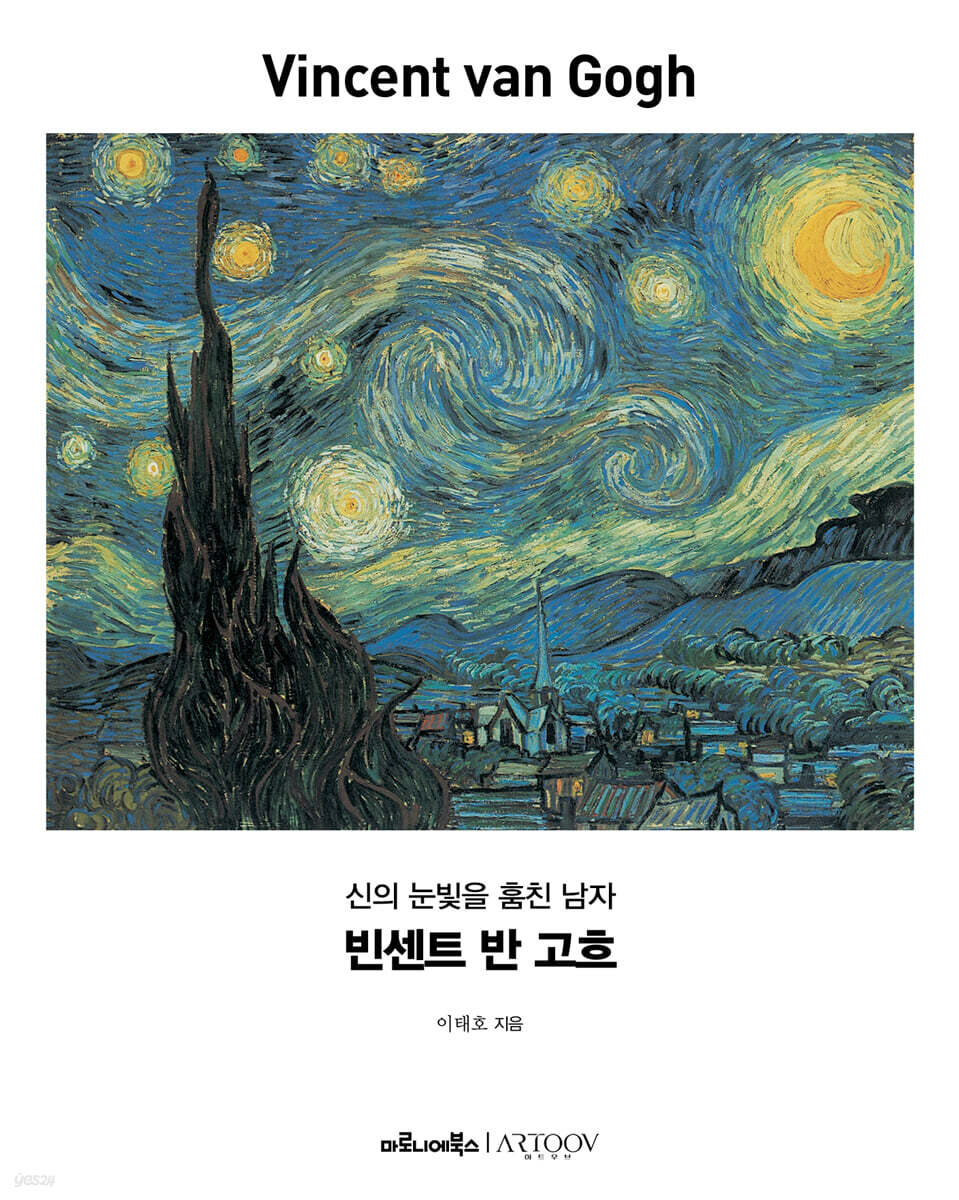 |
Description
Book Introduction
- A word from MD
- [Immortal Painter, Vincent van Gogh] Van Gogh, a painter loved by people all over the world.
We reinterpret the world of his works by following 100 of his works and his life's footsteps.
The works are broadly categorized into portraits, still lifes, and landscapes, and are arranged chronologically to help follow Van Gogh's life.
The author, a Korean art historian, also stands out with his fresh perspective.
- Ahn Hyun-jae, art producer
Vincent van Gogh, the 'immortal painter' who remains
Vincent van Gogh is still loved by people all over the world today.
Following in his footsteps, art galleries and memorial spaces are being built, and many people visit the historic sites.
Following the films, plays, and musicals produced based on Van Gogh's mad life and artistic spirit, his representative works have recently been digitally simulated to attract the public.
In this respect, he can be said to be the greatest in Western modern and contemporary art, and indeed in the entire history of world art.
In Korea, Van Gogh's special exhibitions have attracted hundreds of thousands of visitors and have also been a commercial success, proving that he remains an 'immortal painter.'
"Vincent van Gogh: The Man Who Stole the Eyes of God" presents readers with another Van Gogh exhibition that follows the footsteps of his life along with 100 of his works.
The works are broadly categorized into portraits, still lifes, and landscapes, and are arranged in chronological order to allow one to grasp the flow of Van Gogh's world of art at a glance.
Vincent van Gogh is still loved by people all over the world today.
Following in his footsteps, art galleries and memorial spaces are being built, and many people visit the historic sites.
Following the films, plays, and musicals produced based on Van Gogh's mad life and artistic spirit, his representative works have recently been digitally simulated to attract the public.
In this respect, he can be said to be the greatest in Western modern and contemporary art, and indeed in the entire history of world art.
In Korea, Van Gogh's special exhibitions have attracted hundreds of thousands of visitors and have also been a commercial success, proving that he remains an 'immortal painter.'
"Vincent van Gogh: The Man Who Stole the Eyes of God" presents readers with another Van Gogh exhibition that follows the footsteps of his life along with 100 of his works.
The works are broadly categorized into portraits, still lifes, and landscapes, and are arranged in chronological order to allow one to grasp the flow of Van Gogh's world of art at a glance.
- You can preview some of the book's contents.
Preview
index
At the beginning of the book
The Life and Art of Vincent van Gogh and the Theory of East Asian Art
-Dutch era
Growing up in a Protestant family
Finally, I entered the path of becoming a painter.
Meet the land and farmers of our homeland
Learn about the national traditions of the golden age
-French era
Impressionism meets the screen, brightening it up
Encountering the Orient through Japanese Ukiyo-e Woodblock Prints
Arles' unique beauty is enhanced by its natural scenery.
From Saint-Rémy to Auvers, reaching its climax
- Van Gogh's creative theory resembles Eastern art theory
Just let the brush go where it goes
I'm glad it didn't go my way.
Contemporary evaluations of Van Gogh were also good.
Embracing the human and earth that God gave us
The world of the work, an artistic fusion of humans and nature
10 years of my life as an artist, devoted entirely to painting
-Portrait
Self-portrait, intense gaze in a suit
Portrait, not exactly like the appearance
Genre painting, working people
-still life
Things placed in the living space
Sunflower painting
-landscape
The Netherlands, the land of working people
From Paris to the South of France, to the sun-drenched lands of the South
Montmartre, Paris
Arles-de-Provence
Saint-Rémy-de-Provence
Auvers-sur-Oise
Van Gogh's paintings, the foundation of modern art
Review: Van Gogh and the Netherlands I Met
List of illustrations
List of domestic publications on Van Gogh
The Life and Art of Vincent van Gogh and the Theory of East Asian Art
-Dutch era
Growing up in a Protestant family
Finally, I entered the path of becoming a painter.
Meet the land and farmers of our homeland
Learn about the national traditions of the golden age
-French era
Impressionism meets the screen, brightening it up
Encountering the Orient through Japanese Ukiyo-e Woodblock Prints
Arles' unique beauty is enhanced by its natural scenery.
From Saint-Rémy to Auvers, reaching its climax
- Van Gogh's creative theory resembles Eastern art theory
Just let the brush go where it goes
I'm glad it didn't go my way.
Contemporary evaluations of Van Gogh were also good.
Embracing the human and earth that God gave us
The world of the work, an artistic fusion of humans and nature
10 years of my life as an artist, devoted entirely to painting
-Portrait
Self-portrait, intense gaze in a suit
Portrait, not exactly like the appearance
Genre painting, working people
-still life
Things placed in the living space
Sunflower painting
-landscape
The Netherlands, the land of working people
From Paris to the South of France, to the sun-drenched lands of the South
Montmartre, Paris
Arles-de-Provence
Saint-Rémy-de-Provence
Auvers-sur-Oise
Van Gogh's paintings, the foundation of modern art
Review: Van Gogh and the Netherlands I Met
List of illustrations
List of domestic publications on Van Gogh
Detailed image

Into the book
As the brush moves, it becomes a wheat field hill, a field of grass, or a cloud shape.
The brush strokes that flowed according to inspiration and instinct show that Van Gogh achieved a state of mindlessness in his 30s.
Although the material texture of the oil paints is not clearly visible due to the thickness of the material, if you look closely at the brush strokes and the flow of the touch, the concise expressive intention is also clearly read.
Van Gogh's thoughts and expressions also show a simplicity and austerity that are close to the spirit of East Asian painting.
It also brings to mind the painting of the mind, 'Sa-i', a southern school of painting theory of East Asian literati.
In particular, it is noteworthy that Van Gogh, despite his thoroughgoing approach to Oriental painting, which involves painting with the subject right in front of his eyes, also thought about the meaning of death.
---From "A Theory of Van Gogh's Creation Resembling Oriental Art Theory"
If you look closely at the depiction style of these Joseon Dynasty portraits, you can see that they are drawn in a slightly right-facing pose, with both eyes and lips facing forward.
Let's compare the facial features of [Portrait of Heungseon Daewongun] (1869, Treasure No. 1499, Seoul Museum of History), painted by Joseon Dynasty painters Lee Han-cheol and Yu Suk, with Van Gogh's self-portrait.
It is interesting that the way this portrait is expressed closely resembles Van Gogh's self-portraits drawn in the mirror.
Van Gogh's self-portraits show his face looking to the left or right, with the nose and ears in profile, but the eyes and lips closer to a frontal view.
This gives the effect of staring straight ahead with such intensity that it overpowers the opponent even when the head is slightly turned.
To capture the two eyes looking straight ahead, van Gogh slightly widened the forehead and exaggerated it.
---From "Portrait, Not Resembling the Appearance"
Van Gogh was interested in portraiture from his early days in the Netherlands.
I sympathized with the desperate pain and suffering of farmers and miners working on the land.
Furthermore, he recognized these lives as objects of religious salvation and poured his affection on them.
He was also greatly influenced by Millet, whom he considered the greatest painter of his time.
Van Gogh said, “If I were a gentleman living a wealthy life wearing fancy shoes, this indifference would really bother me.
But I can get through it well because I wear wooden shoes,” he said, greatly agreeing with Millet’s attitude towards work.
Also, through works like [The Gleaners] and [The Angelus], he sympathized with the lives of peasants and completely trusted the words of the peasant painter Millet, who said, “You must devote your heart and soul to art.”
Van Gogh painted peasant portraits by Millet throughout his life.
From his early pastel paintings [Peasant Woman Gleaners] (July-August 1885, Kröller-Müller Museum) such as [Peasant Digging] and [Peasant Digger] to his later oil paintings from his Provençal period such as [The Sower] (November 1888, Van Gogh Museum) and [Woman Binding Sheaves (copy of Millet)], these works are the result of his attempts to study painting by following Millet.
Since then, he has continued to produce works in the form of drawings and oil paintings.
Meanwhile, Van Gogh produced a large number of his own peasant portraits.
---From "Genre Painting, Working People"
Van Gogh has been loved by many people more than anything else for his sunflower paintings.
He enjoyed drawing so much that he considered it his own brand.
He moved to Paris, France and then to Arles, where he expressed his aspirations in sunflower paintings.
The sticky feeling of oil paint and the brushstrokes of dried and twisted flower petals seemed to go well with expressing Van Gogh's image.
That's how many masterpieces were born.
Sunflowers are plants that grow in sunny locations and have strong reproductive capacity.
It is also called 'flower of the sun' and 'flower of gold'.
The sunflower painting started during my time in Paris.
During his time in Paris, he painted two or three sunflowers on the ground with their ovaries fully ripe and their petals withered or dried, as in [Two Broken Sunflowers] (Summer 1887, Metropolitan Museum of Art).
I drew a sunflower to match the blue background color that takes advantage of the complementary color contrast effect.
In the expression of the sharp, falling petals, the breath of the freshly cut flower stem seems to have strongly tempted Van Gogh.
---From "Sunflower Painting"
Van Gogh sought a new canvas to capture his moving wheatfield scene in Auvers.
I painted several long landscapes on a 30-40 size canvas that is about 1 meter wide.
It can be said to be a new form of Van Gogh's landscape paintings from his Auvers period.
In a 2:1 ratio, it is longer horizontally than the width of the canvas for the coast guard.
It is a size and proportion that really suits the vastness of the European fields.
I guess I never thought of this size when I was living in Provence, southern France, where the land was as wide and undulating as the sea.
[Landscape with the Castle of Auvers at Sunset] (June 1890, Van Gogh Museum), [Wheatfield near Auvers] (June 1890, Austrian Museum), [Wheat Field] (July 1890, Beyeler Museum), [Farmhouses with Hills Behind] (July 1890, Tate Gallery, London), [View of Auvers in the Rain] (July 1890, National Museum, Cardiff), [Wheatfield Under a Cloudy Sky] (July 1890, Van Gogh Museum), [Wheatfield with Crows] (July 1890, Van Gogh Museum) are oil paintings measuring approximately 50×100cm.
The brush strokes that flowed according to inspiration and instinct show that Van Gogh achieved a state of mindlessness in his 30s.
Although the material texture of the oil paints is not clearly visible due to the thickness of the material, if you look closely at the brush strokes and the flow of the touch, the concise expressive intention is also clearly read.
Van Gogh's thoughts and expressions also show a simplicity and austerity that are close to the spirit of East Asian painting.
It also brings to mind the painting of the mind, 'Sa-i', a southern school of painting theory of East Asian literati.
In particular, it is noteworthy that Van Gogh, despite his thoroughgoing approach to Oriental painting, which involves painting with the subject right in front of his eyes, also thought about the meaning of death.
---From "A Theory of Van Gogh's Creation Resembling Oriental Art Theory"
If you look closely at the depiction style of these Joseon Dynasty portraits, you can see that they are drawn in a slightly right-facing pose, with both eyes and lips facing forward.
Let's compare the facial features of [Portrait of Heungseon Daewongun] (1869, Treasure No. 1499, Seoul Museum of History), painted by Joseon Dynasty painters Lee Han-cheol and Yu Suk, with Van Gogh's self-portrait.
It is interesting that the way this portrait is expressed closely resembles Van Gogh's self-portraits drawn in the mirror.
Van Gogh's self-portraits show his face looking to the left or right, with the nose and ears in profile, but the eyes and lips closer to a frontal view.
This gives the effect of staring straight ahead with such intensity that it overpowers the opponent even when the head is slightly turned.
To capture the two eyes looking straight ahead, van Gogh slightly widened the forehead and exaggerated it.
---From "Portrait, Not Resembling the Appearance"
Van Gogh was interested in portraiture from his early days in the Netherlands.
I sympathized with the desperate pain and suffering of farmers and miners working on the land.
Furthermore, he recognized these lives as objects of religious salvation and poured his affection on them.
He was also greatly influenced by Millet, whom he considered the greatest painter of his time.
Van Gogh said, “If I were a gentleman living a wealthy life wearing fancy shoes, this indifference would really bother me.
But I can get through it well because I wear wooden shoes,” he said, greatly agreeing with Millet’s attitude towards work.
Also, through works like [The Gleaners] and [The Angelus], he sympathized with the lives of peasants and completely trusted the words of the peasant painter Millet, who said, “You must devote your heart and soul to art.”
Van Gogh painted peasant portraits by Millet throughout his life.
From his early pastel paintings [Peasant Woman Gleaners] (July-August 1885, Kröller-Müller Museum) such as [Peasant Digging] and [Peasant Digger] to his later oil paintings from his Provençal period such as [The Sower] (November 1888, Van Gogh Museum) and [Woman Binding Sheaves (copy of Millet)], these works are the result of his attempts to study painting by following Millet.
Since then, he has continued to produce works in the form of drawings and oil paintings.
Meanwhile, Van Gogh produced a large number of his own peasant portraits.
---From "Genre Painting, Working People"
Van Gogh has been loved by many people more than anything else for his sunflower paintings.
He enjoyed drawing so much that he considered it his own brand.
He moved to Paris, France and then to Arles, where he expressed his aspirations in sunflower paintings.
The sticky feeling of oil paint and the brushstrokes of dried and twisted flower petals seemed to go well with expressing Van Gogh's image.
That's how many masterpieces were born.
Sunflowers are plants that grow in sunny locations and have strong reproductive capacity.
It is also called 'flower of the sun' and 'flower of gold'.
The sunflower painting started during my time in Paris.
During his time in Paris, he painted two or three sunflowers on the ground with their ovaries fully ripe and their petals withered or dried, as in [Two Broken Sunflowers] (Summer 1887, Metropolitan Museum of Art).
I drew a sunflower to match the blue background color that takes advantage of the complementary color contrast effect.
In the expression of the sharp, falling petals, the breath of the freshly cut flower stem seems to have strongly tempted Van Gogh.
---From "Sunflower Painting"
Van Gogh sought a new canvas to capture his moving wheatfield scene in Auvers.
I painted several long landscapes on a 30-40 size canvas that is about 1 meter wide.
It can be said to be a new form of Van Gogh's landscape paintings from his Auvers period.
In a 2:1 ratio, it is longer horizontally than the width of the canvas for the coast guard.
It is a size and proportion that really suits the vastness of the European fields.
I guess I never thought of this size when I was living in Provence, southern France, where the land was as wide and undulating as the sea.
[Landscape with the Castle of Auvers at Sunset] (June 1890, Van Gogh Museum), [Wheatfield near Auvers] (June 1890, Austrian Museum), [Wheat Field] (July 1890, Beyeler Museum), [Farmhouses with Hills Behind] (July 1890, Tate Gallery, London), [View of Auvers in the Rain] (July 1890, National Museum, Cardiff), [Wheatfield Under a Cloudy Sky] (July 1890, Van Gogh Museum), [Wheatfield with Crows] (July 1890, Van Gogh Museum) are oil paintings measuring approximately 50×100cm.
---From "Aubers-sur-Oise"
Publisher's Review
The World of Van Gogh as Seen by a Korean Art Historian
Meanwhile, 『Vincent van Gogh: The Man Who Stole the Eyes of God』 presents a new perspective on Van Gogh's work by interpreting it from the perspective of a Korean art historian.
As is widely known, Van Gogh loved Japanese Ukiyo-e and even created his own painting style based on it.
He also seems to have been interested in East Asian ink painting techniques.
This is because there are many examples of people or landscape drawings from the Dutch or French era that were made using ink.
However, since there was little cultural interaction between the Netherlands and Joseon at the time, the probability that he incorporated Joseon paintings into his work is very low.
But surprisingly, when you look at his paintings, you find many similarities to Joseon Dynasty paintings.
For example, Van Gogh's self-portraits and portraits are reminiscent of portraits of the literati, scholar-officials, and bureaucrats of the late Joseon Dynasty.
Looking at the depiction style of Joseon Dynasty portraits, the pose is slightly tilted to the right, with both eyes and lips facing forward.
This is interesting because it closely resembles Van Gogh's self-portrait drawn in a mirror.
His self-portraits show his face looking to the left or right, with the nose and ears in profile, while the eyes and lips are closer to a frontal view.
Also, the intensity of complementary color contrast and the beauty of color that Van Gogh learned through Delacroix's paintings can be found in Korean art history.
In particular, the complementary color contrast of green and red is a color combination that appears in Goguryeo tomb murals.
It can be said to be the color of Korea, continuing from Goryeo Buddhist paintings and Joseon Buddhist paintings to Joseon Dynasty court colors and colored paintings.
In this way, readers will be able to experience the joy of discovering aspects of Korean art in Van Gogh's work through 『Vincent Van Gogh: The Man Who Stole the Eyes of God』.
Meanwhile, 『Vincent van Gogh: The Man Who Stole the Eyes of God』 presents a new perspective on Van Gogh's work by interpreting it from the perspective of a Korean art historian.
As is widely known, Van Gogh loved Japanese Ukiyo-e and even created his own painting style based on it.
He also seems to have been interested in East Asian ink painting techniques.
This is because there are many examples of people or landscape drawings from the Dutch or French era that were made using ink.
However, since there was little cultural interaction between the Netherlands and Joseon at the time, the probability that he incorporated Joseon paintings into his work is very low.
But surprisingly, when you look at his paintings, you find many similarities to Joseon Dynasty paintings.
For example, Van Gogh's self-portraits and portraits are reminiscent of portraits of the literati, scholar-officials, and bureaucrats of the late Joseon Dynasty.
Looking at the depiction style of Joseon Dynasty portraits, the pose is slightly tilted to the right, with both eyes and lips facing forward.
This is interesting because it closely resembles Van Gogh's self-portrait drawn in a mirror.
His self-portraits show his face looking to the left or right, with the nose and ears in profile, while the eyes and lips are closer to a frontal view.
Also, the intensity of complementary color contrast and the beauty of color that Van Gogh learned through Delacroix's paintings can be found in Korean art history.
In particular, the complementary color contrast of green and red is a color combination that appears in Goguryeo tomb murals.
It can be said to be the color of Korea, continuing from Goryeo Buddhist paintings and Joseon Buddhist paintings to Joseon Dynasty court colors and colored paintings.
In this way, readers will be able to experience the joy of discovering aspects of Korean art in Van Gogh's work through 『Vincent Van Gogh: The Man Who Stole the Eyes of God』.
GOODS SPECIFICS
- Date of issue: November 15, 2024
- Page count, weight, size: 268 pages | 902g | 178*225*25mm
- ISBN13: 9788960536654
- ISBN10: 8960536652
You may also like
카테고리
korean


korean

![GQ KOREA Mark (Monthly): December [2025]](http://librairie.coreenne.fr/cdn/shop/files/8ef265dbbfbf186523ed75ba7319009d.jpg?v=1765340328&width=3840)


