

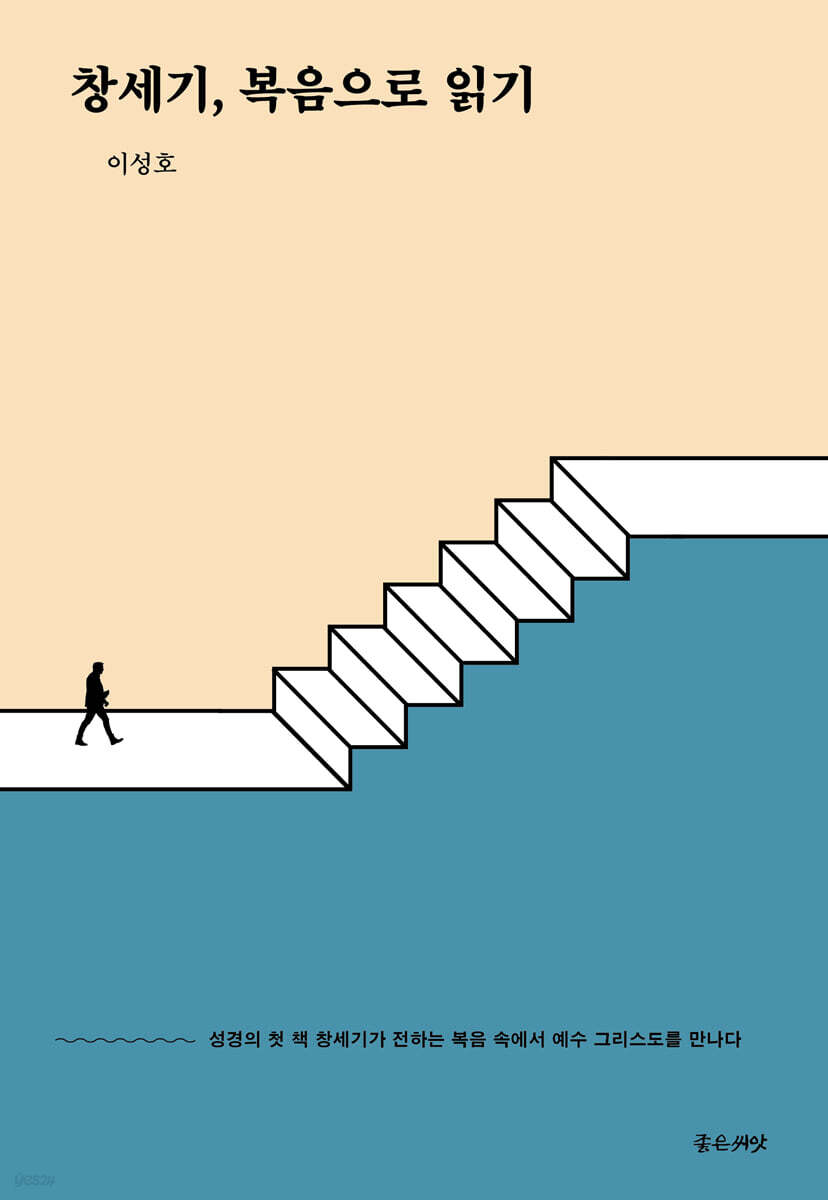
Reading Genesis as a Gospel
 |
Description
Book Introduction
Like other books of the Bible, Genesis is ultimately a story about God's work.
We must learn about God through Genesis.
Simply put, the main character of this book is not Adam, Abraham, Isaac, or Jacob, but God.
They are all just supporting actors who reveal God's work.
Genesis, which begins with the words “in the beginning,” ends with the words “in Egypt,” according to the original Hebrew text.
The story that began with the creation of life in Chapter 1 ends with Joseph's death and funeral in Chapter 50.
On the surface, the ending seems tragic, but within it, God's covenant continues and becomes the basis for our hope.
The covenant that begins in Genesis 3:15 continues through the final chapter, revealing the origin of humanity and the source of blessing.
This book will help you see this structure more clearly.
The biggest question I have when reading or preaching on Genesis is, “What does this story have to do with me?”
The answer is not easy to find because it is not explicitly stated in the text.
One of the purposes of preaching is to convey the meaning of the Bible text to believers today.
This is called 'application of the sermon'.
I also think about this a lot when preparing my sermons.
If done wrong, a sermon can devolve into a moral lecture, a lecture on religious methods like “the secret to being blessed,” or even just nagging.
My conclusion is that presenting the text as it is, in context, and accurately can have a 'relevant' effect on the audience.
Because it explains the meaning of the text to ‘today’s audience’.
In the 'West Gate'
We must learn about God through Genesis.
Simply put, the main character of this book is not Adam, Abraham, Isaac, or Jacob, but God.
They are all just supporting actors who reveal God's work.
Genesis, which begins with the words “in the beginning,” ends with the words “in Egypt,” according to the original Hebrew text.
The story that began with the creation of life in Chapter 1 ends with Joseph's death and funeral in Chapter 50.
On the surface, the ending seems tragic, but within it, God's covenant continues and becomes the basis for our hope.
The covenant that begins in Genesis 3:15 continues through the final chapter, revealing the origin of humanity and the source of blessing.
This book will help you see this structure more clearly.
The biggest question I have when reading or preaching on Genesis is, “What does this story have to do with me?”
The answer is not easy to find because it is not explicitly stated in the text.
One of the purposes of preaching is to convey the meaning of the Bible text to believers today.
This is called 'application of the sermon'.
I also think about this a lot when preparing my sermons.
If done wrong, a sermon can devolve into a moral lecture, a lecture on religious methods like “the secret to being blessed,” or even just nagging.
My conclusion is that presenting the text as it is, in context, and accurately can have a 'relevant' effect on the audience.
Because it explains the meaning of the text to ‘today’s audience’.
In the 'West Gate'
- You can preview some of the book's contents.
Preview
index
Introduction 10
Genesis Overview 14
Creation and Fall
1.
How Creation Becomes the Gospel (1:1-31) 18
2.
Humans Created in the Image of God (1:26-31) 28
3.
God's Rest (2:1-3) 38
4.
The Garden of Eden: A Place to Taste and Know God's Goodness (2:4-17) 48
5.
The Fall: Away from the Word (3:1-8) 57
6.
God Who Has Hostility (3:15) 66
7.
Cain: A Rebellious One Who Belonged to the Serpent (4:1-15) 75
8.
Enoch: The Man Taken by God (5:21-25) 85
9.
The Great Flood: Judgment and Salvation (6:1-22) 95
10.
Noah's Ark: The Means of Salvation (7:1-24) 104
11.
God Renews the World (8:1-22) 114
12.
God Blesses Noah (9:1-7) 124
13.
Why was Canaan cursed? (9:18-27) 134
14.
The Story of Noah's Sons (10:1-32) 144
15.
God Who Destroyed the Tower of Babel (11:1-9) 154
The Story of Abraham
16.
Leaving without knowing where to go (11:27-12:5) 166
17.
The Almighty Who Protected the Mother of Promise (12:10-13:2) 177
18.
Abraham Resolves a Dispute (13:5-18) 186
19.
Abraham: From Coward to Warrior (14:1-24) 195
20.
Justification by Faith (15:1-7; Rom. 4:1-12) 204
21.
Where Does Confidence Come From? (15:7-21) 212
22.
God Who Examines Me (16:1-16) 220
23.
El Shaddai, the Fulfillment of the Covenant (17:1-27) 230
24.
The Importance of Hospitality (18:1-15) 241
25.
Abraham's Intercession (18:16-33) 251
26.
Lot's Deliverance from Sodom (19:1-38) 260
27.
Abraham the Weak, God the Faithful (20:1-18) 269
28.
Isaac and Ishmael (21:8-21) 278
29.
Abraham Returns His Reader (22:1-19; Heb 11:17-19) 287
30.
Abraham Purchases a Burial Site by Faith (23:1-20) 296
The Story of Isaac and Jacob
31.
Rebekah: God's Bride (24:1-67) 306
32.
Jacob the Chosen One (25:19-26) 314
33.
In: The Sample of the Delusional (25:27-34, Heb 12:16-17) 323
34.
Isaac's Lie and God's Care (26:1-11) 332
35.
Isaac Blessed at Gerar (26:12-33) 341
36.
Isaac Lost His Spiritual Discernment (27:1-46) 348
37.
God Makes Covenant at Bethel (28:10-22) 357
38.
He was deceived by Laban (29:21-30) 366
39.
Jacob is appointed the father of the twelve tribes (29:31-30:24) 375
40.
God Who Provided Wages (30:25-43) 384
41.
God Who Saved Jacob (31:17-42) 394
42.
From Jacob to Israel (32:21-32; Hosea 12:1-3) 404
43.
Two Brothers Reconciled by God's Grace (33:1-11) 414
44.
Jacob's Shame (34:1-31) 423
45.
God Restores Jacob (35:1-15) 432
46.
The Reason for Strengthening Esau (36:1-43) 441
The Story of Joseph
47.
Joseph, Envious of His Brothers (37:2-11) 452
48.
Joseph Sold into Egypt (37:12-36) 461
49.
Restoration of Israel through Tamar (38:1-30) 472
50.
Joseph, the Conduit of Blessing (39:1-6) 480
51.
Obeyed the Word (39:7-23) 489
52.
The Interpreter of Dreams (40:1-23) 499
53.
God Exalted Joseph (41:25-45) 507
54.
Canaan and Egypt During the Famine (42:18-25) 516
55.
Joseph Welcomes His Brothers (43:1-34) 526
56.
Judah's Desperate Appeal (44:1-34) 535
57.
Providence must be well understood and applied (45:1-28) 544
58.
The Promise Received at Beersheba (46:1-34) 553
59.
Israel Prospers in the Land of Goshen (46:28-47:31) 563
60.
Jacob's Faith (48:1-22, Hebrews 11:21) 572
61.
Jacob's Testament (49:1-33) 581
62.
Joseph's Testament (50:1-26) 591
Genesis Overview 14
Creation and Fall
1.
How Creation Becomes the Gospel (1:1-31) 18
2.
Humans Created in the Image of God (1:26-31) 28
3.
God's Rest (2:1-3) 38
4.
The Garden of Eden: A Place to Taste and Know God's Goodness (2:4-17) 48
5.
The Fall: Away from the Word (3:1-8) 57
6.
God Who Has Hostility (3:15) 66
7.
Cain: A Rebellious One Who Belonged to the Serpent (4:1-15) 75
8.
Enoch: The Man Taken by God (5:21-25) 85
9.
The Great Flood: Judgment and Salvation (6:1-22) 95
10.
Noah's Ark: The Means of Salvation (7:1-24) 104
11.
God Renews the World (8:1-22) 114
12.
God Blesses Noah (9:1-7) 124
13.
Why was Canaan cursed? (9:18-27) 134
14.
The Story of Noah's Sons (10:1-32) 144
15.
God Who Destroyed the Tower of Babel (11:1-9) 154
The Story of Abraham
16.
Leaving without knowing where to go (11:27-12:5) 166
17.
The Almighty Who Protected the Mother of Promise (12:10-13:2) 177
18.
Abraham Resolves a Dispute (13:5-18) 186
19.
Abraham: From Coward to Warrior (14:1-24) 195
20.
Justification by Faith (15:1-7; Rom. 4:1-12) 204
21.
Where Does Confidence Come From? (15:7-21) 212
22.
God Who Examines Me (16:1-16) 220
23.
El Shaddai, the Fulfillment of the Covenant (17:1-27) 230
24.
The Importance of Hospitality (18:1-15) 241
25.
Abraham's Intercession (18:16-33) 251
26.
Lot's Deliverance from Sodom (19:1-38) 260
27.
Abraham the Weak, God the Faithful (20:1-18) 269
28.
Isaac and Ishmael (21:8-21) 278
29.
Abraham Returns His Reader (22:1-19; Heb 11:17-19) 287
30.
Abraham Purchases a Burial Site by Faith (23:1-20) 296
The Story of Isaac and Jacob
31.
Rebekah: God's Bride (24:1-67) 306
32.
Jacob the Chosen One (25:19-26) 314
33.
In: The Sample of the Delusional (25:27-34, Heb 12:16-17) 323
34.
Isaac's Lie and God's Care (26:1-11) 332
35.
Isaac Blessed at Gerar (26:12-33) 341
36.
Isaac Lost His Spiritual Discernment (27:1-46) 348
37.
God Makes Covenant at Bethel (28:10-22) 357
38.
He was deceived by Laban (29:21-30) 366
39.
Jacob is appointed the father of the twelve tribes (29:31-30:24) 375
40.
God Who Provided Wages (30:25-43) 384
41.
God Who Saved Jacob (31:17-42) 394
42.
From Jacob to Israel (32:21-32; Hosea 12:1-3) 404
43.
Two Brothers Reconciled by God's Grace (33:1-11) 414
44.
Jacob's Shame (34:1-31) 423
45.
God Restores Jacob (35:1-15) 432
46.
The Reason for Strengthening Esau (36:1-43) 441
The Story of Joseph
47.
Joseph, Envious of His Brothers (37:2-11) 452
48.
Joseph Sold into Egypt (37:12-36) 461
49.
Restoration of Israel through Tamar (38:1-30) 472
50.
Joseph, the Conduit of Blessing (39:1-6) 480
51.
Obeyed the Word (39:7-23) 489
52.
The Interpreter of Dreams (40:1-23) 499
53.
God Exalted Joseph (41:25-45) 507
54.
Canaan and Egypt During the Famine (42:18-25) 516
55.
Joseph Welcomes His Brothers (43:1-34) 526
56.
Judah's Desperate Appeal (44:1-34) 535
57.
Providence must be well understood and applied (45:1-28) 544
58.
The Promise Received at Beersheba (46:1-34) 553
59.
Israel Prospers in the Land of Goshen (46:28-47:31) 563
60.
Jacob's Faith (48:1-22, Hebrews 11:21) 572
61.
Jacob's Testament (49:1-33) 581
62.
Joseph's Testament (50:1-26) 591
Into the book
When we look at the Psalms and Proverbs, we can see that God created the world with wisdom.
The very method of creation reveals the essence of creation.
So, for what purpose did God create the world? To enable all things to reveal God's character and glory.
The expression 'good' is also translated as 'good' in Hebrew.
The reason everything God created is good is because it reflects the good nature of God.
--- p.20 From “Chapter 1: How Creation Becomes the Gospel (1:1-31)”
God, as revealed in Genesis 1, is the Creator and King who rules over the entire world.
In ancient Near Eastern societies, kings erected statues in conquered lands to proclaim their rule.
It is similar to this in that God created man in his own image.
Humans are beings who demonstrate God's rule on this earth.
God appointed man as his deputy ruler and made all things subject to him.
But ruling alone is not enough to explain the image of God.
If that were all, there would have been no need to create both man and woman.
Just as there was one king in the ancient kingdoms, one person would have been enough.
However, God created humans as male and female, which means that God's image should be reflected in both.
Neither one alone can fully reflect His image.
--- p.30 From “Chapter 2 Humans Created in the Image of God (1:26-31)”
This personal fellowship is the essence of 'rest'.
After God finished His work, He rested to fellowship with mankind.
This makes us realize that Sabbath is not simply 'rest' or 'stopping'.
The Bible describes the believer's state after death as 'eternal rest.'
Why do we say that believers "enter into rest" after death? It's because they are free from all toil and suffering, the struggle against sin, and the weaknesses of the flesh, and enter into complete communion with God.
Eternal rest is not a state of inaction.
It is entering into a deep loving communion with the Trinity, the Father, the Son, and the Holy Spirit.
This is the eternal rest we desire.
--- p.42 「Chapter 3.
From “God’s Rest (2:1-3)”
The Hebrew word 'teiva', translated into Korean as 'ark', means 'box'.
This word is used for huge structures like Noah's Ark, but it is also used for very small boxes.
In fact, the reed basket that Moses' mother made to save him is also called 'Teibah'.
These two boxes are remarkably similar.
Just as Noah's ark was the means by which God saved His chosen people from the water when He judged the world, so too was the ark the means by which baby Moses, who was abandoned in the Nile River to escape the persecution of Pharaoh of Egypt who sought to kill all Israelite male babies, was saved.
Just as Noah's ark drifted aimlessly and ended up on Mount Ararat (8:4), Moses' chest also drifted aimlessly down the Nile and ended up in Pharaoh's daughter's hands.
Taking all of this into account, Noah's Ark can be seen as a type of the Exodus.
--- p.107 「Chapter 10.
From "Noah's Ark: The Means of Salvation (7:1-24)"
Because there is a great gap of time and space between Abraham and us, we cannot mechanically apply God's promise to Abraham to our lives today.
Conversely, we should not dismiss that promise as something unrelated to us, something that applies only to a single person in ancient Israel.
God promised blessings to Abraham, and today He has given us the same spiritual blessings we enjoy in Jesus Christ.
This blessing is given through faith, and in this respect Abraham and we are essentially the same.
The three promises God gave to Abraham (a great nation, a great name, and a blessing to all the nations) were ultimately fulfilled in Jesus Christ.
Jesus came as the true descendant of Abraham, and through him the kingdom of God came, his name was exalted above every name, and through him the whole world enjoyed the blessing of salvation.
--- p.175 「Chapter 16.
From “Leaving Not Knowing Where to Go (11:27-12:5)”
“I am the Almighty God.
“Walk before me and be blameless (v. 1).”
These words are a typical introductory form of an ancient covenant text.
God first reveals who he is.
In Hebrew, the name 'El Shaddai' (Almighty God) is revealed.
This is the first time in Genesis that God reveals himself by name.
In chapter 15, He spoke metaphorically, saying, “I am your shield and your exceedingly great reward,” but here He reveals His name directly.
The exact meaning of 'El Shaddai' is unclear, but the important fact is that 'El' was a general term for 'god' in the ancient Near East, whereas 'Shaddai' is a modifier that distinguishes the true God from other gods.
In Exodus 6:3, God says to Moses:
“I appeared to Abraham, Isaac, and Jacob as God Almighty (El Shaddai), but by my name Jehovah I did not make myself known to them.”
--- p.233 「_Chapter 23.
El Shaddai, the Fulfillment of the Covenant (17:1-27)
Then God spoke.
“Two nations are in your womb.
Two nations will be separated from within you.
“One people will be stronger than the other people, and the older will serve the younger” (v. 23).
These words were a significant declaration that determined Jacob's identity.
Rebekah became the mother of two peoples, and she heard firsthand that God's sovereign choice was at work between them.
God rejected Esau and chose Jacob.
A detailed commentary on this passage is found in Romans 9.
The central message is that not all who are physically descendants of Abraham are Israelites.
Abraham also had Ishmael, the son of his maidservant Hagar, and six sons by his concubine Keturah in his later years (Gen. 25:1-4).
But not all of them were recognized as children of the covenant.
Only Isaac was the child of promise.
The reason is not simply because he was born of Sarah, but because he was chosen according to God's promise.
--- p.318 「_Chapter 32.
From "Jacob the Chosen One (25:19-26)"
Jacob's prayer contained both trust in God's promise and fear of his brother.
This is the true form of a believer.
Believing in God does not mean that worries and concerns will completely disappear.
Even after we pray, we often fall back into worry.
Some may say, “Why worry when you can just leave it to God?” But even people of faith face great fear and tension on the path of obedience.
Jacob is now on his way back home, obeying God's command.
But that path also put the family's life at risk.
When we too try to obey God's will, Satan does not remain silent.
The believer's obedience is always a path that runs counter to spiritual tension.
The very method of creation reveals the essence of creation.
So, for what purpose did God create the world? To enable all things to reveal God's character and glory.
The expression 'good' is also translated as 'good' in Hebrew.
The reason everything God created is good is because it reflects the good nature of God.
--- p.20 From “Chapter 1: How Creation Becomes the Gospel (1:1-31)”
God, as revealed in Genesis 1, is the Creator and King who rules over the entire world.
In ancient Near Eastern societies, kings erected statues in conquered lands to proclaim their rule.
It is similar to this in that God created man in his own image.
Humans are beings who demonstrate God's rule on this earth.
God appointed man as his deputy ruler and made all things subject to him.
But ruling alone is not enough to explain the image of God.
If that were all, there would have been no need to create both man and woman.
Just as there was one king in the ancient kingdoms, one person would have been enough.
However, God created humans as male and female, which means that God's image should be reflected in both.
Neither one alone can fully reflect His image.
--- p.30 From “Chapter 2 Humans Created in the Image of God (1:26-31)”
This personal fellowship is the essence of 'rest'.
After God finished His work, He rested to fellowship with mankind.
This makes us realize that Sabbath is not simply 'rest' or 'stopping'.
The Bible describes the believer's state after death as 'eternal rest.'
Why do we say that believers "enter into rest" after death? It's because they are free from all toil and suffering, the struggle against sin, and the weaknesses of the flesh, and enter into complete communion with God.
Eternal rest is not a state of inaction.
It is entering into a deep loving communion with the Trinity, the Father, the Son, and the Holy Spirit.
This is the eternal rest we desire.
--- p.42 「Chapter 3.
From “God’s Rest (2:1-3)”
The Hebrew word 'teiva', translated into Korean as 'ark', means 'box'.
This word is used for huge structures like Noah's Ark, but it is also used for very small boxes.
In fact, the reed basket that Moses' mother made to save him is also called 'Teibah'.
These two boxes are remarkably similar.
Just as Noah's ark was the means by which God saved His chosen people from the water when He judged the world, so too was the ark the means by which baby Moses, who was abandoned in the Nile River to escape the persecution of Pharaoh of Egypt who sought to kill all Israelite male babies, was saved.
Just as Noah's ark drifted aimlessly and ended up on Mount Ararat (8:4), Moses' chest also drifted aimlessly down the Nile and ended up in Pharaoh's daughter's hands.
Taking all of this into account, Noah's Ark can be seen as a type of the Exodus.
--- p.107 「Chapter 10.
From "Noah's Ark: The Means of Salvation (7:1-24)"
Because there is a great gap of time and space between Abraham and us, we cannot mechanically apply God's promise to Abraham to our lives today.
Conversely, we should not dismiss that promise as something unrelated to us, something that applies only to a single person in ancient Israel.
God promised blessings to Abraham, and today He has given us the same spiritual blessings we enjoy in Jesus Christ.
This blessing is given through faith, and in this respect Abraham and we are essentially the same.
The three promises God gave to Abraham (a great nation, a great name, and a blessing to all the nations) were ultimately fulfilled in Jesus Christ.
Jesus came as the true descendant of Abraham, and through him the kingdom of God came, his name was exalted above every name, and through him the whole world enjoyed the blessing of salvation.
--- p.175 「Chapter 16.
From “Leaving Not Knowing Where to Go (11:27-12:5)”
“I am the Almighty God.
“Walk before me and be blameless (v. 1).”
These words are a typical introductory form of an ancient covenant text.
God first reveals who he is.
In Hebrew, the name 'El Shaddai' (Almighty God) is revealed.
This is the first time in Genesis that God reveals himself by name.
In chapter 15, He spoke metaphorically, saying, “I am your shield and your exceedingly great reward,” but here He reveals His name directly.
The exact meaning of 'El Shaddai' is unclear, but the important fact is that 'El' was a general term for 'god' in the ancient Near East, whereas 'Shaddai' is a modifier that distinguishes the true God from other gods.
In Exodus 6:3, God says to Moses:
“I appeared to Abraham, Isaac, and Jacob as God Almighty (El Shaddai), but by my name Jehovah I did not make myself known to them.”
--- p.233 「_Chapter 23.
El Shaddai, the Fulfillment of the Covenant (17:1-27)
Then God spoke.
“Two nations are in your womb.
Two nations will be separated from within you.
“One people will be stronger than the other people, and the older will serve the younger” (v. 23).
These words were a significant declaration that determined Jacob's identity.
Rebekah became the mother of two peoples, and she heard firsthand that God's sovereign choice was at work between them.
God rejected Esau and chose Jacob.
A detailed commentary on this passage is found in Romans 9.
The central message is that not all who are physically descendants of Abraham are Israelites.
Abraham also had Ishmael, the son of his maidservant Hagar, and six sons by his concubine Keturah in his later years (Gen. 25:1-4).
But not all of them were recognized as children of the covenant.
Only Isaac was the child of promise.
The reason is not simply because he was born of Sarah, but because he was chosen according to God's promise.
--- p.318 「_Chapter 32.
From "Jacob the Chosen One (25:19-26)"
Jacob's prayer contained both trust in God's promise and fear of his brother.
This is the true form of a believer.
Believing in God does not mean that worries and concerns will completely disappear.
Even after we pray, we often fall back into worry.
Some may say, “Why worry when you can just leave it to God?” But even people of faith face great fear and tension on the path of obedience.
Jacob is now on his way back home, obeying God's command.
But that path also put the family's life at risk.
When we too try to obey God's will, Satan does not remain silent.
The believer's obedience is always a path that runs counter to spiritual tension.
--- p.407 Chapter 42.
From Jacob to Israel (32:21-32, Hosea 12:1-3)
From Jacob to Israel (32:21-32, Hosea 12:1-3)
GOODS SPECIFICS
- Date of issue: October 31, 2025
- Page count, weight, size: 600 pages | 145*210*35mm
- ISBN13: 9788958744245
- ISBN10: 8958744243
You may also like
카테고리
korean


korean

![GQ KOREA Mark (Monthly): December [2025]](http://librairie.coreenne.fr/cdn/shop/files/8ef265dbbfbf186523ed75ba7319009d.jpg?v=1765340328&width=3840)


