

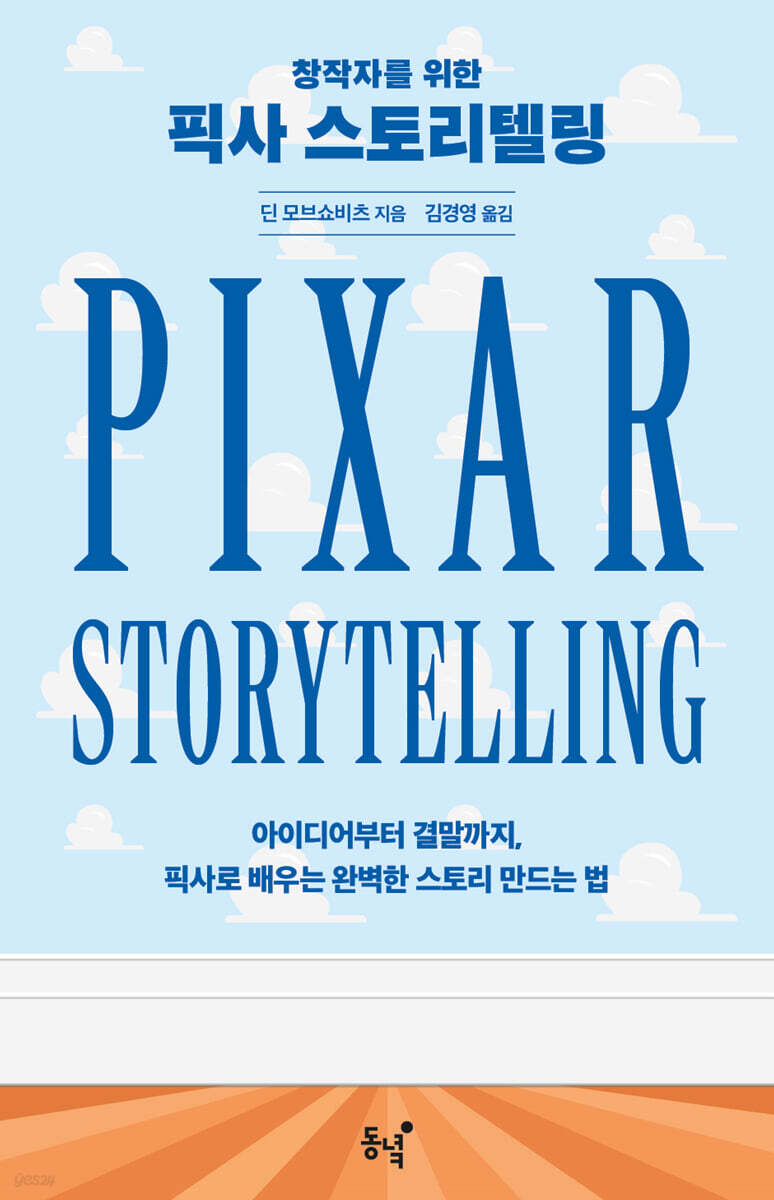
Pixar Storytelling for Creators
 |
Description
Book Introduction
- #1 bestseller on Amazon in the US
- Recommended by Pixar Senior Artist Scheme On West and webtoon artist Jongbeom Lee!
If you want to write a Pixar-like story, learn from Pixar's stories!
Learn the secrets of Pixar storytelling in a fun way with vivid examples.
The most basic way to write a great story is to find a good example, analyze its strengths, and appropriately incorporate them into your own work.
To this end, a new "Storytelling Secrets Series" has been launched, uncovering the "success recipes" of brands that have established themselves as "trusted" film studios with high-quality stories and distinct personalities.
The first protagonist is Pixar, an animation studio loved around the world for its stable and well-structured story structure, original and fantastic worldview, captivating plot development, and resonant messages.
This book analyzes numerous Pixar masterpieces, including Toy Story, Finding Nemo, Ratatouille, WALL-E, Up, Inside Out, Coco, Soul, and Elemental, and introduces effective storytelling techniques that story creators can immediately utilize.
This book summarizes Pixar's know-how used in all stages of story creation, from discovering the story's core idea to building characters, conflict structure, and worldview, setting the story's progression and ending, and conveying the theme.
Each chapter presents a storytelling principle commonly used in Pixar films, along with case studies from the films that illustrate it.
These vivid examples not only evoke the fun and emotion of the film, but also make abstract writing principles easy and intuitive to understand.
The latter part of each chapter includes a "Summary" section that summarizes the key points explained earlier, an "Application" section that reverse-analyzes how the content is implemented in a well-written story ("Inside Out"), and a "Practical Exercise" section that examines and supplements one's own work by comparing it to Pixar's principles, helping readers practically apply the techniques explained earlier in their story creation.
Meanwhile, Pixar's storytelling style includes many of its own unique techniques, but also many of the basic principles that a good story should have.
These universal and core writing principles provide a solid foundation for building the skeleton of a story, even without knowing complex theories or detailed rules.
Because of these characteristics, the principles introduced in this book can be usefully applied to all types of stories, including not only movies but also dramas, webtoons, and web novels.
- Recommended by Pixar Senior Artist Scheme On West and webtoon artist Jongbeom Lee!
If you want to write a Pixar-like story, learn from Pixar's stories!
Learn the secrets of Pixar storytelling in a fun way with vivid examples.
The most basic way to write a great story is to find a good example, analyze its strengths, and appropriately incorporate them into your own work.
To this end, a new "Storytelling Secrets Series" has been launched, uncovering the "success recipes" of brands that have established themselves as "trusted" film studios with high-quality stories and distinct personalities.
The first protagonist is Pixar, an animation studio loved around the world for its stable and well-structured story structure, original and fantastic worldview, captivating plot development, and resonant messages.
This book analyzes numerous Pixar masterpieces, including Toy Story, Finding Nemo, Ratatouille, WALL-E, Up, Inside Out, Coco, Soul, and Elemental, and introduces effective storytelling techniques that story creators can immediately utilize.
This book summarizes Pixar's know-how used in all stages of story creation, from discovering the story's core idea to building characters, conflict structure, and worldview, setting the story's progression and ending, and conveying the theme.
Each chapter presents a storytelling principle commonly used in Pixar films, along with case studies from the films that illustrate it.
These vivid examples not only evoke the fun and emotion of the film, but also make abstract writing principles easy and intuitive to understand.
The latter part of each chapter includes a "Summary" section that summarizes the key points explained earlier, an "Application" section that reverse-analyzes how the content is implemented in a well-written story ("Inside Out"), and a "Practical Exercise" section that examines and supplements one's own work by comparing it to Pixar's principles, helping readers practically apply the techniques explained earlier in their story creation.
Meanwhile, Pixar's storytelling style includes many of its own unique techniques, but also many of the basic principles that a good story should have.
These universal and core writing principles provide a solid foundation for building the skeleton of a story, even without knowing complex theories or detailed rules.
Because of these characteristics, the principles introduced in this book can be usefully applied to all types of stories, including not only movies but also dramas, webtoons, and web novels.
- You can preview some of the book's contents.
Preview
index
5 for Korean readers
Prologue 8
Chapter 1: Choosing an Idea 15
Finding the Goldmine of Ideas: Selecting Potential Ideas 17
Breaking Out of Your Comfortable Routine: The More Uncomfortable, the More Storytelling 18
Existing flaw: The conflict between characters and the world becomes the subject of adventure 22
Organic: The Secret to Connecting Every Moment of Your Story to a Core Idea 24
Summary / Application / Practical Exercise 32
Chapter 2: Building Persuasive Characters 37
Interesting characters are truly endearing 39
A firm affection comes from a firm belief 42
The best beliefs come from (painful) experience 44
Summary / Application / Practical Exercise 49
Chapter 3: Evoking Empathy 53
The Three Stages of Love 55
Sympathy 57
Desire and Motivation 61
“If it’s an incurable disease, there’s no need to be sad,” he said. 63
Inner Journey 67
Summary / Application / Practical Exercise 69
Chapter 4: Drama and Conflict 73
Stories Beyond Life and Death 75
Creating and Resolving Emotional Conflicts 79
Death 〈 Divine Punishment 81
85 Describing danger vividly and exaggeratedly
Opportunities for Growth: Revealing and Changing Character Emotions 87
Summary / Application / Practical Exercise 93
Chapter 5 Villain 99
Tales of the Enemy 101
'Evil' Antagonists vs. 'Troublesome' Antagonists 101
Beneficial Antagonist 104
The Antagonist as a Mirror Reflecting the Protagonist 107
Summary / Application / Practical Exercise 109
Chapter 6: Character Design 113
Story 115: Efficient Like a Machine
Characters with plot functions 117
Write honestly 119
Designing Characters with Distinct Personalities 121
Summary / Application / Practical Exercise 123
Chapter 7: Forming a Worldview 127
Composition Principle 129
Rules, Name Tags, and Rituals 132
Exploring the World vs. Plotting 135
Subvert Expectations 137
Constraints for Creativity: Focus Your Canvas 140
Summary / Application / Practical Exercise 142
Chapter 8: Pixar's Structure 147
Story of Structure 149
Key Events: Content, Process, and Reasons of the Event 154
Multi-layered storytelling cake 158
Bonding Story 160
Double Climax 162
Don't abuse the structure 165
Summary / Application / Practical Exercise 167
Chapter 9, Conclusion 173
Chance vs. Character 175
5 Simple Steps to Change 178
Betrayal and Sacrifice 182
Solution: Showing a New and Healthy World 188
Back to the Beginning: Answering the Forgotten Question 190
Summary / Application / Practical Exercise 192
Chapter 10 Topic 197
What is a topic? 199
Step 1: Identifying the Core of Your Story 200
Step 2: Incorporating the Theme into Your Story 201
Step 3: Revealing the Topic Through Results 206
Summary / Application / Practical Exercise 212
Epilogue: For Beginning Artists 216
Acknowledgments 223
Movie List 225
Prologue 8
Chapter 1: Choosing an Idea 15
Finding the Goldmine of Ideas: Selecting Potential Ideas 17
Breaking Out of Your Comfortable Routine: The More Uncomfortable, the More Storytelling 18
Existing flaw: The conflict between characters and the world becomes the subject of adventure 22
Organic: The Secret to Connecting Every Moment of Your Story to a Core Idea 24
Summary / Application / Practical Exercise 32
Chapter 2: Building Persuasive Characters 37
Interesting characters are truly endearing 39
A firm affection comes from a firm belief 42
The best beliefs come from (painful) experience 44
Summary / Application / Practical Exercise 49
Chapter 3: Evoking Empathy 53
The Three Stages of Love 55
Sympathy 57
Desire and Motivation 61
“If it’s an incurable disease, there’s no need to be sad,” he said. 63
Inner Journey 67
Summary / Application / Practical Exercise 69
Chapter 4: Drama and Conflict 73
Stories Beyond Life and Death 75
Creating and Resolving Emotional Conflicts 79
Death 〈 Divine Punishment 81
85 Describing danger vividly and exaggeratedly
Opportunities for Growth: Revealing and Changing Character Emotions 87
Summary / Application / Practical Exercise 93
Chapter 5 Villain 99
Tales of the Enemy 101
'Evil' Antagonists vs. 'Troublesome' Antagonists 101
Beneficial Antagonist 104
The Antagonist as a Mirror Reflecting the Protagonist 107
Summary / Application / Practical Exercise 109
Chapter 6: Character Design 113
Story 115: Efficient Like a Machine
Characters with plot functions 117
Write honestly 119
Designing Characters with Distinct Personalities 121
Summary / Application / Practical Exercise 123
Chapter 7: Forming a Worldview 127
Composition Principle 129
Rules, Name Tags, and Rituals 132
Exploring the World vs. Plotting 135
Subvert Expectations 137
Constraints for Creativity: Focus Your Canvas 140
Summary / Application / Practical Exercise 142
Chapter 8: Pixar's Structure 147
Story of Structure 149
Key Events: Content, Process, and Reasons of the Event 154
Multi-layered storytelling cake 158
Bonding Story 160
Double Climax 162
Don't abuse the structure 165
Summary / Application / Practical Exercise 167
Chapter 9, Conclusion 173
Chance vs. Character 175
5 Simple Steps to Change 178
Betrayal and Sacrifice 182
Solution: Showing a New and Healthy World 188
Back to the Beginning: Answering the Forgotten Question 190
Summary / Application / Practical Exercise 192
Chapter 10 Topic 197
What is a topic? 199
Step 1: Identifying the Core of Your Story 200
Step 2: Incorporating the Theme into Your Story 201
Step 3: Revealing the Topic Through Results 206
Summary / Application / Practical Exercise 212
Epilogue: For Beginning Artists 216
Acknowledgments 223
Movie List 225
Detailed image

Publisher's Review
The easiest way to get started with a story
Let's use the success recipes of storytellers who are "trusted and seen."
It is truly an 'age of great creation'.
Countless stories are produced and consumed every day, not only in movies and dramas, but also in webtoons, web novels, and genre literature.
At a time when interest in stories is higher than ever, aspiring creators trying to take their first steps in story creation are bound to feel as lost as a sailboat lost in the vast ocean.
"Where should I start? They say writing theory is essential for crafting a solid story, but which of the numerous theories should I learn? Can I learn it on my own?" Anyone who's ever tried to create a story has likely experienced this anxiety at least once.
But there is an easier way to learn how to create stories.
It's about finding a well-made story that has a lot to learn from, analyzing its strengths, and utilizing them appropriately in your own work.
Accordingly, Dongneok is introducing a new series titled 'Storytelling Secrets Series' that delves into the creative techniques of storytellers who have established themselves as a 'trusted' film studio with high-quality stories and distinct personalities.
This three-volume series covers Pixar Animation Studios, Studio Ghibli, and Marvel Studios.
All three studios are veteran creative groups that have captured the hearts of countless people with their unique colors and storytelling.
Meet Pixar Storytelling for Creators, the first book in a series exploring their "recipes for success."
Inside Out, Toy Story, Soul, Coco, Up…
The Secrets of Great Stories Loved Around the World
Pixar has created a legacy of films that boast stable and well-structured story structures, original and imaginative worldviews, compelling plot developments, and resonant messages.
From the Toy Story series, which broke the stereotype that "animation is for children's stories," to Monsters, Inc., Finding Nemo, The Incredibles, and Cars, which created Pixar's "unstoppable" myth, to Ratatouille, WALL-E, and Up, which demonstrated the power of a well-made story, to Inside Out, Coco, and Soul, which brilliantly combined an original worldview and touching themes, and even Elemental, which caused a huge stir in Korea with the relatable story of a Korean immigrant, the company has been developing successful story formats for a long time.
This book analyzes 22 of Pixar's major films and introduces us to the effective storytelling techniques commonly used.
For example, how do you come up with creative ideas that become the concept of a story? How do you build a character's personality and desires and how do you arouse the audience's affection for that character? What is the most important thing to keep in mind when creating a villain? How do you set up the main conflict structure of the story? How do you design a solid worldview and how do you create an ending that the audience will feel is 'perfect'? And what is Pixar's unique story structure?
As former Pixar senior artist Schemonwest puts it, this book "dissects and spoon-feeds Pixar's storytelling know-how, piece by piece, which is difficult to notice when all the story elements are mixed together."
Storytelling that's as easy to learn as watching a movie
This book explains the principles and know-how of storytelling step by step, using specific film examples.
The examples in the work are vividly conveyed in ways such as quickly summarizing the overall plot of the story, following a character's journey and analyzing it from a specific perspective, or dissecting a single scene in detail.
This brings back to readers the fun and excitement they felt in Pixar films, and allows them to feel once again the power of the story in the work.
And above all, it helps you understand the principles of writing, which can sometimes feel abstract, in an easy and intuitive way.
Practical creative guidelines for when your story gets stuck
The latter part of each chapter includes a "Summary" section that summarizes the key points explained earlier, an "Application" section that reverse-analyzes how the content is implemented in a well-written story ("Inside Out"), and a "Practice" section that examines and improves your own work by comparing it to Pixar's principles.
The techniques explained in this book will become a solid weapon that will provide practical assistance to readers as they reflect on their own stories while answering the questions of "practical practice."
Moreover, this book is compact enough to fit in one hand, so it can be a reliable creative guide that you can keep by your side wherever you go and refer to whenever you get stuck on a story.
The book's order is also structured according to the flow of story creation, from selecting ideas to setting the ending. If you follow the book's contents in order and utilize them, this book can also serve as a coach that helps you run along the process of completing your work.
Learn the fundamentals of story creation that apply to all types of stories.
Pixar's storytelling method includes some of its own unique techniques, such as the "double climax structure" and "troublesome" antagonists, but it also contains many of the basic principles that make a good story.
Ideas, characters, conflicts, worldviews, and themes are essential elements that cannot be left out in any story, and Pixar is very good at using these elements in a standard way while cleverly varying them as needed.
So, by learning the universal and core principles of writing that are embedded in Pixar stories, you can build a solid foundation for building the story's framework even without knowing complex theories and detailed rules.
As Jong-Beom Lee, the author of the webtoon "Doctor Frost" and an educator of comics writing, praised Pixar's films as excellent educational materials, the principles introduced in this book can be usefully applied not only to movies but also to all types of stories, including dramas, webtoons, and web novels.
This book is especially worth reading if you're looking for a story with a unique worldview, fantastical adventure, solid structure, and a moving message.
Let's use the success recipes of storytellers who are "trusted and seen."
It is truly an 'age of great creation'.
Countless stories are produced and consumed every day, not only in movies and dramas, but also in webtoons, web novels, and genre literature.
At a time when interest in stories is higher than ever, aspiring creators trying to take their first steps in story creation are bound to feel as lost as a sailboat lost in the vast ocean.
"Where should I start? They say writing theory is essential for crafting a solid story, but which of the numerous theories should I learn? Can I learn it on my own?" Anyone who's ever tried to create a story has likely experienced this anxiety at least once.
But there is an easier way to learn how to create stories.
It's about finding a well-made story that has a lot to learn from, analyzing its strengths, and utilizing them appropriately in your own work.
Accordingly, Dongneok is introducing a new series titled 'Storytelling Secrets Series' that delves into the creative techniques of storytellers who have established themselves as a 'trusted' film studio with high-quality stories and distinct personalities.
This three-volume series covers Pixar Animation Studios, Studio Ghibli, and Marvel Studios.
All three studios are veteran creative groups that have captured the hearts of countless people with their unique colors and storytelling.
Meet Pixar Storytelling for Creators, the first book in a series exploring their "recipes for success."
Inside Out, Toy Story, Soul, Coco, Up…
The Secrets of Great Stories Loved Around the World
Pixar has created a legacy of films that boast stable and well-structured story structures, original and imaginative worldviews, compelling plot developments, and resonant messages.
From the Toy Story series, which broke the stereotype that "animation is for children's stories," to Monsters, Inc., Finding Nemo, The Incredibles, and Cars, which created Pixar's "unstoppable" myth, to Ratatouille, WALL-E, and Up, which demonstrated the power of a well-made story, to Inside Out, Coco, and Soul, which brilliantly combined an original worldview and touching themes, and even Elemental, which caused a huge stir in Korea with the relatable story of a Korean immigrant, the company has been developing successful story formats for a long time.
This book analyzes 22 of Pixar's major films and introduces us to the effective storytelling techniques commonly used.
For example, how do you come up with creative ideas that become the concept of a story? How do you build a character's personality and desires and how do you arouse the audience's affection for that character? What is the most important thing to keep in mind when creating a villain? How do you set up the main conflict structure of the story? How do you design a solid worldview and how do you create an ending that the audience will feel is 'perfect'? And what is Pixar's unique story structure?
As former Pixar senior artist Schemonwest puts it, this book "dissects and spoon-feeds Pixar's storytelling know-how, piece by piece, which is difficult to notice when all the story elements are mixed together."
Storytelling that's as easy to learn as watching a movie
This book explains the principles and know-how of storytelling step by step, using specific film examples.
The examples in the work are vividly conveyed in ways such as quickly summarizing the overall plot of the story, following a character's journey and analyzing it from a specific perspective, or dissecting a single scene in detail.
This brings back to readers the fun and excitement they felt in Pixar films, and allows them to feel once again the power of the story in the work.
And above all, it helps you understand the principles of writing, which can sometimes feel abstract, in an easy and intuitive way.
Practical creative guidelines for when your story gets stuck
The latter part of each chapter includes a "Summary" section that summarizes the key points explained earlier, an "Application" section that reverse-analyzes how the content is implemented in a well-written story ("Inside Out"), and a "Practice" section that examines and improves your own work by comparing it to Pixar's principles.
The techniques explained in this book will become a solid weapon that will provide practical assistance to readers as they reflect on their own stories while answering the questions of "practical practice."
Moreover, this book is compact enough to fit in one hand, so it can be a reliable creative guide that you can keep by your side wherever you go and refer to whenever you get stuck on a story.
The book's order is also structured according to the flow of story creation, from selecting ideas to setting the ending. If you follow the book's contents in order and utilize them, this book can also serve as a coach that helps you run along the process of completing your work.
Learn the fundamentals of story creation that apply to all types of stories.
Pixar's storytelling method includes some of its own unique techniques, such as the "double climax structure" and "troublesome" antagonists, but it also contains many of the basic principles that make a good story.
Ideas, characters, conflicts, worldviews, and themes are essential elements that cannot be left out in any story, and Pixar is very good at using these elements in a standard way while cleverly varying them as needed.
So, by learning the universal and core principles of writing that are embedded in Pixar stories, you can build a solid foundation for building the story's framework even without knowing complex theories and detailed rules.
As Jong-Beom Lee, the author of the webtoon "Doctor Frost" and an educator of comics writing, praised Pixar's films as excellent educational materials, the principles introduced in this book can be usefully applied not only to movies but also to all types of stories, including dramas, webtoons, and web novels.
This book is especially worth reading if you're looking for a story with a unique worldview, fantastical adventure, solid structure, and a moving message.
GOODS SPECIFICS
- Date of issue: April 10, 2024
- Page count, weight, size: 228 pages | 232g | 120*186*13mm
- ISBN13: 9788972971252
You may also like
카테고리
korean


korean

![GQ KOREA Mark (Monthly): December [2025]](http://librairie.coreenne.fr/cdn/shop/files/8ef265dbbfbf186523ed75ba7319009d.jpg?v=1765340328&width=3840)


