

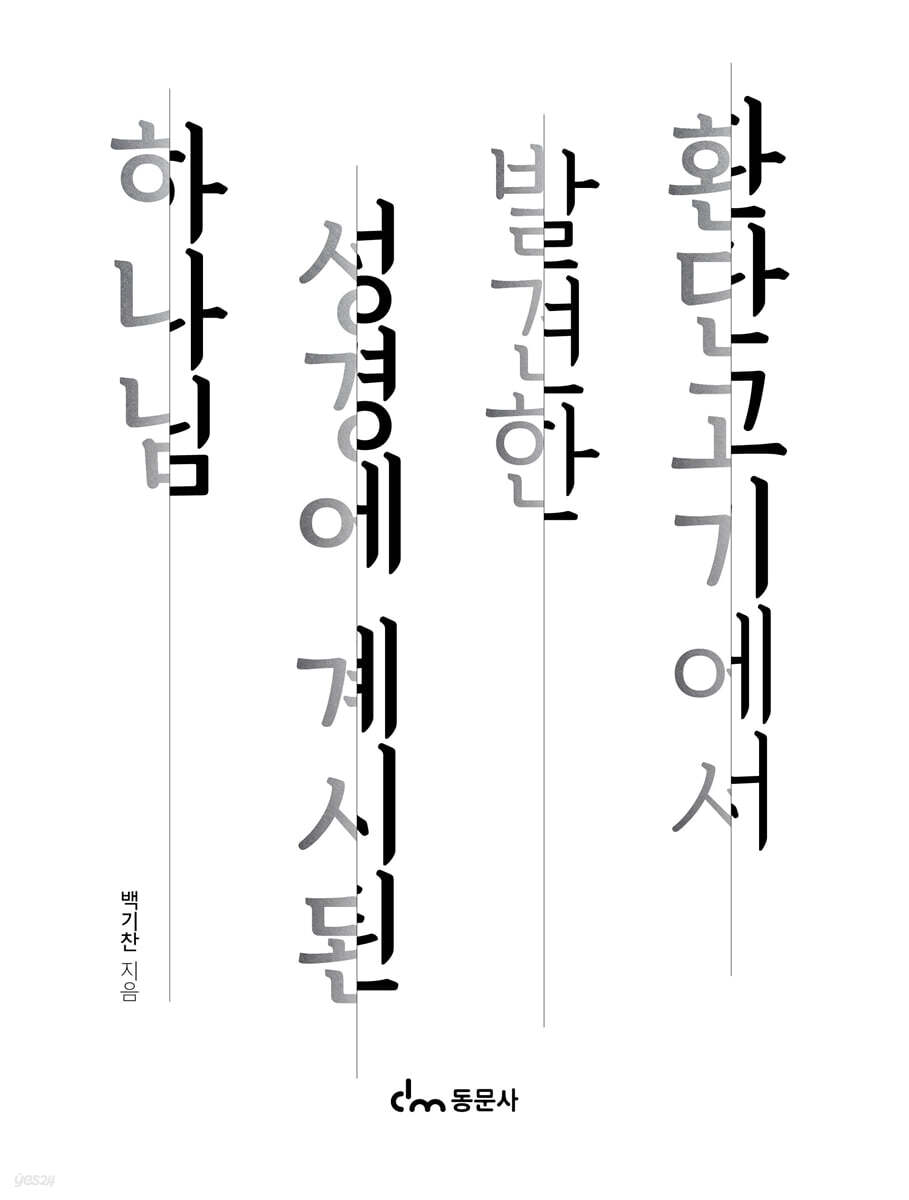
God revealed in the Bible found in Hwandangogi
 |
Description
Book Introduction
The Korean people have believed in the 'Cheonshin' (Heavenly God) since the ancient times, not only in 'Hwan-guk' (桓國), but also in 'Baedal-guk' (倍達國) and 'Gojoseon' (古朝鮮).
The belief in 'Cheonshin' continued to exist in the later 'Northern Buyeo', 'Goguryeo', and 'Balhae'.
'Cheonshin' was called 'Samsin Sangje' (三神上帝), 'Samsinilche Sangje' (三神一體上帝), or in short 'Ilshin' (一神), 'Samsin' (三神), 'Cheonju' (天主), or 'Ilshin' (有一神), which is the same as the Christian Trinity God.
Here, ‘Samsin’ (三神) is a shortened form of ‘Samilsin’ (三一神) and means ‘Trinity God (Sangje).’
And the ‘three gods’ are respectively called ‘the Lord of Creation’, ‘the Lord of Education’, and ‘the Lord of Governing’.
In the book “Taebaek Ilsa (太白逸史)” included in “Hwandan Gogi” which records the history of the Korean people in ancient times and was edited by Yi Maek (李陌, 1455-1528) in the early Joseon Dynasty, there is the following passage: “Self-superior world (자상계), There are three gods (각유삼신), There is one supreme emperor (적일상제), The subject is a god (주체치위일신), Not each is a god (비각유신야), The operation rules are three gods (작합치삼신야).” The translation of the text is “There are three gods in the transcendent eternal world, who are one ‘Sangje’ (上帝).
The subject is ‘one God’, so there are no separate gods, but only the ‘three gods’ in action,” which is exactly in line with the theological view of the orthodox Christian doctrine of the Trinity.
The belief in 'Cheonshin' continued to exist in the later 'Northern Buyeo', 'Goguryeo', and 'Balhae'.
'Cheonshin' was called 'Samsin Sangje' (三神上帝), 'Samsinilche Sangje' (三神一體上帝), or in short 'Ilshin' (一神), 'Samsin' (三神), 'Cheonju' (天主), or 'Ilshin' (有一神), which is the same as the Christian Trinity God.
Here, ‘Samsin’ (三神) is a shortened form of ‘Samilsin’ (三一神) and means ‘Trinity God (Sangje).’
And the ‘three gods’ are respectively called ‘the Lord of Creation’, ‘the Lord of Education’, and ‘the Lord of Governing’.
In the book “Taebaek Ilsa (太白逸史)” included in “Hwandan Gogi” which records the history of the Korean people in ancient times and was edited by Yi Maek (李陌, 1455-1528) in the early Joseon Dynasty, there is the following passage: “Self-superior world (자상계), There are three gods (각유삼신), There is one supreme emperor (적일상제), The subject is a god (주체치위일신), Not each is a god (비각유신야), The operation rules are three gods (작합치삼신야).” The translation of the text is “There are three gods in the transcendent eternal world, who are one ‘Sangje’ (上帝).
The subject is ‘one God’, so there are no separate gods, but only the ‘three gods’ in action,” which is exactly in line with the theological view of the orthodox Christian doctrine of the Trinity.
index
Ⅰ.
introduction
A.
About Hwandangogi
B.
About the origin of mankind
Ⅱ.
A Controversial Study of the Ancient History of the Korean People
A.
The loss of historical data on the ancient history of the Korean people
1.
confiscation of feed
2.
loss of feed
B.
Differences in historical perspectives on the ancient history of the Korean people
1.
The harmful effects of the Samguk Sagi
2.
The harmful effects of Samguk Yusa
C.
Distortion of historical interpretation of the ancient history of the Korean people
1.
China's nationalistic interpretation of history
2.
Japan's nationalistic interpretation of history
Ⅲ.
A Biblical Study of the Ancient History of the Korean People
A.
Religious evolution
1.
Faith in God revealed in the Proto-Gospel discovered in modern times
2.
False God beliefs of religions according to their religious nature
B.
Proto-Gospel
1.
The Protogospel Revealed in the Old Testament
2.
The Proto-Gospel Spread to Early Human Civilizations
3.
The faith in God of the original gospel
syncretism of pagan ancestor worship
4.
Another chosen people, the descendants of Yoktan
Ⅳ.
A Historical Study of the Ancient History of the Korean People
A.
Hwan-guk (桓國)
1.
Politics of the Restoration
2.
Religion of the Hwan-guk
B.
Delivery country
1.
Politics of the delivery country
2.
Religion of the delivery country
C.
The Three Sovereigns and Five Emperors of China
1.
Three Emperors
2.
Five Emperors
D.
Gojoseon (古朝鮮)
1.
Gojoseon politics
2.
Religion of Gojoseon
E.
Chinese dynasties: Xia, Yin, Zhou
1.
Xia Dynasty, a vassal state of Gojoseon
2.
The Yin (殷/商) Dynasty, a vassal state of Gojoseon
3.
The Zhou Dynasty, a vassal state of Gojoseon
4.
His admiration for Confucius's Four Books and Three Classics and the "Land of the Gentleman"
V.
A Theological Study of the Ancient History of the Korean People
A.
≪Cheonbugyeong (Heavenly Talisman Scripture): Johwagyeong (Creation Scripture)≫
1.
Upper scriptures.
The way in which the Trinity exists
2.
Middle scriptures.
The providence of creation by the triune God
3.
Lower Sutra.
The providence of salvation by the triune God
B.
≪Samilsingo (Three Divine Proclamations): The Sutra of Teaching and Education≫
1.
Chapter 1: The Void (Gi-Myo-Ja)
2.
Chapter 2 Monotheism
3.
Chapter 3 Heaven
4.
Chapter 4: The World (Universe)
5.
Chapter 5: People (Wandeok)
C.
≪Sutra on Participation in the War: Sutra on Purification≫
1.
The first principle is sincerity (1st principle).
6 bodies 47 uses
2.
The second principle, Shin (信, 55th story).
5th group, 35th department
3.
The third principle is love (96th chapter).
6th episode, 43rd place
4.
The 4th Gangnyeong (濟, 146th).
Rule 4, 32 patterns
5.
The 5th Gangryong disaster (183rd story).
Article 6, Section 42
6.
The 6th lecture, Bok (福, 232nd lecture).
6 gates, 45 houses
7.
Report No. 7 (No. 284).
6th level, 30th level
8.
The 8th Gangryong (應, 321st).
6 fruits 39 types
Ⅵ.
conclusion
│References
introduction
A.
About Hwandangogi
B.
About the origin of mankind
Ⅱ.
A Controversial Study of the Ancient History of the Korean People
A.
The loss of historical data on the ancient history of the Korean people
1.
confiscation of feed
2.
loss of feed
B.
Differences in historical perspectives on the ancient history of the Korean people
1.
The harmful effects of the Samguk Sagi
2.
The harmful effects of Samguk Yusa
C.
Distortion of historical interpretation of the ancient history of the Korean people
1.
China's nationalistic interpretation of history
2.
Japan's nationalistic interpretation of history
Ⅲ.
A Biblical Study of the Ancient History of the Korean People
A.
Religious evolution
1.
Faith in God revealed in the Proto-Gospel discovered in modern times
2.
False God beliefs of religions according to their religious nature
B.
Proto-Gospel
1.
The Protogospel Revealed in the Old Testament
2.
The Proto-Gospel Spread to Early Human Civilizations
3.
The faith in God of the original gospel
syncretism of pagan ancestor worship
4.
Another chosen people, the descendants of Yoktan
Ⅳ.
A Historical Study of the Ancient History of the Korean People
A.
Hwan-guk (桓國)
1.
Politics of the Restoration
2.
Religion of the Hwan-guk
B.
Delivery country
1.
Politics of the delivery country
2.
Religion of the delivery country
C.
The Three Sovereigns and Five Emperors of China
1.
Three Emperors
2.
Five Emperors
D.
Gojoseon (古朝鮮)
1.
Gojoseon politics
2.
Religion of Gojoseon
E.
Chinese dynasties: Xia, Yin, Zhou
1.
Xia Dynasty, a vassal state of Gojoseon
2.
The Yin (殷/商) Dynasty, a vassal state of Gojoseon
3.
The Zhou Dynasty, a vassal state of Gojoseon
4.
His admiration for Confucius's Four Books and Three Classics and the "Land of the Gentleman"
V.
A Theological Study of the Ancient History of the Korean People
A.
≪Cheonbugyeong (Heavenly Talisman Scripture): Johwagyeong (Creation Scripture)≫
1.
Upper scriptures.
The way in which the Trinity exists
2.
Middle scriptures.
The providence of creation by the triune God
3.
Lower Sutra.
The providence of salvation by the triune God
B.
≪Samilsingo (Three Divine Proclamations): The Sutra of Teaching and Education≫
1.
Chapter 1: The Void (Gi-Myo-Ja)
2.
Chapter 2 Monotheism
3.
Chapter 3 Heaven
4.
Chapter 4: The World (Universe)
5.
Chapter 5: People (Wandeok)
C.
≪Sutra on Participation in the War: Sutra on Purification≫
1.
The first principle is sincerity (1st principle).
6 bodies 47 uses
2.
The second principle, Shin (信, 55th story).
5th group, 35th department
3.
The third principle is love (96th chapter).
6th episode, 43rd place
4.
The 4th Gangnyeong (濟, 146th).
Rule 4, 32 patterns
5.
The 5th Gangryong disaster (183rd story).
Article 6, Section 42
6.
The 6th lecture, Bok (福, 232nd lecture).
6 gates, 45 houses
7.
Report No. 7 (No. 284).
6th level, 30th level
8.
The 8th Gangryong (應, 321st).
6 fruits 39 types
Ⅵ.
conclusion
│References
GOODS SPECIFICS
- Date of issue: October 20, 2025
- Page count, weight, size: 560 pages | 172*227*35mm
- ISBN13: 9791163287186
- ISBN10: 1163287180
You may also like
카테고리
korean


korean

![GQ KOREA Mark (Monthly): December [2025]](http://librairie.coreenne.fr/cdn/shop/files/8ef265dbbfbf186523ed75ba7319009d.jpg?v=1765340328&width=3840)


