

History of War
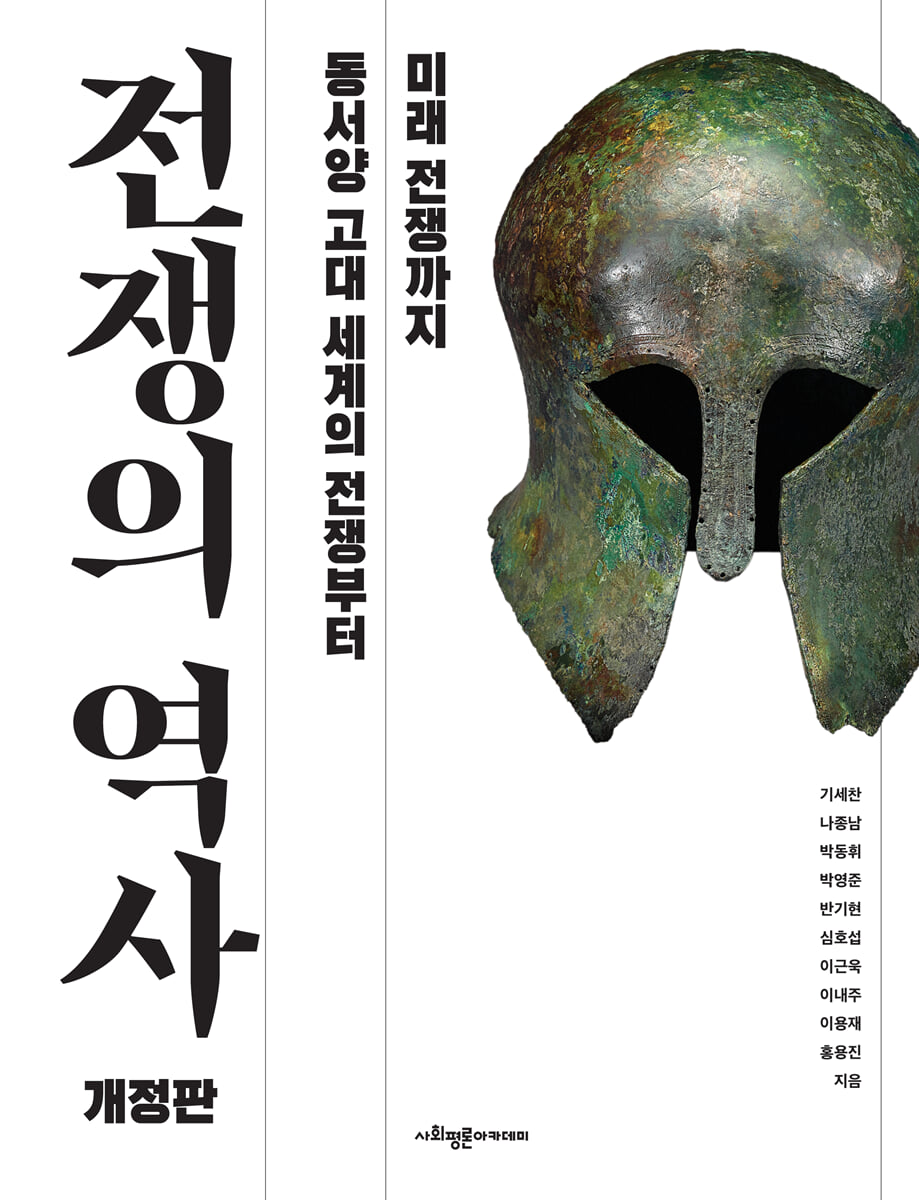 |
Description
Book Introduction
A grand epic of 5,000 years of human civilization, compiled from a new, human-centered perspective.
There is a French word called 'Belle Époque'.
It refers to the 'good times (pacific era)' from the late 19th century to the 15 years before the outbreak of World War I.
Will Durant, an American philosopher and historian, analyzed in his book, “The Lessons of History,” that out of the 3,421 years recorded in history, there were only 268 years without war, or 7.8% of the total.
It would be no exaggeration to say that the history of mankind is the history of war.
『A History of War』 is a compilation of the history of war and military affairs in the East and the West from the 30th century BC to the 21st century AD.
This book, under the perspective that “war is a universal activity resulting from the interaction of human communities,” describes various historical elements, including humans and society experiencing war, war and culture, and the impact of war on society.
In this respect, it contrasts with war history books that simply describe war in terms of armies and military strategies and tactics.
Many wars have evolved based on military innovations, such as the use of gunpowder and the development of new weapons. However, as seen in the wars in Ukraine and the Gaza Strip, simply increasing military efficiency is not enough to solve the constantly changing problems of war.
This is because war, which occurs in a space where the wills of living humans confront each other, is constantly changing, and predicting such changes is virtually impossible.
"A History of War" examines the changing nature of warfare over time, making it an engaging read for any reader interested in history, and through this, provides an understanding of the flow of warfare that permeates the ages.
There is a French word called 'Belle Époque'.
It refers to the 'good times (pacific era)' from the late 19th century to the 15 years before the outbreak of World War I.
Will Durant, an American philosopher and historian, analyzed in his book, “The Lessons of History,” that out of the 3,421 years recorded in history, there were only 268 years without war, or 7.8% of the total.
It would be no exaggeration to say that the history of mankind is the history of war.
『A History of War』 is a compilation of the history of war and military affairs in the East and the West from the 30th century BC to the 21st century AD.
This book, under the perspective that “war is a universal activity resulting from the interaction of human communities,” describes various historical elements, including humans and society experiencing war, war and culture, and the impact of war on society.
In this respect, it contrasts with war history books that simply describe war in terms of armies and military strategies and tactics.
Many wars have evolved based on military innovations, such as the use of gunpowder and the development of new weapons. However, as seen in the wars in Ukraine and the Gaza Strip, simply increasing military efficiency is not enough to solve the constantly changing problems of war.
This is because war, which occurs in a space where the wills of living humans confront each other, is constantly changing, and predicting such changes is virtually impossible.
"A History of War" examines the changing nature of warfare over time, making it an engaging read for any reader interested in history, and through this, provides an understanding of the flow of warfare that permeates the ages.
- You can preview some of the book's contents.
Preview
index
index
introduction
Chapter 1: Wars in the Ancient Western World (30th century BC–5th century AD)
Ⅰ.
Overview of the Ancient Western World
Ⅱ.
The changing nature of war and its driving forces
Ⅲ.
Representative wars of the ancient West
1.
Egyptian-Hittite Wars: Battle of Kadesh (c. 1275 BC)
2.
Persian Wars (490 BC–479 BC)
3.
Peloponnesian War (431 BC–404 BC)
4.
Alexander's Wars (334 BC–324 BC)
5.
Punic Wars (264 BC–146 BC)
6.
Parthian/Persian Wars and Strategy
Chapter 2: Wars in the Western Medieval World (5th–15th centuries AD)
Ⅰ.
Overview of the Western Medieval World
Ⅱ.
The changing nature of war and its driving forces
Ⅲ.
Representative wars of the medieval West
1.
Frankish vs. Umayyad Wars: Battle of Tours (732)
2.
Norman vs. Anglo-Saxon Wars: Battle of Hastings (1066)
3.
Crusades (late 11th century–13th century)
4.
Hundred Years' War (1337–1453)
Chapter 3: Warfare in the Ancient and Medieval East (7th century BC–13th century AD)
Ⅰ.
Wars of the Spring and Autumn Period and Warring States Period
1.
Military system of the state
2.
Battle of Seongbok
3.
Jin's War of Unification
Ⅱ.
Han-Xiongnu War
1.
Background of the war
2.
Han's military system
3.
Course of the war
Ⅲ.
The Party's foreign war
1.
The founding of the party
2.
The party's military system
3.
Party territorial expansion
Ⅳ.
War between Song and Liao (Khitan)
1.
Background of the war
2.
Song and Liao armies
3.
Course of the war
V.
The Mongol Empire's wars of conquest
1.
Genghis Khan and the Establishment of the Mongol Empire
2.
Organization and training of the Mongolian army
3.
Khorezm Expedition
4.
European expedition
Chapter 4: The Age of Gunpowder Wars and the Transformation of Europe (1500–1720)
Ⅰ.
16th-century Europe, the Renaissance and the Wars of Religion
1.
From war to war
2.
The Gunpowder Revolution and the Transformation of War
3.
War of the Mercenaries
4.
Growth in England and the Netherlands
[Case Study] The Military Revolution in Early Modern Europe
Ⅱ.
17th-century Europe: Absolutism and Dynastic Wars
1.
Thirty Years' War
2.
The Rise of Sweden: Gustav Adolf, the "Lion of the North"
[Case Study] Battle of Breitenfeld
3.
Hegemony of the Sea: The Anglo-Dutch Wars (1652–1674)
4.
The Rise of France and the Era of Standing Armies
Chapter 5: The Age of War and Revolution (1720–1815)
Ⅰ.
The turmoil of 18th-century Europe
1.
The Balance of Power in Europe and the Rise of Prussia
2.
The era of line infantry
[Case Study] Battle of Fontenoy
Ⅱ.
An epic of revolution and war
1.
American Revolutionary War
2.
French Revolutionary Wars
3.
Napoleonic Wars
4.
The fall of Napoleon's empire
[Case Study] The Battle of Waterloo as Seen by Jomini
Chapter 6: Wars in the Industrial Age (1815–1914)
Ⅰ.
Overview of 19th-century Europe
Ⅱ.
The changing nature of war and its driving forces
1.
The Way of War: The Software Aspects of War
2.
The Means of War: The Hardware Aspects of War
Ⅲ.
Representative battle
1.
Crimean War (Battle of Sevastopol)
2.
American Civil War (Battle of Gettysburg)
3.
Franco-Prussian War (Battle of Sedan)
4.
Case of Imperialist War (Battle of Omdurman)
Ⅳ.
The historical significance of war in the 19th century
Chapter 7: Wars in East Asia (since the 16th century)
Ⅰ.
Changes in the military systems and international order of East Asian countries
Ⅱ.
Imjin War
1.
Toyotomi Hideyoshi's plan to invade the continent
2.
Early situation of the war
3.
Joseon's counterattack and the dispatch of Ming reinforcements
4.
Strengthening the push for reinforcement and long-term warfare posture
5.
The Imjin War and Ganghwa
Ⅲ.
The Byeongja Horan and the Jeongmyo Horan
1.
The rise of the Jurchen (Manchu) people and Gwanghaegun's diplomacy
2.
King Injo's shift in anti-Qin policy and the Byeongjahoran (Manchu invasion of Korea)
3.
Byeongja Horan
Ⅳ.
Sino-Japanese War
1.
Background and Causes
2.
Initial course
3.
Limits of War and the Treaty of Shimonoseki
V.
Russo-Japanese War
1.
Background and Causes
2.
Early war situation
3.
Battle of Fengtian and Battle of Tsushima
4.
Treaty of Portsmouth
Chapter 8: World War I (1914–1918)
Ⅰ.
Background and outbreak of war
Ⅱ.
Opening and early battles
1.
Border battles
2.
The situation on the Eastern Front
Ⅲ.
War situation in 1915-1916
1.
Prolonged war
2.
Battle of Verdun
3.
Battle of Somme
Ⅳ.
The situation and the end of the war in 1917-1918
1.
American entry into the war and the failure of the Nivelle Offensive
2.
The road to the end
[Case Study] Naval Battles during World War I
[Case Study] Air Combat in World War I
V.
The impact of war
Chapter 9: World War II (1939–1945)
Ⅰ.
The Rise of the Axis Powers and the Road to War
Ⅱ.
Axis Offensive and Allied Crisis (1940–1941)
1.
The German Offensive and the Fall of France
2.
The British crisis and the German invasion of the Soviet Union
3.
Japan's offensive and America's entry into the war
Ⅲ.
Reversal of fortunes (1942-1943)
1.
The North African Campaign and the German-Soviet War
2.
The turning point of the Pacific War
Ⅳ.
Allied offensive and Axis surrender (1943–1945)
1.
Allied counteroffensive on the European front
2.
The Soviet advance and the fall of Berlin
3.
The American offensive and Japan's defeat
V.
Factors in the Allied Victory and the Significance of World War II
Chapter 10: Wars of the Cold War (1946–1989)
Ⅰ.
Formation of a hostile bipolar system
1.
The dawn of the Cold War
2.
The entrenched bipolar system
Ⅱ.
The emergence of nuclear weapons and the arms race
1.
Cold War confrontation between the United States and the Soviet Union
2.
The international community's response to nuclear deterrence
Ⅲ.
The Cold War and the Korean War in Asia
1.
Communism in mainland China
2.
Korean War
Ⅳ.
Decolonization of Asia and the Vietnam War
1.
Changes in US policy toward Southeast Asia
2.
Vietnam War
3.
Cold War in the Middle East
V.
Peaceful coexistence, détente, and escalating crisis
Ⅵ.
The collapse of the Cold War
Chapter 11: Wars of the Post-Cold War (Afghanistan and Iraq, Donbas and Crimea)
Ⅰ.
The end of the Cold War and the rise and fall of the unipolar system
Ⅱ.
Changes in War and Post-Cold War Military Facilities
1.
The ICT revolution in its early stages
2.
Low-level provocation and use of military force
Ⅲ.
America's war in Afghanistan
1.
9/11 terrorist attacks and the invasion of Afghanistan
2.
The failure of Afghan nation-building
3.
Obama's war in Afghanistan
4.
Poppies, Opium, and the Drug War
5.
Trump's war in Afghanistan
6.
Biden's Complete Withdrawal and the Fall of Kabul
Ⅳ.
America's war in Iraq
1.
The Iraq invasion and its initial chaos
2.
Nation-building and sectarian civil war
3.
The Arab Spring and the Rise of ISIS
V.
Russia's invasion of Donbas and Crimea
1.
Putin's regime and Russia's foreign expansion
2.
low-intensity invasion of Crimea
3.
Donbas War
4.
Russia's threat of invasion of Ukraine
Ⅵ.
Conclusion: The Meaning of Post-Cold War War
Chapter 12: 21st Century War and Future War (Cyber, Robots (Drones), AI)
Ⅰ.
The Fourth Industrial Revolution and War
Ⅱ.
cyber warfare
1.
The Birth of Cyberspace
2.
Understanding Cyber Warfare
3.
Major cyber warfare cases
[Case Study] The 2022 Russia-Ukraine War and Cyberwar
Ⅲ.
Robot and drone warfare
1.
The Etymology and Modern Meaning of Robot
2.
Robots on the Battlefield: Unmanned Vehicles (UVs)
3.
2020 Nagorno-Karabakh War
Ⅳ.
Artificial Intelligence (AI) and Future Warfare
1.
History and Understanding of Artificial Intelligence
2.
Military Use of Artificial Intelligence
V.
Conclusion
Search
About the writers
introduction
Chapter 1: Wars in the Ancient Western World (30th century BC–5th century AD)
Ⅰ.
Overview of the Ancient Western World
Ⅱ.
The changing nature of war and its driving forces
Ⅲ.
Representative wars of the ancient West
1.
Egyptian-Hittite Wars: Battle of Kadesh (c. 1275 BC)
2.
Persian Wars (490 BC–479 BC)
3.
Peloponnesian War (431 BC–404 BC)
4.
Alexander's Wars (334 BC–324 BC)
5.
Punic Wars (264 BC–146 BC)
6.
Parthian/Persian Wars and Strategy
Chapter 2: Wars in the Western Medieval World (5th–15th centuries AD)
Ⅰ.
Overview of the Western Medieval World
Ⅱ.
The changing nature of war and its driving forces
Ⅲ.
Representative wars of the medieval West
1.
Frankish vs. Umayyad Wars: Battle of Tours (732)
2.
Norman vs. Anglo-Saxon Wars: Battle of Hastings (1066)
3.
Crusades (late 11th century–13th century)
4.
Hundred Years' War (1337–1453)
Chapter 3: Warfare in the Ancient and Medieval East (7th century BC–13th century AD)
Ⅰ.
Wars of the Spring and Autumn Period and Warring States Period
1.
Military system of the state
2.
Battle of Seongbok
3.
Jin's War of Unification
Ⅱ.
Han-Xiongnu War
1.
Background of the war
2.
Han's military system
3.
Course of the war
Ⅲ.
The Party's foreign war
1.
The founding of the party
2.
The party's military system
3.
Party territorial expansion
Ⅳ.
War between Song and Liao (Khitan)
1.
Background of the war
2.
Song and Liao armies
3.
Course of the war
V.
The Mongol Empire's wars of conquest
1.
Genghis Khan and the Establishment of the Mongol Empire
2.
Organization and training of the Mongolian army
3.
Khorezm Expedition
4.
European expedition
Chapter 4: The Age of Gunpowder Wars and the Transformation of Europe (1500–1720)
Ⅰ.
16th-century Europe, the Renaissance and the Wars of Religion
1.
From war to war
2.
The Gunpowder Revolution and the Transformation of War
3.
War of the Mercenaries
4.
Growth in England and the Netherlands
[Case Study] The Military Revolution in Early Modern Europe
Ⅱ.
17th-century Europe: Absolutism and Dynastic Wars
1.
Thirty Years' War
2.
The Rise of Sweden: Gustav Adolf, the "Lion of the North"
[Case Study] Battle of Breitenfeld
3.
Hegemony of the Sea: The Anglo-Dutch Wars (1652–1674)
4.
The Rise of France and the Era of Standing Armies
Chapter 5: The Age of War and Revolution (1720–1815)
Ⅰ.
The turmoil of 18th-century Europe
1.
The Balance of Power in Europe and the Rise of Prussia
2.
The era of line infantry
[Case Study] Battle of Fontenoy
Ⅱ.
An epic of revolution and war
1.
American Revolutionary War
2.
French Revolutionary Wars
3.
Napoleonic Wars
4.
The fall of Napoleon's empire
[Case Study] The Battle of Waterloo as Seen by Jomini
Chapter 6: Wars in the Industrial Age (1815–1914)
Ⅰ.
Overview of 19th-century Europe
Ⅱ.
The changing nature of war and its driving forces
1.
The Way of War: The Software Aspects of War
2.
The Means of War: The Hardware Aspects of War
Ⅲ.
Representative battle
1.
Crimean War (Battle of Sevastopol)
2.
American Civil War (Battle of Gettysburg)
3.
Franco-Prussian War (Battle of Sedan)
4.
Case of Imperialist War (Battle of Omdurman)
Ⅳ.
The historical significance of war in the 19th century
Chapter 7: Wars in East Asia (since the 16th century)
Ⅰ.
Changes in the military systems and international order of East Asian countries
Ⅱ.
Imjin War
1.
Toyotomi Hideyoshi's plan to invade the continent
2.
Early situation of the war
3.
Joseon's counterattack and the dispatch of Ming reinforcements
4.
Strengthening the push for reinforcement and long-term warfare posture
5.
The Imjin War and Ganghwa
Ⅲ.
The Byeongja Horan and the Jeongmyo Horan
1.
The rise of the Jurchen (Manchu) people and Gwanghaegun's diplomacy
2.
King Injo's shift in anti-Qin policy and the Byeongjahoran (Manchu invasion of Korea)
3.
Byeongja Horan
Ⅳ.
Sino-Japanese War
1.
Background and Causes
2.
Initial course
3.
Limits of War and the Treaty of Shimonoseki
V.
Russo-Japanese War
1.
Background and Causes
2.
Early war situation
3.
Battle of Fengtian and Battle of Tsushima
4.
Treaty of Portsmouth
Chapter 8: World War I (1914–1918)
Ⅰ.
Background and outbreak of war
Ⅱ.
Opening and early battles
1.
Border battles
2.
The situation on the Eastern Front
Ⅲ.
War situation in 1915-1916
1.
Prolonged war
2.
Battle of Verdun
3.
Battle of Somme
Ⅳ.
The situation and the end of the war in 1917-1918
1.
American entry into the war and the failure of the Nivelle Offensive
2.
The road to the end
[Case Study] Naval Battles during World War I
[Case Study] Air Combat in World War I
V.
The impact of war
Chapter 9: World War II (1939–1945)
Ⅰ.
The Rise of the Axis Powers and the Road to War
Ⅱ.
Axis Offensive and Allied Crisis (1940–1941)
1.
The German Offensive and the Fall of France
2.
The British crisis and the German invasion of the Soviet Union
3.
Japan's offensive and America's entry into the war
Ⅲ.
Reversal of fortunes (1942-1943)
1.
The North African Campaign and the German-Soviet War
2.
The turning point of the Pacific War
Ⅳ.
Allied offensive and Axis surrender (1943–1945)
1.
Allied counteroffensive on the European front
2.
The Soviet advance and the fall of Berlin
3.
The American offensive and Japan's defeat
V.
Factors in the Allied Victory and the Significance of World War II
Chapter 10: Wars of the Cold War (1946–1989)
Ⅰ.
Formation of a hostile bipolar system
1.
The dawn of the Cold War
2.
The entrenched bipolar system
Ⅱ.
The emergence of nuclear weapons and the arms race
1.
Cold War confrontation between the United States and the Soviet Union
2.
The international community's response to nuclear deterrence
Ⅲ.
The Cold War and the Korean War in Asia
1.
Communism in mainland China
2.
Korean War
Ⅳ.
Decolonization of Asia and the Vietnam War
1.
Changes in US policy toward Southeast Asia
2.
Vietnam War
3.
Cold War in the Middle East
V.
Peaceful coexistence, détente, and escalating crisis
Ⅵ.
The collapse of the Cold War
Chapter 11: Wars of the Post-Cold War (Afghanistan and Iraq, Donbas and Crimea)
Ⅰ.
The end of the Cold War and the rise and fall of the unipolar system
Ⅱ.
Changes in War and Post-Cold War Military Facilities
1.
The ICT revolution in its early stages
2.
Low-level provocation and use of military force
Ⅲ.
America's war in Afghanistan
1.
9/11 terrorist attacks and the invasion of Afghanistan
2.
The failure of Afghan nation-building
3.
Obama's war in Afghanistan
4.
Poppies, Opium, and the Drug War
5.
Trump's war in Afghanistan
6.
Biden's Complete Withdrawal and the Fall of Kabul
Ⅳ.
America's war in Iraq
1.
The Iraq invasion and its initial chaos
2.
Nation-building and sectarian civil war
3.
The Arab Spring and the Rise of ISIS
V.
Russia's invasion of Donbas and Crimea
1.
Putin's regime and Russia's foreign expansion
2.
low-intensity invasion of Crimea
3.
Donbas War
4.
Russia's threat of invasion of Ukraine
Ⅵ.
Conclusion: The Meaning of Post-Cold War War
Chapter 12: 21st Century War and Future War (Cyber, Robots (Drones), AI)
Ⅰ.
The Fourth Industrial Revolution and War
Ⅱ.
cyber warfare
1.
The Birth of Cyberspace
2.
Understanding Cyber Warfare
3.
Major cyber warfare cases
[Case Study] The 2022 Russia-Ukraine War and Cyberwar
Ⅲ.
Robot and drone warfare
1.
The Etymology and Modern Meaning of Robot
2.
Robots on the Battlefield: Unmanned Vehicles (UVs)
3.
2020 Nagorno-Karabakh War
Ⅳ.
Artificial Intelligence (AI) and Future Warfare
1.
History and Understanding of Artificial Intelligence
2.
Military Use of Artificial Intelligence
V.
Conclusion
Search
About the writers
Into the book
The war had a tremendous impact on social change, and conversely, the changed social landscape also changed the paradigm of war.
Throughout antiquity, warfare gradually evolved from a ritualistic act in which a small group of warriors (a privileged class) determined victory or defeat, to a practical armed action centered on a large number of citizen soldiers.
As wars became more frequent and larger in scale, the cooperation of the common people became more urgent, and it became increasingly difficult to encourage their participation in the war simply for the sake of community safety.
Therefore, it was only natural that citizens, who had fulfilled their responsibilities through participation in the war and increased taxation due to their income levels, would demand that the privileged class share political power.
--- p.32 From “Chapter 1_War in the Ancient Western World”
The Hundred Years' War sowed the seeds of a permanent state of war in Europe.
In the long run, it can be said that in Europe, international wars involving alliances and alliances between various countries continued for approximately 600 years from 1337 to 1945.
Even if we consider the revolutionary era of the 19th century and the two world wars of the 20th century separately, this concentration and accumulation of violence, and the chain reaction of war begetting war, continued at least until the end of the Napoleonic Wars in 1815.
In this situation, European countries developed into war-oriented states, and taxes were levied to prepare for constant war.
A representative system was generally established to discuss the validity of the purpose of this taxation, but in France, which found this cumbersome and developed a bureaucracy, an absolute monarchy was also established.
--- p.116 From “Chapter 2_War in the Western Medieval World”
The defeat of the Hungarian allies sent fear through Europe.
There was now no army in Europe that could stop the Mongols.
However, the Mongol army did not continue to advance, but suddenly retreated to Karakorum, the capital of the Mongol Empire.
At that time, the Mongol emperor Ogedei had died, and Batu and Subutai, who were leading the expeditionary force, had to attend the kurultai to elect the khan of the empire.
This marked the end of the Mongol expedition to Europe.
Europe barely survived.
The Mongols waged wars of conquest across Eurasia, building an empire of unprecedented scale.
Its territory extended from the East Sea to the Mediterranean Sea and the Carpathian Mountains, and at its peak it had an army of over a million men.
The Mongol army was able to win successive wars because it practically adapted the tactics of the steppe to new tactics, weapons, and new forms of warfare.
--- p.169 From “Chapter 3_War in the Ancient and Medieval East”
In this way, the fighting power of infantry, which combined 'spears and rifles', began to replace the cavalry's military exploits that had characterized the Hundred Years' War in the Middle Ages.
The musketeers launched a preemptive attack on the enemy cavalry, while the pikemen, armed with pikes 3 to 7.5 meters long, protected the musketeers from the cavalry's charge and rushed into the enemy lines to engage in close combat.
When Charles VIII of France invaded Italy in 1498, half of his army was cavalry.
But when Francis I invaded Italy in 1524, only 20% of his soldiers were on horseback.
By 1700, most European armies were composed of about 75% infantry and 25% cavalry.
--- p.183 From “Chapter 4_The Age of Gunpowder Wars and Changes in Europe”
The most striking thing about 18th-century infantry combat was the complete disappearance of pikemen.
This was a representative change brought about by the improvement of the personal firearm, the musket.
Until the 17th century, muskets used matchlock triggers, which were slow and cumbersome to load and fire.
However, in the 18th century, a hand-fired musket that detonated gunpowder by sparks generated by friction between flint and steel was invented, replacing the matchlock musket.
The hand-fired musket was still loaded by a muzzle-loader, but it was capable of firing a volley with a simple firing process.
Moreover, the invention of the ring bayonet, which was a method of attaching the bayonet ring to the barrel, made it possible to fire even with the bayonet attached.
The ring bayonet allowed all infantry to become spearmen, and spears completely disappeared from the battlefield.
The era of 'pikes and muskets' has disappeared into the back alleys of history, and the era of 'bayonet infantry' has arrived.
--- p.225-226 From “Chapter 5_The Age of War and Revolution”
Rail transport, in itself harmless, gradually came to have a significant impact on the conduct of war in the late 19th century.
This is because the railroad greatly changed the time element, especially among the three strategic elements of time, space, and power, by allowing for the rapid movement of large numbers of troops and military supplies to the battlefield.
Germany, which was one step ahead of this trend, continuously improved and repeatedly mastered its mobilization methods, and by the early 20th century, it had reached a level where it could conduct large-scale battles within two weeks of mobilization.
The conditions were ripe for the so-called 'railway timetable' war to break out.
Right at the center of it all was the German military's operational plan, the Schlieffen Plan.
An ominous atmosphere hung over continental Europe in the early 20th century, as if everyone was secretly hoping someone would light a powder keg.
--- p.277 From “Chapter 6_War in the Industrial Age”
After Won Gyun died, Yi Sun-sin, who was reappointed as the commander of the three provinces' naval forces, gathered the remaining 13 ships and fought the Battle of Myeongnyang against the Japanese navy on September 16th with the spirit of 'Ilbu Danggyeong Jokgu Cheonbu', meaning 'If one man guards the pass, he can make a thousand enemies fear'.
Japan faced Yi Sun-sin's fleet with more than ten times the number of ships, but was ultimately defeated, with Kurushima Michifusa and others killed.
As a result, the Japanese navy's plan to support the Japanese army advancing from the seas of Jeolla-do and Chungcheong-do to the land was frustrated, and they retreated toward Ungcheon.
--- p.323 From “Chapter 7_War in East Asia”
In June 1941, Germany invaded the Soviet Union.
Failing to subdue Britain and expanding its influence into North Africa, why did Germany invade the Soviet Union, breaking its non-aggression pact? Germany sought to avoid a two-front war, a traditional strategic weakness.
Therefore, the Soviet Union had to be defeated before Britain could regain its strength and the United States could enter the war in earnest.
Paradoxically, it was the stronger-than-expected British resistance and the anticipated American entry into the war that accelerated the war with the Soviet Union.
Moreover, Germany needed the resources of the areas occupied by the Soviet Union to wage a long-term total war.
As Hitler mentioned in his book Mein Kampf, Ukraine's food, the Urals' mineral resources, the Caucasus' oil fields, and Siberia's forest resources were essential for Germany's war effort.
--- p.420 From “Chapter 9_World War II”
The changes in the international situation brought about by the Korean War were dramatic.
The U.S. government significantly increased defense spending, which had plummeted since the end of World War II, strengthened NATO's military capabilities, and accelerated the reconstruction of West Germany.
In Asia, the Korean War postponed China's attack on Taiwan, but it further strengthened Mao Zedong's position in China.
Finally, this war, which fiercely fought on the Korean Peninsula for three years, has had a significant impact on the Cold War, the post-Cold War era, and even today, as we enter a new Cold War era.
The two countries, divided into South and North Korea, viewed each other with hostility throughout the Cold War, and in the post-Cold War era, they attempted to build trust through several summits, but achieved no notable results.
Furthermore, military tensions on the Korean Peninsula and in neighboring countries have been rising due to North Korea's nuclear weapons development and threats since the early 1990s.
--- p.484 From “Chapter 10_War in the Cold War”
From a long-term perspective, especially from the perspective of a unipolar world centered on the United States, the post-Cold War wars will be remembered as wars that depleted the political, economic, and military capabilities of the sole superpower, the United States.
The United States enjoyed sole superpower status in a unipolar world in 2001, but now, in 2021, it faces a formidable challenge from China and has failed to secure adequate returns for its efforts over the past two decades with its withdrawal from Afghanistan.
Russia's invasion of Ukraine, which began in late February 2022, further complicated the situation.
The most important political significance of the post-Cold War era was probably the fact that it brought an end to the US-centered unipolar system sooner than expected.
--- p.552 From “Chapter 11_War in the Post-Cold War Period”
Space warfare, once seen only in science fiction movies, has now become a real security threat.
Space warfare encompasses anything from wars between actors located in space to armed conflicts between space and the ground.
That is, combat between space and the Earth includes actions such as striking terrestrial targets from satellites orbiting the Earth and destroying satellites in space with terrestrial weapons.
Despite current international treaties restricting the deployment and use of weapons of mass destruction, including nuclear weapons, in space, countries are actively developing and testing weapons for space warfare, cleverly circumventing the treaties.
Additionally, major countries with advanced space science and technology, such as the United States, Russia, and India, have long established and are operating specialized organizations and units responsible for space warfare.
South Korea is also working to address future security threats by developing the capability to independently launch satellites and creating an organization within the military dedicated to space warfare.
Throughout antiquity, warfare gradually evolved from a ritualistic act in which a small group of warriors (a privileged class) determined victory or defeat, to a practical armed action centered on a large number of citizen soldiers.
As wars became more frequent and larger in scale, the cooperation of the common people became more urgent, and it became increasingly difficult to encourage their participation in the war simply for the sake of community safety.
Therefore, it was only natural that citizens, who had fulfilled their responsibilities through participation in the war and increased taxation due to their income levels, would demand that the privileged class share political power.
--- p.32 From “Chapter 1_War in the Ancient Western World”
The Hundred Years' War sowed the seeds of a permanent state of war in Europe.
In the long run, it can be said that in Europe, international wars involving alliances and alliances between various countries continued for approximately 600 years from 1337 to 1945.
Even if we consider the revolutionary era of the 19th century and the two world wars of the 20th century separately, this concentration and accumulation of violence, and the chain reaction of war begetting war, continued at least until the end of the Napoleonic Wars in 1815.
In this situation, European countries developed into war-oriented states, and taxes were levied to prepare for constant war.
A representative system was generally established to discuss the validity of the purpose of this taxation, but in France, which found this cumbersome and developed a bureaucracy, an absolute monarchy was also established.
--- p.116 From “Chapter 2_War in the Western Medieval World”
The defeat of the Hungarian allies sent fear through Europe.
There was now no army in Europe that could stop the Mongols.
However, the Mongol army did not continue to advance, but suddenly retreated to Karakorum, the capital of the Mongol Empire.
At that time, the Mongol emperor Ogedei had died, and Batu and Subutai, who were leading the expeditionary force, had to attend the kurultai to elect the khan of the empire.
This marked the end of the Mongol expedition to Europe.
Europe barely survived.
The Mongols waged wars of conquest across Eurasia, building an empire of unprecedented scale.
Its territory extended from the East Sea to the Mediterranean Sea and the Carpathian Mountains, and at its peak it had an army of over a million men.
The Mongol army was able to win successive wars because it practically adapted the tactics of the steppe to new tactics, weapons, and new forms of warfare.
--- p.169 From “Chapter 3_War in the Ancient and Medieval East”
In this way, the fighting power of infantry, which combined 'spears and rifles', began to replace the cavalry's military exploits that had characterized the Hundred Years' War in the Middle Ages.
The musketeers launched a preemptive attack on the enemy cavalry, while the pikemen, armed with pikes 3 to 7.5 meters long, protected the musketeers from the cavalry's charge and rushed into the enemy lines to engage in close combat.
When Charles VIII of France invaded Italy in 1498, half of his army was cavalry.
But when Francis I invaded Italy in 1524, only 20% of his soldiers were on horseback.
By 1700, most European armies were composed of about 75% infantry and 25% cavalry.
--- p.183 From “Chapter 4_The Age of Gunpowder Wars and Changes in Europe”
The most striking thing about 18th-century infantry combat was the complete disappearance of pikemen.
This was a representative change brought about by the improvement of the personal firearm, the musket.
Until the 17th century, muskets used matchlock triggers, which were slow and cumbersome to load and fire.
However, in the 18th century, a hand-fired musket that detonated gunpowder by sparks generated by friction between flint and steel was invented, replacing the matchlock musket.
The hand-fired musket was still loaded by a muzzle-loader, but it was capable of firing a volley with a simple firing process.
Moreover, the invention of the ring bayonet, which was a method of attaching the bayonet ring to the barrel, made it possible to fire even with the bayonet attached.
The ring bayonet allowed all infantry to become spearmen, and spears completely disappeared from the battlefield.
The era of 'pikes and muskets' has disappeared into the back alleys of history, and the era of 'bayonet infantry' has arrived.
--- p.225-226 From “Chapter 5_The Age of War and Revolution”
Rail transport, in itself harmless, gradually came to have a significant impact on the conduct of war in the late 19th century.
This is because the railroad greatly changed the time element, especially among the three strategic elements of time, space, and power, by allowing for the rapid movement of large numbers of troops and military supplies to the battlefield.
Germany, which was one step ahead of this trend, continuously improved and repeatedly mastered its mobilization methods, and by the early 20th century, it had reached a level where it could conduct large-scale battles within two weeks of mobilization.
The conditions were ripe for the so-called 'railway timetable' war to break out.
Right at the center of it all was the German military's operational plan, the Schlieffen Plan.
An ominous atmosphere hung over continental Europe in the early 20th century, as if everyone was secretly hoping someone would light a powder keg.
--- p.277 From “Chapter 6_War in the Industrial Age”
After Won Gyun died, Yi Sun-sin, who was reappointed as the commander of the three provinces' naval forces, gathered the remaining 13 ships and fought the Battle of Myeongnyang against the Japanese navy on September 16th with the spirit of 'Ilbu Danggyeong Jokgu Cheonbu', meaning 'If one man guards the pass, he can make a thousand enemies fear'.
Japan faced Yi Sun-sin's fleet with more than ten times the number of ships, but was ultimately defeated, with Kurushima Michifusa and others killed.
As a result, the Japanese navy's plan to support the Japanese army advancing from the seas of Jeolla-do and Chungcheong-do to the land was frustrated, and they retreated toward Ungcheon.
--- p.323 From “Chapter 7_War in East Asia”
In June 1941, Germany invaded the Soviet Union.
Failing to subdue Britain and expanding its influence into North Africa, why did Germany invade the Soviet Union, breaking its non-aggression pact? Germany sought to avoid a two-front war, a traditional strategic weakness.
Therefore, the Soviet Union had to be defeated before Britain could regain its strength and the United States could enter the war in earnest.
Paradoxically, it was the stronger-than-expected British resistance and the anticipated American entry into the war that accelerated the war with the Soviet Union.
Moreover, Germany needed the resources of the areas occupied by the Soviet Union to wage a long-term total war.
As Hitler mentioned in his book Mein Kampf, Ukraine's food, the Urals' mineral resources, the Caucasus' oil fields, and Siberia's forest resources were essential for Germany's war effort.
--- p.420 From “Chapter 9_World War II”
The changes in the international situation brought about by the Korean War were dramatic.
The U.S. government significantly increased defense spending, which had plummeted since the end of World War II, strengthened NATO's military capabilities, and accelerated the reconstruction of West Germany.
In Asia, the Korean War postponed China's attack on Taiwan, but it further strengthened Mao Zedong's position in China.
Finally, this war, which fiercely fought on the Korean Peninsula for three years, has had a significant impact on the Cold War, the post-Cold War era, and even today, as we enter a new Cold War era.
The two countries, divided into South and North Korea, viewed each other with hostility throughout the Cold War, and in the post-Cold War era, they attempted to build trust through several summits, but achieved no notable results.
Furthermore, military tensions on the Korean Peninsula and in neighboring countries have been rising due to North Korea's nuclear weapons development and threats since the early 1990s.
--- p.484 From “Chapter 10_War in the Cold War”
From a long-term perspective, especially from the perspective of a unipolar world centered on the United States, the post-Cold War wars will be remembered as wars that depleted the political, economic, and military capabilities of the sole superpower, the United States.
The United States enjoyed sole superpower status in a unipolar world in 2001, but now, in 2021, it faces a formidable challenge from China and has failed to secure adequate returns for its efforts over the past two decades with its withdrawal from Afghanistan.
Russia's invasion of Ukraine, which began in late February 2022, further complicated the situation.
The most important political significance of the post-Cold War era was probably the fact that it brought an end to the US-centered unipolar system sooner than expected.
--- p.552 From “Chapter 11_War in the Post-Cold War Period”
Space warfare, once seen only in science fiction movies, has now become a real security threat.
Space warfare encompasses anything from wars between actors located in space to armed conflicts between space and the ground.
That is, combat between space and the Earth includes actions such as striking terrestrial targets from satellites orbiting the Earth and destroying satellites in space with terrestrial weapons.
Despite current international treaties restricting the deployment and use of weapons of mass destruction, including nuclear weapons, in space, countries are actively developing and testing weapons for space warfare, cleverly circumventing the treaties.
Additionally, major countries with advanced space science and technology, such as the United States, Russia, and India, have long established and are operating specialized organizations and units responsible for space warfare.
South Korea is also working to address future security threats by developing the capability to independently launch satellites and creating an organization within the military dedicated to space warfare.
--- p.605 From “Chapter 12_21st Century War and Future War”
Publisher's Review
The Unfinished History of War Returns in Full-Color Revised Edition
The revised edition of 『A History of War』 has pursued significant changes in both content and design.
The change in content is that the content has been revised and supplemented for each chapter.
This reflects the ongoing Russia-Ukraine war and the Israel-Hamas war, and adds new issues such as the decisions of US President Trump and Russian President Putin, and the dispatch of North Korean troops to Russia. It is also the result of faithfully reflecting readers' feedback since the first edition was published.
The design changes are even more striking, with a significantly increased number of illustrations, photographs, and maps, all in full color, to appeal to a readership more familiar with images than text.
Accordingly, the book's format was enlarged and the cover and paper quality were upgraded to publish it as a hardcover edition.
Like the ever-evolving nature of war, this book will continue to evolve.
The first 'war history' written to fit the Korean context
『A History of War』 covers the history of wars in the East and the West from the 30th century BC to the 21st century AD.
Unlike existing war history books that focused on military strategy and tactics such as military operations, tactics, and unit command, this book was written as a 'new history of war' that understood war as a universal human behavior and interpreted war from a human-centered perspective.
War has been the most common activity in human history, and the armies that wage war have long been central to human communities.
Warfare, a vital way for human communities to interact, has led to the expansion of political power and religion, spurred technological advancements, served as a means of trade and economic exchange, and often served as a vector for the spread of disease.
War is one of the major activities of human communities and is an important subject of historical study.
The various factors that influenced the war and the results and impact of the war
Efforts to understand the flow of war history
However, war history books introduced in Korea so far have focused on deeply covering one important war in world history, focusing on the dynamics of each power waging war, or listing important wars to outline the overall flow.
In particular, military history books were mainly translations of foreign war history textbooks, and focused on military operations and tactics, various battles, and unit commands, and showed little interest in the countries and societies that experienced war, civilians including women and children who suffered greater casualties than the military, and workers who produced weapons.
『A History of War』 differs from books previously published in Korea in two major ways.
First, the scope of time, region, dimension, and area covered by this book.
This book covers the period from ancient times to the present, specifically from the 30th century BC to the 21st century AD.
Geographically, it includes both Eastern and Western war history.
Unlike previous books, it includes wars fought not only on land but also at sea and in the air.
In fact, wars since the 20th century have been fought in three dimensions: land, sea, and air.
Second, while focusing on strategy and tactics like existing books, it also paid significant attention to the political, cultural, social, and human factors that influenced these strategies.
It focuses on key issues in war and military history representing each era, and encourages consideration of the various factors that influence military operations and the results and impacts they bring.
A history of war filled with unique reading material written by domestic military history experts of each era.
Korean military history experts have long agreed that a suitable book is needed to convey the latest trends in military history research for systematic education in war history.
"The History of War" is the result of discussions and planning by ten military history specialists, historians, and military experts from each era, including a professor of military history at the Korea Military Academy.
"A History of War" provides a wealth of reading material for readers interested in history, war, and international relations.
From castle building and siege warfare, the emergence of cannons, the military revolution brought about by the invention of gunpowder, the introduction of the steam engine, and even recent nuclear weapons and space warfare, the weapons that led to victory in war are explained in relation to the development of civilization and science and technology, providing readers with a unique entertainment experience.
Through the various wars and historical situations that appear in the book, readers who live in the midst of human history will be able to build a rich intellectual foundation.
The book is divided into 12 chapters, covering wars from the 30th century BC to the 21st century AD and into the future.
Each chapter describes the wars and military developments that occurred in that time and place, as well as the interactions between war and society.
Five of the twelve chapters are devoted to the history of war in the 20th and 21st centuries.
The authors explain that their focus on wars and military developments in the near past and near future, that is, wars and military developments in the present and future, stems from the pragmatic perspective inherent in the book's planning.
In this book, readers will encounter a wide range of knowledge of military history and high-level, up-to-date military history research topics and trends.
It also allows us to objectively view our country's current geopolitical and military situation.
Hundreds of pages of introductory material (battle routes, maps, photos, etc.) inserted into the text enable a vivid and three-dimensional understanding of the content.
The revised edition of 『A History of War』 has pursued significant changes in both content and design.
The change in content is that the content has been revised and supplemented for each chapter.
This reflects the ongoing Russia-Ukraine war and the Israel-Hamas war, and adds new issues such as the decisions of US President Trump and Russian President Putin, and the dispatch of North Korean troops to Russia. It is also the result of faithfully reflecting readers' feedback since the first edition was published.
The design changes are even more striking, with a significantly increased number of illustrations, photographs, and maps, all in full color, to appeal to a readership more familiar with images than text.
Accordingly, the book's format was enlarged and the cover and paper quality were upgraded to publish it as a hardcover edition.
Like the ever-evolving nature of war, this book will continue to evolve.
The first 'war history' written to fit the Korean context
『A History of War』 covers the history of wars in the East and the West from the 30th century BC to the 21st century AD.
Unlike existing war history books that focused on military strategy and tactics such as military operations, tactics, and unit command, this book was written as a 'new history of war' that understood war as a universal human behavior and interpreted war from a human-centered perspective.
War has been the most common activity in human history, and the armies that wage war have long been central to human communities.
Warfare, a vital way for human communities to interact, has led to the expansion of political power and religion, spurred technological advancements, served as a means of trade and economic exchange, and often served as a vector for the spread of disease.
War is one of the major activities of human communities and is an important subject of historical study.
The various factors that influenced the war and the results and impact of the war
Efforts to understand the flow of war history
However, war history books introduced in Korea so far have focused on deeply covering one important war in world history, focusing on the dynamics of each power waging war, or listing important wars to outline the overall flow.
In particular, military history books were mainly translations of foreign war history textbooks, and focused on military operations and tactics, various battles, and unit commands, and showed little interest in the countries and societies that experienced war, civilians including women and children who suffered greater casualties than the military, and workers who produced weapons.
『A History of War』 differs from books previously published in Korea in two major ways.
First, the scope of time, region, dimension, and area covered by this book.
This book covers the period from ancient times to the present, specifically from the 30th century BC to the 21st century AD.
Geographically, it includes both Eastern and Western war history.
Unlike previous books, it includes wars fought not only on land but also at sea and in the air.
In fact, wars since the 20th century have been fought in three dimensions: land, sea, and air.
Second, while focusing on strategy and tactics like existing books, it also paid significant attention to the political, cultural, social, and human factors that influenced these strategies.
It focuses on key issues in war and military history representing each era, and encourages consideration of the various factors that influence military operations and the results and impacts they bring.
A history of war filled with unique reading material written by domestic military history experts of each era.
Korean military history experts have long agreed that a suitable book is needed to convey the latest trends in military history research for systematic education in war history.
"The History of War" is the result of discussions and planning by ten military history specialists, historians, and military experts from each era, including a professor of military history at the Korea Military Academy.
"A History of War" provides a wealth of reading material for readers interested in history, war, and international relations.
From castle building and siege warfare, the emergence of cannons, the military revolution brought about by the invention of gunpowder, the introduction of the steam engine, and even recent nuclear weapons and space warfare, the weapons that led to victory in war are explained in relation to the development of civilization and science and technology, providing readers with a unique entertainment experience.
Through the various wars and historical situations that appear in the book, readers who live in the midst of human history will be able to build a rich intellectual foundation.
The book is divided into 12 chapters, covering wars from the 30th century BC to the 21st century AD and into the future.
Each chapter describes the wars and military developments that occurred in that time and place, as well as the interactions between war and society.
Five of the twelve chapters are devoted to the history of war in the 20th and 21st centuries.
The authors explain that their focus on wars and military developments in the near past and near future, that is, wars and military developments in the present and future, stems from the pragmatic perspective inherent in the book's planning.
In this book, readers will encounter a wide range of knowledge of military history and high-level, up-to-date military history research topics and trends.
It also allows us to objectively view our country's current geopolitical and military situation.
Hundreds of pages of introductory material (battle routes, maps, photos, etc.) inserted into the text enable a vivid and three-dimensional understanding of the content.
GOODS SPECIFICS
- Date of issue: October 20, 2025
- Page count, weight, size: 616 pages | 1,733g | 188*245*35mm
- ISBN13: 9791167072016
- ISBN10: 1167072014
You may also like
카테고리
korean


korean

![GQ KOREA Mark (Monthly): December [2025]](http://librairie.coreenne.fr/cdn/shop/files/8ef265dbbfbf186523ed75ba7319009d.jpg?v=1765340328&width=3840)


