

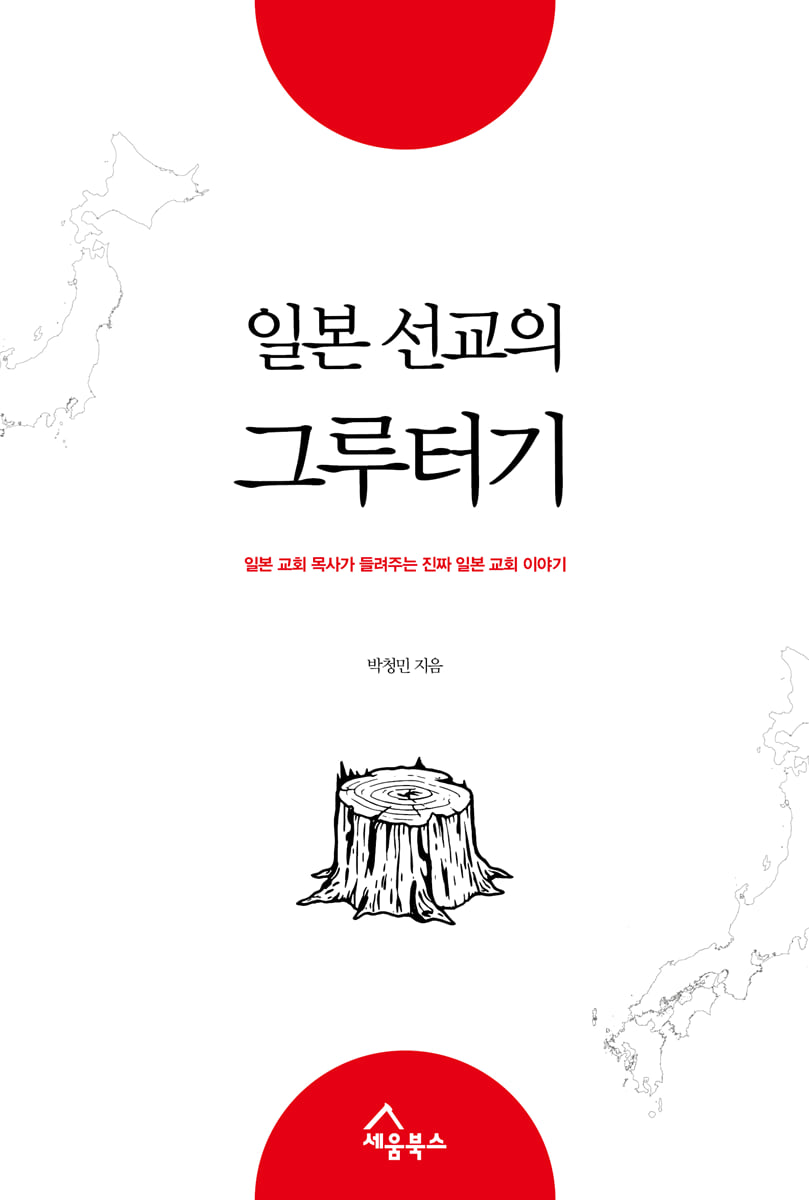
The stump of Japanese missionary work
 |
Description
Book Introduction
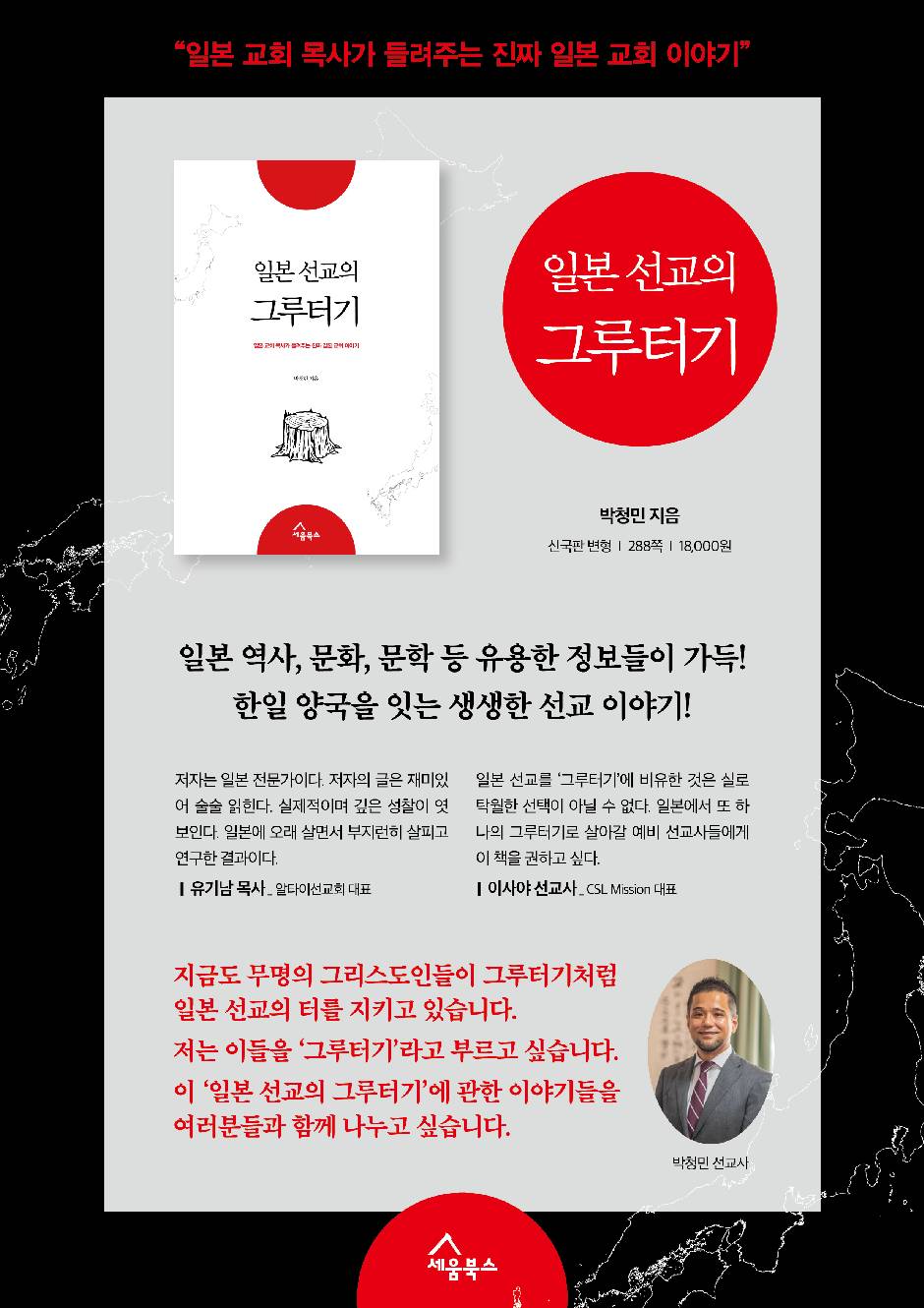
“Even now, anonymous Christians are guarding the grounds of the Japanese mission like stumps.”
The story of the "Japanese mission and church" that persevered through hardship and trials.
ㆍ A moving record of a vivid mission field connecting Korea and Japan through the gospel.
ㆍ Full of useful information about Japanese Christian history, culture, and literature.
The story of a mixed-race Korean-Japanese pastor's struggles in Japanese ministry.
ㆍ A practical challenge to participate in and pray for missions in Japan!
Japan, a country that is both close and far.
The barren mission field with only 0.4% of the Christian population is like a stump that has been cut down.
However, the author notes the tenacious vitality deeply embedded in the base of this stump.
Missionary (pastor) Park Cheong-min, born to a Japanese father and a Korean mother, was called to be a bridge between Korea and Japan through the gospel of forgiveness and reconciliation.
This book contains the record of his intense journey of faith, in which he sought God and continued on his mission without giving up, even amidst tears, pain, and discouragement in the mission field.
Amidst the weighty realities of historical conflict between Korea and Japan, cultural differences, and the anguish of ministry, the author argues that the forgiveness and love of the cross are the only answers for sprouting again from the stump.
It also introduces the "holy seeds" of Japanese Christianity, such as Kanzo Uchimura and Masayasu Norimatsu, and provides a new perspective on Japanese missions.
This is the story of the "stump of Japanese missionary work," a seemingly unassuming but vital force! Through this book, readers will cultivate a heart for and pray for missionary work in Japan.
And at least we will be challenged to hold on to the essence of the gospel and live a missionary life in our own places.
The story of the "Japanese mission and church" that persevered through hardship and trials.
ㆍ A moving record of a vivid mission field connecting Korea and Japan through the gospel.
ㆍ Full of useful information about Japanese Christian history, culture, and literature.
The story of a mixed-race Korean-Japanese pastor's struggles in Japanese ministry.
ㆍ A practical challenge to participate in and pray for missions in Japan!
Japan, a country that is both close and far.
The barren mission field with only 0.4% of the Christian population is like a stump that has been cut down.
However, the author notes the tenacious vitality deeply embedded in the base of this stump.
Missionary (pastor) Park Cheong-min, born to a Japanese father and a Korean mother, was called to be a bridge between Korea and Japan through the gospel of forgiveness and reconciliation.
This book contains the record of his intense journey of faith, in which he sought God and continued on his mission without giving up, even amidst tears, pain, and discouragement in the mission field.
Amidst the weighty realities of historical conflict between Korea and Japan, cultural differences, and the anguish of ministry, the author argues that the forgiveness and love of the cross are the only answers for sprouting again from the stump.
It also introduces the "holy seeds" of Japanese Christianity, such as Kanzo Uchimura and Masayasu Norimatsu, and provides a new perspective on Japanese missions.
This is the story of the "stump of Japanese missionary work," a seemingly unassuming but vital force! Through this book, readers will cultivate a heart for and pray for missionary work in Japan.
And at least we will be challenged to hold on to the essence of the gospel and live a missionary life in our own places.
- You can preview some of the book's contents.
Preview
index
Recommendation
prolog
Part 1: Japanese Missions Like Stumps
Chapter 1: The Country of Japan
Unity in Diversity / Stories from Japan / Treasures in Earthenware / The Duality of Light and Darkness / The Essence of Japanese Missions
Chapter 2: The Stepping Stones of Korean-Japanese Missions
What Those Who Are Debtors of the Gospel Should Do - Tsuda Sen / All Shame Be to Me, All Glory Be to God - Norimatsu Masayasu / Standing Thoroughly on Weakness - Kashiwagi Gien / A Christian Who Lived as a Seeker of Atonement - Sawa Masahiko / Take Up Your Cross and Follow Me - Oyama Reiji
Chapter 3: Missionary Work in Japan
With the innocence of a dove and the wisdom of a serpent, / Japanese missionaries are always learning / Aren't we doing missionary work in Japan with a sense of spiritual superiority? / Lord! Let's do missionary work in Japan with Akaneki / Open our eyes of hope for the Lord.
Chapter 4: Sweat and Tears on the Stump
People may rest, but books do not / By the good power of the Lord / The Lord who started the work of missionary work in Japan / What we learn from pulling out weeds / From the moment we open our tightly clenched hands
Part 2: A Sprout Blooming on a Stump
Chapter 5: Japanese Missions and Obedience
Taking up the baton of obedience / A life of obedience as the Lord leads / Another name for Christian / On the narrow path of love and truth / The steps of obedience
Chapter 6: Mission to Japan and Patience
As a falling drop of water wears away a stone / Take a long breath and look at it for a long time / If you don't give up in the middle / Don't give up and keep going / No matter how painful it is, if you persevere, a path will open someday
Chapter 7: Missions to Japan and Gratitude
Gratitude that comes when you lower the threshold of happiness / Daily gratitude is food / Gratitude is the strength to live / Only in the late evening / Where there is grace that turns failure into gratitude
Chapter 8: Relations with Japanese Missions
Missionary work in Japan is a series of encounters and relationships / Relationships that lead to Jesus / Jesus, the bread of eternal life / Everything has a beginning / As someone who owes a debt of love
Part 3: The Stump's Trials and Pains
Chapter 9: The Struggles of Japanese Missions
If I hadn't struggled / The invisible spiritual battle / The spiritual growth that came amidst suffering / Lord! Have mercy on me / The heavy stone and the grateful stone
Chapter 10: When You Get Discouraged in Your Mission to Japan
Why Prayers Don't Get Answered / True Comfort for My Tired and Discouraged Soul / Why Was I So Swayed by Anger Back Then? / The Strength to Handle the Discouraging Japan Mission / I Live True to Myself
Chapter 11: Forgiveness and Repentance on the Cross
Five months' worth of living expenses / The Judas within me / Things I took for granted / My hardened heart / Let's be conscious of the Lord in any meeting
Chapter 12: The Agony of Preaching in Japanese
A small and insignificant pond / Standing upright before the Word / A sermon not watered by prayer / The agony of a preacher / Grace bound to a sermon manuscript
Part 4: Deeply Rooted Stumps
Chapter 13: The Life of a Japanese Missionary
Living with a Traveler's Heart / On a Missionary Journey to Japan / Prejudice and Misunderstanding Come from Ignorance and Indifference / The Life and Death of a Japanese Missionary / The Joyful Path to Heaven
Chapter 14: Children of Japanese Missionaries
Cherry Blossoms Fall at the Kindergarten Entrance Ceremony / Heaven Belongs to Children / Prayers for Healthy Lives for Children ∥ Worship with Children / Don't Be Afraid! That's How You Grow Up!
Chapter 15: Japanese Missionary Couple
I love this kind of wife / The role and responsibility of a husband / A word from a wife who endured silently with a heart of mutual compassion / The happiness of a couple is not far away.
Chapter 16: Japanese Missionary Family
It's not that I raised you / Love, from the deep abyss / Flowers rather than rice cakes / Joy from a child / Just as commas and spaces are necessary in writing
Part 5: The Stump of the Japanese Mission
Chapter 17: Pastoral Care in the Japanese Church
When the walls of reality seem overwhelming / Does money buy everything? / The core of Japanese church ministry / Have you eaten? Let's go eat together! / Kanji of the year
Chapter 18: People Participating in the Japanese Mission
How beautiful are the feet of those who bring good news! / The Lord who began a good work / The Lord's family / They look like blackened coals / But are you a Christian? We are Christians too!
Chapter 19: A Few Christians
Even a single word from the Lord is enough / Even on the ground of beautifully blooming flowers, there are earthworms / Traces of the cross / Christ, the fragrance of the Lord / Light seen in the dark Japanese mission
Chapter 20: Mission to Japan with Jesus
The need for unwavering consistency and building trusting relationships / The grace of living a life of deliberate discomfort / Always with a heart of reverence for the Lord / The weeds in my heart / A missionary letter from the first Christmas concert
prolog
Part 1: Japanese Missions Like Stumps
Chapter 1: The Country of Japan
Unity in Diversity / Stories from Japan / Treasures in Earthenware / The Duality of Light and Darkness / The Essence of Japanese Missions
Chapter 2: The Stepping Stones of Korean-Japanese Missions
What Those Who Are Debtors of the Gospel Should Do - Tsuda Sen / All Shame Be to Me, All Glory Be to God - Norimatsu Masayasu / Standing Thoroughly on Weakness - Kashiwagi Gien / A Christian Who Lived as a Seeker of Atonement - Sawa Masahiko / Take Up Your Cross and Follow Me - Oyama Reiji
Chapter 3: Missionary Work in Japan
With the innocence of a dove and the wisdom of a serpent, / Japanese missionaries are always learning / Aren't we doing missionary work in Japan with a sense of spiritual superiority? / Lord! Let's do missionary work in Japan with Akaneki / Open our eyes of hope for the Lord.
Chapter 4: Sweat and Tears on the Stump
People may rest, but books do not / By the good power of the Lord / The Lord who started the work of missionary work in Japan / What we learn from pulling out weeds / From the moment we open our tightly clenched hands
Part 2: A Sprout Blooming on a Stump
Chapter 5: Japanese Missions and Obedience
Taking up the baton of obedience / A life of obedience as the Lord leads / Another name for Christian / On the narrow path of love and truth / The steps of obedience
Chapter 6: Mission to Japan and Patience
As a falling drop of water wears away a stone / Take a long breath and look at it for a long time / If you don't give up in the middle / Don't give up and keep going / No matter how painful it is, if you persevere, a path will open someday
Chapter 7: Missions to Japan and Gratitude
Gratitude that comes when you lower the threshold of happiness / Daily gratitude is food / Gratitude is the strength to live / Only in the late evening / Where there is grace that turns failure into gratitude
Chapter 8: Relations with Japanese Missions
Missionary work in Japan is a series of encounters and relationships / Relationships that lead to Jesus / Jesus, the bread of eternal life / Everything has a beginning / As someone who owes a debt of love
Part 3: The Stump's Trials and Pains
Chapter 9: The Struggles of Japanese Missions
If I hadn't struggled / The invisible spiritual battle / The spiritual growth that came amidst suffering / Lord! Have mercy on me / The heavy stone and the grateful stone
Chapter 10: When You Get Discouraged in Your Mission to Japan
Why Prayers Don't Get Answered / True Comfort for My Tired and Discouraged Soul / Why Was I So Swayed by Anger Back Then? / The Strength to Handle the Discouraging Japan Mission / I Live True to Myself
Chapter 11: Forgiveness and Repentance on the Cross
Five months' worth of living expenses / The Judas within me / Things I took for granted / My hardened heart / Let's be conscious of the Lord in any meeting
Chapter 12: The Agony of Preaching in Japanese
A small and insignificant pond / Standing upright before the Word / A sermon not watered by prayer / The agony of a preacher / Grace bound to a sermon manuscript
Part 4: Deeply Rooted Stumps
Chapter 13: The Life of a Japanese Missionary
Living with a Traveler's Heart / On a Missionary Journey to Japan / Prejudice and Misunderstanding Come from Ignorance and Indifference / The Life and Death of a Japanese Missionary / The Joyful Path to Heaven
Chapter 14: Children of Japanese Missionaries
Cherry Blossoms Fall at the Kindergarten Entrance Ceremony / Heaven Belongs to Children / Prayers for Healthy Lives for Children ∥ Worship with Children / Don't Be Afraid! That's How You Grow Up!
Chapter 15: Japanese Missionary Couple
I love this kind of wife / The role and responsibility of a husband / A word from a wife who endured silently with a heart of mutual compassion / The happiness of a couple is not far away.
Chapter 16: Japanese Missionary Family
It's not that I raised you / Love, from the deep abyss / Flowers rather than rice cakes / Joy from a child / Just as commas and spaces are necessary in writing
Part 5: The Stump of the Japanese Mission
Chapter 17: Pastoral Care in the Japanese Church
When the walls of reality seem overwhelming / Does money buy everything? / The core of Japanese church ministry / Have you eaten? Let's go eat together! / Kanji of the year
Chapter 18: People Participating in the Japanese Mission
How beautiful are the feet of those who bring good news! / The Lord who began a good work / The Lord's family / They look like blackened coals / But are you a Christian? We are Christians too!
Chapter 19: A Few Christians
Even a single word from the Lord is enough / Even on the ground of beautifully blooming flowers, there are earthworms / Traces of the cross / Christ, the fragrance of the Lord / Light seen in the dark Japanese mission
Chapter 20: Mission to Japan with Jesus
The need for unwavering consistency and building trusting relationships / The grace of living a life of deliberate discomfort / Always with a heart of reverence for the Lord / The weeds in my heart / A missionary letter from the first Christmas concert
Detailed image
Publisher's Review
prolog
According to the Japan National Tourism Organization, the number of foreign tourists visiting Japan in 2024 reached a record high of 36,869,900, of which 8,817,800 were Koreans, accounting for about 24% of the total, making them the largest number of foreign tourists.
I think this is because it is the most popular travel destination for Koreans due to its geographical proximity, low cost, cultural appeal, and visa-free entry.
As a missionary to Japan, it is a very gratifying thing to see Koreans visiting Japan with such great interest and curiosity.
However, it is a bit disappointing that there is a lack of information or materials about Japanese missions and culture.
It is also a sad reality that whenever historical issues and conflicts between Korea and Japan arise, hatred and resentment toward Japan are expressed.
In this way, the relationship between Korea and Japan has complex and specific characteristics that change depending on the situation, and emotional conflicts can intensify as ignorance, misunderstanding, and distrust accumulate.
How can we overcome this volatile relationship between the two countries? I believe the answer lies in the love and forgiveness of the cross.
Nevertheless, the weight of the love and forgiveness of the cross is not that light.
I am currently doing missionary work in Fukuoka.
There are a few places in Fukuoka that always weigh heavily on my heart. The first of these is the Fukuoka Prison (now a detention center), where the poet Yun Dong-ju, known for his poem "Preface," died.
This place can be reached by walking a short distance along the road leading downstream from Fujisaki Station.
While studying at Tokyo's Doshisha University, Yun Dong-ju was sentenced to two years in prison for violating the Public Security Preservation Law for gathering Korean students and inciting them to independence.
He was later transferred to Fukuoka Prison, where he died on February 16, 1945.
Although 80 years have passed since Yun Dong-ju's death, there is still a "Society for Reading Yun Dong-ju's Poetry" in Japan to commemorate the poet.
This group, comprised of a small number of Japanese people, gathers at Fukuoka Prison every year on the anniversary of Yun Dong-ju's death to remember him, read his poetry, and share a message of peace and love.
Fukuoka also has another historical site, Kushida Shrine.
This shrine is within walking distance from Hakata Canal City, and is a place to pray for wealth and longevity.
However, the sword that was used to assassinate Empress Myeongseong is kept here.
On August 20, 1895, armed Japanese assassins stormed Gyeongbokgung Palace to assassinate Empress Myeongseong under the guise of a "fox hunt," and the sword used was the "Hizento."
Do Katsuaki, one of the assassins who broke into Gyeongbokgung Palace during the Eulmi Incident, donated this sword to Kushida Shrine in 1908.
It is said that the phrase “Slashing an old fox in an instant like lightning (一瞬電光刺老狐)” is engraved on Hizento.
In addition, this shrine is also the starting point of Oiyama, the highlight of the Hakata Gion Yamakasa, Fukuoka's largest festival.
Whenever I recall historical sites that weigh heavily on my heart, I am overcome with mixed emotions.
Every time, I take the time to quietly look at Jesus and ask myself questions.
‘What does it mean to love as the one who has been loved?’, ‘What does it mean to forgive as the one who has been forgiven?’ Suddenly, Ayako Miura’s novel ‘Hitsujigaoka’ comes to mind.
(…syncopation…)
Even if the love and forgiveness of the cross are not displayed in a flashy manner, there are Christians who silently carry the cross.
It's like a 'stump' that remains after the grass has been cut down.
As you walk along the road, you sometimes see the stumps left after a tree has been cut down.
Although the tree has been cut down, its roots, deeply embedded in the ground, are still alive.
That's the stump.
It's easy to think that when a tree is cut down, it's over, but new shoots sprout from the remaining stump.
This is because the roots that extend deep into the ground are still alive.
We admire the outward size and fruitfulness of a tree, but we often overlook the strength of its roots.
No matter how big or beautiful a tree is, if it cannot put down deep roots in the ground, its leaves and fruit will eventually wither and the tree will die.
The Bible says this about the stump:
“Even though a tenth remains, this too will be laid waste. But as the terebinth and oak leave stumps when they are cut down, so the holy seed will be the stump in the land” (Isaiah 6:13).
This stump symbolizes the faithful Christian who endures to the end even in the midst of tribulation, showing that there is still hope.
Even if the tree has suffered the pain of having its trunk cut down, it can sprout again because it has deep roots.
Perhaps the Japanese mission is similar to this?
Even now, anonymous Christians are guarding the grounds of the Japanese missionary work like stumps.
I like to call them 'stumps'.
Even when a stump is wounded, it does not give up its life and sprouts again.
Even though only the traces of the cut remain on the outside, a tenacious life force breathes within it.
Even though the sprout may seem small and fragile, it has taken root there and is filled with new life.
In order to bloom into a dazzling flower someday, it silently guards its place even in a place where no one is watching.
Although it may seem unspectacular, I would like to share with you the stories of this 'stump of Japanese missionary work.'
According to the Japan National Tourism Organization, the number of foreign tourists visiting Japan in 2024 reached a record high of 36,869,900, of which 8,817,800 were Koreans, accounting for about 24% of the total, making them the largest number of foreign tourists.
I think this is because it is the most popular travel destination for Koreans due to its geographical proximity, low cost, cultural appeal, and visa-free entry.
As a missionary to Japan, it is a very gratifying thing to see Koreans visiting Japan with such great interest and curiosity.
However, it is a bit disappointing that there is a lack of information or materials about Japanese missions and culture.
It is also a sad reality that whenever historical issues and conflicts between Korea and Japan arise, hatred and resentment toward Japan are expressed.
In this way, the relationship between Korea and Japan has complex and specific characteristics that change depending on the situation, and emotional conflicts can intensify as ignorance, misunderstanding, and distrust accumulate.
How can we overcome this volatile relationship between the two countries? I believe the answer lies in the love and forgiveness of the cross.
Nevertheless, the weight of the love and forgiveness of the cross is not that light.
I am currently doing missionary work in Fukuoka.
There are a few places in Fukuoka that always weigh heavily on my heart. The first of these is the Fukuoka Prison (now a detention center), where the poet Yun Dong-ju, known for his poem "Preface," died.
This place can be reached by walking a short distance along the road leading downstream from Fujisaki Station.
While studying at Tokyo's Doshisha University, Yun Dong-ju was sentenced to two years in prison for violating the Public Security Preservation Law for gathering Korean students and inciting them to independence.
He was later transferred to Fukuoka Prison, where he died on February 16, 1945.
Although 80 years have passed since Yun Dong-ju's death, there is still a "Society for Reading Yun Dong-ju's Poetry" in Japan to commemorate the poet.
This group, comprised of a small number of Japanese people, gathers at Fukuoka Prison every year on the anniversary of Yun Dong-ju's death to remember him, read his poetry, and share a message of peace and love.
Fukuoka also has another historical site, Kushida Shrine.
This shrine is within walking distance from Hakata Canal City, and is a place to pray for wealth and longevity.
However, the sword that was used to assassinate Empress Myeongseong is kept here.
On August 20, 1895, armed Japanese assassins stormed Gyeongbokgung Palace to assassinate Empress Myeongseong under the guise of a "fox hunt," and the sword used was the "Hizento."
Do Katsuaki, one of the assassins who broke into Gyeongbokgung Palace during the Eulmi Incident, donated this sword to Kushida Shrine in 1908.
It is said that the phrase “Slashing an old fox in an instant like lightning (一瞬電光刺老狐)” is engraved on Hizento.
In addition, this shrine is also the starting point of Oiyama, the highlight of the Hakata Gion Yamakasa, Fukuoka's largest festival.
Whenever I recall historical sites that weigh heavily on my heart, I am overcome with mixed emotions.
Every time, I take the time to quietly look at Jesus and ask myself questions.
‘What does it mean to love as the one who has been loved?’, ‘What does it mean to forgive as the one who has been forgiven?’ Suddenly, Ayako Miura’s novel ‘Hitsujigaoka’ comes to mind.
(…syncopation…)
Even if the love and forgiveness of the cross are not displayed in a flashy manner, there are Christians who silently carry the cross.
It's like a 'stump' that remains after the grass has been cut down.
As you walk along the road, you sometimes see the stumps left after a tree has been cut down.
Although the tree has been cut down, its roots, deeply embedded in the ground, are still alive.
That's the stump.
It's easy to think that when a tree is cut down, it's over, but new shoots sprout from the remaining stump.
This is because the roots that extend deep into the ground are still alive.
We admire the outward size and fruitfulness of a tree, but we often overlook the strength of its roots.
No matter how big or beautiful a tree is, if it cannot put down deep roots in the ground, its leaves and fruit will eventually wither and the tree will die.
The Bible says this about the stump:
“Even though a tenth remains, this too will be laid waste. But as the terebinth and oak leave stumps when they are cut down, so the holy seed will be the stump in the land” (Isaiah 6:13).
This stump symbolizes the faithful Christian who endures to the end even in the midst of tribulation, showing that there is still hope.
Even if the tree has suffered the pain of having its trunk cut down, it can sprout again because it has deep roots.
Perhaps the Japanese mission is similar to this?
Even now, anonymous Christians are guarding the grounds of the Japanese missionary work like stumps.
I like to call them 'stumps'.
Even when a stump is wounded, it does not give up its life and sprouts again.
Even though only the traces of the cut remain on the outside, a tenacious life force breathes within it.
Even though the sprout may seem small and fragile, it has taken root there and is filled with new life.
In order to bloom into a dazzling flower someday, it silently guards its place even in a place where no one is watching.
Although it may seem unspectacular, I would like to share with you the stories of this 'stump of Japanese missionary work.'
GOODS SPECIFICS
- Date of issue: October 30, 2025
- Page count, weight, size: 288 pages | 135*200*20mm
- ISBN13: 9791193996638
- ISBN10: 1193996635
You may also like
카테고리
korean


korean

![GQ KOREA Mark (Monthly): December [2025]](http://librairie.coreenne.fr/cdn/shop/files/8ef265dbbfbf186523ed75ba7319009d.jpg?v=1765340328&width=3840)


