

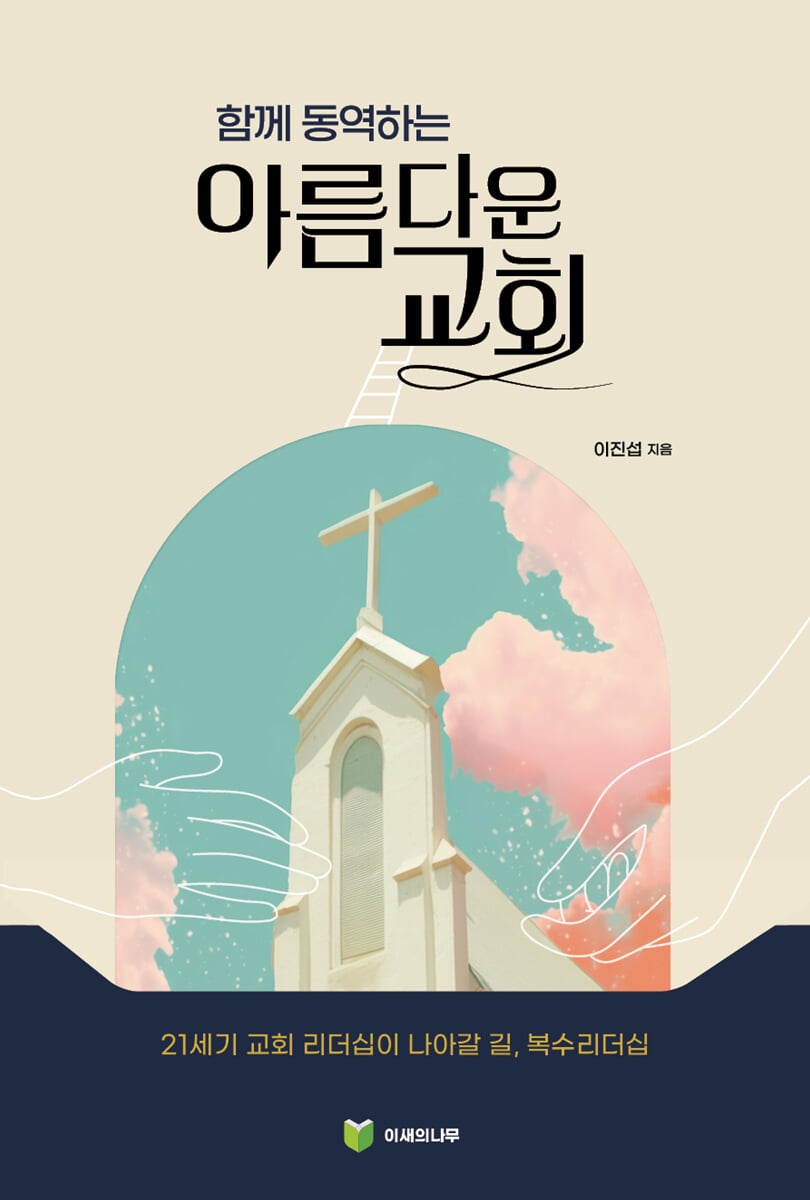
A beautiful church that works together
 |
Description
Book Introduction
Professor Lee Jin-seop's book, "A Beautiful Church Working Together," diagnoses the root causes of the problems facing the Korean church today and proposes "multiple leadership" as a solution.
Today, the Korean church is losing the trust of its members due to secularization, materialism, moral decline, and the lack of pastoral qualifications. This is becoming a source of pain that causes the church to weep rather than to excite hearts.
The author believes that the root causes of these problems stem from a lack of sound theology and problems with church leadership.
In particular, many problems in the Korean church are related to the single-leadership system (the senior pastor system), which easily appears and is amplified when leadership is concentrated in one person.
The senior pastor system is the root cause of problems such as the power of leadership, lack of diverse teachings, irregular employment of assistant pastors, and hereditary problems in the church.
This book presents a biblical alternative to these problems: a beautiful church that works together, or plural leadership.
Already about 2,000 years ago, the New Testament church clearly demonstrated the spirit of plural leadership working together.
The early church was built on a healthy foundation of plural leadership and powerfully revealed the kingdom of God.
Plural leadership is not simply a reform of the system, but rather a restoration of the church as the church according to biblical teachings.
This book covers an analysis of the root causes of the problem (Part 1), an examination of the legitimacy of plural leadership in the New Testament (Part 2), and specific methods for implementing plural leadership in the 21st-century Korean church (Part 3).
Plural leadership is a path forward from power-centered to service-centered, from singular to plural, and from institutional to biblical. It offers a message of hope for the church to be beautifully established as the light and salt of the world.
Today, the Korean church is losing the trust of its members due to secularization, materialism, moral decline, and the lack of pastoral qualifications. This is becoming a source of pain that causes the church to weep rather than to excite hearts.
The author believes that the root causes of these problems stem from a lack of sound theology and problems with church leadership.
In particular, many problems in the Korean church are related to the single-leadership system (the senior pastor system), which easily appears and is amplified when leadership is concentrated in one person.
The senior pastor system is the root cause of problems such as the power of leadership, lack of diverse teachings, irregular employment of assistant pastors, and hereditary problems in the church.
This book presents a biblical alternative to these problems: a beautiful church that works together, or plural leadership.
Already about 2,000 years ago, the New Testament church clearly demonstrated the spirit of plural leadership working together.
The early church was built on a healthy foundation of plural leadership and powerfully revealed the kingdom of God.
Plural leadership is not simply a reform of the system, but rather a restoration of the church as the church according to biblical teachings.
This book covers an analysis of the root causes of the problem (Part 1), an examination of the legitimacy of plural leadership in the New Testament (Part 2), and specific methods for implementing plural leadership in the 21st-century Korean church (Part 3).
Plural leadership is a path forward from power-centered to service-centered, from singular to plural, and from institutional to biblical. It offers a message of hope for the church to be beautifully established as the light and salt of the world.
- You can preview some of the book's contents.
Preview
index
ㆍ Preface / 4
ㆍ Recommendation / 9
Terminology / 22
Introduction: Dreaming of a Beautiful Church / 28
ㆍ Part 1: Korean Church and the Senior Pastor System
· Chapter 1: The Korean Church and the Problem of Leadership / 39
Chapter 2: Church Politics and the Senior Pastor System / 47
· Chapter 3: The Pastoral System and the Problems of the Korean Church / 56
ㆍ Part 2: The Church and Plural Leadership in the New Testament
· Chapter 4: Plural Leadership in the New Testament Church / 87
Chapter 5: The Foundation of the Church, Plural Leadership / 116
· Chapter 6: The Early Church's Plural Leadership / 132
Chapter 7: The Legitimacy of Plural Leadership / 153
ㆍ Part 3: Multiple Leadership and the Korean Church
· Chapter 8: A Beautiful Church Working Together, 'Ganada' Church / 165
· Chapter 9: Building a Church with Plural Leadership / 193
· Chapter 10: Plural Leadership and the Restoration of the Korean Church / 215
Conclusion: The Road We Walk Together / 242
Appendix 1 Standard Articles of Incorporation / 246
Appendix 2: Is the Concept of a Disciplinary Elder Biblical? / 264
FAQ (Frequently Asked Questions) / 293
References / 302
ㆍ Recommendation / 9
Terminology / 22
Introduction: Dreaming of a Beautiful Church / 28
ㆍ Part 1: Korean Church and the Senior Pastor System
· Chapter 1: The Korean Church and the Problem of Leadership / 39
Chapter 2: Church Politics and the Senior Pastor System / 47
· Chapter 3: The Pastoral System and the Problems of the Korean Church / 56
ㆍ Part 2: The Church and Plural Leadership in the New Testament
· Chapter 4: Plural Leadership in the New Testament Church / 87
Chapter 5: The Foundation of the Church, Plural Leadership / 116
· Chapter 6: The Early Church's Plural Leadership / 132
Chapter 7: The Legitimacy of Plural Leadership / 153
ㆍ Part 3: Multiple Leadership and the Korean Church
· Chapter 8: A Beautiful Church Working Together, 'Ganada' Church / 165
· Chapter 9: Building a Church with Plural Leadership / 193
· Chapter 10: Plural Leadership and the Restoration of the Korean Church / 215
Conclusion: The Road We Walk Together / 242
Appendix 1 Standard Articles of Incorporation / 246
Appendix 2: Is the Concept of a Disciplinary Elder Biblical? / 264
FAQ (Frequently Asked Questions) / 293
References / 302
Detailed image

Publisher's Review
In an age where the church has become a source of wailing, we restore the essence of the church through plural leadership.
Today, the Korean church is losing the trust of its members due to secularization, materialism, moral decline, and problems with the qualifications of pastors.
The reality is that the church has become a source of pain that makes believers cry rather than making their hearts beat.
The author, Professor Lee Jin-seop, diagnoses that the root cause of these problems lies in the lack of sound theology and problems with church leadership.
This book points out that the core of the problem of the Korean church is related to the singular leadership system (the senior pastor system), which appears and is amplified when leadership is concentrated in one person.
The senior pastor system is the root cause of problems such as the empowerment of leadership, the lack of diverse teachings, the irregular employment of assistant pastors, and the problem of church succession.
When authority and responsibility are concentrated in one person, it is easy to be tempted or lead astray, and the adage that “absolute power corrupts absolutely” applies equally to the church.
Professor Lee Jin-seop suggests plural leadership as a biblical solution to this problem.
This is not a simple reform of the system, but rather a restoration of the church as the church according to biblical teachings.
Already about 2,000 years ago, the New Testament church clearly demonstrated the spirit of plural leadership working together.
When Jesus sought to establish the church, he had a blueprint for plural leadership, and the early church was built healthily on this plural leadership, powerfully revealing the kingdom of God.
Scholar Jinseop Lee, who has long studied the Pauline Epistles and has devoted his passion to biblical education, declares through this book that it is time to address issues of church politics along with the theological and ideological understanding of what the Bible says.
This book closely analyzes the causes of the problems in the Korean church (Part 1), clarifies the legitimacy of plural leadership as revealed in the New Testament (Part 2), and then presents a concrete methodology for implementing plural leadership in the reality of the 21st-century Korean church (Part 3).
Plural leadership is a path from power-centered to service-centered, from singular to plural, and from institutional to biblical.
Through this path, the church can recover the Lord's teachings, undistorted and unadorned, and receive the message of hope that will allow it to be beautifully established as the light and salt of the world.
Today, the Korean church is losing the trust of its members due to secularization, materialism, moral decline, and problems with the qualifications of pastors.
The reality is that the church has become a source of pain that makes believers cry rather than making their hearts beat.
The author, Professor Lee Jin-seop, diagnoses that the root cause of these problems lies in the lack of sound theology and problems with church leadership.
This book points out that the core of the problem of the Korean church is related to the singular leadership system (the senior pastor system), which appears and is amplified when leadership is concentrated in one person.
The senior pastor system is the root cause of problems such as the empowerment of leadership, the lack of diverse teachings, the irregular employment of assistant pastors, and the problem of church succession.
When authority and responsibility are concentrated in one person, it is easy to be tempted or lead astray, and the adage that “absolute power corrupts absolutely” applies equally to the church.
Professor Lee Jin-seop suggests plural leadership as a biblical solution to this problem.
This is not a simple reform of the system, but rather a restoration of the church as the church according to biblical teachings.
Already about 2,000 years ago, the New Testament church clearly demonstrated the spirit of plural leadership working together.
When Jesus sought to establish the church, he had a blueprint for plural leadership, and the early church was built healthily on this plural leadership, powerfully revealing the kingdom of God.
Scholar Jinseop Lee, who has long studied the Pauline Epistles and has devoted his passion to biblical education, declares through this book that it is time to address issues of church politics along with the theological and ideological understanding of what the Bible says.
This book closely analyzes the causes of the problems in the Korean church (Part 1), clarifies the legitimacy of plural leadership as revealed in the New Testament (Part 2), and then presents a concrete methodology for implementing plural leadership in the reality of the 21st-century Korean church (Part 3).
Plural leadership is a path from power-centered to service-centered, from singular to plural, and from institutional to biblical.
Through this path, the church can recover the Lord's teachings, undistorted and unadorned, and receive the message of hope that will allow it to be beautifully established as the light and salt of the world.
GOODS SPECIFICS
- Date of issue: October 2, 2025
- Page count, weight, size: 308 pages | 152*225*30mm
- ISBN13: 9791169021142
- ISBN10: 116902114X
You may also like
카테고리
korean


korean

![ELLE 엘르 스페셜 에디션 A형 : 12월 [2025]](http://librairie.coreenne.fr/cdn/shop/files/b8e27a3de6c9538896439686c6b0e8fb.jpg?v=1766436872&width=3840)


