

Bravo to the ROK-US alliance
 |
Description
Book Introduction
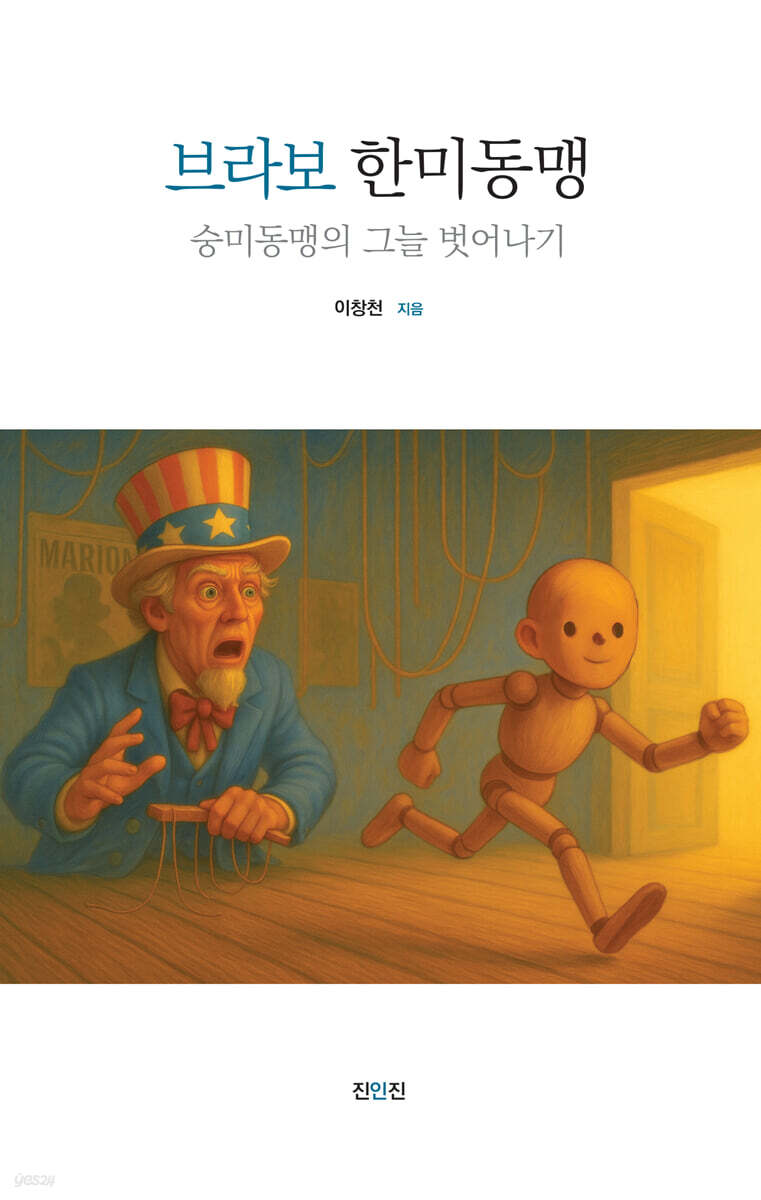
『Bravo Korea-US Alliance - Escaping the Shadow of the Pro-American Alliance』 is a work by former diplomat Lee Chang-cheon, based on 33 years of experience and intense reflection, in which he diagnoses the fundamental problems of Korean diplomacy stemming from the distorted Korea-US relationship and presents innovative alternatives.
This book is a sequel to the previous work, "The Path of Luxury Diplomacy - Korean Diplomacy as Seen by a Left-Wing Diplomat," which critically examined Korea's foreign policy in general. It contains concrete measures to respond to the issues of "tariff negotiations" and "modernization of the ROK-US (military) alliance" that have been raised since the inauguration of the new Lee Jae-myung administration, as well as fundamental reflections on the historical and diplomatic context that gave rise to these debates.
This book is a sequel to the previous work, "The Path of Luxury Diplomacy - Korean Diplomacy as Seen by a Left-Wing Diplomat," which critically examined Korea's foreign policy in general. It contains concrete measures to respond to the issues of "tariff negotiations" and "modernization of the ROK-US (military) alliance" that have been raised since the inauguration of the new Lee Jae-myung administration, as well as fundamental reflections on the historical and diplomatic context that gave rise to these debates.
index
prolog
· The Shadow of the Black-Haired American and the Admiration
· America's Perspective on Korea: Alliance and Colony
· The superstructure and foundation of the pro-American alliance
· The role of US forces in Korea - Rapid Deployment Force against China
· Anti-Americanism, anti-Americanism, and pro-Americanism
· The truth and meme of Sungmi
· Outsider's mindset
· Report on the state of worship
1.
The relocation of US military bases in Korea is a betrayal of the nation: Korea has become a puppet of the US.
· Yongsan base relocation election promise
· Negotiation process between submission and blind obedience
· Totally insolvent negotiations
· Mountain after mountain, defense cost sharing
· Still a long way to go, timetable for completing the return of the base
2.
Strategic Flexibility - Korea as a U.S. Launching Base for War Against China
· The chaotic state of diplomacy during the participatory government
· The emergence of strategic flexibility
· A negotiation process riddled with deception
· Roh Moo-hyun's Maginot Line: Setting Strict Conditions for Strategic Flexibility
· Strategic flexibility that violates the sovereignty of the Republic of Korea
· A critical task for the new Lee Jae-myung administration
3.
The Issue of Returning Wartime Operational Control and Strategic Flexibility - The Illusion of Reclaiming Defense Sovereignty
· Restoration of due rights
· The development of the discussion
· Transfer of wartime operational control and US interests
· The return of wartime operational control is a condition for strategic flexibility.
· The recovery of wartime operational control and Korea's interests
4.
The Holy Bible Sofa Agreement - The Sublime Scripture of Untouchable Extraterritoriality
· The owner of a changed country
· Overview of the SOFA Agreement
· US military bases that have been turned into sanctuaries
· Fundamental problems with the ROK-US alliance
· Look at them with a cool gaze
5.
The Agency's Ghosts: The CIA's Greatest Success Story in Korea
· CIA political operations
· Kidnap Korea
· Operations in post-war Japan
· Operations in post-war Korea
· Recent cases of agency involvement in internal affairs
· Take a look at North Korea
6.
The Americanization of the Korea-US FTA - The Sorrow of a Male Mantis Preyed on by a Female
· Enemy within
· The negotiation process that gave everything to the United States
· The Essence of the Korea-US FTA - The Trophy of Admiration
· The worship of the American religion is a system of control
· The reason why the United States went for the Korea-US FTA
Bravo Korea-US FTA
· Escape the shadow of the US-Korea FTA
7.
The Selfish Gene and the Meme of Admiration - Mutant DNA of Koreans
· Gene-centered evolution
· The Origin of Species - The Four Stresses That Created the Cult Gene
· The American-Supporting Meme - Replicator of Americanism
· The evolution of cult-like truths and memes
· Various expression patterns of the cult gene
8.
Ah! South Korea - Escape from the Shadow of the Pro-American Alliance
· Long live the United States of Korea!
· America's three tank destroyers
· Expensive festival of worship
· How to create normal memes and jinns
· How to reform Korean diplomacy
· Three major tasks and two major goals for luxury diplomacy
· Disband the Ministry of Foreign Affairs, just like the prosecution.
Epilogue
· The US military is superior
· Now is the time to let it go
· Strategic flexibility is the weapon that will destroy South Korea.
· The true face of independent Korea
Bravo! The ROK-US Alliance
Search
About the Author
main
· The Shadow of the Black-Haired American and the Admiration
· America's Perspective on Korea: Alliance and Colony
· The superstructure and foundation of the pro-American alliance
· The role of US forces in Korea - Rapid Deployment Force against China
· Anti-Americanism, anti-Americanism, and pro-Americanism
· The truth and meme of Sungmi
· Outsider's mindset
· Report on the state of worship
1.
The relocation of US military bases in Korea is a betrayal of the nation: Korea has become a puppet of the US.
· Yongsan base relocation election promise
· Negotiation process between submission and blind obedience
· Totally insolvent negotiations
· Mountain after mountain, defense cost sharing
· Still a long way to go, timetable for completing the return of the base
2.
Strategic Flexibility - Korea as a U.S. Launching Base for War Against China
· The chaotic state of diplomacy during the participatory government
· The emergence of strategic flexibility
· A negotiation process riddled with deception
· Roh Moo-hyun's Maginot Line: Setting Strict Conditions for Strategic Flexibility
· Strategic flexibility that violates the sovereignty of the Republic of Korea
· A critical task for the new Lee Jae-myung administration
3.
The Issue of Returning Wartime Operational Control and Strategic Flexibility - The Illusion of Reclaiming Defense Sovereignty
· Restoration of due rights
· The development of the discussion
· Transfer of wartime operational control and US interests
· The return of wartime operational control is a condition for strategic flexibility.
· The recovery of wartime operational control and Korea's interests
4.
The Holy Bible Sofa Agreement - The Sublime Scripture of Untouchable Extraterritoriality
· The owner of a changed country
· Overview of the SOFA Agreement
· US military bases that have been turned into sanctuaries
· Fundamental problems with the ROK-US alliance
· Look at them with a cool gaze
5.
The Agency's Ghosts: The CIA's Greatest Success Story in Korea
· CIA political operations
· Kidnap Korea
· Operations in post-war Japan
· Operations in post-war Korea
· Recent cases of agency involvement in internal affairs
· Take a look at North Korea
6.
The Americanization of the Korea-US FTA - The Sorrow of a Male Mantis Preyed on by a Female
· Enemy within
· The negotiation process that gave everything to the United States
· The Essence of the Korea-US FTA - The Trophy of Admiration
· The worship of the American religion is a system of control
· The reason why the United States went for the Korea-US FTA
Bravo Korea-US FTA
· Escape the shadow of the US-Korea FTA
7.
The Selfish Gene and the Meme of Admiration - Mutant DNA of Koreans
· Gene-centered evolution
· The Origin of Species - The Four Stresses That Created the Cult Gene
· The American-Supporting Meme - Replicator of Americanism
· The evolution of cult-like truths and memes
· Various expression patterns of the cult gene
8.
Ah! South Korea - Escape from the Shadow of the Pro-American Alliance
· Long live the United States of Korea!
· America's three tank destroyers
· Expensive festival of worship
· How to create normal memes and jinns
· How to reform Korean diplomacy
· Three major tasks and two major goals for luxury diplomacy
· Disband the Ministry of Foreign Affairs, just like the prosecution.
Epilogue
· The US military is superior
· Now is the time to let it go
· Strategic flexibility is the weapon that will destroy South Korea.
· The true face of independent Korea
Bravo! The ROK-US Alliance
Search
About the Author
main
Into the book
I hope that Korea will have a diplomatic power that is as powerful and advanced as its economy.
Just kick out the sungmi.
Admiration is both a disease and a sick way of thinking.
So, to get rid of the admiration, you need to cultivate healthy cells and cultivate cheerful yet cool-headed thoughts.
Then there is no room for pseudo-diplomacy or pseudo-diplomacy.
If that's the case, then I don't need to call the Ministry of Foreign Affairs the Ministry of Foreign Affairs anymore.
South Korea becomes a developed country recognized by all.
Of course, it is an independent country.
This is the real Republic of Korea.
The truly independent Republic of Korea will now engage in proper dialogue with North Korea “among ourselves” regarding exchange, cooperation, and unification.
This is the wonderful future we deserve to enjoy.
Just kick out the sungmi.
Admiration is both a disease and a sick way of thinking.
So, to get rid of the admiration, you need to cultivate healthy cells and cultivate cheerful yet cool-headed thoughts.
Then there is no room for pseudo-diplomacy or pseudo-diplomacy.
If that's the case, then I don't need to call the Ministry of Foreign Affairs the Ministry of Foreign Affairs anymore.
South Korea becomes a developed country recognized by all.
Of course, it is an independent country.
This is the real Republic of Korea.
The truly independent Republic of Korea will now engage in proper dialogue with North Korea “among ourselves” regarding exchange, cooperation, and unification.
This is the wonderful future we deserve to enjoy.
--- From "Prologue - Report on the State of Worship"
Publisher's Review
The Ghost of 'Sungmi' Haunting Korea
The ROK-US relationship, formed immediately after the end of World War II, has evolved over the past 80 years, transcending mere differences in national power and expanding into an unbalanced and dependent relationship.
This book explains how these structural distortions originated and how they became a core structure of Korean diplomacy.
The US-ROK relationship, which was formed under the name of "liberation" when the US, the victorious nation and superpower of the Pacific War, entered the Korean Peninsula, which was a colony of the defeated nation, Japan, as an occupying force, was asymmetrical from the start.
Afterwards, amidst the suffering of colonial exploitation, division, and war, Korean society became trapped in a collective distorted consciousness called "Americanism," which resulted in structural inequality in Korea's diplomatic and security decision-making structure.
The nature of the pro-American alliance and ways to overcome it
This book names the abnormal relationship between the two countries, in which the superpower United States regards Korea as a virtual "colony," and Korea worships the United States as a supra-constitutional being, as the "Pro-American Alliance."
Representative examples of this relationship include the relocation of US military bases, strategic flexibility (modernization of the ROK-US alliance), and the transfer of wartime operational control.
Furthermore, it specifically analyzes the legal and institutional inequalities revealed in the process of concluding and operating the SOFA agreement and the Korea-US FTA, as well as the issue of US intelligence agencies' intervention in domestic affairs, and explains that this diplomatic dependency structure is not a simple policy issue, but rather a problem based on collective unconsciousness and evolutionary psychological factors, namely the "American admiration gene."
This book emphasizes the need for radical reform measures, such as disbanding the Ministry of Foreign Affairs, to overcome this American worship and restructure the asymmetrical Korea-US relationship into a healthy and autonomous partnership.
The Lee Jae-myung administration's diplomatic challenges toward the United States
"Bravo Korea-US Alliance" presents specific diplomatic tasks that the new Lee Jae-myung administration must accomplish ahead of the Korea-US summit scheduled for late August 2025.
First, I emphasize that, with the successful conclusion of tariff negotiations, we must clearly reject the demand for strategic flexibility being pursued under the pretext of "modernizing the ROK-US alliance."
We warn that the role of US forces in Korea should be limited to a "defensive" mission against a North Korean invasion, and that any attempt to expand this role to the entire Indo-Pacific would be subordinated to US hegemonic strategies, regardless of South Korea's security interests.
Furthermore, we are making it clear that incidents such as Vietnam and Iraq, where Korean troops were dispatched overseas at the unilateral request of the United States, must not be repeated in future cross-strait conflicts between China and Taiwan.
It also emphasizes that the new administration must respond with a principled attitude to key diplomatic issues, such as the realization of the return of wartime operational control, revision of the Status of Forces Agreement (SOFA), and adjustment of the Korea-U.S. FTA.
For a healthy and independent ROK-US alliance
The book's epilogue presents a vision for a healthy, independent, and ideal alliance, transcending the current, unilateral, and dependent ROK-US alliance.
We argue that we must achieve structural transformation, including the withdrawal of US troops, the establishment of an independent diplomatic strategy, and the reestablishment of ROK-US relations as equal sovereign states. This will lead to the restoration of leadership in inter-Korean relations, pragmatic diplomacy with neighboring countries, and the expansion of global multilateral diplomatic capabilities.
"Bravo Korea-US Alliance - Escaping the Shadow of the Pro-American Alliance" is not a simple diplomatic critique. Rather, it is a policy book that provides practical policy alternatives to the foreign policy practitioners of the new Lee Jae-myung administration and offers insights that can fundamentally reorganize the mindset and structure of Korean diplomacy.
As an alternative intellectual outlet capable of countering the Trump administration's diplomatic strategy of strengthening a hegemonic unipolar system, I hope it will provide profound insight and inspiration to researchers, practitioners, and policymakers interested in international politics, foreign affairs and security, and the history of the ROK-US alliance, as well as citizen readers who sympathize with independent diplomacy.
The ROK-US relationship, formed immediately after the end of World War II, has evolved over the past 80 years, transcending mere differences in national power and expanding into an unbalanced and dependent relationship.
This book explains how these structural distortions originated and how they became a core structure of Korean diplomacy.
The US-ROK relationship, which was formed under the name of "liberation" when the US, the victorious nation and superpower of the Pacific War, entered the Korean Peninsula, which was a colony of the defeated nation, Japan, as an occupying force, was asymmetrical from the start.
Afterwards, amidst the suffering of colonial exploitation, division, and war, Korean society became trapped in a collective distorted consciousness called "Americanism," which resulted in structural inequality in Korea's diplomatic and security decision-making structure.
The nature of the pro-American alliance and ways to overcome it
This book names the abnormal relationship between the two countries, in which the superpower United States regards Korea as a virtual "colony," and Korea worships the United States as a supra-constitutional being, as the "Pro-American Alliance."
Representative examples of this relationship include the relocation of US military bases, strategic flexibility (modernization of the ROK-US alliance), and the transfer of wartime operational control.
Furthermore, it specifically analyzes the legal and institutional inequalities revealed in the process of concluding and operating the SOFA agreement and the Korea-US FTA, as well as the issue of US intelligence agencies' intervention in domestic affairs, and explains that this diplomatic dependency structure is not a simple policy issue, but rather a problem based on collective unconsciousness and evolutionary psychological factors, namely the "American admiration gene."
This book emphasizes the need for radical reform measures, such as disbanding the Ministry of Foreign Affairs, to overcome this American worship and restructure the asymmetrical Korea-US relationship into a healthy and autonomous partnership.
The Lee Jae-myung administration's diplomatic challenges toward the United States
"Bravo Korea-US Alliance" presents specific diplomatic tasks that the new Lee Jae-myung administration must accomplish ahead of the Korea-US summit scheduled for late August 2025.
First, I emphasize that, with the successful conclusion of tariff negotiations, we must clearly reject the demand for strategic flexibility being pursued under the pretext of "modernizing the ROK-US alliance."
We warn that the role of US forces in Korea should be limited to a "defensive" mission against a North Korean invasion, and that any attempt to expand this role to the entire Indo-Pacific would be subordinated to US hegemonic strategies, regardless of South Korea's security interests.
Furthermore, we are making it clear that incidents such as Vietnam and Iraq, where Korean troops were dispatched overseas at the unilateral request of the United States, must not be repeated in future cross-strait conflicts between China and Taiwan.
It also emphasizes that the new administration must respond with a principled attitude to key diplomatic issues, such as the realization of the return of wartime operational control, revision of the Status of Forces Agreement (SOFA), and adjustment of the Korea-U.S. FTA.
For a healthy and independent ROK-US alliance
The book's epilogue presents a vision for a healthy, independent, and ideal alliance, transcending the current, unilateral, and dependent ROK-US alliance.
We argue that we must achieve structural transformation, including the withdrawal of US troops, the establishment of an independent diplomatic strategy, and the reestablishment of ROK-US relations as equal sovereign states. This will lead to the restoration of leadership in inter-Korean relations, pragmatic diplomacy with neighboring countries, and the expansion of global multilateral diplomatic capabilities.
"Bravo Korea-US Alliance - Escaping the Shadow of the Pro-American Alliance" is not a simple diplomatic critique. Rather, it is a policy book that provides practical policy alternatives to the foreign policy practitioners of the new Lee Jae-myung administration and offers insights that can fundamentally reorganize the mindset and structure of Korean diplomacy.
As an alternative intellectual outlet capable of countering the Trump administration's diplomatic strategy of strengthening a hegemonic unipolar system, I hope it will provide profound insight and inspiration to researchers, practitioners, and policymakers interested in international politics, foreign affairs and security, and the history of the ROK-US alliance, as well as citizen readers who sympathize with independent diplomacy.
GOODS SPECIFICS
- Date of issue: August 6, 2025
- Page count, weight, size: 369 pages | 134*204*30mm
- ISBN13: 9788963476346
- ISBN10: 8963476340
You may also like
카테고리
korean


korean

![GQ KOREA Mark (Monthly): December [2025]](http://librairie.coreenne.fr/cdn/shop/files/8ef265dbbfbf186523ed75ba7319009d.jpg?v=1765340328&width=3840)


