

Geology of Media
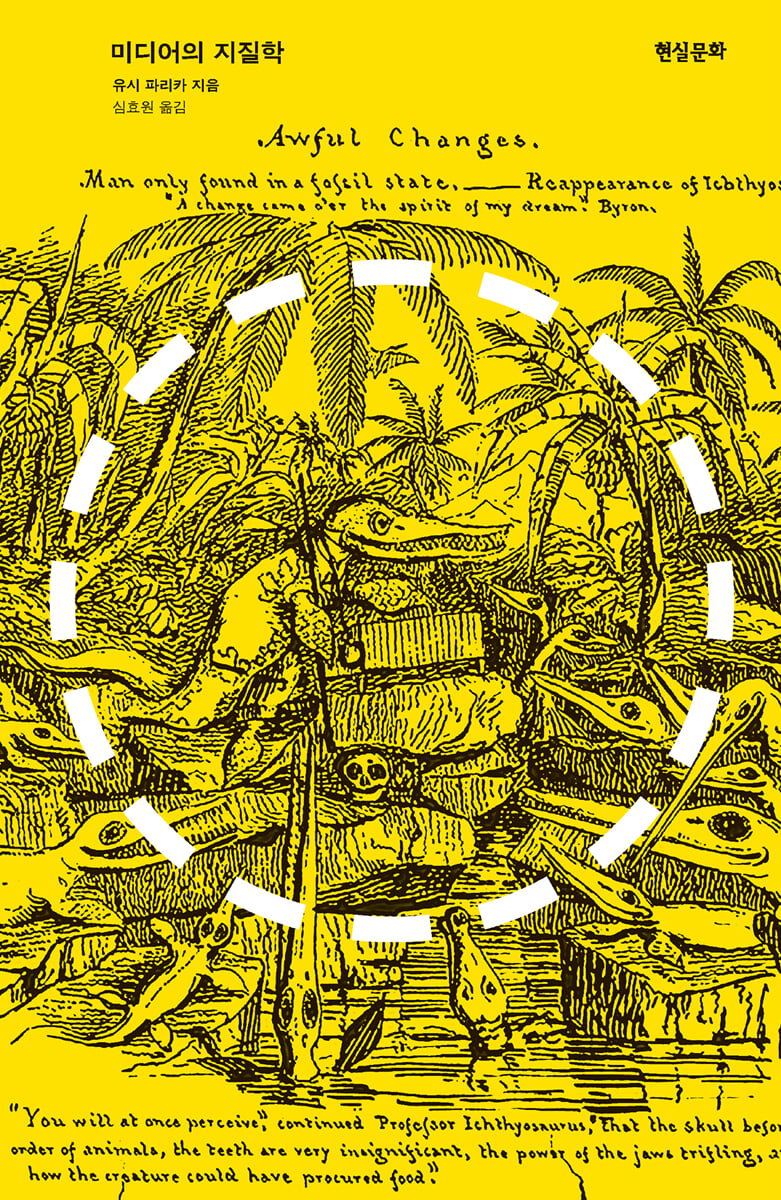 |
Description
Book Introduction
Beyond the screen lies the Earth's long memory.
From fossils to planetary computing,
Expanding the horizons of media philosophy to planet Earth!
Wires and data, waste and dust—the genealogy of technology begins in the ground.
Recently, as soon as China pulled out the rare earth card to counter the US tariff war, the situation suddenly reversed.
We are helpless against China's strategy of building a meticulous rare earth supply chain over 40 years.
China seems to have known that rare earths would be the ultimate game changer for all media and cutting-edge technology.
Geology of Media is a book by Jussi Parika, a renowned Finnish philosopher and media theorist, that presents radical thinking about media.
According to his argument, media is not just a means of human communication.
This book traces the entanglements of technology and nature, the co-evolution of the Earth and information, and the extractive economics of digital capitalism through the material foundations that make up media: rare earth metals, silicon, minerals, and hazardous waste.
Digital doesn't float in the air.
It is a condensation of deep resources created over hundreds of millions of years, from the ecology of electronic waste created by modern technology, to pre-industrial geological accumulations, to geological materials made of copper, coltan, lithium and silicon.
This book, which simultaneously stimulates ethical and sensory thinking with a new critical spirit that crosses geology, ecology, the philosophy of technology, and media theory, will be an invaluable landmark for readers interested in media archaeology, ecological media theory, and the philosophy of materiality.
From fossils to planetary computing,
Expanding the horizons of media philosophy to planet Earth!
Wires and data, waste and dust—the genealogy of technology begins in the ground.
Recently, as soon as China pulled out the rare earth card to counter the US tariff war, the situation suddenly reversed.
We are helpless against China's strategy of building a meticulous rare earth supply chain over 40 years.
China seems to have known that rare earths would be the ultimate game changer for all media and cutting-edge technology.
Geology of Media is a book by Jussi Parika, a renowned Finnish philosopher and media theorist, that presents radical thinking about media.
According to his argument, media is not just a means of human communication.
This book traces the entanglements of technology and nature, the co-evolution of the Earth and information, and the extractive economics of digital capitalism through the material foundations that make up media: rare earth metals, silicon, minerals, and hazardous waste.
Digital doesn't float in the air.
It is a condensation of deep resources created over hundreds of millions of years, from the ecology of electronic waste created by modern technology, to pre-industrial geological accumulations, to geological materials made of copper, coltan, lithium and silicon.
This book, which simultaneously stimulates ethical and sensory thinking with a new critical spirit that crosses geology, ecology, the philosophy of technology, and media theory, will be an invaluable landmark for readers interested in media archaeology, ecological media theory, and the philosophy of materiality.
- You can preview some of the book's contents.
Preview
index
Preface to the Korean edition
introduction
Acknowledgements
1.
Materiality: The Foundation of Media and Culture
2.
An alternative, profound time for media
3.
Psychogeophysics of Technology
4.
Dust and exhausted life
5.
Fossil Futures
Review: So-called nature
Appendix: Zombie Media
Translator's Note
Search
introduction
Acknowledgements
1.
Materiality: The Foundation of Media and Culture
2.
An alternative, profound time for media
3.
Psychogeophysics of Technology
4.
Dust and exhausted life
5.
Fossil Futures
Review: So-called nature
Appendix: Zombie Media
Translator's Note
Search
Into the book
All media technologies imply in their models a certain relationship to ecology and nature, whether through resources or otherwise.
Such media technologies utilize specific material production chains.
…at the same time, media technologies are also important technological epistemological devices through which the concepts of ‘Earth’ and ‘planetary’ are constructed.
--- p.9
I invite readers to consider this book within the context of the massive, planetary computing we call artificial intelligence (and its variants) and within the context of a geopolitical framework that defines media beyond interfaces to logistical media, infrastructure, and supply chains.
Through this, I propose to view the contemporary media situation as a system that fundamentally governs the Earth by treating it as a resource, and further as part of the problem of extractivism.
--- p.
10
This short book explores the culture of science, the realities of technology, and artistic perspectives, placing science and technology in a multidisciplinary context related to media studies and the history of media art.
While this book does not claim to be a comprehensive account of the relationship between geology and technology, it aims to share meaningful insights with those in the fields of media, art, and contemporary technology studies, including media archaeology.
--- p.12~13
This book focuses on the connection between media technologies and their materiality, hardware, and energy with geophysical properties.
That property is nature, enduring and bearing the weight of media culture, from metals and minerals to the waste load it produces.
--- p.13
The conceptual foundation that guides this book is geology.
Geology is the science of the ground beneath our feet, its history and composition, and the systematic study of the various levers, layers, strata, and interconnections that define the Earth.
This suggests that geotechnical and geotechnical work is not only a specific way of interacting with the solidity of the Earth, but also a sophisticated measurement technique linked to a broader awareness of the environmental composition of our lives.
--- p.
28
Geology is not only about the soil, crust, and strata that form the foundation of our lives, but also about climate change and the political economy of industrial and post-industrial production.
It connects with the broader world of geophysical life that supports biological life as much as it does with the technological world of transmission, computation, and storage.
Geology has become a way to study the materiality of the technological media world.
It has become a conceptual trajectory of contemporary cultural history and seeks creative intervention in it.
--- p.
28
Various related disciplines and fields of knowledge, such as geology, chemistry, and ecology, frame the modern world and give it a possible scientific structure.
These disciplines are strongly implied in the emergence of technological and scientific culture, which is the source of our media cultural practices.
That is why I am interested in exploring the characteristics of media materialism outside the general definition of media.
--- p.12~13
If the rise of industrialization and the resulting sulfur dioxide emissions from mines, refineries, and coal-fired power plants since the 19th century have been treated by poets as dramatic aesthetic and ecological changes, either celebrated or critically narrated, contemporary technological art is doing similar work (though in many cases, it engages directly with the material world of geophysics on a practical level).
--- p.
38
Our relationship with the Earth is mediated by technologies and techniques such as visualization, sonification, computation, mapping, prediction, and simulation.
Through media, we perceive the Earth as an object of cognitive, practical, and affective relations.
…geology unearths the secrets of the Earth and its planet, offering a perspective not only on the present moment unfolding with its potential for future development, but also on the past buried beneath our feet.
Depth becomes time.
--- p.
44~45
The underground is another important geological site in the geology of media (art).
Hell is located underground, and in Western mythology it is defined as a place with chemical properties such as the smell of sulfur and the toxicity of carbon dioxide.
This is why, since Virgil's Aeneid, the underworld has been known as a place where all animals that approach it die.
The underground is central to the technological imagination of modernity.
It is a space for the future that technology has been implementing since the 19th century, and an artistic avant-garde that breaks away from the mainstream.
--- p.
43
The history of media is a story about the relationship between organic and inorganic matter, as well as the materials needed for production, and the waste resulting from their use and misuse.
Media history engages in the narrative of global expansion through colonialism and the resource rush.
It draws a global map of increasingly depleted territories, including valuable resources like minerals, oil, and other energy resources like uranium.
Such media technologies utilize specific material production chains.
…at the same time, media technologies are also important technological epistemological devices through which the concepts of ‘Earth’ and ‘planetary’ are constructed.
--- p.9
I invite readers to consider this book within the context of the massive, planetary computing we call artificial intelligence (and its variants) and within the context of a geopolitical framework that defines media beyond interfaces to logistical media, infrastructure, and supply chains.
Through this, I propose to view the contemporary media situation as a system that fundamentally governs the Earth by treating it as a resource, and further as part of the problem of extractivism.
--- p.
10
This short book explores the culture of science, the realities of technology, and artistic perspectives, placing science and technology in a multidisciplinary context related to media studies and the history of media art.
While this book does not claim to be a comprehensive account of the relationship between geology and technology, it aims to share meaningful insights with those in the fields of media, art, and contemporary technology studies, including media archaeology.
--- p.12~13
This book focuses on the connection between media technologies and their materiality, hardware, and energy with geophysical properties.
That property is nature, enduring and bearing the weight of media culture, from metals and minerals to the waste load it produces.
--- p.13
The conceptual foundation that guides this book is geology.
Geology is the science of the ground beneath our feet, its history and composition, and the systematic study of the various levers, layers, strata, and interconnections that define the Earth.
This suggests that geotechnical and geotechnical work is not only a specific way of interacting with the solidity of the Earth, but also a sophisticated measurement technique linked to a broader awareness of the environmental composition of our lives.
--- p.
28
Geology is not only about the soil, crust, and strata that form the foundation of our lives, but also about climate change and the political economy of industrial and post-industrial production.
It connects with the broader world of geophysical life that supports biological life as much as it does with the technological world of transmission, computation, and storage.
Geology has become a way to study the materiality of the technological media world.
It has become a conceptual trajectory of contemporary cultural history and seeks creative intervention in it.
--- p.
28
Various related disciplines and fields of knowledge, such as geology, chemistry, and ecology, frame the modern world and give it a possible scientific structure.
These disciplines are strongly implied in the emergence of technological and scientific culture, which is the source of our media cultural practices.
That is why I am interested in exploring the characteristics of media materialism outside the general definition of media.
--- p.12~13
If the rise of industrialization and the resulting sulfur dioxide emissions from mines, refineries, and coal-fired power plants since the 19th century have been treated by poets as dramatic aesthetic and ecological changes, either celebrated or critically narrated, contemporary technological art is doing similar work (though in many cases, it engages directly with the material world of geophysics on a practical level).
--- p.
38
Our relationship with the Earth is mediated by technologies and techniques such as visualization, sonification, computation, mapping, prediction, and simulation.
Through media, we perceive the Earth as an object of cognitive, practical, and affective relations.
…geology unearths the secrets of the Earth and its planet, offering a perspective not only on the present moment unfolding with its potential for future development, but also on the past buried beneath our feet.
Depth becomes time.
--- p.
44~45
The underground is another important geological site in the geology of media (art).
Hell is located underground, and in Western mythology it is defined as a place with chemical properties such as the smell of sulfur and the toxicity of carbon dioxide.
This is why, since Virgil's Aeneid, the underworld has been known as a place where all animals that approach it die.
The underground is central to the technological imagination of modernity.
It is a space for the future that technology has been implementing since the 19th century, and an artistic avant-garde that breaks away from the mainstream.
--- p.
43
The history of media is a story about the relationship between organic and inorganic matter, as well as the materials needed for production, and the waste resulting from their use and misuse.
Media history engages in the narrative of global expansion through colonialism and the resource rush.
It draws a global map of increasingly depleted territories, including valuable resources like minerals, oil, and other energy resources like uranium.
--- p.
71~72
71~72
Publisher's Review
Philosophy on the Strata: Expanding the Horizons of Media Theory
Geology of Media is a thoroughly material text.
Yet, this book is metaphysical.
Because it raises important philosophical questions such as ‘What is technology?’, ‘How does information work?’, ‘How do we perceive the world?’, and ‘How does the materiality of devices mediate between the non-human and the human realms?’
Parika sees media not simply as mechanical devices, but as technological devices that shape sense and perception, time and space.
He extends media theory to philosophy, ecology, earth science, and art theory, analyzing how media, along with their layered materiality, describe, remember, and construct the world.
This theoretical work renews the methodology of media studies itself.
It is a shift in thinking from the existing paradigm of analyzing ‘images’ or ‘codes’ to focusing on the materiality, globality, and environmentality of media.
Philosophy is no longer an abstract concept, but is rewritten in the language of stones and earth lying on the strata.
The Materiality of Media and Geological Time: Thinking from Deep Time
It's easy to believe that what we commonly call digital media—smartphones, computers, servers, artificial intelligence—are made up of lightweight, intangible signals, but Yushi Parika asks the opposite question.
Where exactly did media come from? He returns this question to material reality, not mere metaphor.
Geology of Media understands media as a product of geological origins.
That is, silicon, lithium, coltan, and rare earth metals that make up the media are mineral resources formed over millions of years inside the Earth.
This is where the concept of 'deep time' comes into play.
Parika emphasizes that the media devices we use are not simply products of the post-Industrial Revolution, but originate in the geological history of the Earth.
This perspective critically overturns the existing media discourse centered on 'technological progress' and reconstructs media as a stratified phenomenon where nature, humans, time, and matter intersect.
Before information, media was a 'stone', a 'mineral', and a 'stratum'.
Reading media back into geological time is a way of thinking that simultaneously questions its origins and rethinks the future of digital technology on a planetary scale.
The Intertwining of Technology and Nature: Ecological Media Archaeology
Parika argues that technology and nature, artifacts and the global environment, do not exist as separate binary constructs.
For too long we have divided technology into 'human' and nature into 'non-human'.
But if you look at the materials that actually make up a single smartphone, it's a completely natural product made up of metals and minerals mined from the Earth.
This is a proposal to understand the history of media not only as a history of mechanical progress or the development of communication technology, but also in its interaction with environmental and geological conditions.
For example, Parika points out that contemporary media is dependent on massive extractive capitalism, and analyzes the geopolitical context of coltan mining and rare earth production in the Congo.
Ultimately, this book can be read as a political critique of the expanded media environment, encompassing the resources, labor, waste, and global imbalances surrounding the media.
The recursive ghosts of 'zombie media' as waste and debris
The digital age is often described as a time of speed and advancement towards the 'latest technology,' but Parika looks at the other side of the coin.
These are recursive ghosts: media that have simply retired from the scene, media that have been systematically made obsolete, abandoned devices, and discarded technologies.
This phenomenon, which Parika calls "zombie media," offers a surprising and gift-like insight into the emerging field of media archaeology.
He says that media theory can no longer remain limited to future-oriented perspectives.
Another essence of media is the constant accumulation of debris and waste.
Smartphones, CRT monitors, and floppy disks were all once cutting-edge technological products, but they will soon be relegated to electronic waste.
"Geology of Media" interprets these wastes not as simple industrial byproducts, but as geological elements that directly impact the Earth's ecology.
It also shows that abandoned technologies can be repurposed as new fields of creation and thought.
Reflecting on what remains does not simply restore the past, but calls for a different sense of the future.
Geology of Media is a thoroughly material text.
Yet, this book is metaphysical.
Because it raises important philosophical questions such as ‘What is technology?’, ‘How does information work?’, ‘How do we perceive the world?’, and ‘How does the materiality of devices mediate between the non-human and the human realms?’
Parika sees media not simply as mechanical devices, but as technological devices that shape sense and perception, time and space.
He extends media theory to philosophy, ecology, earth science, and art theory, analyzing how media, along with their layered materiality, describe, remember, and construct the world.
This theoretical work renews the methodology of media studies itself.
It is a shift in thinking from the existing paradigm of analyzing ‘images’ or ‘codes’ to focusing on the materiality, globality, and environmentality of media.
Philosophy is no longer an abstract concept, but is rewritten in the language of stones and earth lying on the strata.
The Materiality of Media and Geological Time: Thinking from Deep Time
It's easy to believe that what we commonly call digital media—smartphones, computers, servers, artificial intelligence—are made up of lightweight, intangible signals, but Yushi Parika asks the opposite question.
Where exactly did media come from? He returns this question to material reality, not mere metaphor.
Geology of Media understands media as a product of geological origins.
That is, silicon, lithium, coltan, and rare earth metals that make up the media are mineral resources formed over millions of years inside the Earth.
This is where the concept of 'deep time' comes into play.
Parika emphasizes that the media devices we use are not simply products of the post-Industrial Revolution, but originate in the geological history of the Earth.
This perspective critically overturns the existing media discourse centered on 'technological progress' and reconstructs media as a stratified phenomenon where nature, humans, time, and matter intersect.
Before information, media was a 'stone', a 'mineral', and a 'stratum'.
Reading media back into geological time is a way of thinking that simultaneously questions its origins and rethinks the future of digital technology on a planetary scale.
The Intertwining of Technology and Nature: Ecological Media Archaeology
Parika argues that technology and nature, artifacts and the global environment, do not exist as separate binary constructs.
For too long we have divided technology into 'human' and nature into 'non-human'.
But if you look at the materials that actually make up a single smartphone, it's a completely natural product made up of metals and minerals mined from the Earth.
This is a proposal to understand the history of media not only as a history of mechanical progress or the development of communication technology, but also in its interaction with environmental and geological conditions.
For example, Parika points out that contemporary media is dependent on massive extractive capitalism, and analyzes the geopolitical context of coltan mining and rare earth production in the Congo.
Ultimately, this book can be read as a political critique of the expanded media environment, encompassing the resources, labor, waste, and global imbalances surrounding the media.
The recursive ghosts of 'zombie media' as waste and debris
The digital age is often described as a time of speed and advancement towards the 'latest technology,' but Parika looks at the other side of the coin.
These are recursive ghosts: media that have simply retired from the scene, media that have been systematically made obsolete, abandoned devices, and discarded technologies.
This phenomenon, which Parika calls "zombie media," offers a surprising and gift-like insight into the emerging field of media archaeology.
He says that media theory can no longer remain limited to future-oriented perspectives.
Another essence of media is the constant accumulation of debris and waste.
Smartphones, CRT monitors, and floppy disks were all once cutting-edge technological products, but they will soon be relegated to electronic waste.
"Geology of Media" interprets these wastes not as simple industrial byproducts, but as geological elements that directly impact the Earth's ecology.
It also shows that abandoned technologies can be repurposed as new fields of creation and thought.
Reflecting on what remains does not simply restore the past, but calls for a different sense of the future.
GOODS SPECIFICS
- Date of issue: July 11, 2025
- Page count, weight, size: 328 pages | 456g | 140*215*23mm
- ISBN13: 9788965643067
- ISBN10: 8965643066
You may also like
카테고리
korean


korean

![GQ KOREA Mark (Monthly): December [2025]](http://librairie.coreenne.fr/cdn/shop/files/8ef265dbbfbf186523ed75ba7319009d.jpg?v=1765340328&width=3840)


