

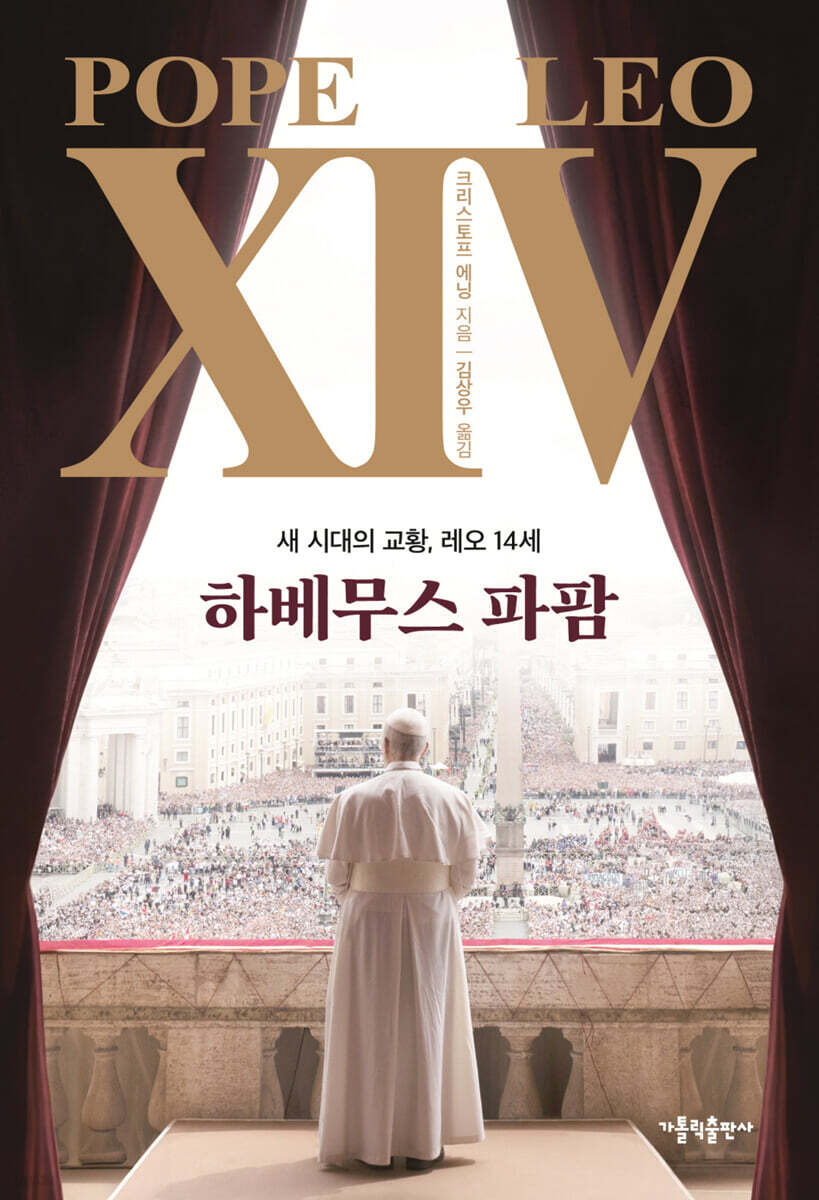
Habemus Papam
 |
Description
Book Introduction
Habemus Papam!
Leo XIV, the Birth of a New Pope
In May 2025, the Catholic Church around the world watched with bated breath as a new chapter in history began.
As the conclave concluded amidst the sadness of Pope Francis's death, a resounding cry resounded from the balcony of St. Peter's Basilica to the world.
“Habemus Papam!”
The new pope was the American Cardinal Robert Francis Prevost, also known as Leo XIV.
Habemus Papam (The Pope of the New Era, Leo XIV) vividly captures this historic moment, illuminating the life and vision of the first American pope who offered new hope for the Catholic Church.
Robert Francis Prevost, who grew up in Chicago, Illinois, entered the Order of St. Augustine and devoted his life to the Church.
The author covers the Pope's childhood, his journey as a pastor, and the process leading up to his election as Pope, leading us to reflect on God's providence that permeated his life.
It also emphasizes the Pope's gentle yet firm character and presents a future for the Catholic Church that will walk the path of unity and integration.
Leo XIV, the Birth of a New Pope
In May 2025, the Catholic Church around the world watched with bated breath as a new chapter in history began.
As the conclave concluded amidst the sadness of Pope Francis's death, a resounding cry resounded from the balcony of St. Peter's Basilica to the world.
“Habemus Papam!”
The new pope was the American Cardinal Robert Francis Prevost, also known as Leo XIV.
Habemus Papam (The Pope of the New Era, Leo XIV) vividly captures this historic moment, illuminating the life and vision of the first American pope who offered new hope for the Catholic Church.
Robert Francis Prevost, who grew up in Chicago, Illinois, entered the Order of St. Augustine and devoted his life to the Church.
The author covers the Pope's childhood, his journey as a pastor, and the process leading up to his election as Pope, leading us to reflect on God's providence that permeated his life.
It also emphasizes the Pope's gentle yet firm character and presents a future for the Catholic Church that will walk the path of unity and integration.
- You can preview some of the book's contents.
Preview
index
Recommendation 5
Introduction 8
Introduction 11
Ⅰ.
Habemus Papam
Chapter 1: The Birth of a New Pope 19
Chapter 2 · Pope Leo XIV, American, 31
Chapter 3 · Steps for the World 47
Chapter 4: The Seven Cardinals Who Still Matter 60
Ⅱ.
The era of the new pope begins
Chapter 5: Pope Francis's Final Moments 79
Chapter 6: Lessons from History 90
Chapter 7: The College of Cardinals from Around the World: 99
Chapter 8: The Very Secret Conclave 111
Ⅲ.
Challenges Facing the Church
Chapter 9 · The Legacy of Pope Bergoglio 123
Chapter 10 · The Twelve Missions of Leo XIV 134
Chapter 11 · Leo XIV's Six Challenges 160
Chapter 12 · The New Pope's Gentle Charisma 176
Outgoing Words 191
Pope Leo XIV's Biography 194
Reference 196
Translator's Note 197
Introduction 8
Introduction 11
Ⅰ.
Habemus Papam
Chapter 1: The Birth of a New Pope 19
Chapter 2 · Pope Leo XIV, American, 31
Chapter 3 · Steps for the World 47
Chapter 4: The Seven Cardinals Who Still Matter 60
Ⅱ.
The era of the new pope begins
Chapter 5: Pope Francis's Final Moments 79
Chapter 6: Lessons from History 90
Chapter 7: The College of Cardinals from Around the World: 99
Chapter 8: The Very Secret Conclave 111
Ⅲ.
Challenges Facing the Church
Chapter 9 · The Legacy of Pope Bergoglio 123
Chapter 10 · The Twelve Missions of Leo XIV 134
Chapter 11 · Leo XIV's Six Challenges 160
Chapter 12 · The New Pope's Gentle Charisma 176
Outgoing Words 191
Pope Leo XIV's Biography 194
Reference 196
Translator's Note 197
Detailed image

Into the book
Participating in the conclave is a very rewarding adventure, both humanly and spiritually.
We gathered there naturally realized the weighty task of finding a successor to the Apostle Peter in the secularized 21st century.
Among the 133 cardinals gathered in that locked room was the new pope.
We gathered at the conclave and knew little about each other.
Although they had different calculations, big and small, and different sensibilities toward the church, they shared the common task of finding Peter's successor, with hopes and dreams for the future.
Of course, I believed that the Holy Spirit would help me, but I didn't know how He would move.
Nevertheless, I believe that the Holy Spirit guided the College of Cardinals in the preparatory meetings and plenary discussions held prior to the conclave.
--- From the "Preface" on p.8-9
“The new pope is Leo XIV!”
After a conclave that proceeded surprisingly quickly, Cardinal Robert Francis Prevost was finally elected the 267th Pope on May 8, 2025.
It is said that it was a 'remarkable vote' that was close to unanimous.
The fact that Pope Leo XIV enjoyed such high support clearly shows how much trust the College of 132 cardinals had in him.
As a pastor, he is a model of prudence, as well as prayer and listening, which our times desperately need.
Moreover, the path he walked is like a bridge connecting the two American continents, from Chicago to Peru.
The new pope is one of the pastors concerned about North America, which is mired in identity confusion and apathy, and South America, which is suffering from poverty and violence.
--- pp.11-12
Cardinal Robert Francis Prevost, 69, was chosen to be the pope sooner than expected.
He was a member of the Order of St. Augustine and had been serving as the Secretary of the Dicastery for Bishops at the time.
Although he was a quiet figure with little public recognition, his clarity and composure must have made a good impression at the pre-conclave meeting.
At 7:23 p.m., the new pope stood on the balcony, looking moved.
He waved to the people gathered in the square, trying hard to hide his tears.
“Brothers and sisters, peace be with you all!”
The new Pope's first words clearly revealed the direction of his papacy.
“This is the first greeting of the risen Christ.”
The well-prepared speech was filled with stories from the Gospels.
The word "peace" in particular appeared several times, which was the message the new pope, a monk and missionary, wanted to convey to the world.
--- pp.21~22
The seven cardinals who were considered as candidates for the papacy appear to have fallen victim to the old adage: "He who enters the conclave to become pope comes out of the conclave a cardinal."
The media has dubbed them the "Papabili," but the results of the conclave vote are always unpredictable.
However, they will continue to play a very important role in the church.
Although no official papal candidate has been announced, the conclave has a positive aspect in that it has provided an opportunity for a sort of "survey" of figures who would play a significant role in the universal Church.
They were deeply connected to the future of the church, as it was certain that they would participate in the General Assembly and the Conclave even before the conclave opened.
These seven cardinals, whether or not they supported Cardinal Robert Francis Prevost, would have been staunch supporters of Pope Leo XIV as an unelected candidate.
Of course, there may be cardinals who take a different position from the new pope due to differences of opinion, but the successor pope can easily reconstitute the Pontifical Council of Cardinals as a forum for exchange and dialogue, as established by his predecessor.
--- pp.60-61
A bishop must be 'Catholic'.
Because bishops often run the risk of focusing only on the local level.
However, a bishop must have a much broader perspective on the Church and reality, and must also experience the universality of the Church.
A bishop must also be able to listen to others, seek advice, and demonstrate psychological and spiritual maturity.
The essential element of a bishop is that, as a pastor, he must be able to stay close to the members of the ecclesiastical community, beginning with the priesthood, which considers him a father and brother.
We must be able to build close relationships with everyone, without excluding anyone.
--- From an interview with Vatican News on p.74-75
The crowds waiting in St. Peter's Square, as is customary, are still unaware of what is happening behind the high walls of Vatican City.
All eyes are focused solely on the Sistine Chapel chimney.
Black smoke rising from the chimney means that voting is not over, but white smoke signals the good news that a new pope has been elected.
As white smoke rises, the bells of all the cathedrals ring with all their might, spreading throughout the world.
The bells of St. Peter's Basilica, announcing the Pope's election to the world, echo with joy to Catholics around the world.
--- p.118
It was French Cardinal Dominique Mamberti who recited those famous and moving Latin lines from the balcony of St. Peter's Basilica shortly after the 2025 conclave.
“Annuntio vobis gaudium magnum.
Habemus Papam!”
Translated into Korean, it means, “I bring you great joy.
It would be something like, “The Pope has been elected.”
The 267th Bishop of Rome was Pope Leo XIV.
The new Pope gave his first papal blessing amidst loud cheers from the crowd, powerfully opening the door to his papacy.
We gathered there naturally realized the weighty task of finding a successor to the Apostle Peter in the secularized 21st century.
Among the 133 cardinals gathered in that locked room was the new pope.
We gathered at the conclave and knew little about each other.
Although they had different calculations, big and small, and different sensibilities toward the church, they shared the common task of finding Peter's successor, with hopes and dreams for the future.
Of course, I believed that the Holy Spirit would help me, but I didn't know how He would move.
Nevertheless, I believe that the Holy Spirit guided the College of Cardinals in the preparatory meetings and plenary discussions held prior to the conclave.
--- From the "Preface" on p.8-9
“The new pope is Leo XIV!”
After a conclave that proceeded surprisingly quickly, Cardinal Robert Francis Prevost was finally elected the 267th Pope on May 8, 2025.
It is said that it was a 'remarkable vote' that was close to unanimous.
The fact that Pope Leo XIV enjoyed such high support clearly shows how much trust the College of 132 cardinals had in him.
As a pastor, he is a model of prudence, as well as prayer and listening, which our times desperately need.
Moreover, the path he walked is like a bridge connecting the two American continents, from Chicago to Peru.
The new pope is one of the pastors concerned about North America, which is mired in identity confusion and apathy, and South America, which is suffering from poverty and violence.
--- pp.11-12
Cardinal Robert Francis Prevost, 69, was chosen to be the pope sooner than expected.
He was a member of the Order of St. Augustine and had been serving as the Secretary of the Dicastery for Bishops at the time.
Although he was a quiet figure with little public recognition, his clarity and composure must have made a good impression at the pre-conclave meeting.
At 7:23 p.m., the new pope stood on the balcony, looking moved.
He waved to the people gathered in the square, trying hard to hide his tears.
“Brothers and sisters, peace be with you all!”
The new Pope's first words clearly revealed the direction of his papacy.
“This is the first greeting of the risen Christ.”
The well-prepared speech was filled with stories from the Gospels.
The word "peace" in particular appeared several times, which was the message the new pope, a monk and missionary, wanted to convey to the world.
--- pp.21~22
The seven cardinals who were considered as candidates for the papacy appear to have fallen victim to the old adage: "He who enters the conclave to become pope comes out of the conclave a cardinal."
The media has dubbed them the "Papabili," but the results of the conclave vote are always unpredictable.
However, they will continue to play a very important role in the church.
Although no official papal candidate has been announced, the conclave has a positive aspect in that it has provided an opportunity for a sort of "survey" of figures who would play a significant role in the universal Church.
They were deeply connected to the future of the church, as it was certain that they would participate in the General Assembly and the Conclave even before the conclave opened.
These seven cardinals, whether or not they supported Cardinal Robert Francis Prevost, would have been staunch supporters of Pope Leo XIV as an unelected candidate.
Of course, there may be cardinals who take a different position from the new pope due to differences of opinion, but the successor pope can easily reconstitute the Pontifical Council of Cardinals as a forum for exchange and dialogue, as established by his predecessor.
--- pp.60-61
A bishop must be 'Catholic'.
Because bishops often run the risk of focusing only on the local level.
However, a bishop must have a much broader perspective on the Church and reality, and must also experience the universality of the Church.
A bishop must also be able to listen to others, seek advice, and demonstrate psychological and spiritual maturity.
The essential element of a bishop is that, as a pastor, he must be able to stay close to the members of the ecclesiastical community, beginning with the priesthood, which considers him a father and brother.
We must be able to build close relationships with everyone, without excluding anyone.
--- From an interview with Vatican News on p.74-75
The crowds waiting in St. Peter's Square, as is customary, are still unaware of what is happening behind the high walls of Vatican City.
All eyes are focused solely on the Sistine Chapel chimney.
Black smoke rising from the chimney means that voting is not over, but white smoke signals the good news that a new pope has been elected.
As white smoke rises, the bells of all the cathedrals ring with all their might, spreading throughout the world.
The bells of St. Peter's Basilica, announcing the Pope's election to the world, echo with joy to Catholics around the world.
--- p.118
It was French Cardinal Dominique Mamberti who recited those famous and moving Latin lines from the balcony of St. Peter's Basilica shortly after the 2025 conclave.
“Annuntio vobis gaudium magnum.
Habemus Papam!”
Translated into Korean, it means, “I bring you great joy.
It would be something like, “The Pope has been elected.”
The 267th Bishop of Rome was Pope Leo XIV.
The new Pope gave his first papal blessing amidst loud cheers from the crowd, powerfully opening the door to his papacy.
--- p.119
Publisher's Review
In the footsteps of great popes
Finding the way forward for the church
This book details why he chose the name Leo XIV as his papal name.
Leo XIII laid the foundations of social doctrine by defending workers' rights and human dignity during the Industrial Revolution.
The author explains that the new pope, inheriting the spirit of Pope Leo XIII, is demonstrating a strong will to actively respond to contemporary challenges, such as the digital revolution and the resulting social inequality and bioethics.
This would be a promise that the church will not remain silent about the problems of modern society, but will actively intervene and practice justice and love.
This book also delicately portrays Pope Leo XIV's respect for Pope Francis' pastoral direction.
The climate crisis, the migration crisis, and interreligious dialogue, among other important topics addressed by Pope Francis, were also crucial challenges for Pope Leo XIV.
Pope Leo XIV, following in the footsteps of his predecessors, will strive to lower the threshold of the Church, embrace the marginalized, and spread the joy of the Gospel throughout the world.
The author clearly presents the spiritual link between the two popes, simultaneously demonstrating both the continuity of the Church and its new direction of development.
It also awakens us to our mission to confront the challenges of this age with prayer and love and to join together in the Church's new journey.
Because true hope shines brighter when we walk together, not alone.
“The Church has been on a long journey under God’s providence.
The mystery of the universal church, especially centered on the successor of the Apostle Peter,
It gives our believers a strong sense of solidarity and strong hope.
This book, along with the spiritual legacy of Pope Francis,
The contemporary challenges facing the church are the immigration issue,
Climate crisis, rapid decline in the number of LGBTQ+ people, church governance issues, interfaith dialogue,
And we are not avoiding and addressing sensitive issues such as sexual violence within the church.
To overcome these difficulties, the author
He says the new Pope must lead the Church with "gentleness and decisiveness."
In addition, 'finding a way to stabilize extremely sensitive areas'
He has the insight that 'we must move forward.'
This is for us, the people of God
This is also the reason why we must not lose hope even in the midst of confusion and pain.
And this is not a burden that the Pope can bear alone.
“It is a mission that the entire church must pray for and participate in together.”
- From Bishop Lee Yong-hoon's 'Recommendation'
Pope Leo XIV and a New Era
The Future of the Church as Seen in "Habemus Papam"
Believers from around the world gazed at the small chimney of the Sistine Chapel, and a suffocating silence enveloped the Vatican.
The silence, condensed into a time of prayer and waiting, finally gave way to joyful cheers, accompanied by a majestic rise of white smoke.
And finally, the Habemus Papam resounds throughout St. Peter's Square! This is a moving and majestic declaration symbolizing the eternal vitality of the Church and a new beginning.
French journalist Christophe Henning introduces the 267th Pope, who has arrived to bring peace to the world, and looks forward to the new era he will usher in.
Subtitled “The Pope of the New Era, Leo XIV,” “Habemus Papam” delves into the life and pastoral experiences of Pope Leo XIV, the process of his election to the papacy, and the challenges he faced both inside and outside the Church, over three parts.
Ⅰ.
Habemus Papam
The book opens with the joyful proclamation of the birth of a new pope, "Habemus Papam," a moment longed for by believers around the world.
This book introduces the process by which Pope Leo XIV was elected through a conclave and the life he lived as an American in the pastoral field before becoming Pope.
It also sheds light on the significance of Pope Leo XIV's first steps toward the world and the Church, and the seven cardinals who were mentioned as potential successors to the next Pope.
Ⅱ.
The era of the new pope begins
In Part 2, we look back on the legacy of faith left by Pope Francis to the Church and retrace his steps.
Furthermore, it analyzes the changes in the composition of the worldwide College of Cardinals that will elect a new Pope, and documents the solemn and secret process of the conclave that will elect the successor to the Apostle Peter, leading readers to a deeper understanding of this historic moment.
Ⅲ.
Challenges Facing the Church
The final third focuses on the mission that Pope Leo XIV, the successor to the Apostle Peter, would have to shoulder.
It also analyzes in detail six challenges that the church cannot avoid, including the climate crisis, welcoming immigrants, caring for LGBTQ+ people, and interfaith dialogue.
The new pope has the mission of continuing the spiritual legacy of his predecessor while also overcoming the complex and sharp challenges facing the Church both inside and outside.
The author predicted that Pope Leo XIV would overcome these challenges with “meekness and determination.”
Additionally, this book also conveys the reasons for choosing Leo XIV as the name of the Pope and some of the sermons he gave in the Vatican after his election.
In particular, the significance of the choice of the papal name, revealed to the College of Cardinals immediately after the election of the Pope, reveals the new Pope's strong will to carry on the social doctrinal legacy of Pope Leo XIII.
Moreover, the Pope's extensive pastoral experience, spanning Chicago and Peru, foresees a new pastoral direction that will continue to pursue a synodal Church.
And Pope Francis's will, included in the text, will be passed on as a gift to believers who live with the legacy of faith in their hearts.
"Habemus Papam" offers profound insight into the path the Catholic Church should take as it approaches the Jubilee of Hope.
This book will serve as the quickest and clearest guide to the leadership of Pope Leo XIV and the future of the Church, not only for Catholics but also for all readers interested in the ethical and political issues of modern society.
Finding the way forward for the church
This book details why he chose the name Leo XIV as his papal name.
Leo XIII laid the foundations of social doctrine by defending workers' rights and human dignity during the Industrial Revolution.
The author explains that the new pope, inheriting the spirit of Pope Leo XIII, is demonstrating a strong will to actively respond to contemporary challenges, such as the digital revolution and the resulting social inequality and bioethics.
This would be a promise that the church will not remain silent about the problems of modern society, but will actively intervene and practice justice and love.
This book also delicately portrays Pope Leo XIV's respect for Pope Francis' pastoral direction.
The climate crisis, the migration crisis, and interreligious dialogue, among other important topics addressed by Pope Francis, were also crucial challenges for Pope Leo XIV.
Pope Leo XIV, following in the footsteps of his predecessors, will strive to lower the threshold of the Church, embrace the marginalized, and spread the joy of the Gospel throughout the world.
The author clearly presents the spiritual link between the two popes, simultaneously demonstrating both the continuity of the Church and its new direction of development.
It also awakens us to our mission to confront the challenges of this age with prayer and love and to join together in the Church's new journey.
Because true hope shines brighter when we walk together, not alone.
“The Church has been on a long journey under God’s providence.
The mystery of the universal church, especially centered on the successor of the Apostle Peter,
It gives our believers a strong sense of solidarity and strong hope.
This book, along with the spiritual legacy of Pope Francis,
The contemporary challenges facing the church are the immigration issue,
Climate crisis, rapid decline in the number of LGBTQ+ people, church governance issues, interfaith dialogue,
And we are not avoiding and addressing sensitive issues such as sexual violence within the church.
To overcome these difficulties, the author
He says the new Pope must lead the Church with "gentleness and decisiveness."
In addition, 'finding a way to stabilize extremely sensitive areas'
He has the insight that 'we must move forward.'
This is for us, the people of God
This is also the reason why we must not lose hope even in the midst of confusion and pain.
And this is not a burden that the Pope can bear alone.
“It is a mission that the entire church must pray for and participate in together.”
- From Bishop Lee Yong-hoon's 'Recommendation'
Pope Leo XIV and a New Era
The Future of the Church as Seen in "Habemus Papam"
Believers from around the world gazed at the small chimney of the Sistine Chapel, and a suffocating silence enveloped the Vatican.
The silence, condensed into a time of prayer and waiting, finally gave way to joyful cheers, accompanied by a majestic rise of white smoke.
And finally, the Habemus Papam resounds throughout St. Peter's Square! This is a moving and majestic declaration symbolizing the eternal vitality of the Church and a new beginning.
French journalist Christophe Henning introduces the 267th Pope, who has arrived to bring peace to the world, and looks forward to the new era he will usher in.
Subtitled “The Pope of the New Era, Leo XIV,” “Habemus Papam” delves into the life and pastoral experiences of Pope Leo XIV, the process of his election to the papacy, and the challenges he faced both inside and outside the Church, over three parts.
Ⅰ.
Habemus Papam
The book opens with the joyful proclamation of the birth of a new pope, "Habemus Papam," a moment longed for by believers around the world.
This book introduces the process by which Pope Leo XIV was elected through a conclave and the life he lived as an American in the pastoral field before becoming Pope.
It also sheds light on the significance of Pope Leo XIV's first steps toward the world and the Church, and the seven cardinals who were mentioned as potential successors to the next Pope.
Ⅱ.
The era of the new pope begins
In Part 2, we look back on the legacy of faith left by Pope Francis to the Church and retrace his steps.
Furthermore, it analyzes the changes in the composition of the worldwide College of Cardinals that will elect a new Pope, and documents the solemn and secret process of the conclave that will elect the successor to the Apostle Peter, leading readers to a deeper understanding of this historic moment.
Ⅲ.
Challenges Facing the Church
The final third focuses on the mission that Pope Leo XIV, the successor to the Apostle Peter, would have to shoulder.
It also analyzes in detail six challenges that the church cannot avoid, including the climate crisis, welcoming immigrants, caring for LGBTQ+ people, and interfaith dialogue.
The new pope has the mission of continuing the spiritual legacy of his predecessor while also overcoming the complex and sharp challenges facing the Church both inside and outside.
The author predicted that Pope Leo XIV would overcome these challenges with “meekness and determination.”
Additionally, this book also conveys the reasons for choosing Leo XIV as the name of the Pope and some of the sermons he gave in the Vatican after his election.
In particular, the significance of the choice of the papal name, revealed to the College of Cardinals immediately after the election of the Pope, reveals the new Pope's strong will to carry on the social doctrinal legacy of Pope Leo XIII.
Moreover, the Pope's extensive pastoral experience, spanning Chicago and Peru, foresees a new pastoral direction that will continue to pursue a synodal Church.
And Pope Francis's will, included in the text, will be passed on as a gift to believers who live with the legacy of faith in their hearts.
"Habemus Papam" offers profound insight into the path the Catholic Church should take as it approaches the Jubilee of Hope.
This book will serve as the quickest and clearest guide to the leadership of Pope Leo XIV and the future of the Church, not only for Catholics but also for all readers interested in the ethical and political issues of modern society.
GOODS SPECIFICS
- Date of issue: October 10, 2025
- Page count, weight, size: 200 pages | 286g | 140*205*12mm
- ISBN13: 9788932119779
- ISBN10: 8932119775
You may also like
카테고리
korean


korean

![GQ KOREA Mark (Monthly): December [2025]](http://librairie.coreenne.fr/cdn/shop/files/8ef265dbbfbf186523ed75ba7319009d.jpg?v=1765340328&width=3840)


