

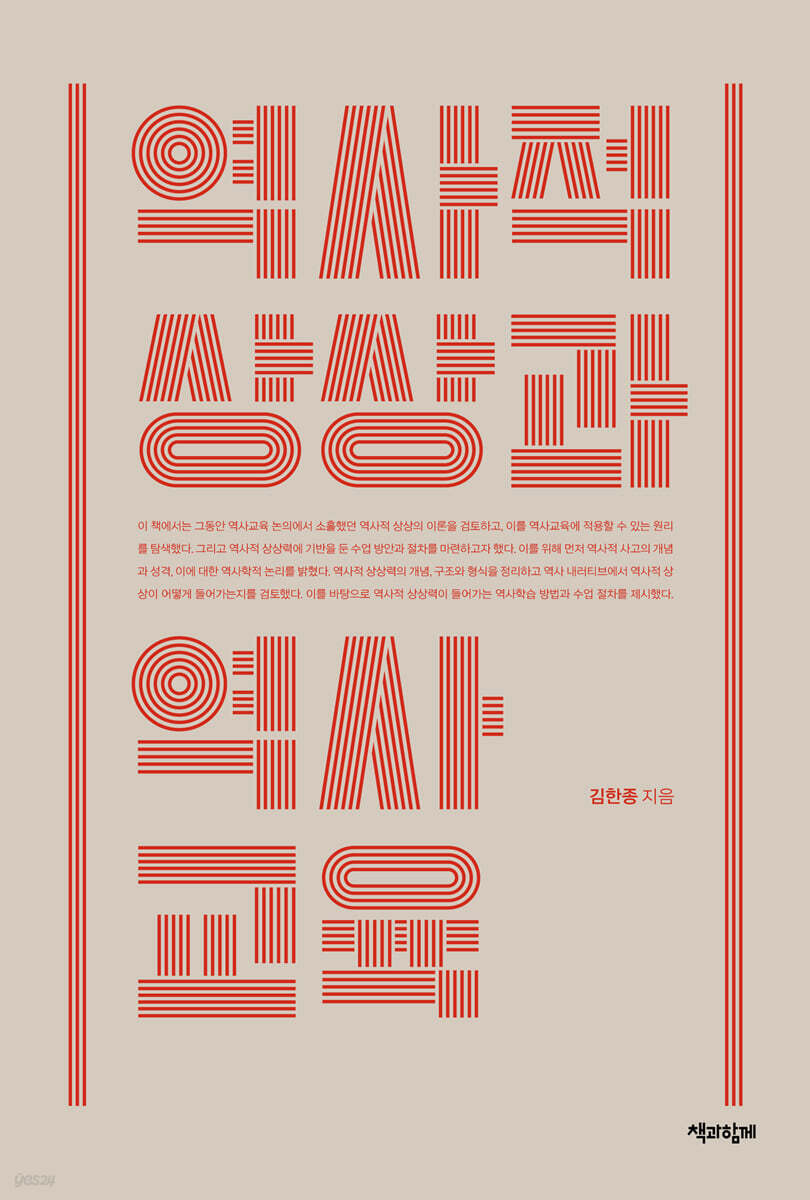
Historical imagination and historical education
 |
Description
Book Introduction
Imagination, a way of thinking essential to understanding history
How should it be utilized in history education?
Traditionally, the issue of imagination has been ignored or neglected in curriculum education.
Education emphasized developing students' logical analysis and rational reasoning skills.
In doing so, thinking has been dichotomously divided into rational and irrational thinking, and imagination has been considered a form of irrational thinking.
Discussions about historical thinking have also tended to focus on analytical or critical thinking.
However, in education, the critical and imaginative elements of thinking are not so clearly distinguished.
When imagination is said to be a conscious act of drawing images in the mind, it can be a rational and intelligent mental function, not a wild fantasy or irrational thought.
Because history is a duality of both recreation and explanation, art and science, these two ways of thinking often complement each other.
The fact that history has the character of recreation or art means that imagination is necessary for historical understanding.
Understanding history requires more imagination than natural or social science.
Historical imagination is not a purely creative act, but rather a necessary reconstruction of the past, used to reconstruct information that is not directly represented in the sources or to fill in gaps in the sources.
This book examines theories of historical thought and imagination from this critical perspective, systematizes the concept and properties of historical imagination as a way of understanding history, and explores learning methods for experiencing historical imagination.
How should it be utilized in history education?
Traditionally, the issue of imagination has been ignored or neglected in curriculum education.
Education emphasized developing students' logical analysis and rational reasoning skills.
In doing so, thinking has been dichotomously divided into rational and irrational thinking, and imagination has been considered a form of irrational thinking.
Discussions about historical thinking have also tended to focus on analytical or critical thinking.
However, in education, the critical and imaginative elements of thinking are not so clearly distinguished.
When imagination is said to be a conscious act of drawing images in the mind, it can be a rational and intelligent mental function, not a wild fantasy or irrational thought.
Because history is a duality of both recreation and explanation, art and science, these two ways of thinking often complement each other.
The fact that history has the character of recreation or art means that imagination is necessary for historical understanding.
Understanding history requires more imagination than natural or social science.
Historical imagination is not a purely creative act, but rather a necessary reconstruction of the past, used to reconstruct information that is not directly represented in the sources or to fill in gaps in the sources.
This book examines theories of historical thought and imagination from this critical perspective, systematizes the concept and properties of historical imagination as a way of understanding history, and explores learning methods for experiencing historical imagination.
- You can preview some of the book's contents.
Preview
index
Entering
introduction
1.
Raising an issue
2.
Research trends
3.
Book structure
Chapter 1: Understanding History and Historical Imagination
1.
The nature of historical thinking
2.
The logic of understanding history
3.
The concept of historical imagination
Chapter 2 Categories of Historical Imagination
1.
empathic understanding
2.
structural imagination
3.
historical judgment
Chapter 3: Historical Narrative and Historical Imagination
1.
The concept and imagination of historical narrative
2.
Imagination for narrative composition
3.
Historical imagination for narrative expression
Chapter 4: Historical Imagination and Historical Learning
1.
Historical imagination as a learning function
2.
Cognitive Development and Historical Imagination
3.
The development of historical imagination
4.
Historical Imagination Patterns of Middle and High School Students
Chapter 5: Historical Imagination-Based Historical Learning
1.
Role play
2.
Imaginative exploration of feed
3.
simulation game
conclusion
main
References
Search
introduction
1.
Raising an issue
2.
Research trends
3.
Book structure
Chapter 1: Understanding History and Historical Imagination
1.
The nature of historical thinking
2.
The logic of understanding history
3.
The concept of historical imagination
Chapter 2 Categories of Historical Imagination
1.
empathic understanding
2.
structural imagination
3.
historical judgment
Chapter 3: Historical Narrative and Historical Imagination
1.
The concept and imagination of historical narrative
2.
Imagination for narrative composition
3.
Historical imagination for narrative expression
Chapter 4: Historical Imagination and Historical Learning
1.
Historical imagination as a learning function
2.
Cognitive Development and Historical Imagination
3.
The development of historical imagination
4.
Historical Imagination Patterns of Middle and High School Students
Chapter 5: Historical Imagination-Based Historical Learning
1.
Role play
2.
Imaginative exploration of feed
3.
simulation game
conclusion
main
References
Search
Publisher's Review
Imagination, a way of thinking essential to understanding history
How should it be utilized in history education?
Traditionally, the issue of imagination has been ignored or neglected in curriculum education.
Education emphasized developing students' logical analysis and rational reasoning skills.
In doing so, thinking has been dichotomously divided into rational and irrational thinking, and imagination has been considered a form of irrational thinking.
Discussions about historical thinking have also tended to focus on analytical or critical thinking.
However, in education, the critical and imaginative elements of thinking are not so clearly distinguished.
When imagination is said to be a conscious act of drawing images in the mind, it can be a rational and intelligent mental function, not a wild fantasy or irrational thought.
Because history is a duality of both recreation and explanation, art and science, these two ways of thinking often complement each other.
The fact that history has the character of recreation or art means that imagination is necessary for historical understanding.
Understanding history requires more imagination than natural or social science.
Historical imagination is not a purely creative act, but rather a necessary reconstruction of the past, used to reconstruct information that is not directly represented in the sources or to fill in gaps in the sources.
This book examines theories of historical thought and imagination from this critical perspective, systematizes the concept and properties of historical imagination as a way of understanding history, and explores learning methods for experiencing historical imagination.
What is historical imagination?
How does it differ from imagination in other fields?
Until now, the concept of historical imagination has not been clearly defined.
Most discussions of the concept of historical imagination present its characteristics by comparing it with imaginations in other fields rather than directly presenting its meaning.
The nature of ‘historical imagination’ can be summarized in three points.
First, it is not fiction, but a realistic imagination.
Historical imagination is limited because it is based on facts.
Second, it is an imagination within the context of the past, not a present-day perspective.
The person who imagines is a person in the present, but the way he imagines is by inferring what people in the past thought.
Third, imagination about historical texts.
It is not about creating facts that do not appear in the sources or that are not what the sources say, but about extending one's thinking to meanings that the sources do not directly convey or that are not clear.
This book attempts to gradually concretize historical imagination, which may seem vague but is an essential keyword for understanding history, through various discussions and to apply it to actual history education.
To achieve this goal, the following questions are raised:
First, what are the distinctive ways of thinking that distinguish history from other disciplines or subjects? What are the characteristics of historical imagination, one of the key modes of historical thinking?
Second, what are the forms and properties of imagination that appear in historical research and history education? How should we categorize this historical imagination?
Third, what are the imaginative elements inherent in history education? And how should imagination be structured in history education going forward?
Fourth, how does historical imagination develop and what stages does it go through? What processes do students go through to reach imaginative understanding in their historical studies? And what types of historical imagination do students exhibit?
Fifth, how should we structure history classes based on historical imagination, and what learning activities should students experience in these classes?
Main contents and structure
To answer these questions, this book first explains the concept and nature of historical thinking, as well as its historical logic.
We have organized the concept, structure, and form of historical imagination as a characteristic way of historical thinking and examined how this historical imagination enters historical narratives.
Based on this, we proposed a method of learning history and a teaching procedure that incorporates historical imagination.
Chapter 1, “Understanding History and Historical Imagination,” deals with the concept of historical imagination.
The concept and nature of historical imagination were revealed through the differences between historical imagination and imagination commonly mentioned in society or imagination in other academic fields.
And the logic of understanding history, which can be seen as a characteristic way of historical thinking, was explored based on the theories of Dilthey, Collingwood, and Drey.
Chapter 2, “Categories of Historical Imagination,” literally organizes the categories of historical imagination.
Historical thinking refers to a category of thinking that has common properties.
Therefore, we can classify the thoughts corresponding to historical imagination according to their characteristics.
In this chapter, the categories of historical imagination are divided into empathic understanding, structural imagination, and historical judgment.
And we specified the historical imagination concepts and thought properties of each category.
In Chapter 3, “Historical Narrative and Historical Imagination,” I attempted to clarify the nature of historical imagination by comparing it with the imagination of literature or art.
Since historical imagination is based on the humanistic nature of history, the closest thing to it is the imagination of writers and artists.
The basic method of historical perception and description is narrative.
By examining what historical narratives share and what differences they have between them and narratives in literature or art, we can clarify the nature of historical imagination.
This is also a comparison between the imagination of the historian and the imagination of the writer.
Chapter 4, “Historical Imagination and Historical Learning,” analyzes how historical imagination is actually applied to school history education.
To this end, we analyzed the elements of imagination as a curriculum objective and classification of educational objectives, and examined how much it reflected the nature of historical imagination.
Next, we established the stages of historical empathy and structural imagination based on developmental theory, and confirmed the historical imagination of domestic middle and high school students through actual research.
Chapter 5, “Historical Learning Based on Historical Imagination,” presents a teaching method that provides an experience of historical imagination.
Role-playing, imaginative exploration of materials, and simulation games.
Students experience empathic understanding in role-playing, structural imagination in imaginative exploration of data, and both empathic understanding and structural imagination in simulation games.
This chapter explores the direction of these classes and provides specific lesson plans.
How should it be utilized in history education?
Traditionally, the issue of imagination has been ignored or neglected in curriculum education.
Education emphasized developing students' logical analysis and rational reasoning skills.
In doing so, thinking has been dichotomously divided into rational and irrational thinking, and imagination has been considered a form of irrational thinking.
Discussions about historical thinking have also tended to focus on analytical or critical thinking.
However, in education, the critical and imaginative elements of thinking are not so clearly distinguished.
When imagination is said to be a conscious act of drawing images in the mind, it can be a rational and intelligent mental function, not a wild fantasy or irrational thought.
Because history is a duality of both recreation and explanation, art and science, these two ways of thinking often complement each other.
The fact that history has the character of recreation or art means that imagination is necessary for historical understanding.
Understanding history requires more imagination than natural or social science.
Historical imagination is not a purely creative act, but rather a necessary reconstruction of the past, used to reconstruct information that is not directly represented in the sources or to fill in gaps in the sources.
This book examines theories of historical thought and imagination from this critical perspective, systematizes the concept and properties of historical imagination as a way of understanding history, and explores learning methods for experiencing historical imagination.
What is historical imagination?
How does it differ from imagination in other fields?
Until now, the concept of historical imagination has not been clearly defined.
Most discussions of the concept of historical imagination present its characteristics by comparing it with imaginations in other fields rather than directly presenting its meaning.
The nature of ‘historical imagination’ can be summarized in three points.
First, it is not fiction, but a realistic imagination.
Historical imagination is limited because it is based on facts.
Second, it is an imagination within the context of the past, not a present-day perspective.
The person who imagines is a person in the present, but the way he imagines is by inferring what people in the past thought.
Third, imagination about historical texts.
It is not about creating facts that do not appear in the sources or that are not what the sources say, but about extending one's thinking to meanings that the sources do not directly convey or that are not clear.
This book attempts to gradually concretize historical imagination, which may seem vague but is an essential keyword for understanding history, through various discussions and to apply it to actual history education.
To achieve this goal, the following questions are raised:
First, what are the distinctive ways of thinking that distinguish history from other disciplines or subjects? What are the characteristics of historical imagination, one of the key modes of historical thinking?
Second, what are the forms and properties of imagination that appear in historical research and history education? How should we categorize this historical imagination?
Third, what are the imaginative elements inherent in history education? And how should imagination be structured in history education going forward?
Fourth, how does historical imagination develop and what stages does it go through? What processes do students go through to reach imaginative understanding in their historical studies? And what types of historical imagination do students exhibit?
Fifth, how should we structure history classes based on historical imagination, and what learning activities should students experience in these classes?
Main contents and structure
To answer these questions, this book first explains the concept and nature of historical thinking, as well as its historical logic.
We have organized the concept, structure, and form of historical imagination as a characteristic way of historical thinking and examined how this historical imagination enters historical narratives.
Based on this, we proposed a method of learning history and a teaching procedure that incorporates historical imagination.
Chapter 1, “Understanding History and Historical Imagination,” deals with the concept of historical imagination.
The concept and nature of historical imagination were revealed through the differences between historical imagination and imagination commonly mentioned in society or imagination in other academic fields.
And the logic of understanding history, which can be seen as a characteristic way of historical thinking, was explored based on the theories of Dilthey, Collingwood, and Drey.
Chapter 2, “Categories of Historical Imagination,” literally organizes the categories of historical imagination.
Historical thinking refers to a category of thinking that has common properties.
Therefore, we can classify the thoughts corresponding to historical imagination according to their characteristics.
In this chapter, the categories of historical imagination are divided into empathic understanding, structural imagination, and historical judgment.
And we specified the historical imagination concepts and thought properties of each category.
In Chapter 3, “Historical Narrative and Historical Imagination,” I attempted to clarify the nature of historical imagination by comparing it with the imagination of literature or art.
Since historical imagination is based on the humanistic nature of history, the closest thing to it is the imagination of writers and artists.
The basic method of historical perception and description is narrative.
By examining what historical narratives share and what differences they have between them and narratives in literature or art, we can clarify the nature of historical imagination.
This is also a comparison between the imagination of the historian and the imagination of the writer.
Chapter 4, “Historical Imagination and Historical Learning,” analyzes how historical imagination is actually applied to school history education.
To this end, we analyzed the elements of imagination as a curriculum objective and classification of educational objectives, and examined how much it reflected the nature of historical imagination.
Next, we established the stages of historical empathy and structural imagination based on developmental theory, and confirmed the historical imagination of domestic middle and high school students through actual research.
Chapter 5, “Historical Learning Based on Historical Imagination,” presents a teaching method that provides an experience of historical imagination.
Role-playing, imaginative exploration of materials, and simulation games.
Students experience empathic understanding in role-playing, structural imagination in imaginative exploration of data, and both empathic understanding and structural imagination in simulation games.
This chapter explores the direction of these classes and provides specific lesson plans.
GOODS SPECIFICS
- Date of issue: December 14, 2024
- Page count, weight, size: 448 pages | 152*225*30mm
- ISBN13: 9791194263180
- ISBN10: 1194263186
You may also like
카테고리
korean


korean

![GQ KOREA Mark (Monthly): December [2025]](http://librairie.coreenne.fr/cdn/shop/files/8ef265dbbfbf186523ed75ba7319009d.jpg?v=1765340328&width=3840)


