

Second Art History
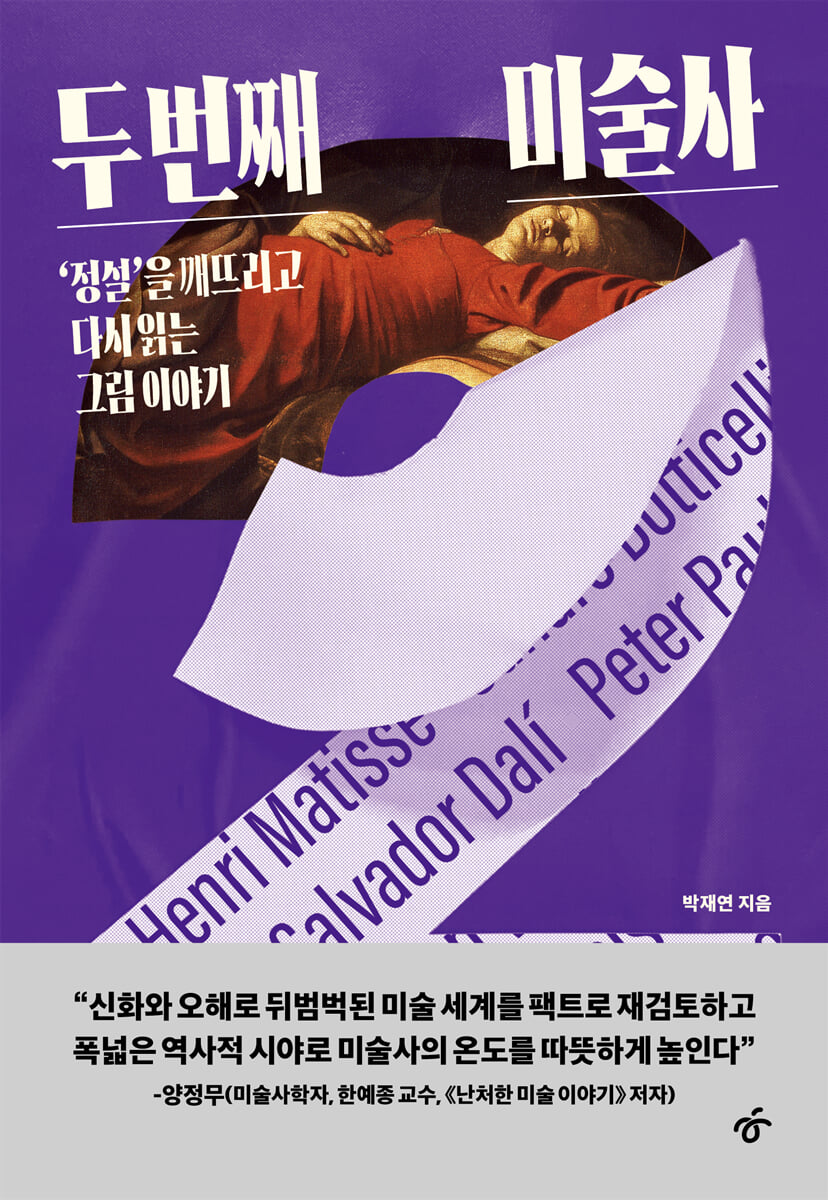 |
Description
Book Introduction
"Re-examining the art world, which is full of myths and misunderstandings, with facts
“Warming up the temperature of art history with a broad historical perspective.”
Yang Jeong-mu (art historian, professor at Han Ye-jong, author of "Embarrassing Stories of Art")
Beyond the myths of 'first,' 'original,' and 'genius'...
A delicate and three-dimensional 'second interpretation'
"Van Gogh didn't sell a single painting in his lifetime?" "Was Tahiti a primitive paradise for Gauguin?" "Da Vinci, from Italy, died in the arms of the King of France?"... The art education book "Second History of Art" has been published, boldly yet delicately reinterpreting the "myths" we've all heard and believed.
This book is written by Professor Jae-yeon Park of Ajou University, an art historian who has actively contributed to the popularization of art and culture and has received the Minister of Culture, Sports and Tourism Award for two consecutive years starting in 2023.
Professor Park, who has been reexamining the familiar and definitive art history we have learned and exploring the possibilities of artists and works that "must be constantly reread" from the perspective of a new era, examines the historical context in which widely known stories were born and the socio-cultural circumstances that supported these beliefs through 35 questions.
Breaking away from narratives centered on "masters" and "geniuses," "firsts" and "originals," "men" and "those in power," "The Second History of Art" begins with the premise that art always "transcends individual creation."
The fact that many of Rubens's works were created by the hands of his assistants and disciples may be considered a masterpiece by today's standards, but it is not such a simple matter when you look at the circumstances of the time.
Berthe Morisot was a key figure in establishing the Impressionist aesthetic, but her identity as an independent painter was long obscured by the description of her being the sister-in-law or model of the "master" Edouard Manet.
The Birth of Venus, now a well-known painting, has been quoted and adapted in countless movies, advertisements, and album covers, but was pushed out of art history for 400 years because Botticelli's style was considered "amateurish."
History is not 'fair'.
Some names are erased for some reason, and some works are rediscovered for some reason.
《The Second History of Art》 deconstructs the myths surrounding artists and their works, and focuses on the social conditions and institutional power hidden behind masters and masterpieces.
It follows the mechanisms of selection and oblivion that cannot be explained solely through the talent of an individual artist, using kind language and a broad perspective, ultimately suggesting that even at this very moment, there exist "unfinished stories" in the world of art.
“I wanted to calmly examine why such stories came into being and have persisted to this day, and also explore the cultural desires and power of memory that underlie why we tend to believe certain stories to be more true.
Ultimately, this book is also a small attempt to view art history itself as a cultural phenomenon.” _From the prologue
“Warming up the temperature of art history with a broad historical perspective.”
Yang Jeong-mu (art historian, professor at Han Ye-jong, author of "Embarrassing Stories of Art")
Beyond the myths of 'first,' 'original,' and 'genius'...
A delicate and three-dimensional 'second interpretation'
"Van Gogh didn't sell a single painting in his lifetime?" "Was Tahiti a primitive paradise for Gauguin?" "Da Vinci, from Italy, died in the arms of the King of France?"... The art education book "Second History of Art" has been published, boldly yet delicately reinterpreting the "myths" we've all heard and believed.
This book is written by Professor Jae-yeon Park of Ajou University, an art historian who has actively contributed to the popularization of art and culture and has received the Minister of Culture, Sports and Tourism Award for two consecutive years starting in 2023.
Professor Park, who has been reexamining the familiar and definitive art history we have learned and exploring the possibilities of artists and works that "must be constantly reread" from the perspective of a new era, examines the historical context in which widely known stories were born and the socio-cultural circumstances that supported these beliefs through 35 questions.
Breaking away from narratives centered on "masters" and "geniuses," "firsts" and "originals," "men" and "those in power," "The Second History of Art" begins with the premise that art always "transcends individual creation."
The fact that many of Rubens's works were created by the hands of his assistants and disciples may be considered a masterpiece by today's standards, but it is not such a simple matter when you look at the circumstances of the time.
Berthe Morisot was a key figure in establishing the Impressionist aesthetic, but her identity as an independent painter was long obscured by the description of her being the sister-in-law or model of the "master" Edouard Manet.
The Birth of Venus, now a well-known painting, has been quoted and adapted in countless movies, advertisements, and album covers, but was pushed out of art history for 400 years because Botticelli's style was considered "amateurish."
History is not 'fair'.
Some names are erased for some reason, and some works are rediscovered for some reason.
《The Second History of Art》 deconstructs the myths surrounding artists and their works, and focuses on the social conditions and institutional power hidden behind masters and masterpieces.
It follows the mechanisms of selection and oblivion that cannot be explained solely through the talent of an individual artist, using kind language and a broad perspective, ultimately suggesting that even at this very moment, there exist "unfinished stories" in the world of art.
“I wanted to calmly examine why such stories came into being and have persisted to this day, and also explore the cultural desires and power of memory that underlie why we tend to believe certain stories to be more true.
Ultimately, this book is also a small attempt to view art history itself as a cultural phenomenon.” _From the prologue
- You can preview some of the book's contents.
Preview
index
Prologue: Why Did We Believe That 'It' Was the Only Art History?
Chapter 1.
How the Myth of the Master is Created
· Van Gogh never sold a single painting in his entire life?
· Cezanne's apples don't rot?
· Were Picasso and Matisse on bad terms?
· Was Tahiti, where Gauguin arrived, a primitive paradise?
· Raised an anteater as a running pet?
Chapter 2.
How an Artist Becomes a Brand
· Rubens didn't paint alone?
· Did Michelangelo sign only one work?
· Even if it has Rembrandt's signature, it is not a Rembrandt work?
· Wasn't Millet's "The Angelus" initially a "national painting"?
· Are all the Gates of Hell around the world genuine Rodin works?
Chapter 3.
Who is remembered and who is forgotten
· Was de la Tour a painter of silence and seclusion?
· Was The Birth of Venus once completely forgotten?
· Morizo's death certificate says 'unemployed'?
· Was Frida a style icon even during her lifetime?
· Was Kandinsky the 'origin' of abstract art?
Chapter 4.
What to draw and what not to draw
· Did Dürer draw a rhinoceros he had never seen?
· Did Manet set up a bar for his last painting?
· Courbet called 30 people into his studio at once?
· Vermeer's studio faced south?
· Is “Judith Beheading” a painting of resentment?
Chapter 5.
Who is behind the artist?
· Da Vinci died in the arms of the King of France?
· Did the Pope favor Raphael over Michelangelo?
· Caravaggio committed murder and still received the Pope's support?
· Did Velazquez repaint “Las Meninas” three years later?
· David didn't get paid all the money for his paintings from Napoleon?
Chapter 6.
Why is the title of the work problematic?
· Didn't Ingres paint "Turkish Bath" in Türkiye?
· Magritte's 'Pipe' is not a pipe?
· Do all Warhol's Campbell's Soup Cans taste the same?
· Did the title of “Portrait of Madeleine” change 200 years later?
· The character in “Scream” isn’t actually screaming?
Chapter 7.
How Art Museums Create Masterpieces
· Has the Metropolitan Museum of Art ever changed an artist's name?
· Has the Orangerie Museum begun construction for the “Water Lilies” series?
· Did the Louvre Museum hide all of its collections during the war?
· Were the walls of the art gallery originally red?
· Is entry into the art gallery warehouse strictly prohibited to visitors?
Chapter 1.
How the Myth of the Master is Created
· Van Gogh never sold a single painting in his entire life?
· Cezanne's apples don't rot?
· Were Picasso and Matisse on bad terms?
· Was Tahiti, where Gauguin arrived, a primitive paradise?
· Raised an anteater as a running pet?
Chapter 2.
How an Artist Becomes a Brand
· Rubens didn't paint alone?
· Did Michelangelo sign only one work?
· Even if it has Rembrandt's signature, it is not a Rembrandt work?
· Wasn't Millet's "The Angelus" initially a "national painting"?
· Are all the Gates of Hell around the world genuine Rodin works?
Chapter 3.
Who is remembered and who is forgotten
· Was de la Tour a painter of silence and seclusion?
· Was The Birth of Venus once completely forgotten?
· Morizo's death certificate says 'unemployed'?
· Was Frida a style icon even during her lifetime?
· Was Kandinsky the 'origin' of abstract art?
Chapter 4.
What to draw and what not to draw
· Did Dürer draw a rhinoceros he had never seen?
· Did Manet set up a bar for his last painting?
· Courbet called 30 people into his studio at once?
· Vermeer's studio faced south?
· Is “Judith Beheading” a painting of resentment?
Chapter 5.
Who is behind the artist?
· Da Vinci died in the arms of the King of France?
· Did the Pope favor Raphael over Michelangelo?
· Caravaggio committed murder and still received the Pope's support?
· Did Velazquez repaint “Las Meninas” three years later?
· David didn't get paid all the money for his paintings from Napoleon?
Chapter 6.
Why is the title of the work problematic?
· Didn't Ingres paint "Turkish Bath" in Türkiye?
· Magritte's 'Pipe' is not a pipe?
· Do all Warhol's Campbell's Soup Cans taste the same?
· Did the title of “Portrait of Madeleine” change 200 years later?
· The character in “Scream” isn’t actually screaming?
Chapter 7.
How Art Museums Create Masterpieces
· Has the Metropolitan Museum of Art ever changed an artist's name?
· Has the Orangerie Museum begun construction for the “Water Lilies” series?
· Did the Louvre Museum hide all of its collections during the war?
· Were the walls of the art gallery originally red?
· Is entry into the art gallery warehouse strictly prohibited to visitors?
Detailed image

Into the book
Johanna intentionally created a myth about Van Gogh by exhibiting his works in exhibitions across Europe, and these efforts, intertwined with the flow of modernist art in the early 20th century, elevated Van Gogh from a 'forgotten master' to a 'pioneer of modern art.'
--- p.16
Gauguin's life was never romantic.
(…) They left with difficulty with a small amount of support from the French government, but life there soon became difficult.
Eventually, he ended up doing manual labor at construction sites for the colonial authorities, and constantly sent letters to acquaintances in France, pleading, “Please send me money to buy paints, to buy bread.”
--- p.35
But ironically, after this signature, Michelangelo never signed any of his works again.
Giorgio Vasari, in his Lives of the Artists, reports that Michelangelo regretted signing the Pietà and swore to remain humble thereafter.
--- p.60
Even on her death certificate, her occupation was listed as 'unemployed,' and even after her death, Morisot's name disappeared from art history textbooks for a long time.
Her work remained in the hands of only a few collectors and was not exhibited or studied.
Under the description of 'Édouard Manet's sister-in-law' or 'his model', her identity as an independent painter was long forgotten and obscured.
--- p.103
The title 'First' should be annotated.
If we begin the genealogy of abstract painting with Kandinsky, we must also include Hilma af Klint for the balance of the narrative.
Although she pioneered abstraction in her own language, she worked in Sweden, a periphery of the European art world, and because she delayed publishing her work, she remained out of the mainstream art historical spotlight for a long time.
--- p.119
Artemisia created her first painting of Judith shortly after her painful sexual assault trial.
During the trial, she had to endure torture to establish her credibility, and the perpetrator escaped prison.
It is clear that this cruel memory left a deep mark on her.
But Judith Beheading Holofernes is more than that.
--- p.154
Vasari's records contain many inconsistencies.
He even incorrectly stated da Vinci's age as 75, eight years older than his actual age, and made unsubstantiated claims that da Vinci was obsessed with the Virgin Mary and suffered from severe tremors in his later years.
Vasari was a typical Renaissance writer who preferred to describe the biographies of great artists in a dramatic way rather than writing them down factually.
--- p.163
Goliath's severed head is a self-portrait of Caravaggio himself.
It is interpreted as a hint saying, “I offer my life (head) to you, so please save me.”
In fact, Cardinal Scipione uses his powerful influence to move his uncle, the Pope, to proceed with the process of pardoning Caravaggio.
--- p.181
This conflict was not simply a contractual misunderstanding, but a question about the standards of compensation between artists and those in power.
Because of this, David never produced the remaining two works, “The Welcome Ceremony at the City Hall” and “The Inauguration Ceremony.”
--- p.195
Benoit wanted to capture the individuality of this Madeleine in his painting, but in the description of the work exhibited at the Salon at the time, he did not reveal the model's real name and instead introduced her as "a black woman."
This was a custom of the time, but it was also a decision that reflected the anonymization and otherization of black people.
--- p.219
To move the massive marble sculpture, which is 2.75 meters tall and weighs 3 tons, Jozar and his staff installed a separate ramp along the 53 steps inside the museum and added dozens of layers of rubber pads and hemp cloth to prevent the sculpture from shaking.
One curator who witnessed this tense work recalled, “It was we, not Nike, who needed wings.”
--- p.16
Gauguin's life was never romantic.
(…) They left with difficulty with a small amount of support from the French government, but life there soon became difficult.
Eventually, he ended up doing manual labor at construction sites for the colonial authorities, and constantly sent letters to acquaintances in France, pleading, “Please send me money to buy paints, to buy bread.”
--- p.35
But ironically, after this signature, Michelangelo never signed any of his works again.
Giorgio Vasari, in his Lives of the Artists, reports that Michelangelo regretted signing the Pietà and swore to remain humble thereafter.
--- p.60
Even on her death certificate, her occupation was listed as 'unemployed,' and even after her death, Morisot's name disappeared from art history textbooks for a long time.
Her work remained in the hands of only a few collectors and was not exhibited or studied.
Under the description of 'Édouard Manet's sister-in-law' or 'his model', her identity as an independent painter was long forgotten and obscured.
--- p.103
The title 'First' should be annotated.
If we begin the genealogy of abstract painting with Kandinsky, we must also include Hilma af Klint for the balance of the narrative.
Although she pioneered abstraction in her own language, she worked in Sweden, a periphery of the European art world, and because she delayed publishing her work, she remained out of the mainstream art historical spotlight for a long time.
--- p.119
Artemisia created her first painting of Judith shortly after her painful sexual assault trial.
During the trial, she had to endure torture to establish her credibility, and the perpetrator escaped prison.
It is clear that this cruel memory left a deep mark on her.
But Judith Beheading Holofernes is more than that.
--- p.154
Vasari's records contain many inconsistencies.
He even incorrectly stated da Vinci's age as 75, eight years older than his actual age, and made unsubstantiated claims that da Vinci was obsessed with the Virgin Mary and suffered from severe tremors in his later years.
Vasari was a typical Renaissance writer who preferred to describe the biographies of great artists in a dramatic way rather than writing them down factually.
--- p.163
Goliath's severed head is a self-portrait of Caravaggio himself.
It is interpreted as a hint saying, “I offer my life (head) to you, so please save me.”
In fact, Cardinal Scipione uses his powerful influence to move his uncle, the Pope, to proceed with the process of pardoning Caravaggio.
--- p.181
This conflict was not simply a contractual misunderstanding, but a question about the standards of compensation between artists and those in power.
Because of this, David never produced the remaining two works, “The Welcome Ceremony at the City Hall” and “The Inauguration Ceremony.”
--- p.195
Benoit wanted to capture the individuality of this Madeleine in his painting, but in the description of the work exhibited at the Salon at the time, he did not reveal the model's real name and instead introduced her as "a black woman."
This was a custom of the time, but it was also a decision that reflected the anonymization and otherization of black people.
--- p.219
To move the massive marble sculpture, which is 2.75 meters tall and weighs 3 tons, Jozar and his staff installed a separate ramp along the 53 steps inside the museum and added dozens of layers of rubber pads and hemp cloth to prevent the sculpture from shaking.
One curator who witnessed this tense work recalled, “It was we, not Nike, who needed wings.”
--- p.246
Publisher's Review
Every work in art history has been selected, misunderstood, and then
Finally coming back
Doubting the established truth and 'fact-checking' are not meant to judge right and wrong.
I am not trying to deny the existing history of art.
The goal is to broaden our perspective on art by slightly twisting the stories we take for granted, exploring the contemporary context of why we believe things that way, and finding new possibilities for interpretation.
Chapter 1 reveals the complex and dynamic inner workings of how an artist is labeled a master by history, revealing facts that were previously obscured by the weight of the title "master."
It includes the background of Gauguin, who idealized Tahiti as an artistic paradise but attempted suicide due to his life in Tahitian life, which was not ideal at all, and Salvador Dali, who was nicknamed 'Avida Dollars' (the dollar-hungry one) due to his unique commercialism and 'flashy' behavior, taking a walk in Paris with an anteater.
Chapter 2 examines the collaboration, authenticity, and market logic behind 'branded' artists such as Rubens, Michelangelo, and Rodin.
The story of how the initially 'insignificant and ordinary' 'The Angelus' became France's 'national painting' is included, as well as the reason why not all works can be said to be Rembrandt's work even if they have his signature.
Chapter 3 focuses on the process of restoring those forgotten by history.
We recall de la Tour, who was almost forgotten after his death in the 17th century and then rediscovered in the 20th century with an 'unexpected' image overlaid on him, and Hilma af Klint, who created completely abstract paintings several years before Kandinsky, who is called the originator of abstract art.
Chapter 4 explores the meaning revealed in the selection and presentation of the subject matter of the work.
We delve into the unique language and visual philosophy that artists sought to express through artists like Dürer, who vividly recreated a rhinoceros without ever having seen one, and Courbet, who transformed his studio into a grand stage for the people of the time.
Chapter 5 is about patrons, those who 'helped' art for various purposes.
We see one model of the intertwining of power and art in Pope Julius II, who employed the two masters Michelangelo and Raphael together.
We can also see the tug-of-war between art and money, pride and interests in David, who never completed a large-scale project for imperial authority because he was not paid the amount he wanted for a painting by Napoleon.
Chapter 6 examines why the title of the work is problematic.
It shows what kind of misunderstandings or imagination arise from titles like “Turkish Bath” and “The Scream,” what twists and turns there were before the portrait’s name was changed from “Black Woman” to “Madeleine,” and how this changed the fate of the work.
Chapter 7 sheds light on the role of art museums, which goes beyond exhibiting and preserving masterpieces to 'perfecting' masterpieces into masterpieces.
The efforts of the Musée de l'Orangerie, which extensively renovated its entire gallery to accommodate Monet's massive Water Lilies, and the Louvre, which coded and, through dramatic anecdotes, "evacuated" major works like the Mona Lisa to a remote countryside during World War II, demonstrate the role of those who have given us the authority to now say that certain works are "historical."
“The reason Caravaggio was able to receive the support of the Pope and high-ranking clergy was not simply his genius.
(…) This point may be one aspect that shows that art has not always remained in a pure realm, and has sometimes been consumed strategically and politically.” _Page 183
A story of art that aims for the present through history
Second, third… Increasing the ‘version’
It's being used again at this very moment
The gaze of “Second Art History,” which looks back on the past, aims at the present through history.
Global auctions consistently produce astonishing winning bids, massive blockbuster exhibitions encourage consumers to purchase "certification shots" and "goods" rather than the artwork itself, and ever-evolving AI-generated images test the authority and boundaries of traditional art.
In the midst of this upheaval, we are asked again:
Where does the value of art come from? What makes a work a "masterpiece"? The message conveyed by "The Second History of Art" offers an age-old answer to these questions, yet still offers a valid hint.
Rubens's studio, one of the first artists to establish himself and his work as a kind of 'brand', marks the beginning of the collective creative model.
This impacts today's studio creative systems, artist brands, and even digital-era NFT art (an art form that uses blockchain technology to grant digital artworks unique certificates proving their originality and ownership).
In that the space itself was designed as a work of art, the Orangerie Museum's "Water Lilies" exhibition is a pioneering example of today's "immersive art," a prototype of the large-scale exhibition trend that "transforms" everything from space to the audience experience into a work of art.
Rembrandt's 17th-century painting, the subject of constant controversy over its authenticity, was even reproduced using a 21st-century artificial intelligence algorithm.
The 2016 project, "The Next Rembrandt," was a provocation that asked what "Rembrandt-ness" is, as it involved teaching AI the style, composition, light and shade, and even character depiction of over 300 of Rembrandt's paintings scattered around the world to create "new works that Rembrandt would have painted."
Pope Julius II, who employed Michelangelo and Raphael together and allowed them to 'coexist', is a model of the sophistication of political patronage, and can be an effective approach for countries and corporations to support artists today.
The word "unemployed" on Morisot's death certificate reminds us that there are still women and non-mainstream writers who are marginalized by institutions and markets simply because they are "minorities."
Readers of “The Second History of Art” will gain a language for reading today’s landscapes and confusion.
Art history is not a stuffed animal of the past; all works are selected, forgotten, and then summoned again according to the desires of the times, the logic of the market, the pressures of the system, and the demands of patrons.
Understanding this fact will lead us to realize that the same holds true for all artistic phenomena occurring here and now, and that the value and authority of art are influenced by such context.
Art history is being rewritten even at this very moment, with second, third, fourth… versions.
“In particular, materials that Morisot loved to work with, such as mirrors, windows, lace, dresses, and sunlight, are still deeply inspiring researchers exploring gender gaze and visuality today.
(…) An artist’s fame and position are not fixed.
“We must continue to ask who drew what and who valued it.” _pp. 105-106
Finally coming back
Doubting the established truth and 'fact-checking' are not meant to judge right and wrong.
I am not trying to deny the existing history of art.
The goal is to broaden our perspective on art by slightly twisting the stories we take for granted, exploring the contemporary context of why we believe things that way, and finding new possibilities for interpretation.
Chapter 1 reveals the complex and dynamic inner workings of how an artist is labeled a master by history, revealing facts that were previously obscured by the weight of the title "master."
It includes the background of Gauguin, who idealized Tahiti as an artistic paradise but attempted suicide due to his life in Tahitian life, which was not ideal at all, and Salvador Dali, who was nicknamed 'Avida Dollars' (the dollar-hungry one) due to his unique commercialism and 'flashy' behavior, taking a walk in Paris with an anteater.
Chapter 2 examines the collaboration, authenticity, and market logic behind 'branded' artists such as Rubens, Michelangelo, and Rodin.
The story of how the initially 'insignificant and ordinary' 'The Angelus' became France's 'national painting' is included, as well as the reason why not all works can be said to be Rembrandt's work even if they have his signature.
Chapter 3 focuses on the process of restoring those forgotten by history.
We recall de la Tour, who was almost forgotten after his death in the 17th century and then rediscovered in the 20th century with an 'unexpected' image overlaid on him, and Hilma af Klint, who created completely abstract paintings several years before Kandinsky, who is called the originator of abstract art.
Chapter 4 explores the meaning revealed in the selection and presentation of the subject matter of the work.
We delve into the unique language and visual philosophy that artists sought to express through artists like Dürer, who vividly recreated a rhinoceros without ever having seen one, and Courbet, who transformed his studio into a grand stage for the people of the time.
Chapter 5 is about patrons, those who 'helped' art for various purposes.
We see one model of the intertwining of power and art in Pope Julius II, who employed the two masters Michelangelo and Raphael together.
We can also see the tug-of-war between art and money, pride and interests in David, who never completed a large-scale project for imperial authority because he was not paid the amount he wanted for a painting by Napoleon.
Chapter 6 examines why the title of the work is problematic.
It shows what kind of misunderstandings or imagination arise from titles like “Turkish Bath” and “The Scream,” what twists and turns there were before the portrait’s name was changed from “Black Woman” to “Madeleine,” and how this changed the fate of the work.
Chapter 7 sheds light on the role of art museums, which goes beyond exhibiting and preserving masterpieces to 'perfecting' masterpieces into masterpieces.
The efforts of the Musée de l'Orangerie, which extensively renovated its entire gallery to accommodate Monet's massive Water Lilies, and the Louvre, which coded and, through dramatic anecdotes, "evacuated" major works like the Mona Lisa to a remote countryside during World War II, demonstrate the role of those who have given us the authority to now say that certain works are "historical."
“The reason Caravaggio was able to receive the support of the Pope and high-ranking clergy was not simply his genius.
(…) This point may be one aspect that shows that art has not always remained in a pure realm, and has sometimes been consumed strategically and politically.” _Page 183
A story of art that aims for the present through history
Second, third… Increasing the ‘version’
It's being used again at this very moment
The gaze of “Second Art History,” which looks back on the past, aims at the present through history.
Global auctions consistently produce astonishing winning bids, massive blockbuster exhibitions encourage consumers to purchase "certification shots" and "goods" rather than the artwork itself, and ever-evolving AI-generated images test the authority and boundaries of traditional art.
In the midst of this upheaval, we are asked again:
Where does the value of art come from? What makes a work a "masterpiece"? The message conveyed by "The Second History of Art" offers an age-old answer to these questions, yet still offers a valid hint.
Rubens's studio, one of the first artists to establish himself and his work as a kind of 'brand', marks the beginning of the collective creative model.
This impacts today's studio creative systems, artist brands, and even digital-era NFT art (an art form that uses blockchain technology to grant digital artworks unique certificates proving their originality and ownership).
In that the space itself was designed as a work of art, the Orangerie Museum's "Water Lilies" exhibition is a pioneering example of today's "immersive art," a prototype of the large-scale exhibition trend that "transforms" everything from space to the audience experience into a work of art.
Rembrandt's 17th-century painting, the subject of constant controversy over its authenticity, was even reproduced using a 21st-century artificial intelligence algorithm.
The 2016 project, "The Next Rembrandt," was a provocation that asked what "Rembrandt-ness" is, as it involved teaching AI the style, composition, light and shade, and even character depiction of over 300 of Rembrandt's paintings scattered around the world to create "new works that Rembrandt would have painted."
Pope Julius II, who employed Michelangelo and Raphael together and allowed them to 'coexist', is a model of the sophistication of political patronage, and can be an effective approach for countries and corporations to support artists today.
The word "unemployed" on Morisot's death certificate reminds us that there are still women and non-mainstream writers who are marginalized by institutions and markets simply because they are "minorities."
Readers of “The Second History of Art” will gain a language for reading today’s landscapes and confusion.
Art history is not a stuffed animal of the past; all works are selected, forgotten, and then summoned again according to the desires of the times, the logic of the market, the pressures of the system, and the demands of patrons.
Understanding this fact will lead us to realize that the same holds true for all artistic phenomena occurring here and now, and that the value and authority of art are influenced by such context.
Art history is being rewritten even at this very moment, with second, third, fourth… versions.
“In particular, materials that Morisot loved to work with, such as mirrors, windows, lace, dresses, and sunlight, are still deeply inspiring researchers exploring gender gaze and visuality today.
(…) An artist’s fame and position are not fixed.
“We must continue to ask who drew what and who valued it.” _pp. 105-106
GOODS SPECIFICS
- Date of issue: September 24, 2025
- Page count, weight, size: 264 pages | 436g | 145*210*17mm
- ISBN13: 9791172133221
You may also like
카테고리
korean


korean

![GQ KOREA Mark (Monthly): December [2025]](http://librairie.coreenne.fr/cdn/shop/files/8ef265dbbfbf186523ed75ba7319009d.jpg?v=1765340328&width=3840)


