

cruel optimism
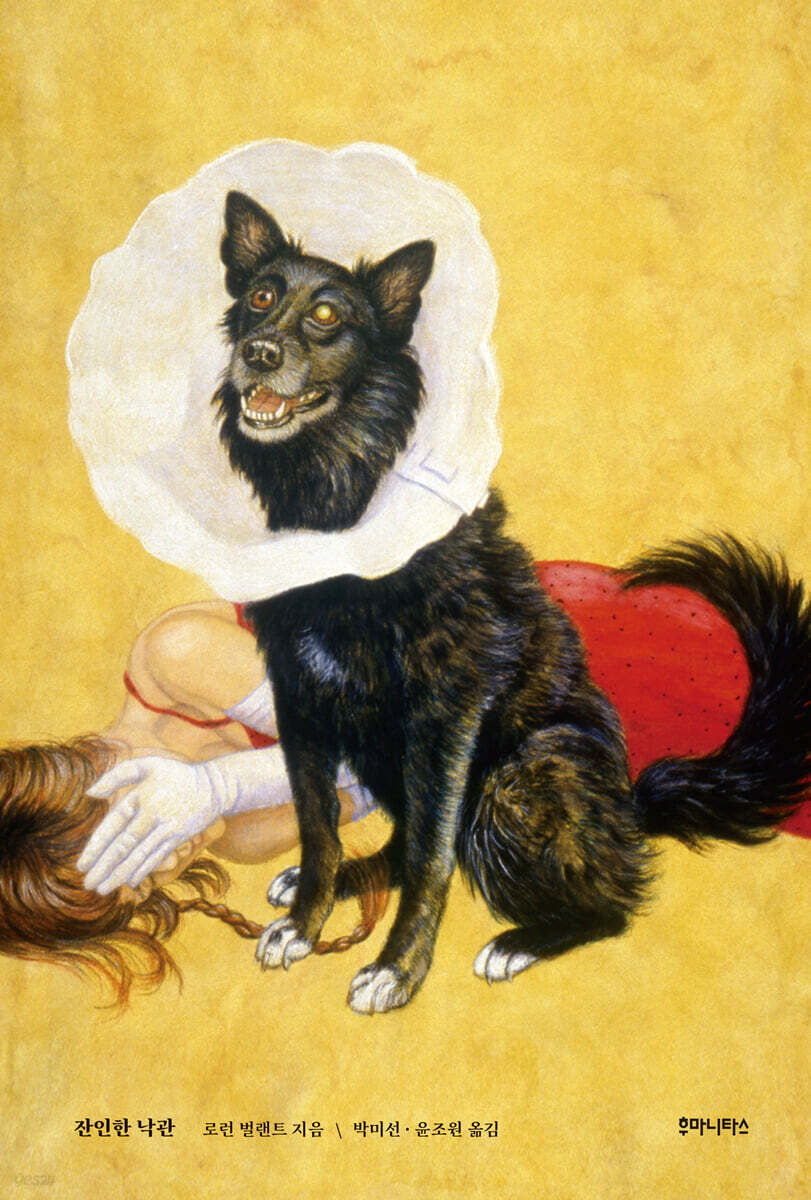 |
Description
Book Introduction
“Why can’t we escape capitalism, even though we know it doesn’t enrich our lives?”
“Why can’t we escape from relationships that hurt us?”
There is a cruel optimism involved when the object of one's desire becomes an obstacle to a better life.
The object could be something to eat or something like love.
It could be a fantasy of a good life, or it could be a political project.
… … This type of optimistic relationship is not inherently cruel.
An optimistic relationship becomes cruel when the object of attachment actively interferes with the achievement of the goal that led to the attachment in the first place.
This book examines the various relationships of cruel optimism, from the objects and scenes of social ascent and romantic love to the desire for politics itself.
“Why can’t we escape from relationships that hurt us?”
There is a cruel optimism involved when the object of one's desire becomes an obstacle to a better life.
The object could be something to eat or something like love.
It could be a fantasy of a good life, or it could be a political project.
… … This type of optimistic relationship is not inherently cruel.
An optimistic relationship becomes cruel when the object of attachment actively interferes with the achievement of the goal that led to the attachment in the first place.
This book examines the various relationships of cruel optimism, from the objects and scenes of social ascent and romantic love to the desire for politics itself.
- You can preview some of the book's contents.
Preview
index
Acknowledgements
Introduction: Current Emotions
Chapter 1: Cruel Optimism
1.
Optimism and its Object
2.
Target's promise
3.
Promise of exchange value
4.
Promise of Learning
Chapter 2 Intuitionists: History and the Emotional Event
1.
How We Live Now: Affect, Mediation, and Ideology
2.
Current histories
3.
Jeongdong area and events
4.
The Fallen and the Screaming: Anonymity and Trauma
Chapter 3: Slow Death: Obesity, Sovereignty, and Lateral Agency
1.
Slow Death and Sovereignty
2.
The concept of the case genre
3.
Actuarial Investigation of Obesity
4.
From distributed causality to interrupted agency
5.
Conclusion: Brutal and Everyday Nutrients
Chapter 4 Two Girls, Fat and Thin
1.
When you wish upon a star
2.
Someone said a wish?
3.
Conclusion: Post-Trauma Melodrama
Chapter 5: Almost Utopian, Almost Normal: The Emotions of the Post-Fordist Era in "The Promise" and "Rosetta"
1.
almost ……
2.
Psychoanalysis, Ethics, and Infancy
3.
A world of pain
Chapter 6: After the Good Life, Stagnant: "Time Out," "Human Resources," and the Precarious Present
1.
Always Now: Situation, Gesture, and Stagnation
2.
"It's normal to feel a little anxious": Ministry of Human Resources Development
3.
Why You Should Be Exempt: Time Out
Chapter 7: On the Desire for the Political
1.
Emotion, noise, silence, resistance: citizenship shaped by the surrounding atmosphere
2.
Feel the war through sound
3.
Silence recorded on tape
4.
Artworks from an era of clearly unstable collective transition
5.
Cruel optimism and a desire for the political
About the cover image: "If the Body: Middle-Aged Riva and Zora"
Translator's Note: Lauren Berlant's Affect Theory
Americas
References
Search
Introduction: Current Emotions
Chapter 1: Cruel Optimism
1.
Optimism and its Object
2.
Target's promise
3.
Promise of exchange value
4.
Promise of Learning
Chapter 2 Intuitionists: History and the Emotional Event
1.
How We Live Now: Affect, Mediation, and Ideology
2.
Current histories
3.
Jeongdong area and events
4.
The Fallen and the Screaming: Anonymity and Trauma
Chapter 3: Slow Death: Obesity, Sovereignty, and Lateral Agency
1.
Slow Death and Sovereignty
2.
The concept of the case genre
3.
Actuarial Investigation of Obesity
4.
From distributed causality to interrupted agency
5.
Conclusion: Brutal and Everyday Nutrients
Chapter 4 Two Girls, Fat and Thin
1.
When you wish upon a star
2.
Someone said a wish?
3.
Conclusion: Post-Trauma Melodrama
Chapter 5: Almost Utopian, Almost Normal: The Emotions of the Post-Fordist Era in "The Promise" and "Rosetta"
1.
almost ……
2.
Psychoanalysis, Ethics, and Infancy
3.
A world of pain
Chapter 6: After the Good Life, Stagnant: "Time Out," "Human Resources," and the Precarious Present
1.
Always Now: Situation, Gesture, and Stagnation
2.
"It's normal to feel a little anxious": Ministry of Human Resources Development
3.
Why You Should Be Exempt: Time Out
Chapter 7: On the Desire for the Political
1.
Emotion, noise, silence, resistance: citizenship shaped by the surrounding atmosphere
2.
Feel the war through sound
3.
Silence recorded on tape
4.
Artworks from an era of clearly unstable collective transition
5.
Cruel optimism and a desire for the political
About the cover image: "If the Body: Middle-Aged Riva and Zora"
Translator's Note: Lauren Berlant's Affect Theory
Americas
References
Search
Into the book
There is a cruel optimism involved when the object of one's desire becomes an obstacle to a better life.
The object could be something to eat or something like love.
It could be a fantasy of a good life, or it could be a political project.
It may be based on something simpler.
Like a new habit that promises to lead to a better way of being.
This type of optimistic relationship is not inherently cruel.
An optimistic relationship becomes cruel when the object of attachment actively interferes with the achievement of the goal that led to the attachment in the first place.
--- p.9
Whatever the specifics of the experience of optimism, the affective structure of optimistic attachment involves a persistent tendency to return to specific fantasy scenes.
The illusion is one that allows us to hope that this time, if we approach this object, it will help us change ourselves or the world in just the right way.
But when a person or a nation struggles to bring about widespread change, and the very thing or scene that sparked the idea that change was possible makes that change itself impossible, then optimism becomes cruel.
And when the pleasure of staying in a relationship becomes enduring, regardless of the content of the relationship, and when people or the world find themselves trapped in a situation that is both deeply threatening and deeply reassuring, optimism becomes doubly cruel.
--- p.10-11
"Cruel Optimism" does not cover the entire period from the late 20th century to the 21st century.
After the war, we believed in the democratic possibility of a good life for everyone, but the economic opportunities, social norms, and legal rights that fueled that great postwar optimism are now expanding unevenly.
This book does not thoroughly expose the fact that the state avoided intervention in this situation.
Instead, this book will cover mass media, literature, television, film, and video from 1990 onward, and will attempt to uncover the belatedly emerging sense centers of history as the optimistic, fantastical elements of structural change have waned in their ability to drive the world.
--- p.12
Each chapter in this book tells the story of the demise of an optimistic object/scenario that once held space for the illusion of a good life, and traces the drama of how we have adapted to situations in which the relationships that once seemed to form the foundation have been transformed into what we might call “cruel” optimism.
--- p.13
Typically, the term “stagnant” refers to a period of time when a person or situation is no longer making progress and is moving at a standstill.
In this book, the meaning of stagnation refers to a period of time in which we continue to act while feeling that the world is incomprehensible even though it appears vividly before our eyes.
So, living in a state of stagnation requires both a wandering consciousness that absorbs information and hypervigilance.
--- p.15
Even in relatively wealthy places like the United States, it exhausts or wears down the subject.
And the irony that in today's world the very labor that reproduces life soon becomes an activity that exhausts life has concrete implications for thinking about the everydayness of suffering, the violence of normativity, and the "art of patience" that postpones questions about the cruelty of the present moment with the concept of later.
Cruel optimism is, in this sense, a conception of a kind of lived immanence, which arises from a sense of why people do not become Bartlebys, why they do not want to engage with the multifaceted impoverishment that appears, but rather simply ride the wave of familiar systems of attachment, why they keep out of step with them, or why they prefer to remain in a relationship of resignation that does not imply reciprocity, reconciliation, or surrender.
The object could be something to eat or something like love.
It could be a fantasy of a good life, or it could be a political project.
It may be based on something simpler.
Like a new habit that promises to lead to a better way of being.
This type of optimistic relationship is not inherently cruel.
An optimistic relationship becomes cruel when the object of attachment actively interferes with the achievement of the goal that led to the attachment in the first place.
--- p.9
Whatever the specifics of the experience of optimism, the affective structure of optimistic attachment involves a persistent tendency to return to specific fantasy scenes.
The illusion is one that allows us to hope that this time, if we approach this object, it will help us change ourselves or the world in just the right way.
But when a person or a nation struggles to bring about widespread change, and the very thing or scene that sparked the idea that change was possible makes that change itself impossible, then optimism becomes cruel.
And when the pleasure of staying in a relationship becomes enduring, regardless of the content of the relationship, and when people or the world find themselves trapped in a situation that is both deeply threatening and deeply reassuring, optimism becomes doubly cruel.
--- p.10-11
"Cruel Optimism" does not cover the entire period from the late 20th century to the 21st century.
After the war, we believed in the democratic possibility of a good life for everyone, but the economic opportunities, social norms, and legal rights that fueled that great postwar optimism are now expanding unevenly.
This book does not thoroughly expose the fact that the state avoided intervention in this situation.
Instead, this book will cover mass media, literature, television, film, and video from 1990 onward, and will attempt to uncover the belatedly emerging sense centers of history as the optimistic, fantastical elements of structural change have waned in their ability to drive the world.
--- p.12
Each chapter in this book tells the story of the demise of an optimistic object/scenario that once held space for the illusion of a good life, and traces the drama of how we have adapted to situations in which the relationships that once seemed to form the foundation have been transformed into what we might call “cruel” optimism.
--- p.13
Typically, the term “stagnant” refers to a period of time when a person or situation is no longer making progress and is moving at a standstill.
In this book, the meaning of stagnation refers to a period of time in which we continue to act while feeling that the world is incomprehensible even though it appears vividly before our eyes.
So, living in a state of stagnation requires both a wandering consciousness that absorbs information and hypervigilance.
--- p.15
Even in relatively wealthy places like the United States, it exhausts or wears down the subject.
And the irony that in today's world the very labor that reproduces life soon becomes an activity that exhausts life has concrete implications for thinking about the everydayness of suffering, the violence of normativity, and the "art of patience" that postpones questions about the cruelty of the present moment with the concept of later.
Cruel optimism is, in this sense, a conception of a kind of lived immanence, which arises from a sense of why people do not become Bartlebys, why they do not want to engage with the multifaceted impoverishment that appears, but rather simply ride the wave of familiar systems of attachment, why they keep out of step with them, or why they prefer to remain in a relationship of resignation that does not imply reciprocity, reconciliation, or surrender.
--- p.55
Publisher's Review
1.
Cruel Optimism: Are You Still Dreaming?
Lauren Berlant describes the cruel optimism that prevailed in the West since the 1980s as the promises of postwar social democracy were being rolled back.
Despite the fact that today's liberal capitalist society no longer offers individuals the opportunity to improve their lives, many people still cling to fantasies of the unattainable good life: upward mobility, stable jobs, political and social equality, and lasting intimacy.
Although a step behind Western societies, Korean society has also rapidly transformed individual lives and the social landscape through industrialization.
Today we feel that our lives are becoming increasingly impoverished.
Prices go up after you wake up, stores close every day, and the weather changes so rapidly from day to day that it seems to make you forget the seasons.
But ironically, the harder it is to get something you want, the more 'good' it becomes, and the more unattainable the 'good life' becomes, the more it becomes an illusion.
Even amidst endless competition and the pressure to survive on one's own, countless people invest and maintain the illusion of an uncertain future: "Someday..."
We lament our society of each for himself, and we know that wealth is increasingly concentrated in the hands of a very small number of people, yet we all still dream of becoming rich.
"Cruel Optimism" examines the various relationships of cruel optimism, from social mobility and the objects and scenes of romantic love to the desire for politics itself.
Through this, we examine how the illusion and attachment to the good life wears down individuals striving for the 'good life' and erodes the political power of groups seeking to achieve it.
Throughout this book, I have argued that optimistic attachment becomes cruel when the object/scene of desire itself becomes an obstacle to the fulfillment of the very need that gives rise to the optimistic attachment.
But the very status of optimistic attachment as an organizing force in life makes it difficult to mediate the harm it causes.
Even if we recognize that the normative public sphere is the space of elite action, a space already shrinking, fragmented, and distant from ordinary citizens, this can be a relationship of cruel optimism when members of the polity periodically return to the rituals and scenes of their commitment to the polity.
- From the text
2.
Stagnant: Why Are We Still Clinging to Our Dreams?
Why can't I become rich? Why can't our children become doctors? Why can't some people become lawyers? Why can't we rise higher? We all know this all too well.
The fact is that wealth is born among the wealthy, and medicine has long been a family business.
So why do we desire wealth? What keeps us stuck in our current situation?
The approach adopted in "Cruel Optimism" to explain this reality begins with a critical reflection on the existing approach that has assumed the modern subject to be a rational individual based on rational calculation and rational judgment.
In other words, it can be said that existing literary/cultural criticism has developed around stories, meanings, and claims.
Traditional critics have sought to identify and explore words and phrases in literary works, including poetry, and have focused on how these construct the meaning and argument the work seeks to convey.
Marxists were interested in how the meaning of a text could be situated within a larger social and political context.
However, affect theory sees our world not only as composed of stories and assertions, but also as shaped by nonverbal effects such as feelings, moods, and emotions.
In other words, in order to understand the current state of cruel optimism that cannot be explained at all by conventional concepts of subjectivity such as individual reason, will, and rational choice, we need to focus on 'affect', which influences cognitive function through or with the body, and analyze why we are still bound to the outdated illusion of a 'better life' today.
What Berlant focuses on in 'Cruel Optimism' is 'affect' as an 'attachment' to a better life.
In other words, despite the fact that life is becoming impoverished due to optimism about a better future that has not yet arrived, paradoxically, it is the 'affective' function of 'attachment' to a better life that sustains the subject's present life.
On the one hand, the state of stagnation expresses our current situation of being stuck in place without getting any closer to our goal, but it also expresses the emotional mechanism that sustains life in the present for a subject who has not reached his goal.
That is, in a state of stagnation where loss and instability continue to increase, we feel anxious and fearful.
Therefore, we diligently try to gather the information necessary to understand and overcome the situation while remaining stagnant.
This is a time and space that leads people to constantly 'some' or 'manage the fishing ground', although they cannot get the object of their love, to obtain various qualifications so that they can get a position whenever it becomes available, and to study stocks and manage accounts with the dream of becoming a 'ttasang' someday.
Self-fulfillment is impossible, but today, we are even more absorbed in self-development, and that is precisely why we are living in a state of stagnation.
In this respect, cruel optimism is part of neoliberal affective governance, an affective mechanism that forces us to adapt ourselves to our times.
It's a truly brutal story, but the author argues that staying in this "state of stagnation" today may have already become a kind of hope for many.
In this respect, "Cruel Optimism" can be said to be an empirically grounded exploration of why and how people desire their own oppression.
Why do people cling to conventional illusions of the good life—enduring reciprocal relationships within couples, families, political systems, institutions, markets, and the workplace—when evidence abounds that such things are unstable, fragile, and costly?
- From the text
3.
Lateral agency and the politics of laterality
What to do.
How can we escape this cruel optimism? There is no clear answer.
This is because ‘politics’, which promised to help us live in a better society, is also leading us into a relationship of cruel optimism.
In other words, the very thing that politics (or the political) promised (i.e., a change of government) and its future are actually becoming obstacles to our leading better lives.
In this situation, what Berlant is paying attention to is lateral agency and the politics of laterality.
For example, if sovereign agency refers to the capacity for action to build, expand, and extend one's self and life through one's autonomous will and clear purpose, then 'lateral agency' refers to an affective survival strategy that operates in a realm where sovereign action is largely useless, or in other words, one is in a state of cruel optimism.
This is similar to the life of the protagonist in Herman Melville's novel Bartleby, not a mechanical life faithfully following a given work schedule, but a life that escapes it.
That is, “lateral subjectivity” refers to a kind of agency described as a kind of lateral movement, such as sidestepping, deviating, or taking a detour, which is distinct from the goal-oriented, linear, and unilinear movement of practical sovereignty that is generally normative.
In connection with the lateral agency that Berlant focuses on, namely the concept of “counter-dissipation,” we can imagine a new term recently coined among young people: “tangjinjam” (spending money or time lavishly on activities that provide momentary gratification without regard for macro goals or long-term plans).
If lateral agency is a departure from the linear, purposive actions of a subject moving toward a goal that is no longer attainable, then the politics of laterality begins with a departure from speaking out or communicating through institutional politics.
In other words, if conventional politics deals with social antagonism in the public sphere and presupposes a sovereign subject with autonomy and critical rationality, the politics of laterality means that people temporarily form an affective community by accidentally hearing the sounds around them (including complaints, grievances, and frustrations), and that this community, thus formed, moves sideways and deviates from the norm, thereby critically indicating the norm.
4.
Political depression and intimate public
Each chapter of "Cruel Optimism" tells the story of the objects of optimism that once gave birth to spaces where the illusion of a good life could take root, and the demise of those scenarios. It traces how we have adapted to situations where the relationships that once seemed to form the foundation of life have been transformed into relationships of so-called "cruel" optimism.
In particular, based on various popular culture texts (literature, television, film, video, etc.), it discovers and presents to readers compelling emotional, sentimental, and psychological spaces that help us understand contemporary political life in a consumer culture full of crisis.
For example, we can observe the emergence of an 'intimate public' as an alternative to the existing reality and public sphere being threatened.
Intimate publics emerge particularly amidst the deterioration of the public sphere.
In crisis situations that cannot be understood through existing frameworks or where help cannot be obtained through existing institutions or public forums, individuals gather and exchange the information necessary to live their lives by traversing various media.
Through informal networks that share this kind of information and knowledge, people exchange paradigms on how to live as best as possible. These entities are the "intimate publics."
Such 'intimate publics' are created by establishing within the public sphere a responsive mechanism of affective belonging that people can inhabit when there are few suitable normative institutions to rely on, trust in, or return to.
In this respect, Berlant's political thinking can be said to be less about exploring the possibility of resolving a crisis or restoring a damaged life, and more about the dilemma of adapting to a crisis that has become routine, and about a way of life that seeks continuation and survival even in an irreversible situation.
This exploration can be said to have emerged from a long-standing concern about the depression that is rampant on the left.
Depression can be seen as a response to a situation where we long for social change but change does not occur.
However, while Berlant faced the fact that fundamental change was difficult and did not actually occur, he also tried to politicize such depression and use it as a resource for trying something.
This is because the position of depression, which is not optimistic about change, is also an expression of a desire for the political.
This is precisely why Berlant focuses on ‘intimate publics.’
5.
Citizenship formed by the surrounding atmosphere
On the one hand, Berlant helps us better understand how and why the “working class has a non-revolutionary character,” or at least how and why people become attached to things that hurt them.
But it may also give us a better understanding of how people are already resisting new forms of power.
In this regard, the point to note in 『Cruel Optimism』 is “citizenship formed by the surrounding atmosphere.”
This concept refers to a temporary sense of political belonging (i.e., an affective community) created in response to sound, which refers to a peculiar form of politics that can emerge in an era described as one of constant crisis, namely 'political action as an act that does not tire of politics'.
“Citizenship formed by the surrounding atmosphere” refers to a form of politics that is formed in the atmosphere and space that arises when events, scenes, and dramas that spread sounds and emotions in the surrounding space meet the scenarios of social movements that discuss certain situations or issues (e.g., war and routine surveillance systems, AIDS and poverty, public mourning, 9/11, climate disasters, etc.), but does not directly intervene in the politics of the public sphere.
Cruel Optimism: Are You Still Dreaming?
Lauren Berlant describes the cruel optimism that prevailed in the West since the 1980s as the promises of postwar social democracy were being rolled back.
Despite the fact that today's liberal capitalist society no longer offers individuals the opportunity to improve their lives, many people still cling to fantasies of the unattainable good life: upward mobility, stable jobs, political and social equality, and lasting intimacy.
Although a step behind Western societies, Korean society has also rapidly transformed individual lives and the social landscape through industrialization.
Today we feel that our lives are becoming increasingly impoverished.
Prices go up after you wake up, stores close every day, and the weather changes so rapidly from day to day that it seems to make you forget the seasons.
But ironically, the harder it is to get something you want, the more 'good' it becomes, and the more unattainable the 'good life' becomes, the more it becomes an illusion.
Even amidst endless competition and the pressure to survive on one's own, countless people invest and maintain the illusion of an uncertain future: "Someday..."
We lament our society of each for himself, and we know that wealth is increasingly concentrated in the hands of a very small number of people, yet we all still dream of becoming rich.
"Cruel Optimism" examines the various relationships of cruel optimism, from social mobility and the objects and scenes of romantic love to the desire for politics itself.
Through this, we examine how the illusion and attachment to the good life wears down individuals striving for the 'good life' and erodes the political power of groups seeking to achieve it.
Throughout this book, I have argued that optimistic attachment becomes cruel when the object/scene of desire itself becomes an obstacle to the fulfillment of the very need that gives rise to the optimistic attachment.
But the very status of optimistic attachment as an organizing force in life makes it difficult to mediate the harm it causes.
Even if we recognize that the normative public sphere is the space of elite action, a space already shrinking, fragmented, and distant from ordinary citizens, this can be a relationship of cruel optimism when members of the polity periodically return to the rituals and scenes of their commitment to the polity.
- From the text
2.
Stagnant: Why Are We Still Clinging to Our Dreams?
Why can't I become rich? Why can't our children become doctors? Why can't some people become lawyers? Why can't we rise higher? We all know this all too well.
The fact is that wealth is born among the wealthy, and medicine has long been a family business.
So why do we desire wealth? What keeps us stuck in our current situation?
The approach adopted in "Cruel Optimism" to explain this reality begins with a critical reflection on the existing approach that has assumed the modern subject to be a rational individual based on rational calculation and rational judgment.
In other words, it can be said that existing literary/cultural criticism has developed around stories, meanings, and claims.
Traditional critics have sought to identify and explore words and phrases in literary works, including poetry, and have focused on how these construct the meaning and argument the work seeks to convey.
Marxists were interested in how the meaning of a text could be situated within a larger social and political context.
However, affect theory sees our world not only as composed of stories and assertions, but also as shaped by nonverbal effects such as feelings, moods, and emotions.
In other words, in order to understand the current state of cruel optimism that cannot be explained at all by conventional concepts of subjectivity such as individual reason, will, and rational choice, we need to focus on 'affect', which influences cognitive function through or with the body, and analyze why we are still bound to the outdated illusion of a 'better life' today.
What Berlant focuses on in 'Cruel Optimism' is 'affect' as an 'attachment' to a better life.
In other words, despite the fact that life is becoming impoverished due to optimism about a better future that has not yet arrived, paradoxically, it is the 'affective' function of 'attachment' to a better life that sustains the subject's present life.
On the one hand, the state of stagnation expresses our current situation of being stuck in place without getting any closer to our goal, but it also expresses the emotional mechanism that sustains life in the present for a subject who has not reached his goal.
That is, in a state of stagnation where loss and instability continue to increase, we feel anxious and fearful.
Therefore, we diligently try to gather the information necessary to understand and overcome the situation while remaining stagnant.
This is a time and space that leads people to constantly 'some' or 'manage the fishing ground', although they cannot get the object of their love, to obtain various qualifications so that they can get a position whenever it becomes available, and to study stocks and manage accounts with the dream of becoming a 'ttasang' someday.
Self-fulfillment is impossible, but today, we are even more absorbed in self-development, and that is precisely why we are living in a state of stagnation.
In this respect, cruel optimism is part of neoliberal affective governance, an affective mechanism that forces us to adapt ourselves to our times.
It's a truly brutal story, but the author argues that staying in this "state of stagnation" today may have already become a kind of hope for many.
In this respect, "Cruel Optimism" can be said to be an empirically grounded exploration of why and how people desire their own oppression.
Why do people cling to conventional illusions of the good life—enduring reciprocal relationships within couples, families, political systems, institutions, markets, and the workplace—when evidence abounds that such things are unstable, fragile, and costly?
- From the text
3.
Lateral agency and the politics of laterality
What to do.
How can we escape this cruel optimism? There is no clear answer.
This is because ‘politics’, which promised to help us live in a better society, is also leading us into a relationship of cruel optimism.
In other words, the very thing that politics (or the political) promised (i.e., a change of government) and its future are actually becoming obstacles to our leading better lives.
In this situation, what Berlant is paying attention to is lateral agency and the politics of laterality.
For example, if sovereign agency refers to the capacity for action to build, expand, and extend one's self and life through one's autonomous will and clear purpose, then 'lateral agency' refers to an affective survival strategy that operates in a realm where sovereign action is largely useless, or in other words, one is in a state of cruel optimism.
This is similar to the life of the protagonist in Herman Melville's novel Bartleby, not a mechanical life faithfully following a given work schedule, but a life that escapes it.
That is, “lateral subjectivity” refers to a kind of agency described as a kind of lateral movement, such as sidestepping, deviating, or taking a detour, which is distinct from the goal-oriented, linear, and unilinear movement of practical sovereignty that is generally normative.
In connection with the lateral agency that Berlant focuses on, namely the concept of “counter-dissipation,” we can imagine a new term recently coined among young people: “tangjinjam” (spending money or time lavishly on activities that provide momentary gratification without regard for macro goals or long-term plans).
If lateral agency is a departure from the linear, purposive actions of a subject moving toward a goal that is no longer attainable, then the politics of laterality begins with a departure from speaking out or communicating through institutional politics.
In other words, if conventional politics deals with social antagonism in the public sphere and presupposes a sovereign subject with autonomy and critical rationality, the politics of laterality means that people temporarily form an affective community by accidentally hearing the sounds around them (including complaints, grievances, and frustrations), and that this community, thus formed, moves sideways and deviates from the norm, thereby critically indicating the norm.
4.
Political depression and intimate public
Each chapter of "Cruel Optimism" tells the story of the objects of optimism that once gave birth to spaces where the illusion of a good life could take root, and the demise of those scenarios. It traces how we have adapted to situations where the relationships that once seemed to form the foundation of life have been transformed into relationships of so-called "cruel" optimism.
In particular, based on various popular culture texts (literature, television, film, video, etc.), it discovers and presents to readers compelling emotional, sentimental, and psychological spaces that help us understand contemporary political life in a consumer culture full of crisis.
For example, we can observe the emergence of an 'intimate public' as an alternative to the existing reality and public sphere being threatened.
Intimate publics emerge particularly amidst the deterioration of the public sphere.
In crisis situations that cannot be understood through existing frameworks or where help cannot be obtained through existing institutions or public forums, individuals gather and exchange the information necessary to live their lives by traversing various media.
Through informal networks that share this kind of information and knowledge, people exchange paradigms on how to live as best as possible. These entities are the "intimate publics."
Such 'intimate publics' are created by establishing within the public sphere a responsive mechanism of affective belonging that people can inhabit when there are few suitable normative institutions to rely on, trust in, or return to.
In this respect, Berlant's political thinking can be said to be less about exploring the possibility of resolving a crisis or restoring a damaged life, and more about the dilemma of adapting to a crisis that has become routine, and about a way of life that seeks continuation and survival even in an irreversible situation.
This exploration can be said to have emerged from a long-standing concern about the depression that is rampant on the left.
Depression can be seen as a response to a situation where we long for social change but change does not occur.
However, while Berlant faced the fact that fundamental change was difficult and did not actually occur, he also tried to politicize such depression and use it as a resource for trying something.
This is because the position of depression, which is not optimistic about change, is also an expression of a desire for the political.
This is precisely why Berlant focuses on ‘intimate publics.’
5.
Citizenship formed by the surrounding atmosphere
On the one hand, Berlant helps us better understand how and why the “working class has a non-revolutionary character,” or at least how and why people become attached to things that hurt them.
But it may also give us a better understanding of how people are already resisting new forms of power.
In this regard, the point to note in 『Cruel Optimism』 is “citizenship formed by the surrounding atmosphere.”
This concept refers to a temporary sense of political belonging (i.e., an affective community) created in response to sound, which refers to a peculiar form of politics that can emerge in an era described as one of constant crisis, namely 'political action as an act that does not tire of politics'.
“Citizenship formed by the surrounding atmosphere” refers to a form of politics that is formed in the atmosphere and space that arises when events, scenes, and dramas that spread sounds and emotions in the surrounding space meet the scenarios of social movements that discuss certain situations or issues (e.g., war and routine surveillance systems, AIDS and poverty, public mourning, 9/11, climate disasters, etc.), but does not directly intervene in the politics of the public sphere.
GOODS SPECIFICS
- Date of issue: June 17, 2024
- Page count, weight, size: 580 pages | 744g | 152*225*30mm
- ISBN13: 9788964374504
- ISBN10: 8964374509
You may also like
카테고리
korean


korean

![GQ KOREA Mark (Monthly): December [2025]](http://librairie.coreenne.fr/cdn/shop/files/8ef265dbbfbf186523ed75ba7319009d.jpg?v=1765340328&width=3840)


