

liberal constitutional theory
 |
Description
Book Introduction
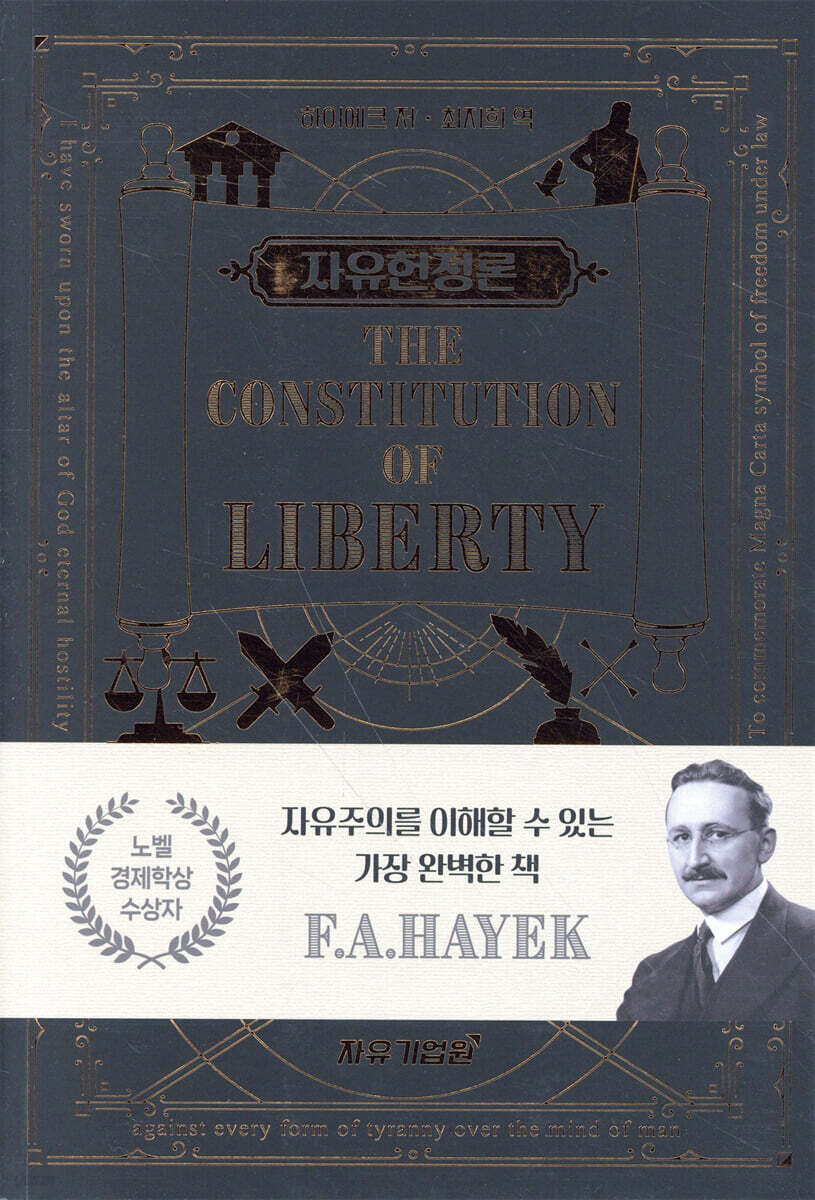
A User's Manual for "Freedom" Essential for Modern People We reexamine the meaning of freedom, which is the foundation of constitutional order and the rule of law! “The great political philosophy of our time” (Henry Hazlitt, British journalist) Through this book, you will be able to understand the true meaning of freedom and the constitutional order suited to the new era. What are some values that everyone considers important, but that everyone tends to have different opinions about? A representative example would be ‘freedom.’ In our society, too, there is a sharp conflict over the exact meaning of freedom. In line with this situation, Hayek's 『On the Constitution of Liberty』 was republished in a new edition. The Liberal Constitutional Theory was first translated and published in 1997, and was subsequently revised 26 years later. It explains in detail what freedom is and why it is precious to us living in the modern world. It also emphasizes that the proper implementation of the rule of law is impossible without freedom. This may be the most complete book to understand liberalism. When people think of Hayek, they often think of The Road to Serfdom. However, the importance of freedom that Hayek so emphasized shines through in this 『On the Constitution of Liberty』. This book, following Mill's "On Liberty," is like a definitive version that shows the essence of liberal thought. Let's solve our worries about freedom with this one book. |
index
Author's Preface
preface
Part 1: The Value of Freedom
1.
Freedom and liberties
2.
The creativity of free civilization
3.
Common sense of progress
4.
Freedom, reason, tradition
5.
Responsibility and Freedom
6.
Equality, value, and merit
7.
majority rule
8.
Employment and Independence
Part 2: Freedom and Law
9.
Force and the State
10.
law, order, command
11.
The origins of the rule of law
12.
America's Contribution: Constitutionalism
13.
Liberalism and Administration: The Rule of Law
14.
safeguards for individual liberty
15.
Economic policy and the rule of law
16.
Decline of the law
Part 3 Freedom in the Welfare State
17.
The Decline of Socialism and the Rise of the Welfare State
18.
Labor unions and employment
19.
social security
20.
Taxation and Redistribution
21.
monetary system
22.
Housing and Urban Planning
23.
Agriculture and Natural Resources
24.
Education and Research
Review: Why I'm Not a Conservative
annotation
About the Translator
preface
Part 1: The Value of Freedom
1.
Freedom and liberties
2.
The creativity of free civilization
3.
Common sense of progress
4.
Freedom, reason, tradition
5.
Responsibility and Freedom
6.
Equality, value, and merit
7.
majority rule
8.
Employment and Independence
Part 2: Freedom and Law
9.
Force and the State
10.
law, order, command
11.
The origins of the rule of law
12.
America's Contribution: Constitutionalism
13.
Liberalism and Administration: The Rule of Law
14.
safeguards for individual liberty
15.
Economic policy and the rule of law
16.
Decline of the law
Part 3 Freedom in the Welfare State
17.
The Decline of Socialism and the Rise of the Welfare State
18.
Labor unions and employment
19.
social security
20.
Taxation and Redistribution
21.
monetary system
22.
Housing and Urban Planning
23.
Agriculture and Natural Resources
24.
Education and Research
Review: Why I'm Not a Conservative
annotation
About the Translator
Into the book
In individuals, ambition, impatience, and haste can sometimes be desirable.
But it is very dangerous if this temperament leads to the exercise of coercive power, and if those who believe that their authority is based on superior wisdom are given the right to impose their beliefs on others, and if the course of events is influenced by these people.
I want our generation to understand that perfectionism, in all its various forms, has destroyed everything society has achieved, big or small.
Freedom ultimately reveals its value where human beings transcend their present selves, where novelty emerges and evaluation lies in the future.
The question of education and research thus returns us from a place where the consequences of freedom and regulation are far more distant and less visible, to a place where they most directly impact the ultimate values that are central to this book.
Nothing could be more fitting as a conclusion than the words of von Humboldt, quoted by John Stuart Mill a century ago at the beginning of On Liberty:
“The great and central principle upon which all the arguments developed in this book converge is that human development, in its richest diversity, is of absolute and essential importance.”
It should be emphasized that the rule of law limits the power of all governments, including the legislature, because it means that the government should never coerce individuals except to enforce known rules.
It is a principle of what law should be and a principle of the general properties that individual laws should have.
This is important because today the concept of the rule of law is often confused with the requirement of simple legality in governmental actions.
Of course, the rule of law presupposes complete legality, but that alone is not enough.
If the law gave the government unlimited power to do whatever it wanted, all of its actions would be legal, but they would not be under the rule of law.
Therefore, the rule of law is more than constitutionalism.
The rule of law requires that all laws follow certain principles.
But it is very dangerous if this temperament leads to the exercise of coercive power, and if those who believe that their authority is based on superior wisdom are given the right to impose their beliefs on others, and if the course of events is influenced by these people.
I want our generation to understand that perfectionism, in all its various forms, has destroyed everything society has achieved, big or small.
Freedom ultimately reveals its value where human beings transcend their present selves, where novelty emerges and evaluation lies in the future.
The question of education and research thus returns us from a place where the consequences of freedom and regulation are far more distant and less visible, to a place where they most directly impact the ultimate values that are central to this book.
Nothing could be more fitting as a conclusion than the words of von Humboldt, quoted by John Stuart Mill a century ago at the beginning of On Liberty:
“The great and central principle upon which all the arguments developed in this book converge is that human development, in its richest diversity, is of absolute and essential importance.”
It should be emphasized that the rule of law limits the power of all governments, including the legislature, because it means that the government should never coerce individuals except to enforce known rules.
It is a principle of what law should be and a principle of the general properties that individual laws should have.
This is important because today the concept of the rule of law is often confused with the requirement of simple legality in governmental actions.
Of course, the rule of law presupposes complete legality, but that alone is not enough.
If the law gave the government unlimited power to do whatever it wanted, all of its actions would be legal, but they would not be under the rule of law.
Therefore, the rule of law is more than constitutionalism.
The rule of law requires that all laws follow certain principles.
---From the text
Publisher's Review
#For the constitutional order of the new era, read this book!
A new era requires a new order.
How will the constitutional order of our lives change? Many modern liberal nations have achieved remarkable progress through the accumulation of numerous advances.
But now, those countries are trying to restrict individual freedom and expand the role of the state in the name of the 'welfare state'.
We must look closely at this, pay attention to it, and be alert.
Because any policy or system that is not properly established with the principles of freedom always poses a terrible threat to freedom.
We must be careful of moments when we place excessive trust in human reason.
Because from there, the achievements that history has built up begin to crumble.
This book will help us reawaken the importance of freedom, enabling us to advance further and faster in our society's progress.
Hayek's philosophical reflections reiterate the need for individual freedom and rights to be protected.
Furthermore, the importance of laws and systems to protect this is shown through this “Theory of Constitutional Freedom.”
#A book for the proper implementation of the rule of law
If we explore the forms of freedom presented in “Theory of Liberty and Constitutionalism,” we will be able to find clues to the proper implementation of the rule of law.
The rule of law means that “government should never coerce individuals except to enforce known rules.”
“It limits the powers of all governments, including the legislature.”
It is a national principle in which the law, not people, rules.
At first glance, it may seem oppressive and restrictive of freedom, but when the system of 'rule of law' functions properly, freedom can be fully felt.
Because when the rights of citizens guaranteed by law are violated, the rule of law strongly defends citizens and if they are not protected by the law, freedom cannot be considered protected.
Those who changed laws and institutions throughout history worked to protect freedom.
And based on these changing laws and systems, humanity has constantly been contemplating ways to govern to protect its freedom, and the 'rule of law' is considered a good alternative.
The country can be put on the right track only when the rule of law is properly implemented.
In order to ensure that this rule of law is implemented smoothly, it is essential to first have a good understanding of law and governance.
#Knowing freedom is the path to a just society.
Freedom has played a more important role than anything else in the growth and development of civilization.
This book, “Theory of Constitutional Freedom,” is a book that can correct misunderstandings about freedom and rediscover its importance.
Developed countries also have a much longer and more complex history of industrialization and democratization.
As a latecomer, we, Korea, must first observe the path paved by advanced countries, learn from what we can learn from them, and learn from what we cannot learn from them.
The word freedom occupies a significant place in the countless pages of the book 'History'.
It paradoxically shows that human history is a history of oppression, and that people have always recognized that freedom is directly related to 'justice'.
Freedom is a value that has long been longed for, especially on this Korean peninsula.
Representative examples include the freedom that citizens cried out for against the dictatorship and the freedom that they cried out for for independence during the Japanese colonial period.
Without the sacrifices and rewards of our people who endured these times, the free Republic of Korea would never have been established.
If you want to upgrade South Korea, read The New Era's Order.
The core content is contained in this “Theory of Constitutional Freedom.”
A new era requires a new order.
How will the constitutional order of our lives change? Many modern liberal nations have achieved remarkable progress through the accumulation of numerous advances.
But now, those countries are trying to restrict individual freedom and expand the role of the state in the name of the 'welfare state'.
We must look closely at this, pay attention to it, and be alert.
Because any policy or system that is not properly established with the principles of freedom always poses a terrible threat to freedom.
We must be careful of moments when we place excessive trust in human reason.
Because from there, the achievements that history has built up begin to crumble.
This book will help us reawaken the importance of freedom, enabling us to advance further and faster in our society's progress.
Hayek's philosophical reflections reiterate the need for individual freedom and rights to be protected.
Furthermore, the importance of laws and systems to protect this is shown through this “Theory of Constitutional Freedom.”
#A book for the proper implementation of the rule of law
If we explore the forms of freedom presented in “Theory of Liberty and Constitutionalism,” we will be able to find clues to the proper implementation of the rule of law.
The rule of law means that “government should never coerce individuals except to enforce known rules.”
“It limits the powers of all governments, including the legislature.”
It is a national principle in which the law, not people, rules.
At first glance, it may seem oppressive and restrictive of freedom, but when the system of 'rule of law' functions properly, freedom can be fully felt.
Because when the rights of citizens guaranteed by law are violated, the rule of law strongly defends citizens and if they are not protected by the law, freedom cannot be considered protected.
Those who changed laws and institutions throughout history worked to protect freedom.
And based on these changing laws and systems, humanity has constantly been contemplating ways to govern to protect its freedom, and the 'rule of law' is considered a good alternative.
The country can be put on the right track only when the rule of law is properly implemented.
In order to ensure that this rule of law is implemented smoothly, it is essential to first have a good understanding of law and governance.
#Knowing freedom is the path to a just society.
Freedom has played a more important role than anything else in the growth and development of civilization.
This book, “Theory of Constitutional Freedom,” is a book that can correct misunderstandings about freedom and rediscover its importance.
Developed countries also have a much longer and more complex history of industrialization and democratization.
As a latecomer, we, Korea, must first observe the path paved by advanced countries, learn from what we can learn from them, and learn from what we cannot learn from them.
The word freedom occupies a significant place in the countless pages of the book 'History'.
It paradoxically shows that human history is a history of oppression, and that people have always recognized that freedom is directly related to 'justice'.
Freedom is a value that has long been longed for, especially on this Korean peninsula.
Representative examples include the freedom that citizens cried out for against the dictatorship and the freedom that they cried out for for independence during the Japanese colonial period.
Without the sacrifices and rewards of our people who endured these times, the free Republic of Korea would never have been established.
If you want to upgrade South Korea, read The New Era's Order.
The core content is contained in this “Theory of Constitutional Freedom.”
GOODS SPECIFICS
- Date of issue: May 8, 2023
- Page count, weight, size: 768 pages | 153*223*40mm
- ISBN13: 9788984292703
- ISBN10: 8984292702
You may also like
카테고리
korean


korean

![GQ KOREA Mark (Monthly): December [2025]](http://librairie.coreenne.fr/cdn/shop/files/8ef265dbbfbf186523ed75ba7319009d.jpg?v=1765340328&width=3840)


