

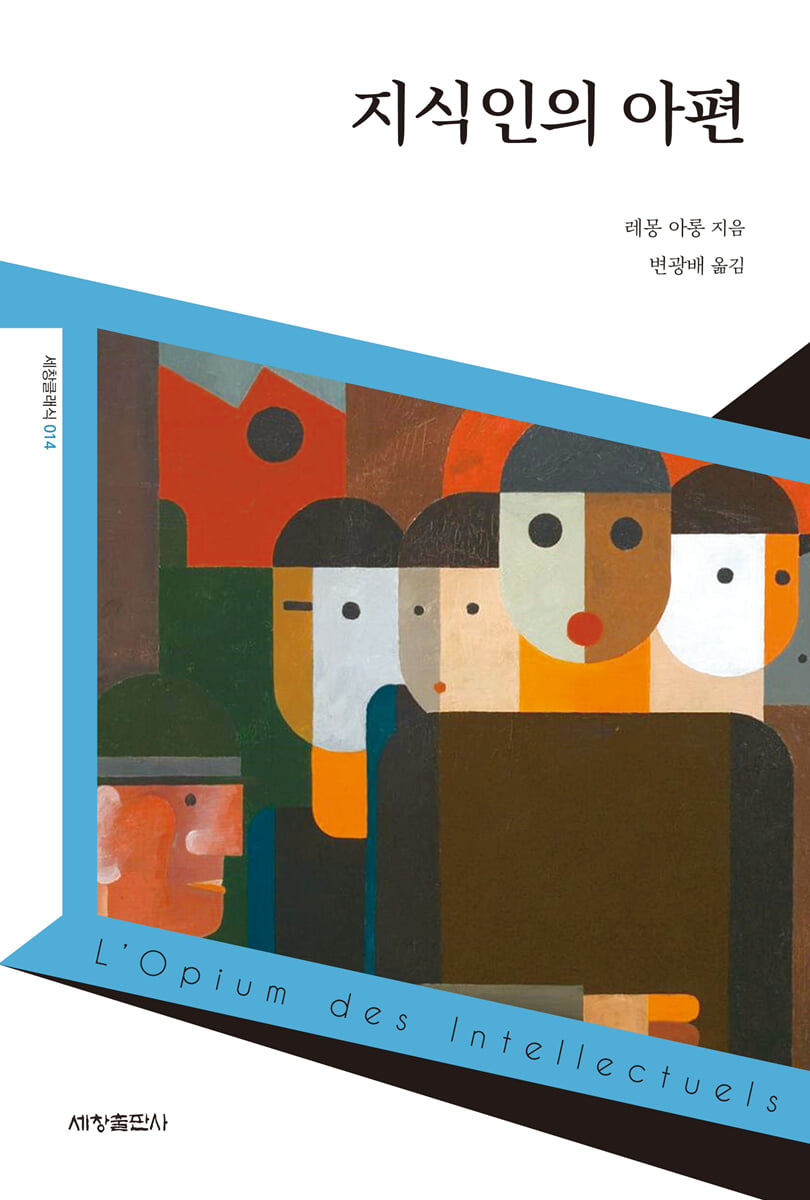
Opium of the intellectuals
 |
Description
Book Introduction
The opium of communism, based on Marxism, incites people to revolt. While trying to explain the attitude of intellectuals, who are merciless toward the flaws of democracy yet tolerant of the worst crimes committed under the guise of correct doctrine, I soon encountered the sacred words "left," "revolution," and "proletariat." The critique of their myths led me to reflect on the cult of history and to examine a social category to which sociologists have not yet shown any interest. That is 'Intelligentia'. As I, a member of a leftist family, put an end to this book dedicated to that family, I am inclined to sever all ties with that family. This is not about sinking into isolation. This is rather to select sympathizers from among those who know how to fight without hatred, and who do not consider the debate in the public square the secret of human destiny. |
- You can preview some of the book's contents.
Preview
index
introduction
Part 1 Political Myths
Chapter 1: The Myth of the Left
Retrospective myth
Separation of values
Dialectics of Institutions
Ideal and Reality
Chapter 2: The Myth of Revolution
The French Revolution and minor revolutions
The majesty of revolution
Rebellion and Revolution
Is the situation in France revolutionary?
Chapter 3: The Myth of the Proletariat
Definition of the proletariat
Real liberation and ideological liberation
The temptation of ideological liberation
The banality of realistic liberation
On political optimism
Part 2: Idolatry of History
Chapter 4: Clergy and Believers
The infallibility of the party
revolutionary idealism
Trial and Confession
About the so-called revolutionary justice
Chapter 5: The Meaning of History
plurality of meanings
Units of History
The purpose of history
History and Fanaticism
Chapter 6: The Illusion of Necessity
accidental determinism
Theoretical predictions
historical predictions
On dialectics
On the Dominance of History
Part 3: The Alienation of Intellectuals
Chapter 7: Intellectuals and Their Homelands
About 'Intelligentia'
Intelligentsia and Politics
Intellectuals' paradise
Hell for intellectuals
Chapter 8: Intellectuals and Ideology
Key Facts
National Debate
Japanese intellectuals and the French model
Indian and British influence
Chapter 9: Intellectuals in Search of Religion
economic opinions or secular religions
fighters and sympathizers
From civil religion to Stalinism
secular clericalism
The fate of 'Intelligentia'
Conclusion: Will the Age of Ideology End?
Translator's Note
Part 1 Political Myths
Chapter 1: The Myth of the Left
Retrospective myth
Separation of values
Dialectics of Institutions
Ideal and Reality
Chapter 2: The Myth of Revolution
The French Revolution and minor revolutions
The majesty of revolution
Rebellion and Revolution
Is the situation in France revolutionary?
Chapter 3: The Myth of the Proletariat
Definition of the proletariat
Real liberation and ideological liberation
The temptation of ideological liberation
The banality of realistic liberation
On political optimism
Part 2: Idolatry of History
Chapter 4: Clergy and Believers
The infallibility of the party
revolutionary idealism
Trial and Confession
About the so-called revolutionary justice
Chapter 5: The Meaning of History
plurality of meanings
Units of History
The purpose of history
History and Fanaticism
Chapter 6: The Illusion of Necessity
accidental determinism
Theoretical predictions
historical predictions
On dialectics
On the Dominance of History
Part 3: The Alienation of Intellectuals
Chapter 7: Intellectuals and Their Homelands
About 'Intelligentia'
Intelligentsia and Politics
Intellectuals' paradise
Hell for intellectuals
Chapter 8: Intellectuals and Ideology
Key Facts
National Debate
Japanese intellectuals and the French model
Indian and British influence
Chapter 9: Intellectuals in Search of Religion
economic opinions or secular religions
fighters and sympathizers
From civil religion to Stalinism
secular clericalism
The fate of 'Intelligentia'
Conclusion: Will the Age of Ideology End?
Translator's Note
Into the book
The leftist myth creates the illusion that the movement of history is a process of accumulating wealth for each generation, leading to a happy ending.
Thanks to socialism, the formal freedom won by the bourgeoisie can be supplemented with real freedom.
Of course, history is dialectical.
Not in the strict sense that the present communists give to the word.
---From "Chapter 1: The Myth of the Left"
The myth of revolution has complementary and opposing meanings.
The myth of revolution fosters the expectation of a radical break with the ordinary flow of human history.
The myth of revolution also seems to arise from reflection on the past.
Those who prepared for the French Revolution by spreading a way of thinking incompatible with the old system neither foresaw nor desired the complete collapse of the old world.
---From "Chapter 2: The Myth of Revolution"
Marxism is not a study of the misfortunes of the working class, but rather a philosophy of intellectuals who have seduced a part of the proletariat.
Moreover, communism, far from being the inherent philosophy of the proletariat, is merely using a pseudo-study called Marxism for its own purpose, namely, to seize power.
The workers do not believe that they have been chosen for the salvation of humanity.
They rather long for an ascent towards the bourgeoisie.
---From Chapter 3, The Myth of the Proletariat
The dogmatism of orthodox communists, whether sincere or in name only, threatens not only non-communists but also converts and traitors.
If a priest possessed universal truth, he would have no reason to fear professing a new faith to a pagan.
Such confessions take the form of an autobiography written by a non-believer in the categories and terms of a believer imposed upon him.
---From “Chapter 4: Clergy and Believers”
The error that arises from the combination of absolutism and relativism also does not conform to the logic of seeking to know human facts by going back to the past.
Historians, sociologists, and lawyers can derive 'multiple meanings' from actions, institutions, and laws.
But they cannot find a 'one' meaning for the whole.
History is not absurd.
But no one alive knows the ultimate meaning of history.
---From Chapter 5, The Meaning of History
We do not rule out the possibility that future development will lead to an economy with less capitalist elements.
We only assert that this development is not subject to rigid determinism resulting from conflicts between some fundamental variables.
Even considering only the main directions, such developments are not mere inevitability but form a complex history.
---From "Chapter 6: The Illusion of Necessity"
Intellectuals, in judging their countries and institutions, are more willing to contrast the present reality with ideas than with other realities.
For example, instead of comparing France today with France yesterday, they compare it to their own ideas about what France should be like.
No human institution can withstand such a test without being damaged.
---From Chapter 7: Intellectuals and Their Homeland
What constitutes the independence of communism is the dogma of its theory and the unconditional obedience of its fighters.
Such communism is intellectually inferior to the open and free interpretation of progressive ideology, but for those seeking faith it is probably superior.
Intellectuals who feel disconnected from anything are not satisfied with theory.
He wants certainty.
He wants a system.
The revolution gives him opium.
---From Chapter 8, Intellectuals and Ideology
Intellectuals devised ideologies, that is, systems of social interpretation.
This system contains an order of values, reforms to be achieved, and chaos to be feared or hoped for.
Those who criticized the Christian church in the name of 'reason' have come to accept secular doctrines.
Because they were not satisfied with partial knowledge, or because they envied the power given only to the bearers of 'truth'.
Thanks to socialism, the formal freedom won by the bourgeoisie can be supplemented with real freedom.
Of course, history is dialectical.
Not in the strict sense that the present communists give to the word.
---From "Chapter 1: The Myth of the Left"
The myth of revolution has complementary and opposing meanings.
The myth of revolution fosters the expectation of a radical break with the ordinary flow of human history.
The myth of revolution also seems to arise from reflection on the past.
Those who prepared for the French Revolution by spreading a way of thinking incompatible with the old system neither foresaw nor desired the complete collapse of the old world.
---From "Chapter 2: The Myth of Revolution"
Marxism is not a study of the misfortunes of the working class, but rather a philosophy of intellectuals who have seduced a part of the proletariat.
Moreover, communism, far from being the inherent philosophy of the proletariat, is merely using a pseudo-study called Marxism for its own purpose, namely, to seize power.
The workers do not believe that they have been chosen for the salvation of humanity.
They rather long for an ascent towards the bourgeoisie.
---From Chapter 3, The Myth of the Proletariat
The dogmatism of orthodox communists, whether sincere or in name only, threatens not only non-communists but also converts and traitors.
If a priest possessed universal truth, he would have no reason to fear professing a new faith to a pagan.
Such confessions take the form of an autobiography written by a non-believer in the categories and terms of a believer imposed upon him.
---From “Chapter 4: Clergy and Believers”
The error that arises from the combination of absolutism and relativism also does not conform to the logic of seeking to know human facts by going back to the past.
Historians, sociologists, and lawyers can derive 'multiple meanings' from actions, institutions, and laws.
But they cannot find a 'one' meaning for the whole.
History is not absurd.
But no one alive knows the ultimate meaning of history.
---From Chapter 5, The Meaning of History
We do not rule out the possibility that future development will lead to an economy with less capitalist elements.
We only assert that this development is not subject to rigid determinism resulting from conflicts between some fundamental variables.
Even considering only the main directions, such developments are not mere inevitability but form a complex history.
---From "Chapter 6: The Illusion of Necessity"
Intellectuals, in judging their countries and institutions, are more willing to contrast the present reality with ideas than with other realities.
For example, instead of comparing France today with France yesterday, they compare it to their own ideas about what France should be like.
No human institution can withstand such a test without being damaged.
---From Chapter 7: Intellectuals and Their Homeland
What constitutes the independence of communism is the dogma of its theory and the unconditional obedience of its fighters.
Such communism is intellectually inferior to the open and free interpretation of progressive ideology, but for those seeking faith it is probably superior.
Intellectuals who feel disconnected from anything are not satisfied with theory.
He wants certainty.
He wants a system.
The revolution gives him opium.
---From Chapter 8, Intellectuals and Ideology
Intellectuals devised ideologies, that is, systems of social interpretation.
This system contains an order of values, reforms to be achieved, and chaos to be feared or hoped for.
Those who criticized the Christian church in the name of 'reason' have come to accept secular doctrines.
Because they were not satisfied with partial knowledge, or because they envied the power given only to the bearers of 'truth'.
---From Chapter 9, “Intellectuals in Search of Religion”
Publisher's Review
Raymond Aron, the Thinker We Never Knew
The name Raymond Aron is not familiar to us.
This is especially true when compared to the huge names of Sartre, Merleau-Ponty, and Camus, who left their mark on various ideas during his time.
It is also not well known to us that Sartre and Aron were close friends.
However, Arong himself was a person with a great interest in Korea.
He 'claimed' that the Korean War began with North Korea's provocations from the beginning of the war.
It is a clear fact now, but considering that there were many people at the time, like Sartre, who argued that our country was to blame for the situation, I cannot help but appreciate his insight.
So why, then, should we revisit the previously unknown figure of Arong? We must consider his "reinstatement" in the 21st century.
In France, Sartre's hometown, the 21st century saw the restoration of Aron and the fall of Sartre.
Why did France suddenly push out Sartre, who held a prominent position, and elevate Aron? Considering the influence French philosophy has on our country, we cannot help but notice this surprising phenomenon.
Isn't it surprising that Sartre has fallen and his ideological adversary has risen?
There is one more surprising thing.
The fact is that Aron himself was a socialist and a 'member of the left-wing family' before the end of World War II.
In liberated France, where the left had gained hegemony, Arong declared his break with the left as an 'alienated' intellectual and became an advocate of liberal democracy.
Why did he become such a "loner"? Why did he become a self-exiled intellectual, a self-imposed "isolated island"? It was to fulfill his duty as an intellectual.
Although the French intellectual world turned its back on him, he remained an 'intellectual' to the end.
Returning to the previous story, why did the French intellectual community begin to pay attention to Aron again? It stemmed from the so-called new millennium, the crisis of the left.
The revolution has now changed direction.
People argued for a molecular revolution rather than a total revolution.
The Soviet Union collapsed, and leftist intellectuals lost their way.
In this situation of disappearance of leftist intellectuals, it was natural for them to look back at Arong, whom they had previously rejected.
And in the place I looked back, there stood a great intellectual who had silently walked the path of an intellectual.
It was a victory for the 'traitor' Raymond Aron.
Myth, History, and Alienation
When you hear the title "Opium of the Intellectuals," what comes to mind? Perhaps the famous saying, "Religion is the opium of the people" comes to mind? If so, you've hit the nail on the head.
‘Opium of the intellectuals’ is a symbolic expression that corresponds to ‘opium of the people’ and reveals that communism is the religion and opium of the intellectuals.
Aron divided this book into three parts to criticize French intellectuals who were intoxicated with the opium of communism.
These are “political myths,” “idolatry of history,” and “alienation of intellectuals.”
The 'political myths' discussed in Part 1 refer to three myths: 'the left', 'revolution', and 'proletariat'.
Arong argues in this section that there is no such thing as a unified 'left' in history.
Next, he asks who among those who call themselves leftists are truly leftists.
Again, the 'revolution' says that the disasters in the process have disappeared, and only the dignity remains, and asks where the revolution ends and where it stops.
And finally, it asks whether the 'mission' of the 'proletariat', and further, whether a single, united 'group' called the proletariat, really exists.
Arong is destroying the 'myth' through these questions.
Where myths collapse, ‘history’ emerges.
But what exactly does the "idolization of history" discussed in this section refer to? Does it refer to the idea of "historical judgment," a stern judgment that regards history as a stern judge? It refers to a revelatory view of history, one that holds that a specific "path" is set for history.
Arong criticizes the 'priests and believers' of history, saying that there is no such thing as a final meaning or inevitability in history.
Does history truly have a final destination? Whose victory does history proclaim? We all know.
The last denial, 'alienation of intellectuals', seems somewhat distant.
However, if you think about it for a moment, you will realize that when myths collapse and the meaning of history collapses, only 'alienation' remains.
Arong first talks about the relationship between ‘intellectuals and their homeland’ and ‘intellectuals and ideology’.
And intellectuals say that they eventually find religion.
Intellectuals, torn between their ideals and a different homeland, their reality and an ideology, eventually come to rely on a religion of their own making.
Communism has now become the 'opium of the intellectuals.'
Intellectuals' Criticism of Fanaticism
But who on earth admires communism these days? Of course, since the collapse of the Soviet Union, most of those who admired communism have either converted or disappeared.
At this point, one might wonder why one should read 『Opium of the Intellectuals』 at all.
However, what Arong wanted to criticize more than anything else in this book is the so-called fanatic belief in communism.
And this so-called 'fanatic belief' is not limited to communism.
Fanaticism is a tendency to reject critical thinking.
This is why we need to reread 『Opium of the Intellectuals』.
We value critical thinking, but we do not welcome critical thinking about ourselves.
Critical thinking is 'critical' only when it is directed at the other person, not at myself.
But if you are an intellectual, you should naturally be more critical of yourself.
Descartes even doubted his own existence, so how can intellectuals be certain of their beliefs? Intellectuals must be critical, both for themselves and for society.
Blind faith silences intellectuals, and silence drives society to the brink.
A society that does not allow criticism is no longer a human society.
Anyone who has watched the Netflix drama "Hellbound" will have seen the horrors of blind faith and blind obedience.
In a society where questioning is not permitted, critics are persecuted as apostates.
But how different is our society from the society in "hell"? The degree and the object of blind faith may be different, but doesn't our society also, to some extent, fiercely attack criticism and questioning? Or, rather, don't we even attack others simply for being different? Can we, can we, can you, can we face these questions with confidence? Even if we don't know what it is, aren't we still worshipping something?
"Opium of the Intellectuals" will free us from these myths.
Isn't there an intellectual who is showing us the way?
Of course, there may be criticisms about Arong as well.
But if you have any criticisms, feel free to criticize them.
Didn't André Gide say this in 'Bread of the Earth'?
“After you have read my story, throw this book away—and go outside.” We must take the time to reflect and see if we too have become intoxicated by a new opium under a different name.
And 『Opium of the Intellectuals』 is just a very easy way to help with that.
The name Raymond Aron is not familiar to us.
This is especially true when compared to the huge names of Sartre, Merleau-Ponty, and Camus, who left their mark on various ideas during his time.
It is also not well known to us that Sartre and Aron were close friends.
However, Arong himself was a person with a great interest in Korea.
He 'claimed' that the Korean War began with North Korea's provocations from the beginning of the war.
It is a clear fact now, but considering that there were many people at the time, like Sartre, who argued that our country was to blame for the situation, I cannot help but appreciate his insight.
So why, then, should we revisit the previously unknown figure of Arong? We must consider his "reinstatement" in the 21st century.
In France, Sartre's hometown, the 21st century saw the restoration of Aron and the fall of Sartre.
Why did France suddenly push out Sartre, who held a prominent position, and elevate Aron? Considering the influence French philosophy has on our country, we cannot help but notice this surprising phenomenon.
Isn't it surprising that Sartre has fallen and his ideological adversary has risen?
There is one more surprising thing.
The fact is that Aron himself was a socialist and a 'member of the left-wing family' before the end of World War II.
In liberated France, where the left had gained hegemony, Arong declared his break with the left as an 'alienated' intellectual and became an advocate of liberal democracy.
Why did he become such a "loner"? Why did he become a self-exiled intellectual, a self-imposed "isolated island"? It was to fulfill his duty as an intellectual.
Although the French intellectual world turned its back on him, he remained an 'intellectual' to the end.
Returning to the previous story, why did the French intellectual community begin to pay attention to Aron again? It stemmed from the so-called new millennium, the crisis of the left.
The revolution has now changed direction.
People argued for a molecular revolution rather than a total revolution.
The Soviet Union collapsed, and leftist intellectuals lost their way.
In this situation of disappearance of leftist intellectuals, it was natural for them to look back at Arong, whom they had previously rejected.
And in the place I looked back, there stood a great intellectual who had silently walked the path of an intellectual.
It was a victory for the 'traitor' Raymond Aron.
Myth, History, and Alienation
When you hear the title "Opium of the Intellectuals," what comes to mind? Perhaps the famous saying, "Religion is the opium of the people" comes to mind? If so, you've hit the nail on the head.
‘Opium of the intellectuals’ is a symbolic expression that corresponds to ‘opium of the people’ and reveals that communism is the religion and opium of the intellectuals.
Aron divided this book into three parts to criticize French intellectuals who were intoxicated with the opium of communism.
These are “political myths,” “idolatry of history,” and “alienation of intellectuals.”
The 'political myths' discussed in Part 1 refer to three myths: 'the left', 'revolution', and 'proletariat'.
Arong argues in this section that there is no such thing as a unified 'left' in history.
Next, he asks who among those who call themselves leftists are truly leftists.
Again, the 'revolution' says that the disasters in the process have disappeared, and only the dignity remains, and asks where the revolution ends and where it stops.
And finally, it asks whether the 'mission' of the 'proletariat', and further, whether a single, united 'group' called the proletariat, really exists.
Arong is destroying the 'myth' through these questions.
Where myths collapse, ‘history’ emerges.
But what exactly does the "idolization of history" discussed in this section refer to? Does it refer to the idea of "historical judgment," a stern judgment that regards history as a stern judge? It refers to a revelatory view of history, one that holds that a specific "path" is set for history.
Arong criticizes the 'priests and believers' of history, saying that there is no such thing as a final meaning or inevitability in history.
Does history truly have a final destination? Whose victory does history proclaim? We all know.
The last denial, 'alienation of intellectuals', seems somewhat distant.
However, if you think about it for a moment, you will realize that when myths collapse and the meaning of history collapses, only 'alienation' remains.
Arong first talks about the relationship between ‘intellectuals and their homeland’ and ‘intellectuals and ideology’.
And intellectuals say that they eventually find religion.
Intellectuals, torn between their ideals and a different homeland, their reality and an ideology, eventually come to rely on a religion of their own making.
Communism has now become the 'opium of the intellectuals.'
Intellectuals' Criticism of Fanaticism
But who on earth admires communism these days? Of course, since the collapse of the Soviet Union, most of those who admired communism have either converted or disappeared.
At this point, one might wonder why one should read 『Opium of the Intellectuals』 at all.
However, what Arong wanted to criticize more than anything else in this book is the so-called fanatic belief in communism.
And this so-called 'fanatic belief' is not limited to communism.
Fanaticism is a tendency to reject critical thinking.
This is why we need to reread 『Opium of the Intellectuals』.
We value critical thinking, but we do not welcome critical thinking about ourselves.
Critical thinking is 'critical' only when it is directed at the other person, not at myself.
But if you are an intellectual, you should naturally be more critical of yourself.
Descartes even doubted his own existence, so how can intellectuals be certain of their beliefs? Intellectuals must be critical, both for themselves and for society.
Blind faith silences intellectuals, and silence drives society to the brink.
A society that does not allow criticism is no longer a human society.
Anyone who has watched the Netflix drama "Hellbound" will have seen the horrors of blind faith and blind obedience.
In a society where questioning is not permitted, critics are persecuted as apostates.
But how different is our society from the society in "hell"? The degree and the object of blind faith may be different, but doesn't our society also, to some extent, fiercely attack criticism and questioning? Or, rather, don't we even attack others simply for being different? Can we, can we, can you, can we face these questions with confidence? Even if we don't know what it is, aren't we still worshipping something?
"Opium of the Intellectuals" will free us from these myths.
Isn't there an intellectual who is showing us the way?
Of course, there may be criticisms about Arong as well.
But if you have any criticisms, feel free to criticize them.
Didn't André Gide say this in 'Bread of the Earth'?
“After you have read my story, throw this book away—and go outside.” We must take the time to reflect and see if we too have become intoxicated by a new opium under a different name.
And 『Opium of the Intellectuals』 is just a very easy way to help with that.
GOODS SPECIFICS
- Date of issue: January 5, 2022
- Page count, weight, size: 432 pages | 634g | 153*225*20mm
- ISBN13: 9791166840708
- ISBN10: 1166840700
You may also like
카테고리
korean


korean

![GQ KOREA Mark (Monthly): December [2025]](http://librairie.coreenne.fr/cdn/shop/files/8ef265dbbfbf186523ed75ba7319009d.jpg?v=1765340328&width=3840)


