

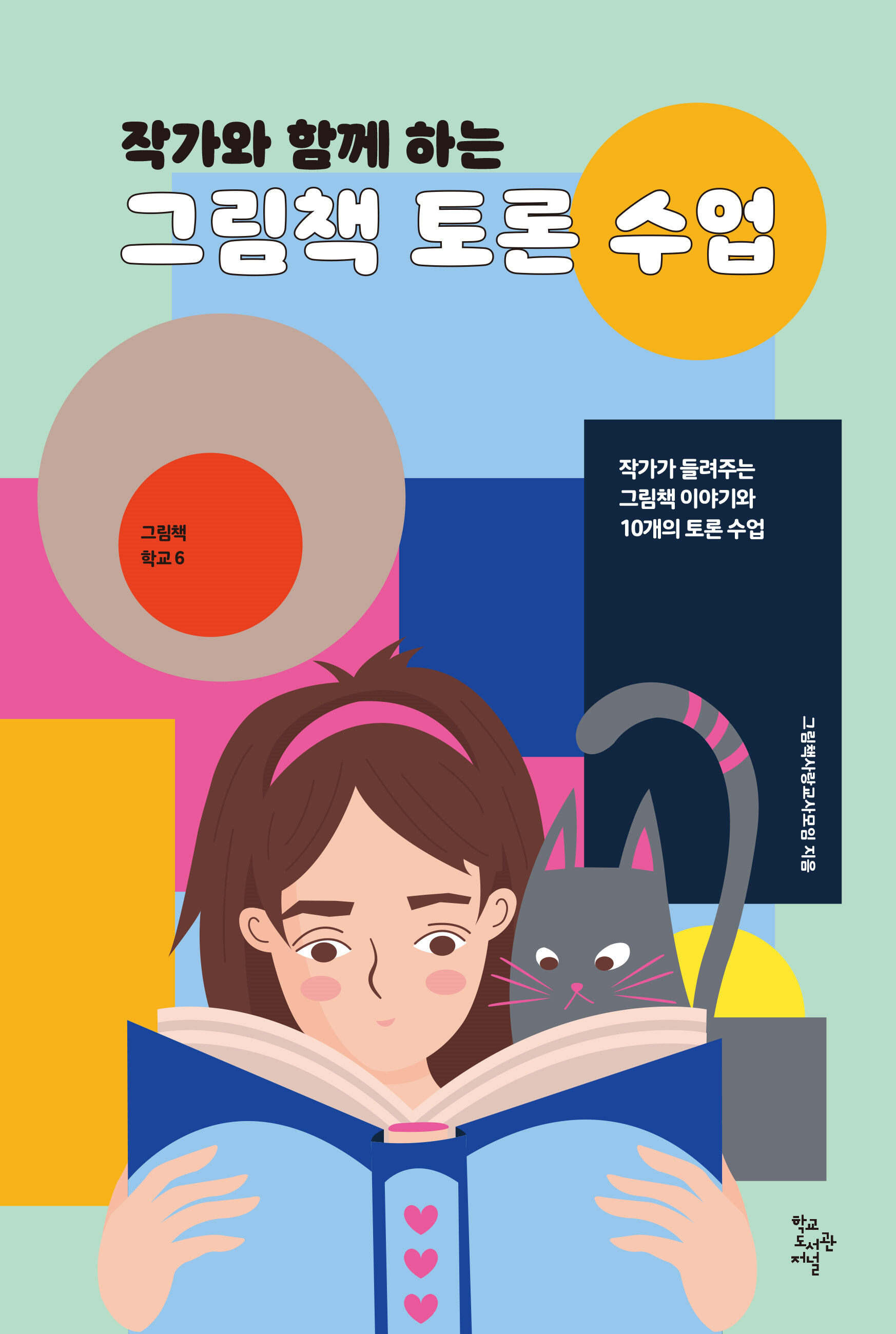
Picture book discussion class with the author
 |
Description
Book Introduction
A book containing interviews with 10 picture book authors and 10 discussion classes.
Ten of Korea's leading picture book authors will share stories about their lives and works and pose questions for discussion classes.
Then, a special discussion class begins in the classroom with questions from the author, questions from students, and questions from the teacher.
You can have more in-depth discussion classes with a rich structure that includes pre- and post-discussion activities, various examples, detailed lesson plans, and introductions to good picture books to read together.
Ten of Korea's leading picture book authors will share stories about their lives and works and pose questions for discussion classes.
Then, a special discussion class begins in the classroom with questions from the author, questions from students, and questions from the teacher.
You can have more in-depth discussion classes with a rich structure that includes pre- and post-discussion activities, various examples, detailed lesson plans, and introductions to good picture books to read together.
- You can preview some of the book's contents.
Preview
index
Chapter 1: Understanding the Author's Intention and Discussing It in Class
Picture books that encourage children to ask questions
Discussion classes anyone can participate in
A vivid interview with the author to understand the work
Understand the author's intention and discuss it
Conducting a discussion class using picture books
Chapter 2: Understanding the Author and His Works and Discussing Picture Books
"The Wire Elephant" (by Go Jeong-sun), which teaches you how to overcome a breakup.
- Discussion on the Six-Color Thinking Hat
『Zoo』, where animals and humans are both happy (Lee Su-ji)
- Reading Marvel Discussion
A Different Perspective on Disability: "Look Up!" (Jin-ho Jeong)
- Fishbone Discussion
The Rejection Method for Building True Relationships: "Mr. Bear's Chair" (Noh In-gyeong)
- Mandala Discussion
"Santa Grandma" (Jin Su-kyung), which teaches the process of finding one's dreams
- Post-it interview discussion
"Our Happy Family" (Han Seong-ok), which teaches consideration for others
- 5Why Discussion
"Other People" (Sorry) - Acknowledging and Coexisting with Each Other's Differences
- IF~Discussion
A Wonderful Day (Ahn Shin-ae), a reflection on life and coexistence
- Thought Cog Discussion
"The Worry Box" (by Jo Mi-ja), a book that helps us understand each other's feelings
- Question-making discussion
How to Remember Painful History: Sixteen (Kwon Yoon-deok)
- Question-type semantic map discussion
Picture books that encourage children to ask questions
Discussion classes anyone can participate in
A vivid interview with the author to understand the work
Understand the author's intention and discuss it
Conducting a discussion class using picture books
Chapter 2: Understanding the Author and His Works and Discussing Picture Books
"The Wire Elephant" (by Go Jeong-sun), which teaches you how to overcome a breakup.
- Discussion on the Six-Color Thinking Hat
『Zoo』, where animals and humans are both happy (Lee Su-ji)
- Reading Marvel Discussion
A Different Perspective on Disability: "Look Up!" (Jin-ho Jeong)
- Fishbone Discussion
The Rejection Method for Building True Relationships: "Mr. Bear's Chair" (Noh In-gyeong)
- Mandala Discussion
"Santa Grandma" (Jin Su-kyung), which teaches the process of finding one's dreams
- Post-it interview discussion
"Our Happy Family" (Han Seong-ok), which teaches consideration for others
- 5Why Discussion
"Other People" (Sorry) - Acknowledging and Coexisting with Each Other's Differences
- IF~Discussion
A Wonderful Day (Ahn Shin-ae), a reflection on life and coexistence
- Thought Cog Discussion
"The Worry Box" (by Jo Mi-ja), a book that helps us understand each other's feelings
- Question-making discussion
How to Remember Painful History: Sixteen (Kwon Yoon-deok)
- Question-type semantic map discussion
Detailed image

Into the book
"Zoo" is a puzzle-like book.
There are stories that are not easy to discover all at once, and that require multiple re-watches to become apparent.
I hope that students will feel the joy of discovery by slowly and thoroughly observing on their own, discussing what they have discovered and guessed, without the teacher first suggesting or guiding them.
---From "The Zoo" recommended by author Lee Su-ji
I recommend reading "Look Up!" in three different directions.
The first way is to read the book in the direction it was originally bound, the second way is to turn the book 90 degrees and read it while facing Suji who is sitting on the veranda, and the last way is to turn the book 180 degrees and read it from the perspective of people lying on the floor.
All three will give you a slightly different experience.
---From "Look Up!" recommended by author Jeong Jin-ho
"The Worry Box" is a story about one's own mind.
If you force someone to speak about something difficult or secret, it will likely leave them with another worry.
It might be a good idea to write down each person's worries and concerns and put them in a box, or to become a counselor who can help each other with their worries.
---From "The Worry Box" recommended by author Jo Mi-ja
Through "Sixteen," rather than distinguishing between perpetrators and victims, condemning them, and judging right from wrong, I hope we can consider what lessons we can learn from our historical facts, and think deeply about what is needed to prevent the recurrence of unjust violence in our society in the future.
There are stories that are not easy to discover all at once, and that require multiple re-watches to become apparent.
I hope that students will feel the joy of discovery by slowly and thoroughly observing on their own, discussing what they have discovered and guessed, without the teacher first suggesting or guiding them.
---From "The Zoo" recommended by author Lee Su-ji
I recommend reading "Look Up!" in three different directions.
The first way is to read the book in the direction it was originally bound, the second way is to turn the book 90 degrees and read it while facing Suji who is sitting on the veranda, and the last way is to turn the book 180 degrees and read it from the perspective of people lying on the floor.
All three will give you a slightly different experience.
---From "Look Up!" recommended by author Jeong Jin-ho
"The Worry Box" is a story about one's own mind.
If you force someone to speak about something difficult or secret, it will likely leave them with another worry.
It might be a good idea to write down each person's worries and concerns and put them in a box, or to become a counselor who can help each other with their worries.
---From "The Worry Box" recommended by author Jo Mi-ja
Through "Sixteen," rather than distinguishing between perpetrators and victims, condemning them, and judging right from wrong, I hope we can consider what lessons we can learn from our historical facts, and think deeply about what is needed to prevent the recurrence of unjust violence in our society in the future.
---From "Sixteen" recommended by author Kwon Yun-deok
Publisher's Review
A story full of love from a picture book author
A special discussion class that begins with questions from the author, students, and teachers.
『Picture Book Discussion Classes with Authors』 contains 10 discussion classes conducted by current elementary, middle, and high school teachers while reading picture books in the classroom.
Picture books have the power to revive children's forgotten questions.
It is the best tool to make children think, ask questions, and answer questions on their own. Even before opening the picture book, children are already asking questions, and the train of thought continues even after closing the book.
Picture books are often used in discussion classes because they have the advantage of being short on text and easy to understand just by looking at the pictures, but they are generally nothing more than tools for achieving educational goals.
Because there is no interaction between the writer and the reader.
However, in 『Picture Book Discussion Class with Authors』, picture books serve as a story and background that continues from the beginning to the end of the discussion class, and become a stage for children to play.
Korea's famous picture book authors, Go Jeong-sun, Lee Su-ji, Jeong Jin-ho, Noh In-gyeong, Jin Su-gyeong, Han Seong-ok, Mian, Ahn Shin-ae, Jo Mi-ja, and Kwon Yun-deok, tell us why they became picture book authors, what inspired them to create picture books, a scene they feel attached to, and their future plans.
The questions that come to mind when you first read the author's story and understand the author's unique personality or creative intention are completely different from those when you only read the picture book.
A new discussion class featuring the voices of picture book authors
10 Debate Techniques for 10 Topics
It is a novel attempt to design lessons that reflect the author's thoughts and voice in classroom instruction.
The greatest benefit of this class is that it allows students to understand the author's intentions and message, discuss the story around that, and compare the author's and children's thoughts.
It is also a very interesting opportunity for authors to see how their picture books are received by children.
『Picture Book Discussion Class with Authors』 covers a variety of picture books on topics such as life and death, living together, gender equality, looking into the heart, and understanding others.
After examining the content and theme of the picture books, we utilized the discussion technique most appropriate for each book.
The vivid class scenes, which are conducted through discussions on the six-color thinking hat, reading marble, fishbone, mandala, post-it interview, 5Why, IF, thinking gear, question-making, peer psychological counseling, and question-based meaning map, are detailed so that they can be utilized in various books.
Rather than a rigid class that proceeds as the teacher prepares and intends, a class that is conducted through questions posed by the author and through the children's understanding of the work and the questions they create is more lively.
In the classroom, picture books are not just tools for discussion; they become tools for reviving questions and sharing life, and are reborn through students' diverse interpretations.
A special discussion class that begins with questions from the author, students, and teachers.
『Picture Book Discussion Classes with Authors』 contains 10 discussion classes conducted by current elementary, middle, and high school teachers while reading picture books in the classroom.
Picture books have the power to revive children's forgotten questions.
It is the best tool to make children think, ask questions, and answer questions on their own. Even before opening the picture book, children are already asking questions, and the train of thought continues even after closing the book.
Picture books are often used in discussion classes because they have the advantage of being short on text and easy to understand just by looking at the pictures, but they are generally nothing more than tools for achieving educational goals.
Because there is no interaction between the writer and the reader.
However, in 『Picture Book Discussion Class with Authors』, picture books serve as a story and background that continues from the beginning to the end of the discussion class, and become a stage for children to play.
Korea's famous picture book authors, Go Jeong-sun, Lee Su-ji, Jeong Jin-ho, Noh In-gyeong, Jin Su-gyeong, Han Seong-ok, Mian, Ahn Shin-ae, Jo Mi-ja, and Kwon Yun-deok, tell us why they became picture book authors, what inspired them to create picture books, a scene they feel attached to, and their future plans.
The questions that come to mind when you first read the author's story and understand the author's unique personality or creative intention are completely different from those when you only read the picture book.
A new discussion class featuring the voices of picture book authors
10 Debate Techniques for 10 Topics
It is a novel attempt to design lessons that reflect the author's thoughts and voice in classroom instruction.
The greatest benefit of this class is that it allows students to understand the author's intentions and message, discuss the story around that, and compare the author's and children's thoughts.
It is also a very interesting opportunity for authors to see how their picture books are received by children.
『Picture Book Discussion Class with Authors』 covers a variety of picture books on topics such as life and death, living together, gender equality, looking into the heart, and understanding others.
After examining the content and theme of the picture books, we utilized the discussion technique most appropriate for each book.
The vivid class scenes, which are conducted through discussions on the six-color thinking hat, reading marble, fishbone, mandala, post-it interview, 5Why, IF, thinking gear, question-making, peer psychological counseling, and question-based meaning map, are detailed so that they can be utilized in various books.
Rather than a rigid class that proceeds as the teacher prepares and intends, a class that is conducted through questions posed by the author and through the children's understanding of the work and the questions they create is more lively.
In the classroom, picture books are not just tools for discussion; they become tools for reviving questions and sharing life, and are reborn through students' diverse interpretations.
GOODS SPECIFICS
- Publication date: June 10, 2021
- Page count, weight, size: 336 pages | 148*210*30mm
- ISBN13: 9788969151025
- ISBN10: 8969151028
You may also like
카테고리
korean


korean

![GQ KOREA Mark (Monthly): December [2025]](http://librairie.coreenne.fr/cdn/shop/files/8ef265dbbfbf186523ed75ba7319009d.jpg?v=1765340328&width=3840)


