

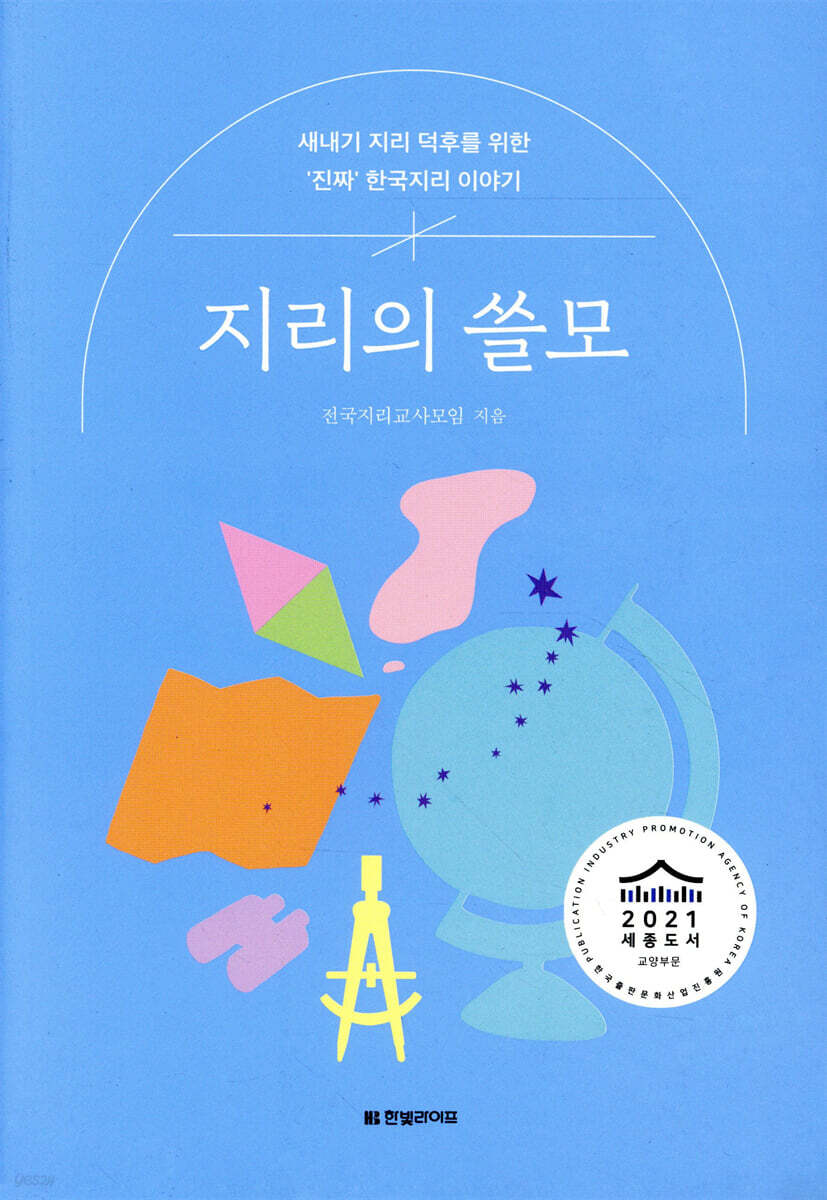
The Usefulness of Geography
 |
Description
Book Introduction
Reading the World Through the Lens of Geography
An essential primer for budding geography nerds
The first topic covered in middle school social studies textbooks is geography, or 'the world I live in.'
Learning geography before politics, economics, society, and culture tells us that understanding geography will soon become the foundation for studying other social studies subjects.
This isn't just a story about the curriculum.
It is difficult to properly explain any phenomenon without considering its location.
This is why an understanding of geography is essential to accurately grasp the causes and trends of everyday life and social problems.
"The Usefulness of Geography" focuses on the fact that geography is a lens through which we view the world.
It is not simply about understanding information on the ground, but it is about highlighting the usefulness of geography as a medium for examining the relationships between places, phenomena, and people.
Through 25 core geographic concepts closely connected to daily life and over 100 images, this book offers the fun of discovering aspects of geography you never knew before.
This is definitely an introductory book that will appeal to the novice geography nerd.
An essential primer for budding geography nerds
The first topic covered in middle school social studies textbooks is geography, or 'the world I live in.'
Learning geography before politics, economics, society, and culture tells us that understanding geography will soon become the foundation for studying other social studies subjects.
This isn't just a story about the curriculum.
It is difficult to properly explain any phenomenon without considering its location.
This is why an understanding of geography is essential to accurately grasp the causes and trends of everyday life and social problems.
"The Usefulness of Geography" focuses on the fact that geography is a lens through which we view the world.
It is not simply about understanding information on the ground, but it is about highlighting the usefulness of geography as a medium for examining the relationships between places, phenomena, and people.
Through 25 core geographic concepts closely connected to daily life and over 100 images, this book offers the fun of discovering aspects of geography you never knew before.
This is definitely an introductory book that will appeal to the novice geography nerd.
- You can preview some of the book's contents.
Preview
index
preface
Part 1: A World on a Round Earth Traveling from a Corner of a Room
Maps: Are the maps we see the same as the real thing?
Location: What determines the different times in each country?
Territory: Where does our country's territory begin and end?
Administrative Districts: When and how did the administrative districts of North and South Korea change?
Part 2: Nature: Knowing the Sky and the Earth, You Can See the Climate and Weather
Mountain Range: What is the difference between Hamheung Naengmyeon and Pyongyang Naengmyeon?
River: Why is it called the 'Miracle of the Han River' and not the 'Miracle of Seoul'?
Coast: What do the three seas of the Korean Peninsula look like?
Highest Temperature: Why Did Daegu Become 'Dae-Africa'?
Precipitation: Why is water stress high despite high precipitation?
Westerly Winds: Why do yellow dust and typhoons always come from the west?
Part 3: The City: Human Geography for Understanding Complex Cities at a Glance
Urban Change: Why Do Cities' Scope and Names Keep Changing?
Population Distribution: Why is half the population concentrated in the metropolitan area?
Population Structure: What Crisis Are We Facing Due to Low Birth Rates and Aging Population?
Multiculturalism: What attitude is needed in a multicultural society that has already arrived?
Regional Conflict: When did regional conflict first appear on the election scene?
Part 4: Understanding Korea's Economy and Industrial Structure through Geography
Tourism Industry: What Will Travel Look Like After COVID-19?
Mineral Resources: Why do we import minerals?
Balanced Development: Will the dream of balanced development come true with the ongoing National Comprehensive Land Plan?
Power Plants: Why are all the nuclear power plants located near the coast?
Distribution Network: How did an onion that used to cost 700 won end up being sold for 4,200 won?
Part 5: A Look Ahead at the Future of the Korean Peninsula
Food Problem: Why is Korea, the world's fifth-largest food importer, facing a food shortage?
Ramsar Wetlands: What Values of Wetlands We Didn't Know About?
Global Warming: Where Have All the Pollock Gone?
Peace on the Korean Peninsula: How Can Peace Be Restored on the Korean Peninsula?
The Silk Road: Will the island nation created by the Cold War become a modern-day Silk Road?
References
Search
Photo and map sources
Part 1: A World on a Round Earth Traveling from a Corner of a Room
Maps: Are the maps we see the same as the real thing?
Location: What determines the different times in each country?
Territory: Where does our country's territory begin and end?
Administrative Districts: When and how did the administrative districts of North and South Korea change?
Part 2: Nature: Knowing the Sky and the Earth, You Can See the Climate and Weather
Mountain Range: What is the difference between Hamheung Naengmyeon and Pyongyang Naengmyeon?
River: Why is it called the 'Miracle of the Han River' and not the 'Miracle of Seoul'?
Coast: What do the three seas of the Korean Peninsula look like?
Highest Temperature: Why Did Daegu Become 'Dae-Africa'?
Precipitation: Why is water stress high despite high precipitation?
Westerly Winds: Why do yellow dust and typhoons always come from the west?
Part 3: The City: Human Geography for Understanding Complex Cities at a Glance
Urban Change: Why Do Cities' Scope and Names Keep Changing?
Population Distribution: Why is half the population concentrated in the metropolitan area?
Population Structure: What Crisis Are We Facing Due to Low Birth Rates and Aging Population?
Multiculturalism: What attitude is needed in a multicultural society that has already arrived?
Regional Conflict: When did regional conflict first appear on the election scene?
Part 4: Understanding Korea's Economy and Industrial Structure through Geography
Tourism Industry: What Will Travel Look Like After COVID-19?
Mineral Resources: Why do we import minerals?
Balanced Development: Will the dream of balanced development come true with the ongoing National Comprehensive Land Plan?
Power Plants: Why are all the nuclear power plants located near the coast?
Distribution Network: How did an onion that used to cost 700 won end up being sold for 4,200 won?
Part 5: A Look Ahead at the Future of the Korean Peninsula
Food Problem: Why is Korea, the world's fifth-largest food importer, facing a food shortage?
Ramsar Wetlands: What Values of Wetlands We Didn't Know About?
Global Warming: Where Have All the Pollock Gone?
Peace on the Korean Peninsula: How Can Peace Be Restored on the Korean Peninsula?
The Silk Road: Will the island nation created by the Cold War become a modern-day Silk Road?
References
Search
Photo and map sources
Detailed image

Publisher's Review
25 Core Concepts That Permeate Our Daily Lives
The usefulness of geography in revealing the relationships between places, phenomena, and people
Everyone uses map apps, so why do we really need to know geography? "The Usefulness of Geography" began with this question.
Teachers who teach geography directly to students agree.
Now, when various social problems are intertwined, is the time when understanding geography is most necessary.
Here, knowing geography goes beyond simply acquiring information on the ground and means the ability to think in a three-dimensional way to understand the relationships between places, phenomena, and people.
The book introduces key concepts in detail so that not only young people learning geography for the first time, but also general readers who are new to geography can become geography nerds.
Each topic is accompanied by the latest issues, capturing both a sense of reality and interest.
Additionally, the book is filled with colorful map images that cannot be found in textbooks and hidden stories that could not be solved in the classroom, making it even more enjoyable to read and look at.
Includes over 100 maps and images
A three-dimensional Korean geography textbook full of things to see
Why is Daegu, the southernmost city in Korea, so much hotter than Jeju? What is the background behind half the population congregating in Seoul and its surrounding Gyeonggi Province? Why is the same cold noodle dish divided into Hamheung and Pyongyang cold noodles? This book offers readers who have been curious about these issues a golden opportunity to satisfy their curiosity.
Exploring everyday curiosities and the background of social issues through the lens of geography is a core theme that runs through the book.
Even if it's an interesting topic, if it's just a series of sentences, you might get tired before you even get to the core of geography.
The book contains 20 illustrated maps, 30 general maps, and 50 image materials.
Colorful maps and images keep readers engrossed in the story without a moment to get bored.
In particular, the diverse map images that cannot be found in other books guarantee the fun of looking at our country's geography from various angles.
Geographic imagination and thinking skills that grow with reading
Curriculum-linked books created by current and former geography teachers
It cannot be overemphasized that the book faithfully reflects the latest curriculum content.
The revised curriculum in 2015 placed greater emphasis on issues occurring in Korea in the Korean geography subject.
The book examines the latest issues in Korea, including low birth rates, aging population, and balanced development, which have been intensifying recently.
This is a time to delve deeper into the core issues that are only briefly mentioned in textbooks.
We have also added special content that is possible because we are teachers who teach geography directly to students in the classroom.
It is a 'Korean Geography Magnifier' in the form of a question and answer session that appears at the end of each topic-based story.
Geography teachers personally selected and organized answers to questions and topics worth discussing after reading the text.
We hope that this will be welcome content for readers who want to deepen their thoughts rather than simply read.
The usefulness of geography in revealing the relationships between places, phenomena, and people
Everyone uses map apps, so why do we really need to know geography? "The Usefulness of Geography" began with this question.
Teachers who teach geography directly to students agree.
Now, when various social problems are intertwined, is the time when understanding geography is most necessary.
Here, knowing geography goes beyond simply acquiring information on the ground and means the ability to think in a three-dimensional way to understand the relationships between places, phenomena, and people.
The book introduces key concepts in detail so that not only young people learning geography for the first time, but also general readers who are new to geography can become geography nerds.
Each topic is accompanied by the latest issues, capturing both a sense of reality and interest.
Additionally, the book is filled with colorful map images that cannot be found in textbooks and hidden stories that could not be solved in the classroom, making it even more enjoyable to read and look at.
Includes over 100 maps and images
A three-dimensional Korean geography textbook full of things to see
Why is Daegu, the southernmost city in Korea, so much hotter than Jeju? What is the background behind half the population congregating in Seoul and its surrounding Gyeonggi Province? Why is the same cold noodle dish divided into Hamheung and Pyongyang cold noodles? This book offers readers who have been curious about these issues a golden opportunity to satisfy their curiosity.
Exploring everyday curiosities and the background of social issues through the lens of geography is a core theme that runs through the book.
Even if it's an interesting topic, if it's just a series of sentences, you might get tired before you even get to the core of geography.
The book contains 20 illustrated maps, 30 general maps, and 50 image materials.
Colorful maps and images keep readers engrossed in the story without a moment to get bored.
In particular, the diverse map images that cannot be found in other books guarantee the fun of looking at our country's geography from various angles.
Geographic imagination and thinking skills that grow with reading
Curriculum-linked books created by current and former geography teachers
It cannot be overemphasized that the book faithfully reflects the latest curriculum content.
The revised curriculum in 2015 placed greater emphasis on issues occurring in Korea in the Korean geography subject.
The book examines the latest issues in Korea, including low birth rates, aging population, and balanced development, which have been intensifying recently.
This is a time to delve deeper into the core issues that are only briefly mentioned in textbooks.
We have also added special content that is possible because we are teachers who teach geography directly to students in the classroom.
It is a 'Korean Geography Magnifier' in the form of a question and answer session that appears at the end of each topic-based story.
Geography teachers personally selected and organized answers to questions and topics worth discussing after reading the text.
We hope that this will be welcome content for readers who want to deepen their thoughts rather than simply read.
GOODS SPECIFICS
- Publication date: June 10, 2021
- Page count, weight, size: 360 pages | 648g | 152*220*22mm
- ISBN13: 9791190846189
- ISBN10: 1190846187
You may also like
카테고리
korean


korean

![GQ KOREA Mark (Monthly): December [2025]](http://librairie.coreenne.fr/cdn/shop/files/8ef265dbbfbf186523ed75ba7319009d.jpg?v=1765340328&width=3840)


