

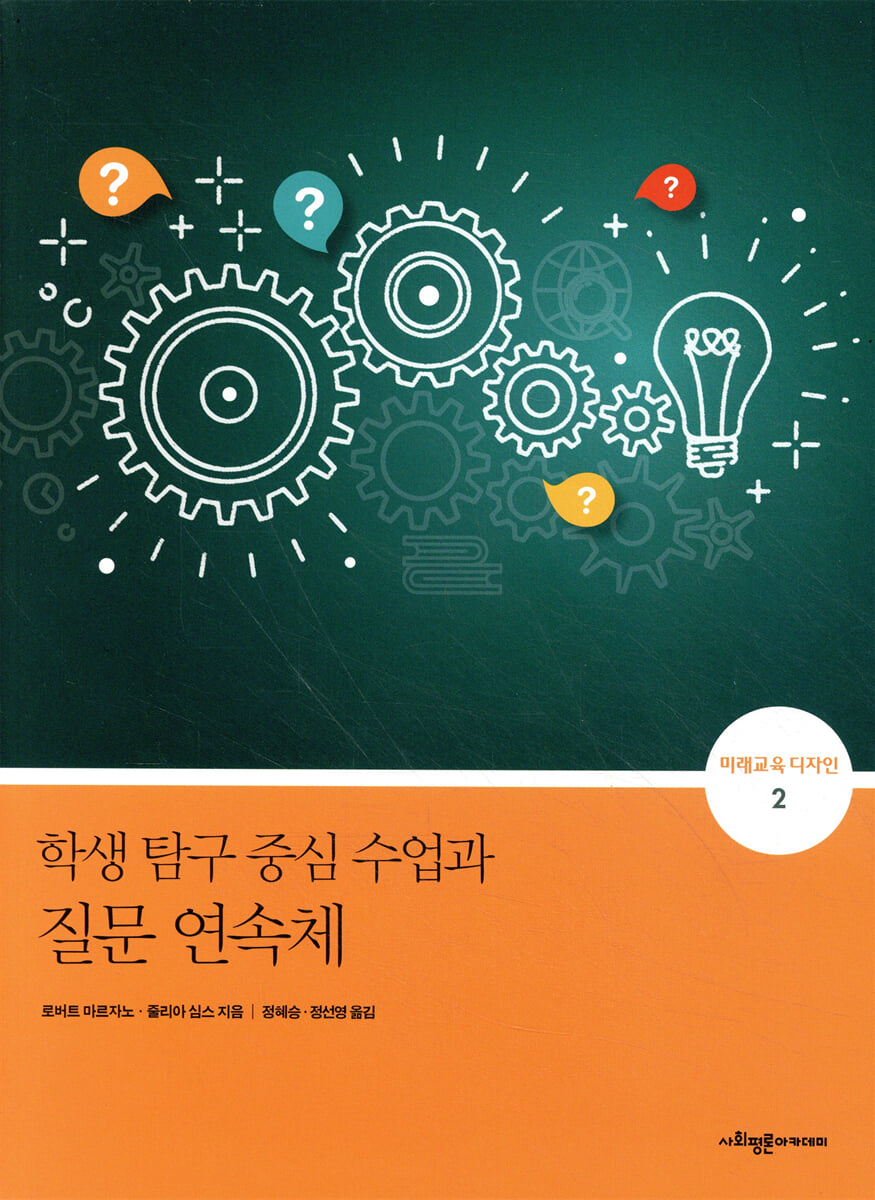
Student inquiry-centered instruction and the inquiry continuum
 |
Description
Book Introduction
There are no always good questions.
In relation to learning objectives
Systematically organized and designed to allow students to explore continuously.
Experience consistent and harmonious teaching and learning through a question continuum.
"Student Inquiry-Centered Instruction and the Inquiry Continuum" begins with a brief but comprehensive chapter reviewing research and theory on inquiry in the classroom.
While impatient readers might be tempted to skip Chapter 1 and jump straight to the chapters presenting techniques applicable in schools, the author strongly encourages a review of the research and theory.
His recommendations are trustworthy because he has provided the most useful strategies based on the most reliable research and theory available.
Chapter 2 explains each step, provides examples, and provides specific, clear instructions for immediately implementing the inquiry continuum in your classroom.
Chapter 3 explains how to teach students to find information in all types of texts to answer each of the four questions posed at each stage of the inquiry continuum.
To answer a question, students must draw information from one of two possible sources: their own existing knowledge or external sources.
External sources include traditional printed texts, graphic texts, multimedia texts, electronic texts, and Internet texts.
Chapter 4 focuses on a variety of response techniques that teachers can use when students respond individually or in groups to answer questions.
It also covers various techniques that teachers can use to facilitate group interaction when students work in groups.
Finally, Chapter 5 provides detailed guidance on how to plan a question continuum that can be used in a single lesson or in multiple lessons.
The appendix also provides examples of question continuums for use in grades 12 through kindergarten.
The sample questions cover a variety of content areas, including reading, writing, math, and science.
Readers can use this book as a self-study text to gain a deeper understanding of how to ask questions effectively in class.
At the end of each chapter, there are questions to check your understanding of the material. You can thoroughly review your understanding by comparing your answers to the answers provided in the appendix.
Additionally, teachers who wish to study the topic in depth can form groups and utilize this book.
This book is the second in the Social Criticism Academy's "Future Education Design" series, which introduces new teaching and learning methods necessary for students' deep understanding and fostering a culture of inquiry in the classroom.
In relation to learning objectives
Systematically organized and designed to allow students to explore continuously.
Experience consistent and harmonious teaching and learning through a question continuum.
"Student Inquiry-Centered Instruction and the Inquiry Continuum" begins with a brief but comprehensive chapter reviewing research and theory on inquiry in the classroom.
While impatient readers might be tempted to skip Chapter 1 and jump straight to the chapters presenting techniques applicable in schools, the author strongly encourages a review of the research and theory.
His recommendations are trustworthy because he has provided the most useful strategies based on the most reliable research and theory available.
Chapter 2 explains each step, provides examples, and provides specific, clear instructions for immediately implementing the inquiry continuum in your classroom.
Chapter 3 explains how to teach students to find information in all types of texts to answer each of the four questions posed at each stage of the inquiry continuum.
To answer a question, students must draw information from one of two possible sources: their own existing knowledge or external sources.
External sources include traditional printed texts, graphic texts, multimedia texts, electronic texts, and Internet texts.
Chapter 4 focuses on a variety of response techniques that teachers can use when students respond individually or in groups to answer questions.
It also covers various techniques that teachers can use to facilitate group interaction when students work in groups.
Finally, Chapter 5 provides detailed guidance on how to plan a question continuum that can be used in a single lesson or in multiple lessons.
The appendix also provides examples of question continuums for use in grades 12 through kindergarten.
The sample questions cover a variety of content areas, including reading, writing, math, and science.
Readers can use this book as a self-study text to gain a deeper understanding of how to ask questions effectively in class.
At the end of each chapter, there are questions to check your understanding of the material. You can thoroughly review your understanding by comparing your answers to the answers provided in the appendix.
Additionally, teachers who wish to study the topic in depth can form groups and utilize this book.
This book is the second in the Social Criticism Academy's "Future Education Design" series, which introduces new teaching and learning methods necessary for students' deep understanding and fostering a culture of inquiry in the classroom.
index
Translator's Preface
Author's Preface
Chapter 1: Research and Theory
1.
Early concepts of effective questioning
2.
Bloom's Taxonomy: A Misapplied System
3.
Research on higher-level questions
4.
Our current view
5.
Question Continuum
6.
Putting research and theory into practice
Chapter 2: Question Continuum
1.
Question Continuum Model
2.
Step 1: Asking Detail Questions
3.
Step 2: Categorical Questions
4.
Step 3: Elaboration Questions
5.
Step Four: Evidence Questions
6.
Flexibility of the Question Continuum
summation
Chapter 2 Comprehension Check Questions
Chapter 3 Information from External Sources
1.
linguistic text
2.
nonverbal text
3.
electronic text
4.
Information in multiple texts
summation
Chapter 3 Comprehension Check Questions
Chapter 4 Response Strategies
1.
Individual student responses
2.
Group reaction
3.
Group interaction
summation
Chapter 4 Comprehension Check Questions
Chapter 5: Preparing for the Question Continuum
1.
Question continuum within a single class period
2.
A continuum of questions that spans multiple classes
3.
Question continuum as a framework for a unit
4.
Things to consider when planning units as a question continuum
summation
Chapter 5 Comprehension Check Questions
Author's Note
Appendix A: Answers to the Comprehension Check Questions
Appendix B: Example Question Continuum
Author's Preface
Chapter 1: Research and Theory
1.
Early concepts of effective questioning
2.
Bloom's Taxonomy: A Misapplied System
3.
Research on higher-level questions
4.
Our current view
5.
Question Continuum
6.
Putting research and theory into practice
Chapter 2: Question Continuum
1.
Question Continuum Model
2.
Step 1: Asking Detail Questions
3.
Step 2: Categorical Questions
4.
Step 3: Elaboration Questions
5.
Step Four: Evidence Questions
6.
Flexibility of the Question Continuum
summation
Chapter 2 Comprehension Check Questions
Chapter 3 Information from External Sources
1.
linguistic text
2.
nonverbal text
3.
electronic text
4.
Information in multiple texts
summation
Chapter 3 Comprehension Check Questions
Chapter 4 Response Strategies
1.
Individual student responses
2.
Group reaction
3.
Group interaction
summation
Chapter 4 Comprehension Check Questions
Chapter 5: Preparing for the Question Continuum
1.
Question continuum within a single class period
2.
A continuum of questions that spans multiple classes
3.
Question continuum as a framework for a unit
4.
Things to consider when planning units as a question continuum
summation
Chapter 5 Comprehension Check Questions
Author's Note
Appendix A: Answers to the Comprehension Check Questions
Appendix B: Example Question Continuum
Publisher's Review
There are no always good questions.
In relation to learning objectives
Systematically organized and designed to allow students to explore continuously.
Experience consistent and harmonious teaching and learning through a question continuum.
High-quality questions don't always guarantee high academic achievement.
Only when targeted questions are used intentionally and in a well-organized sequence can they elicit students' prior knowledge, facilitate the discovery of new information, and deepen and extend their learning.
Robert Marzano, a world-renowned scholar in the field of critical thinking education and teaching methods, presents the Questioning Sequences model in his book, “Student Inquiry-Centered Instruction and the Questioning Continuum,” which consists of four stages: detail questions, category questions, elaboration questions, and evidence questions.
This questioning model provides teachers with valuable assessment material while demonstrating how to use questioning to enhance student learning, spark curiosity, and ultimately improve academic achievement.
The question continuum model uses detail questions in the first stage to help students build a foundation of factual information needed to answer deeper, more complex questions.
In the category question stage, students identify important characteristics of the category by generating a list of examples that fall into that category.
In the elaboration question stage, you use this list to generate claims and conclusions.
Finally, in the evidence questioning stage, you engage in argumentation and evaluation by finding evidence to support your claims and revising your conclusions to exclude misconceptions or errors in reasoning.
Teachers who use this questioning model will be able to create consistent, logical, and purpose-driven questioning experiences in their classes.
Students take responsibility for their own learning by collaborating with classmates and sharing perspectives and feedback.
This book is particularly noteworthy for several reasons:
First, we boldly break down our preconceptions about questions.
Most people believe that high-level questions are good questions, and that asking high-level questions develops students' thinking skills and improves academic achievement.
However, there is no such thing as a good question all the time, and we cannot expect that sporadically 'asking' high-quality questions will develop students' thinking skills or increase their academic achievement.
Second, it enables students to practically guide the process of exploring and constructing knowledge.
Until now, even though teachers have the motivation and direction, they have not been fully aware of specific and practical teaching methods for how to enable students to explore and construct knowledge in class.
This book presents a systematic questioning framework called the "Question Continuum," providing a model for flexible knowledge construction that allows students to generate knowledge by deriving general properties from specific facts, support their constructed knowledge with evidence, and recognize limitations such as exceptions.
Third, it specifically demonstrates a teaching model that implements achievement standards centered on questions.
By dividing the achievement standards into content elements and setting them as learning goals for each unit (or period), and suggesting a method to implement the set goals through question-based methods in one or more periods, teachers can reduce their vagueness and worry.
In particular, the appendix includes examples of applying the inquiry continuum to achievement standards in English, mathematics, and science, which provide practical assistance in implementing an inquiry-centered curriculum.
Fourth, it specifically presents the teaching content and methods essential for teachers to conduct inquiry-centered classes.
It provides practical assistance to teachers by providing specific materials and real-life classroom examples to explain how students can understand and utilize various materials (verbal texts, nonverbal texts, electronic texts) to find answers, and how students should listen, speak, and argue when discussing to find better answers.
"Student Inquiry-Centered Instruction and the Inquiry Continuum" begins with a brief but comprehensive chapter reviewing research and theory on inquiry in the classroom.
While impatient readers might be tempted to skip Chapter 1 and jump straight to the chapters presenting techniques applicable in schools, the author strongly encourages a review of the research and theory.
His recommendations are trustworthy because he has provided the most useful strategies based on the most reliable research and theory available.
Chapter 2 explains each step, provides examples, and provides specific, clear instructions for immediately implementing the inquiry continuum in your classroom.
Chapter 3 explains how to teach students to find information in all types of texts to answer each of the four questions posed at each stage of the inquiry continuum.
To answer a question, students must draw information from one of two possible sources: their own existing knowledge or external sources.
External sources include traditional printed texts, graphic texts, multimedia texts, electronic texts, and Internet texts.
Chapter 4 focuses on a variety of response techniques that teachers can use when students respond individually or in groups to answer questions.
It also covers various techniques that teachers can use to facilitate group interaction when students work in groups.
Finally, Chapter 5 provides detailed guidance on how to plan a question continuum that can be used in a single lesson or in multiple lessons.
The appendix also provides examples of question continuums for use in grades 12 through kindergarten.
The sample questions cover a variety of content areas, including reading, writing, math, and science.
Readers can use this book as a self-study text to gain a deeper understanding of how to ask questions effectively in class.
At the end of each chapter, there are questions to check your understanding of the material. You can thoroughly review your understanding by comparing your answers to the answers provided in the appendix.
Additionally, teachers who wish to study the topic in depth can form groups and utilize this book.
This book is the second in the Social Criticism Academy's "Future Education Design" series, which introduces new teaching and learning methods necessary for students' deep understanding and fostering a culture of inquiry in the classroom.
In relation to learning objectives
Systematically organized and designed to allow students to explore continuously.
Experience consistent and harmonious teaching and learning through a question continuum.
High-quality questions don't always guarantee high academic achievement.
Only when targeted questions are used intentionally and in a well-organized sequence can they elicit students' prior knowledge, facilitate the discovery of new information, and deepen and extend their learning.
Robert Marzano, a world-renowned scholar in the field of critical thinking education and teaching methods, presents the Questioning Sequences model in his book, “Student Inquiry-Centered Instruction and the Questioning Continuum,” which consists of four stages: detail questions, category questions, elaboration questions, and evidence questions.
This questioning model provides teachers with valuable assessment material while demonstrating how to use questioning to enhance student learning, spark curiosity, and ultimately improve academic achievement.
The question continuum model uses detail questions in the first stage to help students build a foundation of factual information needed to answer deeper, more complex questions.
In the category question stage, students identify important characteristics of the category by generating a list of examples that fall into that category.
In the elaboration question stage, you use this list to generate claims and conclusions.
Finally, in the evidence questioning stage, you engage in argumentation and evaluation by finding evidence to support your claims and revising your conclusions to exclude misconceptions or errors in reasoning.
Teachers who use this questioning model will be able to create consistent, logical, and purpose-driven questioning experiences in their classes.
Students take responsibility for their own learning by collaborating with classmates and sharing perspectives and feedback.
This book is particularly noteworthy for several reasons:
First, we boldly break down our preconceptions about questions.
Most people believe that high-level questions are good questions, and that asking high-level questions develops students' thinking skills and improves academic achievement.
However, there is no such thing as a good question all the time, and we cannot expect that sporadically 'asking' high-quality questions will develop students' thinking skills or increase their academic achievement.
Second, it enables students to practically guide the process of exploring and constructing knowledge.
Until now, even though teachers have the motivation and direction, they have not been fully aware of specific and practical teaching methods for how to enable students to explore and construct knowledge in class.
This book presents a systematic questioning framework called the "Question Continuum," providing a model for flexible knowledge construction that allows students to generate knowledge by deriving general properties from specific facts, support their constructed knowledge with evidence, and recognize limitations such as exceptions.
Third, it specifically demonstrates a teaching model that implements achievement standards centered on questions.
By dividing the achievement standards into content elements and setting them as learning goals for each unit (or period), and suggesting a method to implement the set goals through question-based methods in one or more periods, teachers can reduce their vagueness and worry.
In particular, the appendix includes examples of applying the inquiry continuum to achievement standards in English, mathematics, and science, which provide practical assistance in implementing an inquiry-centered curriculum.
Fourth, it specifically presents the teaching content and methods essential for teachers to conduct inquiry-centered classes.
It provides practical assistance to teachers by providing specific materials and real-life classroom examples to explain how students can understand and utilize various materials (verbal texts, nonverbal texts, electronic texts) to find answers, and how students should listen, speak, and argue when discussing to find better answers.
"Student Inquiry-Centered Instruction and the Inquiry Continuum" begins with a brief but comprehensive chapter reviewing research and theory on inquiry in the classroom.
While impatient readers might be tempted to skip Chapter 1 and jump straight to the chapters presenting techniques applicable in schools, the author strongly encourages a review of the research and theory.
His recommendations are trustworthy because he has provided the most useful strategies based on the most reliable research and theory available.
Chapter 2 explains each step, provides examples, and provides specific, clear instructions for immediately implementing the inquiry continuum in your classroom.
Chapter 3 explains how to teach students to find information in all types of texts to answer each of the four questions posed at each stage of the inquiry continuum.
To answer a question, students must draw information from one of two possible sources: their own existing knowledge or external sources.
External sources include traditional printed texts, graphic texts, multimedia texts, electronic texts, and Internet texts.
Chapter 4 focuses on a variety of response techniques that teachers can use when students respond individually or in groups to answer questions.
It also covers various techniques that teachers can use to facilitate group interaction when students work in groups.
Finally, Chapter 5 provides detailed guidance on how to plan a question continuum that can be used in a single lesson or in multiple lessons.
The appendix also provides examples of question continuums for use in grades 12 through kindergarten.
The sample questions cover a variety of content areas, including reading, writing, math, and science.
Readers can use this book as a self-study text to gain a deeper understanding of how to ask questions effectively in class.
At the end of each chapter, there are questions to check your understanding of the material. You can thoroughly review your understanding by comparing your answers to the answers provided in the appendix.
Additionally, teachers who wish to study the topic in depth can form groups and utilize this book.
This book is the second in the Social Criticism Academy's "Future Education Design" series, which introduces new teaching and learning methods necessary for students' deep understanding and fostering a culture of inquiry in the classroom.
GOODS SPECIFICS
- Date of issue: March 31, 2017
- Page count, weight, size: 248 pages | 542g | 188*257*20mm
- ISBN13: 9791188108107
- ISBN10: 1188108107
You may also like
카테고리
korean


korean

![GQ KOREA Mark (Monthly): December [2025]](http://librairie.coreenne.fr/cdn/shop/files/8ef265dbbfbf186523ed75ba7319009d.jpg?v=1765340328&width=3840)


