

Math Lesson Set with Stories and Play
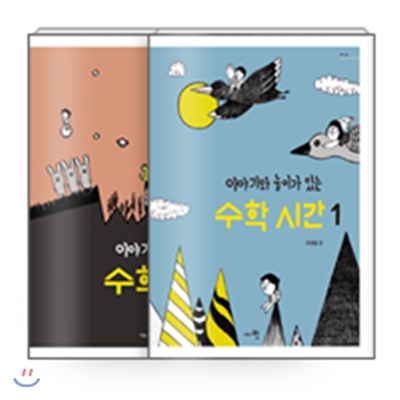 |
Description
Book Introduction
The mathematics curriculum for all elementary school grades is divided into 10 subject areas (natural numbers, addition and subtraction of natural numbers, multiplication and division of natural numbers, fractions, decimals, shapes, measurement, regularity, statistics and probability, and various problem solving).
This structure helps to conduct classes while keeping in mind the overall flow of mathematics education.
The class content for each area is presented by class period, so you can see at a glance how each class is conducted.
Each subtopic is labeled with a grade level and a separate table of contents is provided for each grade level to make it easy to refer to the classes for the grade level in charge.
For each topic, we have inserted games and manipulative activities that can be tried out throughout the book, grouped together as “learn through play.”
You can use them individually according to the flow of the class, or you can do them all at once as a process of organizing the units.
Activity sheets for play and manipulation activities are provided through an online download service.
This book is a revised and expanded edition of Making Fun Math Time 1 and 2, published in 2004, and reflects the additions and changes made in the 2009 revised curriculum.
The content was also revised to reflect changes in the classroom environment, such as a decrease in the number of students per class and a diversification of math teaching aids.
Furthermore, beyond simply exploring enjoyable and effective ways to learn math, there are many supplementary materials that help teachers reflect on the meaning of math class time.
This structure helps to conduct classes while keeping in mind the overall flow of mathematics education.
The class content for each area is presented by class period, so you can see at a glance how each class is conducted.
Each subtopic is labeled with a grade level and a separate table of contents is provided for each grade level to make it easy to refer to the classes for the grade level in charge.
For each topic, we have inserted games and manipulative activities that can be tried out throughout the book, grouped together as “learn through play.”
You can use them individually according to the flow of the class, or you can do them all at once as a process of organizing the units.
Activity sheets for play and manipulation activities are provided through an online download service.
This book is a revised and expanded edition of Making Fun Math Time 1 and 2, published in 2004, and reflects the additions and changes made in the 2009 revised curriculum.
The content was also revised to reflect changes in the classroom environment, such as a decrease in the number of students per class and a diversification of math teaching aids.
Furthermore, beyond simply exploring enjoyable and effective ways to learn math, there are many supplementary materials that help teachers reflect on the meaning of math class time.
index
Volume 1
Opening remarks
Preface to the first edition
I natural number
1.
Numbers up to 9
01 How did you know that the sheep had disappeared from the beginning of the century?
02 Follow the process of inventing numbers up to 9 How did numbers begin?
| Learning through play | Games and activities to learn single-digit numbers
03 Learning the concept of 0 Wintering of baby squirrels
04 Learning the concept of ordinal numbers What does Mr. Heungbu need?
05 Compare two numbers Who picked the bigger number?
2.
Numbers up to 100
01 The discovery of 10 and the meaning of the decimal system How could large numbers be counted accurately?
02 How to use the tens unit? ①
03 How to use two-digit numbers? ②
04 Let's learn two-digit numbers and collect lots of them!
05 Introducing and learning odd and even numbers You can count numbers in a new way.
▶ Introducing inequalities Always fun, the king-eyed fish
| Learning through play | Games and activities to learn two-digit numbers
3.
Numbers up to 1000
01 100 Introduction Do you know 100?
02 How many hundreds are introduced and how to master rock-paper-scissors! Let's color ①
03 Introducing and Mastering Three-Digit Numbers: Rock, Paper, Scissors! Let's Color ②
| Learning through play | Games and activities to learn three-digit numbers
4.
Large numbers greater than 1000
01 1000 Introduction Counting 1000 Beans
02 There are so many thousands to introduce, how do I count them?
03 Introducing and mastering four-digit numbers: Rock, paper, scissors! Let's color!
| Learning through play | Games and activities to learn four-digit numbers
04 Introduction and Mastery of 10000 How big is 10000?
▶ Learn five-digit numbers Let's color the five-digit numbers first.
| Learning through play | Games and activities to learn five-digit numbers
II Addition and subtraction of natural numbers
1.
Addition and subtraction of natural numbers less than 10
Teaching numbers from 01 to 9 How many did Aram eat?
| Learning through play | Games and activities to learn how to count and collect numbers
02 Introducing addition formulas Receipts have addition formulas.
03 Introducing subtraction formulas You can also use subtraction formulas simply.
04 Making a subtraction equation by looking at the addition equation, making an addition equation by looking at the subtraction equation Three numbers that become a family
| Learning through play | Games and activities to learn addition and subtraction up to 9
05 10 Let's teach 10
▶ Introducing a vertical line A rabbit and a vertical line
| Learning through Play | 10 Games and Activities to Learn to Teach and Collect
06 A country where addition makes 10
07 10 minus picnic day eating squid legs
2.
Addition and subtraction of natural numbers greater than 10
01 Addition of two-digit numbers without carrying over Tens are tens, and one is one.
02 Subtraction of two-digit numbers without borrowing Ten is ten and one is one.
03 Add up the single-digit numbers that are greater than 10 and make 10 and add them.
04 Subtraction of tens and single-digit numbers with borrowing There are two ways to subtract at once.
| Learning through play | Games and activities to learn addition and subtraction
05 Addition of two-digit and one-digit numbers with carryover Add the ones digits together.
06 Subtraction of two-digit numbers greater than 20 and one-digit numbers with borrowing When the number cannot be subtracted from the ones digit
07 Addition of three-digit numbers Addition by drawing a model
08 Subtraction of three-digit numbers Draw a model and subtract
09 Addition of three-digit numbers with carry is also easy!
10. Subtracting three-digit numbers with carry-over is easy!
Addition of numbers with more than 11 digits. Add large numbers one by one.
Subtraction of numbers with more than 12 digits. Subtract large numbers one by one.
13 Knowing the order of mixed calculations What should be calculated first?
▶ What should I buy at the market where I buy 10,000 won worth of goods?
| Learning through play | Games and activities to learn addition and subtraction
III Multiplication and Division of Natural Numbers
1.
Multiplication of natural numbers
| Learning through play | Games and activities to try before learning multiplication
01 Introducing the Multiplication Facts The Rabbit's Errand
02 Convenient multiplication table Memorize the multiplication table
| Learn through play | Games and activities to memorize multiplication tables in a fun way
03 You can quickly find out how many tens x how many there are.
04 I can tell you how to multiply two-digit numbers by one-digit numbers ①
05 I can tell you how to multiply a three-digit number by a one-digit number ②
06 Learn two-digit numbers × two-digit numbers step by step ①
07 Learn three-digit numbers x two-digit numbers step by step ②
| Learning through play | Games and activities to learn multiplication
2.
Division of natural numbers
01 Inclusion - Let's share by playing a game of dividing equally ①
02 Equal Division - Let's play a game of dividing into equal parts ②
03 Understanding the convenience of division and how to find the quotient of division Can you divide without leaving any remainder?
04 Let's divide by moving the two-digit number ÷ one-digit number model ①
05 Let's move the division number model in the form of 48÷4 and divide it ②
06 Let's move the division number model in the form of 52÷4 and divide it ③
07 Let's move the division number model in the form of 250÷50 and divide it ④
| Learning through play | Games and activities to learn division
3.
Multiples and divisors
01 Introduction and Familiarization with Multiples What is a multiple?
02 Introduction and familiarization with factors What are factors?
03 Introducing and learning common divisors Common divisors and greatest common divisors
04 Introduction and learning of common multiples Common multiples and least common multiples
| Learning through play | Games and activities to learn factors and multiples
IV fountain
1.
Fractions, sizes of fractions, reductions and common denominators
01 How to divide it into several equal parts? How to divide it?
02 Comparing the size of the whole and the parts How much of the whole is there?
03 Introducing fractions Let's express them as fractions.
| Learning through play | Games and activities to learn fractions
04 What went wrong with the 6th grade?
| Learning through play | Games and activities to learn about the types and sizes of fractions
05 Compare the sizes of two quantities and express them as fractions. Friend's marble, my marble
06 Natural number ÷ Natural number as a fraction Can we find the quotient of all divisions?
07 Find a way to make fractions of the same size. The shapes are different, but the sizes are the same.
08 I like simple things that are easy to simplify ①
09 I like things that are simple to understand ②
2.
Calculating fractions
01 Addition of fractions with the same denominator Can fractions be added?
02 Subtraction of fractions with the same denominator Can fractions be subtracted?
03 I can't figure out how to add fractions with different denominators ①
04 I can't figure out how to subtract fractions with different denominators ②
05 Multiplication of Fractions Is there a way to multiply fractions?
06 Division of Fractions Is there a way to divide fractions?
V prime number
1.
decimal
01 Introducing prime numbers What is the thinnest thing in the world?
02 How to write a decimal The first person to reach the pencil owns it.
03 Comparing the sizes of prime numbers Which prime number is larger?
04 Introducing two decimal places How many centimeters is it?
05 Learn to count up to two decimal places. Fill in the blanks as you go.
06 Learning numbers up to three decimal places Is there a number smaller than 0.01?
2.
Calculation of prime numbers
01 Addition and subtraction of decimals Can decimals be added?
02 Prime Number × Natural Number Can prime numbers also be multiplied?
03 Natural number × decimal How do you calculate natural number × decimal?
04 How do you calculate decimal × decimal and decimal × decimal?
05 Prime Numbers ÷ Natural Numbers Lesson 1: How do we calculate prime numbers ÷ natural numbers? ①
06 Prime Numbers ÷ Natural Numbers 2nd Step Lesson How to Calculate Prime Numbers ÷ Natural Numbers? ②
07 Natural number ÷ Decimal How do you calculate natural number ÷ Decimal?
08 Division of single-digit decimals How do you calculate decimal ÷ decimal? ①
09 Division of two-digit decimal numbers How do you calculate decimal ÷ decimal? ②
10 Remainder of Division of Decimals Is there a remainder in division of decimals?
How do you calculate division of decimals with different digits ÷ decimals with different digits?
12 Mixed calculations of decimals and fractions Decimals are converted to fractions and fractions are converted to decimals.
| Learning through play | Games and activities to learn fractions and decimals
Volume 2
VI shape
1.
three-dimensional figures
01 Classify three-dimensional figures by their characteristics. Group similar shapes together.
02 Introducing the Stacking Block Game The Wisdom of the Shepherd Boy
03 Introduction to Rectangular Solids Let's study rectangular solids ①
04 Understanding the relationship between faces in a rectangular solid Let's study rectangular solids ②
05 Learning how to aim at a rectangular solid Aiming at a rectangular solid
06 Learning the development of a rectangular solid The magic of turning a plane into a three-dimensional object
07 Introduction to Solids and Prisms Let's study solids.
08 Mastering the Pillars Pillars are the same but different
09 Pyramid Mastery Let's study pyramids.
10 Introduction and Characteristics of Cylinders Let's Study Cylinders
11 Introduction and characteristics of cones A natural shape made of clay, a cone
12 Let's learn how to stack while playing and finding the rules by looking at the stacked shapes.
▶ Soma Cube, a play game using stacking blocks
2.
Plane figure
01 Learning about squares, triangles, and circles Shapes of the country School
▶ Learn plane figures: Make triangles and squares with colored paper
02 Learn and master the concepts of line segments and straight lines. Play with strings.
03 You can feel the differences while playing a game to learn and become familiar with the characteristics of triangles and squares.
04 Let's learn about the characteristics of circles and study circles.
▶ Learning the elements of a circle What are the characteristics of a circle?
▶ Ant No. 302, who resented the leader who learned the radius
05 Moving the Shape Introduction Let's move the shape ①
06 Learn to move shapes Let's move shapes ②
| Learning through play | Games and activities to develop a sense of shapes
07 Introducing the concept of angles Finding angles in constellations
08 Let's play with shapes by introducing and learning right triangles, rectangles, and squares.
▶ Why verticality is necessary and the feeling it gives The Leaning Tower of Pisa
| Learning through play | Games and activities that allow you to feel the lines
▶ Why look at the relationship between two sides when finding the characteristics of a quadrilateral Can you make a quadrilateral twin with four sides?
▶ The story of finding the concept of a trapezoid: Saebyeol's Ladder
▶ Find the features of a rhombus. Let's make a square by cutting it only once.
| Learning through play | Games and activities to learn about the relationships between shapes
09 Understanding the meaning of congruence and drawing congruent shapes Congruent shapes
10 Let's learn the meaning of line symmetry and draw line symmetrical figures. Let's learn line symmetrical figures.
11 Discovering shapes in positions of line symmetry Let's learn about shapes in positions of line symmetry
▶ Introducing point symmetry in a story How did the hunter know?
VII Measurement
1.
Comparison Basics Learning
01 Compare lengths Which is longer?
02 Comparing Heights What do you do when it's high?
03 Which cup contains the most?
04 Compare Weights Which one is heavier?
05 Compare Areas Which is wider?
| Learning through play | Games and activities to learn comparison
2.
Clock and time, angle size
01 Introducing and learning the hourly time system You can keep promises even without a clock.
02 You can meet them right away without waiting for them to get used to the 30-minute time unit introduction.
| Learning through play | Games and activities that develop visual skills
03 Introduce and learn the 1-minute time unit. Divide the hour into small pieces.
04 Introducing and mastering the 1-second time unit You can accurately tell even very short periods of time.
| Learning through play | Games and activities to learn time calculation
05 Introducing angle size How do we determine angle size?
06 Introducing and learning angles There is a way to measure the size of an angle.
3.
Length Measurement and Units of Length
01 Finding a way to measure length How should lengths be compared?
02 Feeling the need for unit length and introducing 1cm How to measure length accurately?
03 1m Introduction and learning makes measuring easier
04 1mm Introduction and practice Let's measure the body length of an ant
| Learning through play | Games and activities to learn length
4.
The units are the ones that are measured and the ones that are measured
01 Where do you feel the need for units more?
02 The units introduced and used should be measured with the same cup.
| Learning through play | Games and activities to learn the language
5.
Weighing and Weight Units
01 Introducing and learning weight units Which is heavier by how much?
6.
Area and area units of plane figures
01 Find the perimeter of a rectangle. You need string to make a fence.
02 Introduction to the area of a rectangle and how to find the area Which land is larger?
03 Finding the area of various shapes How do you find the area of a shape?
04 Finding the method for introducing and calculating the surface area of a rectangular solid. Let's find the surface area.
05 Discovering Pi What did people in ancient times study about circles?
06 Finding the area of a circle Can a circle be converted into a square?
7.
Volume Measurement and Units of Volume
01 Introducing and learning volume units Let's compare volumes.
02 1㎥ Get used to it. Go inside 1㎥.
8.
Measurements and Estimates
01 Introducing expressions that indicate the range of numbers and learning the concept Where does this number correspond?
▶ Can I simply talk about estimates (rounding up, down, up)?
▶ An example of a word expressing a range of numbers used in everyday life How much is the entrance fee for Gyeongbokgung Palace for a 4th grader?
VIII Regularity
1.
Find the rules
01 Let's find out the 4-step lesson rules to learn the concept of rules.
2.
Correspondence relationship
01 Learn the relationship between numbers Let's learn the correspondence between two numbers.
02 Understanding the meaning of unknowns and equations and the difference between equations and equations
03 Practice solving equations by understanding the properties of equations. Solve equations.
04 Understanding the concept of direct and inverse proportion There are two special relationships.
3.
Rain, proportion, fuel efficiency
01 Introducing and learning the concept of ratio Let's learn about ratio and ratio.
▶ A story about why percentages are needed How do I represent my score?
▶ Halpunri Learning Baseball Game
02 Introducing and learning proportions, finding the properties of ratios, and studying ratios with the same ratio
03 Introduction to Fuel Efficiency Let's learn about fuel efficiency.
IX Statistics and Probability
1.
statistics
2.
probability
X Solve various problems
1.
Mastering the unknown
2.
Games and activities that help solve problems
3.
Fun problems outside the textbook
Opening remarks
Preface to the first edition
I natural number
1.
Numbers up to 9
01 How did you know that the sheep had disappeared from the beginning of the century?
02 Follow the process of inventing numbers up to 9 How did numbers begin?
| Learning through play | Games and activities to learn single-digit numbers
03 Learning the concept of 0 Wintering of baby squirrels
04 Learning the concept of ordinal numbers What does Mr. Heungbu need?
05 Compare two numbers Who picked the bigger number?
2.
Numbers up to 100
01 The discovery of 10 and the meaning of the decimal system How could large numbers be counted accurately?
02 How to use the tens unit? ①
03 How to use two-digit numbers? ②
04 Let's learn two-digit numbers and collect lots of them!
05 Introducing and learning odd and even numbers You can count numbers in a new way.
▶ Introducing inequalities Always fun, the king-eyed fish
| Learning through play | Games and activities to learn two-digit numbers
3.
Numbers up to 1000
01 100 Introduction Do you know 100?
02 How many hundreds are introduced and how to master rock-paper-scissors! Let's color ①
03 Introducing and Mastering Three-Digit Numbers: Rock, Paper, Scissors! Let's Color ②
| Learning through play | Games and activities to learn three-digit numbers
4.
Large numbers greater than 1000
01 1000 Introduction Counting 1000 Beans
02 There are so many thousands to introduce, how do I count them?
03 Introducing and mastering four-digit numbers: Rock, paper, scissors! Let's color!
| Learning through play | Games and activities to learn four-digit numbers
04 Introduction and Mastery of 10000 How big is 10000?
▶ Learn five-digit numbers Let's color the five-digit numbers first.
| Learning through play | Games and activities to learn five-digit numbers
II Addition and subtraction of natural numbers
1.
Addition and subtraction of natural numbers less than 10
Teaching numbers from 01 to 9 How many did Aram eat?
| Learning through play | Games and activities to learn how to count and collect numbers
02 Introducing addition formulas Receipts have addition formulas.
03 Introducing subtraction formulas You can also use subtraction formulas simply.
04 Making a subtraction equation by looking at the addition equation, making an addition equation by looking at the subtraction equation Three numbers that become a family
| Learning through play | Games and activities to learn addition and subtraction up to 9
05 10 Let's teach 10
▶ Introducing a vertical line A rabbit and a vertical line
| Learning through Play | 10 Games and Activities to Learn to Teach and Collect
06 A country where addition makes 10
07 10 minus picnic day eating squid legs
2.
Addition and subtraction of natural numbers greater than 10
01 Addition of two-digit numbers without carrying over Tens are tens, and one is one.
02 Subtraction of two-digit numbers without borrowing Ten is ten and one is one.
03 Add up the single-digit numbers that are greater than 10 and make 10 and add them.
04 Subtraction of tens and single-digit numbers with borrowing There are two ways to subtract at once.
| Learning through play | Games and activities to learn addition and subtraction
05 Addition of two-digit and one-digit numbers with carryover Add the ones digits together.
06 Subtraction of two-digit numbers greater than 20 and one-digit numbers with borrowing When the number cannot be subtracted from the ones digit
07 Addition of three-digit numbers Addition by drawing a model
08 Subtraction of three-digit numbers Draw a model and subtract
09 Addition of three-digit numbers with carry is also easy!
10. Subtracting three-digit numbers with carry-over is easy!
Addition of numbers with more than 11 digits. Add large numbers one by one.
Subtraction of numbers with more than 12 digits. Subtract large numbers one by one.
13 Knowing the order of mixed calculations What should be calculated first?
▶ What should I buy at the market where I buy 10,000 won worth of goods?
| Learning through play | Games and activities to learn addition and subtraction
III Multiplication and Division of Natural Numbers
1.
Multiplication of natural numbers
| Learning through play | Games and activities to try before learning multiplication
01 Introducing the Multiplication Facts The Rabbit's Errand
02 Convenient multiplication table Memorize the multiplication table
| Learn through play | Games and activities to memorize multiplication tables in a fun way
03 You can quickly find out how many tens x how many there are.
04 I can tell you how to multiply two-digit numbers by one-digit numbers ①
05 I can tell you how to multiply a three-digit number by a one-digit number ②
06 Learn two-digit numbers × two-digit numbers step by step ①
07 Learn three-digit numbers x two-digit numbers step by step ②
| Learning through play | Games and activities to learn multiplication
2.
Division of natural numbers
01 Inclusion - Let's share by playing a game of dividing equally ①
02 Equal Division - Let's play a game of dividing into equal parts ②
03 Understanding the convenience of division and how to find the quotient of division Can you divide without leaving any remainder?
04 Let's divide by moving the two-digit number ÷ one-digit number model ①
05 Let's move the division number model in the form of 48÷4 and divide it ②
06 Let's move the division number model in the form of 52÷4 and divide it ③
07 Let's move the division number model in the form of 250÷50 and divide it ④
| Learning through play | Games and activities to learn division
3.
Multiples and divisors
01 Introduction and Familiarization with Multiples What is a multiple?
02 Introduction and familiarization with factors What are factors?
03 Introducing and learning common divisors Common divisors and greatest common divisors
04 Introduction and learning of common multiples Common multiples and least common multiples
| Learning through play | Games and activities to learn factors and multiples
IV fountain
1.
Fractions, sizes of fractions, reductions and common denominators
01 How to divide it into several equal parts? How to divide it?
02 Comparing the size of the whole and the parts How much of the whole is there?
03 Introducing fractions Let's express them as fractions.
| Learning through play | Games and activities to learn fractions
04 What went wrong with the 6th grade?
| Learning through play | Games and activities to learn about the types and sizes of fractions
05 Compare the sizes of two quantities and express them as fractions. Friend's marble, my marble
06 Natural number ÷ Natural number as a fraction Can we find the quotient of all divisions?
07 Find a way to make fractions of the same size. The shapes are different, but the sizes are the same.
08 I like simple things that are easy to simplify ①
09 I like things that are simple to understand ②
2.
Calculating fractions
01 Addition of fractions with the same denominator Can fractions be added?
02 Subtraction of fractions with the same denominator Can fractions be subtracted?
03 I can't figure out how to add fractions with different denominators ①
04 I can't figure out how to subtract fractions with different denominators ②
05 Multiplication of Fractions Is there a way to multiply fractions?
06 Division of Fractions Is there a way to divide fractions?
V prime number
1.
decimal
01 Introducing prime numbers What is the thinnest thing in the world?
02 How to write a decimal The first person to reach the pencil owns it.
03 Comparing the sizes of prime numbers Which prime number is larger?
04 Introducing two decimal places How many centimeters is it?
05 Learn to count up to two decimal places. Fill in the blanks as you go.
06 Learning numbers up to three decimal places Is there a number smaller than 0.01?
2.
Calculation of prime numbers
01 Addition and subtraction of decimals Can decimals be added?
02 Prime Number × Natural Number Can prime numbers also be multiplied?
03 Natural number × decimal How do you calculate natural number × decimal?
04 How do you calculate decimal × decimal and decimal × decimal?
05 Prime Numbers ÷ Natural Numbers Lesson 1: How do we calculate prime numbers ÷ natural numbers? ①
06 Prime Numbers ÷ Natural Numbers 2nd Step Lesson How to Calculate Prime Numbers ÷ Natural Numbers? ②
07 Natural number ÷ Decimal How do you calculate natural number ÷ Decimal?
08 Division of single-digit decimals How do you calculate decimal ÷ decimal? ①
09 Division of two-digit decimal numbers How do you calculate decimal ÷ decimal? ②
10 Remainder of Division of Decimals Is there a remainder in division of decimals?
How do you calculate division of decimals with different digits ÷ decimals with different digits?
12 Mixed calculations of decimals and fractions Decimals are converted to fractions and fractions are converted to decimals.
| Learning through play | Games and activities to learn fractions and decimals
Volume 2
VI shape
1.
three-dimensional figures
01 Classify three-dimensional figures by their characteristics. Group similar shapes together.
02 Introducing the Stacking Block Game The Wisdom of the Shepherd Boy
03 Introduction to Rectangular Solids Let's study rectangular solids ①
04 Understanding the relationship between faces in a rectangular solid Let's study rectangular solids ②
05 Learning how to aim at a rectangular solid Aiming at a rectangular solid
06 Learning the development of a rectangular solid The magic of turning a plane into a three-dimensional object
07 Introduction to Solids and Prisms Let's study solids.
08 Mastering the Pillars Pillars are the same but different
09 Pyramid Mastery Let's study pyramids.
10 Introduction and Characteristics of Cylinders Let's Study Cylinders
11 Introduction and characteristics of cones A natural shape made of clay, a cone
12 Let's learn how to stack while playing and finding the rules by looking at the stacked shapes.
▶ Soma Cube, a play game using stacking blocks
2.
Plane figure
01 Learning about squares, triangles, and circles Shapes of the country School
▶ Learn plane figures: Make triangles and squares with colored paper
02 Learn and master the concepts of line segments and straight lines. Play with strings.
03 You can feel the differences while playing a game to learn and become familiar with the characteristics of triangles and squares.
04 Let's learn about the characteristics of circles and study circles.
▶ Learning the elements of a circle What are the characteristics of a circle?
▶ Ant No. 302, who resented the leader who learned the radius
05 Moving the Shape Introduction Let's move the shape ①
06 Learn to move shapes Let's move shapes ②
| Learning through play | Games and activities to develop a sense of shapes
07 Introducing the concept of angles Finding angles in constellations
08 Let's play with shapes by introducing and learning right triangles, rectangles, and squares.
▶ Why verticality is necessary and the feeling it gives The Leaning Tower of Pisa
| Learning through play | Games and activities that allow you to feel the lines
▶ Why look at the relationship between two sides when finding the characteristics of a quadrilateral Can you make a quadrilateral twin with four sides?
▶ The story of finding the concept of a trapezoid: Saebyeol's Ladder
▶ Find the features of a rhombus. Let's make a square by cutting it only once.
| Learning through play | Games and activities to learn about the relationships between shapes
09 Understanding the meaning of congruence and drawing congruent shapes Congruent shapes
10 Let's learn the meaning of line symmetry and draw line symmetrical figures. Let's learn line symmetrical figures.
11 Discovering shapes in positions of line symmetry Let's learn about shapes in positions of line symmetry
▶ Introducing point symmetry in a story How did the hunter know?
VII Measurement
1.
Comparison Basics Learning
01 Compare lengths Which is longer?
02 Comparing Heights What do you do when it's high?
03 Which cup contains the most?
04 Compare Weights Which one is heavier?
05 Compare Areas Which is wider?
| Learning through play | Games and activities to learn comparison
2.
Clock and time, angle size
01 Introducing and learning the hourly time system You can keep promises even without a clock.
02 You can meet them right away without waiting for them to get used to the 30-minute time unit introduction.
| Learning through play | Games and activities that develop visual skills
03 Introduce and learn the 1-minute time unit. Divide the hour into small pieces.
04 Introducing and mastering the 1-second time unit You can accurately tell even very short periods of time.
| Learning through play | Games and activities to learn time calculation
05 Introducing angle size How do we determine angle size?
06 Introducing and learning angles There is a way to measure the size of an angle.
3.
Length Measurement and Units of Length
01 Finding a way to measure length How should lengths be compared?
02 Feeling the need for unit length and introducing 1cm How to measure length accurately?
03 1m Introduction and learning makes measuring easier
04 1mm Introduction and practice Let's measure the body length of an ant
| Learning through play | Games and activities to learn length
4.
The units are the ones that are measured and the ones that are measured
01 Where do you feel the need for units more?
02 The units introduced and used should be measured with the same cup.
| Learning through play | Games and activities to learn the language
5.
Weighing and Weight Units
01 Introducing and learning weight units Which is heavier by how much?
6.
Area and area units of plane figures
01 Find the perimeter of a rectangle. You need string to make a fence.
02 Introduction to the area of a rectangle and how to find the area Which land is larger?
03 Finding the area of various shapes How do you find the area of a shape?
04 Finding the method for introducing and calculating the surface area of a rectangular solid. Let's find the surface area.
05 Discovering Pi What did people in ancient times study about circles?
06 Finding the area of a circle Can a circle be converted into a square?
7.
Volume Measurement and Units of Volume
01 Introducing and learning volume units Let's compare volumes.
02 1㎥ Get used to it. Go inside 1㎥.
8.
Measurements and Estimates
01 Introducing expressions that indicate the range of numbers and learning the concept Where does this number correspond?
▶ Can I simply talk about estimates (rounding up, down, up)?
▶ An example of a word expressing a range of numbers used in everyday life How much is the entrance fee for Gyeongbokgung Palace for a 4th grader?
VIII Regularity
1.
Find the rules
01 Let's find out the 4-step lesson rules to learn the concept of rules.
2.
Correspondence relationship
01 Learn the relationship between numbers Let's learn the correspondence between two numbers.
02 Understanding the meaning of unknowns and equations and the difference between equations and equations
03 Practice solving equations by understanding the properties of equations. Solve equations.
04 Understanding the concept of direct and inverse proportion There are two special relationships.
3.
Rain, proportion, fuel efficiency
01 Introducing and learning the concept of ratio Let's learn about ratio and ratio.
▶ A story about why percentages are needed How do I represent my score?
▶ Halpunri Learning Baseball Game
02 Introducing and learning proportions, finding the properties of ratios, and studying ratios with the same ratio
03 Introduction to Fuel Efficiency Let's learn about fuel efficiency.
IX Statistics and Probability
1.
statistics
2.
probability
X Solve various problems
1.
Mastering the unknown
2.
Games and activities that help solve problems
3.
Fun problems outside the textbook
Publisher's Review
For most children, math is
It only means the score.
Solve problems that are much more difficult than those learned in school
I have to win a prize in a math competition,
To get into a good university, you need to get at least one more question right.
In times like these, we as teachers
We must teach 'philosophical arithmetic'.
Mathematics is the ability to know the result without actually doing something that is invisible.
It is 'heart-pounding knowledge' in itself.
- From the text
[Book Introduction]
This book is an elementary school mathematics textbook that brings mathematics from the realm of abstraction to the realm of concrete life.
Cho Seong-sil, an elementary school teacher who has studied mathematics education methods for a long time, points out that the reasons why children have difficulty with mathematics are the curriculum that does not take into account the developmental stage of children who are not accustomed to abstract thinking, and the classes that focus on explanations and problem-solving centered on textbooks.
Therefore, in these two books, the author shows that all mathematical methods requiring abstract thinking can be solved through concrete manipulative activities, and presents various stories and mathematical games that can be used in mathematics classes.
The author incorporates many of these stories and games into conversations between teachers and children during class time, making the reader feel as if they have stepped into the author's classroom and are witnessing an actual class.
This is a revised and expanded edition of “Making Math Time Fun 1, 2” published in 2004, and reflects the additions and changes made in the 2009 revised curriculum.
The content was also revised to reflect changes in the classroom environment, such as a decrease in the number of students per class and a diversification of math teaching aids.
In addition, beyond simply thinking about how to learn math in a fun and effective way, there are many places that supplement the content so that teachers can reflect on the meaning of math class and teach.
This is a necessary guide to mathematics education for teachers and parents who have experienced the frustration of teaching mathematics and wondering, "Why can't children understand this easy thing?"
The prejudice that math classes are bound to be boring is a myth.
We also miss the fact that mathematics begins with life.
The author's math class is comprised of two axes: 'story' and 'play'.
A math class with 'stories and play'.
It is an adjective phrase that is burdensome to put in front of math.
But after reading this book, everyone will agree that stories and play are a perfect match for mathematics.
Children basically love stories.
But introducing stories into mathematics means more than that.
This is because the story draws abstract mathematical formulas and symbols into the concrete realm of life.
The author tells children a story that incorporates the learning topic almost every hour.
Among these, there are stories that help children easily understand and discover mathematical principles, stories that lead children to be willing to engage in manipulative activities, and stories that make them realize how mathematics and calculations make everyday life more convenient.
The author uses everything children love, including folk tales, the history of mathematics, and stories from everyday life related to numbers, as material.
This is the so-called 'storytelling mathematics'.
If stories play a role in constantly finding connections between life and mathematics and indirectly helping us realize the necessity and usefulness of mathematical concepts, symbols, and operations, then play and activities allow us to experience mathematics directly.
In "Math Time with Stories and Play," there are many well-designed games that allow children to naturally learn math concepts.
One example is 'Whose house should be the largest?' (Volume 2, page 120).
This game, presented in the section on learning the concept of 'inclusion of rectangles', which is difficult for children to understand, is a game in which the winner of rock-paper-scissors chooses one of various rectangle models and writes a symbol on the house of the rectangle in the inclusion relationship.
The person who writes more symbols on the game board with houses of each shape, such as a trapezoid, parallelogram, rectangle, rhombus, and square, wins, so children prefer the square models in the order of square-rhombus-rectangle, which cover more areas.
By engaging in these types of play activities, you can naturally recognize the relationship of inclusion.
Another representative game involving calculations is the game of placing number cards one by one on a sixteen-square board drawn four by four, making 20 (or any other number). (Volume 1, page 197)
This game is played with two sets of number cards from 0 to 9. Each player places the number cards wherever they want on the board, and arranges them so that the sum of one row, vertically, or diagonally, is 20. The person who places the last number card takes all the number cards in that row.
As children play this game, they constantly do mental math to figure out which number cards they need to make 20.
In the areas of geometry and measurement, the importance of play is further emphasized.
Because children can develop mathematical senses while playing games that contain countless elements of shapes and measurements, such as rubber band games, tag games, and hopscotch.
The author laments the reality where play and knowledge are completely separated, and urges teachers to bring play back to children.
Through these countless classroom scenes, games, and stories, the author is actually trying to say one thing.
Rather than teachers unilaterally teaching concepts to children, they should provide opportunities for them to think about how mathematical concepts relate to their lives and discover for themselves.
Ultimately, stories, play, and manipulative activities are devices that provide children with sufficient time to experience the necessity of mathematical methods on their own.
As the author says, a class where life and learning become one is a class where both teachers and students are happy, and this kind of waiting and consideration is the first step toward a math education that nurtures life.
It only means the score.
Solve problems that are much more difficult than those learned in school
I have to win a prize in a math competition,
To get into a good university, you need to get at least one more question right.
In times like these, we as teachers
We must teach 'philosophical arithmetic'.
Mathematics is the ability to know the result without actually doing something that is invisible.
It is 'heart-pounding knowledge' in itself.
- From the text
[Book Introduction]
This book is an elementary school mathematics textbook that brings mathematics from the realm of abstraction to the realm of concrete life.
Cho Seong-sil, an elementary school teacher who has studied mathematics education methods for a long time, points out that the reasons why children have difficulty with mathematics are the curriculum that does not take into account the developmental stage of children who are not accustomed to abstract thinking, and the classes that focus on explanations and problem-solving centered on textbooks.
Therefore, in these two books, the author shows that all mathematical methods requiring abstract thinking can be solved through concrete manipulative activities, and presents various stories and mathematical games that can be used in mathematics classes.
The author incorporates many of these stories and games into conversations between teachers and children during class time, making the reader feel as if they have stepped into the author's classroom and are witnessing an actual class.
This is a revised and expanded edition of “Making Math Time Fun 1, 2” published in 2004, and reflects the additions and changes made in the 2009 revised curriculum.
The content was also revised to reflect changes in the classroom environment, such as a decrease in the number of students per class and a diversification of math teaching aids.
In addition, beyond simply thinking about how to learn math in a fun and effective way, there are many places that supplement the content so that teachers can reflect on the meaning of math class and teach.
This is a necessary guide to mathematics education for teachers and parents who have experienced the frustration of teaching mathematics and wondering, "Why can't children understand this easy thing?"
The prejudice that math classes are bound to be boring is a myth.
We also miss the fact that mathematics begins with life.
The author's math class is comprised of two axes: 'story' and 'play'.
A math class with 'stories and play'.
It is an adjective phrase that is burdensome to put in front of math.
But after reading this book, everyone will agree that stories and play are a perfect match for mathematics.
Children basically love stories.
But introducing stories into mathematics means more than that.
This is because the story draws abstract mathematical formulas and symbols into the concrete realm of life.
The author tells children a story that incorporates the learning topic almost every hour.
Among these, there are stories that help children easily understand and discover mathematical principles, stories that lead children to be willing to engage in manipulative activities, and stories that make them realize how mathematics and calculations make everyday life more convenient.
The author uses everything children love, including folk tales, the history of mathematics, and stories from everyday life related to numbers, as material.
This is the so-called 'storytelling mathematics'.
If stories play a role in constantly finding connections between life and mathematics and indirectly helping us realize the necessity and usefulness of mathematical concepts, symbols, and operations, then play and activities allow us to experience mathematics directly.
In "Math Time with Stories and Play," there are many well-designed games that allow children to naturally learn math concepts.
One example is 'Whose house should be the largest?' (Volume 2, page 120).
This game, presented in the section on learning the concept of 'inclusion of rectangles', which is difficult for children to understand, is a game in which the winner of rock-paper-scissors chooses one of various rectangle models and writes a symbol on the house of the rectangle in the inclusion relationship.
The person who writes more symbols on the game board with houses of each shape, such as a trapezoid, parallelogram, rectangle, rhombus, and square, wins, so children prefer the square models in the order of square-rhombus-rectangle, which cover more areas.
By engaging in these types of play activities, you can naturally recognize the relationship of inclusion.
Another representative game involving calculations is the game of placing number cards one by one on a sixteen-square board drawn four by four, making 20 (or any other number). (Volume 1, page 197)
This game is played with two sets of number cards from 0 to 9. Each player places the number cards wherever they want on the board, and arranges them so that the sum of one row, vertically, or diagonally, is 20. The person who places the last number card takes all the number cards in that row.
As children play this game, they constantly do mental math to figure out which number cards they need to make 20.
In the areas of geometry and measurement, the importance of play is further emphasized.
Because children can develop mathematical senses while playing games that contain countless elements of shapes and measurements, such as rubber band games, tag games, and hopscotch.
The author laments the reality where play and knowledge are completely separated, and urges teachers to bring play back to children.
Through these countless classroom scenes, games, and stories, the author is actually trying to say one thing.
Rather than teachers unilaterally teaching concepts to children, they should provide opportunities for them to think about how mathematical concepts relate to their lives and discover for themselves.
Ultimately, stories, play, and manipulative activities are devices that provide children with sufficient time to experience the necessity of mathematical methods on their own.
As the author says, a class where life and learning become one is a class where both teachers and students are happy, and this kind of waiting and consideration is the first step toward a math education that nurtures life.
GOODS SPECIFICS
- Date of publication: February 17, 2014
- Page count, weight, size: 640 pages | 1,590g | 188*240*55mm
- ISBN13: 9788968800078
- ISBN10: 8968800073
You may also like
카테고리
korean


korean

![GQ KOREA Mark (Monthly): December [2025]](http://librairie.coreenne.fr/cdn/shop/files/8ef265dbbfbf186523ed75ba7319009d.jpg?v=1765340328&width=3840)


