

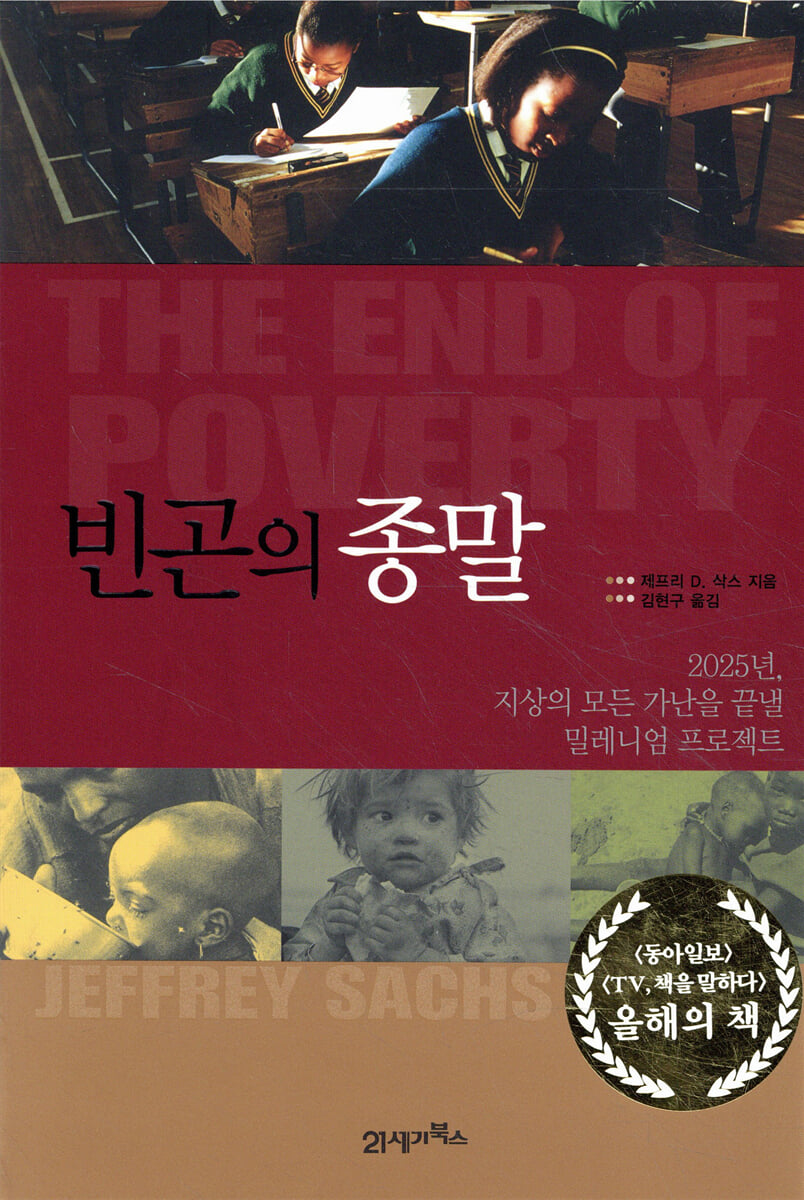
The end of poverty
 |
Description
Book Introduction
The New York Times selected Jeffrey Sachs as “the world’s most important economist.”
He is more famous in Korea for his strong criticism of the high interest rate policy prescribed by the IMF during the 1997 foreign exchange crisis, but in the United States, he is called one of the "three superstars of economics" along with Lawrence Summers and Paul Krugman.
Absolute poverty, which affects one-sixth of the world's population, means that they are deprived of the economic benefits necessary for survival, let alone human dignity.
Moreover, poverty, defined as living on less than $1 a day, has become a complex situation over the decades, making it difficult to find a solution.
Jeffrey Sachs closely analyzes poverty in the Third World to find practical solutions.
Chronic stagnation in growth due to hunger, disease, and low levels of education makes it difficult for poor countries to accumulate the capital necessary to build self-reliance.
Therefore, the author argues in this book that these countries can climb the ladder of self-reliance only by breaking the chains of poverty as quickly as possible through intensive and complex prescriptions.
In this book, the author explores what human values humanity must protect together and what economic practices are necessary to achieve them.
He is more famous in Korea for his strong criticism of the high interest rate policy prescribed by the IMF during the 1997 foreign exchange crisis, but in the United States, he is called one of the "three superstars of economics" along with Lawrence Summers and Paul Krugman.
Absolute poverty, which affects one-sixth of the world's population, means that they are deprived of the economic benefits necessary for survival, let alone human dignity.
Moreover, poverty, defined as living on less than $1 a day, has become a complex situation over the decades, making it difficult to find a solution.
Jeffrey Sachs closely analyzes poverty in the Third World to find practical solutions.
Chronic stagnation in growth due to hunger, disease, and low levels of education makes it difficult for poor countries to accumulate the capital necessary to build self-reliance.
Therefore, the author argues in this book that these countries can climb the ladder of self-reliance only by breaking the chains of poverty as quickly as possible through intensive and complex prescriptions.
In this book, the author explores what human values humanity must protect together and what economic practices are necessary to achieve them.
- You can preview some of the book's contents.
Preview
index
Recommendation
Korean edition author's note
Author's Note
Chapter 1: Where is Poverty?
Chapter 2: The Spread of Economic Prosperity
Chapter 3: Why Some Countries Fail to Prosper
Chapter 4: Similarities Between Medicine and Economics
Chapter 5: Hyperinflation in Bolivia
Chapter 6: Returning to Europe: Poland's Economic Reform
Chapter 7: Restoring Normalcy: Russia's Struggle
Chapter 8: Catch-up After 500 Years: China's Second Leap Forward
Chapter 9: The Long-Awaited Triumph of Hope: India
Chapter 10: Silent Death: Diseases of Africa
Chapter 11: Iraq War or Poverty Eradication?
Chapter 12: On-the-Spot Solutions to End Poverty
Chapter 13: The Virtuous Cycle from Poverty to Capital Accumulation
Chapter 14: A Global Agreement to Overcome Poverty
Chapter 15: The Calculation Method That Makes the World Valuable
Chapter 16: The False Prescription of a Free Market Economy
Chapter 17: Prejudice Against the First-Class Nation, the United States
Chapter 18: The Challenges of Our Time
Acknowledgements
References
Additional References
main
Korean edition author's note
Author's Note
Chapter 1: Where is Poverty?
Chapter 2: The Spread of Economic Prosperity
Chapter 3: Why Some Countries Fail to Prosper
Chapter 4: Similarities Between Medicine and Economics
Chapter 5: Hyperinflation in Bolivia
Chapter 6: Returning to Europe: Poland's Economic Reform
Chapter 7: Restoring Normalcy: Russia's Struggle
Chapter 8: Catch-up After 500 Years: China's Second Leap Forward
Chapter 9: The Long-Awaited Triumph of Hope: India
Chapter 10: Silent Death: Diseases of Africa
Chapter 11: Iraq War or Poverty Eradication?
Chapter 12: On-the-Spot Solutions to End Poverty
Chapter 13: The Virtuous Cycle from Poverty to Capital Accumulation
Chapter 14: A Global Agreement to Overcome Poverty
Chapter 15: The Calculation Method That Makes the World Valuable
Chapter 16: The False Prescription of a Free Market Economy
Chapter 17: Prejudice Against the First-Class Nation, the United States
Chapter 18: The Challenges of Our Time
Acknowledgements
References
Additional References
main
GOODS SPECIFICS
- Date of issue: July 5, 2006
- Format: Hardcover book binding method guide
- Page count, weight, size: 575 pages | 986g | 153*224*35mm
- ISBN13: 9788950908737
- ISBN10: 8950908735
You may also like
카테고리
korean


korean

![GQ KOREA Mark (Monthly): December [2025]](http://librairie.coreenne.fr/cdn/shop/files/8ef265dbbfbf186523ed75ba7319009d.jpg?v=1765340328&width=3840)


