

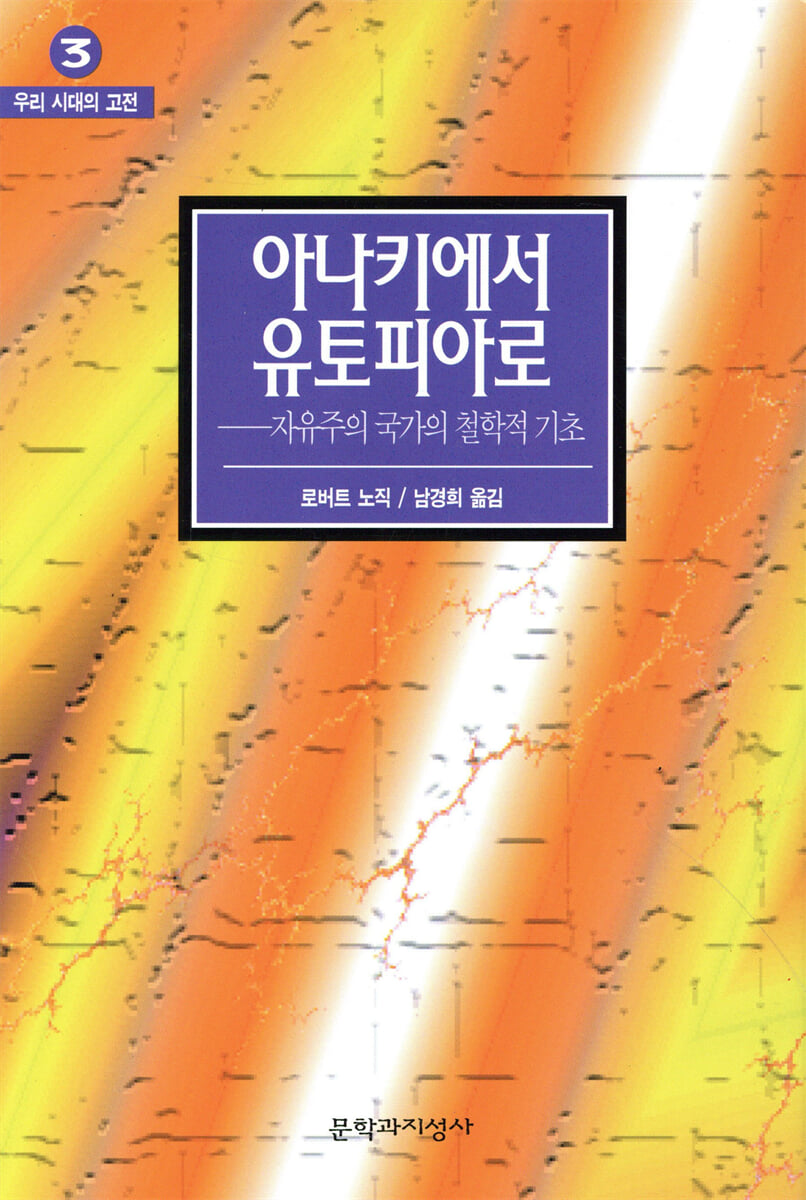
From Anarchy to Utopia
 |
Description
Book Introduction
This book, which advocates the abolition of anarchic anarchy and advocates liberalism, individualism, and openness as utopian ideologies, emphasizes the morality of the state while exploring an idealistic view of reality from a conservative worldview.
index
1.
Why Liberal Theory?
2.
liberalism
3.
Moral constraints and the state
4.
Prohibition, Rewards, and Risks
5.
nation
6.
Additional Considerations for Arguing for the Nation
7.
distributive justice
8.
Equality, jealousy, and jealousy
9.
Democracy
10.
A skeleton for utopia
Why Liberal Theory?
2.
liberalism
3.
Moral constraints and the state
4.
Prohibition, Rewards, and Risks
5.
nation
6.
Additional Considerations for Arguing for the Nation
7.
distributive justice
8.
Equality, jealousy, and jealousy
9.
Democracy
10.
A skeleton for utopia
Into the book
Our task in Chapter 3 was to demonstrate that the dominant protection agency within a territory satisfies the following two conditions for being a state: it possesses the necessary monopoly on the use of force within that territory, and it protects the rights of all people within that territory—even if this universal protection is provided only in one way.
This very crucial aspect of the state is why individualist anarchists condemn it as immoral.
Our other task was to show that this monopoly and redistributive element was itself morally legitimate, that the transition from the state of nature to the microstate (the monopoly element) was morally legitimate and did not violate anyone's rights, and that the transition from the microstate to the minimal state (the monopoly element) was also morally legitimate and did not violate anyone's rights.
This very crucial aspect of the state is why individualist anarchists condemn it as immoral.
Our other task was to show that this monopoly and redistributive element was itself morally legitimate, that the transition from the state of nature to the microstate (the monopoly element) was morally legitimate and did not violate anyone's rights, and that the transition from the microstate to the minimal state (the monopoly element) was also morally legitimate and did not violate anyone's rights.
--- p.147
GOODS SPECIFICS
- Date of issue: September 30, 2000
- Page count, weight, size: 426 pages | 718g | 148*210*30mm
- ISBN13: 9788932001906
- ISBN10: 8932001901
You may also like
카테고리
korean


korean

![GQ KOREA Mark (Monthly): December [2025]](http://librairie.coreenne.fr/cdn/shop/files/8ef265dbbfbf186523ed75ba7319009d.jpg?v=1765340328&width=3840)


