

This is my first time as an activist
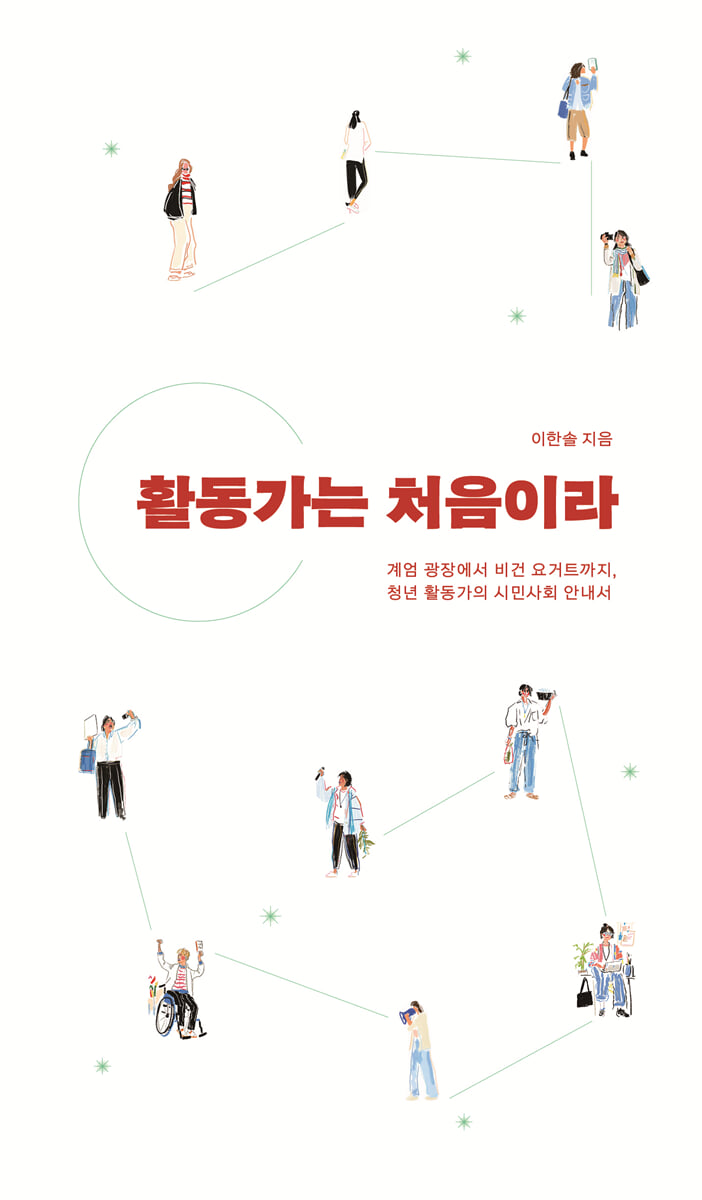 |
Description
Book Introduction
Lee Han-sol, a young activist who, as the chairman of the Korea Social Housing Association, has been leading the "Pan-Youth Action to Ask About Inequality" and "Voice of the Seasons" and experimenting with new forms of civil society, goes beyond testimonies of struggle to honestly and vividly confess the joys and sorrows of being an activist, publishing a "Civil Society Guide" suitable for this era.
From the hot and fierce battlefields to quietly sitting in front of a computer writing a plan, to even developing a vegan yogurt recipe and serving customers, these are all the roles of activists who illuminate every corner of our society.
But the term "activist" has often been misconstrued as a temporary project or a specific activity of a very specific group of people rather than a "well-deserved" profession.
In this book, "First Time Activist," the author reveals in detail the true nature of our civil society and activists, and rather than relying solely on the expertise of insiders, he gently reaches out to citizens outside the "activist world" so that they can begin their activities without difficulty.
I hope that this book will provide the realistic guidance that the young generation who took to the streets after Martial Law Square are contemplating what comes next.
From the hot and fierce battlefields to quietly sitting in front of a computer writing a plan, to even developing a vegan yogurt recipe and serving customers, these are all the roles of activists who illuminate every corner of our society.
But the term "activist" has often been misconstrued as a temporary project or a specific activity of a very specific group of people rather than a "well-deserved" profession.
In this book, "First Time Activist," the author reveals in detail the true nature of our civil society and activists, and rather than relying solely on the expertise of insiders, he gently reaches out to citizens outside the "activist world" so that they can begin their activities without difficulty.
I hope that this book will provide the realistic guidance that the young generation who took to the streets after Martial Law Square are contemplating what comes next.
- You can preview some of the book's contents.
Preview
index
Entering
Part 1: A Taste of Civil Society
Chapter 1: How Capital T Became an Activist
Chapter 2: About 'Voice of the Seasons'
Chapter 3: 'Citizens,' 'Civil Society,' and 'Advocacy'
Part 2: A Day in the Life of an Activist
Chapter 1: An Activist's Day Vlog: Not So Difficult
Chapter 2: Are there still people doing civil movements?
Chapter 3: Civil Society with Citizens
Chapter 4: People Who Hate Being Asked, "What Are You Doing These Days?"
Chapter 5 “I don’t know if I’m an activist.”
[Appendix 1.
Isn't this a force in collusion with a specific political party?]
Part 3: The Work of an Activist
Chapter 1: A to Z of Change
Chapter 2: Isn't it too heavy and old?
Chapter 3: What kind of community do we need?
Chapter 4 Post Where is Facebook?
Chapter 5: If I Could Create My Own Safety Net for My Life
[Appendix 2.
What is the difference between public and private?
The Many Faces of Part 4 Activists
Chapter 1: What's on the News Isn't the Whole Story of Civil Rights Movements
Chapter 2 I didn't know I could do this at work!
Chapter 3: From the struggle to tie a belt to YouTube shorts
Part 5 Activist's Income
Chapter 1 I don't like talking about money either
Chapter 2: A New Wave of Sponsorship: How Did It Move Citizens' Hearts?
Chapter 3: Is there salary negotiation in civil society?
[Appendix 3.
Are you a worker or an activist?
Part 6: Aspiring Activist White Paper
Chapter 1: Is only MBTI E possible?
Chapter 2 What Should I Give Up?
Chapter 3 You, become our comrade!
Chapter 4: These are faces I've never seen before.
Who are you?
[Appendix 4. Can AI Replace Activists?]
7.
Proposals for Change
Chapter 1 So that you, I, and we can grow safely
Chapter 2: What about the average 40-year-old management team?
Chapter 3: How about we shorten the conversations that only we know?
Chapter 4 Let's all gather together!
Going out
Chapter 1: The Sewol Generation and the Key Players of the Impeachment Crisis
Chapter 2: Nevertheless, civil society is still necessary.
[Appendix 5.
For those embarking on the path of activism: Five Stepping Stones]
Part 1: A Taste of Civil Society
Chapter 1: How Capital T Became an Activist
Chapter 2: About 'Voice of the Seasons'
Chapter 3: 'Citizens,' 'Civil Society,' and 'Advocacy'
Part 2: A Day in the Life of an Activist
Chapter 1: An Activist's Day Vlog: Not So Difficult
Chapter 2: Are there still people doing civil movements?
Chapter 3: Civil Society with Citizens
Chapter 4: People Who Hate Being Asked, "What Are You Doing These Days?"
Chapter 5 “I don’t know if I’m an activist.”
[Appendix 1.
Isn't this a force in collusion with a specific political party?]
Part 3: The Work of an Activist
Chapter 1: A to Z of Change
Chapter 2: Isn't it too heavy and old?
Chapter 3: What kind of community do we need?
Chapter 4 Post Where is Facebook?
Chapter 5: If I Could Create My Own Safety Net for My Life
[Appendix 2.
What is the difference between public and private?
The Many Faces of Part 4 Activists
Chapter 1: What's on the News Isn't the Whole Story of Civil Rights Movements
Chapter 2 I didn't know I could do this at work!
Chapter 3: From the struggle to tie a belt to YouTube shorts
Part 5 Activist's Income
Chapter 1 I don't like talking about money either
Chapter 2: A New Wave of Sponsorship: How Did It Move Citizens' Hearts?
Chapter 3: Is there salary negotiation in civil society?
[Appendix 3.
Are you a worker or an activist?
Part 6: Aspiring Activist White Paper
Chapter 1: Is only MBTI E possible?
Chapter 2 What Should I Give Up?
Chapter 3 You, become our comrade!
Chapter 4: These are faces I've never seen before.
Who are you?
[Appendix 4. Can AI Replace Activists?]
7.
Proposals for Change
Chapter 1 So that you, I, and we can grow safely
Chapter 2: What about the average 40-year-old management team?
Chapter 3: How about we shorten the conversations that only we know?
Chapter 4 Let's all gather together!
Going out
Chapter 1: The Sewol Generation and the Key Players of the Impeachment Crisis
Chapter 2: Nevertheless, civil society is still necessary.
[Appendix 5.
For those embarking on the path of activism: Five Stepping Stones]
Into the book
The impeachment period, a time to liquidate the past, concluded with the peaceful end of a civil war regime, in the best possible harmony between citizens and civil society, proving the greatness of democracy worthy of world history.
But the reason citizens gathered in the square was not limited to simply ousting one bad politician.
Now is the time for civil society to imagine a better future together with its citizens.
Especially now that the 2030 youth who led the past plaza have returned to their daily lives, a time has opened for them to meet civil society again in their ordinary days, engage in hopeful and joyful activities, and change the world.
That is why the stories of young activists in this book will be all the more valuable and meaningful.
--- p.11
The field of civil society and the profession of activist are by no means uncharted territory.
For some, it has the appearance and performance of a workplace that is attractive enough.
It's just that there was a lack of language to effectively explain this.
But we did not ignore this regret.
I met citizens directly in the square and opened a cafe to communicate with those who were not familiar with civil society.
We constantly tried to reach out to more citizens by producing YouTube videos and planning social media every day.
In this way, today's activists struggle every day with how and in what language to convey their civil society activities.
And what I'm trying to do in this book is to organize the valuable experiences and language I've accumulated so far so that they don't evaporate.
--- p.14
Civil society has specialized organizations for each issue, and these organizations constantly analyze the experiences of citizens on the ground and consider what structural changes should be made to the national system.
In this way, citizens unite to form a civil society, and civil society, in turn, advocates to protect and expand citizens' rights.
Citizens, civil society, and advocacy are interconnected in this virtuous cycle.
--- p.55
- 7pm: Welcome Party
As I was walking home from work with a heavy heart after a heavy consultation, the executive group chat room caught fire.
A lightning welcome meeting was held for new activists.
I almost regretted the day if I just went home, but I immediately changed my route.
In fact, one of the best things about being a civic activist is that after work, the coworkers you get along with quickly become your friends.
While lightly(?) drinking three glasses of beer, the conversation continues, from work to dramas.
On my way home in a good mood, I received a short-form rough edit of the video I shot that afternoon via KakaoTalk.
Even after three glasses of beer, his face, which had not been affected, turned bright red.
--- p.62
Some propose policies based on their expertise and interests, while others participate in communities built by civil society and create new forms of solidarity.
Although the fields and methods are different, the desire to make society a little better is the same.
Civil movements do not occur only at special moments.
It continues naturally here and now, in our daily lives.
And if you want to get involved in the civil movement in any way, I want you to remember that you are never alone here.
--- p.77
In the 8th revision of the Korean Standard Classification of Occupations, which will be implemented starting in 2025, 'civil society activist' will be elevated to a subcategory and will be recognized as a distinct occupation in Korean society.
But what is most important is that citizens understand this profession correctly.
To this end, activists receive feedback from acquaintances to ensure their explanations are being conveyed effectively, and they continually share references with fellow activists to refine and develop their expressions.
If we do this, won't there come a day when we can proudly introduce the wonderful workplaces and specific roles of activists, moving beyond the vague description of them as "people who do good work"?
--- p.94
In this age of increasing accessibility and overflow of information, the era of someone 'enlightening' someone else is over.
Moreover, the word ‘enlightenment’ itself has long been trivialized.
Now, even the way to inform the agenda is impossible without ‘participation.’
Ultimately, everyone knows that civil society cannot function fully without the participation of its citizens.
--- p.131
Whether as professional activists or engaged citizens, let's not limit our imaginations to formal frameworks like "nonprofit corporations."
Civil society has already transcended the framework of modern systems and is permeating every aspect of citizens' daily lives, regardless of time or place.
A workplace fit for those who passionately call out for struggle on the streets, an innovative organization for those who want to surprise the world with novel ideas, a gathering of warm and caring people who want to change their neighborhoods—the diverse aspects of civil society that you don't see in the news are already right here with you.
But the reason citizens gathered in the square was not limited to simply ousting one bad politician.
Now is the time for civil society to imagine a better future together with its citizens.
Especially now that the 2030 youth who led the past plaza have returned to their daily lives, a time has opened for them to meet civil society again in their ordinary days, engage in hopeful and joyful activities, and change the world.
That is why the stories of young activists in this book will be all the more valuable and meaningful.
--- p.11
The field of civil society and the profession of activist are by no means uncharted territory.
For some, it has the appearance and performance of a workplace that is attractive enough.
It's just that there was a lack of language to effectively explain this.
But we did not ignore this regret.
I met citizens directly in the square and opened a cafe to communicate with those who were not familiar with civil society.
We constantly tried to reach out to more citizens by producing YouTube videos and planning social media every day.
In this way, today's activists struggle every day with how and in what language to convey their civil society activities.
And what I'm trying to do in this book is to organize the valuable experiences and language I've accumulated so far so that they don't evaporate.
--- p.14
Civil society has specialized organizations for each issue, and these organizations constantly analyze the experiences of citizens on the ground and consider what structural changes should be made to the national system.
In this way, citizens unite to form a civil society, and civil society, in turn, advocates to protect and expand citizens' rights.
Citizens, civil society, and advocacy are interconnected in this virtuous cycle.
--- p.55
- 7pm: Welcome Party
As I was walking home from work with a heavy heart after a heavy consultation, the executive group chat room caught fire.
A lightning welcome meeting was held for new activists.
I almost regretted the day if I just went home, but I immediately changed my route.
In fact, one of the best things about being a civic activist is that after work, the coworkers you get along with quickly become your friends.
While lightly(?) drinking three glasses of beer, the conversation continues, from work to dramas.
On my way home in a good mood, I received a short-form rough edit of the video I shot that afternoon via KakaoTalk.
Even after three glasses of beer, his face, which had not been affected, turned bright red.
--- p.62
Some propose policies based on their expertise and interests, while others participate in communities built by civil society and create new forms of solidarity.
Although the fields and methods are different, the desire to make society a little better is the same.
Civil movements do not occur only at special moments.
It continues naturally here and now, in our daily lives.
And if you want to get involved in the civil movement in any way, I want you to remember that you are never alone here.
--- p.77
In the 8th revision of the Korean Standard Classification of Occupations, which will be implemented starting in 2025, 'civil society activist' will be elevated to a subcategory and will be recognized as a distinct occupation in Korean society.
But what is most important is that citizens understand this profession correctly.
To this end, activists receive feedback from acquaintances to ensure their explanations are being conveyed effectively, and they continually share references with fellow activists to refine and develop their expressions.
If we do this, won't there come a day when we can proudly introduce the wonderful workplaces and specific roles of activists, moving beyond the vague description of them as "people who do good work"?
--- p.94
In this age of increasing accessibility and overflow of information, the era of someone 'enlightening' someone else is over.
Moreover, the word ‘enlightenment’ itself has long been trivialized.
Now, even the way to inform the agenda is impossible without ‘participation.’
Ultimately, everyone knows that civil society cannot function fully without the participation of its citizens.
--- p.131
Whether as professional activists or engaged citizens, let's not limit our imaginations to formal frameworks like "nonprofit corporations."
Civil society has already transcended the framework of modern systems and is permeating every aspect of citizens' daily lives, regardless of time or place.
A workplace fit for those who passionately call out for struggle on the streets, an innovative organization for those who want to surprise the world with novel ideas, a gathering of warm and caring people who want to change their neighborhoods—the diverse aspects of civil society that you don't see in the news are already right here with you.
--- p.179
Publisher's Review
From the martial law square where people called for Yoon Seok-yeol's resignation
From the vegan dessert shop in Sinchon that has become a hot spot,
The Here and Now of Civil Society Through the Eyes of a Young Activist
"Being an Activist for the First Time" was planned to gently break the stereotype that "civil society is unfamiliar and being an activist is difficult."
Author Lee Han-sol has been a young activist in the areas of housing, labor, and social economy since his early 20s, working at organizations such as the Snail Union and the Hanbit Media Labor Rights Center. He is currently the chairman of the Korea Social Housing Association and is leading organizations such as the "Pan-Youth Action to Ask About Inequality" and "Voice of the Seasons," experimenting with new forms of civil society.
In this book, he uses his own experiences to explain what it means to be an 'activist' and how specific and realistic the daily life of an activist is.
In the 8th revision of the Korean Standard Classification of Occupations, which will be implemented starting in 2025, 'civil society activist' will be elevated to a subcategory and will be recognized as a distinct occupation in Korean society.
But the term ‘activist’ still remains ambiguous to ordinary citizens.
In fact, the role of activists, whether it's being in a heated and intense battlefield, sitting quietly in front of a computer writing a plan, or even developing a vegan yogurt recipe and serving customers, is all part of the job of illuminating every corner of our society.
But the term "activist" has often been misconstrued as a temporary project or a specific activity of a very specific group of people rather than a "well-deserved" profession.
Long-standing conflicts, such as the prejudice that 'forces are in league with a certain political party' and 'activists' rights as workers', have also been piling up.
In this book, "First Time Activist," the author reveals in detail the true nature of our civil society and activists, and rather than relying solely on the expertise of insiders, he gently reaches out to citizens outside the "activist world" so that they can begin their activities without difficulty.
The power of civil society that moves ahead of the system, the role of planners who connect policy and content, and the possibility of solidarity that begins with small actions in everyday life…
The main goal of this book is to organically demonstrate the overall structure of social movements and suggest new ways for the younger generation to connect with civil society.
When the young generation that defended Martial Law Square pondered what came next
Beyond the record of social movements, "Being a First-Time Activist" proposes a new format for an "introduction to civil society."
Capturing the vivid language of the "field" and the lived experiences and sensibilities of activists "here and now" is the essential skill for a new era's introduction to civil society.
While narratives of struggle and organizational theories are certainly important, this book provides a concrete glimpse into the actual workings of civil society, including the rhythm of work, organizational culture, policy planning, and content production, all from the perspective of a young activist.
In particular, the perspective that views the field of 'policy' as a professional privilege exclusive to activists and the attitude that emphasizes continuity and flexibility over dedication create a fresh crack in the existing grammar of the movement.
As the young generation who defended Martial Law Square pondered what to do next, I hoped this book would provide them with the realistic guidance they needed.
The author guides us through the vast ecosystem of civil society in accessible language, believing that anyone can begin with even a small interest.
Activism as a profession
The kindest and most honest guide to that unknown world.
The book is organized into seven major sections.
It contains honest confessions about the process of accidentally entering civil society as a rational activist with a capital T personality, and what one gains and must give up while living as an activist.
The following chapters describe the daily lives of activists 'today' like a vlog, reconstructing and introducing the actual daily lives of activists, including meetings, planning, requesting sponsorship, proposing policies, and collaborating with local governments.
The chapter, "From Belt-Wrapped Struggles to YouTube Shorts," demonstrates that civil movements are no longer limited to slogans, and explores a new sense of solidarity through social media content, examining a number of case studies.
Also, in the chapter 'I hate talking about money either', the labor and compensation of activists and the structural instability of civil society were honestly addressed, and the conditions for realistic sustainability were explored.
It aims to be a "civil society guide for citizens" that allows those who wish to create a better society to easily enter the field, and to offer a different perspective to those who deify or belittle the profession of "activist."
Civil society is the 'first hand to move in the face of a crisis.'
When politics is tied to votes and administration is tied to institutions, civil society has been a practical agent that restores the broken daily life and designs the future.
As Korean society faces structural challenges like the climate crisis, inequality, and hatred, the author asserts, “Civil society has always been the driving force behind restoring our shattered daily lives and designing the future.”
In particular, the sensibility of "Let's Live Together" that has continued since the Sewol ferry disaster and the memory of Martial Law Square in 2024 have revealed the resilience of civil society and the potential for participation of the younger generation.
"Being an Activist for the First Time" connects this lineage of emotions to reality.
By redefining activists as “social planners” rather than “special devotees,” and helping younger generations imagine their own roles in civil society.
In that sense, "First Time Activist" is not simply a career guide, but a generational record that shows how to survive and thrive in the field of democracy.
From the vegan dessert shop in Sinchon that has become a hot spot,
The Here and Now of Civil Society Through the Eyes of a Young Activist
"Being an Activist for the First Time" was planned to gently break the stereotype that "civil society is unfamiliar and being an activist is difficult."
Author Lee Han-sol has been a young activist in the areas of housing, labor, and social economy since his early 20s, working at organizations such as the Snail Union and the Hanbit Media Labor Rights Center. He is currently the chairman of the Korea Social Housing Association and is leading organizations such as the "Pan-Youth Action to Ask About Inequality" and "Voice of the Seasons," experimenting with new forms of civil society.
In this book, he uses his own experiences to explain what it means to be an 'activist' and how specific and realistic the daily life of an activist is.
In the 8th revision of the Korean Standard Classification of Occupations, which will be implemented starting in 2025, 'civil society activist' will be elevated to a subcategory and will be recognized as a distinct occupation in Korean society.
But the term ‘activist’ still remains ambiguous to ordinary citizens.
In fact, the role of activists, whether it's being in a heated and intense battlefield, sitting quietly in front of a computer writing a plan, or even developing a vegan yogurt recipe and serving customers, is all part of the job of illuminating every corner of our society.
But the term "activist" has often been misconstrued as a temporary project or a specific activity of a very specific group of people rather than a "well-deserved" profession.
Long-standing conflicts, such as the prejudice that 'forces are in league with a certain political party' and 'activists' rights as workers', have also been piling up.
In this book, "First Time Activist," the author reveals in detail the true nature of our civil society and activists, and rather than relying solely on the expertise of insiders, he gently reaches out to citizens outside the "activist world" so that they can begin their activities without difficulty.
The power of civil society that moves ahead of the system, the role of planners who connect policy and content, and the possibility of solidarity that begins with small actions in everyday life…
The main goal of this book is to organically demonstrate the overall structure of social movements and suggest new ways for the younger generation to connect with civil society.
When the young generation that defended Martial Law Square pondered what came next
Beyond the record of social movements, "Being a First-Time Activist" proposes a new format for an "introduction to civil society."
Capturing the vivid language of the "field" and the lived experiences and sensibilities of activists "here and now" is the essential skill for a new era's introduction to civil society.
While narratives of struggle and organizational theories are certainly important, this book provides a concrete glimpse into the actual workings of civil society, including the rhythm of work, organizational culture, policy planning, and content production, all from the perspective of a young activist.
In particular, the perspective that views the field of 'policy' as a professional privilege exclusive to activists and the attitude that emphasizes continuity and flexibility over dedication create a fresh crack in the existing grammar of the movement.
As the young generation who defended Martial Law Square pondered what to do next, I hoped this book would provide them with the realistic guidance they needed.
The author guides us through the vast ecosystem of civil society in accessible language, believing that anyone can begin with even a small interest.
Activism as a profession
The kindest and most honest guide to that unknown world.
The book is organized into seven major sections.
It contains honest confessions about the process of accidentally entering civil society as a rational activist with a capital T personality, and what one gains and must give up while living as an activist.
The following chapters describe the daily lives of activists 'today' like a vlog, reconstructing and introducing the actual daily lives of activists, including meetings, planning, requesting sponsorship, proposing policies, and collaborating with local governments.
The chapter, "From Belt-Wrapped Struggles to YouTube Shorts," demonstrates that civil movements are no longer limited to slogans, and explores a new sense of solidarity through social media content, examining a number of case studies.
Also, in the chapter 'I hate talking about money either', the labor and compensation of activists and the structural instability of civil society were honestly addressed, and the conditions for realistic sustainability were explored.
It aims to be a "civil society guide for citizens" that allows those who wish to create a better society to easily enter the field, and to offer a different perspective to those who deify or belittle the profession of "activist."
Civil society is the 'first hand to move in the face of a crisis.'
When politics is tied to votes and administration is tied to institutions, civil society has been a practical agent that restores the broken daily life and designs the future.
As Korean society faces structural challenges like the climate crisis, inequality, and hatred, the author asserts, “Civil society has always been the driving force behind restoring our shattered daily lives and designing the future.”
In particular, the sensibility of "Let's Live Together" that has continued since the Sewol ferry disaster and the memory of Martial Law Square in 2024 have revealed the resilience of civil society and the potential for participation of the younger generation.
"Being an Activist for the First Time" connects this lineage of emotions to reality.
By redefining activists as “social planners” rather than “special devotees,” and helping younger generations imagine their own roles in civil society.
In that sense, "First Time Activist" is not simply a career guide, but a generational record that shows how to survive and thrive in the field of democracy.
GOODS SPECIFICS
- Date of issue: November 28, 2025
- Page count, weight, size: 324 pages | 424g | 120*205*19mm
- ISBN13: 9791198794390
- ISBN10: 1198794399
You may also like
카테고리
korean


korean

![GQ KOREA Mark (Monthly): December [2025]](http://librairie.coreenne.fr/cdn/shop/files/8ef265dbbfbf186523ed75ba7319009d.jpg?v=1765340328&width=3840)


