

The Bizarre Art Museum
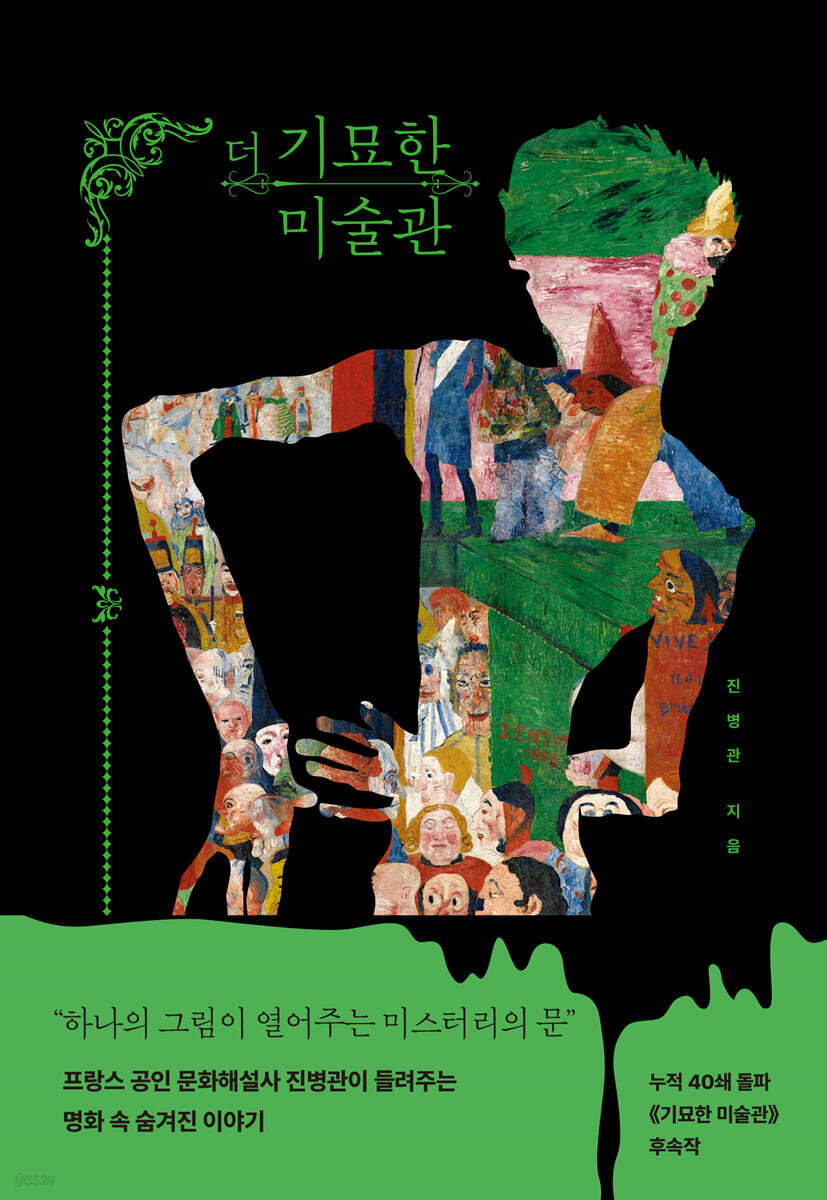 |
Description
Book Introduction
“A door to mystery opened by a beautiful painting”
Hidden Stories from Famous Paintings, Told by French Licensed Cultural Interpreter Jin Byeong-gwan
What if there was an artist who left a will behind a painting? What if a painting hailed as America's "Mona Lisa" was considered pornographic at the time it was painted? What if there was an artist whose paintings Hitler owned eleven? What if there was a painter who cut off his own head and painted it as a portrait?
There is always a hidden story behind the famous paintings we know well.
A painting that was so well drawn that it brought misfortune, a painting that contained the artist's secret that could not be revealed to anyone, a painting drawn to take revenge on those who mocked and pushed him away...
《The Bizarre Museum》 is a fascinating collection of mysteries within famous paintings, unraveled by Jin Byeong-gwan, a certified French cultural commentator and bestselling author.
By following his intelligent and captivating storytelling through over 100 masterpieces, you will be able to enjoy both the pleasure of appreciating art and gaining general knowledge.
Hidden Stories from Famous Paintings, Told by French Licensed Cultural Interpreter Jin Byeong-gwan
What if there was an artist who left a will behind a painting? What if a painting hailed as America's "Mona Lisa" was considered pornographic at the time it was painted? What if there was an artist whose paintings Hitler owned eleven? What if there was a painter who cut off his own head and painted it as a portrait?
There is always a hidden story behind the famous paintings we know well.
A painting that was so well drawn that it brought misfortune, a painting that contained the artist's secret that could not be revealed to anyone, a painting drawn to take revenge on those who mocked and pushed him away...
《The Bizarre Museum》 is a fascinating collection of mysteries within famous paintings, unraveled by Jin Byeong-gwan, a certified French cultural commentator and bestselling author.
By following his intelligent and captivating storytelling through over 100 masterpieces, you will be able to enjoy both the pleasure of appreciating art and gaining general knowledge.
- You can preview some of the book's contents.
Preview
index
prolog.
Between the visible picture and the invisible story
Hall 1.
Room of Destiny
The Face Behind the Mask: James Ensor, The Entry of Christ into Brussels
[In-Depth Reading] What the Owl Symbolizes
The Child Who Never Comes Out: Édouard Manet, The Balcony
[In-Depth Reading of Paintings] Inspired Works
Last Will and Testament in Painting: Felix Nussbaum, The Triumph of Death
From 19th-Century Pornography to America's Mona Lisa: John Singer Sargent, Portrait of Madame X
2nd floor.
Dark Room
The Most Beautiful Black: Odilon Redon, The Weeping Spider
A Hard Life That Can't Be Hiding Even with Flowers: Diego Rivera, The Flower Seller
[In-Depth Reading of Paintings] Diego Rivera and Frida Kahlo
Self-portrait with his own head cut off: Michelangelo Merisi da Caravaggio, David with the Head of Goliath
[In-Depth Reading of Painting] The Birth of Tenebrism
Everyone sets off for the Isle of the Dead: Arnold Böcklin, Self-Portrait with Death Playing the Violin
3rd floor.
Room of Enchantment
Elegant Revenge Against Enemies: James Abbott McNeill Whistler, Nocturne in Black and Gold
A Genius Born Too Early: Leonardo da Vinci, The Virgin of the Rocks
A groundbreaking portrait that made the emperor laugh: Giuseppe Arcimboldo, The Four Seasons
The Greatest 18th-Century Drama: William Hogarth, "Marriage According to Fashion"
[In-Depth Reading of Pictures] Another series satirizing the times
4th hall.
Room of Choice
The Legacy of Unfulfilled Love: Edvard Munch, "The Vampire"
[In-Depth Reading of Paintings] Works on display at the Decadent Art Exhibition
The Ruin of a Portrait Too Well Painted: Hans Holbein, Portrait of Anne of Cleves
All the more beautiful because it's dangerous: Egon Schiele, Double Self-Portrait
Why I Painted Flowers for 11 Hours a Day: John Everett Millais, "Ophelia"
5th floor.
Room of Memory
The world's most political painting: Jacques-Louis David, The Death of Marat
A Secret No One Has Deciphered: Jan Van Eyck's Portrait of the Arnolfini Couple
Why is she crying?: Pablo Picasso, Weeping Woman
[In-Depth Reading] Drawing Reversal and Peace
A painting so eerily realistic: Rosa Bonheur, The Plowing in the Nivernais
References
Between the visible picture and the invisible story
Hall 1.
Room of Destiny
The Face Behind the Mask: James Ensor, The Entry of Christ into Brussels
[In-Depth Reading] What the Owl Symbolizes
The Child Who Never Comes Out: Édouard Manet, The Balcony
[In-Depth Reading of Paintings] Inspired Works
Last Will and Testament in Painting: Felix Nussbaum, The Triumph of Death
From 19th-Century Pornography to America's Mona Lisa: John Singer Sargent, Portrait of Madame X
2nd floor.
Dark Room
The Most Beautiful Black: Odilon Redon, The Weeping Spider
A Hard Life That Can't Be Hiding Even with Flowers: Diego Rivera, The Flower Seller
[In-Depth Reading of Paintings] Diego Rivera and Frida Kahlo
Self-portrait with his own head cut off: Michelangelo Merisi da Caravaggio, David with the Head of Goliath
[In-Depth Reading of Painting] The Birth of Tenebrism
Everyone sets off for the Isle of the Dead: Arnold Böcklin, Self-Portrait with Death Playing the Violin
3rd floor.
Room of Enchantment
Elegant Revenge Against Enemies: James Abbott McNeill Whistler, Nocturne in Black and Gold
A Genius Born Too Early: Leonardo da Vinci, The Virgin of the Rocks
A groundbreaking portrait that made the emperor laugh: Giuseppe Arcimboldo, The Four Seasons
The Greatest 18th-Century Drama: William Hogarth, "Marriage According to Fashion"
[In-Depth Reading of Pictures] Another series satirizing the times
4th hall.
Room of Choice
The Legacy of Unfulfilled Love: Edvard Munch, "The Vampire"
[In-Depth Reading of Paintings] Works on display at the Decadent Art Exhibition
The Ruin of a Portrait Too Well Painted: Hans Holbein, Portrait of Anne of Cleves
All the more beautiful because it's dangerous: Egon Schiele, Double Self-Portrait
Why I Painted Flowers for 11 Hours a Day: John Everett Millais, "Ophelia"
5th floor.
Room of Memory
The world's most political painting: Jacques-Louis David, The Death of Marat
A Secret No One Has Deciphered: Jan Van Eyck's Portrait of the Arnolfini Couple
Why is she crying?: Pablo Picasso, Weeping Woman
[In-Depth Reading] Drawing Reversal and Peace
A painting so eerily realistic: Rosa Bonheur, The Plowing in the Nivernais
References
Detailed image

Into the book
Since the Middle Ages, Europeans have believed that dancing in a cemetery as if possessed could enable them to communicate spiritually with the departed.
During times of epidemics such as the plague, paintings were created of corpses and skeletons rising from graves and dancing with the living.
It reminds us of how close life and death are, how fleeting the glory of this world is, and how we should live.
In this way, the painting depicting the 'dance of death' was an allegory intended to teach a lesson to humanity.
(…) However, unlike his predecessors in the past, the painter did not leave any lessons in his paintings of death.
At the very bottom right of the picture, (…) the signature ‘Felix Nussbaum, April 18, 1944’ is visible.
The date the artist completed the painting and his signature.
Perhaps Nussbaum knew.
That this work would become his will.
---From “The Last Testament Left in Painting: Felix Nussbaum, The Triumph of Death”
The woman in the painting is kneeling and bowing her head, carrying a flower basket on her back that appears larger than her body.
But as if it were difficult for her to lift the heavy basket alone, a man whose hands, feet, and part of his head are visible from behind the basket is helping her.
The woman will soon go out into the street to sell flowers, carrying a heavy basket.
When you first encounter the painting, your eyes are drawn to the gorgeous and beautiful colors and you end up staring at it for a long time, but when you discover the woman carrying the basket, you become more aware of the weight of her life than the beauty of the flowers.
Diego Rivera's "The Flower Seller" is an ironic work that is both beautiful and difficult, and the life of the painter Rivera was like that too.
---「A Hard Life That Can't Be Hiding Even with Flowers: Diego Rivera, from "The Flower Seller"」
Before the advancement of medicine, death was a common occurrence.
Because death was a natural thing, it was natural to sing about and draw death.
But we no longer talk about death in our daily lives.
Although we may feel sad about the deaths of others, we treat it as if it has nothing to do with us.
But Böcklin's paintings constantly ask us whether death is not far away, when it will come to us, and how we will face that moment.
---「Everyone leaves for the island of death: Arnold Böcklin, from “Death and Self-Portrait Playing the Violin”
The revolutionary, who could not put down his work even when he went into the bathtub to overcome the severe itching, and the heroic figure holding a pen and paper even at the moment of death, did not express a skin disease.
The bottom of the bathtub sheet shows traces of a lint-free cloth, subtly showing Mara's cleanliness.
The tombstone-like wooden table is inscribed with “To Marat, David, l'AN DEUX, 1793,” and the handle of the sword used to kill Marat (although it was actually black) is painted white to maximize the hero’s blood.
David actually visited Mara's home the day before she was murdered and met her.
That's why I knew how he usually worked, and I knew how he faced death after he was murdered.
But that fact didn't matter.
Marat in the painting had to remain as Jesus Christ, martyred for the revolution.
During times of epidemics such as the plague, paintings were created of corpses and skeletons rising from graves and dancing with the living.
It reminds us of how close life and death are, how fleeting the glory of this world is, and how we should live.
In this way, the painting depicting the 'dance of death' was an allegory intended to teach a lesson to humanity.
(…) However, unlike his predecessors in the past, the painter did not leave any lessons in his paintings of death.
At the very bottom right of the picture, (…) the signature ‘Felix Nussbaum, April 18, 1944’ is visible.
The date the artist completed the painting and his signature.
Perhaps Nussbaum knew.
That this work would become his will.
---From “The Last Testament Left in Painting: Felix Nussbaum, The Triumph of Death”
The woman in the painting is kneeling and bowing her head, carrying a flower basket on her back that appears larger than her body.
But as if it were difficult for her to lift the heavy basket alone, a man whose hands, feet, and part of his head are visible from behind the basket is helping her.
The woman will soon go out into the street to sell flowers, carrying a heavy basket.
When you first encounter the painting, your eyes are drawn to the gorgeous and beautiful colors and you end up staring at it for a long time, but when you discover the woman carrying the basket, you become more aware of the weight of her life than the beauty of the flowers.
Diego Rivera's "The Flower Seller" is an ironic work that is both beautiful and difficult, and the life of the painter Rivera was like that too.
---「A Hard Life That Can't Be Hiding Even with Flowers: Diego Rivera, from "The Flower Seller"」
Before the advancement of medicine, death was a common occurrence.
Because death was a natural thing, it was natural to sing about and draw death.
But we no longer talk about death in our daily lives.
Although we may feel sad about the deaths of others, we treat it as if it has nothing to do with us.
But Böcklin's paintings constantly ask us whether death is not far away, when it will come to us, and how we will face that moment.
---「Everyone leaves for the island of death: Arnold Böcklin, from “Death and Self-Portrait Playing the Violin”
The revolutionary, who could not put down his work even when he went into the bathtub to overcome the severe itching, and the heroic figure holding a pen and paper even at the moment of death, did not express a skin disease.
The bottom of the bathtub sheet shows traces of a lint-free cloth, subtly showing Mara's cleanliness.
The tombstone-like wooden table is inscribed with “To Marat, David, l'AN DEUX, 1793,” and the handle of the sword used to kill Marat (although it was actually black) is painted white to maximize the hero’s blood.
David actually visited Mara's home the day before she was murdered and met her.
That's why I knew how he usually worked, and I knew how he faced death after he was murdered.
But that fact didn't matter.
Marat in the painting had to remain as Jesus Christ, martyred for the revolution.
---From "The World's Most Political Painting: Jacques-Louis David, The Death of Marat"
Publisher's Review
***There is a painter who left a will in his paintings?***
***The painting hailed as America's Mona Lisa was actually treated as pornography?***
***The artist has a self-portrait drawn with his own cut hair?***
The sequel to the 2021 best-selling and best-selling art book, The Bizarre Museum.
“As you read an exciting story, a picture forms in your mind.”
In 2021, art galleries, which were always easy to visit, are becoming harder to find than before.
《The Bizarre Museum》 was immediately loved as a general bestseller and the best book in the art field upon its publication.
《The Bizarre Museum》 is the sequel that returns with newly discovered works and more powerful storytelling.
Edouard Manet's "Balcony", which revealed a veiled child only just before his death after keeping the existence of the child a secret throughout his life; John Everett Millais' "Ophelia", which required 11 hours of labor a day for 5 months to capture the beauty of nature; Felix Nussbaum's "The Triumph of Death", which he painted like a will before boarding the last train to Auschwitz...
The moment you open the door to the museum filled with secret stories, you will be immersed in a world of unforgettable masterpieces.
“The reason I am drawn to paintings that show the other side of life with darkness and shadows is
Because our lives are not always bright or dark.”
Many people look for beautiful paintings.
And beauty itself gives joy.
But our lives can't always be bright.
It can't just be dark anymore.
So, paintings that penetrate the essence of life, that is, paintings that show the other side of life with darkness and shadows, end up becoming famous paintings loved by many.
While bestselling author Jin Byeong-gwan mainly dealt with relatively popular works in his previous work, “The Strange Museum,” in “The Strange Museum,” he aimed to introduce interesting but relatively unknown works, such as the hidden stories of well-known painters or new stories of little-known painters.
The art museum is divided into five halls.
Hall 1 is the 'Room of Destiny', which features works that changed the world and someone's life; Hall 2 is the 'Room of Darkness', which gathers works that reveal the bright and beautiful other side of life through darkness and shadow; Hall 3 is the 'Room of Enchantment', which is filled with works by artists ahead of their time and groundbreaking works; Hall 4 is the 'Room of Choice', which introduces works that stand on the border between reality and art, life and death; and finally, Hall 5 is the 'Room of Memory', which selects works that will remain in art history for a long time.
In cases where a deeper understanding of the artist's life is necessary to gain a deeper understanding of the work or background knowledge is needed, we cover this in more depth through [Reading Paintings Deeply].
The background knowledge of the work, including its history, current events, painting styles, and techniques, is covered at a general level, so it will be a satisfying viewing experience in terms of both enjoyment and education.
Every work in The Bizarre Museum has its own mystery.
After reading the book, you can imagine hidden stories that the author didn't mention and add your own interpretation, which will be the best viewing experience.
***The painting hailed as America's Mona Lisa was actually treated as pornography?***
***The artist has a self-portrait drawn with his own cut hair?***
The sequel to the 2021 best-selling and best-selling art book, The Bizarre Museum.
“As you read an exciting story, a picture forms in your mind.”
In 2021, art galleries, which were always easy to visit, are becoming harder to find than before.
《The Bizarre Museum》 was immediately loved as a general bestseller and the best book in the art field upon its publication.
《The Bizarre Museum》 is the sequel that returns with newly discovered works and more powerful storytelling.
Edouard Manet's "Balcony", which revealed a veiled child only just before his death after keeping the existence of the child a secret throughout his life; John Everett Millais' "Ophelia", which required 11 hours of labor a day for 5 months to capture the beauty of nature; Felix Nussbaum's "The Triumph of Death", which he painted like a will before boarding the last train to Auschwitz...
The moment you open the door to the museum filled with secret stories, you will be immersed in a world of unforgettable masterpieces.
“The reason I am drawn to paintings that show the other side of life with darkness and shadows is
Because our lives are not always bright or dark.”
Many people look for beautiful paintings.
And beauty itself gives joy.
But our lives can't always be bright.
It can't just be dark anymore.
So, paintings that penetrate the essence of life, that is, paintings that show the other side of life with darkness and shadows, end up becoming famous paintings loved by many.
While bestselling author Jin Byeong-gwan mainly dealt with relatively popular works in his previous work, “The Strange Museum,” in “The Strange Museum,” he aimed to introduce interesting but relatively unknown works, such as the hidden stories of well-known painters or new stories of little-known painters.
The art museum is divided into five halls.
Hall 1 is the 'Room of Destiny', which features works that changed the world and someone's life; Hall 2 is the 'Room of Darkness', which gathers works that reveal the bright and beautiful other side of life through darkness and shadow; Hall 3 is the 'Room of Enchantment', which is filled with works by artists ahead of their time and groundbreaking works; Hall 4 is the 'Room of Choice', which introduces works that stand on the border between reality and art, life and death; and finally, Hall 5 is the 'Room of Memory', which selects works that will remain in art history for a long time.
In cases where a deeper understanding of the artist's life is necessary to gain a deeper understanding of the work or background knowledge is needed, we cover this in more depth through [Reading Paintings Deeply].
The background knowledge of the work, including its history, current events, painting styles, and techniques, is covered at a general level, so it will be a satisfying viewing experience in terms of both enjoyment and education.
Every work in The Bizarre Museum has its own mystery.
After reading the book, you can imagine hidden stories that the author didn't mention and add your own interpretation, which will be the best viewing experience.
GOODS SPECIFICS
- Date of issue: September 11, 2024
- Page count, weight, size: 300 pages | 510g | 146*210*20mm
- ISBN13: 9791194033172
- ISBN10: 1194033172
You may also like
카테고리
korean


korean

![GQ KOREA Mark (Monthly): December [2025]](http://librairie.coreenne.fr/cdn/shop/files/8ef265dbbfbf186523ed75ba7319009d.jpg?v=1765340328&width=3840)


