

Takahiro Kagami teaches you how to draw hands
 |
Description
Book Introduction
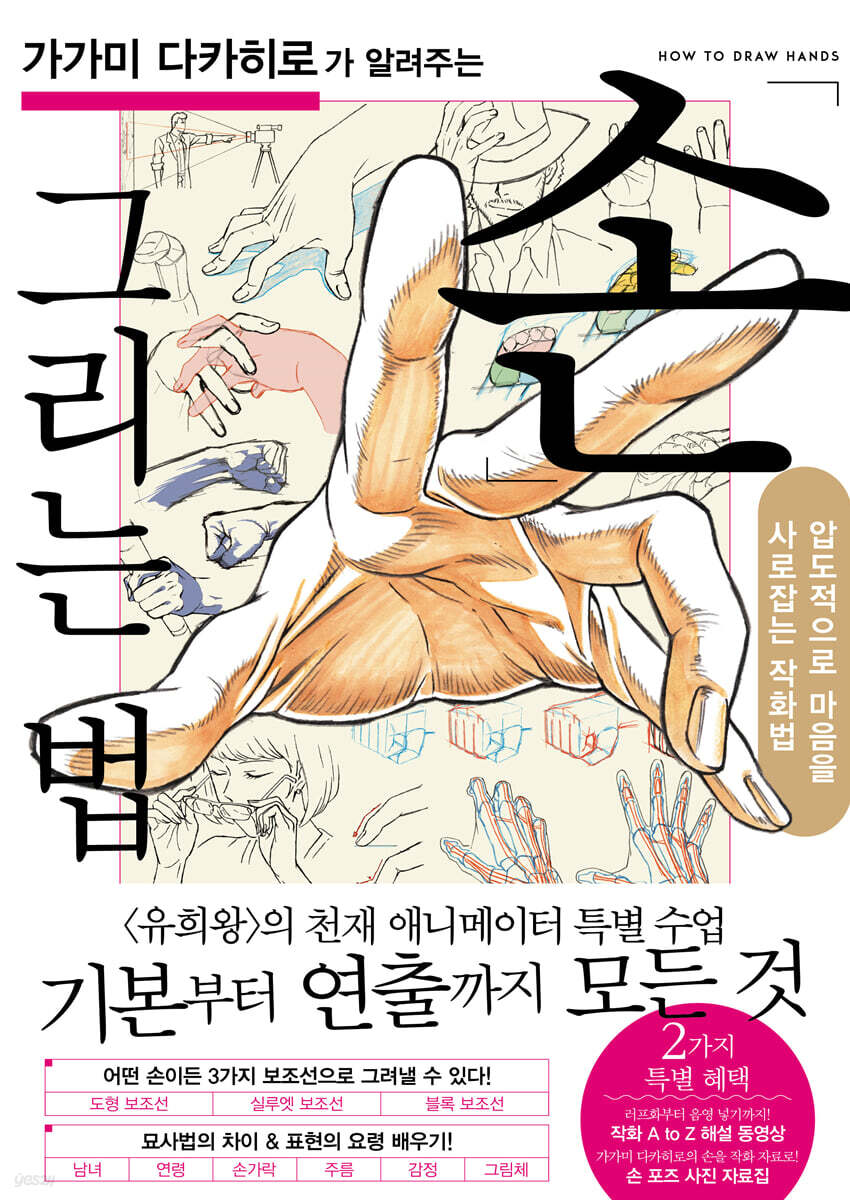
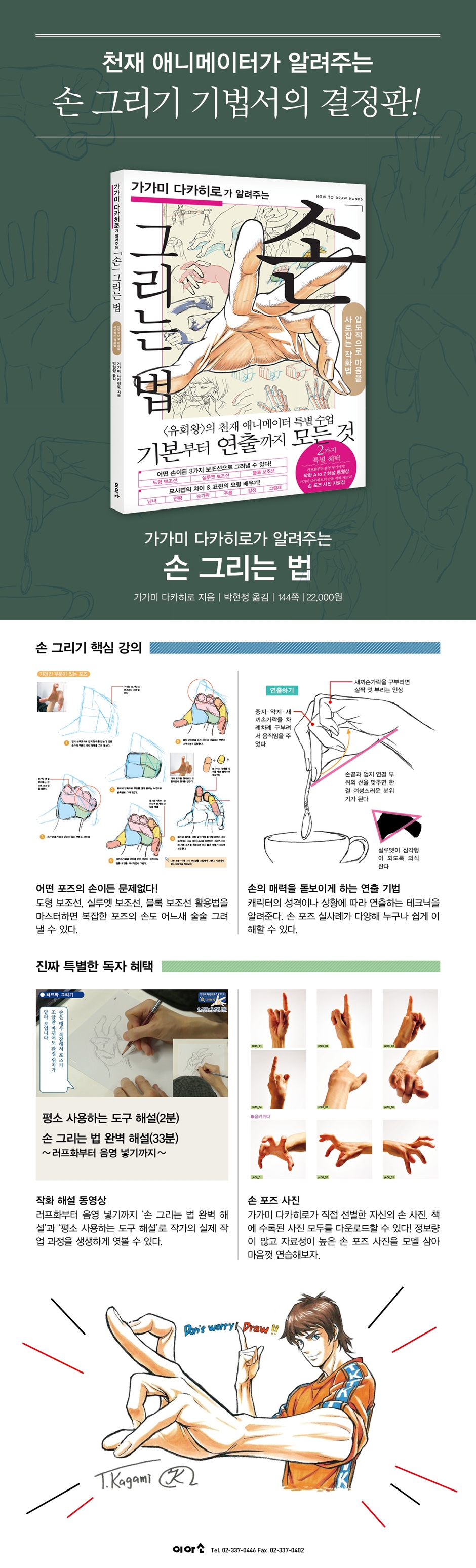
The genius animator of [Yu-Gi-Oh] Only books tell you How to Draw Special Hands Takahiro Kagami, the animation director known worldwide for works such as [Yu-Gi-Oh!], [Lupin the Third], [One Piece Movie], [Death Note], and [Zetsu no Yaiba Children]! "How to Draw Hands with Takahiro Kagami" is the first hand drawing technique guide published by the genius author known as the "God of Animation" among animation enthusiasts. The book is packed with information you need to know just to draw a 'hand'. The hand is a body part that even professionals find difficult to work with because of its complex bone structure and diverse movements and expressions. Mr. Kagami has thoroughly tailored this book to the amateur level, allowing readers to learn the basics of hand drawing, as well as the core know-how, including depiction techniques, expression tips, and directing methods, step by step, all in one book. It also compares and shows the parts that beginners often make mistakes in when drawing hands. It is very helpful for improving my skills as it kindly points out which parts need to be improved and how. It is full of useful and practical information, from character-specific drawing styles, drawing points for each scene, parts to emphasize based on personality or gender, and proportions. Don't miss out on this special video and photo collection! The video features two parts: a 33-minute explanation of Kagami's entire hand-drawing process and a 2-minute explanation of the tools he uses. These meticulously detailed explanations, from rough sketching to shading, make for a valuable teaching tool. The hand pose photo collection contains photos of the author's own hands, making it very useful for practicing hand drawing. |
- You can preview some of the book's contents.
Preview
index
Entering
How to use the book
CHAPTER 1 Basic Drawing Techniques
Hand Basics
Let's draw a hand
Bones and muscles of the back of the hand
Finger shape
wrinkles
three-dimensional effect
Gender differences
Age difference
Size difference
Differences according to drawing style
STEP UP! A Disappointing Case
CHAPTER 2 Directing Techniques
Directing
Natural hand expressions
Expression when giving strength
A powerful-looking expression
Expression of softness
expression of emotions
STEP UP! Shading
CHAPTER 3: Practical Poses
Basic pose
paper
rock
scissors
Pose viewed from the arm side
Pointing fingers
unconscious movements
Arm in arm
Hands on waist
chin rest
Holding hands
Handcuffs
pray
Hand covering
Everyday life poses
rising
Washing hands
study
reading
drive
smoking
Wear it
glasses
hat
jacket
sleeves that cover the back of the hand
pocket
dining scene
Use of chopsticks
Lifting the rice bowl
cutlery
glass
mug
Grabbing objects
Hold the smartphone
Card grab
catch the pole
Action
Punch
chop
Ready position
response
slap
weapon
gun
Japanese sword
knife
Sealing
musical instrument
etc
drums
piano
vocal
Business scene
tie
mouse
Keyboard
Two people's poses
handshake
arm grab
Handcuffs
Escort
heart
Press hard
Special Appendix
Pro's site
Animator Roundtable
Hand Pose Photo Collection
How to use the book
CHAPTER 1 Basic Drawing Techniques
Hand Basics
Let's draw a hand
Bones and muscles of the back of the hand
Finger shape
wrinkles
three-dimensional effect
Gender differences
Age difference
Size difference
Differences according to drawing style
STEP UP! A Disappointing Case
CHAPTER 2 Directing Techniques
Directing
Natural hand expressions
Expression when giving strength
A powerful-looking expression
Expression of softness
expression of emotions
STEP UP! Shading
CHAPTER 3: Practical Poses
Basic pose
paper
rock
scissors
Pose viewed from the arm side
Pointing fingers
unconscious movements
Arm in arm
Hands on waist
chin rest
Holding hands
Handcuffs
pray
Hand covering
Everyday life poses
rising
Washing hands
study
reading
drive
smoking
Wear it
glasses
hat
jacket
sleeves that cover the back of the hand
dining scene
Use of chopsticks
Lifting the rice bowl
cutlery
glass
mug
Grabbing objects
Hold the smartphone
Card grab
catch the pole
Action
Punch
chop
Ready position
response
slap
weapon
gun
Japanese sword
knife
Sealing
musical instrument
etc
drums
piano
vocal
Business scene
tie
mouse
Keyboard
Two people's poses
handshake
arm grab
Handcuffs
Escort
heart
Press hard
Special Appendix
Pro's site
Animator Roundtable
Hand Pose Photo Collection
Detailed image
Publisher's Review
A special class filled with 30 years of success know-how
“Even though the entire book is entirely hand-drawn, I never get tired of it and am amazed!”
"How to Draw Hands with Takahiro Kagami" is an illustration guidebook, but it became a bestseller that maintained the number one spot on Amazon Japan for a long time as soon as it was published, gaining fame and word of mouth.
A highly anticipated work that has been highly requested for publication in our country as well!
Takahiro Kagami, who created internationally popular animations such as “Yu-Gi-Oh!”, “Lupin the Third!”, “One Piece Movie!”, and “Death Note,” is known as an animator with outstanding technique, and is especially renowned for being the best in the hand-drawn field.
In the anime "Yu-Gi-Oh! - Duel Monsters", the detailed drawing that changed hand expressions depending on the character and situation was well-received.
Unusually, a fandom of Kagami's hand drawings has emerged, and countless so-called 'meme rooms' have been created.
This book is also of great value in that it reveals for the first time the experience and know-how gained from working on the front lines for over 30 years.
The definitive hand drawing technique book
Hands are known to be the most difficult part of portraiture because they have many parts and their shape can change depending on the situation.
The author, who has been drawing for over 30 years, says that he still observes hands carefully and researches materials when drawing them.
Hands are not only a simple form but also a very important element that determines the completeness of a painting because they can express emotions such as joy, anger, and sadness, as well as an individual's personality.
In this book, Kagami focuses on drawing techniques that can be used in any scene, rather than describing a method that emphasizes impact through perspective to suit beginners' level.
If you are a beginner or an ordinary person, you can first learn basic drawing techniques.
In CHAPTER 1, you will learn step-by-step how to draw hands, how to use curves and straight lines, and how to draw differently depending on gender and age.
In CHAPTER 2, you will learn the techniques of hand production, such as how to make hand gestures and express them powerfully.
In CHAPTER 3, we have collected practical poses that can be used in various scenes, including poses that frequently appear in animations, comics, etc., as well as difficult poses.
Even in the same scene, you can learn a variety of points to bring out the realism.
After reading the detailed explanations for each drawing, you will find yourself drawing Kagami's hand drawings in the book, and before you know it, your skills will have improved significantly.
Special reader benefits you can't miss
Especially if you are aiming to become an animator, webtoon artist, or illustrator, you absolutely must not miss “How to Draw Hands with Takahiro Kagami.”
This is because it is a book that allows a glimpse into not only the author's skills and know-how, but also his professional spirit, having been active in the field for over 30 years.
The special appendix, “Professional Field,” at the end of the book introduces how hand directing techniques change depending on the characters appearing in “Absolutely Pity Children.”
Additionally, you can hear real voices and advice from the field through conversations with Hiroko Utsumi and Hidekazu Ebina, who are currently leading the Japanese animation industry.
Two special benefits for readers are also receiving a hot response, just like the book itself.
The video provides a vivid glimpse into the artist's actual work process, showing the tools Kagami usually uses (2 minutes) and how to draw hands, from rough sketching to shading (33 minutes).
Let's practice using the pose photos modeled after artist Kagami's hands that are included as drawing reference.
“Even though the entire book is entirely hand-drawn, I never get tired of it and am amazed!”
"How to Draw Hands with Takahiro Kagami" is an illustration guidebook, but it became a bestseller that maintained the number one spot on Amazon Japan for a long time as soon as it was published, gaining fame and word of mouth.
A highly anticipated work that has been highly requested for publication in our country as well!
Takahiro Kagami, who created internationally popular animations such as “Yu-Gi-Oh!”, “Lupin the Third!”, “One Piece Movie!”, and “Death Note,” is known as an animator with outstanding technique, and is especially renowned for being the best in the hand-drawn field.
In the anime "Yu-Gi-Oh! - Duel Monsters", the detailed drawing that changed hand expressions depending on the character and situation was well-received.
Unusually, a fandom of Kagami's hand drawings has emerged, and countless so-called 'meme rooms' have been created.
This book is also of great value in that it reveals for the first time the experience and know-how gained from working on the front lines for over 30 years.
The definitive hand drawing technique book
Hands are known to be the most difficult part of portraiture because they have many parts and their shape can change depending on the situation.
The author, who has been drawing for over 30 years, says that he still observes hands carefully and researches materials when drawing them.
Hands are not only a simple form but also a very important element that determines the completeness of a painting because they can express emotions such as joy, anger, and sadness, as well as an individual's personality.
In this book, Kagami focuses on drawing techniques that can be used in any scene, rather than describing a method that emphasizes impact through perspective to suit beginners' level.
If you are a beginner or an ordinary person, you can first learn basic drawing techniques.
In CHAPTER 1, you will learn step-by-step how to draw hands, how to use curves and straight lines, and how to draw differently depending on gender and age.
In CHAPTER 2, you will learn the techniques of hand production, such as how to make hand gestures and express them powerfully.
In CHAPTER 3, we have collected practical poses that can be used in various scenes, including poses that frequently appear in animations, comics, etc., as well as difficult poses.
Even in the same scene, you can learn a variety of points to bring out the realism.
After reading the detailed explanations for each drawing, you will find yourself drawing Kagami's hand drawings in the book, and before you know it, your skills will have improved significantly.
Special reader benefits you can't miss
Especially if you are aiming to become an animator, webtoon artist, or illustrator, you absolutely must not miss “How to Draw Hands with Takahiro Kagami.”
This is because it is a book that allows a glimpse into not only the author's skills and know-how, but also his professional spirit, having been active in the field for over 30 years.
The special appendix, “Professional Field,” at the end of the book introduces how hand directing techniques change depending on the characters appearing in “Absolutely Pity Children.”
Additionally, you can hear real voices and advice from the field through conversations with Hiroko Utsumi and Hidekazu Ebina, who are currently leading the Japanese animation industry.
Two special benefits for readers are also receiving a hot response, just like the book itself.
The video provides a vivid glimpse into the artist's actual work process, showing the tools Kagami usually uses (2 minutes) and how to draw hands, from rough sketching to shading (33 minutes).
Let's practice using the pose photos modeled after artist Kagami's hands that are included as drawing reference.
GOODS SPECIFICS
- Publication date: November 11, 2021
- Page count, weight, size: 144 pages | 490g | 182*257*10mm
- ISBN13: 9791187113515
- ISBN10: 1187113514
You may also like
카테고리
korean


korean

![GQ KOREA Mark (Monthly): December [2025]](http://librairie.coreenne.fr/cdn/shop/files/8ef265dbbfbf186523ed75ba7319009d.jpg?v=1765340328&width=3840)


