

K-pop time
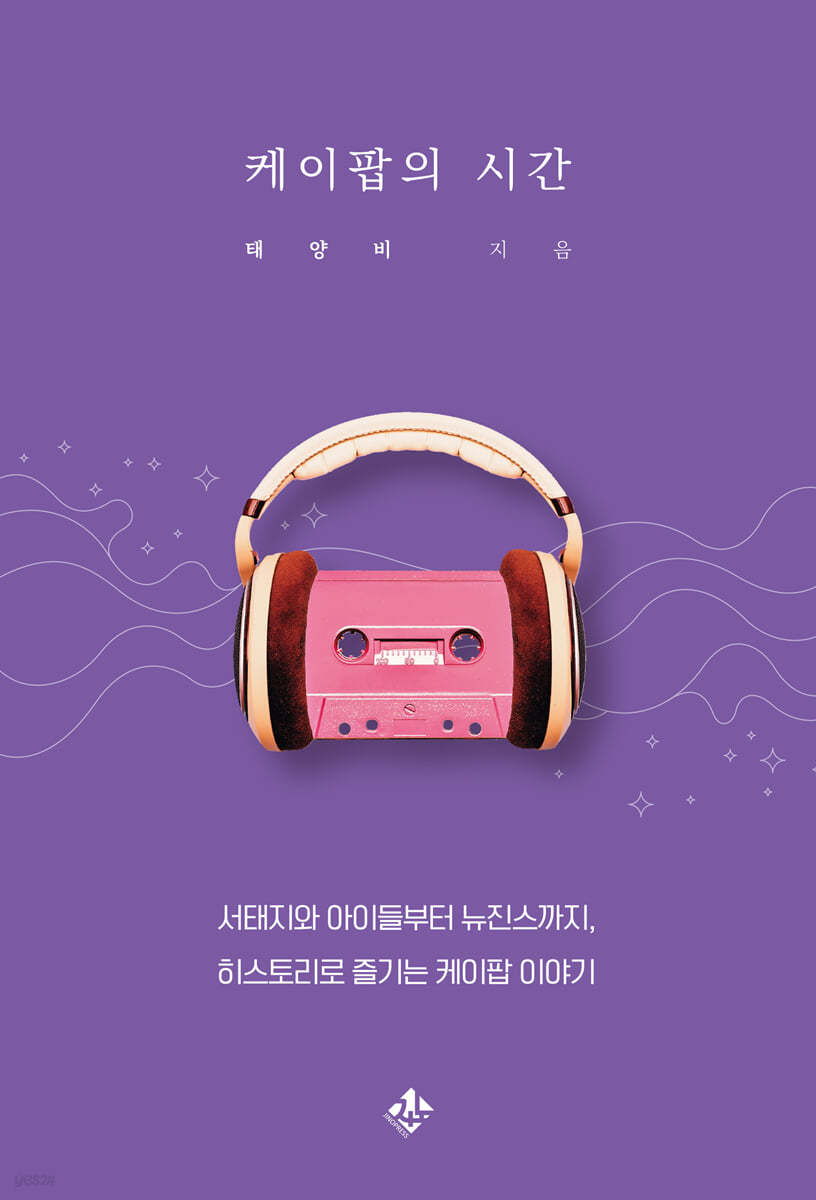 |
Description
Book Introduction
Why is K-pop so popular? How are my favorite idols connected to the history of K-pop? Who is Park Jin-young? Why did Seo Taiji perform with BTS? How are SM and YG similar and different? "K-pop Time" explores the past, present, and future of K-pop.
Author Taeyangbi is a K-pop web novel writer and K-pop journalist. In this book, he explains everything from the definition and origin of K-pop to the trends of key figures and entertainment companies, and the changes in the process, all with his eloquence.
This will allow readers to become more familiar with K-pop in a new and richer way and develop an eye for understanding the context of the K-pop market over a longer period of time.
I highly recommend this book to anyone who is interested in K-pop or considering a career in K-pop, as well as anyone who 'listens to' or 'is a fan of' K-pop.
Author Taeyangbi is a K-pop web novel writer and K-pop journalist. In this book, he explains everything from the definition and origin of K-pop to the trends of key figures and entertainment companies, and the changes in the process, all with his eloquence.
This will allow readers to become more familiar with K-pop in a new and richer way and develop an eye for understanding the context of the K-pop market over a longer period of time.
I highly recommend this book to anyone who is interested in K-pop or considering a career in K-pop, as well as anyone who 'listens to' or 'is a fan of' K-pop.
- You can preview some of the book's contents.
Preview
index
introduction
Part 1.
K-pop before K-pop
01.
I Know _Seo Taiji and Boys
02.
You in My Cloudy Memories _Hyun Jin-young
03.
The Rise of the Nightclub DJ _ Kim Chang-hwan's Division
04.
The Limits of New Generation Dance Music: Rula and the Plagiarism Controversy
05.
Characteristics of a New Generation of Dance Singers _ Viewed through Deux
06.
The End of an Era: Seo Taiji and Boys' Retirement
Part 2.
First Generation Idols: Creating a System
07.
We Are The Future _H.OT
08.
The Great Rivals: Suman Planning and Daesung Planning
09.
The Birth of a Complete K-Pop Artist _ Park Jin-young
10.
The Complete Clone _JYP Entertainment (Park Jin-young, Bang Si-hyuk)
11.
Characteristics of First Generation Idols _ Viewed through H.OT
12.
Asia's Number One _ BoA
Part 3.
Second Generation Idols: Becoming Musicians
13.
Completion of the system _ TVXQ and Super Junior
14.
Girl groups shaking up the world: Wonder Girls and Girls' Generation
15.
Now I'm a Musician _Big Bang
16.
Revolution from Below _ Zinu and "Abracadabra"
17.
Characteristics of Second-Generation Idols _ Viewed through Big Bang
18.
No Asians? _The three major companies fail to advance into the US market.
Part 4.
3rd Generation Idols: A Community We Create Together
19.
The World Turned Upside Down _ Psy and "Gangnam Style"
20.
Idols Who Became Global Blockbusters - SM's System (Lee Sung-soo, Min Hee-jin)
21.
The Idol Craze's Twisted Ending _ Produce 101
22.
Artists Trained as Idols - Jay Park and Yerin Baek
23.
K-pop's Victory _ BTS
24.
Characteristics of Third-Generation Idols _ Viewed through BTS
Part 5.
The Future of K-Pop: When the Virtual Becomes Real?
25.
A New Attempt at K-Pop: Aespa and Otherworldly Idols
extroversion.
The Melancholy of World Star BTS: The Shadow of K-Pop
Appendix 1.
K-Pop Genealogy by Entertainment Company at a Glance (As of January 2023)
Appendix 2.
K-Pop Timeline 1989–2022
Part 1.
K-pop before K-pop
01.
I Know _Seo Taiji and Boys
02.
You in My Cloudy Memories _Hyun Jin-young
03.
The Rise of the Nightclub DJ _ Kim Chang-hwan's Division
04.
The Limits of New Generation Dance Music: Rula and the Plagiarism Controversy
05.
Characteristics of a New Generation of Dance Singers _ Viewed through Deux
06.
The End of an Era: Seo Taiji and Boys' Retirement
Part 2.
First Generation Idols: Creating a System
07.
We Are The Future _H.OT
08.
The Great Rivals: Suman Planning and Daesung Planning
09.
The Birth of a Complete K-Pop Artist _ Park Jin-young
10.
The Complete Clone _JYP Entertainment (Park Jin-young, Bang Si-hyuk)
11.
Characteristics of First Generation Idols _ Viewed through H.OT
12.
Asia's Number One _ BoA
Part 3.
Second Generation Idols: Becoming Musicians
13.
Completion of the system _ TVXQ and Super Junior
14.
Girl groups shaking up the world: Wonder Girls and Girls' Generation
15.
Now I'm a Musician _Big Bang
16.
Revolution from Below _ Zinu and "Abracadabra"
17.
Characteristics of Second-Generation Idols _ Viewed through Big Bang
18.
No Asians? _The three major companies fail to advance into the US market.
Part 4.
3rd Generation Idols: A Community We Create Together
19.
The World Turned Upside Down _ Psy and "Gangnam Style"
20.
Idols Who Became Global Blockbusters - SM's System (Lee Sung-soo, Min Hee-jin)
21.
The Idol Craze's Twisted Ending _ Produce 101
22.
Artists Trained as Idols - Jay Park and Yerin Baek
23.
K-pop's Victory _ BTS
24.
Characteristics of Third-Generation Idols _ Viewed through BTS
Part 5.
The Future of K-Pop: When the Virtual Becomes Real?
25.
A New Attempt at K-Pop: Aespa and Otherworldly Idols
extroversion.
The Melancholy of World Star BTS: The Shadow of K-Pop
Appendix 1.
K-Pop Genealogy by Entertainment Company at a Glance (As of January 2023)
Appendix 2.
K-Pop Timeline 1989–2022
Into the book
"Why is K-pop so popular? How are my favorite idols connected to the history of K-pop? Who is Park Jin-young? Why did Seo Taiji perform with BTS? What are the similarities and differences between SM and YG? By understanding the broader context of the K-pop market through this book, you'll be able to enjoy it in a richer and more enjoyable way."
---From the author's note
-“I thought, what if we categorize K-pop groups into ‘trends’?
After thinking about it that way, a classification similar to the existing method of dividing into 1st, 2nd, and 3rd generations came naturally.
We discovered a 'trend' in the history of K-pop.
I thought that K-pop idol music could be categorized into four trends: 'systemism,' 'musicianism,' 'communitarianism,' and finally, 'iconism,' which dreams of the future of K-pop.
I think that dividing idols into four groups makes the distinction a bit more accurate.
Although Big Bang and TVXQ were active at the same time, they are completely different idols.
TVXQ is the perfect example of a system-oriented idol.
Big Bang is the founder of musicianism.
Block B and BTS were active around the same time, but Block B, who pursued naturalness, can be categorized as musician-oriented, while BTS, who prioritized community identity as the leader of ARMY, can be categorized as community-oriented.”
-“Everything has a beginning.
The same goes for K-pop, right? So when did K-pop begin? It's a more difficult question than you might think.
First of all, what is K-pop? If a Korean sings it, is it K-pop? Then, if Lisa from Blackpink, a Thai woman, sings it, isn't it K-pop? If a Korean produces it, is it K-pop? Then, are the ballads we sing at karaoke also K-pop? Nothing is certain.
In fact, there are still differing opinions on where K-pop begins and even the definition of it.
But when it comes to the beginning of K-pop, there is a moment that comes to mind for many people.
First, I would like to start the story from that scene.
This scene features flashy costumes, amazing breakdancing, and powerful metal guitars.
And above all, there is sharp criticism from music experts.
“That’s a very harsh criticism for a new singer.”
-“Psy was an aspiring composer who graduated from Berklee College of Music.
My dream was to become a professional composer who sells his own songs to SM, JYP, etc.
But they were all rejected.
The president of the agency that signed him 'just by hearing his voice' had to cry and let him debut.
… … Through working with Shin Hae-chul, the leader of the rock band ‘Next,’ Psy gains an unexpected weapon.
It was 'Rock Sound'.
Psy gradually began to incorporate band music, especially rock, into his music.
“By mastering a variety of music, from the energy of hip-hop to the emotion of pop music and the power of rock, Psy gradually began to develop a completely different kind of ‘K-pop music.’”
-“K-pop idol.
Among them, boy bands in particular now always have a 'musician' member.
Most people try to write at least their own 'lyrics'.
There are even many cases where the 'producer' who directs the music is among the members.
Teams like BTS, Seventeen, Day6, and Stray Kids are like that.
Now, the saying that 'idols are puppets who dance as they are told' is completely out of touch with reality.
The catalyst that created this trend was, of course, Big Bang.
Among them, it would be G-Dragon.
Big Bang created a new category called 'idol and musician.'
A musician who is respected by musicians and an idol who has a large fan base.
This combination literally took the K-pop market by storm.
Since then, many K-pop idols have been trained to lead music like Big Bang.”
---From the author's note
-“I thought, what if we categorize K-pop groups into ‘trends’?
After thinking about it that way, a classification similar to the existing method of dividing into 1st, 2nd, and 3rd generations came naturally.
We discovered a 'trend' in the history of K-pop.
I thought that K-pop idol music could be categorized into four trends: 'systemism,' 'musicianism,' 'communitarianism,' and finally, 'iconism,' which dreams of the future of K-pop.
I think that dividing idols into four groups makes the distinction a bit more accurate.
Although Big Bang and TVXQ were active at the same time, they are completely different idols.
TVXQ is the perfect example of a system-oriented idol.
Big Bang is the founder of musicianism.
Block B and BTS were active around the same time, but Block B, who pursued naturalness, can be categorized as musician-oriented, while BTS, who prioritized community identity as the leader of ARMY, can be categorized as community-oriented.”
-“Everything has a beginning.
The same goes for K-pop, right? So when did K-pop begin? It's a more difficult question than you might think.
First of all, what is K-pop? If a Korean sings it, is it K-pop? Then, if Lisa from Blackpink, a Thai woman, sings it, isn't it K-pop? If a Korean produces it, is it K-pop? Then, are the ballads we sing at karaoke also K-pop? Nothing is certain.
In fact, there are still differing opinions on where K-pop begins and even the definition of it.
But when it comes to the beginning of K-pop, there is a moment that comes to mind for many people.
First, I would like to start the story from that scene.
This scene features flashy costumes, amazing breakdancing, and powerful metal guitars.
And above all, there is sharp criticism from music experts.
“That’s a very harsh criticism for a new singer.”
-“Psy was an aspiring composer who graduated from Berklee College of Music.
My dream was to become a professional composer who sells his own songs to SM, JYP, etc.
But they were all rejected.
The president of the agency that signed him 'just by hearing his voice' had to cry and let him debut.
… … Through working with Shin Hae-chul, the leader of the rock band ‘Next,’ Psy gains an unexpected weapon.
It was 'Rock Sound'.
Psy gradually began to incorporate band music, especially rock, into his music.
“By mastering a variety of music, from the energy of hip-hop to the emotion of pop music and the power of rock, Psy gradually began to develop a completely different kind of ‘K-pop music.’”
-“K-pop idol.
Among them, boy bands in particular now always have a 'musician' member.
Most people try to write at least their own 'lyrics'.
There are even many cases where the 'producer' who directs the music is among the members.
Teams like BTS, Seventeen, Day6, and Stray Kids are like that.
Now, the saying that 'idols are puppets who dance as they are told' is completely out of touch with reality.
The catalyst that created this trend was, of course, Big Bang.
Among them, it would be G-Dragon.
Big Bang created a new category called 'idol and musician.'
A musician who is respected by musicians and an idol who has a large fan base.
This combination literally took the K-pop market by storm.
Since then, many K-pop idols have been trained to lead music like Big Bang.”
--- From the text
Publisher's Review
“From the origins of K-pop to its global craze,
“Knowing history makes K-pop more fun!”
A story about K-pop's yesterday, today, and tomorrow!
Meet the K-pop chronicle that permeates Korean society!
Why is K-pop so popular? How are my favorite idols connected to the history of K-pop? Who is Park Jin-young? Why did Seo Taiji perform with BTS? How are SM and YG similar and different? This book, "K-pop Time," explores the past, present, and future of K-pop.
The author says that while there have been many books on the history of Korean pop music, few have focused on K-pop and properly explained its overall flow.
As a K-pop fan myself, I believe that “K-pop becomes more enjoyable when you know its history,” and so I wrote this book to properly convey the 30-year history of K-pop in a fun and interesting way.
Author Taeyangbi is a K-pop web novel writer and K-pop journalist who has been serializing various articles on K-pop in weekly magazines and music streaming sites.
Ultimately, he wants to remain a person who tells a 'good story' about K-pop. He explains everything from the definition and origin of K-pop, to the trends of major figures and entertainment companies, and the changes in the story, one by one with his eloquence, so that readers who are interested in K-pop can have greater enjoyment, and readers who are not familiar with K-pop can enjoy the story of K-pop easily and enjoyably.
The author says that since most people working in the K-pop industry in the 21st century have some connection to the 1990s, knowing the history of K-pop is essential to properly understanding and enjoying K-pop.
I also recommend this book in the hope that it will naturally lead readers to think about the "zeitgeist" that permeates Korean society through the history of K-pop.
“Modern society is trying to compete with technology.
But if technology doesn't have a perspective on life or a virtue, it just ends up being a mere trick.
There is a perception that K-pop is the most commercial and technologically driven art form.
But I looked at K-pop not just for its technology, but for the trends it embodies.
It's like looking at life from all perspectives.
“I would appreciate it if you could consider together whether creating something great requires more than just technique, but also thought.”
Systemism, artistism, communitarianism…
From Seo Taiji and Boys to New Jeans,
Enjoy K-pop stories through history
Who are the most successful idols in K-pop history? There are many groups, but H.O.T.T. is the first generation (1990s), Big Bang is the second generation (2000s), and BTS is the third generation (2010s).
The author reveals that these groups have something surprising in common: they are all groups that started a new 'trend'.
The 'trend' mentioned here refers to the criteria by which the author classifies K-pop in the text, which consists of five parts.
The author examines K-pop music and the market by focusing on four 'trends' within the major flow of K-pop: 'systemism,' 'artist (musician)ism,' 'communitarianism,' and 'iconism.' To better express this, he borrows the 'generational' structure of K-pop that people generally think of.
“I thought, what if we categorize K-pop groups into ‘sajos’?
After thinking about it that way, a classification similar to the existing method of dividing into 1st, 2nd, and 3rd generations came naturally.
We discovered a 'trend' in the history of K-pop.
I thought that K-pop idol music could be categorized into four trends: 'systemism,' 'musicianism,' 'communitarianism,' and finally, 'iconism,' which dreams of the future of K-pop.
I think that dividing idols into four groups makes the distinction a bit more accurate.
Although Big Bang and TVXQ were active at the same time, they are completely different idols.
TVXQ is the perfect example of a system-oriented idol.
Big Bang is the founder of musicianism.
Block B and BTS were active around the same time, but Block B, who pursued naturalness, can be categorized as musician-oriented, while BTS, who prioritized community identity as the leader of ARMY, can be categorized as community-oriented.”
This will allow readers to become more familiar with K-pop in a new and richer way and develop an eye for understanding the context of the K-pop market over a longer period of time.
The "K-pop Genealogy at a Glance" and "K-pop Chronology" included at the end of the text will help you draw a clearer map of K-pop.
I highly recommend this book to anyone who is interested in K-pop or considering a career in K-pop, as well as anyone who 'listens to' or 'is a fan of' K-pop.
K-pop is gaining worldwide attention. If you want to know more, check out "K-pop Time"!
This is the first time I've read a book that explains the K-pop market in such detail.
It explains the trends of major K-pop figures and major entertainment companies very well, so I feel like I've gotten closer to my favorite idols.
I think it would be a good read for friends who are interested in K-pop or are thinking about a career in K-pop.
If you want to know more about K-pop, which is attracting worldwide attention, I highly recommend reading this.
- Do Yu-jin, 2nd year at Ilsan Middle School
“Knowing history makes K-pop more fun!”
A story about K-pop's yesterday, today, and tomorrow!
Meet the K-pop chronicle that permeates Korean society!
Why is K-pop so popular? How are my favorite idols connected to the history of K-pop? Who is Park Jin-young? Why did Seo Taiji perform with BTS? How are SM and YG similar and different? This book, "K-pop Time," explores the past, present, and future of K-pop.
The author says that while there have been many books on the history of Korean pop music, few have focused on K-pop and properly explained its overall flow.
As a K-pop fan myself, I believe that “K-pop becomes more enjoyable when you know its history,” and so I wrote this book to properly convey the 30-year history of K-pop in a fun and interesting way.
Author Taeyangbi is a K-pop web novel writer and K-pop journalist who has been serializing various articles on K-pop in weekly magazines and music streaming sites.
Ultimately, he wants to remain a person who tells a 'good story' about K-pop. He explains everything from the definition and origin of K-pop, to the trends of major figures and entertainment companies, and the changes in the story, one by one with his eloquence, so that readers who are interested in K-pop can have greater enjoyment, and readers who are not familiar with K-pop can enjoy the story of K-pop easily and enjoyably.
The author says that since most people working in the K-pop industry in the 21st century have some connection to the 1990s, knowing the history of K-pop is essential to properly understanding and enjoying K-pop.
I also recommend this book in the hope that it will naturally lead readers to think about the "zeitgeist" that permeates Korean society through the history of K-pop.
“Modern society is trying to compete with technology.
But if technology doesn't have a perspective on life or a virtue, it just ends up being a mere trick.
There is a perception that K-pop is the most commercial and technologically driven art form.
But I looked at K-pop not just for its technology, but for the trends it embodies.
It's like looking at life from all perspectives.
“I would appreciate it if you could consider together whether creating something great requires more than just technique, but also thought.”
Systemism, artistism, communitarianism…
From Seo Taiji and Boys to New Jeans,
Enjoy K-pop stories through history
Who are the most successful idols in K-pop history? There are many groups, but H.O.T.T. is the first generation (1990s), Big Bang is the second generation (2000s), and BTS is the third generation (2010s).
The author reveals that these groups have something surprising in common: they are all groups that started a new 'trend'.
The 'trend' mentioned here refers to the criteria by which the author classifies K-pop in the text, which consists of five parts.
The author examines K-pop music and the market by focusing on four 'trends' within the major flow of K-pop: 'systemism,' 'artist (musician)ism,' 'communitarianism,' and 'iconism.' To better express this, he borrows the 'generational' structure of K-pop that people generally think of.
“I thought, what if we categorize K-pop groups into ‘sajos’?
After thinking about it that way, a classification similar to the existing method of dividing into 1st, 2nd, and 3rd generations came naturally.
We discovered a 'trend' in the history of K-pop.
I thought that K-pop idol music could be categorized into four trends: 'systemism,' 'musicianism,' 'communitarianism,' and finally, 'iconism,' which dreams of the future of K-pop.
I think that dividing idols into four groups makes the distinction a bit more accurate.
Although Big Bang and TVXQ were active at the same time, they are completely different idols.
TVXQ is the perfect example of a system-oriented idol.
Big Bang is the founder of musicianism.
Block B and BTS were active around the same time, but Block B, who pursued naturalness, can be categorized as musician-oriented, while BTS, who prioritized community identity as the leader of ARMY, can be categorized as community-oriented.”
This will allow readers to become more familiar with K-pop in a new and richer way and develop an eye for understanding the context of the K-pop market over a longer period of time.
The "K-pop Genealogy at a Glance" and "K-pop Chronology" included at the end of the text will help you draw a clearer map of K-pop.
I highly recommend this book to anyone who is interested in K-pop or considering a career in K-pop, as well as anyone who 'listens to' or 'is a fan of' K-pop.
K-pop is gaining worldwide attention. If you want to know more, check out "K-pop Time"!
This is the first time I've read a book that explains the K-pop market in such detail.
It explains the trends of major K-pop figures and major entertainment companies very well, so I feel like I've gotten closer to my favorite idols.
I think it would be a good read for friends who are interested in K-pop or are thinking about a career in K-pop.
If you want to know more about K-pop, which is attracting worldwide attention, I highly recommend reading this.
- Do Yu-jin, 2nd year at Ilsan Middle School
GOODS SPECIFICS
- Date of issue: January 31, 2023
- Page count, weight, size: 236 pages | 296g | 128*188*15mm
- ISBN13: 9791190282550
- ISBN10: 1190282550
You may also like
카테고리
korean


korean

![GQ KOREA Mark (Monthly): December [2025]](http://librairie.coreenne.fr/cdn/shop/files/8ef265dbbfbf186523ed75ba7319009d.jpg?v=1765340328&width=3840)


