

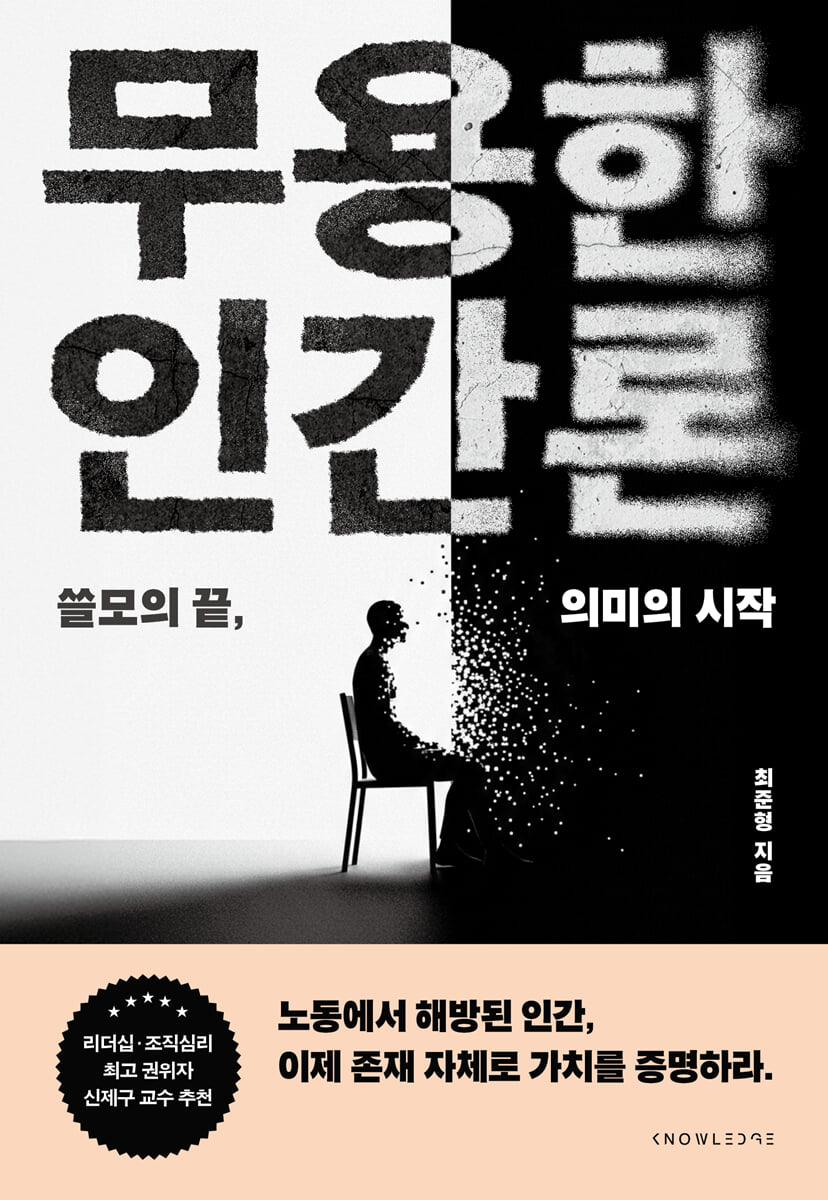
Useless humanism
 |
Description
Book Introduction
“Humans, freed from labor, must now prove their worth through their very existence.”
AI and robots are deeply ingrained in human life.
Beyond simple labor, they are rapidly replacing humans in professional and creative fields.
For the first time, humans experience being deprived of their 'usefulness'.
Work is no longer the exclusive domain of humans.
In terms of efficiency and productivity, we have already lost our throne to machines that perform dozens of times better than humans.
However, the message that the book “Useless Humanity” wants to convey is not just about the usefulness of humans.
Uselessness is not the end, but a new beginning.
At one time, horses were more useful than humans as 'vehicles', but they lost their usefulness after industrialization.
However, horses gain higher value in the areas of horse racing, equestrianism, and culture.
The same goes for humans.
This book examines why and how humans became useless within the context of history and technology.
In the face of machines and robots, humans explore what new possibilities can be opened up in the face of uselessness.
In particular, while showing the dramatic changes brought about by AI and robots in the workplace through specific examples and statistics, it also does not miss the philosophical theme of rediscovering humanity at the end.
In the race for efficiency and speed, humans have already been pushed out.
However, there is hope that areas that cannot be replaced by machines, such as emotions, ethics, relationships, and imagination, will still remain in human hands.
《Useless Humanism》 speaks to the reader somewhat coldly.
“We must face our anxiety and reality.”
At the same time, it reminds us that beyond fear, there is a new hope at the fingertips of human beings.
At the end of usefulness, humans find true meaning, and this will soon become the motivation and survival strategy necessary for all those living in the AI era.
AI and robots are deeply ingrained in human life.
Beyond simple labor, they are rapidly replacing humans in professional and creative fields.
For the first time, humans experience being deprived of their 'usefulness'.
Work is no longer the exclusive domain of humans.
In terms of efficiency and productivity, we have already lost our throne to machines that perform dozens of times better than humans.
However, the message that the book “Useless Humanity” wants to convey is not just about the usefulness of humans.
Uselessness is not the end, but a new beginning.
At one time, horses were more useful than humans as 'vehicles', but they lost their usefulness after industrialization.
However, horses gain higher value in the areas of horse racing, equestrianism, and culture.
The same goes for humans.
This book examines why and how humans became useless within the context of history and technology.
In the face of machines and robots, humans explore what new possibilities can be opened up in the face of uselessness.
In particular, while showing the dramatic changes brought about by AI and robots in the workplace through specific examples and statistics, it also does not miss the philosophical theme of rediscovering humanity at the end.
In the race for efficiency and speed, humans have already been pushed out.
However, there is hope that areas that cannot be replaced by machines, such as emotions, ethics, relationships, and imagination, will still remain in human hands.
《Useless Humanism》 speaks to the reader somewhat coldly.
“We must face our anxiety and reality.”
At the same time, it reminds us that beyond fear, there is a new hope at the fingertips of human beings.
At the end of usefulness, humans find true meaning, and this will soon become the motivation and survival strategy necessary for all those living in the AI era.
index
Recommendation
Entering
Part 1 | Why Have Humans Become Useless?
Chapter 1.
The Age of Useless Humans
The evolutionary ecosystem of AI and robots
AI replaces high-income, highly skilled workers.
Robots are replacing low-income, low-skilled workers.
Temporarily increasing demand for manpower
Labor volume decreases but production volume increases
The emergence of labor that does not require humans
Chapter 2.
Useless human phenomenon
The Age of the Thigh-High and the "NEET Tribe"
rampant mental illness
A flood of time left over
Lonely alone, uncomfortable together
A world where everyone is a leader
Things that start with words and end with words
Part 2 | How did humans become useless?
Chapter 3.
The history of useless humans
The Age of Man and Nature: Self-Sufficiency
The Age of Man and Mankind: Domination
The Age of Man and Animals: Exploitation
The Age of Man and Machine: Control
The Age of Humans and Computers: Collaboration
The Age of Humans and AI/Robots: Emperor or Ruler
Somewhere between the Roman emperor and cattle
Chapter 4.
Hierarchy of useless humans
AI is a human working for me
I am a human working for AI
Two Axes of the New Era: Humans and AI
Can humans dominate AI?
Can AI dominate humans?
Between the ruler and the spoiled
Part 3 | What Do Useless People Do?
Chapter 5.
The only verb given to a useless human being
Exploring the meaning of demand
A weak human being who demands
The absolute power that demands
Democratization of demands
inflation of demands
Layers of demand
Chapter 6.
The era of Demand it Yourself has arrived.
From the Do it Yourself Era to the Demand it Yourself Era
The beginning and end of work is 'Demand'
The Relationship Between 'Needs' and 'Demand'
An era where the cost of every attempt is '0'
The value of uselessness
Stealing, managing, or spending time with others
The Value of "Handmade" in an Era of Automation
Chapter 7.
In this age of useless humans, we
Still looking for areas where humans can be useful
What it means to ask for something precisely
What do you like and find fun?
What is your AI leadership score?
Are you having trouble making decisions?
Brunch or emotion
Who is the main character of your time?
What are you trying?
Finding meaning in a useless age
A world where 'what' and 'how' have disappeared, leaving only 'why'
Coming out | I am Who I am
References
Entering
Part 1 | Why Have Humans Become Useless?
Chapter 1.
The Age of Useless Humans
The evolutionary ecosystem of AI and robots
AI replaces high-income, highly skilled workers.
Robots are replacing low-income, low-skilled workers.
Temporarily increasing demand for manpower
Labor volume decreases but production volume increases
The emergence of labor that does not require humans
Chapter 2.
Useless human phenomenon
The Age of the Thigh-High and the "NEET Tribe"
rampant mental illness
A flood of time left over
Lonely alone, uncomfortable together
A world where everyone is a leader
Things that start with words and end with words
Part 2 | How did humans become useless?
Chapter 3.
The history of useless humans
The Age of Man and Nature: Self-Sufficiency
The Age of Man and Mankind: Domination
The Age of Man and Animals: Exploitation
The Age of Man and Machine: Control
The Age of Humans and Computers: Collaboration
The Age of Humans and AI/Robots: Emperor or Ruler
Somewhere between the Roman emperor and cattle
Chapter 4.
Hierarchy of useless humans
AI is a human working for me
I am a human working for AI
Two Axes of the New Era: Humans and AI
Can humans dominate AI?
Can AI dominate humans?
Between the ruler and the spoiled
Part 3 | What Do Useless People Do?
Chapter 5.
The only verb given to a useless human being
Exploring the meaning of demand
A weak human being who demands
The absolute power that demands
Democratization of demands
inflation of demands
Layers of demand
Chapter 6.
The era of Demand it Yourself has arrived.
From the Do it Yourself Era to the Demand it Yourself Era
The beginning and end of work is 'Demand'
The Relationship Between 'Needs' and 'Demand'
An era where the cost of every attempt is '0'
The value of uselessness
Stealing, managing, or spending time with others
The Value of "Handmade" in an Era of Automation
Chapter 7.
In this age of useless humans, we
Still looking for areas where humans can be useful
What it means to ask for something precisely
What do you like and find fun?
What is your AI leadership score?
Are you having trouble making decisions?
Brunch or emotion
Who is the main character of your time?
What are you trying?
Finding meaning in a useless age
A world where 'what' and 'how' have disappeared, leaving only 'why'
Coming out | I am Who I am
References
Detailed image

Into the book
Humanity reigned as the most useful being on Earth.
Even everything useful that could replace humans was domesticated and developed by humans.
Even in a technologically advanced production environment, humanity has been actively involved in various fields, changing roles.
Until the singularity arrives.
However, as AI and robots are developed and begin to enter the realm of work, the usefulness of humans is rapidly declining, just as it was after the development of automobiles.
This is what led to the advocacy of the 'useless human theory'.
Just as horses no longer pull carriages and plows, people will rapidly lose their value as subjects or means of production.
'What will humanity become in the future?' We stand before that enormous question.
--- From "Entering"
In 2024, something surprising happened at a large Korean law firm.
AI completed the contract review task that would have taken 10 new lawyers a month in just one day.
What's even more surprising is that the AI's accuracy was higher than that of a new lawyer.
Throughout human history, those who have suffered from technological change have always been the socially disadvantaged.
But for the first time in human history, AI technology threatens high-income, high-skilled jobs.
This is what makes the AI era fundamentally different from all previous technological revolutions.
--- 「Chapter 1.
From "The Age of Useless Humans"
In the age of the useless human, a new contract between workers and society is needed.
The traditional social contract of 'hard work pays off' no longer works.
In an age when human labor becomes useless, a new social contract is needed that separates labor from survival, labor from dignity.
Policies such as basic income, reduced working hours, and lifelong education could become conditions for this new social contract.
But more fundamentally, we need a paradigm shift that redefines human value based on criteria other than labor productivity.
--- 「Chapter 2.
From "Useless Human Phenomenon"
It was with the settlement and the beginning of agriculture that humans truly began to change.
We have moved away from the era of self-sufficiency and started working for someone else.
Humans gradually lost initiative and control over their own activities.
And the concept of labor began to emerge little by little, and the distinction between useful and useless began to be made.
These passages offer important implications for us today. In an era where AI and robots are replacing human labor, humans in a primitive, affluent society offer a new direction.
It is a culture and leisure activity in which life and work are not separated, work is not oppressive, and activities that provide immediate satisfaction are not directly linked to survival.
--- 「Chapter 3.
From "The History of Useless Humans"
In the age of AI, we need to teach AI not just how to give commands, but what kinds of requests to make and how to make deeper, more meaningful requests.
This increases the depth of the question, provides context, and develops the ability to approach it from multiple angles.
It matters what kind of words you start with.
Starting with a basic command and starting with a demand filled with deep insight and vision will yield very different results.
A project that begins with a transformative need can change the world, but a project that begins with a basic need can only increase personal convenience.
Even everything useful that could replace humans was domesticated and developed by humans.
Even in a technologically advanced production environment, humanity has been actively involved in various fields, changing roles.
Until the singularity arrives.
However, as AI and robots are developed and begin to enter the realm of work, the usefulness of humans is rapidly declining, just as it was after the development of automobiles.
This is what led to the advocacy of the 'useless human theory'.
Just as horses no longer pull carriages and plows, people will rapidly lose their value as subjects or means of production.
'What will humanity become in the future?' We stand before that enormous question.
--- From "Entering"
In 2024, something surprising happened at a large Korean law firm.
AI completed the contract review task that would have taken 10 new lawyers a month in just one day.
What's even more surprising is that the AI's accuracy was higher than that of a new lawyer.
Throughout human history, those who have suffered from technological change have always been the socially disadvantaged.
But for the first time in human history, AI technology threatens high-income, high-skilled jobs.
This is what makes the AI era fundamentally different from all previous technological revolutions.
--- 「Chapter 1.
From "The Age of Useless Humans"
In the age of the useless human, a new contract between workers and society is needed.
The traditional social contract of 'hard work pays off' no longer works.
In an age when human labor becomes useless, a new social contract is needed that separates labor from survival, labor from dignity.
Policies such as basic income, reduced working hours, and lifelong education could become conditions for this new social contract.
But more fundamentally, we need a paradigm shift that redefines human value based on criteria other than labor productivity.
--- 「Chapter 2.
From "Useless Human Phenomenon"
It was with the settlement and the beginning of agriculture that humans truly began to change.
We have moved away from the era of self-sufficiency and started working for someone else.
Humans gradually lost initiative and control over their own activities.
And the concept of labor began to emerge little by little, and the distinction between useful and useless began to be made.
These passages offer important implications for us today. In an era where AI and robots are replacing human labor, humans in a primitive, affluent society offer a new direction.
It is a culture and leisure activity in which life and work are not separated, work is not oppressive, and activities that provide immediate satisfaction are not directly linked to survival.
--- 「Chapter 3.
From "The History of Useless Humans"
In the age of AI, we need to teach AI not just how to give commands, but what kinds of requests to make and how to make deeper, more meaningful requests.
This increases the depth of the question, provides context, and develops the ability to approach it from multiple angles.
It matters what kind of words you start with.
Starting with a basic command and starting with a demand filled with deep insight and vision will yield very different results.
A project that begins with a transformative need can change the world, but a project that begins with a basic need can only increase personal convenience.
--- Chapter 5.
From "The One Verb Given to Useless Humans"
From "The One Verb Given to Useless Humans"
Publisher's Review
★★★Recommended by Professor Shin Je-gu, a leading domestic authority on leadership and organizational psychology★★★
“What will humans do to survive in a place that has lost its usefulness?”
In 2025, daily news headlines have turned past science fiction into reality.
Tesla's humanoid robot 'Optimus' welcomes human customers by popping popcorn in restaurants, and Xiaomi's Dark Factory assembles smartphones 24 hours a day in a darkened factory.
There's no human touch here. AI and robots are no longer mere tools; they've emerged as agents that replace humans. AI writes developers' code, reviews lawyers' contracts, and even assists doctors in medical diagnoses.
Robots are replacing skilled welders and cleaners, evolving into humanoid forms and mimicking human limbs.
Faced with these beings that work faster, more accurately, and longer than humans, humans are losing their competitiveness in the traditional sense.
But the author of "Useless Humanity" offers a paradoxical hope at precisely that point.
For the first time, humans have the opportunity to escape the shackles of 'usefulness'.
In a place where the shackles of efficiency and productivity are freed, humans can instead question and redefine the very meaning of existence.
At the intersection of crisis and transition, the author makes a philosophical declaration.
“AI dominates utility, but humans fight back with ‘meaning.’”
“The end of usefulness is the beginning of humanity.”
The speed at which AI and robots are replacing humans has surpassed previous imagination.
It is no longer a simple production aid, but has become a direct threat to human status.
Part 1 of this book confronts this stark reality.
The era of "thigh pain" that spread simultaneously in the United States and Korea cannot be explained simply by a labor shortage or generational change.
People are leaving their jobs on their own, asking, “Why should I go to work when machines can do my job better?”
New lifestyles like the NEET tribe reveal not simply a matter of laziness, but the existential anxiety of humans placed in the unfamiliar position of "uselessness."
“How on earth can we prove ourselves?”
Part 2 addresses the above question in a historical context.
For a long time, humans have defined themselves based on usefulness.
Starting out as self-sufficient beings in nature, we have raised livestock, controlled machines, and collaborated with computers.
But today, with AI and robots at the forefront, humans are at risk of being reduced to the livestock of their own creations rather than their masters.
History proves the irony of that transition.
Horses were once a key tool for agriculture and warfare, but they became useless the moment automobiles appeared.
But it's not gone forever.
Rather, words have gained higher value in the realms of leisure and culture.
Humans are also facing the same fate.
It may become useless on the stage of efficiency, but it can shine again on the stage of new meaning.
The final third part explores how a useless human being can survive.
The author's conclusion is unequivocal.
Now, humans have only one verb left: 'Demand'.
The era of Do it Yourself is over, now is the era of Demand it Yourself.
Even if you don't create it yourself, the ability to clearly ask for what you want becomes the new competitive edge.
As automation becomes more complete, the value of handmade products increases, and as the cost of every endeavor approaches zero, creative demands become more meaningful.
Humans are reborn as planners of meaning, not producers.
《Useless Humanism》 says:
Dance is not a fear, it is a liberation.
Efficiency and speed are the domain of machines, but uniquely human qualities such as relationships, emotions, ethics, and imagination are still areas that machines cannot imitate.
The end of usefulness is the beginning of meaning, and that beginning is right before us now.
“What will humans do to survive in a place that has lost its usefulness?”
In 2025, daily news headlines have turned past science fiction into reality.
Tesla's humanoid robot 'Optimus' welcomes human customers by popping popcorn in restaurants, and Xiaomi's Dark Factory assembles smartphones 24 hours a day in a darkened factory.
There's no human touch here. AI and robots are no longer mere tools; they've emerged as agents that replace humans. AI writes developers' code, reviews lawyers' contracts, and even assists doctors in medical diagnoses.
Robots are replacing skilled welders and cleaners, evolving into humanoid forms and mimicking human limbs.
Faced with these beings that work faster, more accurately, and longer than humans, humans are losing their competitiveness in the traditional sense.
But the author of "Useless Humanity" offers a paradoxical hope at precisely that point.
For the first time, humans have the opportunity to escape the shackles of 'usefulness'.
In a place where the shackles of efficiency and productivity are freed, humans can instead question and redefine the very meaning of existence.
At the intersection of crisis and transition, the author makes a philosophical declaration.
“AI dominates utility, but humans fight back with ‘meaning.’”
“The end of usefulness is the beginning of humanity.”
The speed at which AI and robots are replacing humans has surpassed previous imagination.
It is no longer a simple production aid, but has become a direct threat to human status.
Part 1 of this book confronts this stark reality.
The era of "thigh pain" that spread simultaneously in the United States and Korea cannot be explained simply by a labor shortage or generational change.
People are leaving their jobs on their own, asking, “Why should I go to work when machines can do my job better?”
New lifestyles like the NEET tribe reveal not simply a matter of laziness, but the existential anxiety of humans placed in the unfamiliar position of "uselessness."
“How on earth can we prove ourselves?”
Part 2 addresses the above question in a historical context.
For a long time, humans have defined themselves based on usefulness.
Starting out as self-sufficient beings in nature, we have raised livestock, controlled machines, and collaborated with computers.
But today, with AI and robots at the forefront, humans are at risk of being reduced to the livestock of their own creations rather than their masters.
History proves the irony of that transition.
Horses were once a key tool for agriculture and warfare, but they became useless the moment automobiles appeared.
But it's not gone forever.
Rather, words have gained higher value in the realms of leisure and culture.
Humans are also facing the same fate.
It may become useless on the stage of efficiency, but it can shine again on the stage of new meaning.
The final third part explores how a useless human being can survive.
The author's conclusion is unequivocal.
Now, humans have only one verb left: 'Demand'.
The era of Do it Yourself is over, now is the era of Demand it Yourself.
Even if you don't create it yourself, the ability to clearly ask for what you want becomes the new competitive edge.
As automation becomes more complete, the value of handmade products increases, and as the cost of every endeavor approaches zero, creative demands become more meaningful.
Humans are reborn as planners of meaning, not producers.
《Useless Humanism》 says:
Dance is not a fear, it is a liberation.
Efficiency and speed are the domain of machines, but uniquely human qualities such as relationships, emotions, ethics, and imagination are still areas that machines cannot imitate.
The end of usefulness is the beginning of meaning, and that beginning is right before us now.
GOODS SPECIFICS
- Date of issue: September 20, 2025
- Page count, weight, size: 256 pages | 145*212*16mm
- ISBN13: 9791199184053
- ISBN10: 1199184055
You may also like
카테고리
korean


korean

![GQ KOREA Mark (Monthly): December [2025]](http://librairie.coreenne.fr/cdn/shop/files/8ef265dbbfbf186523ed75ba7319009d.jpg?v=1765340328&width=3840)


