

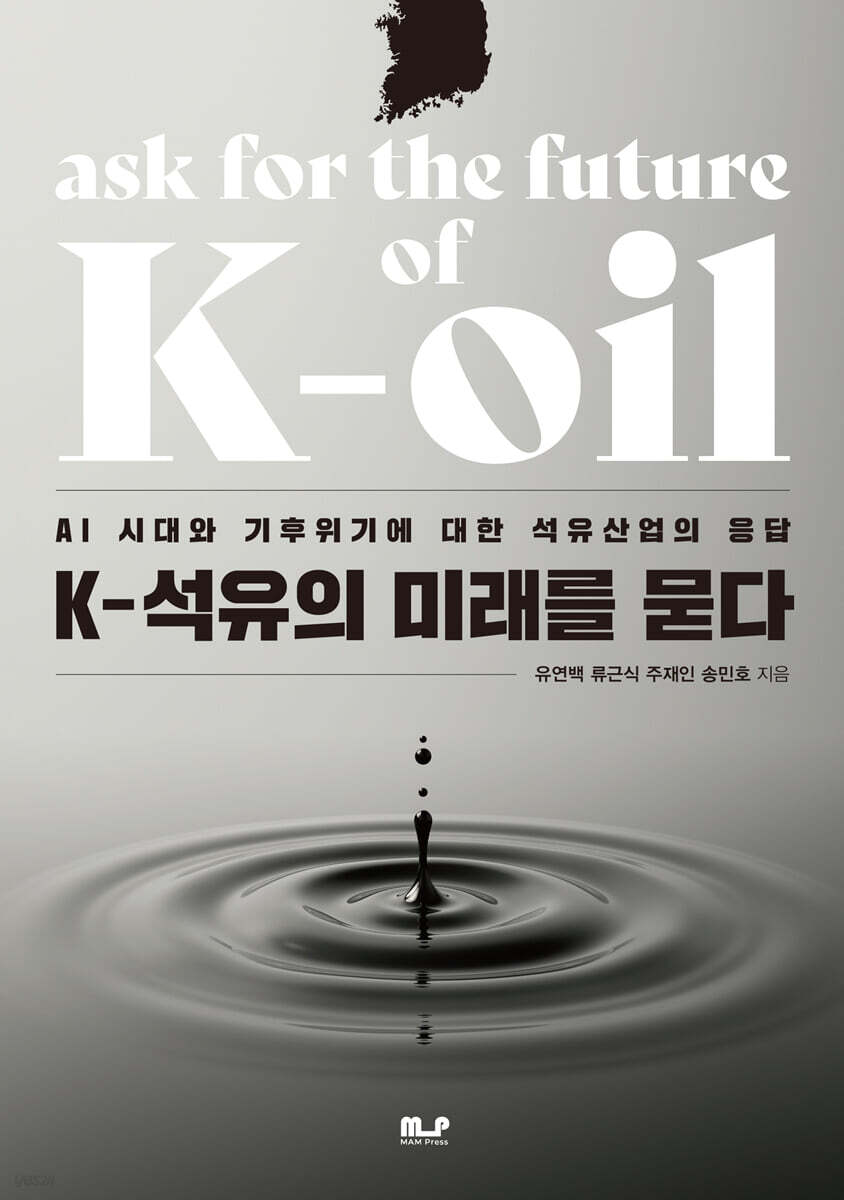
Asking about the future of K-Petroleum
 |
Description
Book Introduction
"Asking About the Future of K-Petroleum" examines the past and present of the Korean petroleum industry and asks what meaning oil holds in the era of AI and energy transition.
South Korea has the unique experience of building a world-class refining and petrochemical industry while importing all of its crude oil.
The authors explore the traces the petroleum industry has left on the Korean economy and society, covering everything from oil drilling and refining technology to the development of petrochemicals, national strategy, and quality competitiveness.
At the same time, it presents a critical perspective on what future oil will face in the face of the climate crisis and the challenges of sustainability.
South Korea has the unique experience of building a world-class refining and petrochemical industry while importing all of its crude oil.
The authors explore the traces the petroleum industry has left on the Korean economy and society, covering everything from oil drilling and refining technology to the development of petrochemicals, national strategy, and quality competitiveness.
At the same time, it presents a critical perspective on what future oil will face in the face of the climate crisis and the challenges of sustainability.
- You can preview some of the book's contents.
Preview
index
Publisher's Note
Opening remarks
Part 1.
How the Age of Oil Began
- The origins, technology, and emergence of black gold and K-oil
Chapter 1.
The Dark Ages, the Origins of Oil, and the Dawn of Civilization
Chapter 2.
Entering Underground Space: Drilling, Recovery, and a Slice of Technological Civilization
Chapter 3.
Refining technology, distribution network
Chapter 4.
The Use of Petroleum Products: Traces of the Invisible Hand
Chapter 5.
The Invisible Cost: The Paradox of the Oil Industry and the Environment
Chapter 6.
The Journey of K-Petroleum: 70 Years of Korean Petroleum Industry Policy
Chapter 7.
K-Petroleum, a Miracle for a Non-Oil-Producing Country: Korea's Globally Leading Oil Industry
Part 2.
How Oil Changed Civilization
- The fuel that drives civilization, the energy that organizes everyday life
Chapter 1.
How kerosene lighting changed the culture of life
Chapter 2.
Transportation culture changed by transportation fuels
Chapter 3.
Road environment changed by asphalt
Chapter 4.
How chemical fibers changed clothing culture
Chapter 5.
Agricultural productivity changed by petrochemical fertilizers
Chapter 6.
Plastic Changes Our Daily Lives
Chapter 7.
The industrial ecosystem changed by the oil industry
Chapter 8.
An Era of Transition: Technology-Driven Industrial Innovation
Part 3.
Where is the age of oil headed?
- The Rise of Crisis, Technological Response, and the Search for Sustainability
Chapter 1.
Six Scenarios Shaping the Future of Oil Hegemony
Chapter 2.
In the age of climate crisis, will oil disappear or will we coexist?
Chapter 3.
Remaining Reserves and New Technologies: The End or Restart of Oil Exploration
Chapter 4.
The Hidden Faces of Oil in Our Daily Lives
Chapter 5.
The Oil Industry in the Trilemma Era: A Sense of Balance for Survival
Chapter 6.
Three Strategies for Shaping the Oil Industry's Future
Chapter 7.
Questions, Not Technology, Shape the Future: Humanities in the Age of Energy Transition
Closing remarks
[Appendix] What We Really Want to Know About Oil
Opening remarks
Part 1.
How the Age of Oil Began
- The origins, technology, and emergence of black gold and K-oil
Chapter 1.
The Dark Ages, the Origins of Oil, and the Dawn of Civilization
Chapter 2.
Entering Underground Space: Drilling, Recovery, and a Slice of Technological Civilization
Chapter 3.
Refining technology, distribution network
Chapter 4.
The Use of Petroleum Products: Traces of the Invisible Hand
Chapter 5.
The Invisible Cost: The Paradox of the Oil Industry and the Environment
Chapter 6.
The Journey of K-Petroleum: 70 Years of Korean Petroleum Industry Policy
Chapter 7.
K-Petroleum, a Miracle for a Non-Oil-Producing Country: Korea's Globally Leading Oil Industry
Part 2.
How Oil Changed Civilization
- The fuel that drives civilization, the energy that organizes everyday life
Chapter 1.
How kerosene lighting changed the culture of life
Chapter 2.
Transportation culture changed by transportation fuels
Chapter 3.
Road environment changed by asphalt
Chapter 4.
How chemical fibers changed clothing culture
Chapter 5.
Agricultural productivity changed by petrochemical fertilizers
Chapter 6.
Plastic Changes Our Daily Lives
Chapter 7.
The industrial ecosystem changed by the oil industry
Chapter 8.
An Era of Transition: Technology-Driven Industrial Innovation
Part 3.
Where is the age of oil headed?
- The Rise of Crisis, Technological Response, and the Search for Sustainability
Chapter 1.
Six Scenarios Shaping the Future of Oil Hegemony
Chapter 2.
In the age of climate crisis, will oil disappear or will we coexist?
Chapter 3.
Remaining Reserves and New Technologies: The End or Restart of Oil Exploration
Chapter 4.
The Hidden Faces of Oil in Our Daily Lives
Chapter 5.
The Oil Industry in the Trilemma Era: A Sense of Balance for Survival
Chapter 6.
Three Strategies for Shaping the Oil Industry's Future
Chapter 7.
Questions, Not Technology, Shape the Future: Humanities in the Age of Energy Transition
Closing remarks
[Appendix] What We Really Want to Know About Oil
Publisher's Review
Oil was the "black gold" that dominated the last century, and it is a resource that still holds the key to human life and international politics in the 21st century.
However, Korea has the unique experience of having built a world-class refining and petrochemical industry without producing a single drop of crude oil.
"Asking About the Future of K-Petroleum" begins with these unique Korean conditions and comprehensively explores the trajectory of the petroleum industry and the challenges of the energy transition era.
The most significant difference of this book is that, while most existing oil-related books focus on the history and policies of oil-producing countries, it focuses on the case of Korea, a non-oil-producing country that grew into an oil powerhouse.
The history of the development of the Korean petroleum industry is not simply a history of technology or economics, but a complex story encompassing the conflicting keywords of dependence and self-reliance, vulnerability and competitiveness.
The book covers a multifaceted range of topics, including the introduction of petroleum, the development of drilling and refining technologies, the petrochemical industry and agricultural revolution, changes in transportation, quality competitiveness, and international export strategies.
At the same time, it explores the traces that oil has left on the lifestyle, culture, and political structure of Korean society, revealing oil not as a simple resource but as an unsung protagonist in modern Korean history.
Above all, 『Asking About the Future of K-Petroleum』 asks about oil again within the new framework of the AI era.
Amidst the massive shift toward AI-driven industrial innovation and climate change response, is oil still a strategic asset, or is it a relic destined for extinction? What kind of energy strategy should Korea adopt to overcome the limitations of its full-import structure? These questions are pressing not only for Korean society but also for the entire world grappling with energy transition.
Moreover, this book combines the weight of an academic book with the readability of a general textbook.
While presenting complex statistics and technical explanations in a way that readers can easily understand, it does not lose the depth of analysis and critical perspective.
Therefore, it provides a new perspective on Korean society and the world order through oil, not only to energy industry professionals and policymakers, but also to general readers.
"Asking About the Future of K-Petroleum" is not simply a book that summarizes the history of petroleum.
This critical guide illuminates oil as a vast prism where politics, economics, and culture intersect, drawing on Korea's experience, and prompts us to consider the choices we must make in the future era of energy transition.
1) Target audience: Energy industry professionals, policy researchers, humanities and social science readers, and general readers
2) Why this book is needed / Differentiation
: 『Asking about the future of K-oil』 is a book that captures Korea's unique experience of growing into a global oil powerhouse without producing a single drop of crude oil.
Going beyond the traditional narrative centered on oil-producing countries, it provides a three-dimensional view of the traces that oil has left across industry, policy, and culture.
This is the first 'K-oil' discourse that presents a wise coexistence strategy with oil, especially in the contemporary context of AI and the climate crisis.
3) One sentence about the book
: A thorough examination of Korea's unique experience of growing from a non-oil-producing country to a global oil powerhouse/ A new perspective on oil history beyond the narrative centered on oil-producing countries, analyzing the duality of dependence and competitiveness under Korean conditions/ A critical perspective and strategic alternatives for the future of oil in the era of AI and climate crisis/ A useful guide for both policymakers and industry professionals, combining academic depth and cultural readability/
Editor's Note
Oil is so close to our lives, yet so distant at the same time.
The moment you fill up at the gas station is palpable, but the massive industry, international order, and challenges of the climate crisis hidden behind it are less visible.
"Asking About the Future of K-Petroleum" reveals this invisible world, and through the unique experience of the Korean petroleum industry, asks why we have relied on oil and how we can wisely coexist in the future.
What's most remarkable about this book is that it delves into the vast subject of oil in a way that's both lighthearted and profound.
Each page is a new discovery thanks to its three-dimensional perspective, encompassing everything from technical aspects like drilling and refining to transportation, agriculture, and culture.
Especially in the current context of AI and the climate crisis, this book critically reflects on the future of oil and explores a strategy for sustainable coexistence rather than isolation, allowing readers to imagine practical alternatives.
Above all, the name ‘K-Oil’ does not simply refer to Korea’s oil industry.
It is a symbol of Korea's unique experience of growing into a global oil powerhouse despite being a non-oil-producing country, and the duality of dependence and self-reliance revealed in the process.
Just as K-pop and K-culture expand Korean identity into global discourse, 'K-Oil' is also a proposal to share the universal meaning of Korea's energy experience with the world.
"Asking About the Future of K-Petroleum" is a book recommended not only to readers interested in the energy industry, but also to anyone who ponders the past and future of Korean society.
We will provide an experience that allows you to read Korea and the world in a new way through oil.
However, Korea has the unique experience of having built a world-class refining and petrochemical industry without producing a single drop of crude oil.
"Asking About the Future of K-Petroleum" begins with these unique Korean conditions and comprehensively explores the trajectory of the petroleum industry and the challenges of the energy transition era.
The most significant difference of this book is that, while most existing oil-related books focus on the history and policies of oil-producing countries, it focuses on the case of Korea, a non-oil-producing country that grew into an oil powerhouse.
The history of the development of the Korean petroleum industry is not simply a history of technology or economics, but a complex story encompassing the conflicting keywords of dependence and self-reliance, vulnerability and competitiveness.
The book covers a multifaceted range of topics, including the introduction of petroleum, the development of drilling and refining technologies, the petrochemical industry and agricultural revolution, changes in transportation, quality competitiveness, and international export strategies.
At the same time, it explores the traces that oil has left on the lifestyle, culture, and political structure of Korean society, revealing oil not as a simple resource but as an unsung protagonist in modern Korean history.
Above all, 『Asking About the Future of K-Petroleum』 asks about oil again within the new framework of the AI era.
Amidst the massive shift toward AI-driven industrial innovation and climate change response, is oil still a strategic asset, or is it a relic destined for extinction? What kind of energy strategy should Korea adopt to overcome the limitations of its full-import structure? These questions are pressing not only for Korean society but also for the entire world grappling with energy transition.
Moreover, this book combines the weight of an academic book with the readability of a general textbook.
While presenting complex statistics and technical explanations in a way that readers can easily understand, it does not lose the depth of analysis and critical perspective.
Therefore, it provides a new perspective on Korean society and the world order through oil, not only to energy industry professionals and policymakers, but also to general readers.
"Asking About the Future of K-Petroleum" is not simply a book that summarizes the history of petroleum.
This critical guide illuminates oil as a vast prism where politics, economics, and culture intersect, drawing on Korea's experience, and prompts us to consider the choices we must make in the future era of energy transition.
1) Target audience: Energy industry professionals, policy researchers, humanities and social science readers, and general readers
2) Why this book is needed / Differentiation
: 『Asking about the future of K-oil』 is a book that captures Korea's unique experience of growing into a global oil powerhouse without producing a single drop of crude oil.
Going beyond the traditional narrative centered on oil-producing countries, it provides a three-dimensional view of the traces that oil has left across industry, policy, and culture.
This is the first 'K-oil' discourse that presents a wise coexistence strategy with oil, especially in the contemporary context of AI and the climate crisis.
3) One sentence about the book
: A thorough examination of Korea's unique experience of growing from a non-oil-producing country to a global oil powerhouse/ A new perspective on oil history beyond the narrative centered on oil-producing countries, analyzing the duality of dependence and competitiveness under Korean conditions/ A critical perspective and strategic alternatives for the future of oil in the era of AI and climate crisis/ A useful guide for both policymakers and industry professionals, combining academic depth and cultural readability/
Editor's Note
Oil is so close to our lives, yet so distant at the same time.
The moment you fill up at the gas station is palpable, but the massive industry, international order, and challenges of the climate crisis hidden behind it are less visible.
"Asking About the Future of K-Petroleum" reveals this invisible world, and through the unique experience of the Korean petroleum industry, asks why we have relied on oil and how we can wisely coexist in the future.
What's most remarkable about this book is that it delves into the vast subject of oil in a way that's both lighthearted and profound.
Each page is a new discovery thanks to its three-dimensional perspective, encompassing everything from technical aspects like drilling and refining to transportation, agriculture, and culture.
Especially in the current context of AI and the climate crisis, this book critically reflects on the future of oil and explores a strategy for sustainable coexistence rather than isolation, allowing readers to imagine practical alternatives.
Above all, the name ‘K-Oil’ does not simply refer to Korea’s oil industry.
It is a symbol of Korea's unique experience of growing into a global oil powerhouse despite being a non-oil-producing country, and the duality of dependence and self-reliance revealed in the process.
Just as K-pop and K-culture expand Korean identity into global discourse, 'K-Oil' is also a proposal to share the universal meaning of Korea's energy experience with the world.
"Asking About the Future of K-Petroleum" is a book recommended not only to readers interested in the energy industry, but also to anyone who ponders the past and future of Korean society.
We will provide an experience that allows you to read Korea and the world in a new way through oil.
GOODS SPECIFICS
- Date of issue: September 8, 2025
- Page count, weight, size: 392 pages | 148*210*30mm
- ISBN13: 9791199233102
- ISBN10: 1199233102
You may also like
카테고리
korean


korean

![GQ KOREA Mark (Monthly): December [2025]](http://librairie.coreenne.fr/cdn/shop/files/8ef265dbbfbf186523ed75ba7319009d.jpg?v=1765340328&width=3840)


