

Art that stole its time
 |
Description
Book Introduction
This is a cultural book that observes human and global culture by gathering and displaying paintings that are far more ancient than the history of writing and most vividly reflect human truth, in a balanced manner by era and language. From the Florentine Renaissance and the French Revolution to the two World Wars and the Great Depression, we take a look at the history of art as a human phenomenon. Thanks to the human desire to depict, major world historical events have been captured in paintings one after another, so we can get a glimpse of the turbulent world history just by carefully looking at a few famous paintings. This book, which guides us through the appreciation and interpretation of painting as the most primal and instinctive realm before the era of aestheticism and art-for-art, will introduce us to a comprehensive world history, not a mere fragment of art history. After majoring in Russian literature and art, art critic Jin-sook Lee has published art reviews in major daily newspapers and delivered lectures to various organizations, spreading the beauty and inspiration of art to many people. With her characteristically easygoing and straightforward technique, she explains major turning points in world history through paintings by leading artists. |
- You can preview some of the book's contents.
Preview
index
5 Moments You'll Encounter in This Book
Art that deals with the "flesh of the world," art history as a human trace, p. 21
1 Medieval Autumn, Painted in Brilliant Sunset, Page 39
2 The Florentine Renaissance, a Moment of Great Fusion, p. 63
3 The Renaissance of the Papal See, p. 85
4 The Reformation That Created Two Europes, p. 103
5 Counter-Reformation and Baroque Art, p. 125
6 Public Life of Dutch Citizens in the Golden Age, p. 147
7 The Private Lives of Dutch Citizens in the Golden Age, p. 169
8 Powerful Kings of Absolute Monarchy, p. 187
9 The Independence of the United States of America, the Land of the Free, p. 207
10 The Outbreak of the French Revolution, p. 231
11 The Napoleonic Wars, which awakened liberalism and nationalism, p. 251
12 The Continuing Wave of Revolution, p. 271
13 Workers and Peasants Who Became the Protagonists, p. 295
14. The Rose-Colored Life Painted by Impressionism, p. 317
15 The Golden Age of Bad Girls, p. 347
16 Women, the Orient, Slavery, and Imperialism, p. 369
17 Seething Desires for Patricide, p. 389
18 Artists Enthusiastic About War, p. 407
The Russian Revolution, which began with enthusiasm and ended in disillusionment, p. 429
20 The Rise of Nationalism, p. 451
The Roaring Twenties, Ended by the Great Depression, p. 479
22 Ideological Battlefields, the Spanish Civil War, p. 499
23 War is No More! Page 521
References p. 545
Art that deals with the "flesh of the world," art history as a human trace, p. 21
1 Medieval Autumn, Painted in Brilliant Sunset, Page 39
2 The Florentine Renaissance, a Moment of Great Fusion, p. 63
3 The Renaissance of the Papal See, p. 85
4 The Reformation That Created Two Europes, p. 103
5 Counter-Reformation and Baroque Art, p. 125
6 Public Life of Dutch Citizens in the Golden Age, p. 147
7 The Private Lives of Dutch Citizens in the Golden Age, p. 169
8 Powerful Kings of Absolute Monarchy, p. 187
9 The Independence of the United States of America, the Land of the Free, p. 207
10 The Outbreak of the French Revolution, p. 231
11 The Napoleonic Wars, which awakened liberalism and nationalism, p. 251
12 The Continuing Wave of Revolution, p. 271
13 Workers and Peasants Who Became the Protagonists, p. 295
14. The Rose-Colored Life Painted by Impressionism, p. 317
15 The Golden Age of Bad Girls, p. 347
16 Women, the Orient, Slavery, and Imperialism, p. 369
17 Seething Desires for Patricide, p. 389
18 Artists Enthusiastic About War, p. 407
The Russian Revolution, which began with enthusiasm and ended in disillusionment, p. 429
20 The Rise of Nationalism, p. 451
The Roaring Twenties, Ended by the Great Depression, p. 479
22 Ideological Battlefields, the Spanish Civil War, p. 499
23 War is No More! Page 521
References p. 545
Detailed image
Publisher's Review
It's not just art history, it's the history of humanity and the world read through pictures!
From the Florentine Renaissance and the French Revolution to the two World Wars and the Great Depression
A glance at the history of art as a human trace.
History is not an experiment conducted in a laboratory.
In history, there are 'actually' people who had to live in a certain era and who will have to live in the future.
The exploration of what life was like in that era, what institutional changes meant to their lives, what they wanted and what kind of lives they wanted to live, and the exploration of the human value and meaning of all events are the domain of art.
Art deals with human reality and the 'flesh of the world' that transcends language.
History is very complex, so it is difficult to make hasty assertions.
But one thing can be said for sure about art.
A picture of social integration can be drawn, even if it is not realized.
On the other hand, the picture of division and massacre is rarely depicted, even if it were realized.
-In the text
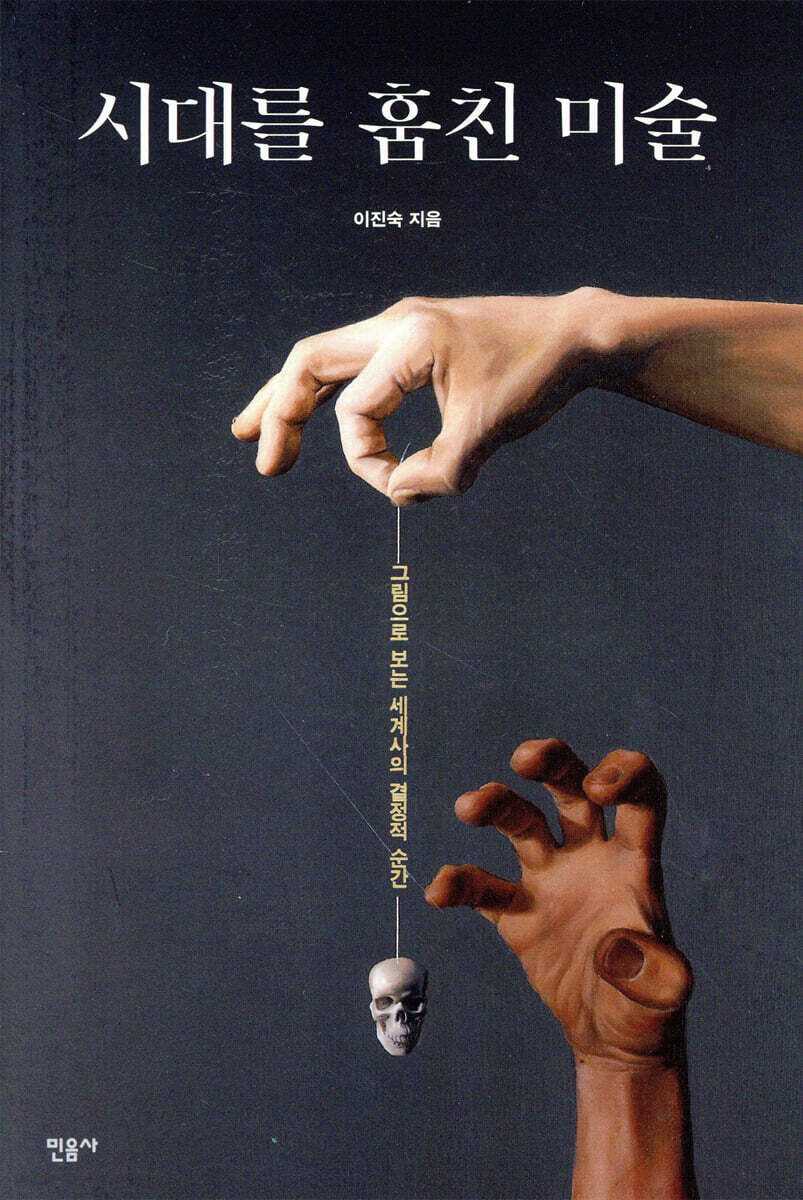
* Decorated with the cover painting of "Monologue" (2008) by Hong Kyung-taek, a young leading figure in today's Korean painting world who won the 2008 "Artist of the Year" award
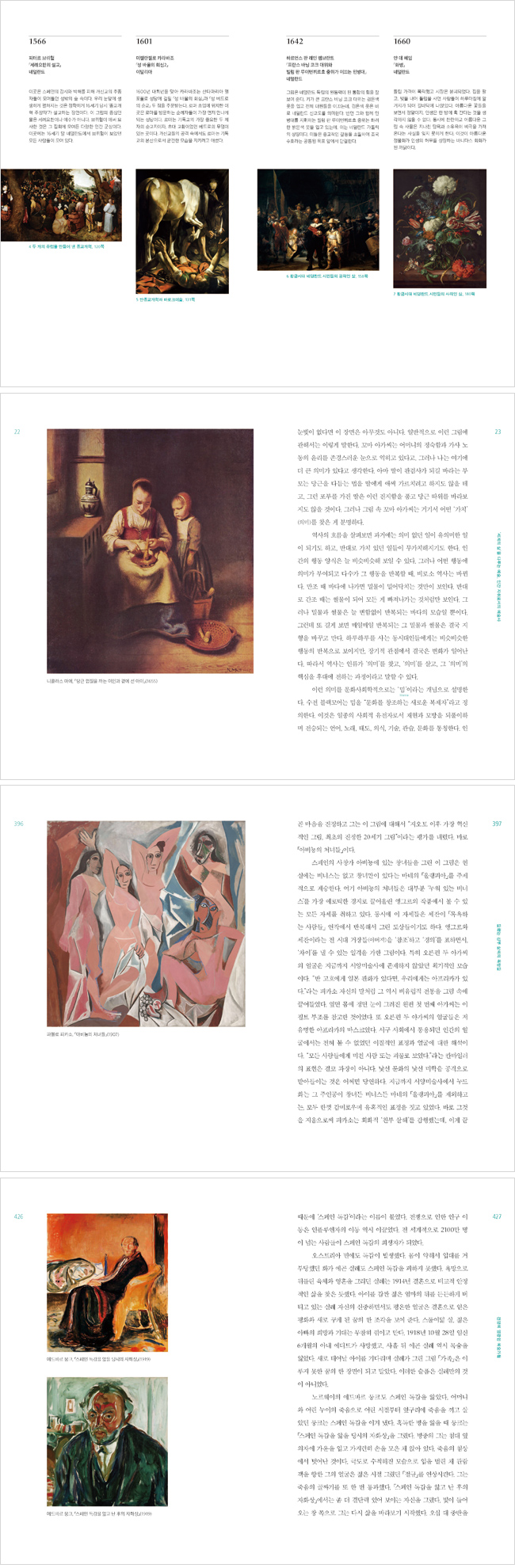
* 174 paintings of world historical and art historical significance are included in the main text, 28 of which are selected and published in chronological order in the appendix, “Moments You Will Encounter in This Book,” ahead of the main text.
1.
A Picture, an Honest Report of the Times
The origins of the medium of painting are so remote that they are almost impossible to fathom.
However, when we talk about the history of painting, we think of a specific history of Western art.
Minumsa has published a book titled "Art that Stole the Times," which examines human and global culture by gathering and displaying paintings, which are far more ancient than the history of writing and are most vivid in the truth of humanity, in a balanced manner by era and language.
Thanks to the human desire to depict, major world historical events have been captured in paintings one after another, so we can get a glimpse of the turbulent world history just by carefully looking at a few famous paintings.
Before the era of aestheticism and art-for-art, 『Art that Stole an Era』, which guides us through the appreciation and interpretation of painting as the most primal and instinctive realm, will introduce us to a comprehensive world history, not a mere fragment of art history.
Jin-sook Lee, a dedicated art critic who majored in Russian literature and art, has been publishing art reviews in major daily newspapers and delivering liberal arts lectures to various organizations, spreading the beauty and inspiration of art to many people. With her characteristically easygoing and straightforward technique, she explains major turning points in world history through paintings by a group of artists.
Raphael Sanzio's "The School of Athens" (1510) tells the story of the splendid Florentine Renaissance; Francisco Goya's "The Disasters of War" (1815) series tells the story of the Napoleonic Wars and their tragedy; Eugène Delacroix's "Liberty Leading the People" (1832) tells the story of the passion and vitality of the French Revolution; William Turner's "The Slave Ship" (1840), which was recently brought to light in the film "Mr. Turner" (2014), tells the story of the outrageous evils of the slave trade; Giuseppe Felizza da Volpedo's "The Fourth Estate" (1901) tells the story of the global labor movement sparked by the Chartist movement; and Grant Wood's "American Gothic" (1930) tells the story of the collapse of the American Dream and the Great Depression in an intuitive and interesting way.
Diego Rivera's "A History of Mexico" (1935)
The huge mural "History of Mexico" he painted in the presidential palace contains all the important events in Mexican history.
In the center, Zapata, a key figure in the Mexican Revolution, appears holding a red flag with the slogan of the Mexican Revolution, TIERRA Y LIBERTAD (Land and Freedom).
Below them, Mexican independence heroes Miguel Hidalgo and José María Morelos hold white flags.
The peasant army in white clothes looks at these heroes.
In the center of the screen, an eagle, the symbol of Mexico, stands on a cactus and holds a snake in its beak.
It symbolizes the salvation of Mexico, the traditions of the Indians, and the emergence of a new nation.
In addition, we also see the dictator Diaz, who was removed by the revolution, and the foreign capitalists and corporate farm owners surrounding him.
Rivera believed that the revolutionary process should be presented comprehensively.
So, in the picture, they drew Pancho Villa, the leader of the resistance who supported Zapata, and even the instructor of Zapata's assassination.
-Art that Stole an Era, pp. 459-462
This is an interpretation of Diego Rivera's "A History of Mexico" (1935).
A detailed and objective description of the elements of a painting, rather than sentimental adjectives or abstract formulas, enhances the understanding of the work.
This book, modeled after Diego Rivera, who sought to “comprehensively show the process of revolution,” provides a comprehensive overview of the background of the work’s creation and the actual results.
Of course, not only Rivera, but all paintings are a medium that erects a vertical temporal history in three dimensions on a horizontal cross-section.
Because the painting comprehensively covers the entire course of revolution, or rather, the entirety of history, its appreciation is not limited to a single point in space, but rather becomes a remarkable experience that follows the long line of human history.
In the paragraph following the above-quoted passage, Lee Jin-sook reveals that the artist “believed that mestizos, born of mixed race, were future beings who would overcome racial conflict and opposition,” thereby explaining not only the background of the painting’s creation but also the artist’s philosophical worldview and future prospects.
“A picture of social integration can be drawn, even if it is not realized.
The author's sentence, "On the other hand, the picture of division and massacre is rarely drawn, even if it was realized," is a paradox that learning history (the history of painting) is not limited to simply acquiring facts, but also serves as the foundation for a sound worldview, that is, a positive culture and a sense of community solidarity.
2.
A feast of pioneering masterpieces that pioneered a new genre of painting.
As previously stated, this book does not focus on explaining minor art movements or describing the biographies of artists.
However, regardless of whether they are debut works or masterpieces of the masters of painting, the aura of the famous paintings that dominated an era cannot be hidden.
The works of art by Eungdal, which cover not only Europe, which undeniably led the history of painting using brushes and paints, but also Asia, Africa, and South America, shine brightly on the author's affection.
Michelangelo Caravaggio's "Conversion of St. Paul" (1601), which used extreme chiaroscuro to give a flat, monotonous painting a dramatic atmosphere reminiscent of a theatrical stage, and Andrea Pozzo's "Adoration of St. Ignatius" (1694), which maximized religious sacredness with trompe l'oeil, a painting that seems to be an illusion, are examples of works that dazzle the reader's eyes just by appearing on the pages of books.
In modern times, this ecstasy transforms into bewilderment.
The author effectively explains the subversive nature of modernity through the thematic, compositional, and visual revolutions achieved by Edouard Manet's "Luncheon on the Grass" (1863), which discarded the traditional drawing practices that had been maintained like written law since the Renaissance and praised the daily lives of modern people "here and now"; Gustave Caillebotte's "Paris on a Rainy Day" (1877), which captured the chance movements of people with no semantic significance; and Claude Monet's "Poppy Field near Argenteuil" (1873), a representative Impressionist artist who focused on spontaneous visuals.
Furthermore, 『Art that Stole an Era』 explains aesthetically unique painting styles such as the Art Nouveau of Gustav Klimt and Alphonse Mucha, the Russian Symbolist works of Kuzma Petrov-Botkin, the posters of El Lissitzky, and the Korean folk paintings that were popular in the late 19th century, and through the analysis of the Fauvist Henri Matisse, the Cubist Pablo Picasso, and the Suprematist Kazimir Malevich, it naturally depicts the aspect of ‘patricide’ in the history of painting through storytelling.
Pablo Picasso, "Les Demoiselles d'Avignon" (1907)
This painting depicts prostitutes in Avignon, a Spanish red-light district, thematically follows Manet's "Olympia," which states that in reality there is no Venus, only prostitutes.
Here the Avignon Maidens are in all the poses you'll find in Ingres's work, where he elevated the 'Reclining Venus' to its most erotic heights.
At the same time, these poses are also the same ones that Cézanne repeatedly depicted in his “Bathers” series. (…) As Picasso himself said, “If Van Gogh had Japanese prints, we have Africa,” he too incorporated non-European traditions into his paintings.
The first lady on the left, with her front eyes painted on her side, was inspired by Egyptian reliefs.
Also, the faces of the two ladies on the right were those famous African masks.
-Art that Stole an Era, p. 397
It is interesting to note that this book explains that Picasso's "Les Demoiselles d'Avignon," which has been dramatically presented as the most appropriate example of patricide, citing Kahnweiler's sentence, "appeared to everyone as a madman or a monster," actually inherited the "traditions" of Manet's themes, Ingres and Cézanne's iconography, African masks, and Egyptian reliefs.
This is because it contains the profound insight that a true blow, a meaningful resistance of the next generation, presupposes respect and reference to previous generations (regardless of region).
In this way, the organisms called conversations seem to exude their own vitality, but the tension and interaction between them form a single, large stream.
This is why we cannot fully appreciate paintings simply by explaining them as cultural changes brought about by technological advancements or as the birth of a trend that responded to the needs of a specific era.
The paintings in 『Art that Stole an Era』 reconstruct the entire history of painting by imitating, accompanying, subverting, and killing each other.
3.
A Portrait of a Sensitive Painter, Capturing the "Modern"
Lincoln's words, "Every man forty is responsible for his own face," are also effective in explaining that a person's face reflects his life, his worldview, and, more broadly, the spirit of the times.
Considering that artists are not only craftsmen with ingenious skills but also members of society who lived in an era and recorders who observed the times, it is certain that the portraits painted by artists are important evidence of dealing with the "flesh of the world," as Régis Debray said.
In 『Art that Stole the Times』, there are also many ‘faces that stole the times’.
In the late 19th century, when eugenics and racism were rampant, the portrait of Sarah Baartman, the "Hottentot Venus," a South African woman who was relegated to the status of an exhibition object; "The Widow," painted by Elizabeth Keith during her visit to Korea in 1919, depicting a woman who lost her husband and was brutally tortured for participating in the March 1st Movement; and Otto Dix's "Portrait of the Journalist Sylvia von Harden" (1926), which depicts a woman struggling as a leading figure of the new era while embracing spiritual poverty in the roaring 1920s America, all make the viewer feel the errors of the times and the responsibility of solidarity through these faces.
As in all areas of human culture, in painting, too, “the ‘individual,’ the subject of modern culture, has emerged in such a painful way.” Artists have sometimes made themselves the subject and material of their paintings.
There are portraits that are meaningful because they are Rembrandts painted by Rembrandt, not Rembrandts painted by others.
“No matter how one expresses or records it, Rembrandt’s only object of observation is ‘I.’ (…) Because we were born within the framework of the solitary modern self, we too suffer from the same illness of loneliness and anxiety that Rembrandt suffered from.” In the midst of the international unrest and domestic political situation that intertwined in a chaotic way that was impossible to grasp, and the process of transitioning into a new era, the painter either immersed himself in himself or delved into himself.
This was a perception of the outside (modernity) without looking at the outside.
This book devotes a significant number of pages to the sad and poignant stories of self-portraits imbued with the artist's self-consciousness.
Ernst Ludwig Kirchner's "Self-Portrait as a Soldier" (1915) depicts the artist with his right arm, which should be holding a paintbrush, bluntly severed.
“The very image of an artist crippled in military uniform is an indictment of a ‘society hostile to art.’” Egon Schiele’s “The Family” (1918) captures the brief, fleeting hope and peace before he fell victim to the Spanish flu.
In addition to this, the book also introduces Frida Kahlo's self-portrait (1929), which highlights the Mexican nationality and mixed-race issues, and Felix Nussbaum's "Portrait of Me Holding a Jewish Passport" (1943), which can be said to be a national pain for all Jews who lived in the era of terror.
Left: Edvard Munch, "Self-Portrait During the Spanish Flu" (1919)
Right: Edvard Munch, "Self-Portrait After the Spanish Flu" (1919)
Edvard Munch of Norway also suffered from the Spanish flu.
Munch, who had lived with death close to his side since childhood due to the deaths of his mother and younger sister, overcame the Spanish flu.
While suffering from a severe illness, Munch painted "Self-Portrait with Spanish Flu."
He is sick and sitting on a chair next to his bed, wearing a gown and with his hands clasped neatly.
I'm out of the death bed.
His face, facing the audience with his mouth open and his extremely gaunt appearance, is reminiscent of "The Scream", which he painted in his youth.
He passed through the valley of death once again.
In "Self-Portrait After the Spanish Flu," he portrays himself as more determined.
He turned to the window where the light was coming in and began to look at life again.
Munch, who was in his mid-fifties, seems to have aged rapidly after suffering from an illness.
But he survived.
Munch looks at us, embracing the pride and new determination of having overcome illness, but also the traces of the illness that have not completely disappeared.
-.『Art that Stole an Era』, pp. 427-428
The last line of the above quote: “He survived.
“Munch looks at us, embracing the pride and new determination of having overcome illness, but also the traces of the illness that have not completely disappeared.” This expresses the artist’s sense of mission that transcends the sacrifices and pain of the times and the superhuman will of the brush.
Art is close to our daily lives, but at the same time, we are naturally awed by the lives of artists who, without being discouraged by the bleak vision of the world, paint with their brushes the will to live and the desire to improve reality.
4.
Lost Modern Man Finds His Way Through Art
Nicolas Mahé, "A Woman Peeling Carrots with a Child by Her Side" (1655)
This scene would be nothing without the serious look in the little girl's eyes. (...) It is clear that the little girl in the painting found some 'value' (meaning) there.
If we look at the flow of history, things that were meaningless in the past sometimes become meaningful, and conversely, things that were valuable sometimes become worthless.
Human behavior patterns can always seem similar.
But history changes only when an action is given meaning and repeated by many.
When you go out to sea at high tide, all you see is the tide coming in.
Conversely, during low tide, the tide ebbs and everything appears to disappear.
However, the ebb and flow of the tide is just a constant, recurring pattern of the sea.
But if you look at it over a long period of time, the ebb and flow that repeats every day ends up changing the terrain.
To our contemporaries, living day to day, it may seem like a repetition of similar actions, but in the long run, change eventually occurs.
Therefore, history can be said to be the process by which mankind searches for 'meaning', lives by 'meaning', and passes on the essence of that 'meaning' to future generations.
Art that Stole an Era, pp. 21-23
The above work by an unknown Dutch genre painter contains no grand events or great people.
We cannot help but wonder how such an ordinary and common scene could become art.
But can we deny, on the contrary, that art that deals with the ordinary touches the hearts of ordinary people and turns the wheels of our difficult daily lives and history?
As Tzvetan Todorov said, “All painting is a celebration of what is painted.” The boundless affirmation of the everyday lives of ordinary people has long given birth to countless works of art.
When art deals with what is ours, not someone else's, and when art uses life, not art, as its subject matter, we gain reflections from art that go beyond entertainment and even correct the course of our lives.
Käthe Kollwitz, "Mother with Dead Son" (1993)
After German reunification in 1993, the Neue Wache Memorial for War Victims was reopened and a small sculpture by Käthe Kollwitz was enlarged and installed.
The full title of this sculpture, also known as Pieta, meaning sorrow, is 'Mother Holding Her Dead Son', and it is a 1938 work that conveys a powerful message of anticipation.
The post-war German government repeatedly reflected on its past, which gave rise to Nazism.
Mass murder in Germany was possible because of the Nazis' reign of terror and the people's tacit consent to it.
(……) On May 8, 1985, to mark the 40th anniversary of the end of the war, West German President Weitzer Weitzer delivers an important speech.
(……) “He who closes his eyes to the past cannot see the present.
“Those who do not wish to remember inhumane acts are likely to be exposed to such danger again.” This statement demonstrates the mature historical awareness of Germans. - Art that Stole the Times, pp. 541-543
Lee Jin-sook explains why we study art and history.
“In order not to repeat the mistakes of the past, to confirm the ancient dream of humanity and to continue that dream.”
"Art that Stole an Era" will surely be a friendly Sherpa for those taking the first step on this weighty journey, a cliche yet difficult to put into practice.
From the Florentine Renaissance and the French Revolution to the two World Wars and the Great Depression
A glance at the history of art as a human trace.
History is not an experiment conducted in a laboratory.
In history, there are 'actually' people who had to live in a certain era and who will have to live in the future.
The exploration of what life was like in that era, what institutional changes meant to their lives, what they wanted and what kind of lives they wanted to live, and the exploration of the human value and meaning of all events are the domain of art.
Art deals with human reality and the 'flesh of the world' that transcends language.
History is very complex, so it is difficult to make hasty assertions.
But one thing can be said for sure about art.
A picture of social integration can be drawn, even if it is not realized.
On the other hand, the picture of division and massacre is rarely depicted, even if it were realized.
-In the text
* Decorated with the cover painting of "Monologue" (2008) by Hong Kyung-taek, a young leading figure in today's Korean painting world who won the 2008 "Artist of the Year" award
* 174 paintings of world historical and art historical significance are included in the main text, 28 of which are selected and published in chronological order in the appendix, “Moments You Will Encounter in This Book,” ahead of the main text.
1.
A Picture, an Honest Report of the Times
The origins of the medium of painting are so remote that they are almost impossible to fathom.
However, when we talk about the history of painting, we think of a specific history of Western art.
Minumsa has published a book titled "Art that Stole the Times," which examines human and global culture by gathering and displaying paintings, which are far more ancient than the history of writing and are most vivid in the truth of humanity, in a balanced manner by era and language.
Thanks to the human desire to depict, major world historical events have been captured in paintings one after another, so we can get a glimpse of the turbulent world history just by carefully looking at a few famous paintings.
Before the era of aestheticism and art-for-art, 『Art that Stole an Era』, which guides us through the appreciation and interpretation of painting as the most primal and instinctive realm, will introduce us to a comprehensive world history, not a mere fragment of art history.
Jin-sook Lee, a dedicated art critic who majored in Russian literature and art, has been publishing art reviews in major daily newspapers and delivering liberal arts lectures to various organizations, spreading the beauty and inspiration of art to many people. With her characteristically easygoing and straightforward technique, she explains major turning points in world history through paintings by a group of artists.
Raphael Sanzio's "The School of Athens" (1510) tells the story of the splendid Florentine Renaissance; Francisco Goya's "The Disasters of War" (1815) series tells the story of the Napoleonic Wars and their tragedy; Eugène Delacroix's "Liberty Leading the People" (1832) tells the story of the passion and vitality of the French Revolution; William Turner's "The Slave Ship" (1840), which was recently brought to light in the film "Mr. Turner" (2014), tells the story of the outrageous evils of the slave trade; Giuseppe Felizza da Volpedo's "The Fourth Estate" (1901) tells the story of the global labor movement sparked by the Chartist movement; and Grant Wood's "American Gothic" (1930) tells the story of the collapse of the American Dream and the Great Depression in an intuitive and interesting way.
Diego Rivera's "A History of Mexico" (1935)
The huge mural "History of Mexico" he painted in the presidential palace contains all the important events in Mexican history.
In the center, Zapata, a key figure in the Mexican Revolution, appears holding a red flag with the slogan of the Mexican Revolution, TIERRA Y LIBERTAD (Land and Freedom).
Below them, Mexican independence heroes Miguel Hidalgo and José María Morelos hold white flags.
The peasant army in white clothes looks at these heroes.
In the center of the screen, an eagle, the symbol of Mexico, stands on a cactus and holds a snake in its beak.
It symbolizes the salvation of Mexico, the traditions of the Indians, and the emergence of a new nation.
In addition, we also see the dictator Diaz, who was removed by the revolution, and the foreign capitalists and corporate farm owners surrounding him.
Rivera believed that the revolutionary process should be presented comprehensively.
So, in the picture, they drew Pancho Villa, the leader of the resistance who supported Zapata, and even the instructor of Zapata's assassination.
-Art that Stole an Era, pp. 459-462
This is an interpretation of Diego Rivera's "A History of Mexico" (1935).
A detailed and objective description of the elements of a painting, rather than sentimental adjectives or abstract formulas, enhances the understanding of the work.
This book, modeled after Diego Rivera, who sought to “comprehensively show the process of revolution,” provides a comprehensive overview of the background of the work’s creation and the actual results.
Of course, not only Rivera, but all paintings are a medium that erects a vertical temporal history in three dimensions on a horizontal cross-section.
Because the painting comprehensively covers the entire course of revolution, or rather, the entirety of history, its appreciation is not limited to a single point in space, but rather becomes a remarkable experience that follows the long line of human history.
In the paragraph following the above-quoted passage, Lee Jin-sook reveals that the artist “believed that mestizos, born of mixed race, were future beings who would overcome racial conflict and opposition,” thereby explaining not only the background of the painting’s creation but also the artist’s philosophical worldview and future prospects.
“A picture of social integration can be drawn, even if it is not realized.
The author's sentence, "On the other hand, the picture of division and massacre is rarely drawn, even if it was realized," is a paradox that learning history (the history of painting) is not limited to simply acquiring facts, but also serves as the foundation for a sound worldview, that is, a positive culture and a sense of community solidarity.
2.
A feast of pioneering masterpieces that pioneered a new genre of painting.
As previously stated, this book does not focus on explaining minor art movements or describing the biographies of artists.
However, regardless of whether they are debut works or masterpieces of the masters of painting, the aura of the famous paintings that dominated an era cannot be hidden.
The works of art by Eungdal, which cover not only Europe, which undeniably led the history of painting using brushes and paints, but also Asia, Africa, and South America, shine brightly on the author's affection.
Michelangelo Caravaggio's "Conversion of St. Paul" (1601), which used extreme chiaroscuro to give a flat, monotonous painting a dramatic atmosphere reminiscent of a theatrical stage, and Andrea Pozzo's "Adoration of St. Ignatius" (1694), which maximized religious sacredness with trompe l'oeil, a painting that seems to be an illusion, are examples of works that dazzle the reader's eyes just by appearing on the pages of books.
In modern times, this ecstasy transforms into bewilderment.
The author effectively explains the subversive nature of modernity through the thematic, compositional, and visual revolutions achieved by Edouard Manet's "Luncheon on the Grass" (1863), which discarded the traditional drawing practices that had been maintained like written law since the Renaissance and praised the daily lives of modern people "here and now"; Gustave Caillebotte's "Paris on a Rainy Day" (1877), which captured the chance movements of people with no semantic significance; and Claude Monet's "Poppy Field near Argenteuil" (1873), a representative Impressionist artist who focused on spontaneous visuals.
Furthermore, 『Art that Stole an Era』 explains aesthetically unique painting styles such as the Art Nouveau of Gustav Klimt and Alphonse Mucha, the Russian Symbolist works of Kuzma Petrov-Botkin, the posters of El Lissitzky, and the Korean folk paintings that were popular in the late 19th century, and through the analysis of the Fauvist Henri Matisse, the Cubist Pablo Picasso, and the Suprematist Kazimir Malevich, it naturally depicts the aspect of ‘patricide’ in the history of painting through storytelling.
Pablo Picasso, "Les Demoiselles d'Avignon" (1907)
This painting depicts prostitutes in Avignon, a Spanish red-light district, thematically follows Manet's "Olympia," which states that in reality there is no Venus, only prostitutes.
Here the Avignon Maidens are in all the poses you'll find in Ingres's work, where he elevated the 'Reclining Venus' to its most erotic heights.
At the same time, these poses are also the same ones that Cézanne repeatedly depicted in his “Bathers” series. (…) As Picasso himself said, “If Van Gogh had Japanese prints, we have Africa,” he too incorporated non-European traditions into his paintings.
The first lady on the left, with her front eyes painted on her side, was inspired by Egyptian reliefs.
Also, the faces of the two ladies on the right were those famous African masks.
-Art that Stole an Era, p. 397
It is interesting to note that this book explains that Picasso's "Les Demoiselles d'Avignon," which has been dramatically presented as the most appropriate example of patricide, citing Kahnweiler's sentence, "appeared to everyone as a madman or a monster," actually inherited the "traditions" of Manet's themes, Ingres and Cézanne's iconography, African masks, and Egyptian reliefs.
This is because it contains the profound insight that a true blow, a meaningful resistance of the next generation, presupposes respect and reference to previous generations (regardless of region).
In this way, the organisms called conversations seem to exude their own vitality, but the tension and interaction between them form a single, large stream.
This is why we cannot fully appreciate paintings simply by explaining them as cultural changes brought about by technological advancements or as the birth of a trend that responded to the needs of a specific era.
The paintings in 『Art that Stole an Era』 reconstruct the entire history of painting by imitating, accompanying, subverting, and killing each other.
3.
A Portrait of a Sensitive Painter, Capturing the "Modern"
Lincoln's words, "Every man forty is responsible for his own face," are also effective in explaining that a person's face reflects his life, his worldview, and, more broadly, the spirit of the times.
Considering that artists are not only craftsmen with ingenious skills but also members of society who lived in an era and recorders who observed the times, it is certain that the portraits painted by artists are important evidence of dealing with the "flesh of the world," as Régis Debray said.
In 『Art that Stole the Times』, there are also many ‘faces that stole the times’.
In the late 19th century, when eugenics and racism were rampant, the portrait of Sarah Baartman, the "Hottentot Venus," a South African woman who was relegated to the status of an exhibition object; "The Widow," painted by Elizabeth Keith during her visit to Korea in 1919, depicting a woman who lost her husband and was brutally tortured for participating in the March 1st Movement; and Otto Dix's "Portrait of the Journalist Sylvia von Harden" (1926), which depicts a woman struggling as a leading figure of the new era while embracing spiritual poverty in the roaring 1920s America, all make the viewer feel the errors of the times and the responsibility of solidarity through these faces.
As in all areas of human culture, in painting, too, “the ‘individual,’ the subject of modern culture, has emerged in such a painful way.” Artists have sometimes made themselves the subject and material of their paintings.
There are portraits that are meaningful because they are Rembrandts painted by Rembrandt, not Rembrandts painted by others.
“No matter how one expresses or records it, Rembrandt’s only object of observation is ‘I.’ (…) Because we were born within the framework of the solitary modern self, we too suffer from the same illness of loneliness and anxiety that Rembrandt suffered from.” In the midst of the international unrest and domestic political situation that intertwined in a chaotic way that was impossible to grasp, and the process of transitioning into a new era, the painter either immersed himself in himself or delved into himself.
This was a perception of the outside (modernity) without looking at the outside.
This book devotes a significant number of pages to the sad and poignant stories of self-portraits imbued with the artist's self-consciousness.
Ernst Ludwig Kirchner's "Self-Portrait as a Soldier" (1915) depicts the artist with his right arm, which should be holding a paintbrush, bluntly severed.
“The very image of an artist crippled in military uniform is an indictment of a ‘society hostile to art.’” Egon Schiele’s “The Family” (1918) captures the brief, fleeting hope and peace before he fell victim to the Spanish flu.
In addition to this, the book also introduces Frida Kahlo's self-portrait (1929), which highlights the Mexican nationality and mixed-race issues, and Felix Nussbaum's "Portrait of Me Holding a Jewish Passport" (1943), which can be said to be a national pain for all Jews who lived in the era of terror.
Left: Edvard Munch, "Self-Portrait During the Spanish Flu" (1919)
Right: Edvard Munch, "Self-Portrait After the Spanish Flu" (1919)
Edvard Munch of Norway also suffered from the Spanish flu.
Munch, who had lived with death close to his side since childhood due to the deaths of his mother and younger sister, overcame the Spanish flu.
While suffering from a severe illness, Munch painted "Self-Portrait with Spanish Flu."
He is sick and sitting on a chair next to his bed, wearing a gown and with his hands clasped neatly.
I'm out of the death bed.
His face, facing the audience with his mouth open and his extremely gaunt appearance, is reminiscent of "The Scream", which he painted in his youth.
He passed through the valley of death once again.
In "Self-Portrait After the Spanish Flu," he portrays himself as more determined.
He turned to the window where the light was coming in and began to look at life again.
Munch, who was in his mid-fifties, seems to have aged rapidly after suffering from an illness.
But he survived.
Munch looks at us, embracing the pride and new determination of having overcome illness, but also the traces of the illness that have not completely disappeared.
-.『Art that Stole an Era』, pp. 427-428
The last line of the above quote: “He survived.
“Munch looks at us, embracing the pride and new determination of having overcome illness, but also the traces of the illness that have not completely disappeared.” This expresses the artist’s sense of mission that transcends the sacrifices and pain of the times and the superhuman will of the brush.
Art is close to our daily lives, but at the same time, we are naturally awed by the lives of artists who, without being discouraged by the bleak vision of the world, paint with their brushes the will to live and the desire to improve reality.
4.
Lost Modern Man Finds His Way Through Art
Nicolas Mahé, "A Woman Peeling Carrots with a Child by Her Side" (1655)
This scene would be nothing without the serious look in the little girl's eyes. (...) It is clear that the little girl in the painting found some 'value' (meaning) there.
If we look at the flow of history, things that were meaningless in the past sometimes become meaningful, and conversely, things that were valuable sometimes become worthless.
Human behavior patterns can always seem similar.
But history changes only when an action is given meaning and repeated by many.
When you go out to sea at high tide, all you see is the tide coming in.
Conversely, during low tide, the tide ebbs and everything appears to disappear.
However, the ebb and flow of the tide is just a constant, recurring pattern of the sea.
But if you look at it over a long period of time, the ebb and flow that repeats every day ends up changing the terrain.
To our contemporaries, living day to day, it may seem like a repetition of similar actions, but in the long run, change eventually occurs.
Therefore, history can be said to be the process by which mankind searches for 'meaning', lives by 'meaning', and passes on the essence of that 'meaning' to future generations.
Art that Stole an Era, pp. 21-23
The above work by an unknown Dutch genre painter contains no grand events or great people.
We cannot help but wonder how such an ordinary and common scene could become art.
But can we deny, on the contrary, that art that deals with the ordinary touches the hearts of ordinary people and turns the wheels of our difficult daily lives and history?
As Tzvetan Todorov said, “All painting is a celebration of what is painted.” The boundless affirmation of the everyday lives of ordinary people has long given birth to countless works of art.
When art deals with what is ours, not someone else's, and when art uses life, not art, as its subject matter, we gain reflections from art that go beyond entertainment and even correct the course of our lives.
Käthe Kollwitz, "Mother with Dead Son" (1993)
After German reunification in 1993, the Neue Wache Memorial for War Victims was reopened and a small sculpture by Käthe Kollwitz was enlarged and installed.
The full title of this sculpture, also known as Pieta, meaning sorrow, is 'Mother Holding Her Dead Son', and it is a 1938 work that conveys a powerful message of anticipation.
The post-war German government repeatedly reflected on its past, which gave rise to Nazism.
Mass murder in Germany was possible because of the Nazis' reign of terror and the people's tacit consent to it.
(……) On May 8, 1985, to mark the 40th anniversary of the end of the war, West German President Weitzer Weitzer delivers an important speech.
(……) “He who closes his eyes to the past cannot see the present.
“Those who do not wish to remember inhumane acts are likely to be exposed to such danger again.” This statement demonstrates the mature historical awareness of Germans. - Art that Stole the Times, pp. 541-543
Lee Jin-sook explains why we study art and history.
“In order not to repeat the mistakes of the past, to confirm the ancient dream of humanity and to continue that dream.”
"Art that Stole an Era" will surely be a friendly Sherpa for those taking the first step on this weighty journey, a cliche yet difficult to put into practice.
GOODS SPECIFICS
- Date of issue: May 10, 2015
- Page count, weight, size: 556 pages | 143*215*20mm
- ISBN13: 9788937431562
- ISBN10: 8937431564
You may also like
카테고리
korean


korean

![GQ KOREA Mark (Monthly): December [2025]](http://librairie.coreenne.fr/cdn/shop/files/8ef265dbbfbf186523ed75ba7319009d.jpg?v=1765340328&width=3840)


